

France is moving its nuclear-powered aircraft carrier strike group toward the Strait of Hormuz as European leaders intensify discussions over a possible multinational maritime security mission aimed at stabilizing one of the world’s most critical shipping lanes.
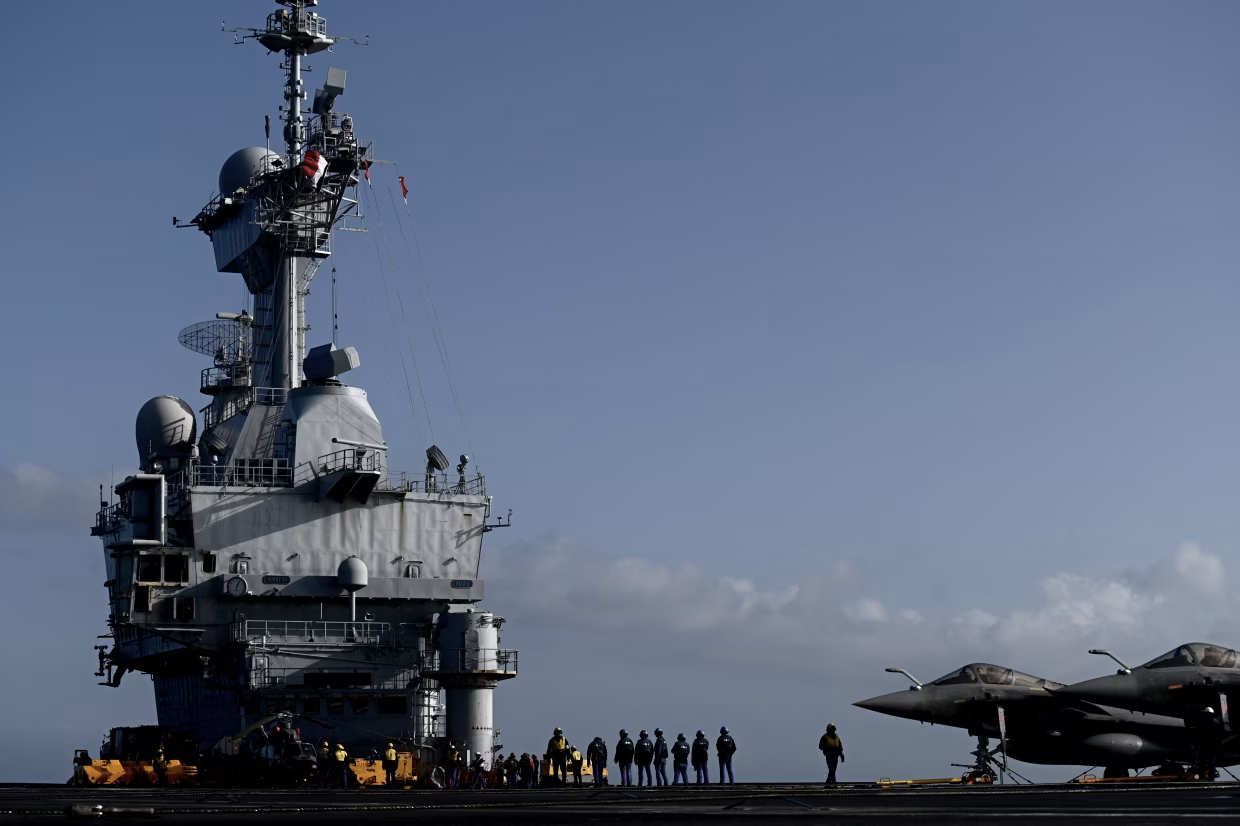
French President Emmanuel Macron confirmed Wednesday that the aircraft carrier Charles de Gaulle and its escort fleet were heading south through the Suez Canal into the Red Sea, positioning the group closer to the Gulf region as tensions linked to the Iran war continue to disrupt global trade and energy markets.
The deployment marks one of Europe’s most significant military responses since the conflict between Iran, the United States and Israel escalated earlier this year. The Strait of Hormuz, a narrow waterway between Iran and Oman, handles a substantial share of the world’s oil and natural gas shipments. Since the conflict intensified in late February, attacks on commercial vessels and growing security threats have sharply reduced maritime traffic through the corridor.
Macron described the proposed European operation as a defensive effort focused on restoring confidence among commercial shipping companies and insurers rather than joining the military campaign led by Washington.
In remarks posted on social media, Macron said the initiative being developed alongside Britain “remains distinct from the parties at war” and is intended to restore maritime stability once security conditions improve.
The French leader also disclosed that he held talks Wednesday with Iranian President Masoud Pezeshkian and planned to raise the issue during discussions with President Donald Trump.
“A return to calm in the Strait will help advance negotiations on nuclear issues, ballistic matters, and the regional situation,” Macron said, signaling that Paris sees maritime security as closely linked to broader diplomatic efforts surrounding Iran’s nuclear program and regional influence.
French military officials stressed that no deployment into the strait itself has yet been approved. Col. Guillaume Vernet, spokesperson for France’s armed forces chief of staff, said the proposed coalition would only move forward once threats against commercial shipping decrease and insurers regain enough confidence to support renewed traffic through the route.
Vernet noted that any mission would also require cooperation from regional countries, including Iran, which borders the strategic waterway and has effectively restricted navigation through attacks, inspections and threats against vessels since the war began Feb. 28.
“The French position remains defensive and based on international law,” Vernet told The Associated Press.
The Charles de Gaulle is Europe’s only nuclear-powered aircraft carrier and represents the centerpiece of French naval power. Its movement toward the region follows what the French presidency previously described as an “unprecedented” mobilization that includes frigates, amphibious assault ships and fighter aircraft deployed across the eastern Mediterranean and Gulf region.
French Rafale fighter jets stationed in the United Arab Emirates have already intercepted drones and missiles over Gulf airspace since fighting erupted. France maintains long-standing defense agreements with Gulf nations including the United Arab Emirates, Qatar and Kuwait.
Reuters earlier quoted Macron saying France must protect its economic interests as the conflict threatens energy supplies and international trade routes.
“We have economic interests to protect because oil prices, gas prices and international trade are being profoundly disrupted by this war,” Macron said during a televised address.
The growing European naval discussions come as the United States pauses its own controversial maritime effort known as “Project Freedom.” President Trump suspended the operation earlier this week after limited commercial participation and rising fears of direct confrontation with Iran.
Unlike the American-led approach, European officials are presenting the proposed French-British initiative as a neutral maritime security effort rather than an enforcement operation.
Still, analysts say the mission carries enormous geopolitical risks.
The Strait of Hormuz remains one of the world’s most strategically sensitive chokepoints. Even temporary disruptions there can trigger major spikes in fuel costs, shipping insurance premiums and global inflation pressures. Since the outbreak of the war, war-risk insurance rates for vessels entering the area have reportedly surged several times above normal levels.
Industry experts say many shipping companies remain unwilling to use the route despite military escorts because of fears of missile strikes, drone attacks or naval mines.
The International Energy Agency has described the current disruption as one of the largest shocks ever experienced in global energy supply chains. Hundreds of commercial vessels remain stranded or delayed in Gulf waters, creating mounting economic pressure across Asia, Europe and North America.
The crisis has also exposed divisions among Western allies over how to respond.
While the United States has pursued aggressive military pressure against Tehran, France and Britain appear to be seeking a narrower role focused on protecting trade and preventing broader regional collapse. European governments are particularly concerned about the economic fallout of prolonged instability in the Gulf, especially as many countries continue struggling with inflation and energy security challenges.
Macron’s approach reflects France’s broader effort to position itself as both a military power and diplomatic intermediary. Paris has repeatedly argued that military escalation alone will not solve the crisis and has continued pushing for renewed talks involving Iran, the United States and European powers.
At the same time, France has increased security measures at home and accelerated evacuation assistance for citizens leaving the Middle East.
The deployment of the Charles de Gaulle carrier group also sends a wider message about Europe’s strategic ambitions. Defense analysts say France and Britain increasingly want to demonstrate that Europe can independently secure major international trade routes without relying entirely on American leadership.
That ambition has gained momentum since the outbreak of the Iran conflict and amid wider uncertainty surrounding global security alliances.
Whether the European mission ultimately moves into the Strait of Hormuz may depend less on military readiness and more on diplomacy. For now, the carrier group’s movement signals that Europe is preparing for a longer and potentially more dangerous confrontation in one of the world’s most economically vital regions.
Sources: Reuters, The Associated Press.





