

Italian authorities have recovered 10 bodies after a migrant boat overturned in waters off Malta, while dozens of survivors were pulled to safety in an operation that underscores the continuing dangers of the central Mediterranean crossing.
Italy’s coast guard said Sunday that the vessel, believed to have carried about 60 people, sank roughly 45 nautical miles southeast of Malta after departing from Libya. A fishing vessel in the area brought about 48 people to safety before rescue teams arrived.
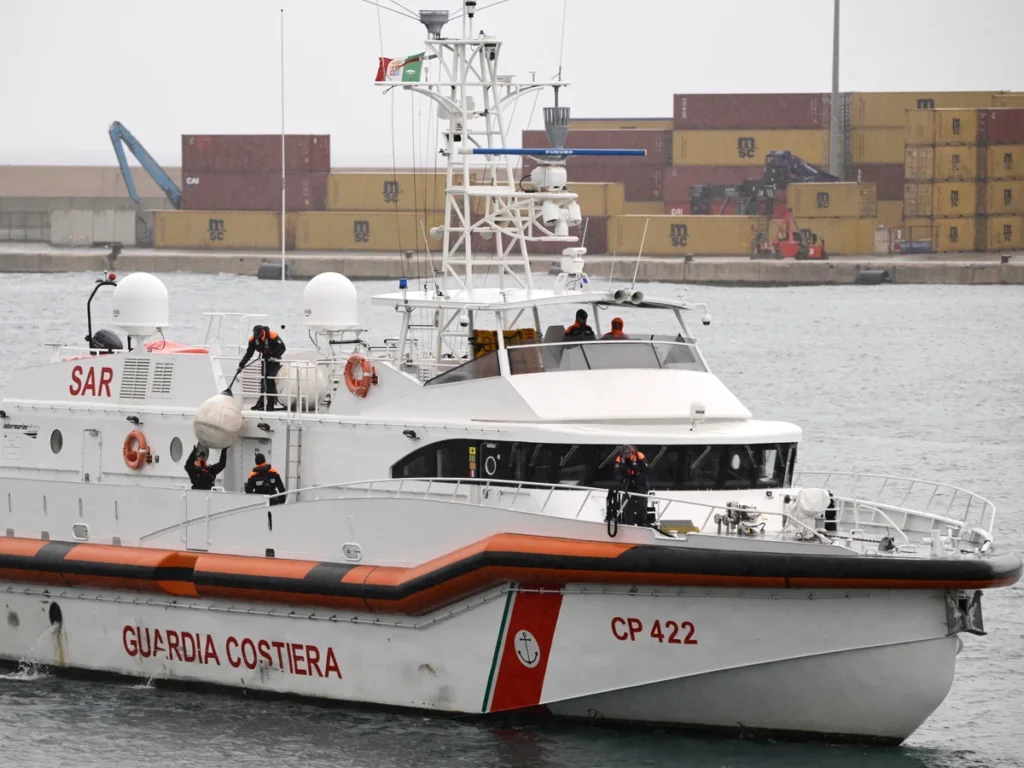
A patrol boat dispatched by Italy’s coast guard retrieved the bodies and continued searching the surrounding waters. The operation is being coordinated with Maltese authorities, which requested assistance after the vessel was reported in distress with passengers in the sea.
Details on the missing remain unclear as search efforts continue.
Accounts carried by the Associated Press and The Guardian indicate that the central Mediterranean remains one of the world’s deadliest migration routes. Data from the International Organization for Migration shows at least 827 people have died so far this year attempting the crossing from North Africa toward Europe. More than 1,300 lost their lives along the same route last year.
The stretch of sea between Libya, Italy and Malta has long served as a primary corridor for migrants seeking entry into Europe. Many depart in overcrowded and unseaworthy boats, often relying on smugglers and facing extreme weather and limited rescue capacity.
European migration policy has increasingly focused on preventing departures from North Africa. The European Union has provided significant financial support to Libya since 2015, directing hundreds of millions of euros toward border enforcement and efforts to intercept migrant vessels before they reach international waters.
Italy has played a central role in this strategy, working closely with Libyan authorities to reduce crossings through training, equipment and logistical backing for coastal patrols.
However, humanitarian groups have argued that such measures have not reduced the risks faced by migrants, but instead pushed them into more dangerous routes and conditions. The latest capsizing highlights the ongoing tension between migration control policies and the humanitarian realities unfolding at sea.
The involvement of a nearby fishing vessel in rescuing survivors also reflects the continued reliance on civilian crews in emergencies, often before official rescue teams can arrive.
As search operations continue off Malta, the incident adds to a growing toll that has kept the central Mediterranean at the forefront of global migration debates, with renewed questions about rescue coordination, safe pathways and the effectiveness of existing policies.
TheGuardian/AP





