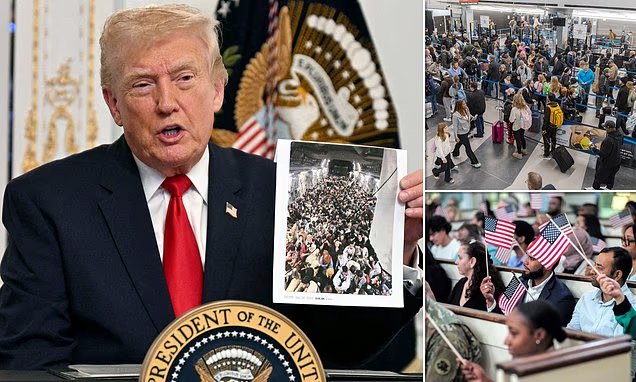
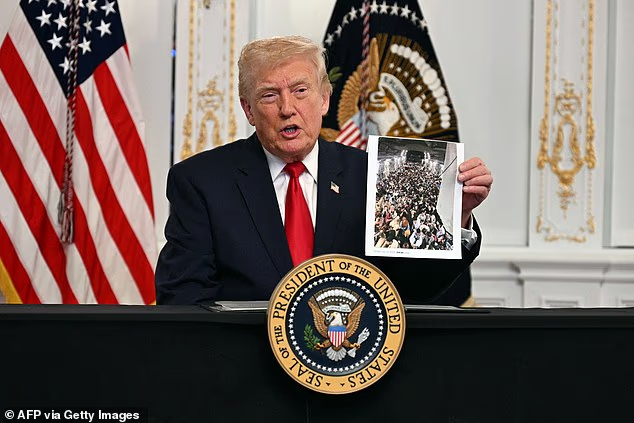
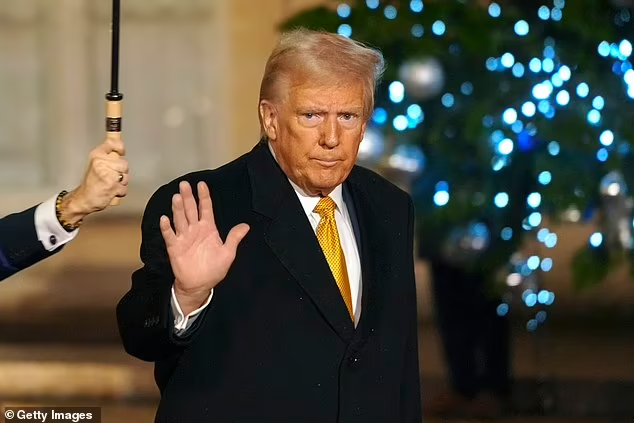
The Trump administration has ordered an immediate halt to immigration processing for people from 19 countries already subject to a broad travel ban, expanding the reach of its national-security framework following last week’s shooting of two National Guard soldiers near the White House.
The Associated Press reported that the decision was outlined in a policy memorandum published Tuesday by U.S. Citizenship and Immigration Services, which oversees the nation’s immigration benefits. The freeze affects pending green card petitions, naturalization interviews and other immigration requests filed by individuals from countries the administration has labeled “high-risk.” The directive grants USCIS Director Joseph Edlow sole authority to determine when the pause will be lifted.
The move builds on a June order barring citizens of 12 countries—and limiting access for seven more—from entering the United States on national security grounds. Reuters noted that Afghanistan and Somalia are among the nations included on the updated list.
According to both AP and Reuters, the memo cites the Thanksgiving-week shooting that killed one member of the National Guard and critically injured another. An Afghan national is in custody as the suspected gunman. The incident has fueled President Donald Trump’s campaign to intensify scrutiny of immigrants, particularly from Muslim-majority nations and African states with strained security infrastructures.
In recent days, Trump has escalated his rhetoric toward Somali immigrants, labeling them “garbage” and insisting the U.S. “does not want them in our country.” The remarks follow his long-running criticism of Somali-American Democratic Rep. Ilhan Omar.
The administration’s updated list of impacted countries includes Afghanistan, Burma, Chad, the Republic of the Congo, Equatorial Guinea, Eritrea, Haiti, Iran, Libya, Somalia, Sudan and Yemen — all of which were already under the most restrictive travel measures. Countries subjected to partial restrictions in June, and now included in the immigration freeze, are Burundi, Cuba, Laos, Sierra Leone, Togo, Turkmenistan and Venezuela.
Reuters reported that the USCIS directive requires all immigrants from the listed countries to undergo a “thorough re-review,” including potential interviews or re-interviews, to reassess any perceived public safety or national security threats. The memo cites several recent crimes said to involve foreign nationals.
Sharvari Dalal-Dheini, director of government relations for the American Immigration Lawyers Association, told The Associated Press that attorneys have already documented canceled oath ceremonies, naturalization reviews and adjustment-of-status interviews for applicants from the affected nations.
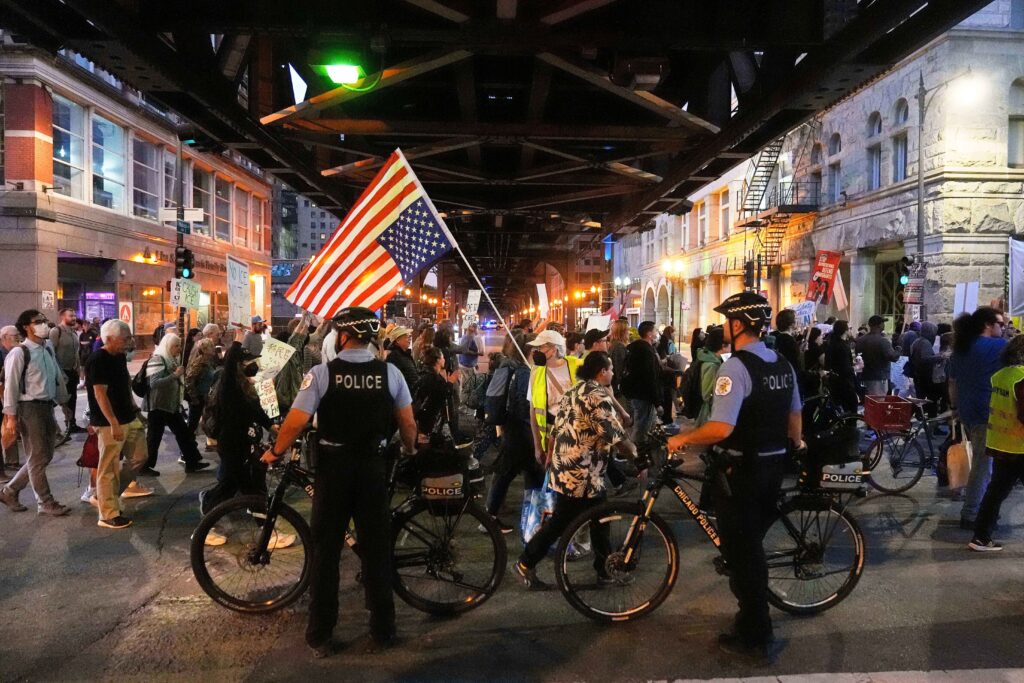
FILE – Police officers block a street as demonstrators march at a protest opposing “Operation Midway Blitz” and the presence of ICE, Sept. 9, 2025, in Chicago. (AP Photo/Erin Hooley, File)
AP also reported that while earlier travel-ban rules did not retroactively affect immigrants already living in the United States, the new directive now subjects even longstanding residents—regardless of when they entered—to renewed scrutiny. USCIS said it will conduct a full review of immigration benefits granted to individuals who arrived during the Biden administration.
The memo states that within 90 days, the agency will build a priority list for re-examination, potentially forwarding cases to immigration enforcement or other federal law enforcement partners.
In recent days, the administration has also paused all asylum decisions, while the State Department stopped processing visas for Afghans who assisted U.S. forces during the war. Separately, USCIS acknowledged that it would re-evaluate the cases of all refugees admitted under the Biden administration.
The freeze marks one of the administration’s most sweeping intrusions into the legal immigration system since Trump returned to office. While past crackdowns focused primarily on border enforcement and deportations, the new directive extends federal scrutiny deep into the population of immigrants who have lived legally in the United States for years.
The move also signals a recalibration of political messaging. By tying national security concerns directly to legal immigration pathways, the White House is attempting to frame the current system as inherently vulnerable—an argument echoed in Trump’s repeated claims that the Biden administration “allowed dangerous individuals” into the country.
Legal experts note that the broad re-review process could overwhelm an already strained USCIS, delaying interviews, court dates, and employment authorization renewals for tens of thousands of people. Immigration attorneys warn that long-term residents could face indefinite uncertainty, fueling fears within communities that have historically been subject to intensified surveillance and political targeting.
The directive also risks diplomatic friction with several of the listed nations—some of which maintain cooperative security relationships with the U.S. but lack robust internal identification systems. Analysts say the renewed freeze could complicate refugee resettlement pipelines, create additional backlogs for military interpreters, and stir constitutional challenges that mirror earlier lawsuits against Trump-era travel bans.
Despite the administration’s insistence that the measure is temporary, the absence of a clear timeline for reinstating immigration services leaves open the possibility of a prolonged policy shift that reshapes the legal immigration landscape long after the current crisis subsides.
WASHINGTON — President Donald Trump delivered sweeping condemnation Tuesday of Somali immigrants residing in the United States, declaring he opposes their presence in the country while characterizing residents of the conflict-ravaged East African nation as excessively dependent on American social programs while contributing minimal value to society, marking his latest targeting of the Somali diaspora community that has established roots across multiple states over three decades.
Trump’s dismissive characterization of the entire immigrant population represents another instance of him specifically attacking Somali communities in the United States. Somalis have been arriving in Minnesota and other states, frequently as refugees fleeing violence and instability, since the 1990s. The president made no distinction between naturalized citizens and non-citizens in his blanket criticism of the ethnic community.
The Associated Press in its widely circulated report states that the president’s commentary arrived days after his administration declared it is suspending all asylum determinations following the shooting incident involving two National Guard soldiers in Washington. The suspect in last week’s incident originates from Afghanistan, but Trump has utilized the moment to raise concerns about immigrants from other nations, including Somalia, despite no connection between the shooting and Somali communities.
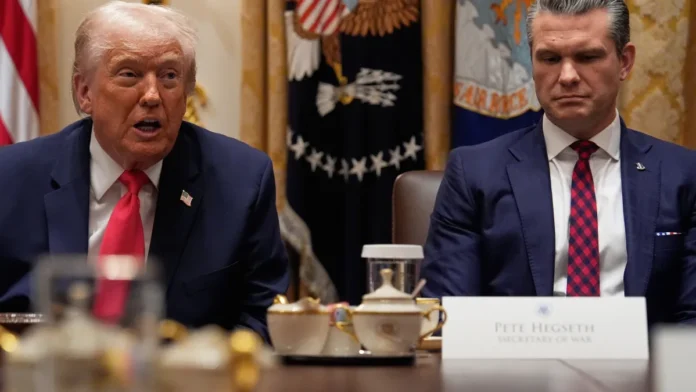
“They contribute nothing. I don’t want them in our country,” Trump told reporters near the conclusion of an extended Cabinet meeting session. He continued with additional harsh language: “Their country is no good for a reason. Your country stinks and we don’t want them in our country,” employing inflammatory rhetoric that immigration advocates characterized as dehumanizing and potentially dangerous for vulnerable communities.
Trump has maintained years-long criticism of Representative Ilhan Omar, a Minnesota Democrat who emigrated from Somalia in 1995 as a child refugee. However, he intensified his attacks on Somalis via social media last week following Christopher Rufo, a conservative activist, publishing unverified allegations in a publication called City Journal. Rufo’s article cited anonymous sources claiming money stolen from Minnesota programs has been funneled to al-Shabab, an al-Qaida-affiliated militant organization that controls portions of Somalia. Immigration experts and Minnesota officials have challenged these allegations as lacking credible evidence.
The Associated Press stated that Trump pledged last week through a social media post to send Somalis “back to where they came from,” while alleging Minnesota, home to the largest Somali community in the United States, functions as “a hub of fraudulent money laundering activity.” These allegations have not been substantiated through official investigations or criminal charges against the broader Somali community, though they have fueled anxiety among immigrant populations concerned about potential enforcement actions.
He specifically committed to terminating temporary legal protections for Somalis living in Minnesota, a directive that is generating fear throughout the state’s deeply-established immigrant community, alongside questions about whether the White House possesses legal authority to implement the directive as outlined. Temporary Protected Status typically requires formal regulatory processes and cannot be revoked through presidential declaration alone, according to immigration law specialists.
The announcement prompted immediate opposition from some state leaders and immigration experts, who characterized Trump’s declaration as a legally questionable effort to cultivate suspicion toward Minnesota’s Somali community without legitimate policy justification. Critics argue the rhetoric serves political purposes rather than addressing genuine security concerns supported by evidence.
The proposed action would affect only a minuscule fraction of the tens of thousands of Somalis residing in Minnesota. A report produced for Congress in August documented the number of Somalis covered by TPS at merely 705 nationwide, representing a tiny segment of the broader Somali-American population that includes naturalized citizens, permanent residents, and individuals holding various immigration statuses.
Trump also renewed his criticism of Omar, whose family fled civil war in Somalia and spent several years in a refugee camp in Kenya before arriving in the United States through the refugee resettlement program. Omar has since become one of the most prominent progressive voices in Congress, frequently clashing with Trump on immigration policy, foreign policy, and domestic issues.
“We can go one way or the other, and we’re going to go the wrong way, if we keep taking in garbage into our country,” Trump said, before directing personal attacks at the congresswoman. “Ilhan Omar is garbage. She’s garbage. Her friends are garbage,” employing language that political analysts noted represents an escalation of personal vitriol directed at an elected official.
On Tuesday, Omar responded to Trump via social media, stating, “His obsession with me is creepy. I hope he gets the help he desperately needs,” characterizing the president’s sustained focus on her as inappropriate and concerning while declining to engage substantively with his specific allegations.
Trump added regarding Somali immigrants broadly, “These aren’t people that work. These aren’t people that say, ‘Let’s go, c’mon. Let’s make this place great.’ These are people that do nothing but complain,” painting the entire ethnic community with broad generalizations that contradict documented economic contributions and business ownership patterns within Somali-American communities.
Minneapolis Mayor Jacob Frey called Trump’s message “wrong” and said that Somali immigrants have helped improve his community through tangible contributions across multiple sectors. “They have started businesses and created jobs. They have added to the cultural fabric of what Minneapolis is,” Frey stated, defending the community against what he characterized as unfair vilification. “To again, villainize an entire group is ridiculous under any circumstances. And the way that Donald Trump is consistent in doing it, I think calls into question major constitutional violations. And it certainly violates the moral fabric of what we stand by in this country as Americans.”
The controversy illuminates deeper tensions surrounding immigration policy, refugee resettlement programs, and the targeting of specific ethnic communities through presidential rhetoric and policy directives. Somali-Americans have established significant communities particularly in Minnesota’s Twin Cities region, where they have created businesses, achieved political representation, and integrated into civic life while maintaining cultural connections to their homeland.
Minnesota’s Somali community faces unique challenges as descendants of refugees who fled one of Africa’s most protracted conflicts. Somalia descended into civil war in 1991 following the collapse of the central government, creating humanitarian catastrophe that displaced millions and generated massive refugee flows to neighboring countries and eventually to Western nations including the United States. The refugee resettlement process involves extensive vetting procedures administered by multiple federal agencies before individuals receive authorization to enter the country.
Trump’s allegations linking Minnesota’s Somali community to terrorist financing through al-Shabab represent serious accusations that immigration advocates argue lack substantiated evidence worthy of such sweeping condemnation. Federal law enforcement agencies maintain ongoing investigations into terrorist financing networks, but no evidence has emerged suggesting widespread involvement by Minnesota’s Somali community in supporting militant organizations abroad, according to publicly available information.
The president’s focus on unverified allegations published by conservative media personalities rather than official intelligence assessments or law enforcement findings raises questions about the basis for policy decisions affecting thousands of individuals. Civil liberties organizations have expressed concern that targeting entire ethnic communities based on unsubstantiated claims violates constitutional principles of equal protection and due process.
The legal mechanics of terminating Temporary Protected Status involve regulatory procedures governed by the Immigration and Nationality Act, which typically requires the Secretary of Homeland Security to formally designate or terminate TPS designations based on country conditions rather than presidential declarations. Legal scholars question whether Trump’s social media statements constitute legally binding directives or merely political rhetoric without enforceable consequences.
The minimal number of Somalis actually covered by TPS—just 705 nationwide according to congressional data—highlights the disconnect between Trump’s sweeping rhetoric targeting the entire Somali-American community and the limited scope of individuals who would be directly affected by TPS termination. The vast majority of Somali-Americans hold citizenship, permanent residency, or other immigration statuses unaffected by TPS policy changes.
The timing of Trump’s escalated attacks on Somali communities coinciding with an unrelated shooting incident involving an Afghan suspect demonstrates a pattern of exploiting violent incidents to advance broader immigration restriction agendas regardless of actual connections to the communities being targeted. This approach has drawn criticism from civil rights organizations who argue it unfairly scapegoats immigrant populations for crimes committed by individuals unconnected to those communities.
Somali business owners in Minnesota have documented economic impacts including restaurants, retail establishments, money transfer services, transportation companies, and other enterprises that contribute to local economies and employ both Somali and non-Somali workers. Data from state economic development agencies shows Somali entrepreneurs have revitalized commercial corridors in Minneapolis neighborhoods that had experienced disinvestment, contradicting Trump’s characterization of the community as non-contributing.
The political calculations behind Trump’s targeting of Minnesota’s Somali community may relate to the state’s status as a competitive electoral battleground where immigration policy resonates with certain voter constituencies. Minnesota has trended Democratic in recent presidential elections but remains contested territory where candidates compete for margins that could determine statewide outcomes.
Omar’s prominent position as one of the first Muslim women elected to Congress and her outspoken progressive advocacy have made her a frequent target for conservative criticism and Trump’s personal attacks throughout her tenure. She represents a Minneapolis-area district with significant Somali-American populations who supported her historic election, creating a connection between Trump’s attacks on the congresswoman and the broader Somali community she represents.
International observers and human rights organizations have raised concerns about rhetoric from American political leaders that could endanger diaspora communities maintaining connections to conflict zones. Inflammatory statements targeting entire ethnic groups based on national origin potentially violate international human rights norms regarding discrimination and dignity protections.
The broader implications of presidential rhetoric characterizing entire immigrant communities in dehumanizing terms extend beyond immediate policy consequences to affect social cohesion, intercultural relations, and the safety of vulnerable populations who may face increased harassment or violence when political leaders employ stigmatizing language. Hate crime statistics have shown correlations between inflammatory political rhetoric targeting specific groups and subsequent increases in bias-motivated incidents affecting those communities.
As the controversy continues generating responses from elected officials, community leaders, and immigration advocates, the Somali-American community faces uncertainty about potential policy changes while confronting public rhetoric questioning their belonging and contributions to American society. The disconnect between Trump’s characterizations and documented realities of Somali-American community life represents a fundamental dispute about immigration’s role in American identity and the treatment of refugee populations who have sought safety and opportunity in the United States.
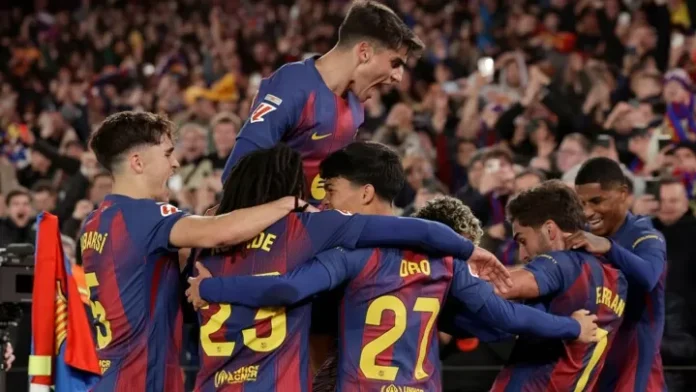
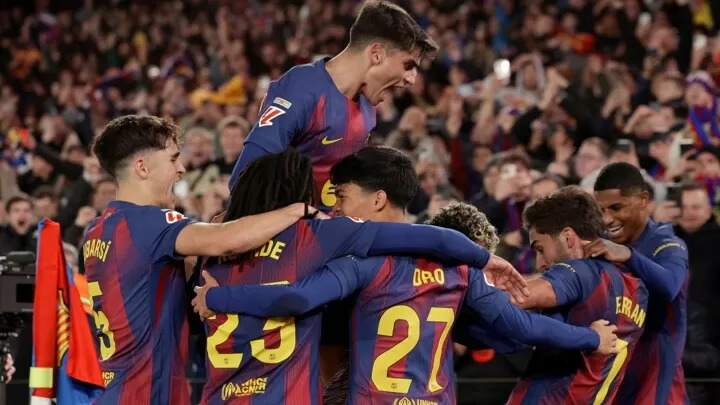
Barcelona orchestrated a stunning reversal Tuesday evening at Camp Nou, erasing an early deficit to defeat Atletico Madrid 3-1 and stretch their advantage atop the La Liga standings to four points, demonstrating resilience that could prove crucial in the championship race despite persistent defensive vulnerabilities that nearly derailed their comeback attempt.
Atletico Madrid seized the initiative when Alex Baena executed an exquisite chip to break the deadlock, but their advantage evaporated within six minutes as Raphinha responded with a swift equalizer. Barcelona secured a golden opportunity to claim the halftime advantage after Pablo Barrios conceded a penalty, only to witness Robert Lewandowski astonishingly launch his spot-kick high over the crossbar in one of the match’s most shocking moments.
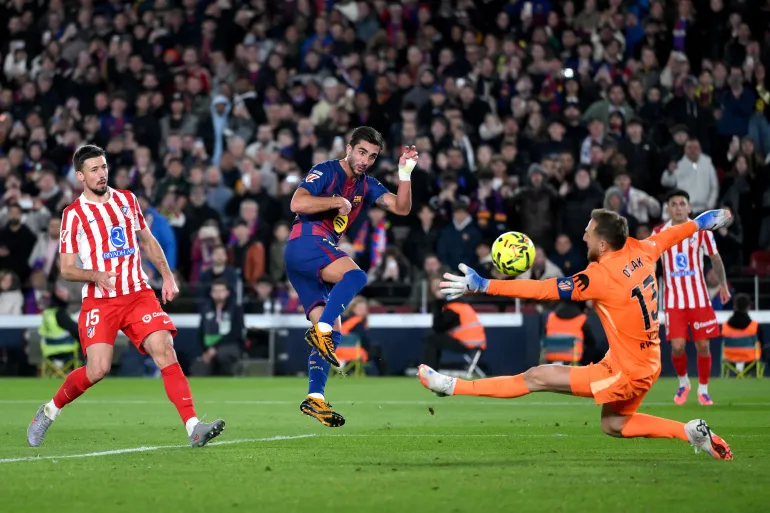
The Catalan club maintained territorial dominance throughout the second half’s majority, ultimately completing their comeback when Dani Olmo clinically directed his strike into the bottom right corner shortly after the hour mark. Ferran Torres confirmed the turnaround victory with a 96th-minute third goal that sealed three vital points in Barcelona’s title pursuit.
Barcelona’s persistent struggles with their aggressive high defensive line were showcased perfectly as they were exposed with their backline positioned almost entirely inside Atletico Madrid’s half when Baena received a through ball and raced clear to open the scoring. The risky tactical approach that defines Hansi Flick’s system continues generating vulnerabilities that elite opponents can exploit with precision passes behind the defenders.
Atletico Madrid consistently sought to capitalize on Barcelona’s advanced defensive positioning and were unfortunate not to convert additional scoring chances, with goalkeeper Joan Garcia producing a particularly crucial save from another Baena breakaway during the first half. Thiago Almada squandered a massive opportunity late in the second period after successfully breaching the offside trap, failing to punish Barcelona for their tactical gamble.
However, that identical tactical factor contributed to Barcelona’s equalizing goal. Despite possessing the ball inside their own half through Pedri, Atletico Madrid found themselves forced deep into their territory by Barcelona’s high starting positions, allowing the midfielder to advance freely before delivering a precise pass that enabled the eventual goalscoring Brazilian to capitalize.
While Flick will derive satisfaction from his squad’s determination to fight from behind and ultimately extend their lead atop the standings, Diego Simeone will feel disappointment regarding the quantity of chances his side surrendered to the hosts. Atletico Madrid have built their reputation on defensive solidity under Simeone’s tenure, yet they conceded a remarkable 19 shots during this encounter, including six high-quality opportunities. Barcelona realistically should have decided the contest far earlier if not for their abundance of squandered chances.
The opening goal arrived through brilliant execution from Baena. Nahuel Molina launched a pinpoint pass over Barcelona’s defensive line into Baena’s path as the forward made a darting run behind the defenders and accelerated toward goal. The attacker drove into the penalty area and cleverly lifted his strike over the advancing Garcia with the outside of his boot, sending the ball bouncing into the net’s rear section to give Atletico Madrid the lead.
Raphinha’s equalizer arrived just six minutes later, restoring parity with stylish finish. Pedri received ample time on the ball to advance into Atletico Madrid’s half and select a through ball for Raphinha, who timed his run between David Hancko and Clement Lenglet into the box perfectly. Raphinha’s initial touch took him around the onrushing Jan Oblak, while his second contact slotted the ball into the vacant net with his right foot.
The 36th minute brought a shocking moment when Lewandowski failed from the penalty spot. Barcelona earned the spot-kick as Barrios was adjudged to have fouled Olmo inside the penalty area, with Lewandowski assuming responsibility. The veteran striker stepped forward and surprisingly launched his effort high and to the left of the goal frame, producing a shocking penalty miss that kept the match level heading into halftime.
Olmo’s goal in the 65th minute capped a wonderful team movement that gave Barcelona the lead. Pedri fired a pass to Olmo just outside the box, and the Spanish international quickly combined with Lewandowski, receiving the return ball just inside the area. Olmo generated a left-footed effort across goal, with his strike beating Oblak and finding the far corner to complete Barcelona’s comeback from their early deficit.
Torres sealed the three points in the 96th minute with Barcelona’s third goal. The hosts patiently circulated possession around the left side, working the ball to Marcus Rashford, who played it down the line to Alejandro Balde. Balde delivered a cross toward Torres in acres of space inside the area, and the striker controlled before firing into the far corner to confirm the victory as Atletico Madrid pushed forward desperately seeking an equalizer.
Pedri earned man of the match honors after an utterly superb performance in Barcelona’s midfield, dictating play as virtually every positive attacking movement originated from the Spanish maestro. The midfielder’s pinpoint delivery enabled Raphinha to perfectly receive the ball in stride and round Oblak before scoring the equalizer, while Pedri also punched passes through defensive lines during the buildup to Olmo’s go-ahead strike. Altogether, Pedri created an impressive three scoring chances throughout his 74 minutes on the pitch, marking a fantastic performance in just his second appearance following his return from injury.
The match statistics reflected Barcelona’s territorial dominance and attacking superiority. The hosts controlled 58 percent of possession compared to Atletico Madrid’s 42 percent. Barcelona generated 19 total shots against Atletico Madrid’s seven attempts, with six of Barcelona’s efforts finding the target compared to just two for the visitors. Corner kicks were relatively balanced at five for Barcelona and four for Atletico Madrid, while Barcelona committed 12 fouls against nine from Atletico Madrid.
The victory carries significant implications for La Liga’s championship race as Barcelona extends their advantage to four points over their nearest pursuers with substantial portions of the season remaining. The ability to overcome adversity after falling behind demonstrates psychological strength that could prove valuable during the inevitable pressure moments that championship campaigns inevitably produce.
However, the defensive concerns highlighted by Atletico Madrid’s repeated success in exploiting Barcelona’s high line represent genuine vulnerabilities that more clinical opponents might punish decisively. The statistical reality that Atletico Madrid generated six big chances despite ultimately losing 3-1 suggests Barcelona’s attacking prowess is compensating for defensive fragility rather than the team achieving comprehensive dominance.
Lewandowski’s penalty miss represents a concerning moment for a striker whose reliability from the spot has historically been exceptional. The Polish international’s conversion rate from penalties throughout his career has typically exceeded 85 percent, making Tuesday’s miss particularly surprising and potentially impactful had Barcelona failed to find the winning goals afterward. The psychological impact of such misses can occasionally affect strikers’ confidence, making Flick’s management of Lewandowski’s mindset important heading into upcoming fixtures.
Pedri’s performance offers encouraging signs regarding Barcelona’s creative capabilities when their maestro operates at peak effectiveness. The midfielder’s injury struggles have plagued significant portions of recent seasons, making his health status crucial to Barcelona’s tactical fluidity and attacking productivity. His ability to dictate tempo, identify passing lanes through organized defenses, and create high-quality chances for teammates represents an irreplaceable element of Barcelona’s system.
The tactical battle between Flick’s aggressive pressing approach and Simeone’s traditionally pragmatic philosophy produced an entertaining spectacle that showcased contrasting philosophies. Barcelona’s commitment to maintaining extremely high defensive positioning creates opportunities for dominant possession and territorial control but simultaneously generates counterattacking vulnerabilities. Atletico Madrid’s willingness to absorb pressure and strike rapidly on transitions created numerous dangerous moments despite ultimately proving insufficient to secure points.
Barcelona’s fixture schedule presents both opportunities and challenges as they seek to maintain their championship advantage. Their upcoming La Liga clash against Real Betis on Saturday provides another opportunity to accumulate points before attention shifts to Champions League competition against Eintracht Frankfurt next Tuesday. Managing player fitness and rotation across multiple competitions while maintaining momentum represents a constant challenge for Flick’s coaching staff.
Atletico Madrid faces a challenging road schedule with upcoming matches against Athletic Bilbao domestically and PSV Eindhoven in European competition. The defeat to Barcelona damages their championship aspirations, though mathematical possibilities remain alive depending on Barcelona’s consistency throughout the remaining fixtures. Simeone’s ability to maintain his squad’s psychological resilience following disappointing results has historically represented one of his greatest strengths as a manager.
The match demonstrated that while Barcelona possesses attacking talent capable of overwhelming opponents through sustained pressure and individual quality, their defensive vulnerabilities create pathways for opposition teams to remain competitive even when statistically dominated. The championship race’s outcome may ultimately depend on whether Barcelona’s offensive firepower continues compensating for defensive fragility or whether a crucial match sees those vulnerabilities prove decisive.
For neutral observers, Tuesday’s encounter provided compelling entertainment through contrasting tactical approaches, dramatic momentum swings, individual moments of brilliance, and the narrative tension created by Barcelona’s comeback from deficit. The quality displayed by players like Pedri, Raphinha, Olmo, and Baena showcased La Liga’s technical standards while the tactical chess match between Flick and Simeone illustrated the strategic complexity that defines elite-level football management.
As Barcelona celebrates extending their championship lead while Atletico Madrid absorbs the disappointment of squandered opportunities, both clubs recognize that the season’s narrative remains unwritten with substantial football remaining before final standings are determined.
STOCKTON, Calif. — Grammy-winning Nigerian artist Burna Boy has committed to financing funeral arrangements for all four young victims slain during a horrific mass shooting that transformed a toddler’s birthday celebration into tragedy last weekend, offering financial relief to grieving families confronting unimaginable loss in this Central California community still reeling from the violence.
The deadly assault unfolded Saturday evening near the intersection of Lucile Avenue and Thornton Road, where gunfire erupted during a birthday party for a two-year-old child. The attack claimed the lives of an eight-year-old, a nine-year-old, a fourteen-year-old, and a twenty-one-year-old, while eleven additional individuals sustained injuries in the barrage. The brazen daytime shooting has left the Stockton community devastated and searching for answers about how such violence could target a children’s gathering.
Among those killed was fourteen-year-old Amari Peterson, whose father Patrick Peterson described him as possessing a “gentle soul” that endeared him to friends and family members. The teenager harbored deep passion for athletics across multiple sports. “He loved sports, he loved football. He loved basketball,” Peterson told reporters through his grief. “He ran a little bit of track, but overall, he was a gentle soul,” emphasizing the peaceful nature of a young life cut tragically short.
TMZ reports that Burna Boy experienced profound emotional response after learning about the mass shooting that devastated the two-year-old’s birthday party last weekend in Stockton, California, and subsequently decided to assume financial responsibility for funeral expenses for all four deceased victims. The Afrobeats superstar disclosed that he encountered the story while consuming content from “The Breakfast Club” radio program and immediately initiated outreach to entertainment executive Wack 100, who facilitated connection with Hollywood Unlocked’s Jason Lee, who additionally serves as vice mayor of his hometown of Stockton.
Lee condemned the unidentified shooters in forceful terms, telling the Associated Press that street culture has never considered it “gangsta” to assassinate children. Burna Boy aligned himself with this sentiment and volunteered to cover all funeral costs, recognizing this gesture represents merely a minimal contribution considering the eternal anguish these parents will endure following such devastating losses.
Vice Mayor Jason Lee explained that the mass shooting captured attention of entertainment executive Wack 100, who subsequently connected him with the international recording artist. The collaboration between the music industry figures and local government official created the pathway for Burna Boy’s philanthropic intervention in a community crisis that has shocked residents and observers nationwide.
“When I heard about the children murdered in Stockton, my heart broke. After hearing the story on The Breakfast Club, I reached out to Wack 100 and connected with Jason Lee because no family should ever face this kind of pain alone. I wanted to do whatever I could to support these parents as they begin the long process of healing,” Burna Boy stated in an official declaration, articulating the compassion that motivated his financial commitment to families he has never personally encountered.
According to ABC’s reporting, Burna Boy volunteered to assume funeral expenses for all victims of the shooting, providing financial relief to families already overwhelmed by grief who now face the additional burden of burial costs that can easily reach tens of thousands of dollars per service. The artist’s intervention removes at least one source of stress during an impossibly difficult period as families plan memorial services while processing their shock and sorrow.
Lee expressed gratitude for the artist’s intercession on behalf of suffering families. “I want to thank Burna Boy for his support of families and children he has never met but still felt moved to help. Let his generosity serve as an example: so many people want to help but may not know how—and our community needs that support now more than ever,” the vice mayor stated, framing the donation as both practical assistance and inspirational model for others seeking ways to contribute to community healing.
The vice mayor has maintained continuous engagement with affected families since conducting a vigil on Sunday, while simultaneously issuing persistent calls for unity, accountability, and community-wide healing efforts. His dual role as both local government official and media personality has positioned him uniquely to bridge multiple constituencies while advocating for systemic responses to violence plaguing the city.
“This is not just another headline. Four lives were stolen, eleven others were wounded, families were changed forever, and our community cannot remain numb to this level of tragedy. We need accountability for those responsible, and we must recommit ourselves to breaking cycles of violence with real resources, real intervention, and real unity,” Lee declared in remarks emphasizing that the shooting demands substantive responses rather than temporary attention before public focus shifts elsewhere.
TMZ concluded in its report that Burna Boy had recently faced friction with fans after removing a woman who had fallen asleep in the front row during one of his concert performances, generating controversy across social media platforms. However, his current charitable action demonstrates that the criticism has not diverted his attention from engaging with genuine real-world tragedies that demand compassionate response and material support.
The gesture from an international celebrity toward a California community crisis illustrates how mass shootings increasingly capture attention beyond their immediate geographic boundaries, particularly when children comprise the victim population. Burna Boy’s status as a global music figure with no apparent previous connection to Stockton amplifies the message that such violence represents a collective societal failure requiring broad-based response rather than isolated local problem.
Stockton has struggled with elevated violent crime rates for years, consistently ranking among California cities with highest per-capita murder rates. The community of approximately three hundred thousand residents has witnessed periodic mass casualty incidents that periodically thrust the city into national headlines, yet sustainable solutions for addressing root causes of violence have proven elusive despite various intervention attempts by law enforcement, community organizations, and government agencies.
The targeting of a children’s birthday party represents a particularly shocking breach of norms that typically govern even street violence in urban communities. The killing of multiple children ranging from eight to fourteen years old crosses boundaries that even individuals engaged in criminal enterprises generally recognize as inviolable, making the attack especially disturbing to residents who have grown somewhat accustomed to gang-related violence among adult participants.
Law enforcement agencies have not yet identified suspects or disclosed potential motives for the shooting, leaving the community without answers about whether the attack represented targeted violence that tragically occurred at a location with children present or whether the gathering itself was deliberately chosen. The absence of information about suspects has fueled anxiety among residents concerned about whether additional violence might follow and whether children remain at risk.
The eleven wounded survivors face their own difficult recovery journeys, potentially including both physical rehabilitation from gunshot injuries and psychological trauma from witnessing the violent deaths of children during what should have been a joyful celebration. The long-term impacts on these individuals, many of whom are likely children themselves, will extend far beyond immediate medical treatment as they process the horror they experienced.
For the parents of the four slain children, Burna Boy’s funeral assistance provides tangible relief during a period when they face overwhelming practical demands alongside their grief. Arranging memorial services, burial plots, caskets, and related funeral expenses typically costs between fifteen and twenty-five thousand dollars per service, creating significant financial strain for many families. The artist’s intervention ensures these parents can focus on honoring their children’s memories without simultaneously worrying about fundraising or accumulating debt.
Vice Mayor Lee’s role in facilitating the connection between Burna Boy and affected families demonstrates how social media personalities and entertainment industry figures can leverage their platforms and networks to mobilize resources during community crises. Lee’s unusual position bridging local government, media entertainment, and community activism enabled rapid coordination that might have proven more difficult through traditional governmental channels alone.
The shooting has reignited debates about gun violence prevention strategies, community safety measures, and the adequacy of resources dedicated to intervention programs aimed at preventing young people from engaging in violence. Stockton officials and community leaders face renewed pressure to demonstrate concrete progress in reducing violent crime after yet another mass casualty incident that has devastated families and traumatized the broader community.
Burna Boy’s philanthropic gesture, while meaningful for the directly affected families, cannot address the systemic factors enabling the violence that killed these four young people. However, his willingness to contribute resources alongside his public platform to highlight the tragedy may inspire additional support for Stockton communities working to implement violence prevention programs, victim services, and youth development initiatives that address underlying conditions fostering criminal activity.
The contrast between the violence that destroyed innocent lives and the compassionate response from a distant celebrity reflects broader tensions in American society between the persistent reality of gun violence and widespread desires to support affected communities. Burna Boy’s intervention demonstrates that individuals with resources and platforms can make immediate meaningful differences for suffering families even when larger structural solutions remain elusive.
As Stockton mourns its latest young victims and families prepare to bury their children, Burna Boy’s commitment ensures that financial concerns will not compound their grief during final farewells to the eight-year-old, nine-year-old, fourteen-year-old, and twenty-one-year-old whose lives ended at a birthday party that should have created joyful childhood memories rather than unspeakable tragedy.
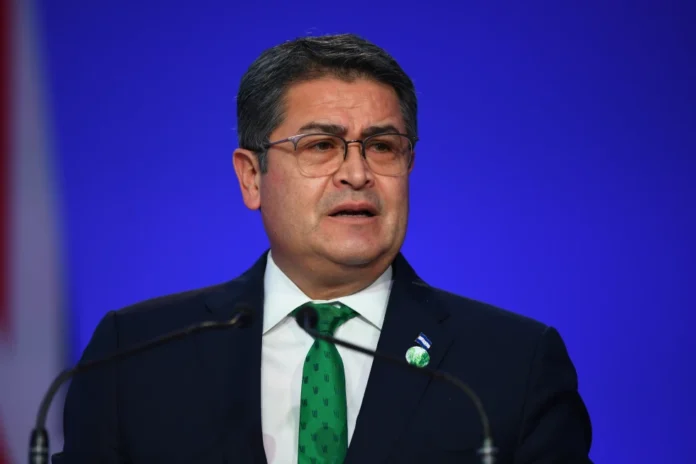
Former Honduran President Juan Orlando Hernández, who was serving a 45-year sentence in the United States on drug trafficking and weapons charges, was released from a federal prison in West Virginia after receiving a presidential pardon from President Donald Trump, his wife announced Tuesday. Hernández, convicted last year in a Manhattan courtroom of taking millions of dollars in bribes to safeguard massive cocaine shipments heading to the United States, walked free Monday evening following Trump’s signature on the pardon order.
According to Reuters, Trump signed the pardon late Monday, and the Federal Bureau of Prisons registry confirmed Hernández’s release from U.S. Penitentiary Hazelton in West Virginia. Hernández’s wife, Ana García, posted a photograph of the prison bureau listing on X and thanked Trump, writing that after nearly four years of “pain, waiting and difficult challenges,” her husband had returned to freedom because of Trump’s intervention. NBC News also reported that García publicly praised Trump’s action and framed the release as the end of what she described as an unjust ordeal.
Trump told reporters aboard Air Force One that he pardoned Hernández after appeals from Hondurans who believed the former president had been “set up.” Trump said those urging the pardon blamed what they called a politically motivated effort by the Biden administration and argued that Hernández was branded a drug dealer because he had been president. Trump said he reviewed the facts and agreed with those claims.
Hernández was arrested in February 2022 at the request of U.S. authorities, just weeks after he handed power to President Xiomara Castro. In March 2024, a Manhattan jury found him guilty of conspiring with traffickers who moved roughly 400 tons of cocaine through Honduras. Prosecutors argued that Hernández used his presidency to shield drug operations, even while presenting himself as an ally of U.S. anti-narcotics efforts. He was sentenced in June to 45 years in prison.
During sentencing, federal Judge P. Kevin Castel said the punishment served as a warning to “well educated, well dressed” officials who believe their power places them above the law. He accused Hernández of using “considerable acting skills” to portray himself as a crusader against drug traffickers while relying on Honduran police and military forces to protect cocaine routes. Hernández insisted he was the victim of traffickers he extradited and claimed he was targeted for political reasons.
Reuters also reported that Hernández wrote a lengthy letter to Trump in which he described himself as a political target of the Biden-Harris administration, comparing his legal troubles to those faced by Trump after his first presidential term. A White House official said Trump had not seen the letter before announcing the pardon. NBC News reported that conservative commentator Roger Stone had advocated for Hernández’s release and communicated with Trump about the case. Hernández’s wife publicly said Stone’s involvement made a “huge difference.”
Honduras’ attorney general, Johel Zelaya, said after Trump announced the intended pardon that prosecutors remain obligated to pursue justice and end impunity. Zelaya did not specify what Honduran charges Hernández could face upon returning to the country, though multiple corruption investigations related to his administration remain unresolved. President Castro, who first ordered Hernández’s arrest and extradition, remains in office until January.
The timing of the pardon came days before Honduras’ closely contested presidential election, where Trump endorsed Nasry Asfura, the conservative National Party candidate. Vote tallies Tuesday showed Asfura and liberal candidate Salvador Nasralla nearly tied with just under 40 percent each. Asfura’s party maintained close ties with Washington during Hernández’s presidency, which spanned from 2014 to 2022. After a 2009 coup, Honduras became a major corridor for cocaine shipments and one of the most violent countries in the world, prompting mass migration to the U.S.
Hernández is not yet guaranteed a quick return home, as Honduran authorities signaled potential legal action. For now, he remains free on U.S. soil as a result of the unprecedented pardon from President Donald Trump, which overturned one of the highest-profile drug trafficking convictions of a former head of state in U.S. federal court.
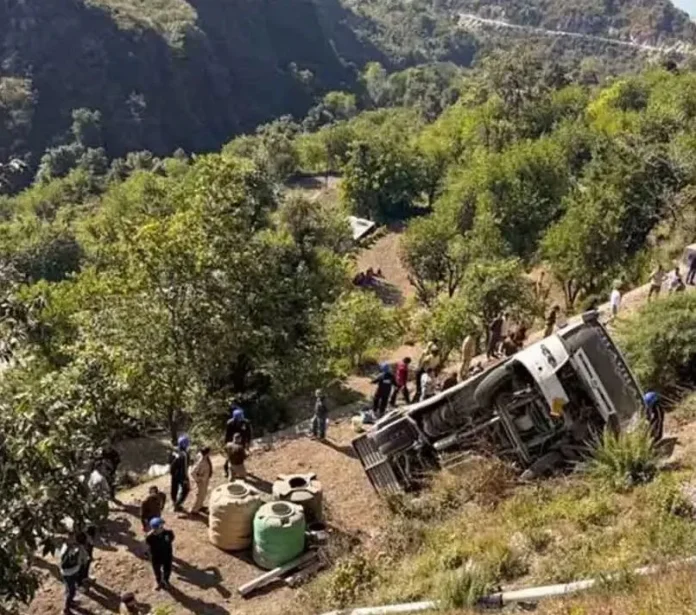
A tourist bus carrying nearly 30 passengers careened off a winding mountain road in northern India on Monday and plunged roughly 230 feet into a steep gorge, killing at least five people and triggering a desperate mountain-side rescue operation, authorities said.
The crash occurred along the narrow Kunjapuri–Hindolakhal route in Uttarakhand’s Narendranagar region, a corridor known for panoramic views and sharp cliffside turns that attract thousands of visitors each year. Officials said the bus veered off the road under unclear circumstances and tumbled into the ravine before coming to rest against a slope of boulders and thick underbrush.
The State Disaster Response Force (SDRF) said the district control room alerted its command center early Monday afternoon with reports that a passenger vehicle had gone off the hillside within the Narendranagar police station limits. Rescue teams from Dhalwala, Koti Colony and the SDRF headquarters mobilized within minutes.
When they reached the crash site — accessible only by rope and foot — responders found the bus crumpled against the rock face. Five people were declared dead at the scene, SDRF officials confirmed. Survivors were lifted out of the ravine by harness and stretcher in a race against fading daylight, then transported to nearby hospitals.
Authorities said many of those aboard were believed to be tourists from outside Uttarakhand, prompting police to begin the difficult process of identifying the dead and notifying families across state lines. “We are still confirming the passenger list and working to reach relatives,” one district officer said.
Local police have opened a formal investigation but have not yet ruled out mechanical failure, driver fatigue or poor road visibility as potential factors. The narrow mountain pass is known to become slick during winter evenings, and road-safety advocates say limited guardrails have long been a concern.
RECENT HISTORY OF DEADLY BUS DISASTERS IN INDIA
Monday’s tragedy adds to a troubling list of recent catastrophic bus accidents across India, a country where overcrowding, speeding and aging fleets repeatedly pose dangers on long-distance routes.
Just last month, at least 25 people were killed when a bus ignited in flames after colliding with a motorbike in Andhra Pradesh’s Kurnool district. According to senior police officer Vikrant Patil, the motorcycle became wedged under the bus after it struck the rear around 3:30 a.m., sparking a fuel-tank explosion. Many passengers were asleep and could not escape as flames consumed the vehicle within minutes.
A year earlier, 12 people were killed and 40 injured in Rajasthan’s Sikar district when a bus smashed into a concrete tunnel after the driver lost control. Witnesses told police that the vehicle had been swerving moments before impact, raising questions about whether mechanical failure or exhaustion played a role.
India has one of the world’s highest rates of fatal road accidents, with government audits repeatedly citing speeding, poor road design, and insufficient enforcement as chronic contributors. In mountainous states such as Uttarakhand and Himachal Pradesh, narrow roads carved into cliffsides frequently become deadly when drivers misjudge turns or encounter unexpected debris.
A STRUCTURAL SAFETY PROBLEM DEEPER THAN ONE CRASH
While officials have yet to determine what sent Monday’s bus off the cliff, transportation experts say the pattern of recent accidents points to a broader systemic issue. Tourism corridors in Uttarakhand have expanded rapidly in recent years, but road infrastructure and enforcement have not kept pace. Many buses operating in these regions are privately owned and minimally regulated, and several routes — including the Kunjapuri–Hindolakhal stretch — lack guardrails along long runs of exposed cliffside.
Investigators will likely examine whether the bus was overloaded, whether brakes failed on a descent, or whether the driver misjudged a blind corner — all recurring factors in India’s mountain-road crashes. Poor mobile connectivity in high-altitude areas also slows emergency responses, increasing the likelihood of fatalities.
Officials in Dehradun and New Delhi have faced mounting pressure to strengthen licensing requirements, enforce speed restrictions, and install protective barriers on roads carved through steep Himalayan terrain. Yet despite periodic safety campaigns, funding challenges and bureaucratic delays have made improvements slow.
Rescuers at Monday’s scene described a chaotic scramble down a debris-covered hill as survivors cried out from the wreckage. “The slope was extremely difficult to navigate. But we brought out everyone we could as fast as possible,” an SDRF member said.
FUTURE OUTLOOK
Authorities say a full report on the cause of the crash will take days. Meanwhile, hospitals in Rishikesh and Tehri continue to treat survivors, some of whom remain in critical condition. State officials have signaled that the incident may prompt a new review of road-safety protocols across Uttarakhand, particularly on tourist-heavy corridors.
As families await word on their relatives, the tragedy has once again exposed the lethal risks lurking on India’s mountain roads — risks many experts say will continue until long-promised safety upgrades materialize.
Israeli forces on Tuesday killed four Palestinians in separate incidents across Gaza and the occupied West Bank, including a Gaza journalist struck by what health officials described as a drone-fired munition. The flare-ups added fresh strain to a fragile ceasefire that has struggled to hold since October.
Officials at Nasser Hospital in Khan Younis told The Hindu that the drone strike killed journalist Mohamed Wadi, who often used aerial footage to document conditions on the ground. His death underscored what media advocates say has been one of the most dangerous conflict periods ever recorded for Palestinian journalists, many of whom operate on front lines with limited protective gear.
Hours earlier, hospital staff at Al-Awda Medical Center reported that a Palestinian man was fatally shot near the Bureij refugee camp in central Gaza. The Israeli military did not comment on either incident but has previously said that many of its post-ceasefire engagements have occurred after militants opened fire on Israeli positions.
According to the Gaza Health Ministry, more than 350 Palestinians have been killed across the enclave since the Oct. 11 ceasefire, a figure that includes those caught in crossfire, targeted raids and confrontations along front-line zones. Both Hamas and Israel accuse the other of violating the ceasefire’s terms.
WEST BANK SEES PARALLEL SURGE IN CLASHES
While southern Gaza absorbed the brunt of the day’s strikes, the West Bank saw its own flashpoints. Israel’s military said troops north of Ramallah shot a Palestinian who allegedly stabbed two soldiers near the settlement of Ateret. The military said the suspect was killed when he continued to advance despite warnings. Israel’s Magen David Adom rescue service said the soldiers sustained light injuries.
The Palestinian Health Ministry confirmed the death of an 18-year-old in the same area but could not immediately say whether it was the same incident.
Farther south, near Hebron, the army said it shot a Palestinian teenager accused of carrying out a car-ramming attack that injured a soldier. The military said the 17-year-old attempted to flee during his arrest and posed a threat to forces. The Palestinian Health Ministry identified the youth as a resident of Hebron.
Hamas issued a statement praising the Hebron attack as a “legitimate response” to ongoing Israeli raids, though it did not claim responsibility. Israeli operations across the West Bank intensified after Hamas’ October 2023 assault ignited the Gaza war. Palestinians and rights groups say civilians, protesters and bystanders have increasingly been among the dead.
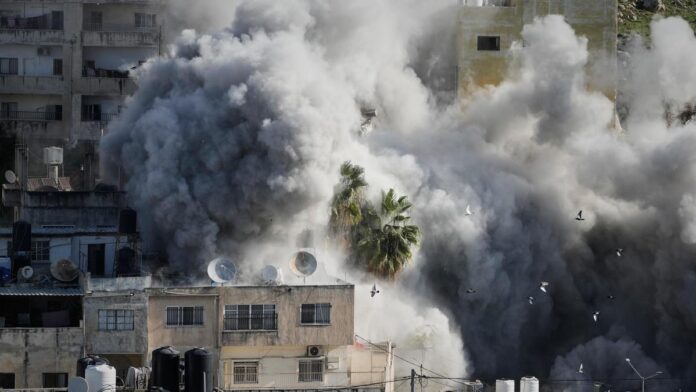
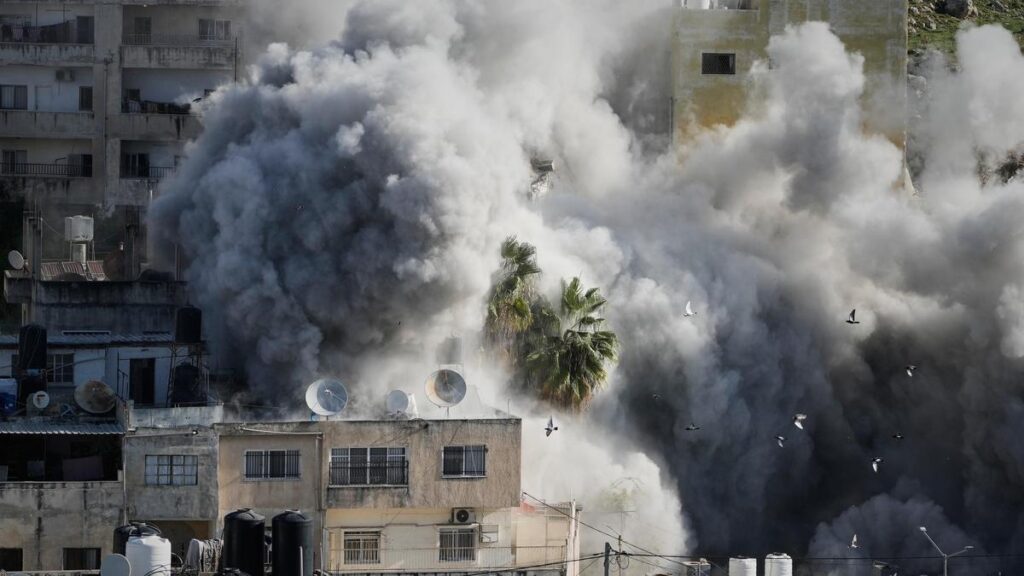
In Nablus, Israeli forces demolished the home of Abdul Karim Sanoubar, a detainee Israel accuses of planting bombs on buses in central Israel earlier this year. Troops cleared nearby homes before the explosion, sending a plume of smoke above the city.
SETTLER VIOLENCE ESCALATES; PROPERTY TARGETED
Palestinian officials reported new settler attacks on Tuesday as well. Al Jazeera said Israeli settlers torched a tractor in Burqa and attempted to ignite a vehicle while scrawling graffiti on a nearby home. The Palestinian news agency Wafa reported that settlers in Khirbet al-Deir laid down an informal road to access a freshwater spring — an area Palestinians say has been increasingly taken over by outposts.
International courts, including the International Court of Justice, have reaffirmed that Israeli settlements in the occupied West Bank and East Jerusalem violate international law, a position Israel rejects.
DIPLOMACY MOVES SLOWLY AS CEASEFIRE PRESSURE BUILDS
As violence simmered, Qatar said it was working to push Hamas and Israel into a second phase of negotiations aimed at stabilizing the ceasefire. Foreign Ministry spokesperson Majed al-Ansari said mediators hope talks will soon expand to address the status of Hamas fighters still in tunnel networks inside Israeli-controlled areas of Gaza.
But on the ground, tensions show little sign of easing. Israel conducted another round of strikes in southern Lebanon on Tuesday, continuing a steady pattern of fire with Hezbollah despite a U.S.-brokered truce last year.
A TRUCE UNDER SEVERE STRESS
The day’s events offered a stark reminder of how easily the ceasefire can fray. Although neither side has declared the agreement void, the accumulation of killings, raids and retaliatory attacks has eroded public confidence that the pause in formal hostilities will hold.
Security analysts say the rise in settler violence, targeted demolitions and Israeli arrest operations in the West Bank mirrors earlier patterns that have historically preceded larger escalations. In Gaza, the killing of a journalist — especially one working with drone footage — may increase international scrutiny over Israel’s rules of engagement and the vulnerability of noncombatants in combat-adjacent zones.
Diplomatically, Qatar’s push for a new negotiation phase suggests mediators believe the window for further progress is narrowing. Any additional spike in casualties risks collapsing talks entirely, which would likely widen the conflict beyond Gaza and the West Bank.
For now, Israeli officials, Palestinian factions and mediators are attempting to keep the ceasefire intact. Yet each new death — whether from a drone strike, a raid or a street confrontation — pushes the truce closer to the limits of political endurance.
Russia escalated its rhetoric against NATO on Monday, warning of unspecified “consequences” and accusing the alliance of preparing for a “major war” after a top military official suggested that pre-emptive action against Moscow could be considered under certain circumstances.
The backlash followed comments attributed to Admiral Giuseppe Cavo Dragone, chair of NATO’s Military Committee, who told the Financial Times that the alliance is reviewing whether it should remain strictly reactive in the face of mounting Russian hybrid attacks. The Sun first reported on the Kremlin’s response, describing Dragone’s remarks as a sharp departure from NATO’s long-standing defensive posture.
For years, European intelligence agencies have accused Russian operatives of orchestrating sabotage, cyber intrusions and airspace violations across the continent. Incidents have ranged from undersea cable disruptions in the Baltic Sea to a recent fire at a Ukrainian-owned warehouse in east London — episodes that Western officials say form part of a broader Kremlin campaign to destabilize NATO members.
Dragone told the Financial Times that the pattern of sabotage is forcing the alliance to examine more proactive options, including counter-cyber operations or, in extreme cases, other forms of pre-emptive defensive action. While stressing that any such move would require careful legal and political review, he said NATO can no longer assume that simply reacting to each incident is sufficient.
Moscow responded with fury. Russian Foreign Ministry spokeswoman Maria Zakharova called the admiral’s comments “an extremely irresponsible step,” claiming they signaled NATO’s willingness to escalate. She argued the statements were an attempt to undermine ongoing efforts to resolve the war in Ukraine. According to reporting by The Sun, the Kremlin accused NATO of “preparing for a major war with Russia.”
The warnings came as U.S. and European officials, meeting in Florida, continued to refine a draft peace framework aimed at ending Russia’s nearly three-year invasion. President Donald Trump said Monday the negotiations were “going along well,” while Sen. Marco Rubio expressed optimism after both sides described the weekend’s talks as productive.
The Kremlin confirmed plans for Steve Witkoff, the U.S. president’s special envoy, to travel to Moscow for further discussions — the latest sign of Washington’s attempt to accelerate diplomacy even amid heightened tensions.
In his interview with the Financial Times, Dragone noted that NATO has significant cyber capabilities spread across its member states, making digital counterstrikes the most straightforward form of pre-emptive action. Responding to drone incursions or physical sabotage, he said, would involve more complex decisions but could not be entirely ruled out.
He acknowledged that the idea of a pre-emptive strike remains distant from NATO’s traditional doctrine. But he said member states, especially in eastern Europe, are increasingly pressing the alliance to rethink its vulnerability to hybrid attacks. One Baltic diplomat told the Financial Times that limiting NATO’s posture to reacting “just invites Russia to keep trying, keep hurting us.”
WHY THE RHETORIC MATTERS
The latest exchange highlights a widening gap between Russia’s interpretation of NATO’s defensive planning and the alliance’s internal concerns about persistent hybrid aggression. Even if Dragone’s remarks were theoretical, Moscow’s reaction shows how quickly doctrinal discussions can be weaponized for propaganda or leverage during peace negotiations.
For NATO, the debate reflects a growing frustration among frontline states that Russia is able to inflict costly disruptions at minimal risk. Analysts say the longer hybrid attacks continue, the more pressure leaders will face to authorize deterrent actions — digital or otherwise — that fall short of open conflict.
Diplomatically, Russia’s warnings serve a dual purpose: discrediting NATO as peace talks progress and signaling to domestic audiences that Moscow remains vigilant against Western threats. The timing, just as U.S. envoys prepare to travel to Moscow, suggests the Kremlin is managing both international and internal expectations.
As negotiators continue to work toward a Ukraine peace plan, both NATO’s internal debate and Russia’s public warnings underscore the volatility surrounding any settlement — and how easily rhetorical escalations can threaten delicate diplomacy.
WASHINGTON — White House physician Sean Barbabella disclosed Monday that President Donald Trump underwent magnetic resonance imaging of his cardiovascular system and abdominal region during October as part of preventative health screening appropriate for men in his age bracket, with all findings falling within normal parameters, according to an official memorandum released by the administration after weeks of limited information about the examination.
The Associated Press stated in its report that Barbabella’s statement characterized Trump’s physical examination as including “advanced imaging” procedures considered “standard for an executive physical” for individuals in the president’s demographic category. The physician’s assessment concluded definitively that both the cardiovascular and abdominal imaging revealed results that were “perfectly normal,” addressing speculation that had mounted since Trump first mentioned the scans without providing specifics.
The White House medical memo emphasized the preventative nature of the imaging protocol. “The purpose of this imaging is preventative: to identify issues early, confirm overall health, and ensure he maintains long-term vitality and function,” Barbabella wrote in the official documentation, framing the procedures as proactive health management rather than investigation of specific symptoms or concerns.
Monday’s release came after Trump announced Sunday during interactions with journalists that he would authorize disclosure of the scan results. Both the president and White House communications staff had previously described the imaging as “part of his routine physical examination” but had consistently declined to specify which anatomical regions had been examined or provide detailed rationale for conducting MRI procedures during Trump’s October visit to Walter Reed National Military Medical Center.
According to NBC’s reporting, the White House confirmed that Trump underwent the MRI examination on his cardiac and abdominal systems in October, with Barbabella characterizing the scan protocol as “standard for an executive physical at President Trump’s age.” The physician’s memo provided granular detail about the cardiovascular findings, noting the absence of any arterial constriction that might compromise blood circulation or structural abnormalities within the heart muscle or major blood vessels.
NBC reported that Barbabella’s documentation stated there was “no evidence of arterial narrowing impairing blood flow or abnormalities in the heart or major vessels. The heart chambers are normal in size, the vessel walls appear smooth and healthy, and there are no signs of inflammation, or clotting.” This comprehensive assessment addressed multiple potential cardiovascular concerns that typically become more prevalent with advancing age, including atherosclerosis, chamber enlargement, vessel irregularities, inflammatory processes, and thrombotic conditions.
Regarding the abdominal imaging component, the physician’s memo indicated that “all major organs appear very health and well-perfused. Everything evaluated is functioning within normal limits with no acute or chronic concerns.” This assessment encompasses critical organs including the liver, kidneys, spleen, pancreas, and other abdominal structures, confirming adequate blood supply and functional status without evidence of acute injury or chronic disease processes.
The medical documentation characterized this imaging approach as “standard for an executive physical at President Trump’s age,” a designation that requires contextual understanding within contemporary medical practice. Such comprehensive imaging protocols do not constitute standard components of typical annual physical examinations recommended for general populations. However, premium “executive physical” packages marketed by hospitals and specialized medical centers frequently incorporate extensive scanning technologies including full-body MRI examinations as part of elaborate and expensive health assessments marketed toward affluent clientele.
The imaging procedures occurred on October 10 during what White House press secretary Karoline Leavitt characterized as Trump’s “routine yearly checkup,” a description that raised questions given that the president had already undergone his annual physical examination in April. The proximity of two comprehensive medical evaluations within a six-month period represents an unusual pattern that diverges from standard annual screening schedules, prompting inquiries about whether specific health concerns motivated the additional assessment.
Barbabella’s initial memorandum from October described the checkup as component of Trump’s “ongoing health maintenance plan,” noting that the president underwent “advanced imaging, laboratory testing, and preventative health assessments” without explicitly referencing MRI technology or specifying which body systems had been examined. This vague characterization contributed to speculation about the nature and motivation for the medical procedures.
Trump first revealed publicly that he had received MRI scanning more than two weeks after the actual examination took place, discussing the matter with journalists aboard Air Force One during travel to Japan. “We had an MRI, MRI and the machine, you know, the whole thing, and it was perfect,” he stated on October 27 when initially disclosing the imaging. When reporters requested additional specifics, Trump deflected to medical professionals, saying “You can ask the doctors.”
The president offered effusive assessments of his medical evaluations during that initial disclosure. “I think they gave you a very conclusive — nobody has ever given you reports like I gave you. And if I didn’t think it was going to be good, either I would let you know negatively, I wouldn’t run, I’d do something. But the doctors said some of the best reports for the age, some of the best reports they’ve ever seen,” he stated at the time, characterizing the findings in superlative terms without providing substantive medical information.
During a subsequent November 14 interaction with journalists on Air Force One, Trump again declined to specify which anatomical regions had undergone scanning, describing the testing as “standard” procedure. “I have no idea what they analyze, but whatever they analyze, they analyze it well, and they said that I had as good a result as they’ve ever seen,” he stated, maintaining vague characterizations while emphasizing positive outcomes.
Speaking with reporters Sunday, the president repeated that he had “no idea” which body parts had been imaged. “What part of the body? It wasn’t the brain because I took a cognitive test and I aced it,” he remarked before committing to authorize release of the medical records, seemingly ruling out neurological imaging while acknowledging uncertainty about the actual scan targets.
Press Secretary Leavitt read Barbabella’s new memorandum aloud during her daily briefing session Monday, characterizing the disclosure as demonstration of the administration’s commitment to transparency. “I think that’s quite a bit of a detail. And in the effort of transparency, the president promised it last night and we have delivered today,” she stated, framing the release as fulfillment of Trump’s public commitment.
The Associated Press added in its published article that the Republican president described the MRI results as “perfect” during Sunday exchanges with journalists as he traveled from Florida back to Washington. “If you want to have it released, I’ll release it,” Trump told reporters, positioning the disclosure as responsive to media interest rather than proactive transparency.
Trump reiterated Sunday that he possessed “no idea” regarding which anatomical region had received MRI examination. “It was just an MRI,” he stated. “What part of the body? It wasn’t the brain because I took a cognitive test and I aced it,” maintaining his pattern of deflecting specific medical details while emphasizing positive cognitive assessment outcomes.
Medical professionals typically order MRI procedures to assist with diagnosing specific symptoms that patients present or to monitor known health conditions requiring ongoing surveillance. So-called “preventive” cardiac and abdominal MRI examinations do not appear in standard screening recommendation guidelines issued by medical professional organizations or public health authorities. The terminology “executive physical” employed by Trump’s physician generally references premium medical packages that incorporate additional non-routine diagnostic procedures including MRI scanning into expensive and time-intensive examination protocols not covered by standard insurance plans and marketed specifically toward wealthy individuals seeking comprehensive health assessments beyond conventional screening parameters.
This distinction raises important questions about the appropriateness and clinical value of extensive imaging in asymptomatic patients. Medical literature demonstrates that indiscriminate screening with advanced imaging technologies can generate false-positive findings that trigger unnecessary follow-up procedures, create patient anxiety, and consume healthcare resources without corresponding mortality or morbidity benefits. Professional medical societies generally recommend targeted screening based on risk factors, family history, and evidence-based protocols rather than comprehensive full-body scanning approaches.
The delayed and piecemeal disclosure of Trump’s imaging procedures contrasts with transparency standards that some presidential administrations have maintained regarding chief executive health status. Historical precedent shows varied approaches to medical disclosure, with some presidents providing detailed annual health summaries while others have maintained greater privacy around medical matters. The public interest in presidential health derives from constitutional concerns about leadership continuity and the Twenty-Fifth Amendment provisions for addressing presidential inability to discharge official duties.
Trump’s age—he is currently 79 years old—places him in a demographic category where cardiovascular disease, metabolic disorders, and various malignancies occur with increased frequency, making preventative screening more defensible from a clinical perspective. However, the specific decision to conduct comprehensive cardiac and abdominal MRI rather than more targeted screening approaches like stress testing, echocardiography, or laboratory biomarkers suggests either unusual risk factors warranting aggressive surveillance or preference for premium diagnostic protocols regardless of clinical indication.
The October timing of the imaging, occurring during a period when Trump was actively campaigning and maintaining an intensive travel schedule, suggests the procedures were not motivated by acute symptoms that would limit his activities. The president’s continued vigorous schedule following the examination and his characterization of results as “perfect” support interpretation of the imaging as genuinely preventative rather than diagnostic evaluation of concerning symptoms.
Barbabella’s conclusion that the imaging revealed no abnormalities provides reassurance regarding several serious conditions that MRI technology can detect. For cardiovascular imaging, the absence of arterial narrowing essentially rules out significant coronary artery disease or peripheral vascular compromise. Normal heart chamber dimensions exclude dilated cardiomyopathy or ventricular enlargement. Smooth vessel walls without irregularities make high-grade atherosclerosis unlikely. The absence of inflammation or clotting eliminates concerns about myocarditis, pericarditis, or thrombotic complications.
Similarly, the abdominal imaging findings excluding acute or chronic organ concerns provide confidence regarding hepatic function, renal integrity, pancreatic health, and the absence of mass lesions or inflammatory processes affecting abdominal structures. Well-perfused organs with normal function essentially eliminate multiple potential disease processes that could impair presidential duties or require medical intervention.
The political implications of presidential health disclosures extend beyond medical concerns to encompass public confidence in leadership capacity and potential succession scenarios. Critics of Trump have periodically questioned his physical and cognitive fitness for office, making health disclosures politically sensitive. The administration’s decision to eventually release imaging details, even after initial deflection, suggests calculation that transparency serves political interests by addressing speculation with definitive medical findings.
Looking forward, questions remain about whether Trump will continue “executive physical” protocols including advanced imaging during future health assessments or whether the October examination represents an isolated instance of comprehensive scanning. The establishment of baseline imaging could facilitate longitudinal comparison in future evaluations, potentially providing value for detecting gradual changes that might escape detection through clinical examination alone.
For now, Barbabella’s memorandum provides the most detailed medical information released about Trump’s health status since his return to the presidency, offering reassurance to supporters while potentially disappointing critics who speculated that undisclosed health concerns motivated the imaging procedures. The “perfectly normal” characterization leaves little ambiguity about the physician’s interpretation of the findings, though questions persist about the clinical necessity of the advanced imaging protocols employed.
Armed assailants launched a deadly assault on a vehicle transporting a district administrator through northwestern Pakistan on Tuesday, killing the official along with two security personnel and an innocent bystander, authorities confirmed, marking the latest incident in a troubling escalation of militant violence plaguing the region bordering Afghanistan.
The Associated Press reports that the fatal ambush occurred within Bannu district, located in the volatile Khyber Pakhtunkhwa province, according to local police official Alam Khan. The slain administrator was identified as Shah Wali, who held a governmental post in Miran Shah, a strategically sensitive town situated near the Afghan frontier where militant activity has intensified in recent years.
Khan detailed that gunmen targeted Wali’s convoy as it traveled through the district, unleashing gunfire that killed the administrator, two members of his security detail tasked with protecting him, and a civilian who happened to be in the vicinity during the attack. The brazen nature of the assault, conducted in daylight hours, underscores the deteriorating security environment in Pakistan’s northwest territories where government officials increasingly operate under threat.
This lethal ambush followed by merely one day another devastating attack in the region. A suicide bombing near a police vehicle in the northwestern district of Lakki Marwat on Monday claimed the life of a senior police officer, creating a pattern of coordinated strikes against security forces and government representatives that has alarmed Pakistani authorities and raised questions about intelligence failures.
No organization has issued a formal claim of responsibility for either Tuesday’s ambush or Monday’s suicide attack. However, security analysts and government officials are directing suspicion toward the Pakistani Taliban, formally designated as Tehrik-e-Taliban Pakistan. According to the Associated Press, this militant organization operates separately from but maintains ideological and tactical alignment with Afghanistan’s Taliban government, and Pakistani authorities have consistently attributed previous attacks of similar nature to the group’s operatives.
The Pakistani Taliban represents a persistent security challenge for Islamabad, having waged an insurgency spanning nearly two decades that has claimed tens of thousands of lives across the country. The organization’s stated objective involves overthrowing Pakistan’s constitutional government and imposing strict interpretations of Islamic law throughout the nation, particularly in the ethnic Pashtun regions along the Afghan border where the group maintains its strongest presence and recruiting networks.
Pakistan has experienced a steady rise in militant violence over recent years, a troubling trend that has severely strained diplomatic relations with neighboring Afghanistan. Pakistani government officials accuse the TTP of maintaining operational bases, training facilities, and safe havens inside Afghan territory since the Taliban’s dramatic return to power in Kabul during August 2021. Islamabad contends that Afghanistan’s Taliban rulers have either proven unable or unwilling to restrict TTP activities within their borders, effectively providing sanctuary to militants who cross the porous frontier to conduct attacks before retreating to Afghan soil.
The Taliban government in Kabul categorically denies these allegations, rejecting claims that it harbors or supports Pakistani militant groups. Afghan officials argue they lack the resources and capacity to monitor all militant factions within their territory while simultaneously consolidating control over their own nation following decades of warfare. This fundamental disagreement over TTP presence and activities has emerged as a primary irritant preventing normalized relations between the two neighbors.
Tensions between Islamabad and Kabul reached critical levels last month following explosive accusations from Afghanistan’s Taliban government. Afghan officials alleged that Pakistan conducted a drone strike on October 9 inside Kabul itself, representing a dramatic escalation that brought the two countries perilously close to open military confrontation. The claimed strike within Afghanistan’s capital city would constitute a severe violation of sovereignty, prompting furious responses from Taliban leadership.
Cross-border clashes erupted in the aftermath of these accusations, with exchange of artillery fire and skirmishes along disputed frontier areas killing dozens of individuals including soldiers from both nations, civilians caught in the crossfire, and militants operating in the contested zones. The violence threatened to spiral into sustained conflict before diplomatic intervention prevented further deterioration.
Qatar brokered a cease-fire agreement on October 19 that succeeded in halting the military exchanges, demonstrating the Gulf state’s growing role as a mediator in regional disputes. The truce has technically remained in effect, preventing renewed large-scale clashes and providing space for diplomatic dialogue to address underlying grievances. However, the cease-fire’s fragility became apparent when recent negotiations between Pakistani and Afghan representatives in Istanbul ended without achieving any substantive agreement on border management, militant activities, or security cooperation mechanisms.
The diplomatic impasse leaves both nations in an uncomfortable stalemate where violence continues at lower intensities while neither side demonstrates willingness to make concessions that might enable lasting reconciliation. For Pakistan, the fundamental demand remains that Afghanistan take concrete action against TTP sanctuaries, including arrests, expulsions, or military operations against Pakistani militant bases. For Afghanistan’s Taliban government, the priority involves securing recognition and legitimacy from the international community, including Pakistan, without appearing to capitulate to external pressure or betray ideological allies.
Tuesday’s ambush of Shah Wali illustrates the human cost of this unresolved conflict, with government officials serving in frontier regions facing extraordinary personal risks merely for attempting to administer basic governmental functions. District administrators in areas like Miran Shah perform essential duties including overseeing development projects, maintaining law and order, and representing federal authority in regions where state presence has historically been limited. Targeting such officials represents a deliberate strategy by militants to undermine governmental legitimacy and create power vacuums in contested territories.
The killing of two security guards alongside the administrator highlights the challenges faced by Pakistani security forces tasked with protecting government personnel. Despite precautions including armed escorts and route variations, militants have demonstrated capacity to gather intelligence, plan sophisticated ambushes, and execute attacks with deadly effectiveness. The death of an uninvolved passerby underscores the indiscriminate nature of such violence and its devastating impact on ordinary citizens who bear the consequences of security failures.
For residents of Khyber Pakhtunkhwa province and adjacent tribal districts, the escalating violence represents a return to the darkest periods of Pakistan’s war on terrorism when daily attacks paralyzed normal life and economic activity ground to a halt. Many communities had experienced relative calm in recent years following military operations that degraded militant networks, making the current resurgence particularly demoralizing for populations hoping those sacrifices had secured lasting peace.
The Pakistani military has launched repeated operations in tribal regions attempting to dismantle militant infrastructure and deny safe havens to groups like TTP. These campaigns have achieved tactical successes, killing or capturing significant numbers of militants and destroying weapons caches and training facilities. However, the persistent ability of militant groups to reconstitute themselves, recruit new members, and launch attacks suggests that military solutions alone cannot resolve the underlying dynamics enabling insurgency.
Security analysts point to multiple factors sustaining militant violence in the region. Economic deprivation and limited opportunities in tribal areas provide recruiting grounds for organizations offering financial incentives and ideological purpose. Grievances over civilian casualties from military operations and drone strikes fuel resentment that militants exploit to portray themselves as defenders against state aggression. The porous border with Afghanistan enables freedom of movement that makes it virtually impossible to seal militants within specific territories. And the ideological appeal of the Taliban’s victory in Afghanistan has energized Pakistani militants who view their Afghan counterparts’ success as validation of their own insurgent strategy.
Addressing these complex challenges requires comprehensive approaches combining security operations with development initiatives, political engagement with tribal communities, and diplomatic coordination with Afghanistan. However, Pakistan’s economic crisis and political instability have limited resources available for ambitious counterinsurgency programs, while Afghanistan’s isolation and internal challenges prevent meaningful bilateral cooperation on security matters.
The Istanbul talks’ failure to produce agreement highlights how far apart the two nations remain on fundamental issues. Pakistan seeks concrete commitments from Afghanistan to combat TTP presence, including potential military action or extradition of wanted militants. Afghanistan demands respect for its sovereignty, cessation of any cross-border strikes, and engagement without preconditions. Neither side appears willing to make the initial concessions necessary to build trust and enable progress on contentious issues.
For families of Shah Wali and the three others killed in Tuesday’s ambush, these geopolitical complexities offer little comfort. Their loss represents another tragedy in a seemingly endless cycle of violence that has traumatized Pakistani society for more than two decades. Until Pakistan and Afghanistan can find mechanisms for genuine security cooperation, attacks like the Bannu ambush will likely continue claiming lives on both sides of the border, perpetuating instability that serves only the interests of militant organizations thriving on chaos and conflict.