BROOKLYN, N.Y. (BN24) — The Federal Bureau of Prisons has officially listed May 8, 2028, as the expected release date for rapper and music mogul Sean “Diddy” Combs, following his 50-month prison sentence handed down earlier this month.
Diddy, 54, has been incarcerated at the Metropolitan Detention Center in Brooklyn since his September 2024 arrest. He was sentenced on October 3 after being found guilty of prostitution-related offenses during a high-profile federal trial that drew nationwide attention. The case followed a cascade of allegations, beginning with a 2023 sexual assault and abuse lawsuit filed by his former partner, Cassie Ventura.
The Bureau of Prisons clarified that the projected May 2028 release date could change, depending on factors such as earned good behavior credit or early release programs. Reports also suggest the timeline does not account for a potential presidential pardon, despite speculation involving President Donald Trump.
TMZ and The Blast reported that rumors of Trump considering a pardon for Diddy were dismissed by the White House. “The president, not anonymous sources, is the final decider on pardons and commutations,” a spokesperson said, calling the claims “false and baseless.”
Meanwhile, Diddy’s legal team has filed an appeal challenging his conviction and sentence. His attorney, Alexandra A.E. Shapiro, is leading the effort, following statements by defense lawyer Marc Agnifilo, who previously argued that Judge Arun Subramanian’s handling of the case was biased. “We believe there is a strong basis to appeal,” Agnifilo said after sentencing, accusing the judge of acting like a “13th juror.”
Concerns have also surfaced over Diddy’s safety while incarcerated. His longtime friend Charlucci Finney alleged that the rapper recently faced a violent threat inside the detention center when another inmate reportedly held a makeshift knife to his neck. “I don’t know whether he fought him off or the guards came,” Finney said, claiming the incident reflected broader dangers faced by inmates convicted of sex-related crimes.
Diddy’s attorneys have requested a transfer to the Federal Correctional Institution in Fort Dix, New Jersey, citing safety concerns and proximity to family. The presiding judge reportedly supported the request.
Despite his appeal and transfer motion, Diddy remains in federal custody, awaiting the next stage of his legal battle. If his appeal is denied and no pardon is granted, the music mogul is expected to complete his sentence and regain his freedom in May 2028.
ABIDJAN, Ivory Coast (BN24) — Ivory Coast’s President Alassane Ouattara was reelected to a fourth term in an election marked by low turnout and empty streets in the economic capital of Abidjan, provisional results showed Monday.
Ouattara, first elected president in the West African nation in 2011, won eighty-nine point seven percent of the vote, Electoral Commission head Ibrahime Kuibiert Coulibaly said Monday. Jean-Louis Billon, a former commerce minister from one of Ivory Coast’s richest families, came in a distant second with three percent of the vote. Simone Gbagbo, a former first lady, came in third with two point four percent under the provisional results.
Final results are expected by November 3, though they could be announced sooner. Some eight point five million people were registered to vote. Voter turnout was around fifty percent.
Nearly nine million Ivorians were eligible to vote on Saturday in a race that excluded Ouattara’s top rivals. Former President Laurent Gbagbo was barred over a criminal conviction, and former Credit Suisse CEO Tidjane Thiam was disqualified for acquiring French citizenship.
The remaining four candidates were not seen as viable contenders, as they lacked backing from a major political party and significant financial resources.
Billon on Sunday congratulated Ouattara after early partial results showed the latter with a strong lead nationwide, winning upwards of ninety percent of the vote with turnout close to one hundred percent in northern strongholds.
The political veteran was also ahead in traditionally pro-opposition areas in the south and parts of the economic hub Abidjan where turnout was low. In the southern city of Gagnoa, he won ninety-two percent of the vote but with a turnout rate of only twenty percent.
Many abstained amid widespread anger over Ouattara’s decision to run for a fourth consecutive term. Under the constitution, presidents may only serve a maximum of two terms, but the president argued his limit was “reset” by a 2016 constitutional overhaul.
In the weeks leading up to the election, sporadic protests broke out in response to the ban on key contenders from the polls, prompting the government to ban demonstrations and arrest over two hundred people from campaign group the Common Front political movement.
Electoral commission president Ibrahime Coulibaly-Kuibiert earlier put turnout at around fifty percent, a similar level to 2020 when Ouattara won ninety-four percent of the vote in an election boycotted by the main opponents.
The low turnout and overwhelming victory margin reflect the contentious nature of Ouattara’s bid for a fourth term. Critics have accused the president of undermining democratic norms by circumventing constitutional term limits through his interpretation of the 2016 constitutional changes.
Ouattara’s supporters argue the constitutional overhaul legitimately reset presidential term counts, making him eligible for what they characterize as a second two-term cycle. Opposition voices and many constitutional scholars reject this interpretation as contrary to the spirit of term limit protections.
The exclusion of Gbagbo and Thiam removed Ouattara’s most formidable potential challengers from the ballot. Gbagbo, who served as president from 2000 to 2011, was ousted following a disputed election and subsequent civil conflict. His barring based on criminal conviction has been criticized as politically motivated, particularly after his acquittal by the International Criminal Court on related charges.
Thiam’s disqualification for holding dual citizenship prevented a potentially competitive race. The prominent banker and former corporate executive had been viewed as a strong opposition candidate before his exclusion under Ivory Coast’s electoral laws prohibiting dual nationals from seeking the presidency.
The stark contrast between turnout rates in different regions underscores political divisions in Ivory Coast. While Ouattara’s northern strongholds saw near-universal participation and overwhelming support, southern opposition areas showed both lower turnout and reduced enthusiasm, though the president still won majorities even there.
The arrest of more than two hundred opposition activists in the weeks before the election drew criticism from international observers and human rights organizations. The government defended the crackdown as necessary to prevent violence and maintain public order during a tense political period.
Ivory Coast, once considered among West Africa’s more stable democracies, has experienced recurring political crises tied to presidential succession. The country endured a brief civil war following disputed 2010 election results that left thousands dead and deeply scarred the national psyche.
Ouattara has presided over significant economic growth during his tenure, with Ivory Coast becoming one of Africa’s fastest-growing economies. The country is the world’s leading cocoa producer and has seen substantial infrastructure development and improved public services under his leadership.
However, critics argue that economic progress has not been accompanied by corresponding political liberalization. The exclusion of major opposition figures, suppression of protests and controversial constitutional interpretation raise concerns about democratic backsliding in one of the region’s largest economies.
The election results, while giving Ouattara an overwhelming victory, occur against a backdrop of questions about the health of Ivorian democracy. The fifty percent turnout represents significant portions of the electorate choosing not to participate, suggesting widespread disillusionment with a political process many view as predetermined.
Regional context for the election includes broader concerns about democratic governance across West Africa. Several countries in the region have experienced military coups or controversial constitutional changes extending presidential tenure in recent years, making Ivory Coast’s situation part of a troubling pattern.
International reaction to the election has been measured, with Western nations and regional bodies offering cautious statements calling for political dialogue and respect for constitutional processes without directly challenging the legitimacy of Ouattara’s victory.
The next five years will test whether Ouattara can address the political divisions his extended tenure has exacerbated while maintaining the economic progress that has characterized his time in office. The combination of low turnout, excluded opposition and widespread protests leaves questions about the mandate he carries into this fourth term.
SYDNEY (BN24)— Indian cricket star Shreyas Iyer, 30, was rushed to the Intensive Care Unit (ICU) after sustaining a serious internal injury during India’s nine-wicket victory over Australia in Sydney, officials said. Doctors described the injury as “potentially fatal” had it not been treated promptly.
The incident occurred during the third One-Day International (ODI) when Iyer, India’s vice-captain, was fielding. In a moment of brilliance, he made a backward-running catch to dismiss Australian wicketkeeper Alex Carey. However, as he landed awkwardly on his left rib cage, Iyer immediately clutched his side in visible pain, signaling that the injury was more than a typical strain.
Teammates rushed to his aid while medical staff quickly attended to him on the field. Recognizing the severity of the injury, they helped Iyer off the pitch and transported him directly to a Sydney hospital for urgent evaluation.
Scans revealed internal bleeding and a laceration to the spleen, necessitating emergency intensive care. A hospital insider described the condition as “potentially fatal” if not addressed immediately.
In an official statement, the Board of Control for Cricket in India (BCCI) said:
“Shreyas Iyer sustained an impact injury to his left lower rib cage while fielding during the third ODI against Australia in Sydney. He was taken to the hospital for further evaluation. Scans have revealed a laceration injury to the spleen. He is under treatment, medically stable, and recovering well. The BCCI medical team, in consultation with specialists in Sydney and India, is closely monitoring his injury status. The Indian team doctor will remain in Sydney with Shreyas to evaluate his day-to-day progress.”
A source from the Press Trust of India added details about Iyer’s condition:
“Shreyas has been in the ICU for the past couple of days. Internal bleeding was detected, and he had to be admitted immediately. He will remain under observation for anywhere between two to seven days, depending on recovery, to prevent complications from the bleeding. He’s stable now, but it could have been fatal. He’s a tough lad and should recover soon.”
Medical teams expect Iyer to stay under close supervision for at least a week. Following this, he will require an estimated three or more weeks of recovery before returning to competitive cricket. Doctors remain cautiously optimistic about his progress, emphasizing that full recovery will depend on how quickly his spleen heals and whether any complications from internal bleeding arise.
The incident has sent shockwaves through the cricketing community, with fans and teammates expressing support for the player. His dedication and resilience are widely praised, and the BCCI confirmed that he will receive continuous medical monitoring to ensure a safe return to the field.
BAMAKO, Mali (BN24)—Mali has ordered the suspension of all school and university classes for two weeks, starting Monday, as the country grapples with a severe fuel shortage, officials said late Sunday. The disruption follows a blockade imposed by an al-Qaeda-linked insurgent group, which has targeted fuel supplies since September, worsening the economic and social strain on the West African nation.
The government’s Education Minister, Amadou Sy Savane, stated that the closures, effective until November 9, are necessary because the fuel shortage is hindering the ability of school staff and teachers to commute to their workplaces. “Authorities are doing everything possible to restore normal fuel supplies so that schools can reopen on November 10,” Savane said.
The Interministerial Committee for Crisis and Disaster Management announced that fuel rationing will continue until further notice. Officials said supplies at designated fuel stations will be prioritized for emergency services, public transportation, and humanitarian aid vehicles, reflecting the crisis’s broad impact on daily life.
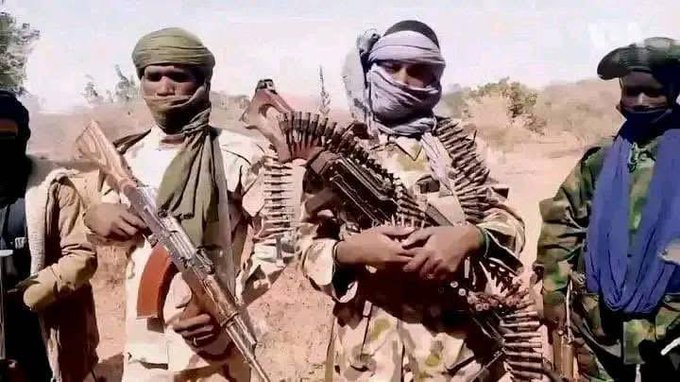
The fuel shortage is the result of a blockade enforced by Jama’at Nusrat ul-Islam wa al-Muslimin (JNIM), an armed group affiliated with al-Qaeda. The group has targeted fuel tankers arriving primarily from Senegal and the Ivory Coast, through which most of Mali’s imported goods transit. JNIM framed the blockade as a response to government restrictions on selling fuel outside official stations in rural areas, measures intended to disrupt the group’s supply chain.
Since the blockade began, Mali’s fragile economy has been squeezed. Commodity prices have surged, and transportation costs have risen sharply. In the capital, Bamako, long lines of vehicles have formed at gas stations, leaving residents facing hours-long waits for limited fuel supplies.
Mali’s security challenges have been compounded by years of insurgency in the Sahel region. Alongside Burkina Faso and Niger, Mali has battled groups linked to al-Qaeda and ISIS, as well as local rebel factions, for more than a decade. Following military coups in the three countries, the ruling authorities expelled French forces and turned to Russian mercenary units for security assistance, though analysts suggest that this has done little to curb attacks or insurgent activity.
The fuel blockade represents a major setback for Mali’s military government, which justified its 2020 coup as a necessary step to address long-standing security crises. Analysts warn that continued disruptions to fuel supplies could further destabilize the economy and public services, particularly education and transportation, which are heavily reliant on fuel imports.
In a bid to address the crisis, Mali has signed an agreement with Russia to secure petroleum products. Officials have said the deal aims to stabilize fuel supplies nationwide, ensuring that schools, businesses, and essential services can resume normal operations. The government’s move also signals an effort to reduce dependency on neighboring countries for fuel imports, though experts caution that logistical challenges may delay immediate relief.
The fuel shortage underscores the wider challenges facing Mali, including economic fragility, insurgent activity, and strained public services. As the school closures take effect, families and educators face uncertainty, while the government works to balance security measures with basic economic and social needs.
YAOUNDÉ, Cameroon (BN24) — Four people were killed in violent clashes between security forces and opposition supporters in Cameroon on Sunday, as tensions escalated ahead of the final election results. The unrest erupted following opposition leader Issa Tchiroma’s refusal to accept the preliminary election results and his call for protests.
Tchiroma, who contested President Paul Biya’s 43-year rule in the October 12 election, has claimed victory, alleging that he won 54.8% of the vote, compared to the 31.3% reported for Biya. However, many analysts expect Biya to be declared the winner in what critics argue is a flawed electoral process. The 92-year-old president has been in power since 1982.
Ahead of the final announcement of the results by the Constitutional Council on Monday, Tchiroma’s supporters took to the streets in cities across Cameroon to voice their opposition to the election outcome.
In Douala, the country’s largest city, security forces clashed with demonstrators after opposition supporters defied a nationwide ban on public gatherings. The regional governor reported that protesters attacked police stations and a gendarmerie brigade in two districts. In the aftermath, four people were confirmed dead, with several members of the security forces also injured.
At the scene, witnesses contradicted the official narrative, claiming that the violence began when security forces fired live ammunition after dispersing the crowd with tear gas. “The shooting started with live bullets,” one demonstrator said. “Three bodies fell in front of us.” These accounts of violence have raised questions about the government’s handling of the protests.
Earlier in the day, police in Garoua, Tchiroma’s northern stronghold, used tear gas to disperse hundreds of demonstrators. Despite the government’s ban on protests, supporters gathered with national flags and banners reading “Tchiroma 2025,” chanting slogans like “Goodbye Paul Biya, Tchiroma is coming.” The protests were part of a broader effort to pressure the government over what many believe was a rigged election.
Tchiroma, who has claimed to be the true winner of the election, has spent several days in Douala surrounded by his supporters. On Sunday, he released a video claiming that military personnel had attempted to force him out of his residence. The opposition leader also said that two figures from the coalition backing him were arrested in Douala on Friday.
In the capital, Yaoundé, police maintained a heavy presence, but the protest call did not appear to gain significant traction. Some reports suggested that the protests in the capital were smaller and more limited in scope, possibly due to increased security measures.
The government has repeatedly warned that the protests are contributing to what it calls an “insurrectionist project,” and could further destabilize the country. On Saturday, the Minister of Territorial Administration described the protests as a security threat, saying they risked plunging Cameroon into a crisis.
Amid the unrest, several regions of the country have experienced internet disruptions, which analysts believe are aimed at curbing the spread of information. Monitors have suggested that these disruptions could limit the ability of both local and international outlets to report on the events as they unfold.
The Constitutional Council is set to announce the final election results on Monday. While many expect Biya to retain the presidency, the ongoing protests highlight the deep political divisions and growing unrest in Cameroon. The violence and accusations of electoral fraud have raised international concerns about the legitimacy of the electoral process and the state of democracy in the country.
Norfolk (BN24) – A 24-year-old Honduran man was struck and killed by a passing vehicle while attempting to flee U.S. Immigration and Customs Enforcement officers during an operation in Norfolk, Virginia, authorities said.
The victim, identified as Josué Castro Rivera, was on his way to work at a gardening job Thursday when ICE agents stopped his vehicle and attempted to detain him and three other passengers, according to his brother, Henry Castro. Rivera ran from the scene on foot and tried to cross Interstate 264, where he was hit by a 2002 Ford pickup truck around 11 a.m., the Virginia State Police said. He was pronounced dead at the scene.
According to the Department of Homeland Security (DHS), ICE officers were conducting a “targeted, intelligence-based operation” at the time of the incident. The agency said the other passengers were detained for allegedly living in the United States without legal authorization.
“Castro Rivera resisted heavily and fled,” DHS said in a statement, adding that he died after being struck by a passing motorist.
Family members said Castro Rivera had been living in the U.S. for about four years and regularly sent money home to support his relatives in Honduras. His brother described him as hardworking and devoted to his family, calling his death an “injustice.” The family now plans to raise funds to return his body to Honduras for burial.
“He didn’t deserve everything that happened to him,” Henry Castro said.
The DHS statement described the young man’s death as “a direct result of every politician, activist, and reporter who continues to spread propaganda and misinformation about ICE’s mission and ways to avoid detention.”
Castro Rivera’s death is the latest in a string of fatal incidents involving immigration enforcement operations across the United States. In recent months, several encounters between ICE officers and undocumented immigrants have ended in tragedy.
In August, a man fleeing ICE agents in California was fatally struck by a vehicle on a freeway. The previous month, a farmworker died after falling from a 30-foot-high roof during an immigration raid at a marijuana farm in the same state. And in September, ICE officers fatally shot a Mexican national during a traffic stop in a Chicago suburb—a case that has prompted public outrage and calls for greater accountability after body camera footage contradicted early federal claims of a “serious injury” to an officer.
The Virginia State Police are leading the investigation into Castro Rivera’s death, while federal authorities continue to review the actions of the ICE agents involved.
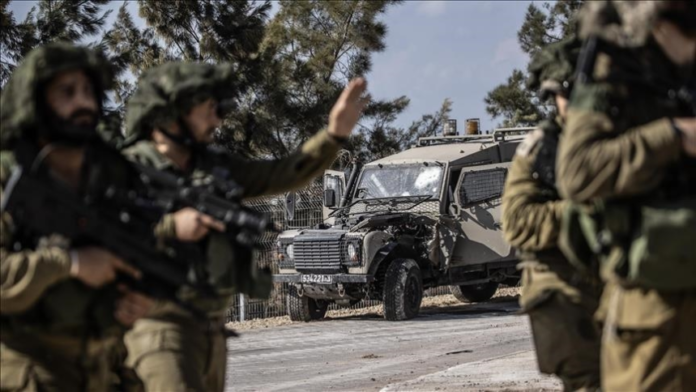
JERUSALEM (BN24) — Prime Minister Benjamin Netanyahu said Sunday Israel would determine which foreign forces it would allow as part of a planned international force in Gaza to help secure a fragile ceasefire under U.S. President Donald Trump’s plan, explicitly ruling out Turkish armed forces.
It remains unclear whether Arab and other states will be ready to commit troops, in part given the refusal of Palestinian Hamas militants to disarm as called for by the plan, while Israel has voiced concerns about the makeup of the force.
While the Trump administration has ruled out sending U.S. soldiers into the Gaza Strip, it has been speaking to Indonesia, the United Arab Emirates, Egypt, Qatar, Turkey and Azerbaijan to contribute to the multinational force.
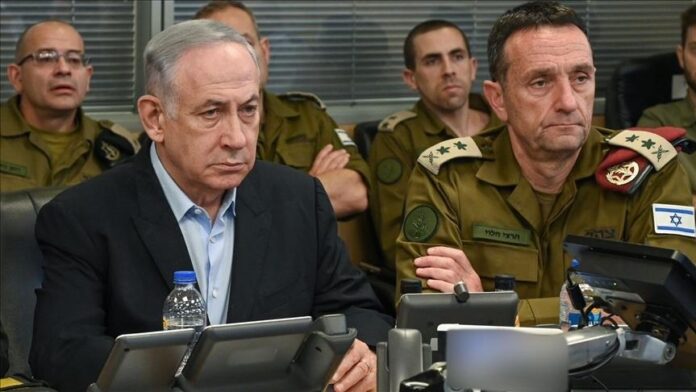
“We are in control of our security, and we have also made it clear regarding international forces that Israel will determine which forces are unacceptable to us, and this is how we operate and will continue to operate,” Netanyahu said. “This is, of course, acceptable to the United States as well, as its most senior representatives have expressed in recent days,” he told a session of his cabinet.
Israel, which besieged Gaza for two years to back up its air and ground war in the enclave against Hamas after the Palestinian militant group’s cross-border attack on October 7, 2023, continues to control all access to the territory.
Last week Netanyahu hinted that he would be opposed to any role for Turkish security forces in Gaza. Once-warm Turkish-Israeli relations soured drastically during the Gaza war, with Turkish President Tayyip Erdogan lambasting Israel’s devastating air and ground campaign in the small Palestinian enclave.
Israeli Foreign Minister Gideon Saar said Monday that Israel will not accept the presence of Turkish armed forces in Gaza under the U.S. plan to end war in the Palestinian territory. “Countries that want or are ready to send armed forces should be at least fair to Israel,” Saar said at a news conference in Budapest.
“Turkey, led by Erdogan, led a hostile approach against Israel,” Saar said, speaking alongside his Hungarian counterpart Peter Szijjarto. “So it is not reasonable for us to let their armed forces enter the Gaza Strip and we will not agree to that and we said it to our American friends.”
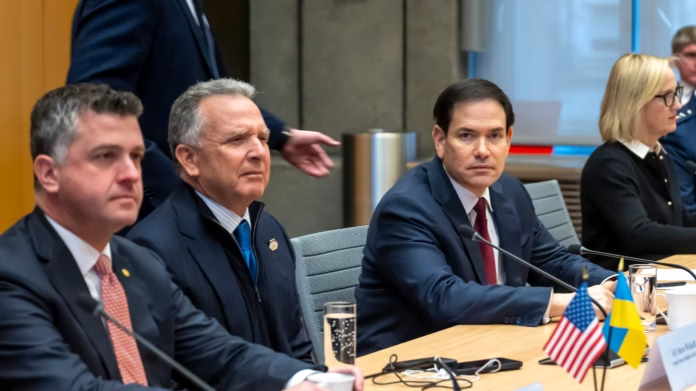
U.S. Secretary of State Marco Rubio, on a visit to Israel aimed at shoring up the truce, said Friday the international force would have to be made up of “countries that Israel’s comfortable with.” He made no comment on Turkish involvement.
Rubio added that Gaza’s future governance still needed to be worked out among Israel and partner nations but could not include Hamas. Rubio later said U.S. officials were receiving input on a possible U.N. resolution or international agreement to authorize the multinational force in Gaza and would discuss the issue in Qatar, a key Gulf mediator on Gaza, on Sunday.
A major challenge to Trump’s plan is that Hamas has balked at disarming. Since the ceasefire took hold two weeks ago as the first stage of Trump’s twenty-point plan, Hamas has waged a violent crackdown on clans that have tested its grip on power.
At the same time, the remains of thirteen deceased hostages remain in Gaza with Hamas citing obstacles to locating them in the pervasive rubble left by the fighting.
An Israeli government spokesperson said Sunday Hamas, which released the remaining twenty living hostages it took in its October 2023 assault, knew where the bodies were. “Israel is aware that Hamas knows where our deceased hostages are, in fact, located. If Hamas made more of an effort, they would be able to retrieve the remains of our hostages,” the spokesperson said.
Israel had, however, allowed the entry of an Egyptian technical team to work with the Red Cross to locate the bodies. The spokesperson said the team would use excavator machines and trucks for the search beyond the so-called yellow line in Gaza behind which Israeli troops have initially pulled back under Trump’s plan.
Netanyahu began the cabinet session by stressing Israel was an independent country, rejecting the notion that “the American administration controls me and dictates Israel’s security policy.” Israel and the United States, he said, are a “partnership.”
Diplomats and analysts say Trump managed to push Netanyahu, who had long rejected global pressure for a ceasefire in Gaza, to accept his framework for a broader peace deal and also forced Netanyahu to call Qatar’s leader to apologize after a failed bombing raid targeting Hamas negotiators in that country.
Trump also persuaded Arab states to convince Hamas to return all the Israeli hostages, its key leverage in the war.
The formation of an international peacekeeping force for Gaza represents one of the most complex aspects of Trump’s ceasefire plan. The force would need to satisfy Israeli security concerns while also being acceptable to Palestinian factions and regional Arab states.
Turkey’s exclusion from consideration reflects the dramatic deterioration in Turkish-Israeli relations during the Gaza conflict. Erdogan has been one of Israel’s harshest critics, repeatedly condemning Israeli military operations and comparing Israeli actions to historical atrocities.
The international force concept aims to provide security in Gaza while allowing humanitarian reconstruction to proceed. However, fundamental questions remain about the force’s mandate, rules of engagement and relationship to both Israeli security forces and Palestinian authority structures.
Hamas’ refusal to disarm represents a fundamental obstacle to implementation of the peacekeeping plan. The militant group has maintained its grip on Gaza despite two years of Israeli military operations and shows no indication of surrendering weapons or control.
The ceasefire that began two weeks ago represents the first sustained pause in fighting since the war began following Hamas’ October 7, 2023, attack that killed around twelve hundred people in Israel and saw two hundred fifty-one taken hostage.
More than sixty-seven thousand Palestinians have been killed in Israel’s subsequent assault on Gaza, according to Gaza health officials. The territory has been devastated, with vast areas reduced to rubble and most of the population displaced.
The recovery of deceased hostage remains has become a contentious issue. Israel insists Hamas knows the locations of bodies and could retrieve them with sufficient effort, while Hamas claims the extensive destruction makes location and recovery extremely difficult.
The deployment of an Egyptian technical team with heavy equipment to search for remains represents a practical step forward, though progress has been slow. The team’s work beyond Israeli-controlled zones demonstrates the complex logistics of implementing even basic aspects of the ceasefire agreement.
Netanyahu’s assertion of Israeli independence in decision-making reflects tensions with the Trump administration over implementation details. While Trump successfully pressured Netanyahu to accept the ceasefire framework, Israel retains effective veto power over force composition given its control of Gaza access.
Cameroon’s long-serving leader, President Paul Biya, has won re-election for an unprecedented eighth term, the country’s Constitutional Council announced Monday, extending his decades-long rule until at least 2032.
Biya, 92, the world’s oldest serving head of state, captured 53.66% of the national vote, according to official results. His closest challenger, Issa Tchiroma Bakary, received 35.19%. The outcome ensures Biya—who first came to power in 1982—will mark 50 years in office if he serves out his new seven-year term.
Despite growing public pressure to step down, Biya appeared at only one campaign rally during the election period, telling supporters that “the best is still to come.” Critics accused him of being increasingly absent from national affairs, while his supporters praised his leadership as a symbol of continuity in a country beset by security and economic challenges.
The vote, held amid sporadic violence and widespread voter apathy, saw significant regional variations and high abstention rates, particularly in the restive Anglophone regions. In the South region—Biya’s home base—he won by a commanding 90.86%, while in the South-West region, where around 53% of voters abstained, he still secured 68.7%.
Bakary performed strongly in several northern and coastal regions, winning 56% in Adamawa, 43.51% in the North, and 64.5% in the Littoral region, which includes the economic capital, Douala. He also drew substantial support from Cameroonians living abroad, capturing 68.21% of the diaspora vote in Asia and the Middle East and 54.99% among voters across Africa.
European-based voters, however, heavily favored Bakary, granting him 62.79% compared to Biya’s 22.63%.
Election observers reported low voter turnout and logistical challenges in several areas, with more than half of registered voters abstaining in some districts. Opposition parties and civil society groups have accused the ruling party of manipulating the vote count, though the government has denied any wrongdoing.
Biya’s re-election cements his position as one of the world’s longest-ruling leaders. His nearly 43-year tenure has been marked by economic stagnation, mounting separatist violence in the English-speaking regions, and periodic crackdowns on dissent.
The Constitutional Council in Yaoundé announced the final results following days of regional tallies. Under Cameroon’s electoral law, the winner is determined by the highest share of votes across the entire electorate.
If Biya completes this new term, he will be nearing 100 years old by 2032. Despite his advanced age and recurring questions about his health, the president has shown no sign of grooming a successor, leaving uncertainty over the country’s political future once his rule eventually ends.
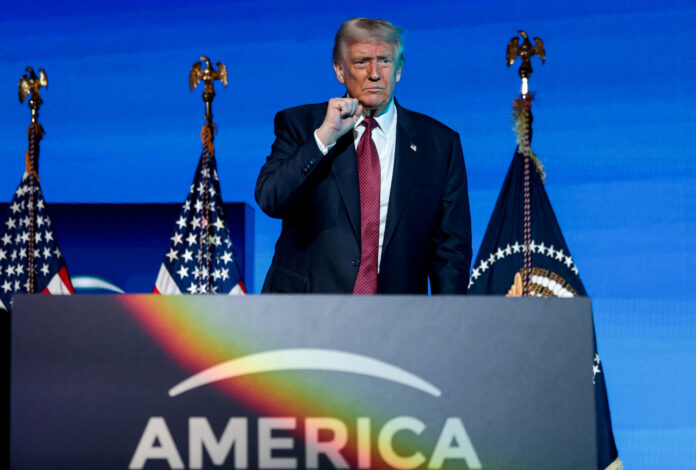
President Donald Trump said Monday he would not consider running for vice president in 2028, firmly rejecting suggestions from some of his allies that he could use the role as a legal loophole to return to the White House for a third term.
Speaking to reporters aboard Air Force One en route to Tokyo for meetings with Emperor Naruhito and Prime Minister Sanae Takaichi, Trump said the idea of joining a future ticket—possibly with Vice President JD Vance—was “too cute” and “wouldn’t be right.”
“I wouldn’t do that. I think it’s too cute,” Trump said. “I think the people wouldn’t like that. It wouldn’t be right.”
The president’s comments come amid renewed speculation about his political future, following remarks from his former chief strategist Steve Bannon, who recently told The Economist that there was “a plan” for Trump to serve a third term. Under the 22nd Amendment to the U.S. Constitution, however, no one may be elected to the presidency more than twice.
Trump, 79, brushed off the idea of running as Vance’s vice president and then taking office if Vance were to resign, saying he believed Americans would reject such a strategy. He emphasized his popularity but said he preferred to win legitimately if he ever sought to return to the presidency.
“I would love to do it. I have my best numbers ever—it’s very terrible,” Trump said, noting his approval rating of about 45%, according to RealClearPolitics. “But I wouldn’t do that. It’s too cute.”
The president also speculated about possible future Republican tickets, suggesting that Vance and Secretary of State Marco Rubio could make an “unstoppable” team in 2028. Still, Trump left open the possibility of running again, musing about a potential face-off with Rep. Alexandria Ocasio-Cortez or Texas Rep. Jasmine Crockett.
“Let AOC go against Trump. Let Jasmine go against Trump,” he said.
Trump has previously hinted at seeking another term despite constitutional limits. In March, he told NBC that he was “not joking” about a potential 2028 campaign, though he later told CNBC he would “probably not” run.
During the Air Force One exchange, Trump also confirmed he underwent an MRI scan during his annual physical earlier this month but said the results were “perfect.”
Trump will be 82 years old at the end of his current term and would be 86 at the conclusion of a hypothetical third term in 2033. While some legal scholars have debated whether a vice-presidential route could bypass the 22nd Amendment, most constitutional experts have dismissed the theory as legally dubious and politically implausible.
The U.S. Navy said Monday that two aircraft — an F/A-18F Super Hornet fighter jet and an MH-60R Sea Hawk helicopter — operating from the aircraft carrier USS Nimitz crashed into the South China Sea within a 30-minute span, marking the latest in a string of recent aviation mishaps involving U.S. naval forces.
According to the Navy’s Pacific Fleet, all five crew members aboard both aircraft survived. The two aviators aboard the Super Hornet ejected safely, while the three crew members on the Sea Hawk were recovered from the water shortly after the crash. All are reported to be in stable condition.
The twin incidents occurred Sunday afternoon during routine operations, the fleet said in a statement. The cause of the crashes remains under investigation.
President Donald Trump, speaking to reporters aboard Air Force One en route to Tokyo, said preliminary information suggests the crashes may have been caused by “bad fuel.” He ruled out any indication of sabotage or enemy involvement, saying, “There’s nothing to hide — this looks like a technical issue.”
The Nimitz is currently returning to its home port at Naval Base Kitsap in Washington state after a months-long deployment to the Middle East. The carrier had been supporting U.S. operations in response to attacks by Yemen’s Houthi rebels on international shipping lanes. The deployment was expected to be the Nimitz’s final one before its scheduled decommissioning.
The incidents add to a troubling pattern of aviation accidents among U.S. carriers in recent months. The USS Harry S. Truman, another U.S. aircraft carrier deployed to the Middle East, has experienced several mishaps this year — including a December incident in which the guided-missile cruiser USS Gettysburg accidentally shot down a jet from the Truman.
In April, an F/A-18 slipped off the Truman’s hangar deck into the Red Sea, and in May, another fighter jet overshot the carrier’s landing cables and went overboard, forcing its two pilots to eject. None of those incidents resulted in fatalities, and investigations into them remain ongoing.
The Navy has not indicated whether the crashes from the Nimitz are related to mechanical issues affecting other carriers or their aircraft.