Home Blog Page 137

Neymar Family Secures Pelé Brand in $18 Million Deal, Setting Stage for Global Relaunch

0

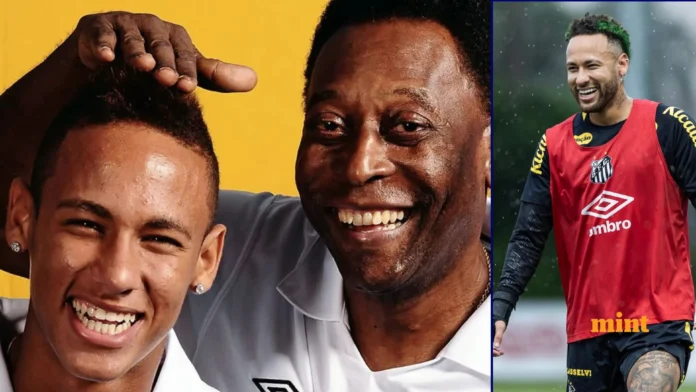
SANTOS, Brazil (BN24) — The global brand of football legend Pelé has been purchased by the family of another Brazilian superstar, Neymar Jr., in a deal signalling both the return of Pelé’s image rights to Brazilian hands and a strategic bid to modernize one of the most powerful names in sports history. The acquisition, valued by Brazilian outlets at approximately USD 18 million, was announced Tuesday at the Pelé Museum in Santos, the coastal city that shaped the King of Football’s rise.

The purchase was made by NR Sports, the marketing and image-rights company controlled by Neymar’s father, Neymar Santos Sr., who said the family considers the move both a commercial investment and a cultural responsibility. At the announcement, Neymar Sr. called Pelé’s name “a very strong brand with extraordinary global resonance,” adding that the new ownership intends to “enhance its identity and bring it into the present,” according to remarks delivered during the ceremony.

The rights had previously been held by U.S.-based Sport 10, but confidentiality agreements prevented full disclosure of the terms. Still, the reported valuation underscores the enduring commercial gravity of Pelé, who, despite his passing in December 2022, remains one of the most internationally recognizable figures in sport.

Pelé, born Edson Arantes do Nascimento, is revered worldwide for redefining football with his creativity, athleticism, and showmanship. A three-time World Cup winner in 1958, 1962, and 1970, he remains the only player to ever claim that achievement, cementing a legacy that spans generations and continents. His daughter Flavia Arantes do Nascimento, who attended the ceremony, said the brand’s return to Brazilian stewardship represents “a priceless moment,” emphasizing that Pelé’s name carries “soul, humanity, and love.”

NR Sports described the acquisition as a “repatriation,” a symbolic restoration of one of Brazil’s greatest cultural assets. For many in the country’s sports industry, the move reflects a broader trend of reclaiming national icons whose commercial rights had gradually migrated abroad during decades of globalization in sports marketing.

Although the $18 million figure may appear modest compared to the valuations of modern athletes Cristiano Ronaldo, Lionel Messi, and even Neymar Jr. himself command image-rights packages exceeding hundreds of millions, Pelé’s brand occupies a rare, almost timeless category. He is not simply a retired player with high name recognition; he is a global cultural figure whose image intersects with history, fashion, music, diplomacy, and international development.

Brand analysts in São Paulo note that Pelé’s likeness continues to generate significant demand across sectors such as sportswear, documentaries, video games, collectibles, lifestyle products, and philanthropic campaigns. With the explosion of global streaming and the expansion of the sports-biopic market, Pelé’s story has renewed commercial potential, particularly among younger audiences who know the name but not the details of his career.

From an economic standpoint, Pelé’s cross-generational appeal makes the acquisition uniquely attractive. Unlike shorter-lived celebrity brands tied to active careers, the Pelé identity functions more like a heritage brand, one that appreciates in cultural value over time.

Neymar Sr., who built a multimillion-dollar enterprise around his son’s image beginning in Neymar Jr.’s early teens, is considered one of Brazil’s most experienced figures in celebrity monetization. His decision to assume stewardship of Pelé’s brand signals a long-term strategy to reposition the icon’s name amid today’s global sports economy, where legacy athletes are experiencing renewed commercial life through digital licensing, NFTs, experiential museums, and co-branded partnerships with luxury labels.

Pelé’s brand acquisition reflects a larger shift in the multibillion-dollar sports marketing industry, where legacy athletes—particularly those with transcendent cultural meaning—remain powerful commercial assets long after retirement. Michael Jordan’s Jordan Brand under Nike, Muhammad Ali’s licensing deals managed by Authentic Brands Group, and Bruce Lee’s global cultural image provide clear precedents.

Pelé’s case is especially compelling. Unlike many icons whose influence remains concentrated in one region, Pelé’s appeal is geographically diverse: Europe, Africa, Asia, North America, and, of course, Brazil. That distributes risk across markets and supports long-term brand health.

With the Neymar family at the helm, Pelé’s name could re-enter the competitive arena of sports branding through partnerships in fashion, streetwear, digital media, and global advertising. Industry observers expect NR Sports to explore:

• new apparel lines tied to Pelé’s classic silhouette
• collaborations with global sportswear companies
• licensing for films, documentaries, and streaming projects
• football academies or youth programs under the Pelé banner
• museum exhibitions and traveling cultural installations

Neymar Jr. himself, one of the most followed athletes in the world, provides immediate marketing reach. His personal platforms alone offer a direct audience of hundreds of millions across social media, offering the Pelé brand instant visibility for relaunch campaigns.

The international market for athlete-driven brands has become increasingly crowded. Ronaldo governs CR7, which extends from underwear to hotels. Messi’s brand continues to grow through partnerships with Adidas and major streaming projects. LeBron James and Serena Williams have expansive equity-based portfolios. Even younger athletes, like Kylian Mbappé, are developing lifestyle brands with long-term global ambitions.

Yet Pelé occupies a different category closer to Ali and Jordan because his brand stands not on real-time visibility but on symbolic power. Pelé represents excellence, joy, sportsmanship, and the global rise of football itself. These traits offer marketing stability independent of match results or controversies, a benefit sometimes out of reach for active players.

The Neymar family’s challenge will be transforming Pelé from a revered historical figure into a profitable 21st-century commercial brand without diluting his legacy or turning heritage into gimmickry. That balance between authenticity and modern appeal will be crucial to the brand’s future trajectory.

For decades, Pelé’s commercial rights were managed by international firms. This was partly a reflection of global demand, Pelé spent much of his post-playing career traveling as an ambassador for football and UNICEF, and partly a characteristic of the pre-digital era when global licensing required foreign brokers.

But in recent years, Brazil’s sports marketing industry has strengthened with the rise of domestic agencies, influencer-driven marketing models, and the internationalization of Brazilian athletes. Bringing Pelé’s brand back to Brazil under Neymar’s family aligns with a nationalist trend in which Brazilian icons are increasingly managed by Brazilian companies.

At the Nov. 25 ceremony, Pelé’s daughter Flavia underscored the emotional dimension of the transfer, calling the return of her father’s brand to Brazilian stewardship “an honor and a moment of deep happiness.”
Father of three abducted Niger State Catholic schoolchildren dies of heart attack in Nigeria

0

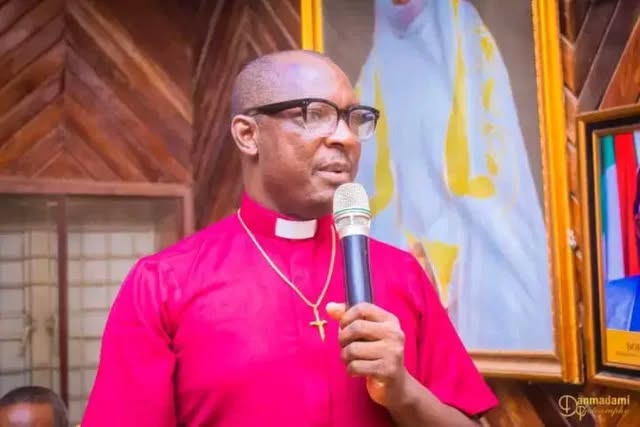
DATELINE — ABUJA, Nigeria (BN24) — A father in Niger State collapsed and died of a heart attack shortly after learning that his three children were among hundreds abducted by armed bandits at St. Mary’s Catholic School in Papiri, Agwara Local Government Area, according to Rev. John Hayab, Chairman of the Christian Association of Nigeria (CAN) in the Northern Region and the Federal Capital Territory.

The Chairman of the Christian Association of Nigeria in the Northern Region and the FCT, Rev. John Hayab

Hayab, speaking Tuesday in an interview with ARISE News, identified the deceased only as Mr. Anthony, describing the incident as a tragic illustration of the psychological devastation families are facing after the mass kidnapping that began on Monday. The attackers seized 303 students, pupils, and a dozen teachers in one of the largest school abductions in northern Nigeria since the 2014 Chibok attack.

According to Hayab and local diocesan authorities, about 50 students who fled into the forest managed to escape between Friday and Saturday. More than 265 students are still missing.

The emotional gravity of the situation has deepened as communities across Niger, Kebbi, and Kwara states grapple with what Hayab called “a traumatic week for parents, leaders, and our security men.” He said parents are terrified to speak publicly, worried that exposure could endanger their missing children.

Hayab narrated that Mr. Anthony had gone into shock upon receiving confirmation that all three of his children were among those kidnapped.

“Imagine a father learning that three of his children were taken,” Hayab said in the televised interview, noting that Anthony succumbed to a heart attack shortly after the news reached him. ARISE News reported that the grief in the community was palpable.

Hayab added that many families remain unwilling to be interviewed or even acknowledge publicly that their children were abducted. “The pains and the trauma are still very fresh,” he said.

Families, he explained, have been living with “intense fear” amid repeated school kidnappings across the northern region. “Everybody is worried, everybody is angry, everybody needs a stop,” he said.

The attack on St. Mary’s Catholic School comes amid a resurgence of mass abductions by armed groups largely described by authorities as “bandits”—criminal networks operating across forests in the Northwest and Northcentral regions.

Data from Nigerian security trackers and local reporting indicate that school kidnappings have escalated sharply since 2020, driven by the profitability of ransom payments and the inability of security forces to consistently protect rural communities.

Though the Nigerian government officially banned ransom payments, communities often resort to private negotiations due to slow or ineffective intervention from state authorities.

Schools in Niger State, which borders the volatile forests of Zamfara and Kebbi, have been especially vulnerable. The Papiri area, deep in rural Agwara, has limited security presence and almost no road infrastructure conditions which bandits exploit.

Hayab told ARISE News that residents reported “no clear security presence” in the aftermath of the attack. He stressed that communities “want to see concrete action.”

“The onus is now on the Nigerian security agencies to ensure that we don’t continue speaking about these tragedies on television,” he said. “People want real movement, not just promises.”

He underscored that the absence of security forces in Papiri after the abduction has intensified despair among families who do not know whether their children have eaten, slept, or even survived the ordeal in captivity.

“These children have not slept; they have not bathed. Their parents cannot even explain where they are.”

While Niger is grappling with its crisis, Kebbi State authorities announced the release of 24 schoolgirls abducted in a separate attack earlier this month. Hayab welcomed the development but said relief in one community does not erase the trauma across others.

“The entire region is enveloped in fear,” he said. “Kebbi, Niger, Kwara everyone is on edge.”

The frequency of these attacks has triggered renewed calls for a coordinated regional strategy, as bandits often operate across state borders and retreat into forests sprawling across multiple jurisdictions.

The repeated attacks on schools are threatening to destabilize northern Nigeria’s already fragile education sector.

Economists and development analysts note that protracted insecurity discourages school enrollment, undermines long-term human capital formation, and deepens regional economic inequality. Every school closure not only disrupts academic activity but also weakens local economies dependent on teachers, vendors, transporters, and food suppliers.

In Niger State alone, rural communities rely heavily on boarding schools that serve as both educational institutions and local employment hubs. The abduction at St. Mary’s threatens to shut down the school indefinitely, a blow that could ripple through Agwara’s local economy for years.

Parents have begun withdrawing children from nearby schools amid fear that other institutions may be targeted, creating what experts call an “education desert” in parts of northern Nigeria.

Nigeria’s broader investment climate continues to be shaped by insecurity. The Northwest and Northcentral zones are critical for agriculture, mining, and emerging energy projects. Persistent attacks increase operational risks, prompting businesses to spend more on private security or withdraw entirely.

Analysts monitoring Nigeria’s risk index note that security incidents such as the Papiri abduction increase volatility in sectors like agro-processing, logistics, and rural infrastructure development. Investors view school abductions as indicators of weak governance, unmonitored terrain, and the difficulty of protecting workers in remote areas.

Market observers also caution that recurring abductions may influence state and federal budget allocations, diverting funds from development programs to emergency security operations and ransom negotiations, whether officially recognized or not.

Nigeria’s security architecture, comprised of the military, police, civil defense, and state-level vigilante groups, has struggled to create a unified strategy against banditry.

Security experts argue that competing mandates and insufficient resource-sharing undermine rapid response capabilities. For instance, the military often leads counter-bandit operations, but local policing and intelligence gathering remain fragmented.

States such as Katsina and Zamfara rely heavily on informal vigilante groups known as “Yan Sakai” or “community guards,” but Niger’s system is less developed, leaving communities like Papiri especially exposed.

Meanwhile, private security companies, which serve wealthier schools and urban districts, are largely absent from public or missionary schools in rural regions, contributing to a widening security gap between urban and rural populations.

Security analysts believe the Papiri abduction will likely intensify pressure on President Bola Tinubu’s administration to improve rural security, particularly after multiple high-profile kidnappings within weeks.

Three big questions loom:
Short-term raids may disperse bandit groups, but experts say that unless troops maintain a presence and monitor forest corridors, attackers will simply regroup.
Bandits operate across state borders; analysts argue that Niger, Kebbi, and Kwara require shared surveillance systems and coordinated rapid-response units.


Without immediate security improvements, parents may reject formal schooling altogether. Long-term fallout could deepen literacy gaps that already disadvantage northern states.

Development economists warn that declining school attendance may undermine Nigeria’s future labor market, affecting everything from agricultural modernization to digital-economy participation.

As families mourn, wait, and hope, the death of Mr. Anthony has crystallized the human toll beyond the statistics. For communities across Niger State, the crisis is no longer defined only by the hundreds of missing children, but also by the accumulating grief and the looming fear that the nation’s security institutions remain overwhelmed.

Hayab’s final words to ARISE News captured the desperation in the region: “People want to see concrete action. Everybody is worried. Everybody needs a stop.”

For now, St. Mary’s Catholic School is silent, classrooms emptied, and a community watches for any sign, any call, any movement that might bring their children home.

Zimbabwean pastor and son sentenced to life imprisonment for chopping off man’s hands over alleged theft

0

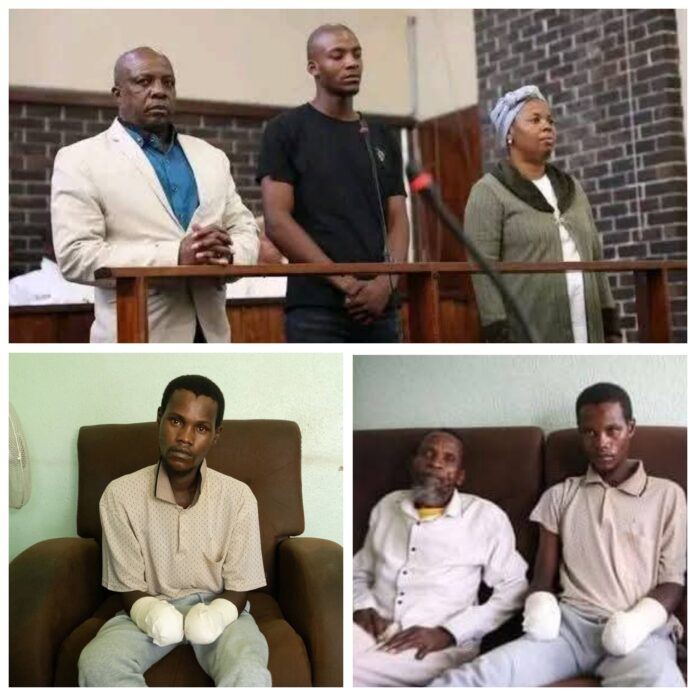
Lagos, Nigeria (BN24) — A Zimbabwean pastor and his son were sentenced to life imprisonment in South Africa after a regional court found them guilty of butchering a young man whose hands they severed with a panga in a brutal assault sparked by accusations of petty theft on church grounds. The case, described by prosecutors as one of the most disturbing acts of vigilantism to come before the court in recent years, concluded this week when the Emalahleni Regional Court handed down life sentences for attempted murder and additional prison terms for kidnapping.

South Africa’s National Prosecuting Authority (NPA) confirmed the sentences on Tuesday, saying Pastor Solomon Mahlangu and his son Enock Mahlangu were convicted of attempted murder and kidnapping, while Enock’s wife, Poppy Lethnes Mhlanga, was convicted on a kidnapping charge. All three were declared unfit to possess firearms.

According to the NPA, the court accepted the State’s argument that the attack was deliberate, coordinated, and executed with extreme brutality, leaving the victim permanently disabled and traumatized. Prosecutor Francois Brandt, who led the State’s case, asked the court to impose severe penalties, saying the community needed a clear signal that violent crime, especially acts masquerading as moral or religious enforcement, would not be tolerated.

The attack unfolded on March 27, 2024, when the victim walked through the church premises along Kroomdraai Road in Vosman, a township within the Emalahleni municipality. He was on his way toward Extension 16 when he encountered the accused, who confronted him with allegations that he had stolen batteries and other items from the church.

The victim testified that the confrontation escalated within moments. Enock, accompanied by the pastor and Poppy, allegedly forced him into a vehicle. Once inside, the victim told the court, he was assaulted, dragged onto the ground, and violently attacked with a panga — a long, machete-like blade commonly used in both gardening and criminal assaults in the region.

According to his account, Solomon and Enock took turns inflicting blows before severing both of his hands. The victim lay bleeding on the ground as the attackers drove off, leaving him to die. The court later heard that he cried out for help until a passerby noticed him, contacted emergency services, and ensured he received urgent medical care. Doctors were able to save his life, but his hands could not be reattached.

The NPA said police investigators reconstructed the scene, photographed the recovered severed hands, and gathered evidence that prosecutors later described as “compelling and irrefutable.” A photo album documenting the aftermath, including where the hands were found, was entered into the record.

Despite the physical evidence and eyewitness testimony, all three accused pleaded not guilty. During the trial, they elected to remain silent on key aspects of the crime. When they did testify, the court found their explanations to be “bare denials” that failed to counter the State’s narrative.

Judge (name not provided in your source) ruled their accounts improbable and inconsistent with the forensic and testimonial evidence. The court determined that the victim’s version, delivered in detailed testimony despite the psychological trauma he endured, was truthful, reliable, and supported by physical findings at the crime scene.

Prosecutor Brandt argued that the crime reflected a calculated, purposeful attack rather than an act of passion or self-defense. Brandt emphasized the level of violence used, the premeditation implied by the use of a panga, and the deliberate decision to leave the victim to die. In his argument for severe sentences, Brandt told the court that the community relied on the justice system to unequivocally reject vigilantism, especially when carried out under the guise of religious or community authority.

In sentencing Solomon and Enock Mahlangu to life imprisonment for attempted murder and three years for kidnapping, the court said the punishment reflected not only the cruelty of the crime but also the societal danger created by individuals who assume the role of judge, jury, and executioner. Poppy Mhlanga received three years’ direct imprisonment for kidnapping.

The NPA, in its statement, welcomed the sentences and described them as a clear message to “would-be offenders” that violent crimes, particularly those involving torture, mutilation, or abuses of authority, carry consequences of the highest severity.

Residents of Vosman and surrounding areas have followed the case closely, with many expressing shock that respected religious figures could carry out such an act. In communities where churches often function as stable centers of support, counseling, and social cohesion, the crime left many questioning how such violence could take place under the leadership of individuals who were supposed to uphold moral guidance.

Local religious leaders have also reacted, saying that the case underscores the need for accountability within churches and the importance of ensuring that accusations of theft or wrongdoing are handled by lawful authorities.

While South Africa has made strides in criminal justice reform, cases of vigilantism continue to haunt communities where mistrust of policing, sometimes born from slow response times or lack of resources, has historically led civilians to take matters into their own hands. Sociologists note that in both urban townships and rural areas, accusations of theft can become flashpoints for mob justice or targeted attacks.

What distinguishes this case, legal analysts say, is not only the brutality but the identity of the perpetrators, a pastor and his family members, and the extreme physical mutilation inflicted on a single unarmed individual.

Zimbabwean migrant communities in South Africa, already vulnerable to xenophobic tensions, have also taken note. The nationalities of the accused and victim were not formally confirmed in open court, but the case has intersected with broader debates about migrant integration, community leadership, and the role of religious institutions in conflict mediation.

Crimes of this nature carry ripple effects far beyond the individuals involved. Emalahleni, historically a coal mining hub, has long faced economic pressures, unemployment, and youth vulnerability conditions that can heighten mistrust and feed community-based vigilantism. Social workers in the area say violent crimes contribute to trauma, fear, and a decline in public confidence, often making it harder for civil society groups to carry out conflict resolution initiatives.

For the victim, the attack represents not only physical loss but a permanent economic setback. Without hands, his earning ability is severely compromised, exacerbating the socio-economic vulnerability many young people in the region already face.

The life sentences imposed on Solomon and Enock Mahlangu may set an important precedent for how South African courts handle cases involving extreme bodily harm and mutilation. Legal scholars note that attempted murder cases often receive varied sentencing, but acts involving dismemberment almost always lead to lengthy prison terms.

The NPA is likely to cite this case in future arguments involving torture-related crimes or violence carried out under the pretext of discipline or moral authority.

As South Africa continues to battle high levels of violent crime, the ruling reinforces the legal system’s insistence that no individual regardless of religious or community status is permitted to carry out justice outside the bounds of the law.

The victim, who survived against the odds thanks to a passerby’s intervention, remains a central figure in the State’s message: that justice, however delayed or painful, can prevail. Prosecutor Brandt praised the victim’s courage in testifying, calling his account “truthful and reliable,” a phrase the court echoed.

As the Mahlangu family begins serving their sentences, Vosman’s residents and the broader public are left to grapple with the devastating consequences of violent vigilantism and the fragile line between community authority and criminal abuse.

Credit: LindaIkejiblog

 2 National Guard Soldiers Shot in ‘Targeted’ Attack Near White House, Suspect in Custody

0

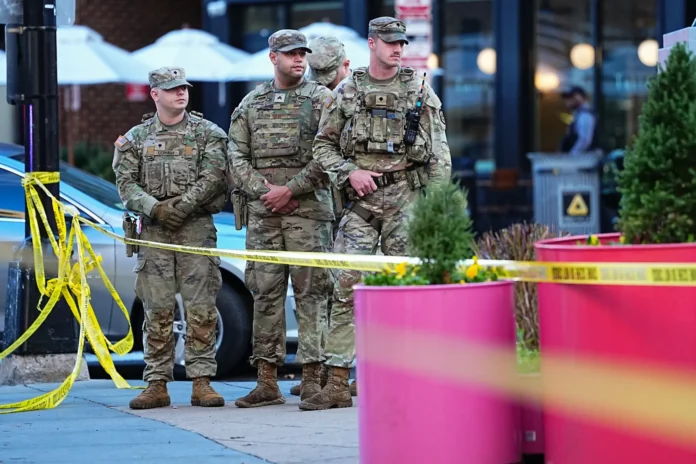
Two West Virginia National Guard soldiers were critically wounded Wednesday afternoon in what authorities characterized as a targeted ambush just blocks from the White House, triggering a massive security response and prompting President Donald Trump to order deployment of 500 additional troops to the nation’s capital.

The attack occurred around 2:15 p.m. Eastern Time near the corner of 17th and I streets, close to Farragut Metro Station, when a suspect emerged from around a corner and opened fire on National Guard members conducting a high-visibility patrol, Metropolitan Police Assistant Chief Jeff Carroll told reporters at a press briefing. After an exchange of gunfire, other Guard members subdued the suspect, who also suffered gunshot wounds and was taken into custody.

“This is a targeted shooting,” Washington Mayor Muriel Bowser stated at the briefing. “One individual appeared to target these guardsmen. That individual has been taken into custody.” FBI Director Kash Patel confirmed the two wounded soldiers remained in critical condition at local hospitals Wednesday evening, though West Virginia Governor Patrick Morrisey initially reported both had died before retracting that statement citing “conflicting reports” about their condition.

The shooting prompted immediate White House lockdown despite Trump being at his Palm Beach resort ahead of Thursday’s Thanksgiving holiday, while Vice President JD Vance was in Kentucky at the time. Law enforcement from multiple federal and city agencies swarmed the area surrounding Farragut Square, a popular lunch destination for office workers just blocks from the executive mansion where light posts wrapped in holiday wreaths normally create festive atmosphere starkly contrasted with Wednesday’s violence.

Attack Details and Emergency Response

Carroll described how the suspect approached the National Guard patrol, raised his arm with a firearm, and “discharged it at the National Guard members” in what authorities characterized as deliberate targeting rather than random violence. “They were able to, after some back and forth, able to subdue the individual and bring them into custody within moments,” Carroll explained. “Members of law enforcement in the area were also able to assist and bring that individual into custody.”

The rapid response by fellow Guard members and law enforcement prevented the suspect from fleeing the scene or causing additional casualties. However, the critical condition of both wounded soldiers underscored the severity of the attack and the close-range nature of the shooting. Carroll emphasized that investigators had identified no additional suspects, suggesting the shooter acted alone though authorities had not publicly disclosed motive.

Witnesses described chaotic scenes following the gunfire with pedestrians fleeing the normally busy commercial area. Mike Ryan, 55, told reporters he was purchasing lunch nearby when he heard what sounded like gunfire, prompting him to run half a block away before hearing another round of apparent shots. When he returned to the scene, Ryan saw two National Guard members on the ground across the street with people attempting resuscitation on one of them while other Guard members had pinned someone to the ground.

Emma McDonald, another witness, reported seeing one Guard member carried away on a stretcher minutes after the shooting with his head covered in blood and an automated compression system attached to his chest, visual evidence of the life-threatening injuries both soldiers sustained. The graphic nature of these witness accounts conveyed the severity of wounds that left both victims fighting for survival at separate Washington hospitals.

Political Response and Troop Deployment

Trump responded to the attack via Truth Social, characterizing the suspect as an “animal” who would “pay a very steep price” while praising National Guard and military personnel. “The animal that shot the two National Guardsmen, with both being critically wounded, and now in two separate hospitals, is also severely wounded, but regardless, will pay a very steep price,” Trump wrote. “God bless our Great National Guard, and all of our Military and Law Enforcement. These are truly Great People.”

Defense Secretary Pete Hegseth announced Wednesday evening that Trump had requested deployment of 500 additional Guard soldiers to Washington following the shooting. “The drop in crime has been historic. The increase in safety and security has been historic. But if criminals want to conduct things like this, violence against America’s best, we will never back down. President Trump will never back down,” Hegseth stated, framing the attack as justification for expanded military presence in the capital.

This additional deployment would bring total National Guard forces in Washington to approximately 2,700 troops. As of Wednesday morning, roughly 2,200 National Guard personnel were operating in the District of Columbia, including units from Louisiana, Mississippi, Ohio, South Carolina, West Virginia, Georgia and Alabama supplementing local Guard forces. These troops have patrolled Washington streets since August when Trump deployed them as part of controversial immigration and crime crackdown targeting Democratic-led cities.

Vice President Vance, speaking from Fort Campbell where he was visiting when the shooting occurred, called on “everybody who’s a person of faith” to pray for the wounded guardsmen. “I think it’s a somber reminder that soldiers, whether they’re active duty, reserve or National Guard, our soldiers are the sword and shield of the United States of America,” Vance stated, casting the attack as assault on military personnel defending the nation rather than isolated criminal violence.

Governor’s Premature Death Announcement

West Virginia Governor Patrick Morrisey’s initial announcement that both Guard members had died from their injuries created confusion and distress before he retracted the statement. “These brave West Virginians lost their lives in the service of their country,” Morrisey first wrote on social media. “We are in ongoing contact with federal officials as the investigation continues. Our entire state grieves with their families, their loved ones, and the Guard community.”

Within an hour, Morrisey posted a correction citing “conflicting reports” about the soldiers’ conditions. “We are now receiving conflicting reports about the condition of our two Guard members and will provide additional updates once we receive more complete information,” he wrote. “Our prayers are with these brave service members, their families, and the entire Guard community.”

The premature death announcement likely reached families and colleagues before correction could be issued, causing unnecessary anguish during already traumatic circumstances. The error highlighted communication challenges during active investigations where information flows chaotically and officials face pressure to update constituents despite incomplete or unreliable preliminary reports.

FBI Investigation and Unknown Motive

The FBI remained on scene Wednesday evening conducting investigation, though Director Patel and other officials declined to release information about the suspect’s identity or potential motive for targeting National Guard members. Attorney General Pam Bondi and Patel had both been briefed and were receiving continuous updates according to official statements, reflecting the seriousness with which federal authorities treated the attack given its proximity to the White House and targeting of military personnel.

The characterization as “targeted” attack rather than random violence suggested investigators had determined the suspect specifically selected National Guard members as victims rather than opportunistically shooting whoever happened to be present. This distinction carries significant implications for understanding whether the attack represented anti-military sentiment, political violence, mental health crisis, or other motivations that remain undisclosed pending investigation.

The timing—Wednesday afternoon during lunch hours when Farragut Square bustles with office workers—ensured numerous witnesses observed the shooting and aftermath, potentially providing investigators with extensive evidence about the suspect’s actions and demeanor before, during and after opening fire. Video surveillance from the metro station, surrounding businesses and street cameras likely captured the entire incident, giving authorities clear documentation of events.

National Guard Deployment Context

The shooting occurred against backdrop of National Guard deployment that has proven deeply controversial since Trump ordered troops to Washington streets in August. The president has repeatedly claimed that crime has disappeared from the capital as result of military presence, assertions contradicted by local officials and crime statistics while drawing heavy criticism from Democrats who characterize the deployment as political theater and inappropriate militarization of civilian law enforcement.

Washington Mayor Bowser and other local officials opposed the National Guard deployment, arguing it was unnecessary given crime trends and represented federal overreach into District affairs. The mayor’s participation in Wednesday’s press briefing despite her opposition to Guard presence reflected the gravity of the attack and need for coordinated response regardless of underlying political disputes about military deployment.

The high-visibility patrols that the two wounded soldiers were conducting when attacked represent core mission of the deployed Guard forces—establishing military presence in public spaces intended to deter crime and provide rapid response capability if incidents occur. Wednesday’s shooting demonstrated both the risks these patrols face and the rapid response capacity that enabled fellow Guard members to subdue the suspect within moments of the attack beginning.

Trump’s decision to deploy 500 additional troops following the shooting reflected his consistent response pattern of escalating military presence following security incidents, framing expanded deployments as necessary protection for troops and citizens rather than acknowledging potential ineffectiveness of existing posture. Whether additional forces will prevent similar future attacks or simply provide more visible targets for individuals intent on violence remains debatable.

Broader Security Implications

The proximity to the White House—just a few blocks from the executive mansion—raised immediate concerns about potential threats to presidential security, prompting the lockdown despite Trump being in Florida. Secret Service and other protective agencies must assess whether the attack represented isolated incident or potential precursor to broader threat targeting government facilities or personnel in Washington’s high-security federal district.

The Farragut Metro Station location where the shooting occurred sits within heavily patrolled and monitored area featuring multiple federal buildings, tourist attractions and commercial properties. The ability of a suspect to approach National Guard members on patrol and open fire before being subdued, despite this security-rich environment, raises questions about protective measures for deployed personnel and their vulnerability while conducting street patrols in civilian areas.

National Guard deployments in domestic settings create inherent tensions between military presence and civilian law enforcement norms. While Guard members possess training and weapons for defensive purposes, their role conducting patrols in American cities differs fundamentally from combat deployments abroad, creating ambiguous rules of engagement and exposure to threats like Wednesday’s shooting that combine characteristics of criminal violence and attacks on military personnel.

The critical condition of both wounded soldiers underscored the lethality of threats facing deployed National Guard members, who may not anticipate being targeted for violence while conducting domestic missions. Whether this attack will prompt changes to force protection measures, patrol configurations or engagement protocols remains to be determined as military and law enforcement authorities assess lessons from Wednesday’s events.

Sources: Foxnews/Reuters

Army Officers Say They Have Seized Power in Guinea-Bissau After Disputed Presidential Election

0

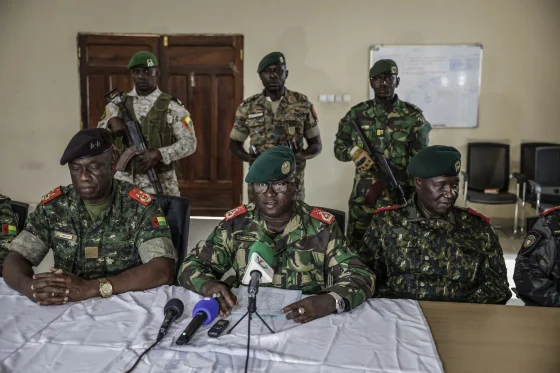
BISSAU, Guinea-Bissau — Military officers in Guinea-Bissau announced Wednesday that they had seized power in the small West African nation, suspending the electoral process and arresting President Umaro Sissoco Embalo just one day before authorities were scheduled to announce results from a hotly contested presidential election that both leading candidates claimed to have won.

“The High Military Command for the re-establishment of national and public order decides to immediately depose the president of the republic, to suspend, until new orders, all of the institutions of the republic of Guinea-Bissau,” spokesperson Dinis N’Tchama declared in a statement broadcast on state television, marking the latest military takeover in a region experiencing unprecedented democratic backsliding since 2020.

Embalo confirmed his ouster in a phone interview with French broadcaster France 24 shortly after the military announcement. “I have been deposed,” the president stated, adding that he was being held at army general staff headquarters. Two security sources told Reuters that military officers were detaining him at the office of the army chief of staff, though the coup leaders did not specify his custody status in their public statements.

The military takeover unfolded amid chaotic scenes in the capital Bissau, where sustained gunfire erupted near the electoral commission headquarters, presidential palace and interior ministry for approximately one hour before subsiding. Witnesses described panic as civilians fled through streets where heavily armed and masked soldiers established checkpoints, closing roads leading to government buildings while enforcing border closures and overnight curfew announced by the self-proclaimed military command.

Disputed Election and Competing Victory Claims

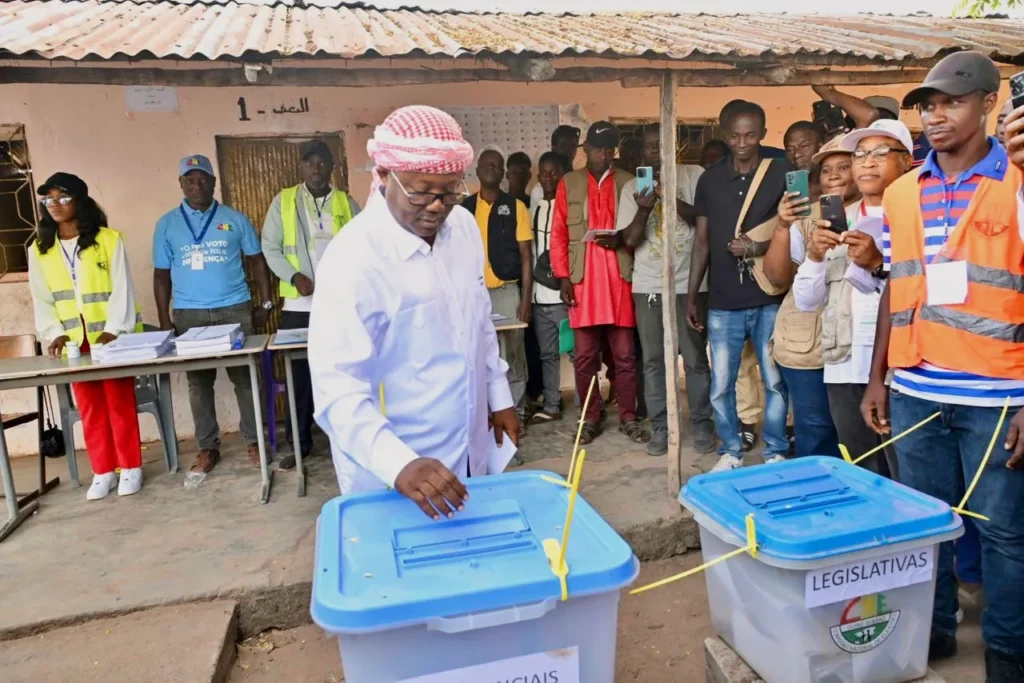
Sunday’s presidential election pitted incumbent Embalo against opposition challenger Fernando Dias in a contest marred by legitimacy questions after authorities barred the main opposition African Party for the Independence of Guinea and Cape Verde from participating. Both candidates declared victory Tuesday despite provisional results not being scheduled for release until Thursday, creating volatile political atmosphere that preceded Wednesday’s military intervention.

The military statement accused unnamed “national politicians” and “well-known national and foreign drug barons” of plotting to destabilize the country through electoral manipulation, though N’Tchama provided no evidence supporting these allegations. “The scheme was set up by some national politicians with the participation of a well-known drug lord, and domestic and foreign nationals,” he asserted, echoing familiar patterns where military forces justify coups by citing corruption or security threats without substantiating specific claims.

Soldiers announced immediate suspension of the electoral process and media outlet activities alongside border closures, effectively isolating the nation of approximately two million people from external oversight or intervention during the uncertain transition period. The United States mission to Guinea-Bissau issued security advisory Wednesday confirming military checkpoints throughout Bissau and reporting that security forces had deployed tear gas, warning that “a continuation of the sporadic gunfire that was reported earlier in the day in Bissau cannot be ruled out.”

Opposition Leaders Detained Amid Confusion

Fernando Dias, Embalo’s primary challenger, released video statement distributed by his campaign late Wednesday claiming he remained free and in a safe location after armed men attempted to take him into custody. However, his assertion contradicted subsequent reports from multiple sources including Al Jazeera correspondent Nicolas Haque, who reported from neighboring Senegal that both Dias and former Prime Minister Domingos Simoes Pereira had been arrested.

Pereira, who lost to Embalo in the contested 2019 presidential runoff and endorsed Dias in the current election, had been barred from this year’s race after authorities claimed his party failed to submit applications properly. The African Party for the Independence of Guinea and Cape Verde confirmed via Facebook statement that soldiers had arrested both Dias and Pereira, though the military command did not acknowledge these detentions in official announcements.

The confusion surrounding who precisely was detained, their locations and conditions reflected the chaotic nature of the takeover and limited information flow as military authorities restricted communications. Haque reported Wednesday afternoon that “the military is trying to cut off the Internet” while enforcing the overnight curfew, tactics commonly employed during coups to prevent coordination among opposition forces and limit information reaching international audiences.

Denis N’Canha, the army officer leading the coup according to Al Jazeera reporting, previously served as head of the presidential guard, creating the particularly paradoxical situation where “the man supposed to protect the president himself has put the president under arrest,” as Haque observed. This pattern of security forces turning against leaders they ostensibly protect has characterized several recent African coups where military units exploit their proximity to power for executing takeovers.

Legitimacy Crisis and Constitutional Disputes

Embalo had faced legitimacy crisis heading into the election, with opposition forces arguing his presidential term had expired and refusing to recognize his authority. Guinea-Bissau’s constitution establishes five-year presidential terms, meaning Embalo’s tenure that began in February 2020 should have concluded on February 27 this year according to opposition calculations. However, the Supreme Court ruled his term should extend until September 4, creating legal ambiguity that opposition parties rejected while demanding elections.

The delayed presidential election, originally scheduled months earlier, finally occurred this month amid this constitutional dispute. Embalo had been seeking to become the first president in three decades to win consecutive terms in Guinea-Bissau, a distinction reflecting the nation’s political instability where military interventions, coups and constitutional crises have repeatedly disrupted democratic transitions since independence from Portugal in 1974.

Civil society coalition Popular Front accused Embalo and the army of staging a “simulated coup” designed to block release of election results and enable him to cling to power. “This maneuver aims to prevent the publication of the electoral results scheduled for tomorrow, Nov. 27,” the coalition stated Wednesday, claiming Embalo planned to name new president and interim prime minister before calling fresh elections where he intended to compete again despite constitutional term limits.

These accusations of manufactured crisis echoed criticisms Embalo has faced throughout his presidency, with opponents charging that he fabricates security threats as pretexts for authoritarian crackdowns. Gunfire rang out for hours in Bissau during December 2023 in what Embalo’s government characterized as attempted coup, prompting him to dissolve parliament. The country has functioned without legislature since that dissolution, concentrating power in the presidency while eliminating institutional checks.

Drug Trafficking and State Fragility

Guinea-Bissau’s status as notorious cocaine trafficking hub between Latin America and Europe provides critical context for understanding its chronic political instability. The small coastal nation situated between Senegal and Guinea offers strategic geography for narcotics transit, with weak state institutions and endemic corruption creating permissive environment for transnational organized crime networks to operate with relative impunity.

An August 2024 report by the Global Initiative Against Transnational Organized Crime described Guinea-Bissau’s cocaine trade as potentially more profitable than ever before under Embalo’s administration, raising questions about government complicity or incapacity to confront trafficking networks. In September 2023, judicial police announced seizing 2.63 metric tons of cocaine from a plane that landed in Bissau from Venezuela, demonstrating both the scale of trafficking and occasional enforcement actions.

The military statement’s reference to “well-known national and foreign drug barons” participating in alleged destabilization plots reflects the intimate connections between Guinea-Bissau’s political elite, security forces and organized crime networks. These relationships create perverse incentives where various factions compete for control over lucrative trafficking routes and corruption proceeds rather than governing in citizens’ interests, perpetuating cycles of instability that undermine democratic institution-building.

Regional Pattern of Democratic Backsliding

Wednesday’s coup marks the latest military takeover in West Africa since 2020, when the region began experiencing unprecedented wave of successful coups reversing decades of gradual democratic progress. Three landlocked Sahel nations—Mali, Niger and Burkina Faso—are now ruled by military leaders who seized power pledging to provide enhanced security against armed group insurgencies that previous civilian governments failed to suppress.

In neighboring Guinea, General Mamadi Doumbouya overthrew the president in 2021, criticizing the previous government for broken promises while vowing to eliminate bad governance and corruption. In Gabon, mutinous soldiers took power in 2023 shortly after the president was declared election winner from which international observers had been barred for the first time, with coup leader General Brice Oligui Nguema subsequently being elected president in April.

This regional pattern demonstrates how military forces exploit governance failures, security challenges and contested elections as justifications for interventions that consistently promise improved leadership while rarely delivering sustainable improvements. The coups reflect deeper crises of legitimacy affecting West African states where populations increasingly question whether democratic institutions serve their interests, creating political space for military actors to present themselves as alternative to dysfunctional civilian rule.

International Response and Calls for Constitutional Order

The African Union and West Africa’s Economic Community of West African States issued joint statement Wednesday evening expressing “deep concern” over the coup announcement and calling for immediate release of detained officials involved in the electoral process. “It’s regrettable that this announcement came at a time when the missions had just concluded meeting with the two leading presidential candidates, who assured us of their willingness to accept the will of the people,” the observers stated.

The observation missions, which included Mozambique’s former President Filipe Jacinto Nyusi and Nigeria’s former President Goodluck Jonathan, urged regional bodies to take necessary steps restoring constitutional order. “We urge the armed forces to immediately release the detained officials to allow the country’s electoral process to proceed to its conclusion,” their statement read, though such appeals have proven ineffective in preventing or reversing recent West African coups.

United Nations Secretary-General Antonio Guterres followed the situation “with deep concern” according to spokesperson Stephane Dujarric, who told reporters that Guterres “appeals to all national stakeholders in Guinea Bissau to exercise restraint and exercise and respect the rule of law.” The secretary-general pledged to closely monitor developments, though the UN’s capacity to influence outcomes in such situations remains limited absent coordinated international pressure backed by concrete consequences.

Portugal, Guinea-Bissau’s former colonial power, called for government institutions to resume normal operations and for vote counting and result proclamation to proceed. The Portuguese government urged all parties to “refrain from any act of institutional or civic violence,” though Lisbon lacks leverage to compel compliance given limited economic or security relationships with its former colony.

Historical Context and Coup-Prone Legacy

Guinea-Bissau has experienced at least nine coups and attempted coups between 1974, when it gained independence from Portugal, and 2020 when Embalo took office. The president claimed to have survived three coup attempts during his tenure, though critics accused him of manufacturing crises as excuses for authoritarian crackdowns that consolidated his power while eliminating opposition and dismantling institutional constraints.

The most recent reported coup attempt before Wednesday came in late October, when authorities announced that senior officers had been arrested on suspicion of attempting to topple the government. These frequent coup plots—whether genuine or fabricated—reflect the military’s central role in Guinea-Bissau’s politics and the fragility of civilian authority over security forces that maintain autonomous power bases and commercial interests independent of government control.

The lead-up to Sunday’s vote was fraught with tensions surrounding Embalo’s legitimacy and opposition complaints about his extended tenure. The barring of the main opposition party from participating eliminated the president’s most formidable challenger while raising serious questions about the election’s credibility that civil society groups and international observers had flagged before voting occurred.

Fire tears through 35-story Hong Kong tower, trapping residents in dramatic high-rise blaze

0

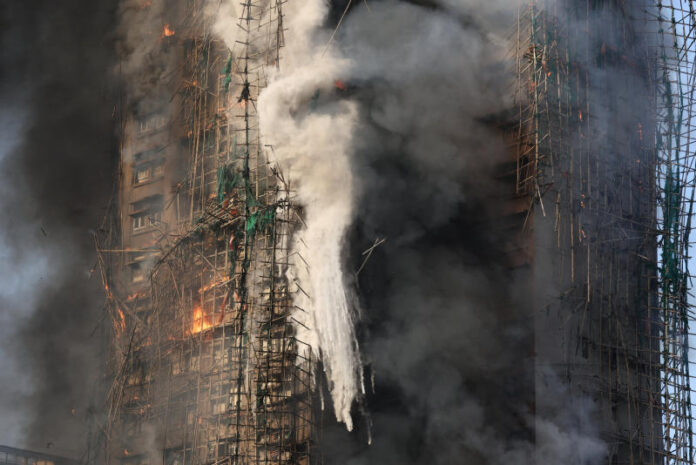
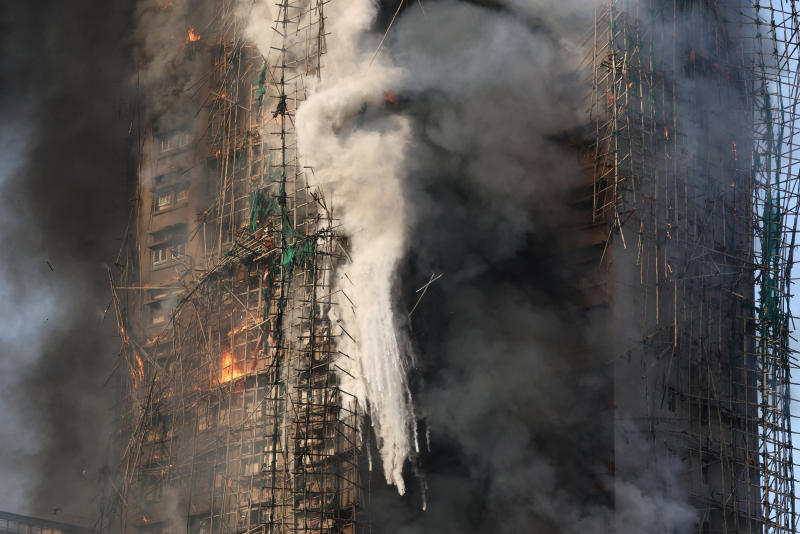
A towering inferno swept through a residential block in Hong Kong’s northern Tai Po district on Wednesday afternoon, sending dense grey smoke across the neighborhood as emergency crews battled a fast-moving fire that trapped people inside the high-rise.

Authorities said the blaze erupted at Wang Fuk Court at 2:51 p.m. and intensified rapidly, prompting officials to upgrade the incident to a No. 4 alarm — the city’s second-highest emergency classification — just over 40 minutes later. Reuters reported that at least one man suffered severe burns and that multiple residents were unable to escape as the fire climbed the building’s exterior.

The tower is part of a large eight-block housing complex containing roughly 2,000 units. Several of the surrounding structures were covered in bamboo scaffolding, a common feature in Hong Kong construction but one that firefighters say can accelerate the spread of flames. Media outlets, including RTHK and the South China Morning Post, reported that the blaze raced up the scaffolding as firefighters worked to reach trapped residents.

Live footage from local broadcasters showed heavy plumes of smoke rolling from the upper floors while flames curled around the building’s frame. Police confirmed they received a surge of emergency calls from people inside who could not make it out as conditions deteriorated.

The Sun reported that flames and smoke crawled up the 35-story façade, with video capturing the intensity of the burning scaffolding and the speed with which the blaze spread. Fire crews worked from the ground and elevated platforms, attempting to contain the fire while still searching for those stranded inside.

Hong Kong’s dense urban landscape and reliance on bamboo scaffolding have long posed challenges for firefighting, particularly in older or tightly packed districts like Tai Po. Fires in high-rise buildings often escalate quickly due to vertical airflows and limited evacuation routes, complicating rescue operations even under normal conditions. Wednesday’s blaze underscores those risks, especially when external scaffolding becomes a conduit for flames that can leap from one level to the next.

The rapid escalation to a No. 4 alarm signals the severity of the incident, as such classifications are reserved for fires requiring large-scale manpower and advanced coordination across multiple emergency units. The incident also raises questions about site safety protocols, especially around active construction or maintenance work where external scaffolding remains in place.

As firefighters continue working to stabilize the structure and locate anyone still inside, the blaze is likely to renew conversation in Hong Kong about fire safety standards in crowded public housing complexes and the vulnerabilities created by external renovation materials. It also highlights the strain on emergency services in high-density districts where rescue operations hinge on speed, vertical access, and the ability to navigate smoke-filled towers.

Authorities have not yet released updated casualty figures or confirmed how many people remain trapped as efforts continue into the evening.

Reuters/Thesun

 Bangkok Judge Issues Arrest Warrant for Miss Universe Co-Owner in Expanding Fraud Case

0

A court in Thailand issued an arrest warrant Wednesday for Jakkaphong “Anne” Jakrajutatip, the high-profile Thai businesswoman and co-owner of the Miss Universe Organization, after she failed to appear at a scheduled hearing tied to an ongoing fraud case. The Bangkok South District Court said her unexplained absence led judges to consider her a potential flight risk.

The court rescheduled the hearing for Dec. 26 and said in its written statement that Jakkaphong was previously charged with fraud in 2023 before being released on bail. Her failure to appear Tuesday, without notifying officials, triggered the warrant and intensified scrutiny surrounding her troubled media empire.

Court documents detail that businessman Raweewat Maschamadol accused both Jakkaphong and her company, JKN Global Group Public Co. Ltd., of deceiving him while selling corporate bonds last year. Raweewat told authorities the investment cost him roughly 30 million baht — about $930,000. JKN began defaulting on payments in 2023 and later entered debt rehabilitation in the Central Bankruptcy Court, reporting liabilities of approximately 3 billion baht (nearly $93 million).

The Miss Universe Organization, once owned by IMG Worldwide LLC, was acquired by JKN in 2022. The company sold a 50 percent stake to Legacy Holding Group USA in 2023, a firm controlled by Mexican businessman Raúl Rocha Cantú. Despite internal turmoil, Jakkaphong remained the largest shareholder until stepping down from all official roles in June after the Thai Securities and Exchange Commission accused her of fabricating elements of the company’s financial disclosures.

Her location has remained unknown since early November. She did not attend the 74th Miss Universe competition, hosted in Bangkok earlier this month, fueling speculation online about whether she had fled the country. On Monday, JKN issued a public denial, insisting rumors of asset liquidation and escape were false, yet the company has not responded to the newly issued arrest warrant. Attempts to reach Jakkaphong have been unsuccessful.

This year’s pageant already faced significant problems, including public criticism from a Thai organizer directed at Mexico’s Fátima Bosch Fernández, who won the Miss Universe 2025 crown on Nov. 19. Two judges reportedly withdrew amid concerns about favoritism, and Thai police opened a separate inquiry into allegations that pageant promotions included illegal online casino advertising.

Jakkaphong, a prominent public figure who has appeared in Thai reality shows and often speaks openly about her identity as a transgender woman, has seen her reputation shift dramatically as legal challenges and financial failures mount. Her long-standing presence in Thailand’s entertainment and business scenes made her one of the country’s most recognizable entrepreneurs, but the rapid unraveling of JKN’s finances has complicated her once-celebrated public image.

The arrest warrant marks a major escalation for both Thai regulators and investors who have grown increasingly anxious about the stability of JKN Global Group. Once marketed as a bold new force in Asian media, JKN aggressively expanded into high-profile ventures—including acquiring Miss Universe—using heavy corporate borrowing. Analysts say the company’s collapse illustrates the risks associated with rapid, debt-fueled acquisitions in a volatile entertainment market.

Legal scholars note that Thailand’s fraud and securities cases often move slowly, but Jakkaphong’s visibility, international profile and the scale of losses have raised the stakes considerably. Her absence from court strengthens critics’ claims that oversight mechanisms failed to catch JKN’s deteriorating finances soon enough.

The troubles surrounding the Miss Universe brand also cast a shadow over one of the world’s most recognizable cultural franchises. While the pageant has shifted toward global inclusivity and modernized its image, the disputes swirling around ownership, judging controversies and police investigations threaten to overshadow recent efforts to rebrand the competition for a new generation of viewers.

Observers say that how Thai courts proceed—particularly whether Jakkaphong returns voluntarily or is detained—could influence investor confidence in Thailand’s media sector and determine the long-term stability of the Miss Universe Organization under divided ownership.

Credit: AP

Chelsea Dismantle 10-Man Barcelona as Estevão Shines in Statement Champions League Win

0

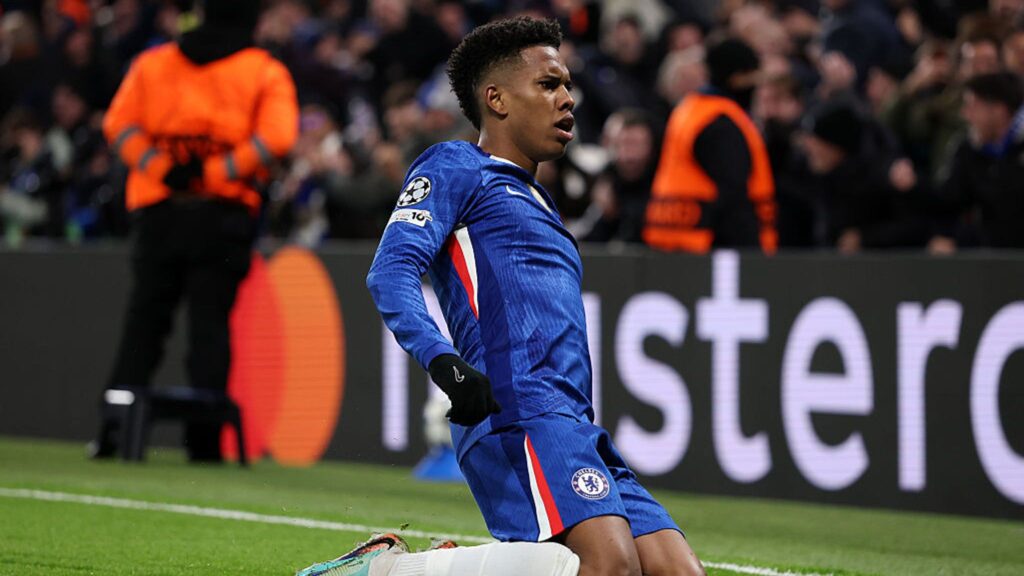
Chelsea delivered one of their most dominant European performances in years on Tuesday night, overwhelming Barcelona 3-0 at Stamford Bridge after the Spanish champions were reduced to 10 players late in the first half. The decisive win, driven by a spectacular finish from teenage standout Estevão, pushed Chelsea deeper into the Champions League’s top eight and left Barcelona’s campaign flickering in uncertainty.

The opening breakthrough came in the 27th minute when Pedro Neto’s driven effort deflected off Barcelona defender Jules Koundé and into the net, according to match accounts released by both clubs. Barcelona’s problems intensified just before halftime when captain Ronald Araújo collected a second yellow card, sending the visitors into the break short-handed and visibly rattled.

Chelsea took complete command after the interval. Estevão, the 18-year-old Brazilian widely touted as one of the sport’s brightest prospects, stunned the stadium with a blistering strike from an impossibly narrow angle, a goal highlighted by Sky Sports as the defining moment of the night. Ten minutes later, substitute Liam Delap capitalized on a confirmed onside decision after VAR overturned an initial flag, providing Chelsea’s third and securing their most emphatic Champions League win of the season.

The victory lifted Chelsea to 10 points from five matchdays, placing them temporarily fifth in the league phase standings. Barcelona remained on seven points and now face the real possibility of losing their automatic route into the knockout rounds, a scenario that would have been unthinkable before this stage of the competition. The Spanish champions also saw their remarkable run of 53 consecutive matches with at least one goal abruptly halted, as confirmed by Sky Sports’ post-match analysis.

Marc Cucurella, named player of the match by Amazon Prime, played a decisive defensive role by neutralizing Spanish national teammate Lamine Yamal. His performance marked one of his strongest outings since joining Chelsea, helping hold the highly rated 16-year-old without a breakthrough on what was expected to be a showcase for Europe’s two most celebrated teenage talents.

Chelsea manager Enzo Maresca praised Estevão’s composure in comments to beIN Sports, comparing the promise of Estevão and Yamal to early-career versions of Lionel Messi and Cristiano Ronaldo. He emphasized the importance of patience, noting that both teenagers are still developing and must focus on daily improvement.

Estevão, speaking with Amazon Prime, described the night as “perfect,” saying the speed and emotion of the moment made his goal feel almost instinctive. He expressed gratitude and said he hoped the strike would be only the beginning of a long run of important contributions.

Cucurella, reflecting on his own journey, acknowledged his pride and said Estevão’s rapid rise showed he is already narrowing the gap with Yamal, despite joining European football later. He added that Chelsea’s dressing room environment would be vital in helping the young forward grow.

Chelsea’s performance was not merely a strong European display—it was a declaration of ambition. Maresca’s decision to play without a traditional striker, deploying Neto as a false nine, demonstrated a tactical boldness that paid off decisively against a Barcelona side known for structured possession. The aggressive pressing and rapid transitions exploited gaps that widened further after Araújo’s dismissal.

For Barcelona, the defeat raises broader concerns. Their reliance on young talent such as Yamal has energized supporters, but the loss exposed structural vulnerabilities, particularly when forced to chase a match while down a defender. The inability to generate meaningful chances even before the red card suggests deeper tactical issues that manager Xavi will need to confront ahead of domestic play.

The result also sharpens the narrative around Estevão’s emergence. His duel with Yamal had been billed as an early glimpse into football’s next great rivalry, yet it was the Brazilian who decisively seized the spotlight. Analysts have noted that his physical readiness and assertiveness in tight spaces already resemble seasoned European forwards.

Chelsea now turn their attention to a critical Premier League showdown with leaders Arsenal on Sunday, a match further charged by the surge of momentum from this victory. Barcelona, meanwhile, return home to face Deportivo Alavés, a fixture they hope will stabilize confidence after one of their most deflating European nights of the season.

French Police Expand Investigation into Louvre Jewel Heist with Four New Arrests

0

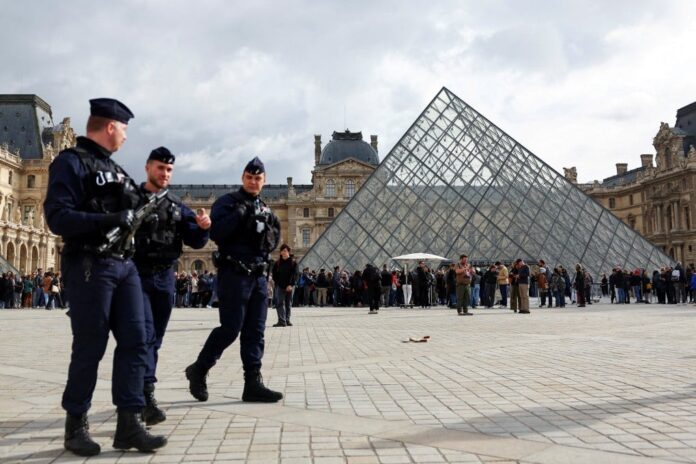
PARIS (BN24) — French police have arrested four additional suspects in connection with the daring October 19 theft of imperial jewels from the Louvre Museum, pushing the total number of individuals detained in the case to eight. The arrests come on the heels of previous charges against four individuals earlier this month, further intensifying the investigation into what has been described as one of the most brazen art thefts in recent memory.

The new arrests, confirmed by Paris prosecutor Laure Beccuau, involved two men aged 38 and 39, and two women aged 31 and 40, all reportedly from the Paris region. The suspects, who have not yet been publicly identified, were detained as part of an ongoing investigation into the high-profile robbery that targeted some of France’s most priceless historical treasures.

A Daylight Heist that Shocked the World

The robbery, which unfolded in broad daylight, has raised serious questions about the security measures in place at one of the world’s most famous museums. On October 19, a well-coordinated team of thieves managed to bypass the Louvre’s security system and make off with eight irreplaceable pieces of jewelry, including items that once belonged to the French royal family. The jewels were valued at an estimated $102 million.

The heist was executed with military precision. The thieves arrived at the museum in a moving truck, parked it beneath the Apollo Gallery—home to the French crown jewels, and set up a makeshift ladder. Using an industrial bucket, they ascended to the gallery’s windows, breaking in and using angle grinders to cut into the glass display cases. Within a span of just seven minutes, they had stolen the valuable pieces and fled the scene on scooters, leaving security forces scrambling to respond.

Remarkably, one of the stolen items, a crown once worn by Empress Eugenie, Napoleon III’s wife, was dropped during the thieves’ hasty escape. The crown, which is adorned with diamonds and emeralds, was recovered shortly after the heist, but the other items remain unaccounted for.

The Stolen Jewels: A Cultural and Historical Loss

Among the items taken were an emerald-and-diamond necklace that was given by Napoleon I to his second wife, Empress Marie-Louise. The necklace, which is considered one of the most valuable pieces of French royal jewelry, has significant historical value. In total, the jewels that were stolen represent not just monetary wealth, but centuries of French history and culture.

In addition to the imperial jewels, several other priceless pieces were part of the haul, including ornate bracelets and earrings that date back to the 19th century. Experts have expressed deep concern about the potential damage these pieces could sustain if not recovered in time.

Rising Questions About Security at the Louvre

The daylight nature of the heist has led many to question the efficacy of security at the Louvre, especially considering that the museum is a leading cultural institution that attracts millions of visitors every year. While the museum boasts state-of-the-art surveillance and protective measures, the thieves were able to circumvent them with apparent ease. The fact that they carried out the heist in such a short window of time has prompted calls for a review of museum security protocols across France and Europe.

According to renowned art security expert Marie Dupont, the robbery raises serious concerns about the vulnerability of museums globally. “If thieves can execute such a sophisticated heist at the Louvre, what does that say about the security of other museums?” Dupont asked. “This could be a turning point in how art institutions approach security in the digital age.”

A Complex and Expanding Investigation

The new arrests come as the investigation into the theft intensifies. While the police have yet to recover the stolen jewels, investigators are optimistic that the latest round of arrests will lead to further breakthroughs. French police are working closely with international law enforcement agencies, including Interpol, to track the movements of the stolen jewels, which experts fear may have already been sold on the black market.

The suspects arrested so far have reportedly been linked to a larger network of thieves who specialize in high-profile art and jewel thefts. Investigators are piecing together the details of how the gang managed to plan and execute the heist, and whether the Louvre’s security lapses were a result of internal complicity or external opportunism.

In addition to the arrest of these four new suspects, authorities are also looking into potential connections between the thieves and organized crime groups operating throughout Europe. The sophistication of the heist suggests that the operation was not a spur-of-the-moment crime but part of a larger, coordinated effort to target valuable cultural artifacts.

The Economic and Cultural Fallout

The theft has not only shocked the art world but also sparked a broader discussion on the economic implications of such high-profile robberies. The loss of these historical treasures is not just a blow to the cultural heritage of France but also a financial one. The value of the stolen jewelry could affect the art market significantly, especially if the pieces are sold or melted down for their precious materials.

Moreover, the incident has put the spotlight on the risks that museums and collectors face in an increasingly digital world. The Louvre’s inability to prevent such a bold robbery could set a dangerous precedent for the future of art security, especially as museums face mounting pressure to balance public access with the protection of priceless artifacts.

As of now, the jewels remain missing, and investigators are racing against the clock to locate and return them. While the recovery of these priceless items would undoubtedly be a relief, experts fear that they may never be recovered in their original form. The art world remains on edge as authorities continue to search for any trace of the stolen jewels.

Looking forward, it is clear that this heist will have long-term implications for museum security and the broader art market. If the stolen jewels remain unrecovered, the case could become a symbol of the vulnerability of cultural treasures to sophisticated criminal operations. Meanwhile, the Louvre and other cultural institutions will likely be forced to reevaluate their security systems, introducing more advanced technologies and stricter protocols to prevent future crimes.

For now, the investigation into the Louvre jewel heist remains ongoing, with French authorities continuing to track down any remaining suspects and recover the stolen items. While the investigation has already resulted in significant arrests, the full extent of the operation and the fate of the missing jewels remain unclear.

Credit: Reuters

5 Dead, Including 3 Children, in Tragic Car Crash South of Denver, Colorado

0

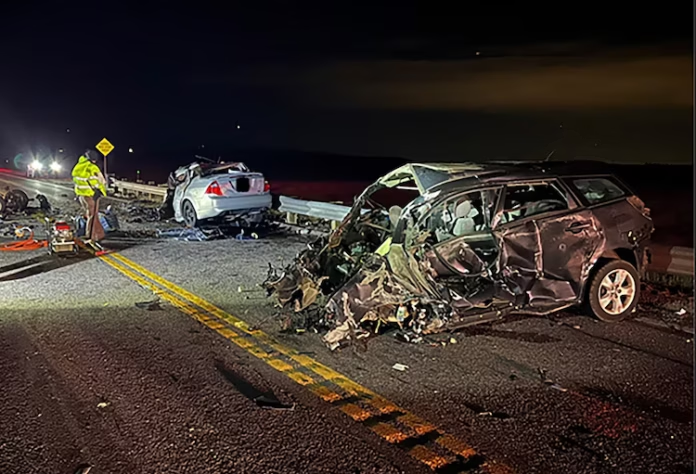
FRANKTOWN, COLORADO (BN24) — Five people, including three children, tragically lost their lives in a car crash on Highway 83 south of Denver, Colorado, on Monday afternoon. The crash, which occurred near Franktown at 4:39 p.m., involved a series of collisions between three vehicles and has left the community in mourning.

According to the Colorado State Patrol (CSP), the accident occurred when a black Toyota hatchback, traveling southbound, lost control while driving on the highway. The Toyota veered off the right shoulder before returning to the road and rolling into the northbound lane. As the Toyota continued to travel south, it collided head-on with a tan Ford sedan, which was traveling northbound. The force of the crash caused the Toyota to then strike a black Ford pickup truck, though the pickup sustained only minor damage.

The driver of the Toyota was ejected from the vehicle during the crash and was pronounced dead at the scene, according to CSP officials. Tragically, the Ford sedan, which an adult driver and five juveniles occupied, also suffered catastrophic damage. The adult driver, along with three of the juveniles, was pronounced dead at the scene of the crash. The two other juveniles were airlifted to a nearby medical facility, their conditions not immediately disclosed.

Fortunately, the driver of the Ford pickup truck involved in the collision was not injured, CSP said.

Authorities have confirmed that the Douglas County coroner’s office will officially identify the deceased once next of kin have been notified, but the crash has already raised numerous questions about what led to the tragic chain of events.

As of Monday evening, the area near mile marker 40.5 on Highway 83, just north of Russellville Road, remained closed while CSP’s Vehicular Crimes Unit led the investigation into the crash. The cause of the Toyota losing control remains unclear, with authorities continuing to gather evidence, including witness statements and surveillance footage, in an effort to determine what led to the collision.

CSP has urged the public to avoid the area as the investigation and cleanup efforts continue. Local drivers were advised to find alternate routes while the highway remains closed.

The devastating crash has sparked an outpouring of grief from the local community and surrounding areas, particularly given the involvement of young children. Emergency responders, local officials, and family members are coping with the aftermath of what has become one of the deadliest crashes in the region this year.

The crash has raised concerns about road safety, especially on Highway 83, a busy route that serves as a key artery between Franktown and other nearby communities. Though the exact cause of the accident remains under investigation, the fact that the Toyota lost control and collided with multiple vehicles has prompted discussions about possible contributing factors such as road conditions, weather, and vehicle maintenance.

Local residents, some of whom witnessed the crash, have called for increased safety measures on the stretch of highway where the accident occurred. “It’s a tragedy, and it could have been prevented,” said one local who spoke on condition of anonymity. “That stretch of road has always been a bit dangerous, and I think the authorities need to look into better signage or even speed limits.”

As investigators work to determine the specifics of the crash, there is also growing concern over the prevalence of fatal car accidents involving multiple vehicles in the region. With traffic fatalities on the rise across the state, local lawmakers have been under pressure to implement more stringent traffic laws, improve infrastructure, and take proactive measures to prevent such tragedies.

The news of the crash has hit the community hard, especially for the families of those involved. Local churches and community organizations have begun organizing support services for the victims’ families and emergency responders. “Our hearts go out to the families of those lost in this devastating accident,” said a spokesperson for the Franktown Community Center. “We’re here to support them in any way we can during this difficult time.”

In addition, social media tributes have poured in from friends and family of the victims, sharing memories of the children and adults who perished in the crash. The community has rallied around the families, offering condolences and support as they begin the grieving process.

While the investigation continues, the crash has highlighted broader issues surrounding vehicle safety, especially in crashes involving multiple cars. The Colorado State Patrol has reminded drivers to stay alert and follow safety protocols, especially during busy travel hours when road conditions can be unpredictable.

The incident has prompted renewed discussions about the importance of ensuring all vehicles on the road are properly maintained, as well as the responsibility of drivers to make safe decisions, especially when navigating dangerous or unfamiliar stretches of road.

As authorities continue their investigation into this heartbreaking incident, the loss of five lives, including three children, has cast a shadow over the Franktown area and beyond. The crash is a painful reminder of the fragility of life and the importance of road safety, particularly on highways that connect small communities.

While questions remain about the cause of the accident, the grief felt by the families and the local community is undeniable. With the investigation ongoing, Colorado residents are urged to keep the victims’ families in their thoughts and continue to drive with caution to prevent further tragedies on the state’s roadways.