TOKYO (BN24)— Firefighters in southwestern Japan struggled Wednesday to contain a fire that swept through a coastal neighborhood in the city of Oita, damaging or destroying roughly 170 homes and forcing more than 170 residents to evacuate as strong winds continued to complicate the response. Authorities said a man in his 70s remained missing as emergency agencies worked to account for residents and assess the full extent of the damage.
The blaze began Tuesday evening near a fishing port in Oita on Kyushu, Japan’s southern main island. Officials said powerful winds quickly carried the flames inland, moving from the waterfront through tightly packed residential streets before spreading into a nearby forest. The speed of the fire’s advance left little time for evacuation, and residents described rushing to safety as smoke and embers filled the air.
One woman told Kyodo News she escaped with only the clothes she was wearing, saying the flames “spread in the blink of an eye,” leaving no opportunity to gather belongings as the fire overran her neighborhood. The rapid escalation forced authorities to issue immediate evacuation orders, sending families to shelters as firefighters attempted to create containment lines.
By midday Wednesday, Japanese television footage showed smoke still rising from large sections of the affected area, where rows of houses had been reduced to blackened foundations. Though the flames that lit the sky overnight were no longer visible, scorched debris continued to smolder as emergency teams navigated collapsed structures and unstable ground.
More than 200 firefighters and dozens of fire engines were dispatched to the scene, where crews had been working for nearly 20 hours without full containment. The Ground Self-Defense Force deployed two UH-1 helicopters to drop water over the burning forested sections and support ground units fighting the spread toward additional homes.
Prime Minister Sanae Takaichi, in a statement posted on X, offered condolences to residents who lost homes and pledged government assistance. She said authorities would “provide maximum support” to those affected as local officials coordinated ongoing firefighting operations, shelter management, and damage assessments.
The cause of the fire had not been announced, and officials said the priority remained controlling remaining hot spots and ensuring that shifting winds did not reignite flames in residential areas already weakened by the overnight blaze.
ERUKU, Kwara State, Nigeria (BN24)— Panic and terror swept through Eruku, a community in the Ekiti Local Government Area, on Tuesday evening when gunmen attacked a branch of the Christ Apostolic Church (CAC), killing three worshippers and abducting several others, including the church pastor.
Eyewitnesses said the assailants struck without warning during a church meeting, opening fire on worshippers and forcing them to flee into surrounding bushes. “The gunmen came in suddenly and started shooting. Three people were killed instantly,” one resident said. “They gathered others at gunpoint and marched them into the bush. We still don’t know the exact number taken.”
The attackers reportedly entered the community through bush paths connecting Eruku to neighboring settlements, advancing into the town with sporadic gunfire that sent residents and travelers fleeing in panic. Vehicles were abandoned on roads as residents scrambled for safety, creating scenes of chaos across the community.
A traveler escaping the attack recorded a frantic video from the bush, describing the mayhem. “This is 18-11-2025. On my way back from the Federal Poly, Bida, Niger State, we were coming through Ilorin road when they started shooting. Everybody has scattered into the bush. Please, come to our rescue. They are shooting everywhere. People have abandoned their vehicles. The community is in chaos,” he said, his voice trembling.
Reports indicate that three people were killed, though some sources suggest two fatalities, reflecting the confusion during the assault. An unspecified number of worshippers were abducted, including the CAC pastor. The gunmen reportedly fled through forested areas linking Eruku to neighboring communities, leaving a trail of fear in their wake.
Residents say Eruku has faced repeated attacks in recent weeks, despite local authorities, vigilante groups, and the Eruku Progressive Union attempting to secure the area. “Nothing concrete has come from the authorities. We are living in fear every day,” a community member said, highlighting the growing insecurity in the region.
The Kwara State Police Command and the state government have yet to issue a formal public statement, though the Police Public Relations Officer, Mrs. Toun Ejire-Adeyemi, confirmed the attack. She said the Divisional Police Officer and his team responded quickly to gunfire reports, with assistance from local vigilante groups.
The attack has intensified fears across Eruku and surrounding areas, raising concerns about escalating violence in parts of Kwara State. Authorities continue to investigate the identities, motives, and movements of the attackers, while residents remain in uncertainty over the fate of the abducted pastor and worshippers.
MAIDUGURI, Nigeria (BN24)— Nigerian security forces intensified their search Tuesday for 25 girls abducted from a boarding school in northwestern Kebbi state, the latest in a series of school kidnappings that continue to plague the country.
Police said armed men stormed the Government Girls Comprehensive Secondary School in Maga town around 4 a.m. local time (0300 GMT) on Monday. The attackers, arriving on motorcycles, engaged police in gunfire before scaling the school’s perimeter fence and abducting the students. Authorities described the operation as well-planned.
“We must find these children. Act decisively and professionally on all intelligence. Success is not optional,” Lieutenant General Waidi Shaibu, Nigeria’s Chief of Army Staff, told troops during a visit to Kebbi on Tuesday.
Nazifi Isa, a resident, said he learned of the abduction after dawn prayers at a mosque. One of his two daughters was among those taken. “Since yesterday, we haven’t eaten, and my wife is in tears. I can’t even go back home to see her because I know how distraught she is,” Isa told Reuters by phone.
The abduction comes as Nigeria faces mounting pressure from the United States following threats of military action by former President Donald Trump over the persecution of Christians by Islamist insurgents, including Islamic State West Africa Province (ISWAP) and Boko Haram.
The kidnapping highlights the continuing insecurity across Nigeria. In the northeast, the government battles Islamist insurgents, while the northwest has seen a rise in ransom kidnappings by armed groups. Clashes between cattle herders and farmers persist in the central “middle belt” region.
ISWAP said its fighters abducted and executed an army general in the northeast over the weekend, dealing a blow to Nigeria’s counterinsurgency efforts. Local media also reported that on Monday, another armed gang kidnapped 64 people, including women and children, in neighboring Zamfara state. Many kidnappings go unreported because they occur in remote areas with limited communication.
At Maga school, some parents waited in hope that their children would be found alive. The attack evoked memories of Boko Haram’s 2014 abduction of more than 300 Chibok schoolgirls, which sparked global outrage. Some of those girls later escaped or were released, but hundreds remain missing. Since then, kidnappings from schools and universities for ransom have become a recurring threat.
SEGOU, Mali (BN24)— Mali’s military and allied militias killed at least 31 villagers in two attacks in the central Segou region, where the main insurgent group linked to al Qaeda operates, Human Rights Watch said Tuesday in a detailed report documenting the killings.
The first attack occurred on October 2 in the village of Kamona, where HRW reported that soldiers and allied militias killed at least 21 men and burned homes. Witnesses described the troops moving through the village, accusing residents of supporting Jama’at Nusrat al-Islam wal-Muslimin (JNIM), an al Qaeda-linked group that has been expanding operations in southern Mali.
A second attack occurred in Balle, roughly 55 kilometers (34 miles) from Kamona. At least 10 villagers, including a woman, were killed. Witnesses said the army and militia forces carried out executions after identifying individuals they suspected of collaborating with insurgents.
One survivor, a local herder, recounted hiding in an abandoned home with his nine-year-old daughter during the Kamona attack. When it was safe to emerge, he discovered 17 bodies riddled with bullets, HRW said. Witness testimonies described homes set ablaze and families fleeing into nearby bushlands, creating a climate of fear across the region.
The report called on the Malian authorities to urgently investigate the killings and hold perpetrators accountable. Human Rights Watch also urged the African Union to take measures to help end the ongoing conflict and provide protection for civilians caught between state forces and insurgents. Requests for comment from Mali’s army and the African Union were not immediately returned.
Mali, a landlocked country in West Africa, has been grappling with escalating attacks by jihadist groups that target government forces and civilian communities. In recent months, insurgent groups imposed a fuel blockade, leading to long lines at stations and dramatically increasing costs for diesel generators, which are critical for hospitals, businesses, and rural communities.
Despite the intensifying violence, Mali’s foreign minister dismissed as implausible the notion that jihadists could seize the capital, Bamako, in the near future. Analysts, however, warn that the central and southern regions of the country have become increasingly vulnerable as government forces struggle to maintain security and humanitarian access.
The HRW report underscores the growing humanitarian crisis in Mali, where civilians face threats from both insurgent groups and state-aligned military operations. Human Rights Watch said international intervention, including oversight by regional organizations such as the African Union, is critical to preventing further atrocities.
MOUNTAIN VIEW, Calif. (BN24)— Alphabet Inc. CEO Sundar Pichai warned Monday that no company, including Google, would escape the fallout if the rapidly expanding artificial intelligence sector experiences a major collapse.
In an interview with the BBC, Pichai said the surge in AI investment has been driven in part by “irrationality,” fueling a technology market rally that has swept through global stock markets this year. However, he noted that rising concerns over sustainability and the potential for an AI bubble have contributed to sharp declines in equity markets in recent months.
When asked directly whether Google itself could be affected by an AI market correction, Pichai responded, “I think no company is going to be immune, including us.”
The interview also addressed longstanding concerns surrounding artificial intelligence, including its accuracy, the potential displacement of workers, and the environmental impact of large-scale AI operations. Pichai emphasized the “immense” energy consumption required to power AI systems. According to the International Energy Agency, AI already accounted for roughly 1.5 percent of global electricity use last year.
Looking ahead, Pichai warned that computing demands for AI could climb to 200 gigawatts by 2030, a level comparable to Brazil’s annual electricity consumption. He said about half of that demand is likely to occur in the United States. The race to build large-scale data centers to support AI applications has intensified these pressures, as facilities require vast numbers of chips and extensive cooling infrastructure.
“These are urgent challenges,” Pichai said, noting that new energy sources and reinforced global infrastructure will be necessary to meet the growing demands of AI technology. He also acknowledged that Alphabet’s climate commitments would be affected, delaying some of its carbon neutrality goals, but insisted the company remains on track to reach net-zero emissions by 2030.
Pichai also highlighted the societal implications of AI, predicting significant disruptions to the global workforce. He said the technology could affect even senior executive roles while emphasizing that individuals who adapt to using AI tools would have a competitive advantage regardless of their field.
Alphabet, based in Mountain View, California, reported quarterly revenue exceeding $100 billion in October, a performance partly fueled by accelerating demand for AI products and services. The company has expanded investments in AI infrastructure and accelerated the global rollout of AI-driven features, including enhancements to Google Search and its Gemini model suite.
As AI adoption continues to grow at an unprecedented pace, Pichai’s remarks underscore the broader risks facing companies and economies worldwide, highlighting both the opportunities and vulnerabilities tied to the technology.
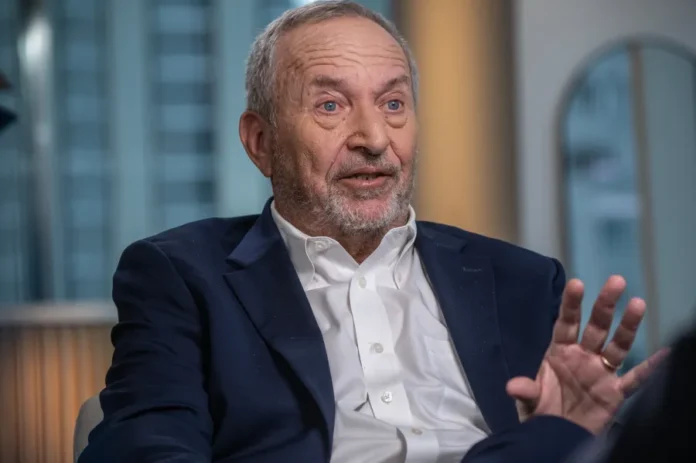
WASHINGTON (BN24) — Former Harvard President Larry Summers said Monday he will step back from public activities after the release of congressional emails showing he continued corresponding with Jeffrey Epstein until the day before the financier was arrested in 2019 on federal charges of sex trafficking minors. The disclosures have widened scrutiny of Epstein’s network and renewed questions surrounding the powerful figures who remained in contact with him after his 2008 conviction.
Summers, who served as treasury secretary under President Bill Clinton and later led the National Economic Council under President Barack Obama, said in a statement to CBS News that he is “deeply ashamed” of the email exchanges and accepts full responsibility for what he called a “misguided decision” to stay in communication with Epstein. He said he hopes to “rebuild trust and repair relationships” with people close to him and will continue teaching at Harvard while stepping back from public-facing commitments.
According to emails released last week by the House Oversight Committee, Summers and Epstein exchanged messages over several years and met for dinners. The correspondence reveals that Epstein frequently sought to arrange introductions between Summers and influential global figures. In a July 2018 message, Epstein proposed a meeting with the “president of the United Nations,” describing the individual as “an interesting person for you,” although the identity of the figure remains unclear.
In another exchange shortly after Donald Trump’s 2016 presidential victory, Summers instructed Epstein to avoid drawing any attention to him within the incoming administration. He wrote that he wanted Epstein to “spend zero effort on anything about me with Trump,” citing concerns about Trump’s approach to conflicts of interest, Russian President Vladimir Putin’s “proximity” to him, and Trump’s public response to the death of Cuban leader Fidel Castro, which Summers described as “mindless.”
House lawmakers are scheduled to vote Tuesday on whether to release all remaining material tied to Epstein, who died in federal custody in 2019. The vote follows the Justice Department’s announcement that it will examine Epstein’s connections to Clinton and several prominent Democrats, an action taken after President Trump urged the department to broaden its inquiry. Trump also called for investigations into Summers, LinkedIn co-founder Reid Hoffman, and banking institutions JPMorgan and Chase.
Trump appeared in more than 1,600 of the 2,324 email threads reviewed by The Wall Street Journal, though none of the messages released last week were sent or received by him. Trump has maintained that he severed contact with Epstein before the financier’s 2008 conviction and has repeatedly denied any wrongdoing. In a social media post following the latest disclosures, Trump asserted that Epstein “was a Democrat” and called him “the Democrats’ problem,” saying there was no reason to “waste time with Trump.”
Clinton has denied any knowledge of Epstein’s crimes. Summers, who led Harvard from 2001 to 2006, has long been known to have crossed paths with Epstein, who cultivated extensive relationships across finance, academia, government, and philanthropy. A spokesperson for Summers previously told U.S. media that he “deeply regrets” maintaining contact with Epstein after his 2008 conviction for soliciting an underage girl.
Summers’ involvement in public organizations has already shifted. The Center for American Progress, a liberal think tank in Washington where Summers had been a senior fellow, said Monday he is no longer affiliated with the organization. Summers also remains listed as a member of OpenAI’s board, a position he took in 2023 following a failed attempt by several directors to oust the company’s chief executive, Sam Altman. OpenAI has not said whether Summers will continue serving on its board, and representatives for Summers have not commented on his future with the company.
The emails released so far mention numerous high-profile individuals across politics, business, and academia. While the records have expanded public understanding of Epstein’s communications, federal authorities have not announced new criminal inquiries based solely on the material made public by the House Oversight Committee. Despite their frequency, the messages between Epstein and Summers do not indicate criminal conduct by Summers, and investigators have not accused him of any wrongdoing.
The continued release of documents is expected to intensify political and public attention surrounding Epstein’s relationships. Lawmakers on both sides of the aisle have said the remaining files could provide further clarity on how Epstein maintained connections to powerful figures for years despite his criminal record.
President Donald Trump is drawing widespread criticism after lashing out at a female reporter who was pressing for information about files related to Jeffrey Epstein.
As Trump was speaking to reporters Friday on Air Force One, Bloomberg White House correspondent and former Philadelphia Daily News reporter Catherine Lucey attempted to ask him about the release of the so-called Epstein files, which the Trump administration has refused to make public.
“If there is nothing incriminating in the files —” Lucey said before being cut off.
“Quiet, quiet, piggy,” an angry Trump shot back while pointing at Lucey.
Neither Lucey nor Bloomberg has responded to The Inquirer’s requests for comment.
“Our White House journalists perform a vital public service, asking questions without fear or favor,” Bloomberg said in a statement to the Guardian. “We remain focused on reporting issues of public interest fairly and accurately.”
Lucey, who has not spoken publicly about the matter, was first identified by the Guardian and can be seen in photographs of the interaction with Trump on Air Force One.
Trump’s remarks drew criticism from across the media world. CNN anchor Jake Tapper called the president’s remarks “disgusting and completely unacceptable.” Former Fox News anchor Gretchen Carlson called the president’s comments “degrading.”
“The president continues to behave in ways that not a single parent I know would tolerate from their elementary-school-aged kids,” wrote the Atlantic’s McKay Coppins.
A White House official defended the remark in a statement to MSNBC’s Vaughn Hillyard, claiming without evidence Lucey “behaved in an inappropriate and unprofessional way towards her colleagues on the plane.” The official did not elaborate.
Though the exchange took place days ago, video footage began circulating Tuesday ahead of a House vote on the Epstein files. It has since gone viral, drawing ire from critics and being reposted by outlets like Pop Crave.
Trump has a history of making sexist comments toward female journalists. He has called women in the press corps “nasty,” “crazy,” and “losers” over the years. He also has used derogatory language about women, comparing them to pigs, dogs and other animals.
Before her time in Washington, Lucey was a respected reporter in Philadelphia, spending 12 years at the Philadelphia Daily News covering everything from police corruption to local news, but her sweet spot was politics. Her portfolio included coverage of then-Mayor Michael Nutter’s administration and the city’s changing power dynamics.
Lucey left in 2012 to work for the Associated Press, focusing on Iowa state politics and presidential races for four years. From there, she headed to the Wall Street Journal, where she covered the Trump and Biden administrations. She joined Bloomberg in March, according to a news release.
Trump also drew criticism Tuesday afternoon after lashing out at ABC News reporter Mary Bruce, who also asked about the Epstein files during an Oval Office meeting between the president and Saudi Arabia Crown Prince Mohammed bin Salman.
“Why wait for Congress to release the Epstein files?” Bruce asked. “Why not just do it now?”
“It’s not the question that I mind, it’s your attitude,” Trump shot back. “You’re a terrible person and a terrible reporter.”
Until recently, Trump had strongly opposed efforts to release the Epstein files. Last week, he called the House’s efforts to press the Department of Justice to make the files available a “Democrat hoax.”
Trump’s social connections to Epstein have been known for decades. Reports show Trump was mentioned in Epstein’s emails more than 1,000 times, making him the most-cited person in the documents released last week by the House Oversight Committee.
But Trump has been reversing his stance on releasing the files, saying on Air Force One, “we have nothing to hide.”
On Tuesday, the House of Representatives passed the Epstein Files Transparency Act in a 427-1 vote, demanding the Justice Department release the unclassified documents on Epstein and his associate Ghislaine Maxwell, who was convicted of sex trafficking.
The Republican-controlled Senate moved quickly Tuesday evening, agreeing to pass the Epstein bill by unanimous consent once it arrived from the House.
The bill would then head to Trump’s desk, who said in recent days he would sign it into law.
The incident aboard Air Force One occurred during what was initially a routine gaggle with reporters traveling with the president. The exchange illustrated the tension between Trump and journalists covering the Epstein story, which has drawn intense scrutiny of the president’s past associations with the convicted sex offender.
The White House’s defense of Trump’s remarks, claiming without evidence that Lucey behaved inappropriately toward colleagues, represents an attempt to justify the president’s language by shifting blame to the reporter. The lack of elaboration on what allegedly inappropriate behavior occurred leaves the claim unsubstantiated.
The timing of the video’s circulation, emerging publicly days after the incident but gaining traction ahead of the House vote on the Epstein transparency legislation, amplified attention to Trump’s treatment of reporters asking about Epstein. The viral spread across social media and major outlets brought the exchange to a wider audience beyond the White House press corps.
Media criticism of Trump’s language came from across the political spectrum. Tapper’s characterization of the remarks as “disgusting and completely unacceptable” and Carlson’s description of them as “degrading” reflected concerns that transcended partisan divides. Coppins’s comparison to behavior parents would not accept from elementary school children framed the president’s conduct as beneath basic standards of civility.
The pattern of Trump’s derogatory comments toward female journalists, documented over years, provides context for understanding the “piggy” remark as part of a broader approach to dealing with critical questioning from women reporters. The use of animal comparisons, including pigs and dogs, represents a specific type of gendered insult.
Lucey’s professional background, including 12 years covering Philadelphia politics and subsequent positions at the Associated Press, Wall Street Journal and Bloomberg, establishes her credentials as an experienced political reporter. Her coverage of mayoral administrations, state politics and presidential campaigns provided the foundation for her current role as White House correspondent.
The dual incidents on the same day, with both Lucey and Bruce facing personal attacks for asking about Epstein files, demonstrate a concentrated response to journalistic inquiry on the topic. Trump’s characterization of Bruce as a “terrible person and a terrible reporter” employed similar tactics of personal attacks rather than engaging with the substance of questions.
The evolution of Trump’s position on Epstein file release, from characterizing Congressional efforts as a “Democrat hoax” to stating “we have nothing to hide” and pledging to sign the transparency legislation, reflects shifting political calculations. The House’s overwhelming 427-1 vote and Senate’s unanimous consent passage created political pressure that made opposition untenable.
Trump’s prominence in the released Epstein documents, mentioned more than 1,000 times according to reports, making him the most-cited person in materials from the House Oversight Committee, helps explain the sensitivity around questions regarding the files. The frequency of references suggests extensive communication or contact documented in Epstein’s records.
The decades-long knowledge of Trump’s social connections to Epstein, now supplemented by documentary evidence from emails and other materials, forms the backdrop for current scrutiny. The historical relationship, combined with new documentary revelations, makes questions about the files particularly pointed for the president.
The Senate’s rapid action following House passage, moving to unanimous consent approval the same evening, demonstrated bipartisan support for transparency that left Trump with limited options beyond signing the legislation as he pledged to do. The swift Congressional action foreclosed any attempt to delay or derail the bill’s path to his desk.
BEIRUT (BN24) — An Israeli airstrike on a Palestinian refugee camp in southern Lebanon on Tuesday killed 13 people and wounded several others, state media and government officials said. It was the deadliest strike on Lebanon since a ceasefire in the Israel-Hezbollah war a year ago.
The drone strike hit a car in the parking lot of a mosque in the Ein el-Hilweh refugee camp on the outskirts of the coastal city of Sidon, the state-run National News Agency said. The Lebanese Health Ministry said 13 people were killed and several others wounded in the airstrike, without giving further details.
Hamas fighters in the area prevented journalists from reaching the scene, as ambulances rushed to evacuate the wounded and the dead.
The Israeli military said it struck a Hamas training compound that was being used to prepare an attack against Israel and its army. It added that the Israeli army would continue to act against Hamas wherever the group operates.
Hamas condemned the attack in a statement saying the strike hit a sports playground and denying that it was a training compound.
Over the past two years, Israeli airstrikes on Lebanon have killed scores of officials from the militant Hezbollah group as well as Palestinian factions such as Hamas.
Saleh Arouri, the deputy political head of Hamas and a founder of the group’s military wing, was killed in a drone strike on a southern suburb of Beirut on Jan. 2, 2024. Several other Hamas officials have been killed in strikes since then.
Hamas led the Oct. 7, 2023 attack on southern Israel that killed about 1,200 people. That sparked Israel’s offensive on the Gaza Strip that killed tens of thousands of Palestinians, according to the Gaza Health Ministry.
A day after the Israel-Hamas war started, Hezbollah began firing rockets toward Israeli posts along the border. Israel responded with shelling and airstrikes in Lebanon, and the two sides became locked in an escalating conflict that became a full-blown war in late September 2024.
That war, the most recent of several conflicts involving Hezbollah over the past four decades, killed more than 4,000 people in Lebanon, including hundreds of civilians, and caused an estimated $11 billion worth of destruction, according to the World Bank. In Israel, 127 people died, including 80 soldiers.
The war ended in late November 2024 with a U.S.-brokered ceasefire. Since then, Israel has carried out scores of airstrikes in Lebanon, saying that Hezbollah is trying to rebuild its capabilities.
Lebanon’s Health Ministry has reported more than 270 people killed and around 850 wounded by Israeli military actions since the ceasefire.
The Ein el-Hilweh refugee camp, established in 1948 following the creation of Israel, is one of the largest Palestinian refugee camps in Lebanon. The camp houses tens of thousands of Palestinian refugees and their descendants, living in crowded conditions on the outskirts of Sidon, a major coastal city in southern Lebanon.
The disputed nature of the target reflects the fundamental disagreement over the strike. Israel’s characterization of the site as a Hamas training compound preparing attacks contrasts sharply with Hamas’s claim that the strike hit a sports playground, raising questions about civilian casualties in a densely populated refugee camp.
The restriction of journalist access by Hamas fighters prevented independent verification of the circumstances surrounding the strike and its aftermath. The presence of Hamas security forces controlling access to the scene complicates efforts to assess the nature of the target and casualties.
The designation of this strike as the deadliest since the November 2024 ceasefire underscores the escalation in violence over the past year. The ceasefire agreement, brokered by the United States, was intended to end hostilities between Israel and Hezbollah but has not prevented continued Israeli military operations in Lebanon.
The Lebanese Health Ministry’s casualty figures, showing more than 270 killed and around 850 wounded since the ceasefire took effect, indicate ongoing military operations despite the formal end to the Israel-Hezbollah war. These numbers suggest Israel has continued targeting what it identifies as militant infrastructure and personnel.
The historical context of Israeli strikes on Palestinian faction leaders in Lebanon demonstrates a pattern of targeted operations. The January 2024 killing of Saleh Arouri in Beirut represented a significant escalation, targeting a senior Hamas political figure in Lebanon’s capital rather than in border areas or refugee camps.
The broader regional conflict, which began with Hamas’s Oct. 7, 2023 attack on Israel and expanded to include Hezbollah’s involvement, has created a complex security situation in Lebanon. The country hosts both Hezbollah, a Shiite militant group with significant political influence, and various Palestinian factions including Hamas operating from refugee camps.
The economic toll of the Israel-Hezbollah war, estimated at $11 billion in destruction by the World Bank, has added to Lebanon’s existing financial crisis. The country was already experiencing severe economic collapse before the 2024 conflict, and the additional destruction has further strained recovery efforts.
The casualty disparity between Lebanon and Israel during the 2024 war, with more than 4,000 Lebanese deaths including hundreds of civilians compared to 127 Israeli deaths including 80 soldiers, reflects the intensity and location of the fighting. Much of the combat occurred on Lebanese territory, with Israeli airstrikes targeting Hezbollah positions in civilian areas.
Israel’s stated justification for continued strikes in Lebanon, that Hezbollah is attempting to rebuild its military capabilities, suggests Israeli forces view the ceasefire as a temporary pause rather than a permanent end to hostilities. This interpretation allows for continued military operations under the framework of preventing future threats.
The targeting of Ein el-Hilweh refugee camp, a location with significant civilian population density, raises concerns about the distinction between military targets and civilian areas. Palestinian refugee camps in Lebanon have historically been sites where various Palestinian factions maintain presence and influence.
The strike occurring in a mosque parking lot, as reported by the National News Agency, adds another dimension to questions about the appropriateness of the target. Religious sites and their immediate surroundings traditionally receive protected status under international humanitarian law, though this protection can be forfeited if used for military purposes.
The evacuation efforts by ambulances amid Hamas security presence suggests chaotic conditions at the scene following the strike. The combination of casualties requiring medical attention and armed faction control of the area created challenges for emergency response.
Israel’s declaration that it will continue acting against Hamas wherever the group operates indicates a policy of extraterritorial operations not limited by Lebanese sovereignty or the ceasefire agreement with Hezbollah. This approach treats Hamas as a legitimate target regardless of location or diplomatic agreements with other parties.
WASHINGTON (BN24) — The House on Tuesday voted overwhelmingly to pass legislation to compel the Justice Department to release all its records related to the late convicted sex offender Jeffrey Epstein, a major victory for lawmakers in both parties who have been leading the push for months.
As the final vote tally, 427-1, was read, several Epstein survivors who were sitting in the House gallery embraced each other and loud cheers went up through the chamber. Rep. Clay Higgins, Republican of Louisiana, was the only lawmaker to vote no.
The measure, which last week secured enough bipartisan support to head straight to the House floor, got another boost over the weekend, when President Donald Trump reversed his position and urged Republicans to support it.
Reps. Thomas Massie, Republican of Kentucky, and Ro Khanna, Democrat of California, the bipartisan duo who co-authored the legislation and successfully forced the vote on the House floor, despite leadership’s objections, had spent the past few days trying to drive up the vote tally.
The near-unanimous vote put enormous pressure on the Republican-controlled Senate to act.
Just hours later, Senate Minority Leader Chuck Schumer, Democrat of New York, headed to the floor and requested unanimous consent that the measure be passed in the upper chamber once the bill is sent over from the House.
Not a single senator objected.
It means that once the paperwork is sent from the House to the Senate, the bill will be sent straight to Trump, who has vowed to sign it into law.
The bill would require the attorney general to release in a searchable and downloadable format “all unclassified records, documents, communications, and investigative materials” related to Epstein and his co-conspirator Ghislaine Maxwell, flight logs or travel records, people and entities connected with Epstein and internal emails, notes and other internal Justice Department communications.
Those records would need to be released “not later than 30 days” after enactment of the law.
The legislation says the attorney general may withhold or redact any information that identifies victims or would jeopardize an active federal investigation.
Ahead of the House vote, Massie, Khanna and Rep. Marjorie Taylor Greene, Republican of Georgia, held an emotional news conference outside the Capitol with more than a dozen Epstein survivors, urging senators to quickly take up the bill.
“You had Jeffrey Epstein, who literally set up an island of rape — a rape island — and you had rich and powerful men, some of the richest people in the world, who thought that they could hang out with bankers, buy off politicians and abuse and rape America’s girls with no consequence,” Khanna told reporters Tuesday.
“Because survivors spoke up, because of their courage, the truth is finally going to come out,” he added. “And when it comes out, this country is really going to have a moral reckoning.”
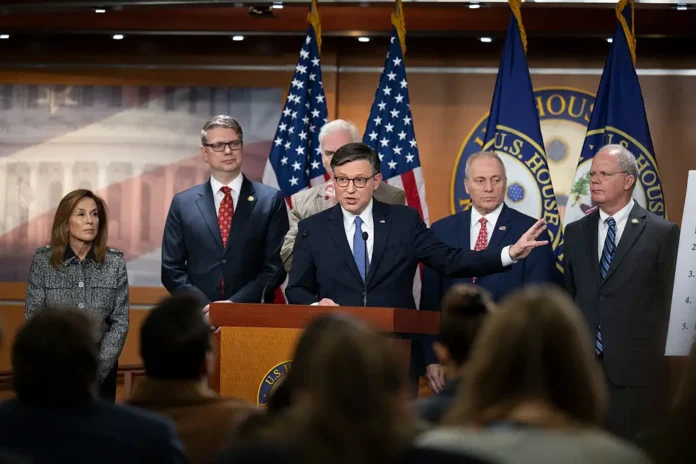
Massie said he was fine with Speaker Mike Johnson’s efforts to get the Senate to tweak language to protect the identities of victims. Higgins wrote on social media that he would support the bill if that effort is successful, arguing that, as written, it could reveal “thousands of innocent people — witnesses, people who provided alibis, family members, etc.”
“If you want to add some additional protections for these survivors, go for it,” Massie continued, but he warned that such changes should not delay or halt the release of the documents.
“If you do anything that prevents any disclosure, you are not for the people … Do not muck it up in the Senate,” he said.
“We fought the president, the attorney general, the FBI director, the speaker of the House and the vice president to get this win,” Massie said, adding that proponents deserve some “credit” because the administration now backs the legislation. “They are finally on the side of justice.”
Momentum on the Epstein discharge petition had been building in the House, which allowed rank-and-file members to circumvent leadership and force a vote.
All House Democrats were on board, and after half the House signed the discharge petition to force a vote, a deluge of Republicans began announcing they would vote for it.
Trump and the White House had worked behind the scenes to stop the effort, trying to pressure a handful of GOP women to drop off the petition.
But with the writing on the wall, Trump abruptly reversed course Sunday night, posting on Truth Social that House Republicans should vote for the bill. On Friday, Trump directed Attorney General Pam Bondi to investigate Epstein’s ties to prominent Democrats and financial institutions.
Trump, who had supported releasing the Epstein files before his re-election last year, vowed Monday to sign the legislation should it reach his desk, which he said would allow the GOP to turn the page and focus on the economy.
“Some of the people that we mentioned are being looked at very seriously for their relationship to Jeffrey Epstein, but they were with him all the time — I wasn’t. I wasn’t at all,” Trump said in the Oval Office.
“What I just don’t want Epstein to do is detract from the great success of the Republican Party, including the fact that the Democrats are totally blamed for the shutdown,” he continued.
Standing with fellow Epstein survivors Tuesday, Jena-Lisa Jones lashed out at Trump over the new DOJ probe.
“I beg you, President Trump: Please stop making this political,” Jones said. “It is not about you, President Trump. You are our president. Please start acting like it. Show some class, show some real leadership, show that you actually care about the people other than yourself.”
Jones said she voted for Trump. “Your behavior on this issue has been a national embarrassment,” she said.
Asked about the criticism, White House spokeswoman Abigail Jackson said: “Democrats and the media knew about Epstein and his victims for years and did nothing to help them while President Trump was calling for transparency, and is now delivering on it with thousands of pages of documents as part of the ongoing Oversight investigation.”
A conservative Trump ally in the House told NBC News that Republicans have been widely frustrated with the White House’s dismissive handling of the Epstein saga and have privately encouraged it to shift strategy, which was communicated as recently as Friday, days before Trump reversed position on the issue.
The White House was also warned that there would be mass Republican defections on the House floor.
The Justice Department has already turned over tens of thousands of documents from the Epstein investigation to the House Oversight Committee, which is conducting its own probe and has made many of those records public.
In addition, Democrats on the Oversight Committee released a series of emails last week from Epstein to Maxwell and journalist Michael Wolff that refer to Trump, which Epstein’s estate turned over in response to a subpoena. In one 2019 email, Epstein wrote of Trump, “Of course he knew about the girls as he asked ghislaine to stop,” but he did not accuse Trump of any wrongdoing.
Trump has consistently denied involvement in any of Epstein’s crimes. The two men had socialized in the 1980s and the 1990s, including at a 1992 party at Trump’s Mar-a-Lago estate in Florida, where video shows them discussing women. But Trump and Epstein had a falling-out in the 2000s, when Trump accused Epstein of hiring away girls and young women from his resort’s spa. Trump said he banned Epstein from Mar-a-Lago.
In 2008, Epstein pleaded guilty to Florida state charges of soliciting prostitution with a minor. In July 2019, the Justice Department charged him with sex trafficking of minors. A month later, authorities said, Epstein killed himself in his jail cell while he was awaiting trial.
Johnson has argued for months that the Epstein legislation is not needed because the Oversight Committee has been releasing documents to the public. He dodged questions Monday about Trump’s reversal and his conversations with the president.
“He’s never had anything to hide. He and I had the same concern — that we wanted to ensure that victims of these heinous crimes are completely protected from disclosure, those who don’t want their names out there,” Johnson told reporters. “And I’m not sure the discharge petition does that, and that’s part of the problem.”
The overwhelming bipartisan support for the legislation reflects widespread public demand for transparency regarding Epstein’s network and the government’s handling of his case. The 427-1 vote margin represents one of the most lopsided tallies in recent congressional history on a controversial issue.
The discharge petition mechanism, which allows 218 House members to force a vote without leadership approval, proved critical in overcoming resistance from Trump and House leadership. The bipartisan coalition of Massie and Khanna successfully navigated internal opposition to bring the measure to the floor.
The Senate’s unanimous consent passage demonstrates rare bipartisan unity in the upper chamber. Schumer’s immediate action to bring the bill up for passage, and the absence of any objecting senator, ensured rapid movement toward enactment.
The 30-day deadline for release creates urgency for the Justice Department to compile and review materials while allowing time to redact victim identities and protect ongoing investigations as the legislation permits.
The emotional scene in the House gallery, with survivors embracing as the vote was announced, underscored the personal significance of the legislation for those directly affected by Epstein’s crimes. Their presence during the vote represented years of advocacy for accountability and transparency.
Massie’s warning to the Senate not to “muck it up” reflects concern that amendments could delay or weaken the bill’s impact. His willingness to accept victim protection language suggests flexibility on that specific issue while maintaining firm opposition to changes that would prevent disclosure.
The confrontation between survivor Jones and Trump over politicization of the issue highlights tension between survivors seeking truth and political maneuvering around Epstein’s connections to figures across the political spectrum. Jones’s statement that she voted for Trump adds weight to her criticism as coming from within his political coalition.
Trump’s Friday directive to investigate Epstein’s Democratic connections, followed by his Sunday reversal on releasing files, creates a complex political dynamic. The juxtaposition of calling for investigation of Democrats while initially opposing comprehensive file release drew criticism from survivors and lawmakers.
The White House’s behind-the-scenes pressure on GOP women to abandon the discharge petition, and subsequent warnings about mass defections, illustrate the political calculation that led to Trump’s reversal. Republican frustration with the administration’s handling, communicated to the White House as recently as Friday, set the stage for the position change.
Johnson’s argument that the Oversight Committee releases made the legislation unnecessary failed to convince House members who sought comprehensive, mandated disclosure rather than selective releases. His concern about victim protection in the discharge petition language provides political cover for his previous opposition while accepting the bill’s passage.
ChatGPT and the social media platform X were among the websites blocking some users’ access on Nov 18 as the web security firm Cloudflare worked to address a widespread, worldwide networking outage.
Cloudflare was investigating an issue that “potentially impacts multiple customers”, the San Francisco-based company said on its website.
The same page shows Cloudflare had been experiencing issues with a customer support portal, and had been scheduled to conduct some scheduled maintenance in some areas earlier in the day. At one point, Cloudflare’s own outage status website was not loading.
Cloudflare’s software is used by hundreds of thousands of companies globally, acting as a sort of buffer between their websites and end users and working to protect their sites from attacks that might overload them with traffic.
Cloudflare’s system has gone down – multiple times – before. In July 2019, a bug in Cloudflare’s software caused one part of its network to suck up computing resources from the rest of the company, leading thousands of websites around the world that rely on Cloudflare to go offline for as long as 30 minutes.
During that outage, services including the blogging platform Medium, the video game chat provider Discord, Shopify, music service SoundCloud, Bitcoin trading platform Coinbase and online storage site Dropbox were affected.
In June 2022, Cloudflare suffered an outage that affected traffic in 19 of its data centres handling a significant proportion of its global traffic, also essentially shutting down several major websites and services. The incident lasted for about an hour and a half.