A Florida woman was arrested after deputies said she was caught driving more than 100 mph while racing to pick up pizza before a restaurant closed.
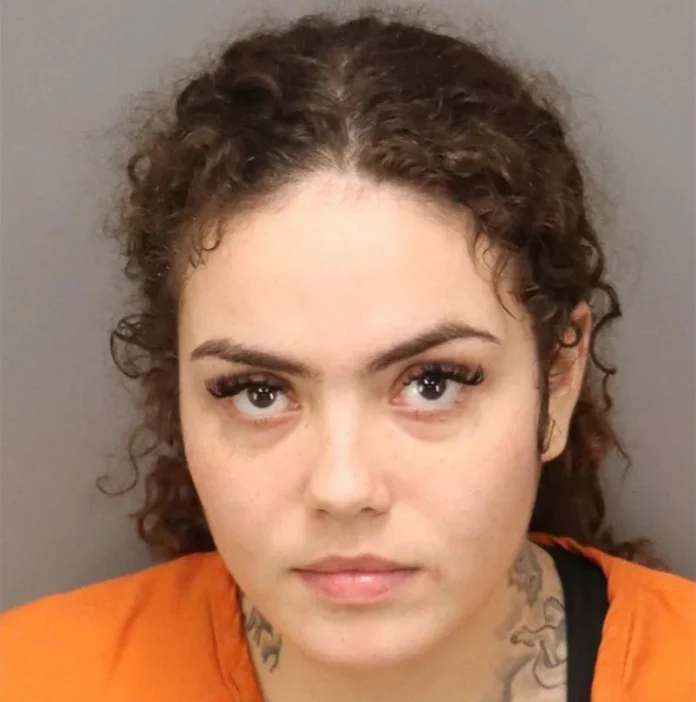
Yazmin Erazo, 21, of Holiday, was stopped Thursday night by Pinellas County sheriff’s deputies after radar showed her speeding at 107 mph in a 55 mph zone on U.S. Highway 19 in Palm Harbor, according to local authorities.
Deputies said Erazo admitted she was rushing to reach Little Caesars before the store closed. She was arrested and charged under Florida’s new excessive speeding law, which took effect July 1, and was later released on bail.
Under the new statute, Florida House Bill 351, drivers can face criminal charges if they exceed the speed limit by more than 50 mph or drive 100 mph or more in a manner deemed dangerous to others. The offense is now classified as a criminal violation, not just a traffic infraction.
A first offense carries penalties of up to 30 days in jail and a $500 fine, while repeat violations can lead to up to 90 days in jail and fines up to $1,000. A second conviction within five years could also result in a license suspension of up to one year.
Because the offense is criminal, convictions appear on background checks, which can affect employment, housing applications, and professional licenses.
The Florida Department of Highway Safety and Motor Vehicles reports that speeding-related fatalities have surged 43 percent statewide between 2013 and 2023, with the majority involving male drivers aged 16 to 25. In Alachua County alone, authorities have recorded 71 crashes this year linked to speeding and aggressive driving, resulting in four serious injuries and two deaths.
The new law was designed to curb extreme speeding after law enforcement across the state reported a sharp rise in dangerous driving behaviors during and after the pandemic.
LISBON, Portugal (BN24)— Cristiano Ronaldo said Tuesday that the 2026 World Cup will be his final appearance on football’s biggest stage, signaling the approaching end of a career that has spanned more than 20 years.
The 40-year-old Portuguese forward, who has scored more than 950 goals in club and international competition, announced a Saudi forum, speaking via video link. When asked if the 2026 World Cup would be his swan song, Ronaldo said, “Definitely, yes. I’m gonna be 41 years old and I think it will be the moment.”
Ronaldo, a five-time Ballon d’Or winner, also confirmed that he plans to retire from professional football within the next one or two years. “When I mean soon, it’s probably one or two years I’ll still be at the game,” he said, elaborating on comments made last week about retiring “soon.”
The veteran forward, who joined Saudi Arabia’s Al Nassr in 2023 after leaving Manchester United for a second spell in late 2022, has continued to attract attention for his late-career moves. His transfer to the Saudi club was part of a wider trend of internationally renowned stars signing with teams in the oil-rich kingdom, which has invested heavily in sports and entertainment as part of its economic diversification plan.
Ronaldo is targeting a sixth World Cup next year. His closest attempt at lifting the trophy came in 2006, when Portugal was eliminated by France in the semifinals. Portugal has yet to qualify for the 2026 tournament, co-hosted by the United States, Canada, and Mexico, but a win over Ireland on Thursday could secure the team’s spot.
Ronaldo’s career has seen him play for some of the world’s top clubs, including Sporting Lisbon, Manchester United, Real Madrid, and Juventus. His scoring record and longevity have made him one of the most decorated footballers in history, and his decision to retire will mark the end of an era for Portugal and global football.
Saudi Arabia, where Ronaldo now plays, has continued to raise its profile in the football world. Last December, the kingdom was awarded the hosting rights for the 2034 World Cup, underscoring its ambitions to become a central hub for sports and entertainment.
Ronaldo’s announcement adds to the anticipation surrounding the 2026 World Cup, where fans and pundits alike will look to see the final international performances of one of football’s all-time greats.
HURGHADA, Egypt (BN24)— At least two people have died and dozens more were injured when a coach carrying tourists collided with a truck early Tuesday near a popular beach resort on Egypt’s Red Sea coast. The accident occurred in the predawn hours along the Hurghada-Cairo highway near Ras Ghareb, roughly 150 kilometers north of Hurghada, authorities said.
Officials confirmed that the fatalities include the coach driver and a Russian citizen traveling on board. A total of 36 passengers suffered injuries, including 24 foreign tourists, some of whom sustained severe trauma. Emergency vehicles rushed to the scene, transporting the injured to hospitals in Ras Ghareb and surrounding areas. Several tourists were reported stable enough to be returned to their hotels in Hurghada, while travel agency representatives remained on-site to assist with logistics and medical coordination.
The coach belonged to a Red Sea tourism company and had departed from Hurghada, heading north along one of Egypt’s main highways. The exact destination of the bus remains unclear, though travel companies often use coaches to transport tourists from Red Sea resorts to cultural and historical attractions, including the Pyramids of Giza, approximately three hours away by road. Hurghada itself is located about 290 miles south of Cairo, and the drive along the Ras Ghareb-Hurghada route generally takes around five hours.
The Russian Consulate General in Hurghada reported the accident on the social media platform X, saying, “At approximately 4:00 a.m. on November 11, an accident occurred on the Hurghada-Cairo highway near Ras Ghareb. A tourist bus collided with a truck. One Russian citizen and the bus driver were killed. The injured are receiving emergency medical care at a hospital in Ras Ghareb. Some of the tourists are being prepared to return to their hotels in Hurghada. Representatives from travel agencies are working at the scene.”
The cause of the crash is still under investigation by Egyptian authorities. Local reports indicate that the coach may have collided with a heavy truck in the early hours, but details regarding speed, road conditions, or potential driver error have not yet been released.
The incident follows a series of fatal transport accidents in Egypt, highlighting ongoing safety concerns. Last September, three people, including two children, were killed in the Nile Delta city of Zagazig when two passenger trains collided, injuring at least 49 others. Footage from that crash showed crumpled carriages surrounded by onlookers, with rescuers lifting injured passengers through windows. Egypt’s railway system, which has suffered from aging infrastructure and mismanagement, has been subject to government initiatives aimed at improving safety and reliability in recent years.
Authorities have urged travelers to exercise caution when using road and rail transport, particularly on long-distance routes connecting tourist destinations to Cairo and other major cities. Emergency responders continue to monitor the condition of the injured, while investigations into the bus-truck collision are ongoing.
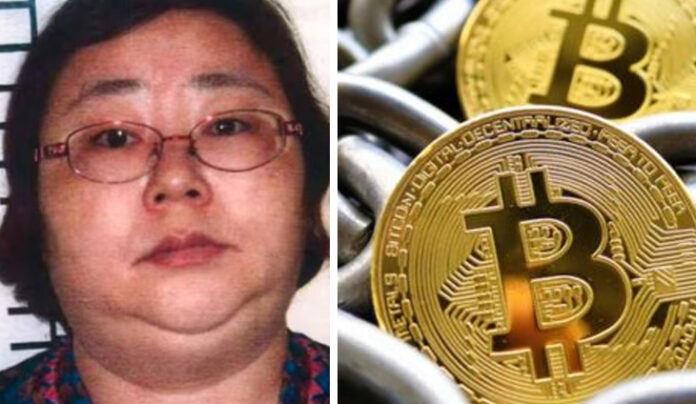
A Chinese woman who orchestrated one of the largest Ponzi schemes in her country and laundered billions of dollars through cryptocurrency was sentenced in the United Kingdom to more than 11 years in prison.
Qian Zhimin, 47, admitted to laundering proceeds from a multibillion-dollar investment fraud that deceived nearly 130,000 investors in China between 2014 and 2017. British police seized over 61,000 bitcoin — now valued at more than $6 billion — in one of the largest cryptocurrency confiscations in history.
Qian pleaded guilty to two counts of money laundering in September and was sentenced Tuesday at Southwark Crown Court to 11 years and eight months in prison. Judge Sally-Ann Hales described Qian as “the architect of this offending from its inception to its conclusion,” adding that her “motive was one of pure greed.”
According to prosecutors, Qian and her associates used funds from the fraudulent investment operation — run through her company, Lantian Gerui — to purchase luxury items, including more than $13 million worth of jewelry. The scheme lured investors with false promises of high returns, ultimately defrauding them of about 40 billion renminbi ($5.6 billion).
Chinese authorities have already convicted more than 80 people connected to the fraud. However, Qian fled China in 2017, escaping arrest after police raided a company event. She traveled through Southeast Asia — including Myanmar, Thailand, Laos, and Malaysia — before arriving in London using a St. Kitts and Nevis passport.
Once in Britain, prosecutors said, Qian attempted to convert bitcoin bought with fraudulent funds into cash, working alongside accomplices including Wen Jian and Ling Seng Hok. Both were later convicted of money laundering offenses. Wen was sentenced last year, and Ling received nearly five years in prison on Tuesday.
The investigation began in 2018 when British police discovered Qian and Wen living together in London. Officers seized electronic devices containing tens of thousands of bitcoin but could not access them until 2021. By that time, the cryptocurrency’s value had soared to £1.5 billion ($2 billion).
Prosecutors said Qian’s network continued to move bitcoin during ongoing trials, helping investigators trace her to an address in York, northern England, where she was finally arrested in April 2024.
Qian’s defense lawyers argued that she never intended to defraud anyone and that the massive rise in bitcoin’s value now far exceeds what is required to compensate victims. But prosecutors countered that her actions caused devastating losses — including homes, life savings, and marriages — for thousands of victims across China.
While Qian’s criminal case has concluded, legal battles remain over the fate of the seized bitcoin and how victims will be repaid. British authorities are considering establishing a compensation fund to return recovered assets to investors.
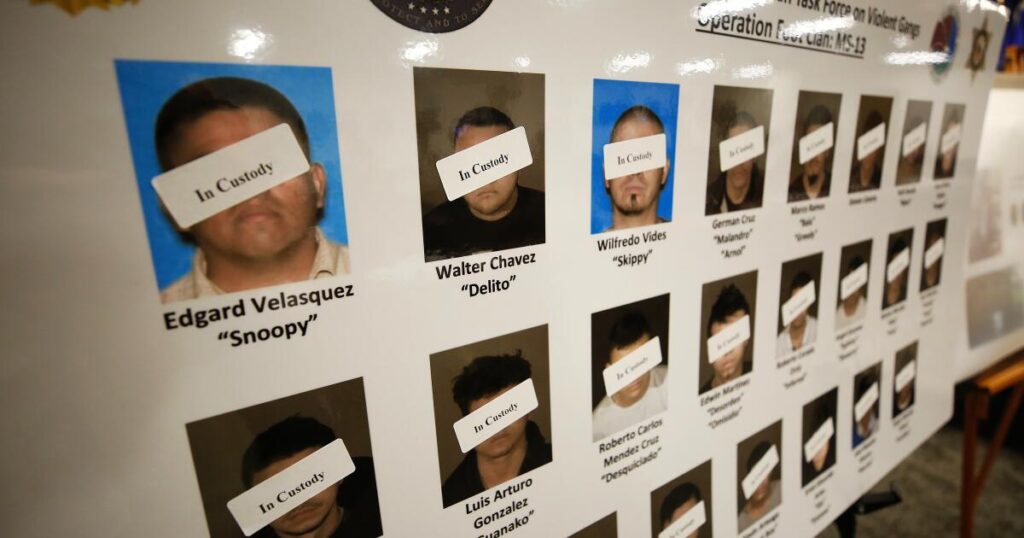
Los Angeles (BN24) – Five members of the violent transnational gang MS-13 have been convicted in federal court for a series of six grisly murders carried out to elevate their status within the organization — killings marked by extreme brutality, including shootings, stabbings, beatings, and mutilations.
After a nine-week trial, a Los Angeles jury found Walter Chavez Larin, 26, of Panorama City; Roberto Alejandro Corado Ortiz, 30, of Baldwin Park; and Edwin Martinez, 28, of Cypress Park, guilty of conspiracy to violate the Racketeer Influenced and Corrupt Organizations (RICO) Act. Chavez and Corado were also convicted of two counts of violent crimes in aid of racketeering (VICAR) murder, while Martinez was convicted of three counts. Two brothers from South Los Angeles, Bryan Alexander Rosales Arias, 28, and Erick Eduardo Rosales Arias, 27, were each convicted of one count of VICAR murder.
According to prosecutors, the murders were committed to strengthen MS-13’s dominance in Los Angeles and to allow members to climb the gang’s hierarchy. The victims, many of whom were believed to be rival 18th Street gang members or individuals who violated MS-13’s internal rules, were lured to remote areas — including the Angeles National Forest and Malibu hills — where they were killed and, in some cases, their bodies dumped off cliffs or down ravines.
“The horrific violence in this case underscores the urgency of destroying MS-13 and putting its depraved members behind bars,” said U.S. Attorney General Pamela Bondi. “Under President Trump, MS-13 can no longer terrorize the American people with impunity.”
Prosecutors described a pattern of calculated brutality. In one 2017 murder, Chavez helped stab and hack a fellow gang member to death in the Angeles National Forest after the victim falsely claimed leadership within MS-13. In another, two teenage girls lured a man suspected of being an 18th Street member to his death, where Corado and Bryan Rosales strangled, beat, and stabbed him before tossing his body off a cliff.
A 2018 killing involved a man shot multiple times at a scenic overlook in Malibu; Corado initiated the shooting before handing the gun to Erick Rosales and other gang members. Martinez was tied to three other killings in late 2018 and early 2019, including the murders of an alleged rival gang member, a fellow MS-13 associate accused of drug use, and a homeless man mistakenly believed to be part of a rival faction.
“These verdicts send a powerful message that MS-13’s reign of terror in Los Angeles will not be tolerated,” said Bill Essayli, First Assistant U.S. Attorney. “We will continue to pursue and dismantle this violent organization at every level.”
FBI Los Angeles Field Office Assistant Director Akil Davis called the murders “barbaric attacks carried out solely to enhance the killers’ ranking within MS-13,” while LAPD Chief Jim McDonnell and L.A. County Sheriff Robert Luna praised the collaborative investigation that led to the convictions.
The defendants face mandatory life sentences when they appear before U.S. District Judge Otis D. Wright II for sentencing in July 2026.
Federal prosecutors said the case is part of a broader crackdown on MS-13’s Los Angeles cliques. To date, 25 gang members have been convicted, with several more trials scheduled for 2026.
The investigation was led by the FBI, Los Angeles Police Department, and Los Angeles County Sheriff’s Department, with prosecutors from multiple sections of the U.S. Attorney’s Office for the Central District of California.
Fourteen current and former Mississippi law enforcement officers have pleaded not guilty to federal charges in connection with a wide-ranging drug-trafficking conspiracy that prosecutors say involved bribery, cartel ties, and the protection of fake cocaine shipments across state lines.
Milton Gaston among those charged (Courtesy: Mississippi Sheriff’s Association)
In total, 20 individuals were indicted — including officers from multiple agencies across Mississippi — accused of taking bribes to provide safe passage for what they believed were major narcotics traffickers. Six civilians, three from Mississippi and three from Tennessee, were also arrested.
Federal prosecutors allege that the officers knowingly helped transport 25 kilograms (55 pounds) of cocaine through several Mississippi counties and into Memphis. Some of them are accused of providing armed escorts to protect drug proceeds, believing they were aiding members of a Mexican cartel.
Among those charged are two elected sheriffs: Washington County Sheriff Milton Gaston and Humphreys County Sheriff Bruce Williams. Prosecutors say both men accepted thousands of dollars in bribes in exchange for granting the supposed cartel permission to operate freely within their jurisdictions.
Williams’ attorney, Michael Carr, said his client “maintains his innocence” and looks forward to clearing his name in court. “Let’s get to the merits and in front of a jury so Sheriff Williams can be publicly vindicated and return to work,” Carr said. Gaston’s lawyer has not commented publicly.
All the law enforcement defendants were released on $10,000 bond, under conditions that prohibit them from serving in law enforcement while the case is pending. The Mississippi Board on Law Enforcement Officer Standards and Training has suspended their certifications until a full hearing.
Bruce Williams among those charged (Courtesy: Mississippi Sheriff’s Association)
Those charged include: Brandon Addison, Javery Howard, Truron Grayson, Sean Williams, Dexture Franklin, Wendell Johnson, Marcus Nolan, Aasahn Roach, Jeremy Sallis, Torio Chaz Wiseman, Pierre Lakes, Derrik Wallace, Marquivious Bankhead, Chaka Gaines, Martavis Moore, Jamario Sanford, Marvin Flowers, and Dequarian Smith.
Attorneys for several defendants insist their clients are innocent. “He is absolutely innocent of any wrongdoing whatsoever, and everybody knows it,” said lawyer Thomas Levidiotis, who represents Smith, a former officer with the Humphreys County Sheriff’s Office and the Isola Police Department.
Federal officials described the indictments as a devastating blow to public confidence in Mississippi’s law enforcement institutions. “This represents a monumental betrayal of public trust,” U.S. Attorney Clay Joyner said during a press conference announcing the charges.
Robert Eikhoff, special agent in charge of the FBI’s Jackson Field Office, echoed that sentiment, saying the arrests underscore the bureau’s commitment to rooting out corruption “at every level of law enforcement.”
FORT LAUDERDALE, Fla. (BN24)— Former UFC fighter Godofredo Pepey, a Brazilian mixed martial artist once known for his flamboyant fighting style, was found dead in a Florida jail while awaiting trial on charges of kidnapping and assaulting his wife, officials confirmed Tuesday.
Pepey, 38, had been held in Broward County since late June following his arrest in Deerfield Beach on suspicion of domestic violence against his wife, Samara Mello. Authorities have not yet released details surrounding the circumstances of his death.
Mello and her attorney, Gaudenio Santiago, were notified Monday of the fighter’s death. In a statement to Brazilian media, Santiago called for restraint and respect for the family as U.S. officials investigate the in-custody death.
“The death of someone in custody is a serious matter,” Santiago said. “There are procedures that the American authorities must follow. Until official information is released, I ask for respect for Samara and her family and that people avoid speculation or malicious comments.”
Pepey, whose full name was Godofredo Castro de Oliveira, was born in Fortaleza, in northeastern Brazil. He began martial arts training as a teenager alongside his brother, Godofredo Claudio, a Brazilian jiu-jitsu black belt.
He debuted professionally in mixed martial arts at the age of 15 in 2003, later returning to competition after a brief hiatus. Pepey joined the UFC in 2012, fighting for six years before the promotion declined to renew his contract. During his 21-fight career, he recorded 13 wins — four by knockout and eight by submission.
Following his arrest on June 30, Mello shared images of her injuries on social media, saying she wanted to expose the realities of domestic violence in sports.
“Domestic violence is real in the world of sports, and in combat sports it remains a taboo few dare to confront,” she wrote. “I am rebuilding my life and grateful to have survived so that I can make a difference for other women.”
At the time of his arrest, Pepey’s brother publicly acknowledged the allegations, calling his sibling’s actions “a mistake” and emphasizing accountability under both “man’s law and God’s law.”
Authorities in Florida and Brazil have not provided further details about the cause of Pepey’s death or whether foul play is suspected.
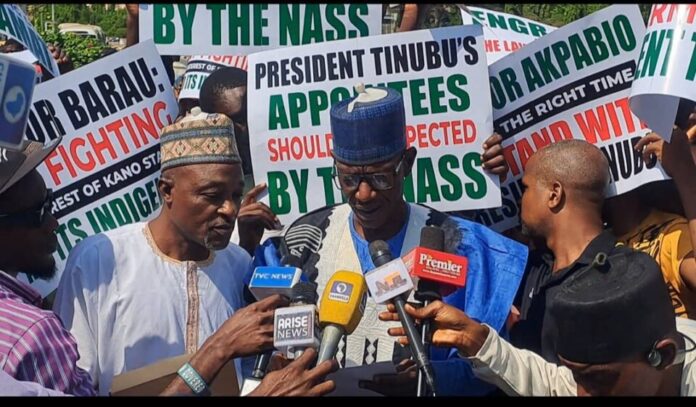
ABUJA, Nigeria (BN24) — Fresh tension erupted at Nigeria’s National Assembly on Tuesday as protesters demanded the Senate immediately confirm President Bola Tinubu’s nominee for Chairman of the Nigerian Electricity Regulatory Commission (NERC), Engr. Abdullahi Ramat.
The demonstrators, comprising Ramat’s supporters, civil society organizations, and human rights activists, marched around the National Assembly complex in Abuja, chanting solidarity songs and waving placards with messages such as “President Tinubu Did Not Send Nominees to Be Harassed” and “Ramat Represents Reform in Power Sector.”
The protest followed the Senate’s October 22 decision to suspend Ramat’s confirmation despite his successful screening by the Senate Committee on Power, chaired by Senator Enyinnaya Abaribe.
Addressing reporters during the protest, Ahmed Suleiman, spokesperson of the Grassroots Initiative Concept, said the group had petitioned both President Tinubu and Senate President Godswill Akpabio, accusing “vested political interests” of working to derail Ramat’s confirmation.
“We write as proud indigenes of Kano State, just like the Deputy Senate President, Distinguished Senator Barau Jibrin, to express our firm commitment to the peace, progress, and good governance of our great nation,” Suleiman said.
He urged the Senate to end the delay, describing Ramat as a highly qualified candidate with the technical expertise and experience needed to reform Nigeria’s struggling power sector.
“Engr. Ramat possesses the requisite academic and professional qualifications, as well as valuable experience,” he said. “It is surprising and deeply unsettling that his name was stepped down on the Senate Order Paper despite a positive screening recommendation. Certain vested interests have mounted pressure to block his confirmation by advancing false narratives and politically motivated petitions.”
Suleiman warned that the delay could set “a dangerous precedent where Nigeria’s most capable hands are subjected to the vindictive whims of politics.”
The demonstration came days after the Senate threatened legal action against former presidential aide Alwan Hassan, who alleged that some lawmakers collected a $10 million bribe to block Ramat’s confirmation.
Senate spokesperson Yemi Adaramodu dismissed the bribery claims as “baseless and malicious,” saying the delay was due to “public and private complaints” questioning the nominee’s suitability for the top regulatory post.
“The attention of the Senate has been drawn to the uncoordinated cacophony of one innocuous Alwan Hassan, who is a hand-tool to one Mr. Abdullahi Garba Ramat,” Adaramodu said in a statement. “Many nominees have stepped down due to such public outcry. The case of Mr. Ramat is not an exception.”
Adaramodu maintained that the Senate would not succumb to pressure from interest groups or political actors, insisting that “no nominee will be confirmed under a cloud of public concern.” He added that the legislature would compel Hassan to appear in court and substantiate his bribery allegations.
The impasse over Ramat’s appointment has deepened frustrations nationwide amid worsening electricity tariffs, erratic supply, and public demand for stronger regulatory oversight in the power sector.
Analysts note that the leadership of NERC, the body responsible for enforcing electricity market rules and tariff structures, plays a central role in Nigeria’s efforts to stabilize the energy sector. The prolonged delay, they warn, risks slowing policy implementation under the Tinubu administration’s energy reform agenda.
Protesters on Tuesday appealed to Senate President Akpabio to prioritize “the national interest, unity of Nigeria, and success of the Tinubu administration” by concluding the confirmation process promptly.
As of press time, Ramat’s nomination remains suspended pending legislative review and possible reconsideration in the coming weeks. Senate insiders suggest that the issue may return to the floor once the leadership committee concludes consultations with the presidency and other stakeholders.
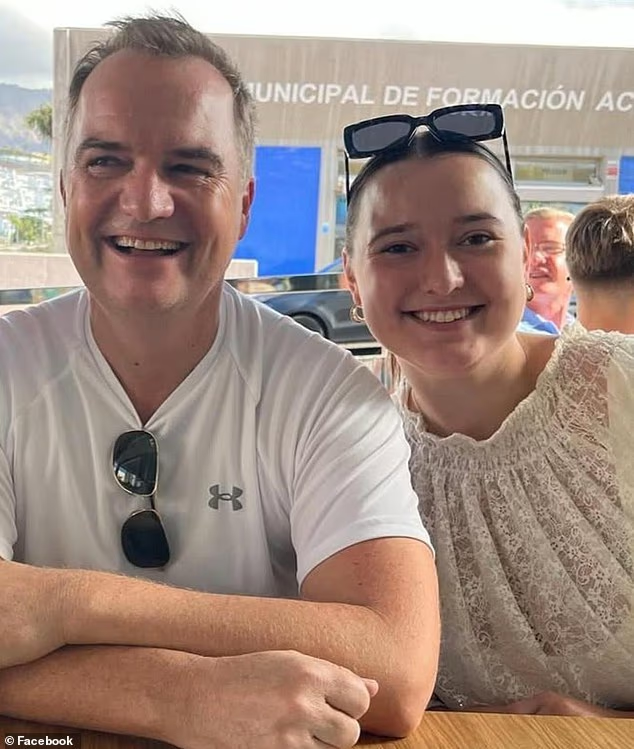
CORAL SPRINGS, Fla. (BN24) — A Christian ministry leader and his daughter have been identified as those killed Monday morning when their private plane crashed into a pond in a Coral Springs neighborhood while en route to Jamaica for hurricane relief work.
Officials identified the victims as Alexander Wurm, 53, the CEO of the evangelical organization Ignite the Fire, and his 22-year-old daughter, Serena. Wurm was piloting a Beechcraft King Air when the aircraft nose-dived into a small lake shortly after taking off from Fort Lauderdale Executive Airport.
Video footage showed the twin-engine plane plummeting from the sky before smashing into the water behind a row of homes. The impact scattered debris across the lake’s surface.
Ignite the Fire said the pair was traveling to Montego Bay, Jamaica, to deliver supplies to victims of Hurricane Melissa. The ministry said Wurm was committed to “empowering youth through missions and evangelism across the Caribbean” and described the trip as “a final act of selflessness and courage.”
“Together, their final journey embodied service and love,” the ministry said in a statement.
A witness told ABC6 that it appeared Wurm realized the aircraft was in distress and attempted to steer toward the water to avoid nearby homes. “I think that the pilot knew he wasn’t going to make a safe landing and made a choice to try and make it into that lake,” the witness said.
Wurm, who frequently flew aid missions to the Caribbean, had just completed a relief delivery to Jamaica on November 4, according to Ignite the Fire. The ministry said he had traveled extensively to assist communities affected by natural disasters.
“His legacy of faith and compassion touched countless lives,” the organization wrote in a Facebook post.
The group said Serena shared her father’s dedication to humanitarian service, describing her as “a beacon of empathy and hope” who had joined her father on previous mission trips.
In a recent post, the charity Crisis International praised Wurm for flying emergency supplies, including solar panels, tarps, and a Starlink unit, to Jamaica following the hurricane.
“Alexander Wurm was absolutely amazing in the wake of Hurricane Melissa,” said Sean Malone, the charity’s founder. “We were waiting for him to arrive again, and then we found out he crashed his aircraft in Coral Springs. He and his daughter did not survive.”
Malone said smaller ministries often depend on pilots like Wurm to reach isolated areas after major storms. “We are in absolute shock and disbelief,” he said, asking for prayers for the Wurm family and their ministry community.
Federal authorities are investigating the cause of the crash.
A popular TikTok influencer in Mali who used her platform to praise the country’s military was abducted and publicly executed by armed men, authorities said, marking one of the most shocking attacks yet against pro-government voices in the region.
Mariame Cissé, who had more than 140,000 followers on TikTok, was seized Friday while visiting a weekly market in the town of Echel, according to Yehia Tandina, the mayor of nearby Timbuktu. He said that the following evening, at dusk, the same men returned with Cissé to Independence Square in Tonka — where they shot her in front of a crowd.
The mayor of Tonka confirmed the execution but said details about the assailants remained unclear. The town sits along the Niger River in central Mali, an area where al-Qaeda’s regional affiliate, Jama’at Nusrat ul-Islam wa al-Muslimin (JNIM), is known to operate. No group has claimed responsibility for the killing.
Cissé was not affiliated with the military but often posted videos of herself wearing fatigues and expressing support for Mali’s armed forces. Local officials said that those videos likely drew the attention of militants in the area.
She reportedly received death threats in the days before her abduction. In her final TikTok video, shared just days before her death, Cissé danced and smiled to upbeat music — a post that has since filled with messages of grief and outrage as her followers continue to grow.
Mali’s military government, which seized power in a 2020 coup and again in 2021 under a separate takeover, has faced intensifying violence from insurgent groups across the country. Despite promises to restore security, attacks by JNIM and other armed factions have surged, particularly in remote rural regions.
The nation is currently in the grip of a two-month fuel blockade imposed by al-Qaeda-linked groups, worsening economic hardship and limiting government control in several provinces.
Cissé’s killing underscores the growing peril faced by public figures who support Mali’s junta amid the country’s worsening conflict.