WASHINGTON (BN24)— U.S. Secretary of State Marco Rubio has called on the international community to halt the flow of weapons to Sudan’s Rapid Support Forces (RSF), the paramilitary group accused of systematic killings and sexual violence in Darfur’s el-Fasher.
Speaking at the conclusion of a G7 foreign ministers meeting in Canada, Rubio described the RSF’s actions as “horrifying atrocities” targeting women, children, and civilians. He stressed that international support for the paramilitary group, whether through direct arms shipments or allowing their transit through third-party territories, must stop immediately.
The RSF, which has been fighting Sudan’s army since a leadership clash erupted into civil war in April 2023, seized el-Fasher last month after an 18-month siege. Satellite imagery and humanitarian reports show piles of bodies and blood-stained streets, with only a small fraction of the population managing to flee. Non-Arab communities in Darfur are reportedly being targeted in what the U.S. and human rights organizations have described as genocide.
Rubio did not directly criticize the United Arab Emirates, despite evidence from international media and UN sources that the Gulf state has supplied weapons and mercenaries to the RSF via African transit routes. Instead, he emphasized the need for multilateral cooperation, citing the “Quad”, the UAE, Egypt, Saudi Arabia, and the U.S. which is pursuing a humanitarian ceasefire and a transition to civilian rule in Sudan.
“The RSF is committing acts of sexual violence and atrocities against innocent civilians of the most horrific kind. And it needs to end immediately,” Rubio said, while noting the paramilitary group’s reliance on outside arms support due to its lack of domestic manufacturing.
Despite a recent U.S.-backed proposal for a humanitarian truce, the RSF violated the agreement after capturing el-Fasher. Sudan’s army has criticized the UAE’s involvement but indicated it would consider the proposed three-month truce followed by a nine-month transition to civilian governance.
The G7 statement accompanying Rubio’s remarks condemned the escalating violence, describing the ongoing civil war as “the world’s largest humanitarian crisis.” The conflict has already claimed more than 150,000 lives and displaced roughly 12 million people.
International investigations have traced weapons used by the RSF to Serbia, Russia, China, Turkey, Yemen, and the UAE, often smuggled through Chad into Darfur. The UAE is also accused of facilitating illicit gold sales by the RSF. Rubio stressed that multiple countries are involved in the arms flow and warned that international cooperation is essential to stop it.
While both the RSF and Sudanese army deny allegations of external support, reports of arms diversion have also prompted scrutiny of European suppliers, including the United Kingdom. Human rights advocates have called for extending the UN arms embargo on Darfur to cover the rest of Sudan, a measure that has not yet been adopted.
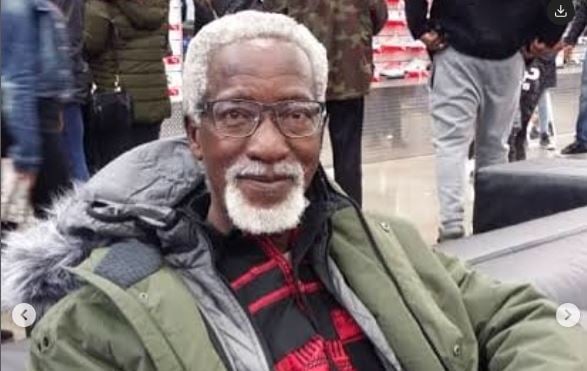
LAGOS, Nigeria (BN24)— Veteran Nollywood actor Oyewole Olowomojuore, widely known by his stage name Baba Gebu, has died after a brief illness, according to fellow actor and producer Kunle Afod.
Afod announced the death on Tuesday, Nov. 11, describing Baba Gebu as “a great legend” whose passing marks a significant loss for the Nigerian film industry. He wrote, “It saddens my heart as I announce the passing away of our great legend, a great actor who passed away this evening after a brief illness… BABA GEBU, may your soul rest in peace.”
The cause of Baba Gebu’s death has not been publicly disclosed. His career in Nollywood spanned decades, during which he became known for his commanding performances and enduring influence on emerging actors.
In 2024, the actor spoke openly about the death of his wife, revealing that returning to acting helped him navigate grief and avoid depression, highlighting his deep dedication to his craft.
Tributes from colleagues, fans, and industry insiders have poured in on social media, reflecting the high regard in which Baba Gebu was held in Nigeria’s entertainment community.
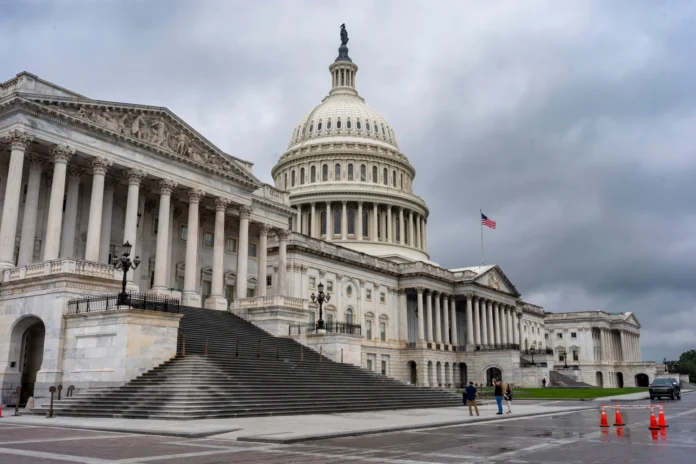
WASHINGTON (BN24) — The House on Wednesday night voted to pass legislation to reopen the federal government and end an acrimonious 43-day shutdown, the longest in American history.
The successful vote came after Speaker Mike Johnson, Republican of Louisiana, brought the Republican-controlled chamber back into session for the first time since Sept. 19, wrapping up an extraordinarily long and unscheduled recess.
The House passed the measure in a 222-209 vote. The Senate had approved the same legislation Monday when eight Democrats peeled off and voted with Republicans to break a filibuster to end the shutdown.
The bill now heads to President Donald Trump’s desk to become law and reopen the government, restoring funding that has been frozen or halted. Trump has said he will sign the bill, which will keep the government open through Jan. 30 with some programs, like SNAP food benefits, funded through September.
Before the vote, Johnson apologized to Americans for the disruptive shutdown, blaming Democrats for mass flight delays and cancellations, millions of civilian workers going without pay, and families going hungry. He said Senate Democrats blocked a bill to fund the government 14 times before ultimately caving.
“While the Democrats keep voting to shut their government down, Republicans are going to vote to open it back up,” Johnson said in a floor speech before the vote. “And with that, we’re going to get the American government running again and working for the people, as they deserve.”
The package includes a “minibus” of three appropriations bills through next September and keeps the rest of the government open at current levels through Jan. 30.
It includes full funding for the Supplemental Nutrition Assistance Program, also known as food stamps, which will keep the program afloat through September. More than 40 million Americans rely on SNAP. Some told NBC News that they ran out of food as the shutdown cut off money for the program, and the Trump administration fought in the courts against having to shift money around to fully fund it.
The legislation also provides limited protections for federal workers who have been under assault since Trump’s inauguration. It reinstates thousands of workers who were laid off during the shutdown and ensures there are no more reductions in force, known as “RIFs,” at least through the end of January. And it provides back pay for workers who were furloughed or working without pay these past six weeks.
But in a major concession from Democrats, the bill does not include an extension of enhanced subsidies under the Affordable Care Act, or Obamacare, after Republicans held firm against extending those funds beyond this year. That means more than 20 million Americans could see their premiums spike next year.
Many House and Senate Democrats are fuming over the failure to secure health care funding as part of the bill. Senate Majority Leader John Thune, Republican of South Dakota, has promised a Senate vote on a to-be-determined ACA funding bill, with no guarantees that it will pass. Johnson has not promised a vote in the House.
“We cannot enable this kind of cruelty with our cowardice,” said progressive Rep. Alexandria Ocasio-Cortez, Democrat of New York.
In the House Rules Committee on Tuesday, Republicans rejected Democratic motions to guarantee a floor vote on an ACA funding extension, and turned away an amendment by Rep. Steven Horsford, Democrat of Nevada, to redirect Trump’s $40 billion “bailout” to Argentina and instead put that to extending ACA funding.
“I guess MAGA stands for MAKE ARGENTINA GREAT AGAIN,” Rep. Teresa Leger Fernández, Democrat of New Mexico, said in response.
The Democratic anger means House Republicans will likely have to carry the bill to passage.
In a bullish sign for the legislation’s prospects, the sometimes rebellious House Freedom Caucus circulated talking points internally praising the bill, which were obtained by NBC News. The document calls it a “responsible CR” that funds the government into 2026 and avoids a “bloated” omnibus to be negotiated over Christmas. And, it notes, the appropriations bills in the minibus either kept spending flat or contained only modest increases.
“The House Freedom Caucus has fought in lock-step with President Trump and Republican leadership in Congress,” the Freedom Caucus document said.
Tucked inside the bill is a provision that is generating heavy pushback from Democrats and even some grumbling among House Republicans. It would allow senators, but not House members, to sue the federal government for hundreds of thousands of dollars if their phone records were obtained without prior notification as part of the Jan. 6, 2021, investigation. It appears to apply to eight specific GOP senators.
Although emotions are raw in the Democratic caucus over some of their senators caving, party leaders say the high-stakes showdown with Trump and the Republicans “crystallized” how Democrats are fighting for health care and affordability for millions of Americans. That economic message, they say, propelled them to victory in last week’s elections in Virginia and New Jersey and will help the party in 2026.
“That will be one of the defining contrasts of the midterms: Democrats working on behalf of the people to lower costs versus Republicans who have made life more expensive for everyday families,” Rep. Suzan DelBene, Democrat of Washington, head of the House Democrats’ campaign arm, said in a statement to NBC News.
“The House Democrats have the better message, stronger candidates, and as we all saw in last week’s elections, the American people are on our side as we go into the midterms,” the statement said.
Shortly before Wednesday’s vote, House Minority Leader Hakeem Jeffries, Democrat of New York, filed a discharge petition in a bid to bypass Johnson and force a future floor vote on a three-year extension of the expiring Obamacare subsidies. But that would need the support of at least four House Republicans to force a vote.
“We’ll fight until we win this battle for the American people. That’s our commitment as House Democrats,” Jeffries said on the floor, adding that the fight will end either when Republicans accept a funding extension to prevent premium hikes, “or the American people will throw Republicans out of their jobs next year and end the speakership of Donald J. Trump once and for all.”
There was plenty of pain during the six-week impasse, some of it caused by the Trump administration as it tried to ramp up pressure on the targeted bloc of moderate Senate Democrats. In addition to the mass layoffs, the White House had threatened to halt SNAP payments to states until the shutdown ended. It ultimately doled out partial payments under a judge’s order, while fighting the issue up to the Supreme Court.
Transportation Secretary Sean Duffy last week announced that the Federal Aviation Administration would have to cut the number of flights in American skies by 4 percent starting last weekend and ramped up reductions to 6 percent by Tuesday, due to air traffic controller staffing shortages spurred by the shutdown.
Thousands of flights have been either delayed or canceled, snarling airports nationwide. It is expected to take a few days for airports to recover after the bill is signed into law.
The 43-day shutdown surpassed the previous record of 35 days set during a 2018-2019 budget standoff. The extended closure of government operations created cascading effects across multiple sectors of American life, from aviation to nutrition assistance to federal workforce stability.
The House had been in an extraordinarily long recess since Sept. 19, leaving the Senate as the primary venue for negotiations over ending the shutdown. The decision by eight Senate Democrats to break with their party leadership and vote with Republicans proved pivotal in breaking the deadlock that had persisted through 14 previous failed votes.
The reinstatement of laid-off federal workers and the prohibition on further reductions in force through January represent significant protections, though limited in duration. Federal workers who remained on the job without pay during the shutdown will receive back pay once the legislation becomes law.
The absence of Affordable Care Act subsidy extensions represents a significant defeat for Democrats who had made healthcare funding a central demand throughout the shutdown negotiations. The enhanced subsidies, which are set to expire at the end of the year, have helped make health insurance more affordable for millions of Americans purchasing coverage through ACA marketplaces.
The provision allowing certain senators to sue over phone records obtained during the Jan. 6 investigation adds a controversial element to the legislation. The specific language appears tailored to benefit eight GOP senators whose records may have been accessed during the congressional investigation into the Capitol attack.
The House Freedom Caucus’s internal endorsement of the legislation signals broad Republican support within the chamber, potentially easing Johnson’s path to securing passage without relying on Democratic votes. The caucus praised the measure for avoiding what it characterized as a “bloated” omnibus spending package while maintaining relatively flat spending levels.
The flight delays and cancellations that plagued airports during the final days of the shutdown highlighted the tangible impact of reduced air traffic controller staffing. The Federal Aviation Administration’s mandated reductions in daily flights created ripple effects throughout the national aviation system, with recovery expected to take several days even after government operations resume.
With Trump’s stated intention to sign the bill, the 43-day shutdown appears poised to end, though the lack of healthcare subsidy extensions and the promise of only a future Senate vote on the issue leave a major Democratic priority unresolved. The discharge petition filed by Jeffries represents a potential avenue for Democrats to force consideration of ACA funding, though success would require Republican defections in the narrowly divided House.
A 2019 email written by disgraced financier Jeffrey Epstein claimed that President Donald Trump “knew about the girls,” according to documents released Wednesday by Democrats on the House Oversight Committee. However, the message offered no clarification about what Trump allegedly knew, and the White House immediately blasted the release as a politically motivated “smear.”
Among the newly disclosed documents are three emails referencing Trump, including one from 2011 in which Epstein told Ghislaine Maxwell that Trump had “spent hours” at his home with a young woman later identified as Virginia Giuffre. Democrats said the emails were part of a larger cache of 23,000 documents obtained from Epstein’s estate.
Republicans quickly countered the release, accusing Democrats of “weaponizing selective leaks” to damage Trump amid a government shutdown fight.
White House Denounces ‘Fake Narrative’
White House spokeswoman Karoline Leavitt said Democrats had “selectively leaked emails” to “create a fake narrative to smear President Trump.”
In a post on Truth Social, President Trump dismissed the release as “another desperate distraction,” writing: “They’re trying to bring up the Jeffrey Epstein hoax again because they’ll do anything to deflect from their failures with the government shutdown and everything else.”
He added that any Republican “should be focused only on opening up our country and fixing the massive damage caused by the Democrats.”
Trump has long maintained that he cut ties with Epstein years ago, even claiming in July that he banned him from Mar-a-Lago for “taking people who worked for me,” including Giuffre, who he said was “taken out of the spa, hired by him — in other words, gone.”
What the Emails Reveal
In a 2019 exchange with journalist Michael Wolff, Epstein allegedly wrote, “Of course he [Trump] knew about the girls as he asked Ghislaine to stop.”
Another email, dated April 2, 2011, from Epstein to Maxwell, stated: “I want you to realize that that dog that hasn’t barked is Trump. Virginia spent hours at my house with him … he has never once been mentioned.”
Maxwell replied the same day: “I have been thinking about that.”
The Democrats’ redacted version withheld the victim’s name, but Republicans later confirmed it was Virginia Giuffre — who died earlier this year and who had long stated that Trump was never involved in Epstein’s sexual crimes.
Giuffre, in sworn testimony and in her memoir, described Trump as “friendly” during a single encounter at Mar-a-Lago, saying he “couldn’t have been friendlier” and never acted inappropriately. She added that he once offered to help her find babysitting jobs at the club.
Other members of Epstein’s household staff also testified that while Trump occasionally visited Epstein’s home, they never saw him engage in misconduct.
Giuffre’s Death and Renewed Scrutiny
Giuffre, who had accused Prince Andrew and other influential men of sexual abuse, died by suicide in April. The renewed release of Epstein’s emails comes months after FBI and Justice Department officials declined to disclose further Epstein-related materials, frustrating online theorists seeking new revelations.
The White House emphasized that Giuffre herself repeatedly cleared Trump of wrongdoing. “The fact remains that President Trump kicked Jeffrey Epstein out of his club decades ago for being a creep to his female employees,” Leavitt said. “Any American with common sense sees right through this hoax.”
Maxwell’s DOJ Interview Clears Trump
In a July interview with Deputy Attorney General Todd Blanche, Maxwell — now serving a 20-year sentence for sex trafficking — denied ever seeing Trump act inappropriately. “I never witnessed the President in any inappropriate setting,” she said. “He was a gentleman in all respects.”
Giuffre had first come forward after Epstein’s 2008 plea deal in Florida, which allowed him to serve just 18 months in jail for soliciting prostitution, avoiding federal prosecution. Epstein died by suicide in 2019 while awaiting trial on new federal charges.
Maxwell, who prosecutors said helped recruit girls for Epstein between 1994 and 2004, continues to maintain her innocence and is serving her sentence at a minimum-security prison camp in Texas.
HARARE, Zimbabwe ( BN24) — A registered nurse from Mutare has been arrested and charged with multiple counts of fraud after allegedly defrauding Zimnat Life Assurance of USD15,000 through a scheme that used the identities of deceased individuals to claim insurance benefits, according to authorities.
The accused, Shamiso Esinath Nyamundanda (née Musafari), 40, is employed at Bamba Rural Health Clinic in Mutare District. She appeared before the Harare Magistrates’ Court this week, facing three counts of fraud under Zimbabwe’s Criminal Law (Codification and Reform) Act.
Prosecutors from the National Prosecuting Authority of Zimbabwe (NPAZ) told the court that between August 2022 and July 2025, Nyamundanda allegedly initiated three separate life insurance policies in the names of deceased persons without the knowledge of their families. Each policy, investigators say, was valued at USD5,000.
Authorities allege that Nyamundanda forged supporting documents, including affidavits and personal identification details, to present herself as a surviving relative of the deceased policyholders. The forged paperwork, reportedly written in her own handwriting, was used to process and claim benefits after falsely declaring the “deaths” of the purported policyholders.
According to the NPAZ, the fraud was uncovered after a Zimnat Life Assurance manager identified inconsistencies in the claim documentation. The company launched an internal review, which revealed that the bank account receiving the insurance payouts was registered in Nyamundanda’s own name.
Following a formal complaint to the Zimbabwe Republic Police (ZRP), Nyamundanda was arrested and later brought before the court. She was granted USD300 bail and ordered to return to court on December 9, 2025, for routine remand.
Zimnat Life Assurance confirmed that the alleged scam resulted in a total loss of USD15,000, adding that the company has strengthened its internal verification systems to prevent future occurrences of similar fraud.
“Insurance fraud not only results in financial loss but also undermines the trust of honest policyholders,” a Zimnat spokesperson said. “We urge professionals entrusted with handling sensitive information to act ethically and within the law.”
Legal experts note that the case underscores growing concerns about the abuse of access to personal data within Zimbabwe’s public service sector, where some professionals are accused of exploiting confidential information for personal financial gain.
The Insurance and Pensions Commission (IPEC) has also raised alarms over a steady increase in insurance-related fraud cases across Zimbabwe. Officials warn that such schemes damage confidence in the country’s insurance industry and discourage people from investing in life assurance products.
In a similar but unrelated case earlier this year, Sylvester Rusere, 36, of Hopely, Harare, was fined USD400 and handed a three-month suspended sentence after fabricating a fictitious daughter to fraudulently claim EcoSure funeral benefits. Rusere’s conviction in June 2024 followed a police investigation that exposed his attempt to profit from a non-existent death.
Industry analysts say both cases highlight the urgent need for improved digital verification systems, cross-institutional data sharing, and more robust policyholder authentication to combat the rising tide of insurance scams.
Nyamundanda’s case remains under investigation, and prosecutors have indicated that additional charges may be added if further fraudulent transactions are uncovered.
If convicted, she faces a potential prison sentence of up to 10 years, as well as fines and restitution orders to repay the amount defrauded.
ACCRA, Ghana (BN24) — A military recruitment drive turned tragic in Ghana’s capital on Wednesday when at least six people died and several others were injured in a stampede at the El-Wak Sports Stadium in Accra, officials confirmed.
According to the Ghana Armed Forces, the incident occurred before dawn as thousands of young applicants gathered outside the stadium gates to participate in the 2025–2026 military recruitment exercise. The Armed Forces said in a statement that the tragedy unfolded around 6:20 a.m., when a surge in the crowd caused several people to fall and be trampled as others pushed forward to gain entry.
The statement, signed by Colonel Evelyn Asamoah, Acting Director-General of the Public Relations Directorate, said the stampede happened when “a large number of applicants breached security protocols and forced their way into the gates ahead of the scheduled screening.”
Witnesses described chaotic scenes as security personnel struggled to control the crowd. Videos circulating on social media showed long queues forming on the surrounding streets hours before dawn, with some applicants reportedly arriving as early as 2 a.m. in hopes of securing a spot in line.
“People were pushing and shouting; everyone wanted to get inside first,” said a witness who declined to give his name. “There were too many people and not enough security to manage the crowd.”
The Ghana Armed Forces said emergency medical teams were immediately dispatched to the scene to provide aid to the injured. Victims were transported to the 37 Military Hospital, where doctors are working to stabilize those in critical condition.
“The unfortunate incident led to the death of six potential recruits, and many others were injured,” the statement said. The Ghana Armed Forces assures the general public that medical teams are working tirelessly to stabilize affected individuals. Arrangements are being made to notify the families of the deceased.”
Colonel Asamoah expressed the Force’s condolences to the families of those who lost their lives and said investigations were underway to determine the cause and prevent future tragedies.
“The Ghana Armed Forces deeply regrets to inform the general public of a tragic stampede before the commencement of the recruitment exercise,” Asamoah said. “Preliminary investigations indicate that the stampede was triggered by an unexpected surge of applicants who breached security protocols and rushed into the gates.”
By late afternoon, authorities had cordoned off sections of the stadium as officials reviewed security footage and interviewed witnesses. Military officers at the scene told reporters that crowd control measures would be strengthened before the exercise resumes.
The Ghana Armed Forces called for calm, urging the public to await official updates and avoid spreading misinformation online.
The recruitment drive, part of the 2025–2026 enlistment campaign, had attracted thousands of applicants across the country, reflecting widespread interest in military service amid limited employment opportunities.
Funeral arrangements for the deceased are expected to be announced once families are formally notified, according to military officials.
ABUJA, Nigeria (BN24) — A young Nigerian soldier has captured the admiration of millions after footage of him standing his ground against a powerful government minister went viral on social media.
Lieutenant A.M. Yerima was part of a military unit that prevented Federal Capital Territory (FCT) Minister Nyesom Wike from accessing a disputed plot of land in Abuja on Tuesday. The confrontation, captured on video and viewed millions of times, shows the minister becoming increasingly agitated as Lt. Yerima calmly cites orders from his superiors and refuses entry.
The soldier’s composure and adherence to protocol have earned widespread praise online. Social media users described him as “courageous” and “brave,” with many sharing his photo on WhatsApp and other platforms.
The incident drew particular attention because Wike, a former governor of the oil-rich Rivers State, is considered one of the most influential figures in President Bola Tinubu’s administration. Wike has a reputation for getting his way, and public displays of defiance against him are rare in Nigeria, where lower-ranking officials typically yield to senior authority figures.
In the video, Wike can be heard telling the officer, “You are a very big fool. At the time I graduated, you were still in primary school.” Lt. Yerima calmly responds, “I am not a fool, sir.” The exchange has been widely cited as an example of discipline and courage within the Nigerian military.
“I commend the gallantry of this military officer, Lieutenant A.M. Yerima, for his unshakable boldness and composure despite the offensive utterances from FCT Minister Wike,” one social media user wrote on X. “He’s well trained and fearless, refusing to be bullied.” Another added, “Discipline, courage, and integrity. The true spirit of the Nigerian military.”
The circumstances surrounding the soldiers’ presence at the land site remain unclear. The BBC has reached out to the Nigerian military for comment. Wike challenged the soldiers to provide documentation proving their authority to occupy the land.
Wike later told reporters that officials from the Abuja Metropolitan Management Council had reported being prevented from accessing the land by soldiers. “This is what prevents us from progressing,” he said. “When the officials came, they said soldiers chased them away. I thought they did so illegally.” He added that the soldiers were unable to produce the requested documents, noting that the land falls under federal capital jurisdiction, which he oversees.
The incident has sparked nationwide discussion on authority, accountability, and the role of the military in civil matters, with many Nigerians applauding Lt. Yerima for his professionalism in the face of pressure from a senior government official.
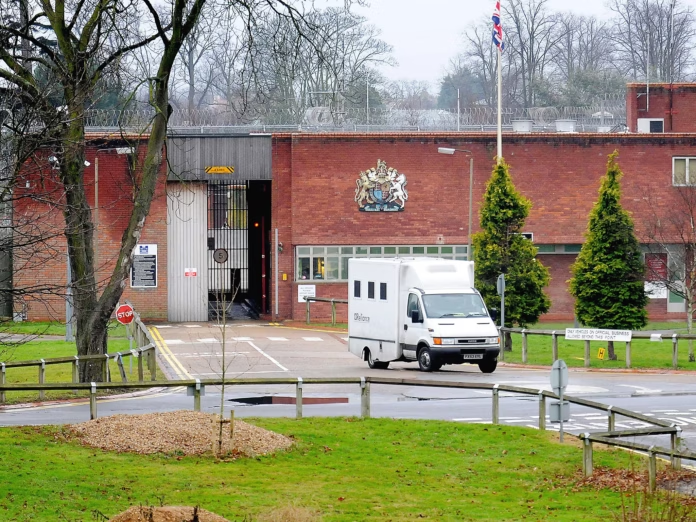
LONDON (BN24) — Two prison officers were seriously injured in an “unprovoked” attack by an inmate at Feltham Young Offenders’ Institution (YOI) in southwest London on Tuesday, officials and union representatives said.
A male officer suffered a fractured skull, while a female colleague experienced a seizure after sustaining facial injuries during the assault. Both were taken to the hospital for treatment. Feltham, which houses up to 140 youths aged 15 to 18, has been described as the most violent youth prison in the United Kingdom.
Mark Fairhurst, national chairman of the Prison Officers’ Association (POA), said the attack underscores the urgent need to expand the use of PAVA pepper spray to all youth prison staff. The Ministry of Justice currently limits its deployment to senior officers.
“Two of my colleagues were hospitalised due to an unprovoked violent attack by a young criminal,” Fairhurst said. “Staff should not have to work under threat without adequate protection in place. Those who think it is acceptable for staff to be used as human punching bags are just as culpable as the thugs who assault them.” He added that the assault highlights how close the youth prison system is coming to a tragedy.
The PAVA spray policy faces a judicial review after the Howard League for Penal Reform challenged its use, arguing that it can cause physical and psychological harm to children and may be applied disproportionately against inmates from minority groups. The charity also warned that its use could spark further violence.
Feltham has seen a sharp rise in assaults on staff. Last year, incidents involving children and young people up to age 21 in England’s three YOIs increased nearly 25 percent compared with 2023, a rate about 14 times higher than in adult prisons. The surge in violence comes amid mounting pressure on Justice Secretary David Lammy following the accidental release of more than 350 prisoners in the past 18 months, including two high-profile migrant sex offenders.
The prison’s challenges have been highlighted in official inspections. A report this summer described the facility as offering a “bleak existence” for inmates due to low educational attendance, high levels of violence, and staff shortages. Boys at Feltham reportedly spend only four hours per day outside their cells, often in enforced idleness, while enhanced units receive somewhat more time.
Chief Inspector of Prisons Charlie Taylor said inspectors observed “frustration” among both staff and inmates due to frequent cancellations of lessons and activities. Feltham’s 12-month record showed 253 assaults on children, contributing to unpredictable staffing and some of the highest sickness rates in the country.
While Taylor noted “cautious optimism” that conditions could improve under interim governor Gary Sillifant, Ofsted maintained that the overall grade for the prison remained “inadequate” because of poor behaviour and management of education services, despite some positive aspects of teaching quality.
The Ministry of Justice has been contacted for comment on the attack, including whether any arrests have been made in connection with Tuesday’s incident.
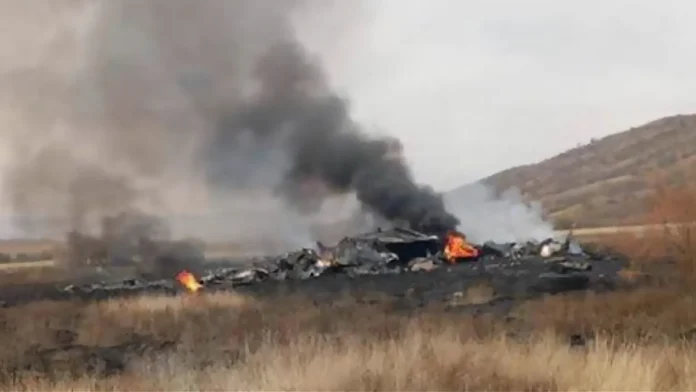
All 20 Turkish military personnel aboard a C-130 cargo plane that crashed in eastern Georgia have been confirmed dead, Turkey’s Defense Minister Yasar Guler announced Wednesday.
The aircraft had taken off from Ganja, Azerbaijan, and was en route to Turkey when it went down Tuesday in Sighnaghi municipality, close to the Azerbaijani border. Authorities said the cause of the crash remains under investigation.
A Turkish accident investigation team arrived at the crash site early Wednesday and began inspecting the wreckage in coordination with Georgian authorities, according to a statement from Turkey’s National Defense Ministry. Reports from Turkish broadcaster NTV described the wreckage scattered across farmland surrounded by hills, with debris found in several locations.
“Our heroic comrades-in-arms were martyred on November 11, 2025, when our C-130 military cargo plane, which had taken off from Azerbaijan en route to our country, crashed near the Georgia-Azerbaijan border,” Minister Guler said in a message on X (formerly Twitter), sharing photos of the fallen personnel.
The Georgian Civil Aviation Authority said that communication with the aircraft was lost shortly after it entered Georgian airspace, and the plane did not issue a distress signal before disappearing from radar.
The C-130E Hercules, a four-engine tactical airlifter, is widely used by the Turkish Armed Forces for transporting troops and carrying out logistical operations. The crash marks one of Turkey’s deadliest military aviation accidents in recent years.
Turkey and Azerbaijan maintain close defense cooperation, and the crash occurred just days after Turkish President Recep Tayyip Erdogan and top officials attended Azerbaijan’s Victory Day celebrations in Baku on November 8, commemorating Azerbaijan’s 2020 military victory over Armenia in Nagorno-Karabakh. It remains unclear whether the soldiers aboard the aircraft had participated in the ceremonies.
Azerbaijan’s President Ilham Aliyev and Georgian Foreign Minister Maka Botchorishvili expressed condolences to Turkey, while U.S. Ambassador to Turkey Tom Barrack and NATO Secretary-General Mark Rutte also offered sympathies, honoring the fallen servicemen and reaffirming solidarity with Ankara.
“We are deeply shocked by the news of the loss of life of our soldiers in the accident that occurred on Georgian soil,” Aliyev said, according to the Anadolu Agency.
A search and recovery operation remains underway, involving Azerbaijani and Georgian emergency teams, as authorities work to recover all remains and investigate the cause of the disaster. Funeral arrangements for the fallen soldiers have not yet been announced.
Police in Kisii, Kenya, have exhumed the body of a 54-year-old woman, Zipporah Omari, who went missing two months ago, uncovering what investigators believe to be a case of domestic homicide.
The body was discovered in a shallow grave beneath a thatched house in the Mwembe area, directly opposite Kisii Cathedral. A 72-year-old man, identified as John Agwacha, is currently detained at Kisii Central Police Station in connection with the murder.
According to the deceased’s family, Omari, a widow, had been living with Agwacha, also a widower, for about a year. Concerns about her disappearance arose when tenants in Mwembe Estate reported that she had failed to collect rent for two months.
“Sisi baada ya wapangaji kuraise alarm tulianza kupiga report kwa vituo vya polisi… ndio baadaye kuna majirani wakatuambia kwamba mwili umeonekana na kwamba mama amezikwa hapa. Tunataka tu haki,” said Nyambati Omari, Zipporah’s son. (Translation: “After the tenants raised the alarm, we started making reports at the police stations… then later some neighbors told us that the body had been found and that the woman had been buried here. We just want justice.”)
Reports from the Directorate of Criminal Investigations (DCI) indicate that the suspect, John Agwacha, initially confessed to killing the deceased by hitting her with a blunt object before burying her body at around 11:30 p.m. However, he later recanted the confession, claiming he was innocent.
“Mama ambaye amepotea kwa muda sasa tumehakikisha ametolewa na mwili unaonekana wake. Uchunguzi tayari unaendelea,” said Kisii Central Sub-County Commander Musa Imai, confirming that the missing woman’s body had been recovered. (Translation: “The woman who had been missing has now been recovered, and her body is visible. Investigations are already ongoing.”)
The suspect will remain in police custody for 30 days as investigations continue. The body of the deceased has been taken to the Kisii Hospital mortuary, where an autopsy will be conducted to determine the cause of death.
Family members and residents of Kisii have called for swift justice, expressing shock over the killing that has shaken the quiet Mwembe community.