Home Blog Page 35

Supreme Court Sets April 1 Hearing on Trump Birthright Citizenship Order

0

The Supreme Court is preparing to take up a case that could redefine who qualifies for citizenship in the United States, as the justices review an executive order issued by President Donald Trump that seeks to limit birthright citizenship.

Oral arguments are scheduled for Wednesday in a closely watched dispute centered on an order signed on the first day of President Donald Trump’s second term. The directive would deny automatic citizenship to children born in the United States after February 19, 2025, if their parents are in the country without legal status or hold temporary visas.

The case places a long settled interpretation of the Constitution under renewed scrutiny. For more than a century, courts have broadly applied the Fourteenth Amendment’s citizenship clause to grant citizenship to nearly anyone born on American soil.

A decision is expected within the next three months. Until then, the policy remains blocked following lower court rulings that halted its enforcement.

The dispute marks one of several major legal challenges tied to President Donald Trump’s policy agenda now before the court. While the administration has secured favorable outcomes in some emergency requests related to immigration and federal authority, this case addresses the core legality of a sweeping constitutional interpretation.

At the center of the debate is the Fourteenth Amendment, which declares that all persons born or naturalized in the United States, and subject to its authority, are citizens. The administration argues that this language has been applied too broadly and does not extend to children born to parents without permanent legal ties to the country.

The executive order, titled “Protecting the Meaning and Value of American Citizenship,” directs federal agencies to deny recognition of citizenship for children who do not meet the new criteria. It also bars the issuance of documents that would otherwise confirm citizenship for those individuals.

In legal filings, the Justice Department maintains that lower courts relied on an incorrect interpretation of the Constitution when they blocked the order. The administration contends that extending automatic citizenship in these cases carries significant policy consequences and affects border enforcement.

John Sauer, serving as solicitor general, is expected to present the government’s position before the court. He has argued that the current interpretation grants citizenship without sufficient legal basis to large numbers of individuals.

Opponents of the order describe it as a direct challenge to established constitutional law. A coalition of states, advocacy organizations and private individuals has filed suit, seeking to preserve existing citizenship rights. Among the plaintiffs are expectant mothers who argue that their children would be denied access to benefits tied to citizenship.

Legal advocates, including the American Civil Liberties Union, have argued that the order conflicts with both the Constitution and long standing Supreme Court precedent. Cecillia Wang, legal director for the group, is set to argue on behalf of the challengers and has said the order attempts to rewrite the meaning of the Fourteenth Amendment.

Lower courts that have reviewed the policy have consistently ruled against the administration, finding that it contradicts established legal interpretations. Those rulings have kept the policy from taking effect nationwide.

Much of the argument before the Supreme Court is expected to focus on the phrase “subject to the authority” in the Fourteenth Amendment. The administration interprets this language as allowing limits on who receives citizenship at birth, particularly in cases involving parents without permanent legal status.

Attorneys for the challengers point to a landmark 1898 Supreme Court decision involving Wong Kim Ark, which affirmed that a child born in the United States to foreign parents was a citizen. That ruling has guided courts for generations and remains central to the current debate.

Historical context also plays a key role in the case. The Fourteenth Amendment was adopted after the Civil War to ensure citizenship for formerly enslaved people and their descendants. Supporters of the traditional interpretation argue that the amendment established a broad principle of citizenship based on place of birth rather than parent status.

The potential impact of the case is significant. Data from the Pew Research Center indicates that roughly 150,000 children are born each year in the United States to parents who are not citizens. Millions of children currently living in the country were born under similar circumstances.

Critics of the order warn that enforcing the policy could create confusion and inconsistency across states. They argue that families could face new requirements to prove citizenship status for newborns, potentially complicating access to services and legal protections.

Amanda Frost, a law professor at the University of Virginia, has said the policy could leave some children without clear legal status at birth and raise practical questions for hospitals and state agencies responsible for issuing birth certificates.

Supporters of the administration’s approach argue that the current system encourages misuse, including travel to the United States for the purpose of securing citizenship for children. They contend that limiting birthright citizenship would address those concerns and align policy with a narrower reading of the Constitution.

During earlier court proceedings, some justices expressed skepticism about the administration’s position. Questions raised during those sessions focused on how the policy would be implemented and how officials would determine a child’s status at birth.

Justice Brett Kavanaugh asked how hospitals and state authorities would handle citizenship determinations for newborns under the proposed framework. Justice Sonia Sotomayor questioned whether the order conflicts with multiple existing precedents.

The case now before the court, known as Trump v. Barbara, involves a named plaintiff using a pseudonym. She joined the lawsuit while pregnant, and her child has since been born in the United States.

According to SCOTUSblog, the case is among the most significant of the current term and could reshape constitutional law related to citizenship. The court’s ruling is expected by late June or early July.

The case represents a rare moment in which the Supreme Court may revisit a constitutional principle that has remained largely settled for generations. While immigration policy often shifts with changing administrations, the definition of citizenship has been far more stable.

If the court sides with the administration, the decision could mark a fundamental shift in how citizenship is determined, potentially affecting millions of families and altering long standing legal assumptions. Such a ruling would likely lead to further legal challenges and require new systems for verifying status at birth.

On the other hand, if the court rejects the order, it would reinforce existing precedent and limit the scope of executive authority in redefining constitutional rights. That outcome could also shape future debates over immigration policy by clarifying the boundaries of presidential power.

The broader implications extend beyond immigration. The case tests how the court interprets constitutional text in light of historical context and prior rulings, a balance that often defines major decisions. It also raises questions about the role of the judiciary in resolving disputes with far reaching social and political consequences.

scotusblog/Foxnews

Fighter Jets Intercept Civilian Plane Near Airspace Restrictions During Trump Visit to Palm Beach

0

Fighter jets were deployed Sunday to intercept a civilian aircraft that entered restricted airspace near Palm Beach, prompting a temporary halt in airport operations hours before President Donald Trump was scheduled to depart the area.

The North American Aerospace Defense Command said the incident occurred at approximately 1:15 p.m. when the aircraft entered a flight restriction zone. Military aircraft were sent to respond, and flares were released to alert the pilot before the plane was safely escorted out of the restricted area.

Officials said the situation ended without incident.

The response took place during President Donald Trump’s weekend stay at his Mar a Lago residence. Authorities routinely enforce temporary flight restrictions over the area during such visits, requiring all pilots to comply with strict airspace rules.

According to NewsNation, military aircraft have been launched multiple times to intercept planes entering restricted zones since President Donald Trump began his second term in January 2025. The defense command relies on radar systems, satellites and aircraft to monitor and respond to potential threats.

The New York Post reported that the incident triggered a temporary ground stop at Palm Beach International Airport as authorities worked to assess the situation. Officials said the response began after communication was lost with a general aviation aircraft.

A statement issued through the Defense Visual Information Distribution Service said the aircraft had violated the restricted airspace before being guided away by military pilots.

“The aircraft was safely escorted out of the area,” the statement said. It added that flares were used as a visual signal to gain the pilot’s attention and did not pose a danger to people on the ground.

The White House and the Secret Service said there was no threat to Air Force One or to President Donald Trump. A White House official said communication with the aircraft was eventually restored and the ground stop was lifted shortly afterward.

“There was no concern regarding Air Force One, which was not scheduled to depart until later in the day,” the official said.

At the time of the incident, President Donald Trump was at his nearby golf course. Early reports had suggested the possibility of a drone entering restricted airspace, but officials later indicated that was not the case.

A Secret Service spokesperson said a helicopter seen in the area had been authorized to operate there and was not connected to the incident.

“Airspace violations occur from time to time, particularly outside Washington, but the aircraft referenced was not related to any unauthorized drone activity,” the spokesperson said.

The Federal Aviation Administration said normal operations resumed after a brief slowdown in air traffic at the airport. The agency did not provide further details about the temporary ground stop.

The interception highlights the heightened security protocols in place when a sitting president is present in a given area. Temporary flight restrictions are a standard measure designed to prevent unauthorized aircraft from approaching sensitive locations, particularly when the president is traveling or residing nearby.

While such incidents are not uncommon, they underscore the challenges of maintaining strict airspace control in regions with heavy private aviation activity, such as South Florida. Pilots operating general aviation aircraft are required to stay informed of current restrictions, but lapses in communication or navigation can still occur.

The use of fighter jets and flares is part of a layered response system intended to quickly identify and redirect aircraft that may pose a risk. These measures are designed to escalate in a controlled manner, prioritizing communication and safety before any more aggressive action is considered.

From a security standpoint, the fact that communication was re established and the aircraft was safely escorted away indicates that established procedures functioned as intended. However, repeated incidents of airspace violations may prompt further review of enforcement and pilot awareness efforts.

The broader implication is the continued importance of coordination between military, aviation and security agencies. As presidential travel and security demands remain high, ensuring that both commercial and private pilots understand and comply with restrictions will remain a key priority.

Newsnation/nypost

Tottenham FC Dismiss Manager Igor Tudor After Six Weeks Without a League Win

0

Tottenham Hotspur has parted ways with head coach Igor Tudor after just six weeks in charge, ending one of the shortest managerial tenures in Premier League history following a run of poor results that left the club hovering near the relegation zone.

The club confirmed the decision in a statement, saying it had been mutually agreed that Tudor would leave his role with immediate effect. Goalkeeping coach Tomislav Rogic and fitness coach Riccardo Ragnacci have also departed.

“We can confirm that it has been mutually agreed for head coach Igor Tudor to leave the club with immediate effect,” Tottenham said. “We thank Igor and his staff for their efforts during the past six weeks.”

The announcement follows a difficult stretch in which Tudor failed to secure a single league victory. According to Sky News, Tottenham drew one and lost four of their five Premier League matches under his leadership after he replaced Thomas Frank in February.

Tudor’s 44 day tenure ranks among the briefest in the league’s history, underscoring the scale of the club’s struggles this season. His appointment had been intended as a short term measure to stabilize performances, but results deteriorated instead, leaving Tottenham just one point above the relegation zone with seven matches remaining.

The team’s downturn included a heavy defeat to long time rival Arsenal early in Tudor’s tenure, followed by continued losses that saw the club slide down the standings. Tottenham was also eliminated from the Champions League after a two leg defeat to Atletico Madrid.

A 3-0 home loss to Nottingham Forest before the international break further intensified pressure on the club’s leadership to act. That result came despite strong support from fans, who had welcomed the team ahead of the match.

Tudor did not speak publicly after that defeat after learning of the death of his father. In its statement, Tottenham acknowledged his loss and expressed support for him and his family.

“ We also acknowledge the bereavement that Igor has recently suffered and send our support to him and his family at this difficult time,” the club said.

Assistant coach Bruno Saltor has taken over training duties for players not on international assignments while the club searches for a permanent replacement. Tottenham indicated it intends to appoint a new head coach before its next league match on April 12 against Sunderland.

The dismissal comes as Tottenham faces the possibility of relegation, a scenario that would mark a dramatic fall for a club that has regularly competed in European competitions in recent years. The team’s position could worsen further depending on other results before their next fixture.

The Sun described Tudor’s time in charge as a difficult spell marked by declining form and mounting pressure, with the club’s prospects in both domestic and European competitions unraveling during his brief tenure.

Supporters reacted with little surprise to the decision, with many expressing frustration over the team’s performances and the broader direction of the club. Some pointed to a pattern of frequent managerial changes as a deeper issue affecting long term stability.

Tottenham now turns its focus to identifying a successor capable of guiding the team through the remainder of the season. Several candidates have been linked with the role, including Roberto De Zerbi and Sean Dyche, though it remains unclear whether the club will pursue a permanent appointment immediately or install another interim coach.

Ryan Mason, who has previously served in caretaker roles, is also viewed as a potential short term option if the club opts for continuity.

Tudor’s rapid departure highlights ongoing instability within Tottenham’s leadership structure, where managerial changes have become increasingly frequent. While his appointment was always intended as a temporary solution, the lack of improvement in results exposed deeper structural issues within the squad and the club’s overall strategy.

The timing of the decision suggests urgency rather than long term planning. With the team positioned just above the relegation zone, Tottenham’s priority has shifted from salvaging a European push to simply securing its place in the top division.

Frequent coaching changes can disrupt player development and tactical consistency, making it difficult to build momentum. Analysts often note that clubs facing repeated managerial turnover struggle to establish a clear identity on the field.

The next appointment will be critical. A permanent coach could provide stability but may be reluctant to take over during a relegation battle, while another interim option risks prolonging uncertainty. The club’s leadership must weigh immediate survival against longer term rebuilding efforts.

Beyond the managerial situation, Tottenham’s challenges reflect broader concerns about squad depth, defensive organization and confidence. Addressing these issues will require more than a change in leadership.

As the season enters its final stretch, the club’s ability to respond quickly will determine whether it can avoid relegation and begin to rebuild ahead of the next campaign.

thesun/skynews

Israeli Police Block Catholic Leaders From Palm Sunday Mass at Jerusalem Church, Drawing Global Criticism

0

Israeli police prevented senior Catholic leaders from entering one of Christianity’s holiest sites to celebrate Palm Sunday Mass, an unprecedented move in modern times that has drawn sharp international criticism and raised concerns over restrictions on religious worship in Jerusalem.

Cardinal Pierbattista Pizzaballa, the Latin Patriarch of Jerusalem, was stopped by police as he attempted to enter the Church of the Holy Sepulchre on Sunday to conduct a private Mass marking the start of Holy Week, according to the Latin Patriarchate of Jerusalem. He was accompanied by Father Francesco Ielpo, a senior cleric associated with the church.

Church officials said the two were traveling quietly without any public procession or ceremonial gathering when police intervened and turned them away. The Patriarchate described the incident as the first time in centuries that senior church leaders had been prevented from observing Palm Sunday at the site traditionally recognized by Christians as the place of Jesus’ crucifixion.

The Associated Press reported that the decision triggered a wave of criticism from the United States and other countries, with leaders questioning the necessity and proportionality of the restrictions.

Israeli authorities cited security concerns linked to the ongoing regional conflict as the basis for the decision. Police said they had informed church officials a day earlier that no Mass would be permitted at the site on Palm Sunday due to safety risks, including limited access for emergency vehicles in the narrow streets of the Old City and insufficient shelter capacity.

Jerusalem’s major religious sites, including the Church of the Holy Sepulchre, have been largely closed amid continued missile threats, according to officials. The city has faced repeated attacks, prompting heightened security measures.

However, the Latin Patriarchate challenged the reasoning, noting that the church had continued to host limited, private services since the conflict began, typically with fewer than 50 participants in line with military guidelines.

“It is a deeply sacred day for Christians, and there was no clear justification for such a decision,” said Farid Jubran, a spokesperson for the Patriarchate. He added that the church had requested permission for a small, private gathering, not a public event.

Palm Sunday marks the beginning of Holy Week, one of the most significant periods in the Christian calendar, commemorating Jesus’ entry into Jerusalem. Traditionally, the day is observed with large processions, drawing thousands of pilgrims from around the world. This year’s public events had already been canceled due to security concerns.

Instead of leading services at the Church of the Holy Sepulchre, Pizzaballa conducted Mass at a nearby monastery considered a safer location. He later held a prayer service on the Mount of Olives but did not address the earlier incident in his remarks.

The Vatican did not immediately comment on the situation. However, Pope Leo the Fourteenth, speaking at a Palm Sunday service in Rome, offered prayers for Christians in the Middle East, noting that many are unable to fully observe religious traditions due to ongoing violence.

The incident prompted criticism from several world leaders and governments.

United States Ambassador Mike Huckabee described the decision as an overreach, stating that the planned gathering was well within the permitted size limit. He said preventing the Patriarch from entering the church on such a significant day was difficult to justify.

French President Emmanuel Macron expressed concern about what he described as increasing restrictions affecting religious sites in Jerusalem. He emphasized that freedom of worship must be protected for all faiths.

Italy’s government also issued a formal protest, summoning Israel’s ambassador for clarification. Prime Minister Giorgia Meloni said the move undermined religious freedom and offended not only believers but broader communities that value the right to worship.

Israeli Prime Minister Benjamin Netanyahu responded by saying there was no intent to target religious practices. He said the restrictions were based solely on safety considerations and indicated that authorities are working on a plan to allow limited access to the church in the coming days.

“Given the importance of the period leading up to Easter, security agencies are preparing measures to enable worship at the site,” Netanyahu said in a public statement.

In an interview with an Italian broadcaster, Pizzaballa described the situation as a disagreement with authorities but said discussions remained respectful. He expressed hope that arrangements could be made to balance security needs with the right to prayer.

Restrictions have also affected other religious sites in Jerusalem. The Western Wall, a major site for Jewish prayer, has been largely closed, with only small groups allowed access under strict limits. Smaller places of worship across the Old City remain open if they meet safety requirements, including proximity to shelters and limits on gathering size.

The decision to block senior Catholic leaders from entering the Church of the Holy Sepulchre reflects the difficult balance between security and religious freedom in a city central to multiple faiths. While Israeli authorities argue that the measures are necessary to protect lives amid ongoing attacks, the move risks deepening tensions with religious communities and international partners.

Jerusalem has long operated under a delicate arrangement governing access to holy sites, often referred to as the status quo. Any perceived disruption to that balance can carry significant political and diplomatic consequences. Preventing senior clergy from conducting even a private service on a major religious holiday represents a notable departure from established practice.

The timing of the incident, during Holy Week, amplifies its impact. For many Christians worldwide, the Church of the Holy Sepulchre is among the most sacred locations, and restrictions on access during this period resonate far beyond the region.

From a security standpoint, officials face genuine challenges. The Old City’s narrow streets and limited infrastructure complicate emergency response efforts, particularly during periods of heightened threat. However, critics argue that narrowly tailored measures could allow limited religious observance without compromising safety.

Diplomatically, the response from the United States and European leaders highlights the broader implications of the decision. Israel’s allies have generally supported its security measures but appear concerned about actions that may be viewed as infringing on religious rights.

Looking ahead, the effectiveness of Israel’s proposed plan to allow partial access will be closely watched. How authorities manage access to holy sites in the coming days could influence both local stability and international perceptions.

AP/TheJerusalemPost

Iran Threatens to Attack US Ground Forces as Concerns Rise Over Possible Land Invasion

0

Iran’s leadership has warned that any deployment of United States ground forces would face a direct and forceful response, as concerns mount over a possible land invasion amid the widening conflict in the Middle East.

Mohammad Bagher Ghalibaf, speaker of Iran’s parliament, said Iranian forces are prepared for the arrival of American troops and signaled that such a move would trigger immediate retaliation. His remarks, carried by state media, come as thousands of United States naval personnel and marines have moved into the region, raising fears of a broader military escalation.

“Our armed forces are ready for the arrival of American troops on the ground,” Ghalibaf said, warning that Iran would respond decisively. He added that the country’s missile systems remain in position and that its resolve has strengthened as the conflict continues.

Ghalibaf also accused Washington of publicly discussing negotiations while privately preparing for a land based offensive. He pointed to a proposal relayed through intermediaries as an attempt by the Trump administration to secure concessions that military action has failed to achieve.

“As long as the United States seeks surrender, our position remains firm,” he said, rejecting any outcome that would involve compromise under pressure.

The remarks underscore rising tensions as the war involving Iran, Israel and allied forces shows no sign of easing. Military movements by the United States have fueled speculation that Washington could expand its role beyond air and naval operations, though officials have not confirmed any plans for a ground invasion.

The conflict has already caused widespread casualties across the region, according to figures cited by Sky News and other organizations. The reported toll highlights the growing humanitarian impact of the fighting, though the numbers have not been independently verified.

In Iran, the United States based Human Rights Activists News Agency reported that 3,461 people have been killed since the conflict began, including more than 1,500 civilians and at least 236 children. The International Federation of Red Cross and Red Crescent Societies has said at least 1,900 people have died and 20,000 have been injured in strikes carried out by United States and Israeli forces.

Lebanese authorities say Israeli strikes have killed 1,189 people this month, including at least 124 children. Sources familiar with the armed group Hezbollah told Reuters that more than 400 of its fighters have been killed since it entered the conflict earlier this month.

In Iraq, health officials report at least 100 deaths linked to the crisis. A foreign crew member was also killed in an ആക്രമment on tankers near a port, according to port security officials.

Missile strikes targeting Israel from Iran and Lebanon have killed 19 civilians, according to Israeli emergency services. The Israeli military said four of its soldiers were killed in fighting in southern Lebanon. In a separate incident, Israeli forces mistakenly killed a farmer near the border.

The United States has reported the deaths of 13 service members during the conflict.

Elsewhere, authorities in the United Arab Emirates said 10 people, including two soldiers, were killed in Iranian attacks. Qatar reported seven deaths following a helicopter crash in its waters, including military personnel and technical staff.

Kuwait has confirmed six deaths, including casualties linked to Iranian strikes and losses among security personnel. In Bahrain, two people were killed in separate attacks, while Oman reported two deaths in a drone strike on an industrial area and another fatality involving a vessel off its coast.

Saudi officials said two people were killed when a projectile struck a residential area near the capital. In Syria, state media reported that four people died when a missile hit a building in the southern city of Sweida.

In the Palestinian territories, violence has continued. Six people were reported killed in strikes in Gaza on Saturday, following three deaths a day earlier. The overall number of deaths there remains unclear. In the West Bank, four women were killed in a missile strike, according to reports.

France said one of its soldiers was killed and six others wounded in a drone attack in northern Iraq, where they had been involved in training operations.

Iran’s warning reflects a significant escalation in tone as the possibility of a United States ground operation becomes a more visible concern. While both sides have relied heavily on air power, missiles and regional allies, a land invasion would represent a major shift with far reaching consequences.

For Iran, signaling readiness to confront ground forces serves both as a deterrent and as a message to domestic and regional audiences. The emphasis on preparedness suggests that Iranian military planners are considering scenarios that go beyond the current scope of the conflict.

For the United States, any move toward deploying ground troops would carry substantial risks. Past conflicts in the region have demonstrated the challenges of sustained land operations, particularly against adversaries capable of asymmetric warfare. Iran’s network of allied groups across the region could further complicate such a campaign.

The broader conflict is already affecting multiple countries, with casualties reported across the Middle East. The expansion of hostilities has increased the risk of miscalculation, especially as more actors become involved.

Economically, the stakes are also high. The region plays a central role in global energy supply, and further escalation could disrupt production and transportation routes, affecting markets worldwide.

Diplomatic options appear increasingly limited. Public statements from leaders on all sides suggest entrenched positions, reducing the likelihood of near term negotiations. Without a shift toward dialogue, the risk of a prolonged and more destructive conflict remains.

News.Sky

Congo Court Confirms President Denis Sassou Nguesso’s Election Victory, Securing Fifth Term

0

The Republic of Congo’s constitutional court on Saturday upheld the re election of President Denis Sassou Nguesso, confirming the veteran leader’s victory in the recent national vote and granting him a fifth term in office.

Court president Auguste Iloki announced that Sassou Nguesso secured 94.90 percent of the vote, an outcome he described as an outright majority. The ruling follows provisional figures released March 17 by Interior Minister Raymond Zephirin Mboulou, which had already placed the 82 year old incumbent far ahead with 94.82 percent support.

The confirmation effectively dismisses legal challenges filed by opposition candidates who disputed the credibility of the election. One of the challengers, Uphrem Mafoula, had formally petitioned the court to void the results. Judges rejected the appeal, affirming the legitimacy of the vote.

The March 15 election drew six challengers against Sassou Nguesso, who has dominated the political landscape of the oil producing Central African nation for decades. Despite the presence of multiple candidates, the campaign period underscored a stark imbalance, with the incumbent widely seen as holding a significant advantage in visibility and resources.

According to accounts published by Channelstvng, Sassou Nguesso’s campaign stood apart as he traveled across the country to rally support, while opposition figures struggled to match his reach. In the capital, Brazzaville, campaign displays prominently featured his image, reinforcing his presence throughout the electoral period.

Two major opposition parties boycotted the vote, citing concerns about fairness and transparency. Opposition leaders have consistently challenged previous election outcomes, arguing that the process has not met democratic standards.

Sassou Nguesso’s political career spans more than four decades. He first took power in 1979 under a single party system and governed until 1992, when he lost the country’s first multi party election. He returned to leadership in 1997 following a civil conflict that removed the sitting government. Since then, he has secured repeated electoral victories, each met with criticism from opposition groups.

The constitutional framework that allowed his continued candidacy was reshaped in 2015, when a referendum removed presidential age and term limits. That change enabled Sassou Nguesso to remain eligible for office despite his age and extended tenure.

Saturday’s court ruling reinforces his position as one of the longest serving leaders on the African continent, alongside Cameroon’s President Paul Biya and Equatorial Guinea’s President Teodoro Obiang Nguema Mbasogo.

While supporters credit Sassou Nguesso with maintaining relative stability in a country that experienced periods of unrest, critics and rights organizations have raised concerns about political freedoms and the treatment of opposition figures. Some former political rivals have faced lengthy prison sentences after being accused of threatening national security.

Economic challenges remain a pressing issue for the country. Despite its substantial oil resources, the Republic of Congo continues to grapple with high levels of debt and widespread poverty. World Bank data indicate that the country’s debt stands at 94.5 percent of its gross domestic product, while more than half of its population of 5.7 million lives below the poverty line.

Youth unemployment is also a growing concern, with nearly half of the population under the age of 18. Analysts say the lack of economic opportunity for young people could pose long term risks to stability if not addressed.

The court’s decision to validate the election result underscores the entrenched nature of political power in the Republic of Congo. Sassou Nguesso’s continued leadership reflects a broader pattern seen in parts of Africa, where long serving incumbents maintain control through a combination of institutional influence, constitutional changes and fragmented opposition.

The removal of term and age limits in 2015 marked a turning point, effectively clearing the path for Sassou Nguesso to extend his rule. Such constitutional revisions have been a recurring feature in several countries, often sparking debate about democratic norms and governance standards.

The opposition’s inability to mount a unified and competitive challenge highlights structural barriers within the political system. Boycotts and legal appeals, while signaling dissent, have had limited impact on electoral outcomes. Without stronger institutional checks or broader political reform, analysts suggest that similar results may continue in future elections.

At the same time, the country’s economic realities present a contrast to its political continuity. Oil wealth has not translated into broad based prosperity, and persistent inequality remains a central issue. High debt levels and limited job opportunities, particularly for young people, could intensify public dissatisfaction over time.

Looking ahead, Sassou Nguesso’s current term is expected to be his last under the existing constitution, which bars him from running again in 2031. However, observers note that political landscapes can shift, and future developments will depend on both domestic pressures and regional dynamics.

For now, the court’s ruling cements the status quo, extending the tenure of one of Africa’s longest serving leaders while leaving unresolved questions about governance, economic reform and political inclusion.

Church Pastor Arrested for Alleged Serial Sexual Abuse and Impregnation of 16-Year-Old Girl in Nigeria

0

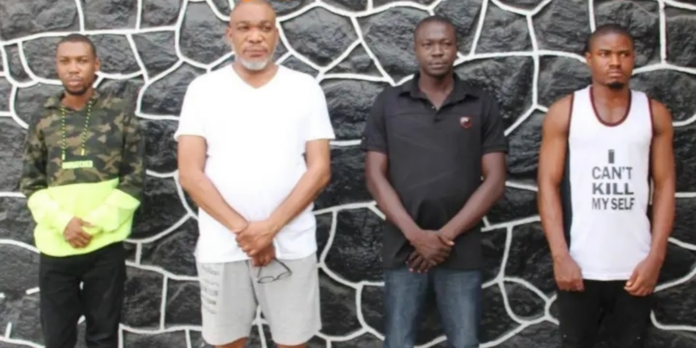
The General Overseer of Jesus Is Ontop Ministry in Amichi, Nnewi South Local Government Area of Anambra State, Nigeria, has been arrested and transferred to police custody at the State Criminal Investigation Department in Awka on allegations of serially raping and impregnating a 16-year-old girl who was entrusted to his spiritual care for what her family believed would be religious deliverance.

Evangelist Dozie Ezani was apprehended at his poultry farm in Igboukwu, Aguata Local Government Area, by operatives from the Anambra State Special Anti-Touting Squad following credible intelligence gathering and monitoring of his activities. The arrest came after security personnel observed suspicious movements involving the pastor and the teenage victim over an extended period.

The Spokesperson for SASA, Karen James, disclosed after cross-examination of the victim at the squad’s headquarters in Onitsha on Friday that the suspect habitually raped the girl at multiple locations including his residence, his church in Amichi, and his poultry farm in the neighboring Igboukwu community. The pattern of abuse across different venues suggested deliberate exploitation of the girl’s vulnerability and the pastor’s positions of authority.

James confirmed that following the suspect’s arrest, he was immediately transferred to the state Criminal Investigation Department where further interrogations and investigations are ongoing. “A security personnel from Igboukwu, where the latest incident occurred, brought in the report of the rape. The security personnel have been observing the suspicious movements of the pastor and the young girl before bringing the report to SASA’s attention,” she explained.

“On receiving the report, and after due diligence gathering, SASA operatives stormed the church at Igboukwu on Monday to arrest the suspect, where he and the victim were brought to SASA’s office. The suspect was immediately handed over to the State Criminal Investigation Department, Awka, for further investigation,” James detailed, describing the operation that culminated in the pastor’s detention.

“During interrogation, the victim said she was formerly residing in Lagos, but her aunt brought her back and handed her over to the pastor for ‘special deliverance’, before the suspect started forcefully having sexual intercourse with her, leading to suspected pregnancy,” the SASA spokesperson revealed, exposing how religious authority and family trust were exploited to facilitate systematic sexual abuse.

According to James, the victim is scheduled to undergo medical examination to ascertain her true physical condition and the extent of “damages” inflicted upon her through the sustained abuse. SASA operatives are actively tracking the aunt who handed the girl to the pastor and is now reportedly on the run, possibly fearing legal consequences for her role in placing the minor in circumstances that enabled the abuse.

Speaking to journalists at SASA’s headquarters in Onitsha, the victim—who identified herself as Precious Okafor from Amichi—recounted that the pastor began forcefully having sexual intercourse with her as far back as November 2025, immediately upon her arrival at his house for what was supposed to be spiritual deliverance from unspecified afflictions her family believed required pastoral intervention.

The victim testified she was repeatedly abused by the pastor at his church, farm, and residence before being rescued by SASA operatives. She added that she remains uncertain about whether she is pregnant and has been experiencing health complications after consuming substances the pastor gave her—raising concerns about potential attempts to terminate a pregnancy or harm her health to conceal evidence of the abuse.

She appealed to the state government, non-governmental organizations, and well-meaning individuals for medical assistance to address the physical and psychological trauma she has endured. She expressed gratitude to SASA operatives for their intervention in rescuing her from circumstances where she felt powerless to escape or seek help on her own.

During video interrogation, Ezani admitted to sexual activity with the girl but attempted to deflect responsibility by attributing his actions to “the devil’s handiwork”—a common strategy among religious figures accused of sexual misconduct who invoke spiritual warfare to avoid accountability for deliberate criminal behavior.

The pastor claimed the substances he administered to the girl were intended to address the suspected pregnancy—effectively confessing to attempted abortion or pregnancy concealment—and offered to cover her medical expenses if released from custody. The offer suggested awareness of wrongdoing and potential civil liability beyond criminal charges.

SASA Head Monday Nwokoye confirmed the suspect remains in SCID custody while investigations continue into the full extent of his alleged crimes. He urged communities to report suspicious activities involving vulnerable individuals, declaring, “The state frowns at such acts, and perpetrators will be brought to justice” regardless of their religious positions or community standing.

As of the time this account was filed, the police had not issued formal statements regarding the arrest, though SASA confirmed it had transferred the suspect to appropriate authorities for further investigation and possible prosecution. The delay in official police communication reflects common patterns in Nigerian law enforcement where cases proceed through investigative stages before public announcements.

When contacted about the development, the Spokesman for the Anambra State Police Command, SP Tochukwu Ikenga, acknowledged he was not yet aware of the specifics but would make enquiries before issuing any official statement. The measured response suggested the case was still in preliminary investigative stages requiring verification before formal police comment.

The case highlights persistent problems of sexual abuse within religious contexts in Nigeria, where pastors and spiritual leaders often wield enormous authority over congregants who trust them with vulnerable family members. The practice of sending troubled teenagers to religious figures for “special deliverance” creates opportunities for predatory individuals to exploit victims who have been isolated from normal family protection.

The involvement of the victim’s aunt in facilitating the abuse—by removing the girl from Lagos and placing her in the pastor’s custody—raises questions about family members’ responsibilities when entrusting minors to religious authorities. Whether the aunt suspected abuse or merely failed to adequately supervise the arrangement remains unclear, though her reported flight from authorities suggests awareness of potential legal exposure.

The case also illustrates the crucial role that community vigilance can play in protecting vulnerable individuals. The security personnel in Igboukwu who observed suspicious patterns and reported concerns to SASA enabled intervention before potentially more severe harm occurred. Their actions demonstrate the importance of bystanders who notice troubling situations taking action rather than remaining silent.

For Precious Okafor, the road ahead involves not only potential pregnancy and physical health issues but also psychological trauma from betrayal by trusted adults including family members and a religious authority figure. Recovery will require comprehensive medical care, counseling, and support systems to help her process the violation and rebuild her sense of safety and dignity.

The pastor’s attempt to blame his actions on demonic influence rather than accepting personal responsibility exemplifies how religious language can be weaponized to evade accountability for criminal conduct. Courts and investigators must look beyond spiritual explanations to examine deliberate choices and patterns of predatory behavior that constitute serious crimes regardless of perpetrators’ religious status.

As the investigation proceeds and prosecutors prepare potential charges, the case will test whether Nigeria’s justice system can hold powerful religious figures accountable for sexual crimes against minors. Successful prosecution would send important signals that religious authority provides no immunity from criminal law and that vulnerable children entrusted to spiritual care deserve protection from exploitation.

The outcome may also influence whether other victims of clergy sexual abuse find courage to report similar crimes, knowing that authorities will take allegations seriously and pursue justice regardless of perpetrators’ positions within religious communities. For now, Evangelist Dozie Ezani remains in custody awaiting the legal process that will determine his fate and potentially provide some measure of justice for the teenage girl whose trust and vulnerability he allegedly exploited so grievously.

French Police Foil Suspected Bomb Plot Near Bank of America Site in Paris

0

French police prevented a suspected bombing attempt near a Bank of America site in central Paris early Saturday, detaining one suspect while another fled, authorities said, as prosecutors opened a terrorism investigation amid heightened security concerns tied to international tensions.

The national anti-terrorism prosecutor’s office confirmed to The Associated Press that it has launched an inquiry into suspected terrorism-related offenses following the incident. Investigators are examining allegations that include attempted destruction using fire or hazardous means, the production and possession of an explosive or incendiary device, and participation in a criminal network linked to terrorism.

Officials said one individual was taken into custody at the scene. Authorities are continuing efforts to identify and locate a second suspect who escaped.

Interior Minister Laurent Nuñez credited a rapid police response with preventing what he described as a potentially serious attack.

“Well done to the rapid intervention of a Paris police prefecture unit, which made it possible to thwart a violent act of a terrorist nature overnight in Paris,” Nuñez said in a statement. He added that security forces remain on heightened alert, noting that vigilance is being maintained at a high level given the broader global context.

French media outlet RTL, citing police sources, indicated that officers encountered two individuals near a Bank of America location in the city’s 8th district during the early morning hours. According to RTL, one suspect was seen attempting to ignite a device while holding a lighter and carrying a bag believed to contain materials associated with the plot. The second individual fled before police could intervene.

The Paris police prefecture did not provide additional details when contacted.

Authorities have not disclosed the exact nature of the device or whether it was fully operational, but the range of charges under review suggests investigators are treating the case as a serious potential threat involving improvised materials.

The incident comes at a time of increased security across France. Earlier this week, Nuñez indicated that authorities had strengthened protection for certain individuals and locations considered at higher risk. These include sites associated with U.S. interests as well as locations linked to the Jewish community, reflecting concerns about possible retaliatory actions tied to the ongoing war involving Iran.

France has a long history of confronting terrorism threats, and law enforcement agencies maintain a robust system for monitoring and responding to suspected plots. The swift intervention described by officials underscores the role of patrol units and intelligence coordination in disrupting potential attacks before they can be carried out.

The investigation is ongoing, and officials have not yet provided information about the suspect’s identity, background or possible motives. Prosecutors are expected to examine whether the individuals involved acted independently or as part of a broader network.

The attempted attack in Paris highlights the persistent and evolving nature of security threats facing major European cities, particularly during periods of geopolitical tension. While authorities have not publicly linked the incident to any specific group, the timing aligns with heightened concerns across Europe about potential spillover effects from conflicts in the Middle East.

France’s decision to elevate security around sites connected to the United States and the Jewish community reflects a broader risk assessment that such locations may be symbolic targets. Historically, attackers have often selected sites that carry political or cultural significance in order to maximize impact beyond immediate physical damage.

The reported use of a simple ignition method suggests the suspected device may have been relatively unsophisticated. However, security experts note that even basic improvised devices can cause significant harm, particularly in densely populated urban areas. The fact that police intervened before the device could be activated likely prevented injuries or worse.

Equally notable is the escape of a second suspect, which introduces ongoing risk and underscores the importance of follow-up operations. Authorities will likely prioritize identifying and apprehending that individual while also determining whether additional accomplices may be involved.

France’s counterterrorism framework has been shaped by past attacks and relies heavily on coordination between intelligence agencies, local police and national prosecutors. The rapid response described by officials suggests that surveillance, patrol presence and situational awareness remain central to preventing incidents.

At the same time, the event may contribute to broader public debate over security policies, civil liberties and the allocation of resources for counterterrorism efforts. Heightened vigilance, while necessary in the face of credible threats, often brings increased scrutiny and pressure on law enforcement agencies to balance safety with transparency.

The incident also underscores the global dimension of modern security challenges. As conflicts abroad continue to influence domestic threat levels, countries like France must navigate a complex environment in which local incidents can have international implications.

While the immediate danger appears to have been contained, the investigation’s findings will be critical in determining whether the plot was isolated or part of a larger pattern. For now, the disruption of the suspected attack serves as a reminder of both the risks and the preventive capabilities present in one of Europe’s most closely watched security landscapes.

AP

Moses Itauma Knocks Out Jermaine Franklin With Fifth-Round Uppercut

0

Rising heavyweight boxing contender Moses Itauma delivered a statement victory Saturday night, stopping Jermaine Franklin with a powerful uppercut in the fifth round before a large crowd in Manchester.

Itauma, 21, improved to 14-0 with 12 knockouts, showcasing a blend of speed, precision and power that has quickly elevated him among the division’s top prospects. Entering the bout ranked near the top by multiple sanctioning bodies, he controlled the fight from the opening bell and broke down Franklin with a steady barrage of punches.

Franklin, now 24-3, had previously gone the distance against top heavyweights, but he struggled to handle Itauma’s pace and accuracy. After being dropped in the third round, Franklin continued to absorb punishment before the decisive finish in the fifth.

The end came when Itauma adjusted his range and landed a clean uppercut that stunned Franklin, leaving him defenseless. A follow-up right hand sent Franklin to the canvas, prompting the referee to stop the fight.

“I’ve done something others haven’t,” Itauma said after the bout, referencing Franklin’s durability against previous opponents.

The fight drew more than 20,000 spectators to the arena, with a number of heavyweight contenders in attendance. Promoter Frank Warren said Itauma could be on track for a title opportunity in the near future.

“He’s ready for a big fight,” Warren said. “I’m confident he’ll challenge for a world title this year.”

Itauma set the tone early, targeting the body and head with a variety of punches. He staggered Franklin in the opening round and continued to apply pressure, mixing power shots with controlled movement.

Franklin showed resilience at times, engaging in exchanges and absorbing heavy blows, but he was unable to match Itauma’s speed and technique. By the middle rounds, the fight had become increasingly one-sided.

The victory further cements Itauma’s status as one of boxing’s most promising young heavyweights and signals his readiness to face higher-level competition.

Full Card Results:
Moses Itauma def. Jermaine Franklin (KO, Round 5) – Heavyweights
Gerome Warburton def. Nathan Heaney (unanimous decision) – Middleweights
Willy Hutchinson def. Ezra Taylor (unanimous decision) – Light heavyweights
Liam Davies def. Francesco Grandelli (corner stoppage, Round 6) – Featherweights
Brad Pauls def. Shakiel Thompson (technical knockout, Round 9) – Middleweights
Michael Gomez Jr. def. Jordan Flynn (technical knockout, Round 3) – Lightweights
Nelson Birchall def. Ryan Griffiths (technical knockout, Round 9) – Featherweights
Josh Holmes def. Alex Murphy (technical knockout, Round 1) – Lightweights
Aadam Hamed def. Michael Mooney (points) – Super lightweights
John Joe Carrigan def. Danny Costello (technical knockout, Round 3) – Super welterweights

Itauma’s performance underscores his rapid rise in the heavyweight division, where young contenders often take years to develop. His ability to stop a durable opponent like Franklin—who had previously gone the distance with elite fighters—marks a significant milestone.

The fight demonstrated not only Itauma’s knockout power but also his composure and ring intelligence. Rather than rushing for an early finish, he systematically broke down Franklin, adjusting his approach and capitalizing on openings.

The presence of other heavyweight contenders at ringside highlights the growing attention surrounding Itauma’s career. With multiple titles in play across the division, his trajectory suggests he could soon enter the mix for major fights.

Promoter confidence and strong fan turnout further indicate that Itauma is becoming a major draw. If his current momentum continues, a title shot within the next year appears increasingly likely.

SportingNews

Millions Mobilize Across America and Globe in Third ‘No Kings’ Rally Protesting Trump Administration Policies

0

Crowds estimated in the millions gathered Saturday across the United States and in multiple foreign nations for the third installment of “No Kings” rallies protesting President Donald Trump’s policies, with Minnesota taking center stage as organizers designated the state capitol as the flagship event headlined by Bruce Springsteen in what demonstrators hope will constitute the largest single-day protest in American history.

Thousands of people stood shoulder-to-shoulder on the Minnesota Capitol lawn and surrounding streets in St. Paul, many holding upside-down American flags—historically a distress signal indicating grave threats to the nation. The massive turnout reflected sustained grassroots opposition to Trump administration actions that protesters characterize as authoritarian overreach threatening constitutional democracy.

The event’s headliner was Springsteen, who performed “Streets of Minneapolis”—a composition he wrote responding to the fatal shootings of Renee Good and Alex Pretti by federal immigration agents and paying tribute to thousands of Minnesotans who took to the streets throughout winter protesting the Trump administration’s aggressive immigration enforcement tactics that culminated in those deaths.

Before launching into the song, Springsteen lamented Good and Pretti’s deaths while emphasizing that continued pushback against U.S. Customs and Immigration Enforcement has provided hope to Americans nationwide watching Minnesota’s resistance. “Your strength and your commitment told us that this was still America,” he declared from the Capitol steps. “And this reactionary nightmare, and these invasions of American cities, will not stand.”

People rallied from New York City—with nearly 8.5 million residents in a solidly Democratic state—to Driggs, a town of fewer than 2,000 people in eastern Idaho, a state Trump carried with 66 percent of the vote in 2024. The geographic breadth of protests spanning deep blue urban centers and conservative rural communities illustrated the movement’s expanding reach beyond traditional progressive strongholds.

U.S. organizers estimated that the first two rounds of No Kings rallies drew more than 5 million people in June and 7 million in October. This week they told journalists they expected 9 million participants Saturday, though determining whether those projections were met would require days of crowd-sourcing analysis across more than 3,100 registered events—500 more than in October—spanning all 50 states.

In Topeka, Kansas, a rally outside the Statehouse featured people impersonating a frog king and Trump as a baby in satirical demonstrations mocking what protesters view as childish authoritarianism. Wendy Wyatt drove with a “Cats Against Trump” sign from Lawrence, 20 miles to the east, and planned returning to her hometown for a subsequent rally there.

Wyatt acknowledged “there are so many things” about the Trump administration that upset her, adding that participating in protests felt “very hopeful to me” as an antidote to feelings of powerlessness confronting governmental actions she opposes.

White House spokesperson Abigail Jackson dismissed the nationwide demonstrations as products of “leftist funding networks” with minimal genuine public support. “The only people who care about these Trump Derangement Therapy Sessions are the reporters who are paid to cover them,” Jackson declared in a statement employing language designed to delegitimize mass civic engagement as mental illness rather than legitimate political expression.

The National Republican Congressional Committee offered similarly harsh criticism of the protests. “These Hate America Rallies are where the far-left’s most violent, deranged fantasies get a microphone,” NRCC spokesperson Maureen O’Toole charged, characterizing peaceful demonstrations as venues for extremism rather than constitutionally protected assembly and speech.

Trump’s immigration enforcement push—particularly in Minnesota where Good and Pretti were killed—represented just one item on protesters’ extensive grievance list that also encompassed the Iran war, transgender rights rollbacks, and broader concerns about democratic backsliding under what demonstrators characterize as increasingly authoritarian governance.

In Washington, hundreds marched past the Lincoln Memorial into the National Mall, hoisting signs proclaiming “Put down the crown, clown” and “Regime change begins at home.” Demonstrators rang bells, played drums, and chanted “No kings” in explicit rejection of what they view as Trump’s monarchical pretensions incompatible with republican government.

Bill Jarcho traveled from Seattle alongside six people costumed as insects wearing tactical vests labeled “LICE”—spoofing ICE as part of what he termed a “mock and awe” tour. “What we provide is mockery to the king,” Jarcho explained. “It’s about taking authoritarianism and making fun of it, which they hate.”

Police in San Diego estimated approximately 40,000 people marched through that city in one of numerous large-scale West Coast demonstrations. In New York, Donna Lieberman, executive director of the New York Civil Liberties Union, declared during a news conference that Trump and his supporters want people afraid to protest.

“They want us to be afraid that there’s nothing we can do to stop them,” Lieberman asserted. “But you know what? They are wrong — dead wrong.” Her defiant rhetoric reflected protesters’ determination to maintain resistance despite what they perceive as governmental efforts to intimidate dissent through harsh rhetoric and potential legal retaliation.

Organizers disclosed that two-thirds of RSVPs for the rallies originated from outside major urban centers, including communities in conservative-leaning states like Idaho, Wyoming, Montana, Utah, South Dakota, and Louisiana, as well as electorally competitive suburbs in Pennsylvania, Georgia, and Arizona. The geographic distribution suggests the movement has penetrated territories where opposition to Trump might prove politically consequential in upcoming midterm elections.

Before Springsteen took the Minnesota stage, organizers screened a video featuring actor Robert De Niro confessing he wakes every morning depressed because of Trump but felt happier Saturday knowing millions were protesting. He also congratulated Minnesotans for running ICE out of town following sustained resistance that temporarily forced federal immigration agents to suspend operations in the Twin Cities metropolitan area.

The program also included singer Joan Baez, actor Jane Fonda, Vermont U.S. Senator Bernie Sanders, and an extensive roster of activists, labor leaders, and elected officials representing the broad coalition opposing Trump administration policies. Protesters held a massive sign on Capitol steps proclaiming, “We had whistles, they had guns. The revolution starts in Minneapolis.”

Demonstrations were planned in more than a dozen other countries spanning Europe to Latin America to Australia, Ezra Levin, co-executive director of Indivisible—a group spearheading the events—disclosed in an interview. In nations with constitutional monarchies, people termed the protests “No Tyrants” to avoid offending monarchs who lack the executive powers protesters oppose in Trump.

In Rome, thousands marched with defiant chants targeting Premier Giorgia Meloni, whose conservative government witnessed its referendum for streamlining Italy’s judiciary fail badly this week amid criticism threatening courts’ independence. Protesters also waved banners protesting Israeli and U.S. attacks on Iran, demanding “A world free from wars.”

In London, demonstrators against the war held banners with slogans including “Stop the far right” and “Stand up to Racism,” linking Trump administration policies to broader global patterns of authoritarian nationalism and xenophobic politics that protesters view as interconnected threats to democracy and human rights.

In Paris, several hundred people—mostly Americans living in France alongside labor unions and human rights organizations—gathered at the Bastille, the historic revolutionary site symbolizing popular resistance to tyranny. “I protest all of Trump’s illegal, immoral, reckless, and feckless, endless wars,” rally organizer Ada Shen declared.

According to Reuters, demonstrators decrying Trump’s policies took to city streets nationwide Saturday in the third edition of “No Kings” rallies which organizers hope will constitute the largest single-day protest in U.S. history. More than 3,200 events were planned in all 50 states and several cities outside the U.S., with the two previous No Kings events attracting millions of participants.

Singers Springsteen and Baez headlined the Minnesota state capitol rally where upward of 100,000 people were expected to gather in an area that became a flashpoint over Trump’s immigration crackdown and federal agents’ incursion into Democratic-led urban centers. Other large rallies occurred in New York, Los Angeles, and Washington, though two-thirds of events happened outside major city centers—a nearly 40 percent jump for smaller communities from the movement’s first mobilization last June, organizers confirmed.

On the National Mall in Washington, crowds chanted pro-democracy slogans and held anti-Trump signs. Outside one high-rise assisted-living center in Chevy Chase, Maryland, elderly people in wheelchairs held signs encouraging passing cars to “Resist tyranny,” “Honk if you want democracy,” and “Dump Trump”—demonstrating that opposition spans age demographics.

In Austin, Texas, a brass band provided soundtrack as protesters gathered outside City Hall before marching through downtown. Thousands assembled in midtown Manhattan where De Niro—one of the organizers—declared that “there have been other presidents who have tested the constitutional limits of their power, but none have been such an existential threat to our freedoms and security.”

“The defining story of this Saturday’s mobilization is not just how many people are protesting, but where they are protesting,” said Leah Greenberg, co-founder of Indivisible, which initiated the No Kings movement last year and led planning for Saturday’s events. The emphasis on geographic distribution rather than raw numbers reflected strategic focus on building political power in electorally competitive regions.

The rallies transpired as Trump’s approval rating has plummeted to 36 percent—its lowest point since his return to the White House—according to a Reuters/Ipsos poll suggesting his policies have alienated substantial portions of the electorate including some who supported him in 2024 elections.

A spokesperson for the National Republican Congressional Committee criticized Democratic politicians and candidates for supporting the rallies. “These Hate America Rallies are where the far-left’s most violent, deranged fantasies get a microphone and House Democrats get their marching orders,” spokesperson Mike Marinella charged in a statement.

With midterm elections approaching later this year, organizers documented surges in people organizing anti-Trump events and registering to participate in deeply Republican states like Idaho, Wyoming, Montana, and Utah. Competitive suburban areas that help decide national elections are witnessing “huge” interest increases, Greenberg noted, citing Pennsylvania’s Bucks and Delaware counties, East Cobb and Forsyth in Georgia, and Scottsdale and Chandler in Arizona.

“Voters who decide elections, the people who do the door-knocking and the voter registration and all of the work of turning protests into power, they are taking to the streets right now, and they are furious,” she emphasized, framing demonstrations as electoral organizing rather than mere symbolic expression.

In northern Virginia outside Washington, several hundred people gathered near Arlington National Cemetery before a planned march across the Potomac River to the National Mall. Some passing drivers honked horns in support while others slowed to berate protesters. “You’re all idiots,” one man shouted from his vehicle, illustrating the polarization defining contemporary American politics.

John Ale, 57, a retired air-conditioning and heating contractor, explained he drove 20 minutes from his Virginia home to join the march. “What’s happening in this country is unsustainable,” he asserted. “The middle class, the little people, can’t afford to live anymore. And he (Trump) is breaking the norms, the things that made us function as a country.”

The No Kings movement launched last year on Trump’s birthday, June 14, drawing an estimated 4 to 6 million people across roughly 2,100 sites nationwide. The second mobilization in October involved an estimated 7 million participants in more than 2,700 cities, according to crowd-sourcing analysis published by prominent data journalist G. Elliott Morris.

That October event was largely fueled by backlash against a government shutdown, aggressive federal immigration enforcement, and National Guard troop deployments to major cities. Saturday’s events arrived amid what organizers characterized as a call to action against bombardment of Iran by the U.S. and Israel—a conflict now four weeks old with mounting American casualties and no clear conclusion despite administration promises of swift victory.

Morgan Taylor, 45, attended the Washington protest with her 12-year-old son, expressing outrage at Trump’s military action in Iran which she termed a “stupid war.” “Nobody’s attacking us,” Taylor emphasized. “We don’t need to be there.” Her sentiment captured widespread skepticism about the conflict’s justification and necessity among protesters who view it as contradicting Trump’s campaign promises to avoid foreign military entanglements.

As demonstrators dispersed Saturday evening across hundreds of cities, the fundamental question persisted about whether mass protests can translate into electoral power capable of constraining Trump’s agenda or whether they represent cathartic expressions of frustration without meaningful political consequences. The answer will emerge during November’s midterm elections when voters either reward or punish the Republican Party for Trump’s governance.