Home Blog Page 508

Two Former Syrian Intelligence Officials Indicted on U.S. War Crimes Charges

The U.S. Department of Justice has charged two former Syrian intelligence officials under the ousted regime of Bashar al-Assad with war crimes, according to an indictment unsealed on Monday in the Northern District of Illinois. 

The indictment accuses Jamil Hassan, 72, and Abdul Salam Mahmoud, 65, both ex-officers in Syria’s Air Force Intelligence, of conspiring to inflict cruel and inhuman treatment on detainees, including U.S. citizens, during the Syrian civil war. 

Prosecutors allege that from 2012 to 2019, detainees at Mezzeh Military Airport, also known as Mezzeh Prison near Damascus, were subjected to brutal torture methods. Victims reportedly endured whipping, electrocution, burns, prolonged hanging by their wrists, and threats of rape and death. Detainees were also falsely told their family members had been killed, according to Attorney General Merrick Garland. 

Both officials remain at large, with warrants issued for their arrest. Attempts to contact them have been unsuccessful, the Justice Department said. 

The charges come in the aftermath of the Syrian civil war, which spanned 13 years and claimed hundreds of thousands of lives. The war displaced millions, caused one of the most significant refugee crises in modern history, and devastated Syria’s economy. 

Over the weekend, Syrian rebels brought an end to more than five decades of Assad family rule after a rapid advance through the country, marking a pivotal moment in Syria’s history. 

This indictment underscores a broader push for accountability for crimes committed during the Syrian conflict. 

Syrian Rebels Receive Support from Alawite Elders in Assad’s Hometown-Reuters

Syrian Sunni-led Islamist rebels, who recently overthrew President Bashar al-Assad, visited Qardaha, the Alawite hometown of the former leader, and gained backing from local elders on Monday. Residents viewed this as a promising step towards fostering tolerance in post-Assad Syria. 

Delegates from Hayat Tahrir al-Sham (HTS) and the Free Syrian Army (FSA)—groups once labeled as terrorists by Assad—held discussions with religious leaders and elders in Qardaha. Following the meeting, the elders signed a statement pledging support for the new regime and called for national unity. 

The signed document emphasized Syria’s religious and cultural diversity, urging swift restoration of state services and the peaceful disarmament of Qardaha’s residents. 

Qardaha, traditionally loyal to the Assad family, was a hub for funerals during Syria’s 13-year civil war due to high casualties among pro-Assad fighters. The elders’ decision to support the rebels marks a profound shift. 

“We affirm the unity of Syria and its cultural diversity,” the statement read. Residents reported that the meeting alleviated local fears of retribution, reinforcing trust in the rebels’ pledge to protect minority rights. 

While HTS has faced international scrutiny as a terrorist organization, its leadership has projected an image of moderation. HTS leader Abu Mohammed al-Golani previously argued the group poses no external threat, urging reconsideration of its terror designation. 

The rebels’ peaceful handling of Qardaha aligns with similar efforts in cities like Aleppo as they advanced towards Damascus. Nonetheless, concerns linger among Syria’s minorities about potential persecution or marginalization. 

Following the rebels’ arrival, residents dismantled a statue of Hafez al-Assad, Bashar’s father, and looted the late leader’s mausoleum. Witnesses described the looting as a reflection of widespread frustration in the impoverished region. 

As the rebels solidify control, discussions are emerging internationally. A British minister stated the UK is reviewing HTS’ terrorist designation. 

This milestone in Qardaha highlights the complex challenges of transitioning to peace and inclusivity in a nation fractured by years of conflict. 

UnitedHealth Executive Brian Thompson’s Suspected Killer Captured in Pennsylvania

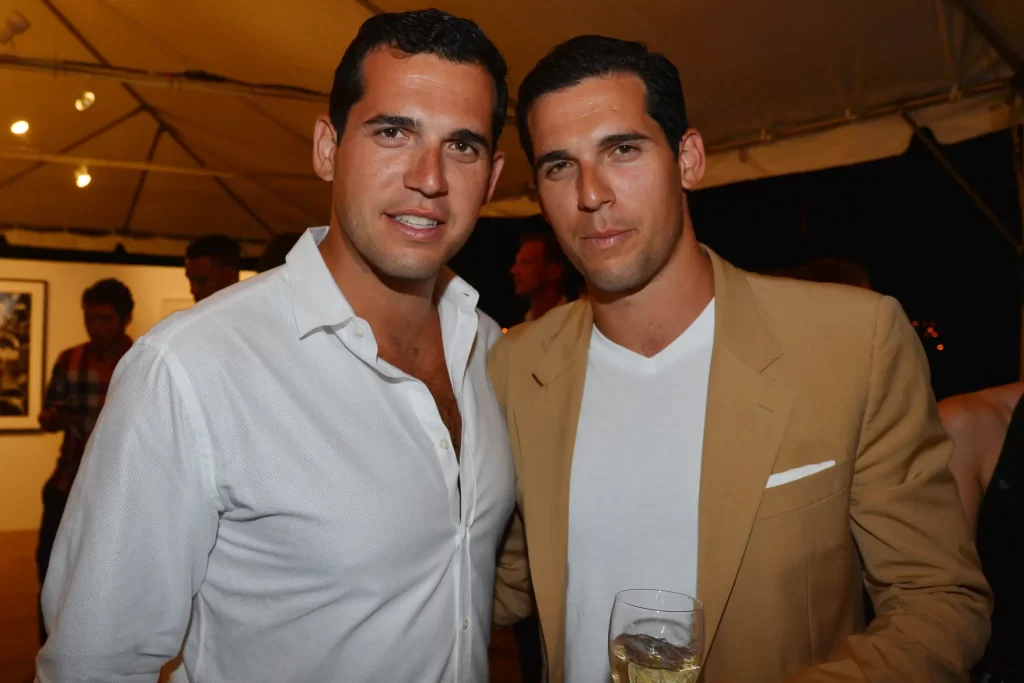
Authorities have arrested Luigi Mangione, 26, in connection with the shooting death of UnitedHealth Group executive Brian Thompson. Mangione was apprehended in Altoona, Pennsylvania, following a five-day manhunt, after being spotted at a McDonald’s by an observant employee who recognized him from media reports, officials confirmed during a press conference on Monday.

Mangione, accused of targeting Thompson in a premeditated attack outside a Manhattan hotel last Wednesday, was arraigned in Pennsylvania on multiple charges, including possession of a “ghost gun” and forgery. Officials allege the untraceable firearm, equipped with a silencer, matches the weapon used in the killing. Evidence found in his possession includes fraudulent IDs, clothing resembling the shooter’s attire, and a handwritten manifesto expressing hostility toward corporate America.

Thompson, 50, was fatally shot from behind by a masked assailant, who appeared to lie in wait before executing the attack. Surveillance footage shows the suspect fleeing on a bicycle to Central Park, later taking a taxi to a bus station, suggesting a well-planned escape.

Mangione, a Maryland native and 2020 graduate of the University of Pennsylvania with dual engineering degrees, had a seemingly promising future. Investigators describe him as harboring resentment toward corporate structures, with shell casings at the crime scene engraved with phrases like “deny,” “defend,” and “depose” – possibly referencing systemic criticisms of the insurance industry.

UnitedHealth expressed condolences to Thompson’s family, describing him as a dedicated professional and father of two. Thompson’s death has sparked widespread discussions about frustrations with the health insurance sector, echoing sentiments voiced in a book titled *”Delay, Deny, Defend,”* which critiques the industry’s practices.

Prosecutors have deemed Mangione a flight risk, citing his use of fake IDs and large cash reserves. Pennsylvania Governor Josh Shapiro indicated Mangione will soon face charges in New York, where the murder occurred. No plea has been entered as of yet.

This tragic case has highlighted ongoing concerns about corporate accountability and societal frustrations, as well as raising questions about personal grievances escalating into violence.

Morocco’s King Recovers After Shoulder Surgery

Morocco’s King Mohammed VI underwent successful surgery Sunday after fracturing his left shoulder during a workout session, state news agency MAP reported.

The monarch’s medical team has prescribed a 45-day rest period to allow for proper recovery, according to an official palace statement. The surgery marks the latest in a series of medical procedures for the king, who previously underwent heart surgeries in 2018 and 2020.

The palace has maintained transparency about the king’s health conditions, previously announcing his treatment for a lung infection in 2019 and COVID-19. The 60-year-old monarch has ruled Morocco since ascending to the throne in 1999.

Armed Attackers Kill 21 in Western Niger Bus Ambush

Armed assailants on motorcycles killed at least 21 civilians in an attack on a public transport bus in western Niger, the army reported, marking another deadly incident in the violence-plagued Sahel region.

The attack occurred Thursday near Tera, approximately 175 kilometers west of the capital Niamey and close to the Burkina Faso border. The army called it a “hateful and inhumane act” in a weekend statement, noting that one soldier was killed the following day when a military vehicle struck an improvised explosive device in an apparent reprisal attack.

The incident occurred in Niger’s Tillaberi region, which has become a focal point for escalating violence between military forces and local armed groups. The attack highlights continuing security challenges in the Sahel, where military governments that seized power since 2020 in Mali, Burkina Faso, and Niger have struggled to contain insurgencies despite promises of improved safety.

Niger’s recent order for U.S. forces to withdraw has left Washington without a military presence in the Sahel, where thousands have been killed and millions displaced by ongoing violence.

2 Dead, Multiple Missing After Explosion at Italian Energy Facility

An explosion at an Italian energy group Eni fuel storage facility near Florence Monday left two people dead, nine injured, and four missing, as authorities urged nearby residents to remain indoors.

The blast occurred in a loading area at the Calenzano facility on Florence’s northern outskirts, though an Eni spokesman confirmed it did not affect the site’s main fuel storage installations. The incident produced a thick column of smoke visible from considerable distance.

“All of Tuscany is united in grief for the tragedy that happened today in Calenzano,” regional president Eugenio Giani wrote on social media. Firefighters have extinguished the blaze, while Italy’s Civil Protection agency warned local residents to avoid the area and stay inside their homes.

Experts from the Regional Environment Protection Agency arrived on scene to evaluate potential environmental damage, particularly to waterways, according to Giani. The assessment comes as authorities work to determine the cause of the explosion at one of Italy’s major energy facilities.

40 Delhi Schools Receive Bomb Threats Prompting Emergency Response

At least 40 schools in Delhi received bomb threats via email on Monday, with the sender demanding $30,000, according to the ANI news agency. The alarming messages triggered immediate police searches across affected school premises, prompting authorities to prioritize safety measures.

Two schools reported receiving the threatening email late Sunday night, alleging that multiple explosives had been planted within the school buildings. The sender warned of detonation if the demanded amount was not paid. By Monday morning, several other schools reported receiving similar emails, escalating concerns across the city.

As a precautionary measure, school authorities contacted parents and asked them to pick up their children early. Scenes of worried parents collecting their children were observed at the gates of several schools as law enforcement officials carried out thorough checks for suspicious items.

Delhi police have not yet issued an official comment on the situation. However, ANI reported that no evidence of explosives had been found during initial searches.

This incident is part of a troubling trend of hoax bomb threats targeting educational institutions, airports, and railway stations across India. Government data reveals that Indian airlines and airports received 999 such threats between January and mid-November this year, leading to the arrest of 12 individuals.

In May, over 50 schools in Delhi and the neighboring area of Noida were similarly targeted with bomb threat emails, which were later confirmed to be false alarms.

While no immediate danger has been confirmed, these incidents have heightened anxiety among students, parents, and school authorities. Security forces are actively working to trace the source of these emails and prevent further disruptions. Authorities have reiterated their commitment to public safety and emphasized the need for vigilance during such events.

Taiwan on High Alert as China Deploys Naval Fleet Amid Extensive Military Drills

Taiwan has heightened its security measures after China established seven reserved airspace zones and deployed nearly 90 naval and coast guard vessels, signaling large-scale military drills across the region. The drills, described by Taiwan’s defense officials as an act of “military intimidation,” target key waterways near Taiwan, southern Japan, and the East and South China Seas.

A senior Taiwanese security source revealed that approximately two-thirds of the deployed vessels are naval ships. The scope of this operation surpasses previous exercises, including China’s “Joint Sword 2024-A” and “Joint Sword 2024-B” drills.

China’s defense ministry has yet to comment on these developments, and the White House has similarly refrained from issuing a statement.

Reserved Airspace Zones for Strategic Exercises

Taiwan’s defense ministry reported that seven “temporary reserved areas” of airspace off China’s Fujian and Zhejiang provinces have been allocated for military activities from Monday to Wednesday. While other flights may pass through these zones with proper clearance, their purpose remains undisclosed.

Wang Ting-yu, a prominent Taiwanese lawmaker, speculated the zones could be used for military operations or serve as a political maneuver to apply pressure. “They may aim to intimidate, but Taiwan will not succumb to coercion,” Wang emphasized.

Enhanced Military Monitoring and Readiness

In response, Taiwan’s armed forces have activated “combat readiness exercises” across key strategic points. Taiwanese naval and coast guard vessels are closely tracking Chinese movements, and officials have warned of potential risks to regional stability.

“Unilateral and provocative actions threaten peace in the Indo-Pacific and are unacceptable to the international community,” Taiwan’s defense ministry stated.

China’s maneuvers are being perceived as an effort to assert control over the island chain extending from Japan to Borneo. “For the first time, their exercises target the entire island chain,” a Taiwanese security source noted, describing it as an unprecedented show of military force.

Grey-Zone Tactics and International Tensions

Taiwan has condemned China’s use of “grey-zone harassment” tactics, which include deploying coast guard ships near Taiwan’s waters. Taipei’s coast guard denounced these actions as illegitimate, warning it reserves the right to take necessary countermeasures.

Beijing’s assertive stance has been linked to Taiwanese President Lai Ching-te’s recent trip to the Pacific, which included stopovers in the U.S. Lai has consistently rejected Beijing’s claims of sovereignty over Taiwan, reiterating that only Taiwan’s citizens have the right to decide their future.

China’s actions, coupled with increasing tensions in the South China Sea, have sparked global concerns about potential conflict. U.S. Defense Secretary Lloyd Austin, speaking in Japan, warned of China’s growing capability to challenge the international rules-based order.

“We will ensure this region remains open to freedom of navigation and overflight,” Austin said.

A Reuters story

Tonga’s Prime Minister Steps Down Ahead of No-Confidence Vote

Tongan Prime Minister Siaosi Sovaleni resigned Monday “for the good of the country and moving Tonga forward,” moments before parliament was expected to consider a no-confidence motion against his leadership.

“I’ll be resigning immediately according to the constitution,” Sovaleni announced to parliament, as reported by the Matangi Tonga news website and confirmed in an official livestream. The parliament’s Facebook page later confirmed he had “voluntarily resigned as Tonga’s Prime Minister effective today.”

King Tupou VI accepted the resignation, with parliament scheduled to reconvene December 24 to consider nominations for a new prime minister. Sovaleni will continue serving as a member of parliament.

The resignation marks the latest development in Sovaleni’s complicated relationship with Tonga’s monarchy, following his March apology over a constitutional dispute. As chairman of the Pacific Islands Forum regional bloc, his departure could have broader implications for Pacific regional politics.

REUTERS

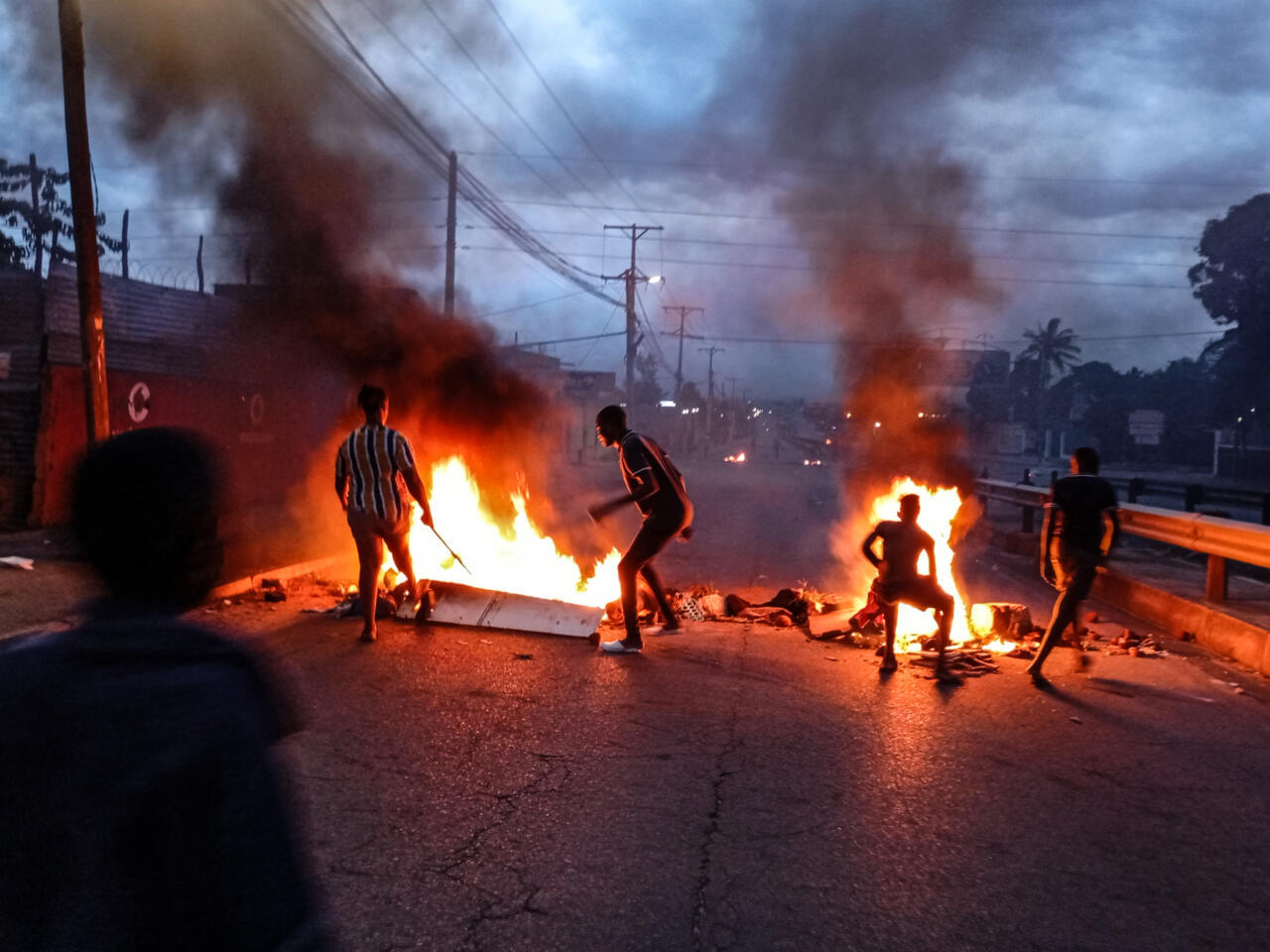
Haiti Gang Violence Claims 110 Lives in Weekend Massacre

A weekend massacre in Haiti’s Cite Soleil slum left at least 110 people dead, the National Human Rights Defense Network (RNDDH) reported Sunday, marking one of the deadliest episodes in the country’s ongoing security crisis.

The rights group said Wharf Jeremie gang leader Monel “Mikano” Felix ordered the killings targeting residents over 60 years old, following a Voodoo priest’s accusations of witchcraft affecting Felix’s now-deceased child. Gang members carried out the killings Friday and Saturday using machetes and knives.

The violence occurred in Cite Soleil, one of Port-au-Prince’s poorest and most dangerous areas, where tight gang control has restricted residents’ ability to communicate about the attacks. The United Nations estimates Felix’s gang comprises some 300 members operating around Fort Dimanche and La Saline.

The massacre follows October’s killing of 115 people in Pont-Sonde by the Gran Grif gang. Haiti’s government, plagued by political instability, has struggled to contain growing gang influence despite requesting international security assistance. A UN-approved mission remains under-resourced due to limited voluntary contributions, while proposals to convert it into a peacekeeping force face opposition from China and Russia.