Home Blog Page 511

Russia Sentences East Ukraine Resident to 16 Years for ‘Treason’ 

0
A Ukrainian soldier walks in a supermarket, amid Russia's invasion of Ukraine, in Kramatorsk, Donetsk region, Ukraine, April 29, 2022. REUTERS/Jorge Silva

A resident of Ukraine’s Lugansk region, currently occupied by Russia, was sentenced to 16 years in prison for “high treason” on Friday, according to Russia’s Federal Security Service (FSB). 

The sentencing reflects Moscow’s ongoing crackdown on individuals it accuses of collaborating with Ukraine, as well as a broader pattern of imprisoning Ukrainians in Russia and territories under its control. 

The unnamed individual was convicted by a military court in Rostov-on-Don, southern Russia. Prosecutors alleged that he had passed information about Russian armed forces to Ukraine’s Security Service (SBU). 

The FSB also accused the man of being an accomplice in terrorist acts and illegally handling and transporting explosives. He is set to serve his term in a high-security penal colony. 

State-run media outlets published a video, reportedly recorded by the FSB, showing the man’s arrest. The footage depicts FSB officers stopping a car, dragging the man out, and taking him into custody. The man’s face was blurred as he appeared on camera, allegedly admitting to being recruited by the SBU in 2016. 

Russia frequently releases similar confession videos following high-profile arrests, though critics argue such recordings often lack transparency and may involve coercion. 

The sentencing coincides with President Vladimir Putin’s call for heightened vigilance by Russian security services, especially in counterintelligence operations. 

Addressing security personnel, Putin emphasized the need to “identify spies and traitors” and intensify anti-terror measures amid the Kremlin’s protracted military campaign in Ukraine. 

In a related development, Russian independent media reported the apparent suicide of Roman Shved, an activist sentenced on Thursday to 16 years in prison. Shved, a 39-year-old anarchist, was convicted of carrying out an arson attack on a government building in 2022 after Russia announced a military mobilization. 

According to the Mediazona website, prison officials in Rostov confirmed Shved’s death, which occurred shortly after his sentencing. Social media reports suggest he took his own life. 

Russia has punished thousands of its citizens for opposing the war in Ukraine, employing heavy-handed measures against both dissenters and individuals accused of espionage or sabotage. Rights groups have condemned these actions as part of a growing crackdown on civil liberties. 

The Kremlin has consistently denied allegations of targeting civilians or conducting politically motivated trials. 

Over 700 Killed in Sudan’s al-Fashir Siege, UN Rights Chief Reports 

0

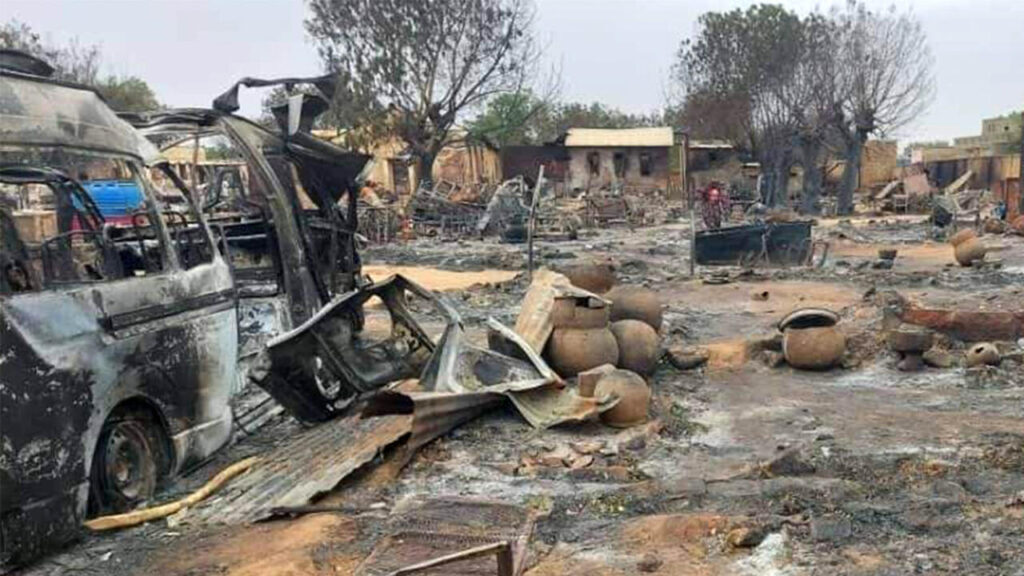
More than 700 people have lost their lives in the besieged city of al-Fashir in Sudan’s North Darfur state since May, according to U.N. High Commissioner for Human Rights Volker Türk. 

Calling for an immediate end to the violence, Türk implored the paramilitary Rapid Support Forces (RSF) to lift the siege, stating, “The relentless fighting is devastating lives every day on a massive scale. This alarming situation cannot continue. The RSF must end this horrible siege.” 

The U.N. rights office documented at least 782 civilian deaths and over 1,143 injuries since May. Evidence, partly gathered from interviews with displaced survivors, indicates intense shelling by RSF forces on densely populated residential areas, alongside airstrikes carried out by the Sudanese Armed Forces. 

The U.N. has warned that these attacks on civilians may constitute war crimes. Both the RSF and the Sudanese Armed Forces have denied targeting civilians, each blaming the other for the violence in al-Fashir and its surroundings. 

The ongoing 18-month conflict between Sudan’s army and the RSF has plunged the nation into a severe humanitarian crisis. Over 12 million people have been displaced from their homes, while U.N. agencies struggle to provide aid amid the violence. 

Al-Fashir remains one of the most volatile frontlines in the Darfur region, with the RSF vying to seize control. Observers warn that an RSF victory could result in widespread ethnic retaliation, as seen in West Darfur last year. 

Earlier this month, the RSF attacked al-Fashir’s main hospital, killing at least nine people, according to local reports. 

In the nearby Zamzam camp, home to over half a million people suffering from famine, RSF artillery fire over the past two weeks has forced thousands to flee. The camp’s residents face dire living conditions, with food shortages and inadequate medical supplies exacerbating the crisis. 

Despite international condemnation, both warring factions have shown little willingness to de-escalate. The U.N. continues to call for an end to hostilities, emphasizing the urgent need for humanitarian access and protections for civilians. 

“The people of al-Fashir have endured unimaginable suffering,” Türk said. “The world cannot stand by as atrocities mount.” 

Malaysia to Restart Search for Missing Flight MH370 After 10 Years 

0

Malaysia announced plans to resume the search for Malaysia Airlines Flight MH370, more than a decade after the Boeing 777 disappeared, leaving one of aviation’s greatest mysteries unresolved. 

Transport Minister Anthony Loke confirmed the decision during a press conference on Friday, emphasizing the government’s commitment to providing closure to the families of the 239 people on board. 

“Our responsibility and obligation are to the next of kin,” Loke said. “We hope this time will be positive, that the wreckage will be found and give closure to the families.” 

The new search initiative will be conducted by Ocean Infinity, an exploration company that led the most recent unsuccessful search in 2018. The operation will span 18 months and focus on a 15,000-square-kilometer (5,790-square-mile) area of the southern Indian Ocean. 

The agreement is based on a “no-find-no-fee” principle, meaning Ocean Infinity will only receive payment if substantial wreckage is located. The reward for a successful discovery is set at $70 million, Loke confirmed. 

While the precise coordinates of the new search area have not been disclosed, Malaysia based the decision on new credible data reviewed by experts and Ocean Infinity’s confidence in identifying the wreckage. 

Flight MH370 disappeared on March 8, 2014, while en route from Kuala Lumpur to Beijing with 227 passengers and 12 crew members. 

The plane’s final transmission came 40 minutes after takeoff as it entered Vietnamese airspace over the Gulf of Thailand. Military radar later tracked the aircraft deviating from its flight path, flying back over northern Malaysia, into the Andaman Sea, and then south into the Indian Ocean. All contact was lost thereafter. 

Since its disappearance, debris believed to be from MH370 has washed up on African shores and Indian Ocean islands. 

An extensive underwater search by Malaysia, Australia, and China covered 120,000 square kilometers (46,332 square miles) of the Indian Ocean but failed to locate the wreckage. A 2018 report indicated that the plane’s controls were likely deliberately manipulated to veer off course, though investigators were unable to determine who was responsible. 

The backgrounds of the captain and co-pilot showed no evidence of suspicious activity, mental health issues, or financial troubles, the report concluded. 

Jiang Hui, whose mother was on the flight, welcomed the news but criticized the time taken to resume the search. He also advocated for a more inclusive approach, such as offering public rewards for participation in the search efforts. 

Meanwhile, families of victims have sought compensation from entities including Malaysia Airlines, Boeing, Rolls-Royce, and Allianz. 

Loke expressed cautious optimism, noting that while the data is credible, there are no guarantees of finding the wreckage after more than a decade. 

“At this point of time, nobody knows for sure,” he said. 

Russian Missile Strike Hits Kyiv, Kills One During Rush Hour

0

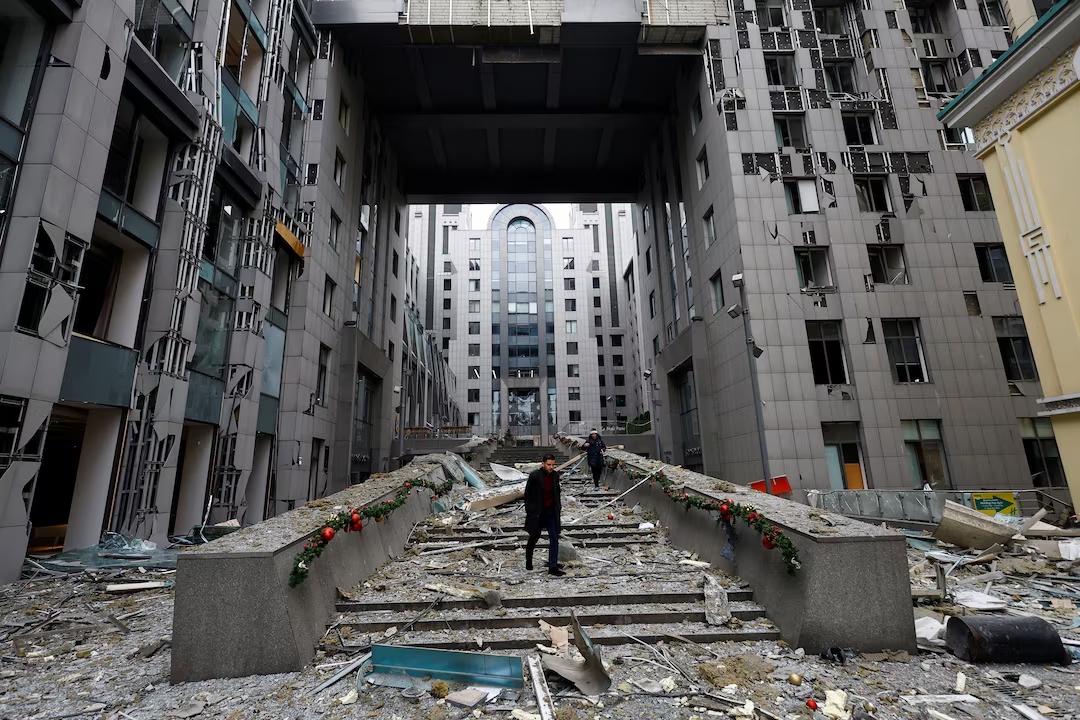
A Russian missile strike on Friday morning killed at least one person and caused significant damage to buildings in central Kyiv, Ukrainian officials reported. The attack occurred during the city’s rush hour, triggering explosions and fires.

Residents in Kyiv’s center reported loud blasts, and images from the scene revealed a destroyed office building with shattered windows. Firefighters were seen extinguishing a blaze after a car was severely damaged on the street below.

Kyiv Mayor Vitali Klitschko confirmed one fatality, while the city’s military administration reported that 11 people were injured, five of whom required hospitalization.

Russian forces, engaged in a full-scale invasion of Ukraine since February 2022, launched eight missiles, including hypersonic Kinzhal and Iskander/KN-23 ballistic missiles, according to Serhiy Popko, head of Kyiv’s military administration. Ukraine’s air force claimed it intercepted all five Iskander-M/KN-23 missiles targeting the capital.

The Russian Defense Ministry stated the strike aimed at a command center used by Ukraine’s SBU intelligence agency, alleging the facility was involved in missile development and housed a U.S.-made Patriot anti-aircraft system. “The goals of the strike have been achieved. All targets have been hit,” the ministry claimed.

Independent verification of these claims by either side remains unavailable.

The assault is part of a series of Russian airstrikes targeting Kyiv and other critical locations, with a focus on energy infrastructure. The strikes coincide with Russia’s ongoing military advancements in eastern Ukraine’s industrial Donbas region, as peace negotiations are anticipated in the coming year.

The missile strike occurs amid Ukrainian concerns over potential shifts in U.S. foreign policy. President Volodymyr Zelenskyy on Thursday urged U.S. President-elect Donald Trump to maintain support for Ukraine and coordinate with European allies to counter Russia’s aggression. Trump is set to assume office next month, raising questions about the future of U.S. aid to Ukraine.

REUTERS

Trump-Backed Bill Fails, Government Shutdown Looms

0

The U.S. House of Representatives on Thursday rejected a funding measure backed by Donald Trump, pushing the federal government closer to a shutdown as the weekend approaches. The proposed bill, which failed to secure the required two-thirds majority, saw opposition from 38 Republicans despite support from the president-elect.

House Speaker Mike Johnson, R-La., vowed to present a new funding solution before the midnight deadline on Friday. This comes after Trump dismissed a bipartisan funding agreement negotiated by GOP leaders and Democrats, citing criticism from tech billionaire Elon Musk.

The failed measure, defeated 235-174, sought to suspend the federal debt limit for two years while tying it to government funding. Opposition stemmed from differing party priorities: Republicans objected to increased spending, while Democrats criticized provisions they said would lead to tax cuts for the wealthy.

Key Developments Leading to a Shutdown

Budget Deadlock Since September:

Earlier efforts to pass a six-month funding extension failed, with Democrats opposing provisions like the SAVE Act, which would have required proof of citizenship for voting. A temporary bipartisan deal kept the government funded through Dec. 20.

Revised Spending Proposal:

Released just days before the holiday recess, the new 1,547-page bill proposed extending funding until March 14, 2024. It included $110 billion for disaster relief, $30 billion for farmers, and provisions like healthcare reforms and protections against deceptive advertising. However, criticism arose over left-leaning inclusions negotiated to gain Democratic support.

Trump and Musk’s Role in the Debate

Opposition to the proposed spending plan intensified after Musk’s public lobbying. On X, the social platform Musk owns, he denounced the measure, calling it “criminal” and urging lawmakers to reject it. His posts often contained misleading claims and rallied significant opposition.

In a joint statement, Trump and incoming Vice President J.D. Vance called for streamlined legislation that excluded Democratic-backed provisions. They also demanded either an elimination or significant raising of the federal debt ceiling.

What’s Next in the Funding Crisis

With no vote expected Thursday night, Congress reconvenes Friday morning, leaving less than 24 hours to avert a shutdown. Speaker Johnson, already facing intra-party dissent, acknowledged the urgency of finding bipartisan support.

“It’s very disappointing that House Democrats chose to oppose a measure they had previously agreed upon,” Johnson said.

However, Democratic leaders, including House Minority Leader Hakeem Jeffries, blamed Johnson for breaking earlier bipartisan agreements. “You break the bipartisan agreement, you own the consequences that follow,” Jeffries posted on X.

Impact of a Potential Shutdown

A shutdown would halt non-essential federal operations, affecting agencies like the Environmental Protection Agency and the National Park Service. Essential services, including air traffic control and border security, would continue. However, millions of federal employees risk missing paychecks, and programs like food stamps could face delays.

Challenges for Speaker Mike Johnson

The funding crisis poses a significant challenge for Speaker Johnson, whose position will be decided in an upcoming House vote. Johnson’s handling of the issue has drawn criticism from within his party, with some Republicans suggesting they may not back him for another term as Speaker.

This development comes amid a backdrop of GOP infighting, highlighted by the ousting of former Speaker Kevin McCarthy in October after similar budget disputes.

A BBC Report

FBI Detains California Man Over Links to Wisconsin School Shooter

0

A 20-year-old California man was detained by the FBI after allegedly communicating with the Wisconsin school shooter who killed two people at Abundant Life Christian School, according to an emergency protective order obtained by NBC San Diego.

Alexander Paffendorf of Carlsbad reportedly admitted to FBI agents that he told 15-year-old Natalie “Samantha” Rupnow of his plans to target a government building with explosives and firearms. The protective order, served Tuesday, requires Paffendorf to surrender any firearms while investigators examine messages between him and Rupnow.

The connection emerged as investigators probe Monday’s shooting at the Madison school, where Rupnow killed staff member Erin West, 42, and student Rubi Vergara, 14, before taking her own life. Two students remain hospitalized with life-threatening injuries, while four others have been released.

Madison police, leading the investigation with FBI support, recovered two guns at the school scene, though only one handgun was used in the shooting. The ATF has completed weapons traces, but details remain sealed as authorities continue examining Rupnow’s social media accounts and communications.

The FBI’s San Diego office stated they’re “not aware of any ongoing threats” in either state, while Carlsbad police confirmed no current threat to their community. A court hearing regarding Paffendorf’s protective order is scheduled for January 3, though he currently faces no criminal charges.

9 Dead in Major Taiwan Construction Site Fire

0

A devastating fire at a five-story food-processing facility under construction in Taichung, Taiwan, claimed nine lives Thursday, with one victim dying after jumping from the third floor. The blaze engulfed the future PX Mart supermarket building, sending dark gray smoke and orange flames billowing from one end.

Taichung government officials reported the fire spread rapidly due to numerous foam panels present at the construction site. Firefighters conducted extensive searches into the evening, discovering additional victims while successfully rescuing nineteen people from the inferno.

The cause of the fire remains under investigation.

Italian Deputy PM Faces Verdict in Migrant Kidnapping Trial

0
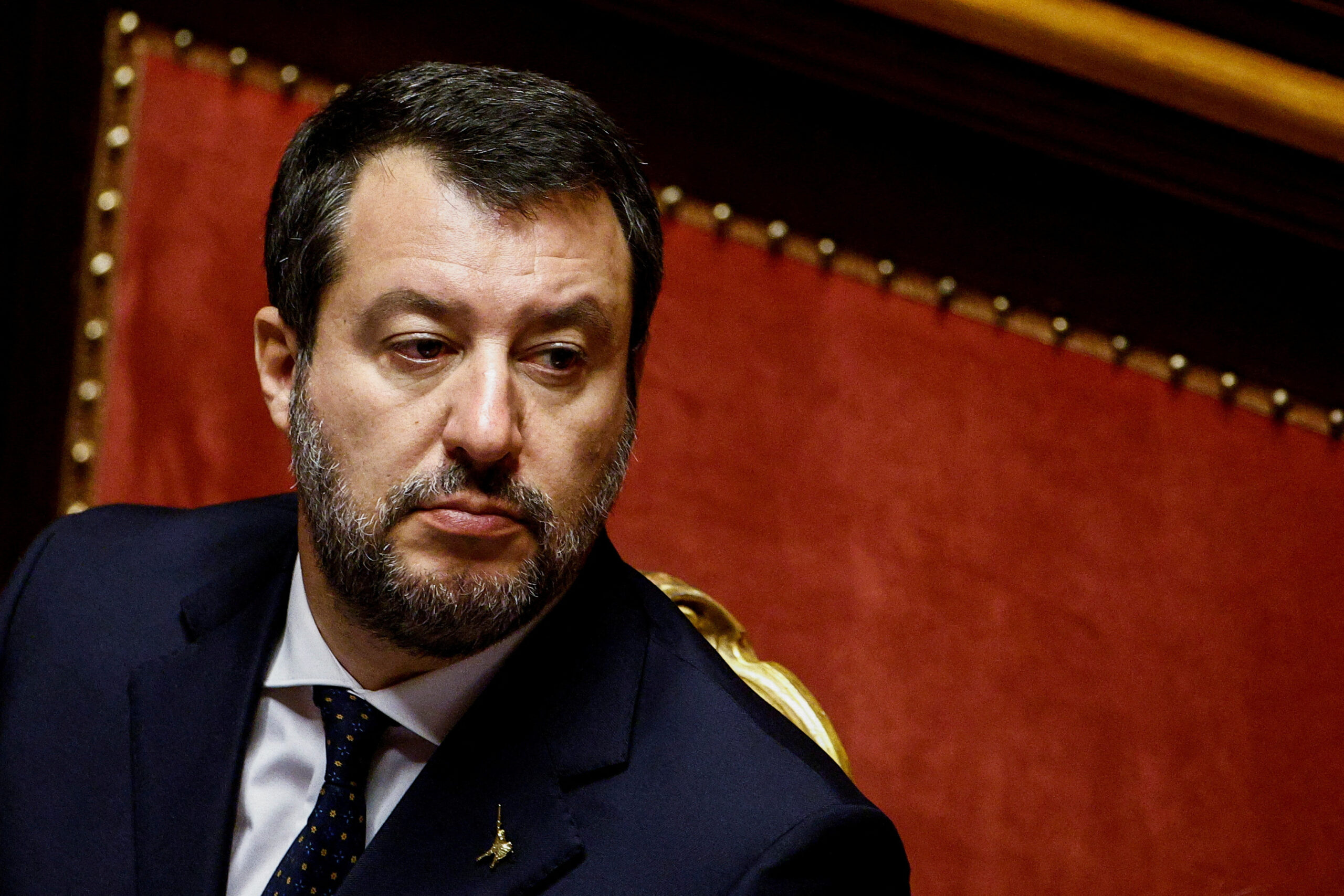
FILE PHOTO: Italy's Infrastructure Minister Matteo Salvini attends the upper house of parliament ahead of a confidence vote for the new government, in Rome, Italy, October 26, 2022. REUTERS/Guglielmo Mangiapane/File Photo

Italy’s Deputy Prime Minister Matteo Salvini awaits a Palermo court’s verdict Friday in a kidnapping trial stemming from his 2019 decision as interior minister to prevent 147 asylum seekers aboard a Spanish charity vessel from entering Italian ports for nearly three weeks.

The case, which could result in a six-year prison sentence, emerges as Prime Minister Giorgia Meloni’s government faces judicial challenges to its migration policies, including recent court questioning of plans to redirect asylum seekers to Albania.

Salvini, who denies wrongdoing, faces charges of kidnapping and dereliction of duty after blocking the Open Arms charity ship from docking. The vessel had rescued primarily African migrants off Libya’s coast but refused directions to sail to Spain, citing passengers’ exhaustion and immediate care needs.

Defense lawyer Giulia Bongiorno, also a League party senator, argued that Italy had no automatic obligation to accept the vessel and that alternative destinations were available. If convicted, Salvini maintains right to two appeals before any final ruling that could bar him from office, though he has promised to retain his position regardless of an initial guilty verdict.

Georgia Appeals Court Removes DA Fani Willis from Trump Election Case

0

A Georgia state appeals court on Thursday disqualified Fulton County District Attorney Fani Willis from overseeing the high-profile election interference case against Donald Trump and others, citing an “appearance of impropriety” tied to her personal relationship with a special prosecutor. 

The 2-1 ruling by the Georgia Court of Appeals marks a significant legal victory for Trump, the president-elect, as he continues to fend off various criminal cases. The court said Willis’ removal was necessary to “restore public confidence in the integrity of these proceedings.” 

Willis’ office immediately signaled plans to appeal the decision to the Georgia Supreme Court. The ruling leaves the future of the case uncertain, with a new prosecutor yet to be appointed. 

The investigation, launched in August 2023, accused Trump and 18 co-defendants of attempting to overturn his 2020 election loss in Georgia. Prosecutors had invoked Georgia’s anti-racketeering law to build the case, which included Trump’s January 2021 call to Georgia Secretary of State Brad Raffensperger asking him to “find” enough votes to reverse the election outcome. 

Four co-defendants have pleaded guilty, while Trump has consistently denied wrongdoing. The president-elect has labeled the case a politically motivated attack, telling Fox News Digital, “This case should not go any further. Everyone caught up in this deserves an apology.” 

The disqualification stems from allegations that Willis maintained a romantic relationship with Nathan Wade, the special prosecutor she hired to lead the case. Defense attorneys alleged that the relationship, which Willis and Wade confirmed began in spring 2022, created conflicts of interest. They also accused Willis of benefiting financially from Wade, who allegedly covered lavish expenses during their relationship. 

While both Willis and Wade denied any improper conduct affecting the case, the appeals court majority found the relationship created an unavoidable perception of bias. 

“The remedy crafted by the trial court to prevent an ongoing appearance of impropriety did nothing to address the appearance of impropriety that existed at times when DA Willis was exercising her broad pretrial discretion about who to prosecute and what charges to bring,” Judge Trenton Brown wrote in the majority opinion, joined by Judge Todd Markle. 

Steve Sadow, Trump’s lead attorney in Georgia, praised the court’s decision as “well-reasoned and just,” calling it a victory against what he described as a politically motivated prosecution. 

“This decision puts an end to a biased effort to target the next president of the United States,” Sadow said in a statement. 

Representatives for Willis did not immediately respond to requests for comment. However, speaking at a public event earlier this year, Willis defended her leadership and Wade’s qualifications, dismissing the allegations as personal attacks designed to derail the case. 

In a dissenting opinion, Judge Benjamin Land argued that the majority overstepped its authority, noting trial court judges have broad discretion in managing cases. “Where a prosecutor has no actual conflict of interest, we have no authority to reverse the trial court’s decision,” Land wrote, citing decades of Georgia precedent. 

The ruling requires Georgia’s Prosecuting Attorneys’ Council to appoint a new prosecutor to lead the sprawling case, which has already demanded extensive resources. The new prosecutor could choose to proceed with the charges, drop some of them, or dismiss the case entirely. 

Superior Court Judge Scott McAfee, who presides over the case, had previously ruled that no actual conflict of interest warranted Willis’ removal, though he acknowledged the “appearance of impropriety.” McAfee allowed Willis to remain on the case in March 2023, but only after Wade resigned as special prosecutor. 

The appeals court decision comes weeks after Justice Department special counsel Jack Smith dropped two federal cases against Trump and amid delays in a New York hush money case. Trump’s legal victories coincide with his transition to the White House after defeating Vice President Kamala Harris in November’s election. 

The case’s disqualification of Willis raises questions about prosecutorial ethics and the challenges of pursuing legal action against a sitting or incoming president. 

UK Labour Minister Linked to Bangladesh Corruption Probe

0

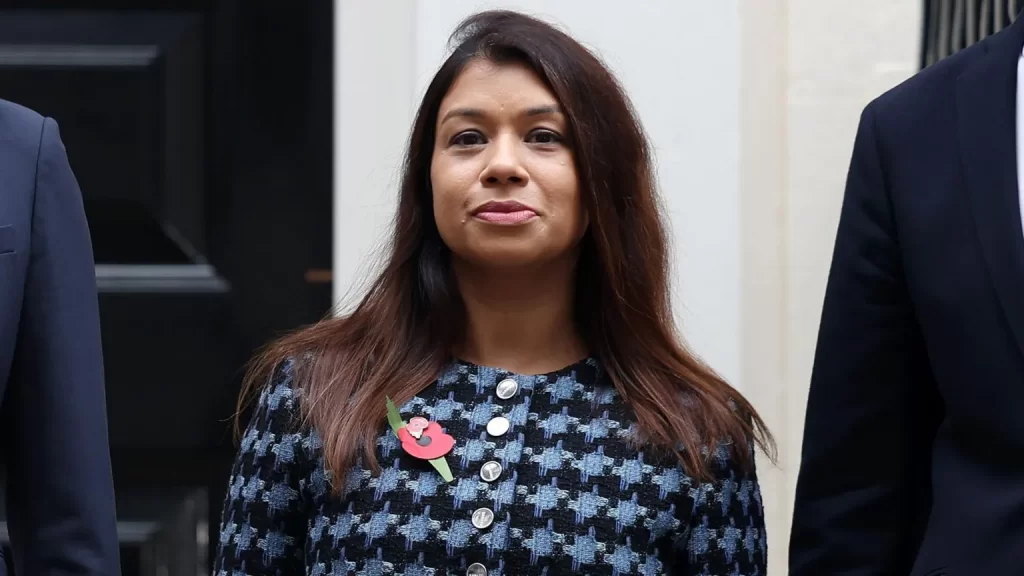
UK Treasury Minister Tulip Siddiq is under scrutiny after being named in an investigation into allegations of corruption involving her family in Bangladesh. The case alleges that up to £3.9 billion (Tk 590 billion) was embezzled from infrastructure projects in the South Asian nation. 

Siddiq, 42, who serves as the Economic Secretary to the Treasury, is accused of playing a key role in brokering a deal with Russia in 2013 to build a nuclear power plant in Bangladesh. Investigators allege the deal was inflated by £1 billion, with the proceeds allegedly siphoned through a network of offshore companies and bank accounts linked to Siddiq’s family. 

The investigation is part of a broader inquiry by Bangladesh’s Anti-Corruption Commission (ACC), which also targets Siddiq’s aunt, Sheikh Hasina, the former prime minister of Bangladesh. Hasina was ousted from power in August and has faced multiple charges of corruption and human rights violations since fleeing the country. 

A spokesperson for Siddiq dismissed the allegations as “politically motivated” and “trumped-up charges” intended to harm her family’s reputation. 

The case has sparked controversy in the UK, with Conservative MP Matt Vickers calling for transparency. “Labour’s anti-corruption minister is embroiled in allegations of corruption. This raises serious questions about Keir Starmer’s judgment,” Vickers said. 

Prime Minister Keir Starmer has defended Siddiq, stating he retains full confidence in her ability to fulfill her ministerial duties. However, Siddiq has recused herself from all political matters relating to Bangladesh. 

Court documents reviewed by the BBC indicate that Siddiq allegedly facilitated meetings between Bangladeshi officials and the Russian government for the £10 billion Rooppur Nuclear Power Plant project. The ACC claims the project’s inflated costs were funneled to Hasina’s family, including Siddiq, through an elaborate financial scheme. 

Bobby Hajjaj, a political opponent of Hasina, has been the primary source of the allegations. Hajjaj asserts that £3.9 billion was siphoned from the project by Hasina, Siddiq, and other family members. 

Footage from 2013, obtained by the Associated Press, shows Siddiq at the Kremlin during the signing ceremony of the Rooppur project, attended by Russian President Vladimir Putin and Hasina. 

The ACC is also investigating other members of Hasina’s family, including Siddiq’s mother, Sheikh Rehana. Hasina, who governed Bangladesh for over two decades, is accused of crimes against humanity and corruption by the new government. 

Hasina’s supporters, including Syed Faruk of the Awami League’s UK branch, have dismissed the allegations as fabricated. 

Corruption charges against top officials from ousted governments are not uncommon in Bangladesh. Hasina’s predecessor, Khaleda Zia, faced similar accusations, as did former president Hussain Muhammad Ershad. 

The independence of Bangladesh’s judiciary has frequently come under question, with critics alleging political interference in legal proceedings.