At least 22 people died when an overcrowded river boat sank in western Democratic Republic of Congo’s Mai-Ndombe province Tuesday after its upper deck collapsed. The victims included 15 women, five men, and two children on a vessel carrying approximately 100 passengers.
Provincial governor Lebon Nkoso Kevani warned that such accidents will continue without the introduction of safer, metallic boats to replace the thousands of wooden vessels currently serving as the primary transport between villages. “There are thousands of these wooden ones circulating on the waters of Mai-Ndombe,” he told Reuters.
Mai-Ndombe senator Anicet Babanga confirmed approximately 30 survivors, with search efforts ongoing to determine the fate of remaining passengers. Provincial officials have deployed to investigate the incident, with many passengers believed to have escaped to shore.
The disaster follows a pattern of boating accidents in Congo, where overloaded wooden vessels frequently serve as the main transportation link between communities. In October, 78 people drowned when a boat carrying 278 passengers capsized in Lake Kivu in eastern Congo.
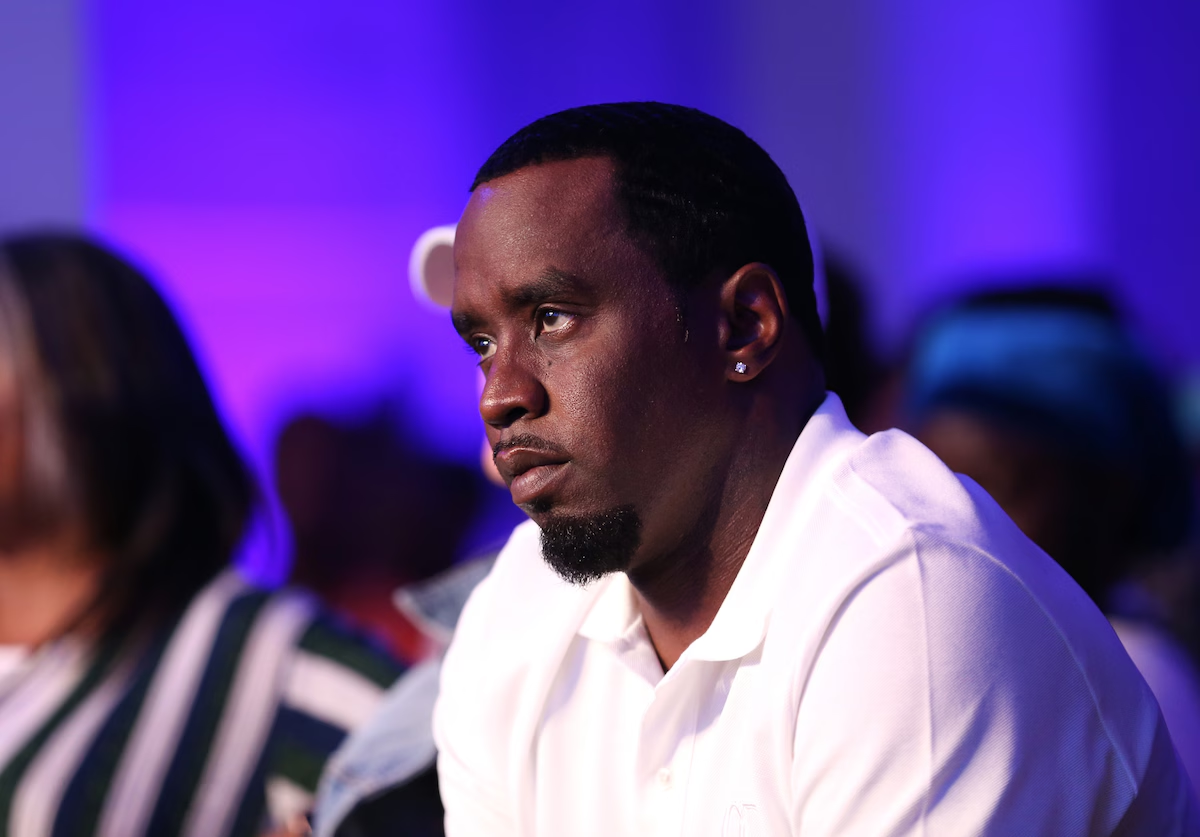
Sean “Diddy” Combs appeared in a Manhattan federal court on Wednesday, where Judge Arun Subramanian cautioned the defense team to avoid any “last-minute surprises” ahead of his trial for sex trafficking and racketeering.
Dressed in a khaki prison jumpsuit, the music mogul attended a status conference in the case, where the judge outlined plans for a clear motion schedule to be in place by January 3. Subramanian emphasized the importance of a smooth pretrial process, saying, “to avoid any kind of surprise at the last minute.” Combs is set to return to court on March 17, with the trial scheduled to begin in May.
Combs has been held at the Metropolitan Detention Center in Brooklyn since his arrest in September and has pleaded not guilty to charges of sex trafficking, racketeering, and related offenses. Prosecutors allege that the charges stem from incidents involving coerced participation in “freak offs” — performances involving male sex workers and women.
This marks Combs’ first court appearance since November 22, when he was denied bail over concerns of potential witness tampering. Although Combs initially appealed the decision, he has since withdrawn the appeal and will remain behind bars through the holiday season.
In Wednesday’s hearing, Judge Subramanian denied a defense request for an evidentiary hearing into allegations that prosecutors leaked evidence to the media. The claims included accusations that surveillance footage of an alleged 2016 assault of singer Cassie Ventura at a Los Angeles hotel was leaked to CNN. Subramanian rejected the request, stating, “Combs has not carried his burden to show that the government leaked it to CNN.”
Meanwhile, Subramanian recently approved Combs’ access to a jail-issued laptop for reviewing discovery materials in preparation for trial.
The court also addressed earlier concerns over Combs appearing in shackles, which his defense team argued could bias potential jurors. As a result, the judge allowed him to appear unshackled during hearings.
A stampede at a holiday funfair in southwestern Nigeria resulted in the deaths of several children on Wednesday, according to authorities. The incident occurred at the Islamic High School in Basorun, Oyo State, near the economic hub of Lagos.
Security forces responded to the scene and arrested the event organizers, Oyo State Governor Seyi Makinde said in a statement. “Earlier today, an incident occurred in Islamic High School Basorun, the venue of an event organized for families. Sadly, a stampede at the venue has led to multiple loss of lives and injuries. This is a very sad day,” Makinde said.
The governor extended his condolences to grieving families, saying, “We sympathize with the parents whose joy has suddenly been turned to mourning due to these deaths.”
Nigeria’s national emergency services deployed a team to provide assistance to victims, while injured children were taken to nearby hospitals. Parents were urged to check local hospitals for missing children.
Video footage from the scene showed a large crowd of mostly children gathered in an open field as others were carried away. Local media identified the event organizers as the Women In Need Of Guidance and Support Foundation, which reportedly hosted a similar event last year. Organizers had planned to host up to 5,000 children this year, according to Oyo-based Agidigbo FM, which had interviewed the group earlier this week. They had promised prizes such as scholarships and other gifts for attendees.
Governor Makinde confirmed that an investigation is underway to determine the causes of the stampede. He also stated that “anyone directly or remotely involved in this disaster will be held accountable.”
A Mississippi woman faces murder charges after allegedly shooting her estranged husband outside Pearl River County Chancery Court in Poplarville following divorce proceedings. Tanya Saucier, 49, was arrested after allegedly killing James Ray Saucier, 62, in the courthouse entryway Tuesday just before 1 p.m.
The victim’s attorney, Don Rafferty, reported the shooting occurred immediately after the divorce proceedings concluded. State Rep. Jansen Owen, who represented Tanya Saucier, said he helped subdue his client after she opened fire, then attempted to provide first aid to James Saucier despite receiving threats.
Court records reveal a complex history of domestic violence between the couple. James Saucier had been indicted in August on charges of aggravated assault and domestic violence with a deadly weapon, accused of shooting Tanya Saucier five times, including once in the face, a year earlier. His trial had been scheduled for March 4.
Family member Johanna Peterson expressed the family’s shock and distress, describing the situation as “confusing, tragic” and noting their frustration and anger. Tanya Saucier remains in custody at the Lenoir Rowell Criminal Justice Center in Poplarville.
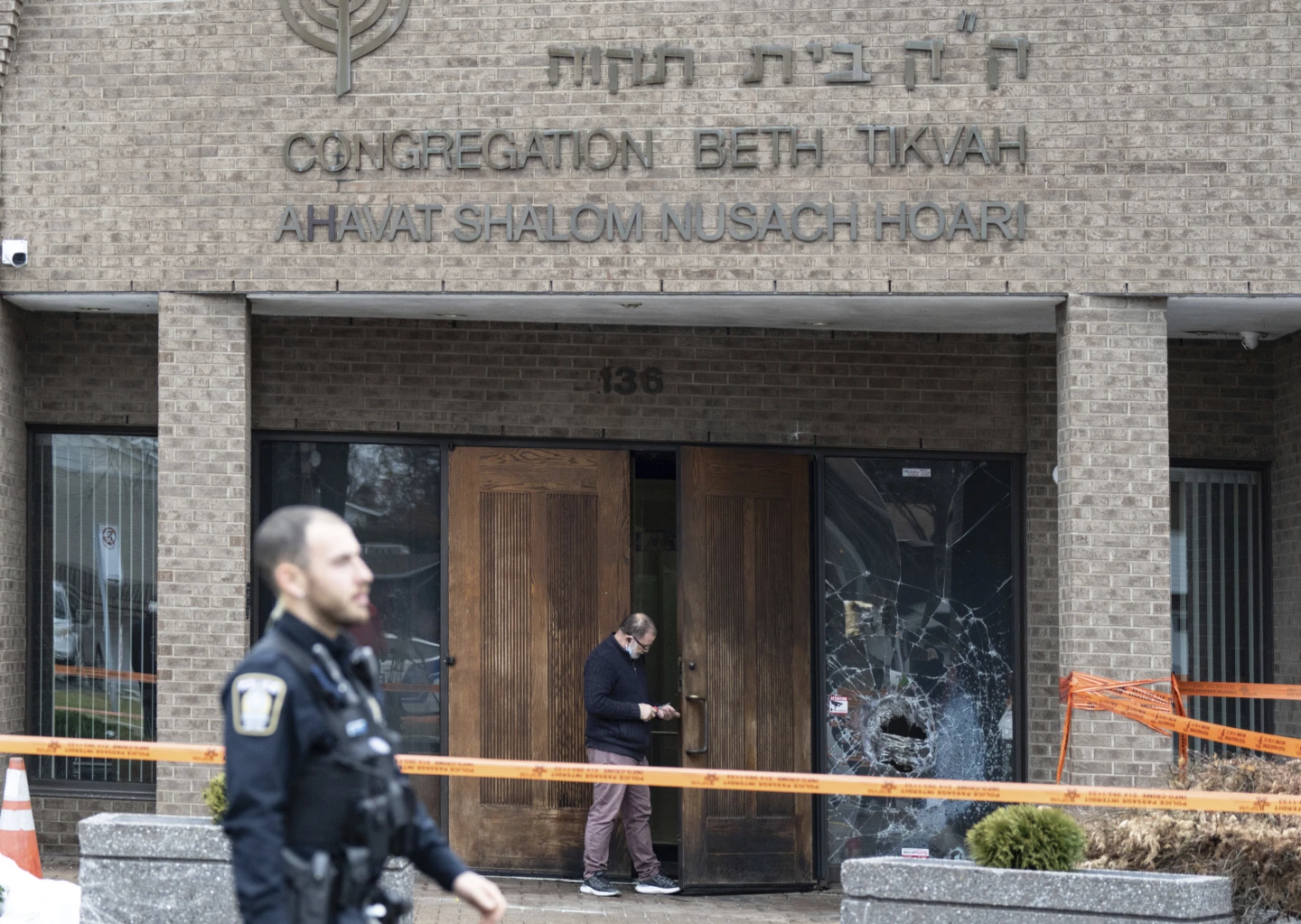
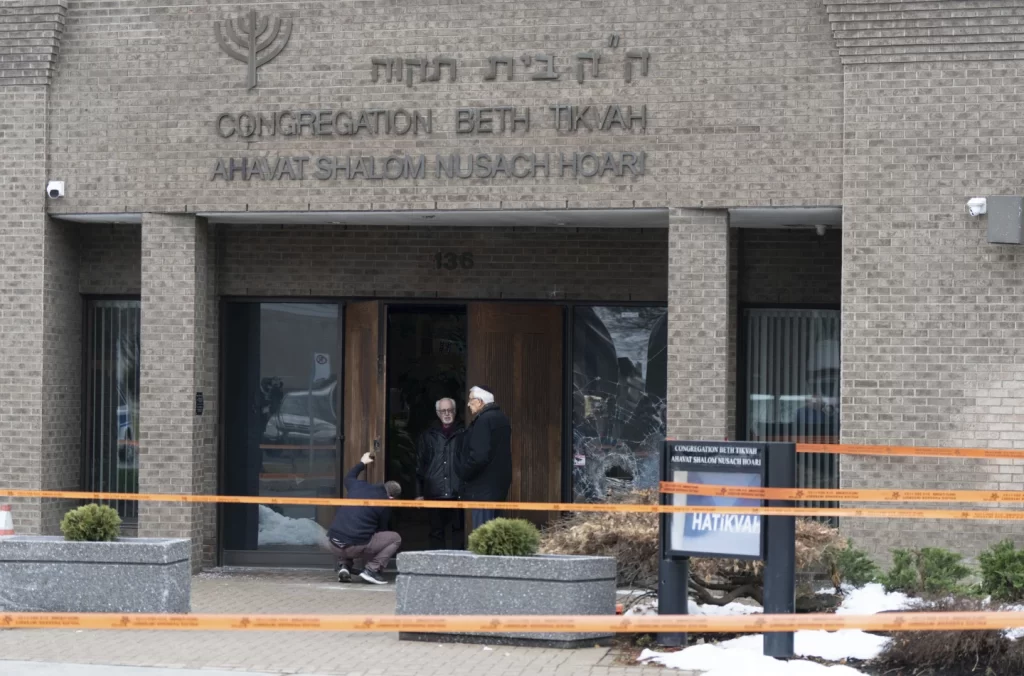
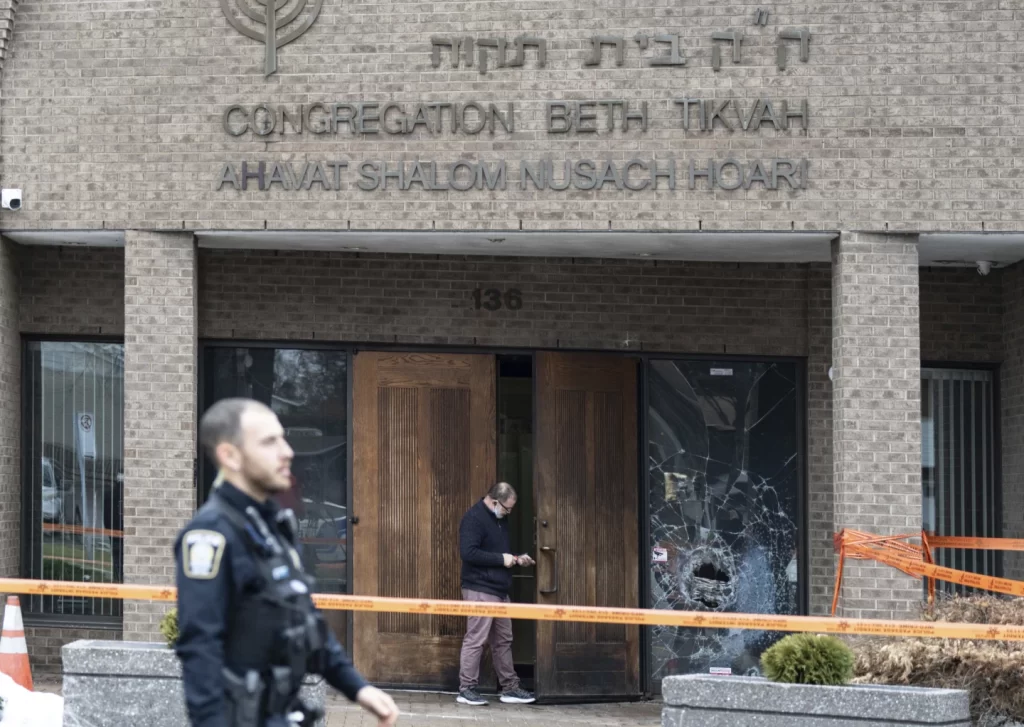
A synagogue in a Montreal suburb was targeted early Wednesday in what police suspect was an arson attack, marking the second time the building has been hit by an incendiary device in just over a year. Authorities reported that a nearby Jewish office building also appeared to have been targeted, though it remains unclear if the two incidents are connected.
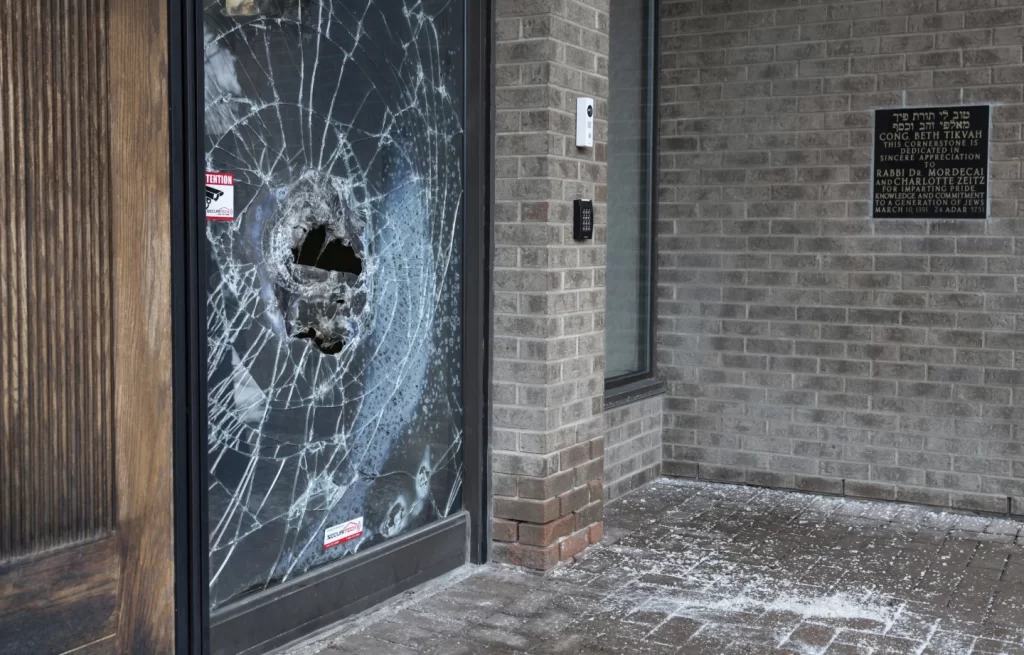
Montreal police responded to a 911 call shortly before 3 a.m. reporting a fire at Congregation Beth Tikvah in Dollard-des-Ormeaux, police spokesperson Véronique Dubuc said. Firefighters extinguished the blaze and discovered an incendiary device at the scene. The synagogue sustained minor damage, including a smashed window, smoke damage, and a damaged door. Witnesses reported seeing a suspect fleeing the area shortly after the fire began.
No injuries were reported, and no arrests have been made. Police have yet to determine whether the fire constitutes a hate crime, Dubuc added.
A few hours after the synagogue fire, officers discovered similar damage—a smashed window and a broken glass door—at the West Island office of the Federation CJA, a prominent Jewish community organization. However, no incendiary device was found at this second location. Authorities are investigating whether the incidents are connected.
This is not the first time these locations have been targeted. In November 2023, both Congregation Beth Tikvah and the Federation CJA office experienced arson attempts that caused minor damage. No injuries were reported, and no arrests were made in those cases.
The attacks have drawn widespread condemnation. Prime Minister Justin Trudeau denounced the incidents on social media, calling them “cowardly and criminal” acts of antisemitism. Israeli President Isaac Herzog also condemned the attacks, urging the Canadian government to take decisive action to combat hatred.
Police investigations into the latest attacks are ongoing.
An improvised landmine, believed to have been planted by a drug cartel, killed two Mexican soldiers and wounded five others, Mexico’s defense secretary announced Tuesday.
Gen. Ricardo Trevilla revealed that the army had suffered six fatalities from similar improvised explosive devices (IEDs) between 2018 and 2024. He did not specify whether these deaths resulted from roadside bombs or explosives dropped by drones, both of which are tactics commonly used by gangs in Mexico.
The device involved in Monday’s explosion was described by Trevilla as “very rustic.” Officials have previously compared such devices to buried pipe bombs. There was no immediate update on the condition of the five wounded soldiers, which included at least one officer.
The incident occurred in Michoacán, a western state plagued by cartel violence. Trevilla suggested the explosion was likely part of a drug cartel booby trap. The soldiers had been dispatched to investigate reports of an armed encampment in a rural area. Upon arriving, they found the path blocked by logs and were forced to proceed on foot.
As they advanced, they discovered three dismembered bodies near the seemingly abandoned encampment. Moments later, a buried explosive detonated, striking the soldiers.
Trevilla attributed the attack to the United Cartels, an alliance that includes the Viagras gang, which has been engaged in long-standing turf wars with the Jalisco New Generation Cartel in Michoacán.
The Mexican army previously acknowledged in August that some soldiers have been killed by drones operated by drug cartels. However, officials have noted that roadside bombs are more frequently encountered than drone-dropped explosives.
Michoacán has seen escalating violence as cartels employ militarized strategies, including IEDs, trenches, pillbox fortifications, homemade armored vehicles, and sniper rifles. According to a report released in August 2023, 42 soldiers, police, and suspects were wounded by IEDs in the first seven months of that year, a significant rise from 16 cases in 2022.
A Michigan man pleaded guilty to planning a mass shooting at a political party headquarters and a nearby bar, both of which he associated with LGBTQ+ individuals, officials announced Tuesday.
Mack Davis, 22, admitted to one count of committing a hate crime for attempting to carry out the mass killings in Owosso, a town about 25 miles west of Flint. Davis faces a maximum sentence of life imprisonment, according to a news release from the Department of Justice.
“This kind of vile and heinous hate-fueled violence, intended to target innocent people based on their sexual orientation, runs contrary to our values as Americans,” Assistant Attorney General Kristen Clarke said in the release. “Bias-motivated crimes targeting the LGBTQI+ community will not be tolerated. The Justice Department will continue using every tool at our disposal to protect communities from the scourge of hate-fueled violence by prosecuting those who carry out or attempt to carry out such crimes.”
Prosecutors said Davis spent months researching mass killings and writing about them in journals and on social media. Between July of last year and June of this year, when he was arrested on an unrelated charge, Davis compiled a list of weapons he owned and weapons he intended to acquire.
By the time of his arrest, authorities said Davis had amassed an arsenal that included two firearms, magazines, hundreds of rounds of ammunition, a crossbow and arrows, bomb-making components, smoke grenades, tactical gear, and several knives. One knife was reportedly inscribed with an anti-gay slur.
Between April and June, Davis posted on social media about plans to open fire at a local political party headquarters and a nearby bar. Using anti-LGBTQ+ slurs in his posts, Davis referred to the two locations as “targets,” according to the Justice Department.
He also allegedly vandalized vehicles belonging to neighbors he believed to be gay, spray-painting slurs and test-firing a firearm at several properties, including the vehicles.
Davis was arrested in June following the shooting incidents and has been in custody since. Sentencing for the foiled mass attack is pending.
“Davis’ plans were chilling. He intended to commit mass shootings at two locations—destroying countless lives and devastating our community—all because of his fanatical hatred for gay people,” U.S. Attorney Dawn N. Ison of the Eastern District of Michigan said. “I applaud the work of law enforcement in disrupting this awful plot and arresting Davis before he could carry out his planned attacks.”
Bryan Sherer, Davis’ attorney, said his client is “just twenty-two years old and vulnerable,” adding that Davis had no prior history of violence and that there was no definitive proof Davis would have carried out the attacks.
The case highlights the ongoing threat of hate-motivated violence against LGBTQ+ individuals. Several high-profile mass shootings have occurred at LGBTQ+ venues in recent years, including the 2016 attack at Pulse Nightclub in Orlando, Florida, which left 49 dead, and the 2020 Club Q shooting in Colorado Springs, Colorado, that resulted in five deaths and 17 injuries.
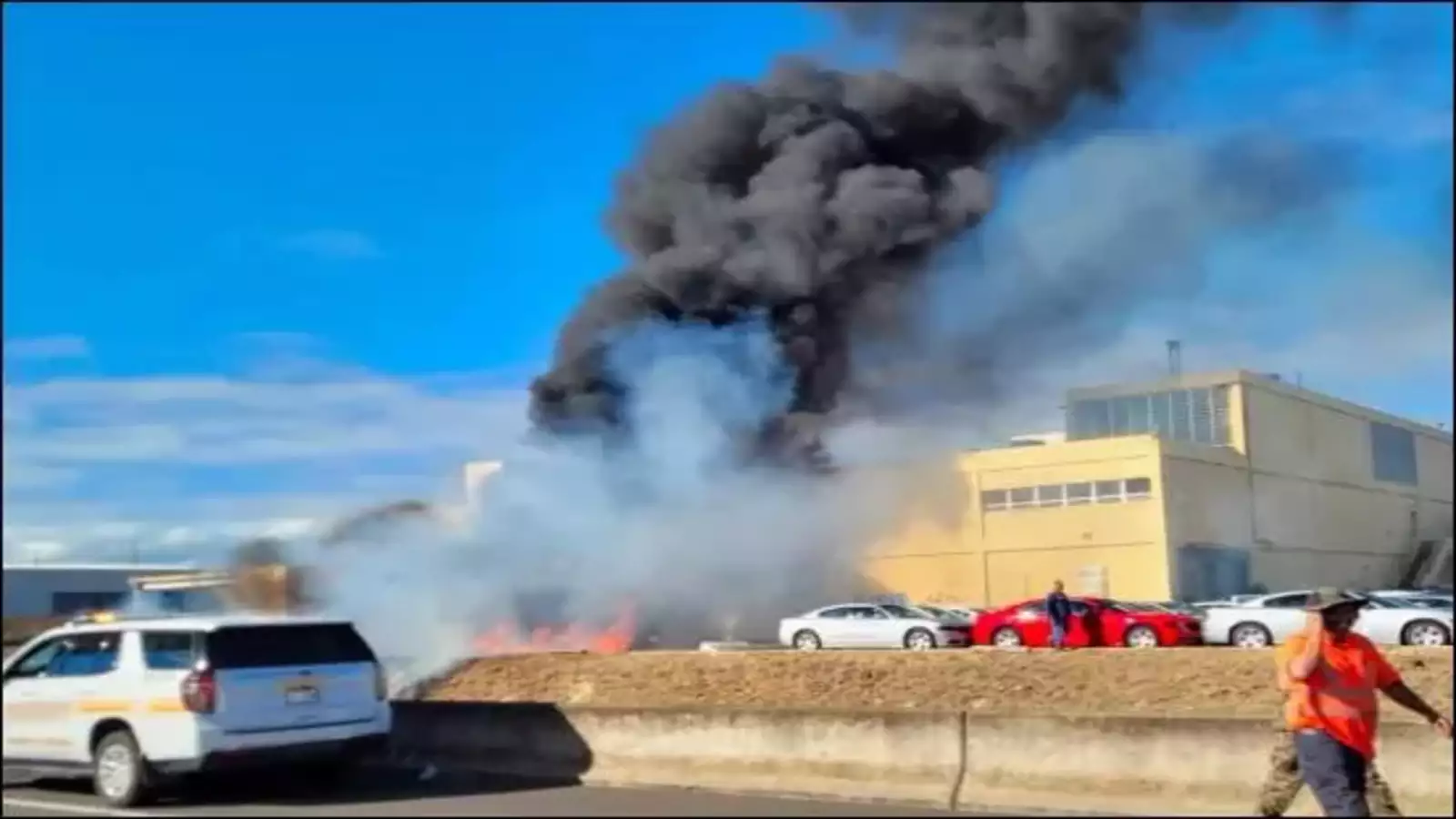
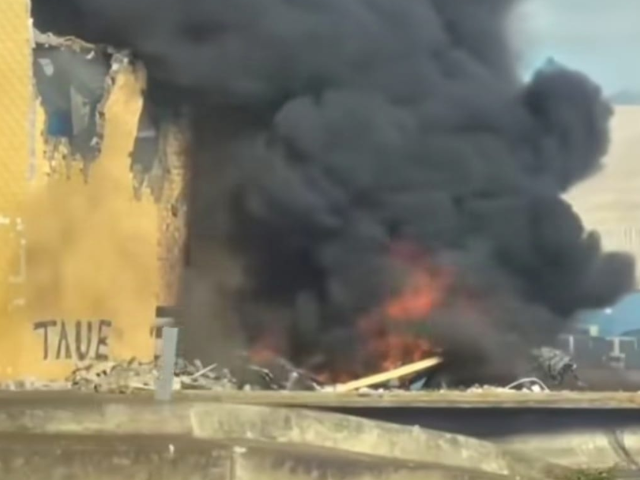
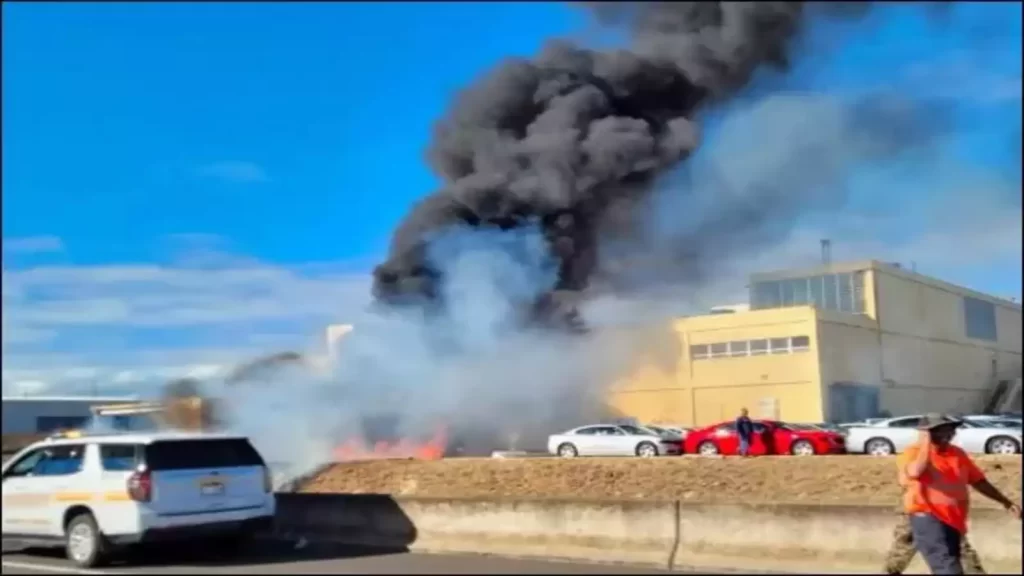
Two pilots perished Tuesday when their Kamaka Air Cessna 208 crashed into a vacant building near Daniel K. Inouye International Airport in Honolulu during a training flight. The incident occurred around 3:15 p.m. local time, sending flames and black smoke into the air.
Hawaii Department of Transportation Director Ed Sniffen confirmed the fatalities, noting witnesses reported the pilots appeared to maneuver away from critical infrastructure, including a fuel farm, before impact. Air traffic control recordings captured the pilots’ final moments, with one stating “We’re out of control here” after being questioned about their flight path.
Witness Nancy Timko described seeing the aircraft flying unusually low past her seventh-floor office window before banking toward the airport, followed by a loud bang. Honolulu Fire Chief Sheldon Hao reported the Cessna struck an exterior stairwell area, with debris contained within a 50-foot radius.
Kamaka Air acknowledged the loss of “two members of the Kamaka Air family” but withheld the victims’ names. The company provides air cargo and charter services in Hawaii. The crash site building, already scheduled for demolition, was owned by the Department of Transportation and unoccupied at the time.
Hawaii Governor Josh Green extended condolences to the victims’ families while promising full support for federal investigators. The National Transportation Safety Board and Federal Aviation Administration have launched investigations into the crash’s cause. Airport operations continued despite the incident, though nearby streets were closed.
A South African man, Sibusiso Lawrence, who killed his girlfriend, Nontobeko Cele, and posted a photo of her lifeless body on Facebook, was found dead by suicide, authorities confirmed.
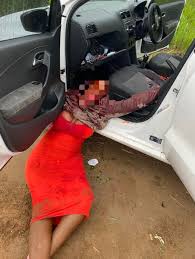
The incident occurred in the Malangeni area of Umzinto, KwaZulu-Natal (KZN), and has sparked widespread outrage on social media. Lawrence’s shocking video confession and disturbing image of 25-year-old Cele lying in a pool of blood with stab wounds went viral on Tuesday, December 17, 2024.
In the chilling video, Lawrence attempted to justify the murder, claiming his girlfriend wanted to leave him after receiving money from the Road Accident Fund (RAF). He also alleged mistreatment within their relationship as a motive for his actions.
KwaZulu-Natal police spokesperson Colonel Robert Netshiunda confirmed that Lawrence’s body was discovered hanging from a tree on the morning of Wednesday, December 18.
“A man who had confessed to killing a woman on a social media video that went viral was found hanging on a tree on Wednesday morning at Malangeni area in Umzinto, a short distance from where he killed the woman,” Netshiunda said.
South African authorities responded to a call about a murder on a gravel road in Malangeni, where they found Cele’s bloodied body lying in the middle of the road with multiple stab wounds. A broken knife was recovered near her body.
“Her bloodied body was found with several stab wounds, and a broken knife was found next to her body,” Netshiunda added.
Investigations revealed that Lawrence had allegedly fetched Cele from her home earlier. It is suspected that a domestic altercation escalated, leading to the fatal stabbing. Police also found his vehicle abandoned nearby with blood on the front passenger seat, suggesting the attack occurred inside the car.
Following an immediate manhunt, police discovered Lawrence’s body hanging from a tree in what appears to be a suicide.
Authorities have opened a murder case and launched an inquest docket to investigate further.
The tragedy highlights growing concerns over domestic violence and femicide in South Africa. Advocacy groups continue to call for more robust interventions to address gender-based violence and its devastating consequences.
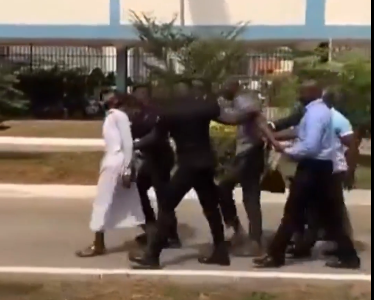
A man wearing white clothing was arrested after damaging several vehicles on Ghana’s Parliament grounds in Accra, with witnesses reporting he smashed windscreens and windows of approximately seven cars parked in front of the legislative buildings.
Police officers stationed at Parliament quickly apprehended the suspect, who appeared to be mentally distressed according to eyewitnesses. During his arrest, the man was heard shouting skyward, “Daddy don’t kill them. Daddy don’t destroy my people.”
Parliamentary authorities have not yet issued an official statement regarding the incident or the extent of damage caused.