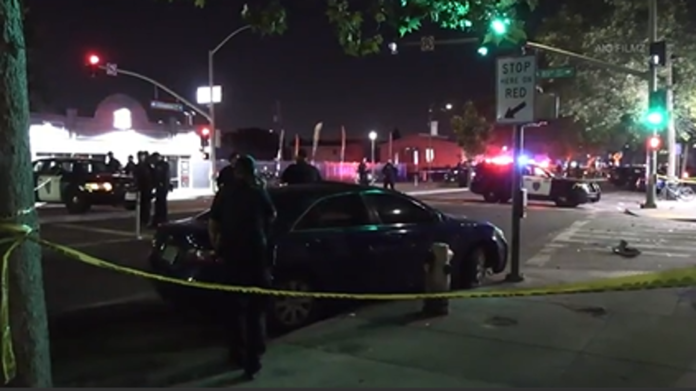
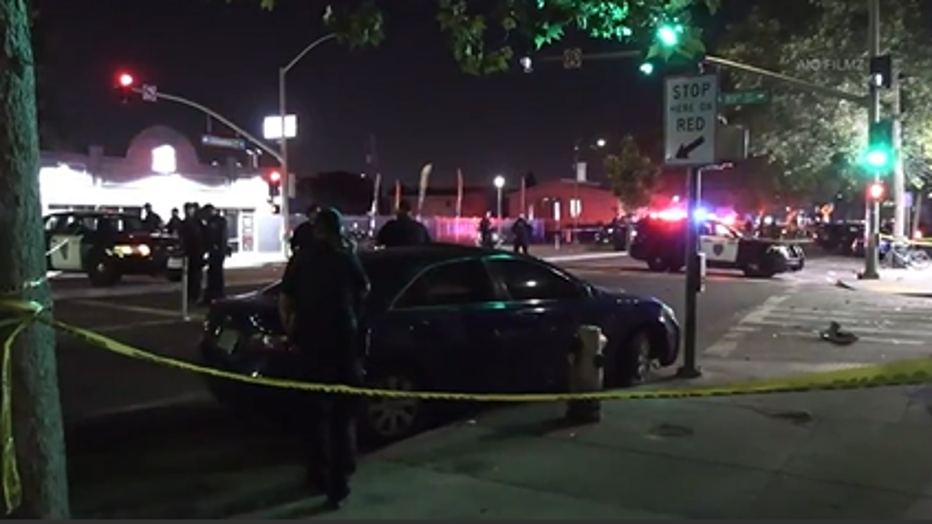
Three people were killed and several others injured late Saturday when a vehicle veered into pedestrians and parked cars in Oakland, authorities said.
Emergency crews responded shortly after 11 p.m. to reports of a major collision near the intersection of International Boulevard and 85th Avenue, where a vehicle struck multiple people and at least one parked car, the Oakland Fire Department said in a public update.
Police said three victims were pronounced dead at the scene. Several others were taken to nearby hospitals, with injuries ranging from critical to stable. Fire officials indicated that at least two victims were in critical condition following the crash.
Investigators said the driver, a minor whose identity was not released, was taken into custody. The driver was also transported to a hospital for treatment.
Preliminary findings indicate the vehicle was traveling north on 85th Avenue at a high rate of speed before turning onto International Boulevard, where it collided with a parked car and a group of pedestrians. Authorities have not determined whether alcohol or drugs played a role.
The Associated Press confirmed that the crash remains under active investigation, while ABC News cited fire officials who described a chaotic scene with multiple victims requiring urgent medical attention.
The incident highlights ongoing concerns about traffic safety in urban corridors like International Boulevard, a major artery in Oakland that has long been associated with heavy traffic and pedestrian risk. Late-night conditions, combined with speed and limited visibility, often increase the likelihood of severe crashes in such areas.
The involvement of a driver under 18 raises additional questions about access to vehicles, supervision, and enforcement of driving laws for minors. Cases like this frequently prompt renewed scrutiny of licensing rules and parental responsibility, particularly when high-speed driving is suspected.
Urban safety advocates have increasingly pushed for traffic-calming measures in cities across California, including better lighting, speed enforcement technologies, and redesigned intersections to reduce pedestrian exposure. Incidents involving multiple fatalities often accelerate calls for such reforms.
Beyond infrastructure, the emotional toll on families and communities is significant. Fatal pedestrian crashes tend to have ripple effects, particularly in densely populated neighborhoods where residents rely on walking as a primary mode of transportation.
As investigators work to determine the exact cause, the case is likely to become part of a broader conversation about road safety, youth driving accountability, and the need for preventive measures in high-risk urban zones.
A former mayor and a campaign aide were shot dead in central Colombia, authorities said, in an attack that underscores rising political violence days before the country heads into a closely watched presidential vote.
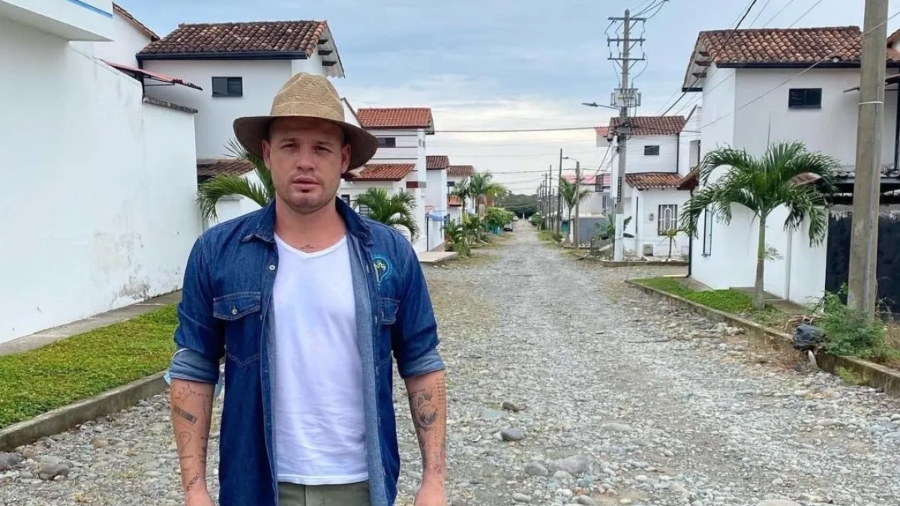
Rogers Mauricio Devia Escoba
The victims, identified as Rogers Mauricio Devia Escoba and his adviser Eder Fabian Cardona Lopez, were killed Friday night in the rural municipality of Cubarral in Meta department, about 105 miles south of the capital, Bogota. Officials said gunmen on motorbikes carried out the shooting.
The Associated Press reported that Devia, who served as mayor of Cubarral from 2020 to 2023, had aligned himself with presidential candidate Abelardo de la Espriella of the National Salvation Movement. The country’s Public Defender’s Office confirmed the killings and warned the attack could undermine political participation ahead of the May 31 election.
Interior Minister Armando Benedetti said investigators have yet to establish a motive. He added that security forces recently disrupted a separate plot targeting a staff member linked to another candidate, Paloma Valencia, in the same region.
Al Jazeera cited Colombia’s citizens’ rights office as cautioning that the violence threatens the “exercise of political rights” as campaigning enters its final stretch. The ombudsman’s office noted that intimidation and attacks against candidates and their teams could weaken public debate and deter voter engagement.
The Meta region, where the killings occurred, has long been contested by armed groups, including factions that split from the Revolutionary Armed Forces of Colombia after a 2016 peace accord. The area is also tied to drug trafficking routes, adding to persistent instability.
The attack comes amid heightened tensions in a race to succeed President Gustavo Petro. Polling has shown left-leaning Senator Ivan Cepeda leading the field, while de la Espriella has drawn support from voters seeking a tougher stance on crime. At least three candidates have disclosed receiving death threats, and leading contenders are traveling with extensive security details.
Colombia has faced a pattern of election-related violence in recent years. In June 2025, presidential hopeful Miguel Uribe was shot during a rally in Bogota and later died from his injuries, highlighting the risks confronting political figures.
The killings point to a broader security challenge that continues to shape Colombia’s political landscape. Despite the 2016 peace agreement, splinter groups and criminal networks have filled power vacuums in several regions, often targeting local leaders and political actors.
Meta’s strategic location makes it a focal point for armed factions seeking influence over territory and resources. Attacks in such areas are not only acts of violence but also signals intended to assert control and intimidate communities ahead of elections.
The timing is particularly significant. With voters preparing to choose a new president, incidents like this can alter campaign dynamics by shifting attention toward security concerns. Candidates may be compelled to harden their rhetoric, while voters weigh safety alongside economic and social issues.
There is also a risk that continued violence could suppress turnout in affected regions, potentially shaping electoral outcomes. Historically, fear and insecurity have discouraged participation, especially in rural areas where state presence is limited.
The Colombian government faces a delicate balance between maintaining order and preserving democratic processes. While security forces have increased protection for candidates, the persistence of attacks suggests deeper structural issues remain unresolved.
As the election approaches, the trajectory of violence will be closely watched, both domestically and internationally, as a measure of Colombia’s progress in stabilizing regions long affected by conflict.
At least four people were killed in a sweeping overnight drone assault attributed to Ukraine, marking one of the most extensive strikes on Russian territory since the war began, regional officials said.
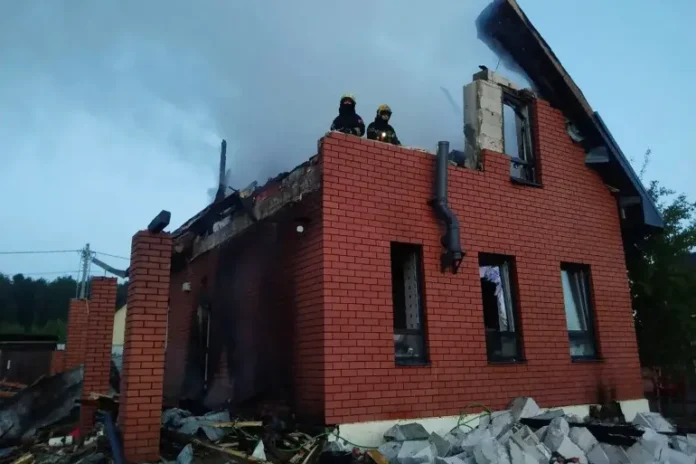
Authorities in the Moscow region said a woman died when a drone struck a residential property in Khimki, a city northwest of the capital. Regional governor Andrei Vorobyev indicated that two men were also killed in the village of Pogorelki, about six miles north of Moscow, while emergency crews searched debris for possible additional victims.
City officials in Moscow said at least 12 people were wounded in the barrage, many near the entrance to an oil refinery. Mayor Sergei Sobyanin stated that while nearby structures were affected, key refinery operations remained intact.
State media, citing municipal officials, said air defense systems intercepted 81 drones approaching Moscow overnight. Russia’s Defense Ministry later indicated that hundreds of drones were destroyed or disrupted across the country, with more than 1,000 reportedly intercepted over a 24-hour period.
In the Belgorod region, which borders Ukraine, local authorities said a separate drone strike hit a truck, killing one person. Elsewhere, officials said debris from intercepted drones landed at Sheremetyevo Airport without causing damage.
The Associated Press described the assault as one of the largest aimed at the Russian capital since Moscow launched its full-scale invasion of Ukraine in February 2022. Reuters cited regional authorities who confirmed casualties and structural damage in multiple locations, including residential buildings and infrastructure.
Ukraine also faced a wave of attacks. The Ukrainian air force said Russia launched nearly 300 drones overnight, most of which were intercepted or disabled. Emergency services in Ukraine said at least eight people were injured in the Dnipropetrovsk region, including residents in the cities of Dnipro and Kryvyi Rih. Damage to homes was recorded in several areas.
The escalation follows a pattern of intensifying drone warfare by both sides. The Associated Press previously documented a large-scale Russian drone assault earlier in the week that struck multiple Ukrainian regions, causing deaths and widespread destruction. Ukrainian President Volodymyr Zelenskyy said at the time that the aim was to overwhelm air defense systems and warned that further strikes could follow.
The latest exchange underscores how drone warfare has become central to the conflict, allowing both sides to strike deep into each other’s territory with increasing frequency. What was once limited to front-line engagements has expanded into a broader campaign targeting infrastructure, logistics hubs and urban centers.
For Russia, the scale of the strike near Moscow highlights growing vulnerabilities in areas once considered relatively secure. Repeated incursions into the capital’s airspace could carry political implications, raising pressure on defense systems and public confidence.
For Ukraine, such operations appear designed to stretch Russian defenses and shift the psychological balance of the conflict. By forcing Moscow to divert resources toward homeland protection, Kyiv may be seeking to offset disadvantages along the front lines.
The intensifying cycle of attacks also complicates diplomatic efforts. Despite statements from President Donald Trump and Russian President Vladimir Putin suggesting the possibility of a negotiated end to the war, continued large-scale strikes signal that both sides are still pursuing military leverage.
As drone technology evolves and production expands, analysts expect these types of attacks to grow in scale and frequency. The result is a conflict increasingly defined not only by territorial battles but by sustained long-range strikes that blur the line between battlefield and civilian space.
Global pop star Shakira and Afrobeats performer Burna Boy have released “Dai Dai,” the official anthem for the 2026 FIFA World Cup, blending Latin pop and African rhythms in a track designed to reflect the tournament’s worldwide appeal.
The song, launched across major streaming platforms, brings together energetic beats and multilingual lyrics that celebrate football’s global reach. In one verse, the artists highlight competing nations, naming countries such as Brazil, Argentina, Mexico and Japan, underscoring the tournament’s international character.
The release follows a teaser shared by Shakira from Rio de Janeiro’s Maracanã Stadium, where she previewed part of the track while performing alongside dancers. The full version debuted days later, coinciding with growing anticipation for the tournament, which will be co-hosted by the United States, Canada and Mexico.
The Associated Press previously noted that the track features alternating verses from both performers before merging into a joint chorus, creating a call-and-response dynamic. FIFA confirmed the song’s role as the tournament’s official anthem, describing it as a reflection of the competition’s “energy, passion and global spirit.”
Shakira, who previously delivered the widely recognized 2010 World Cup anthem “Waka Waka,” returns to the global stage with familiarity and experience in crafting tournament-defining music. Burna Boy adds a contemporary edge, reinforcing the event’s outreach to younger audiences and diverse markets.
The anthem’s release also aligns with plans for the first halftime show in a World Cup final, scheduled for July 19 at MetLife Stadium in New Jersey. Organizers have announced that Shakira will headline the performance alongside Madonna and the South Korean group BTS, with creative direction led by Chris Martin.
FIFA said the song will support the Global Citizen Education Fund, an initiative aimed at raising $100 million to expand access to education and sports opportunities for children worldwide. The organization indicated that proceeds from the track, along with matching contributions from Sony Music, will contribute to the effort.
Additional World Cup-themed music has also emerged ahead of the tournament. A separate anthem backed by Coca-Cola reimagines the song “Jump,” featuring J Balvin and Travis Barker, illustrating how commercial partners are expanding the event’s cultural footprint.
The release of “Dai Dai” highlights a broader shift in how global sporting events position music as a central part of their identity. By pairing artists from different continents, FIFA appears to be leaning into a strategy that mirrors the tournament’s geographic diversity while strengthening its cultural influence beyond the field.
Shakira’s return signals continuity, linking the 2026 tournament to past World Cup moments that achieved lasting global recognition. At the same time, Burna Boy’s involvement reflects the growing prominence of African music on the international stage, suggesting a deliberate effort to engage audiences in emerging markets.
The introduction of a halftime show further indicates FIFA’s ambition to rival entertainment elements seen in events such as the Super Bowl. This evolution points to a more commercial and entertainment-driven approach that could reshape how future tournaments are packaged and consumed.
Taken together, the anthem, expanded music collaborations and new entertainment formats underscore how the World Cup is increasingly positioned not only as a sporting event but also as a global cultural showcase.
BUNIA, Democratic Republic of Congo — The World Health Organization declared the Ebola outbreak spreading through eastern Congo and into Uganda a global public health emergency of international concern on Sunday, as the death toll climbed to at least 87 people and health workers scrambled to contain a disease moving across three health zones in one of Africa’s most conflict-torn provinces.
The declaration, the WHO’s highest level of international alarm short of a pandemic emergency designation, came after 246 suspected cases and eight laboratory-confirmed infections were recorded across Ituri province’s Bunia, Rwampara, and Mongwalu health zones, the WHO said in a statement. The agency confirmed the outbreak involves the Bundibugyo virus, a variant of Ebola that has been less common in Congo’s previous outbreaks.
Congo’s Health Minister Samuel-Roger Kamba identified the likely index case as a nurse who died at a hospital in Bunia, with the illness traced back to April 24 — meaning the virus had been circulating for nearly three weeks before the outbreak was officially announced Friday.
This is Congo’s 17th Ebola outbreak since the disease first emerged in the country in 1976.
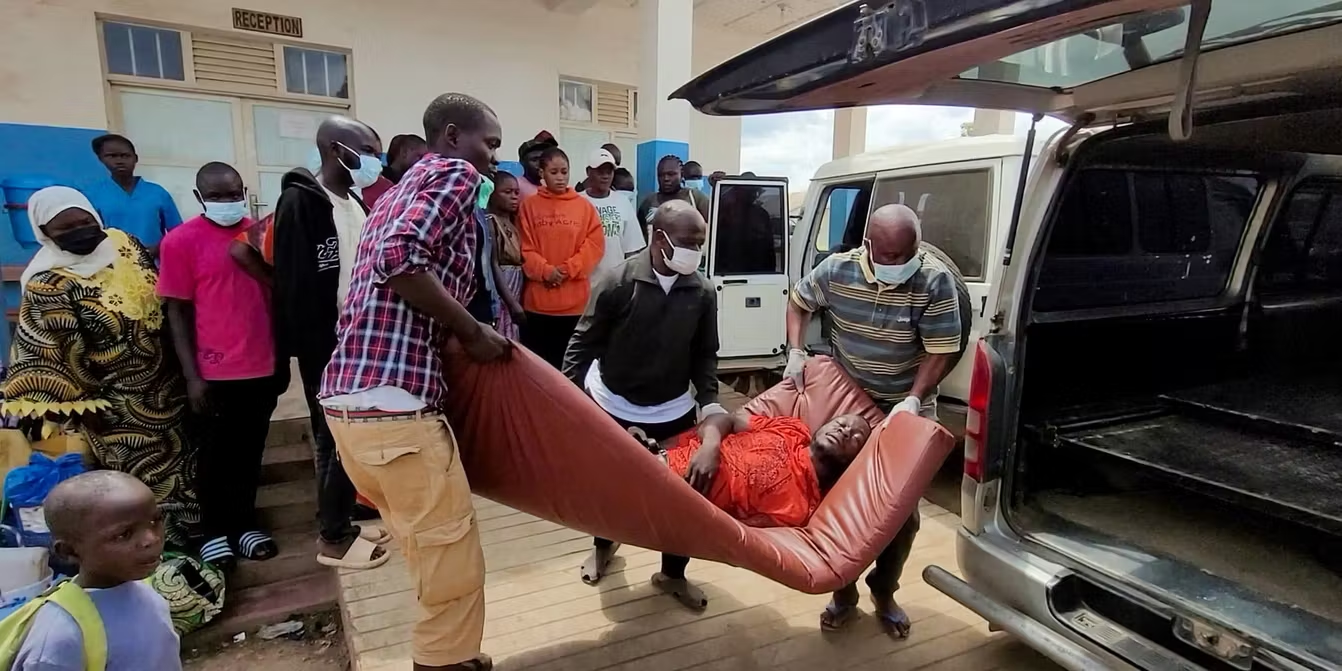
In Bunia, the human reality behind the numbers was stark. Residents described daily burials and mounting fear in a city where people were dying faster than they could be identified.
“Every day, people are dying, and this has been going on for about a week,” Jean Marc Asimwe, a Bunia resident, told the Associated Press. “In a single day, we bury two, three or even more people. At this point, we don’t really know what kind of disease it is.”
How It Spread and Where It Stands
Africa CDC Director-General Dr. Jean Kaseya said at an online briefing Saturday that the outbreak originated in Mongwalu, a high-traffic mining area in Ituri province, before traveling with patients who sought medical care in Rwampara and then Bunia. Of the 87 deaths confirmed by Saturday, 57 occurred in Mongwalu, 27 in Rwampara, and three in Bunia itself.
By Saturday, the Africa Centres for Disease Control and Prevention tallied 336 suspected cases and 13 confirmed cases, with four deaths among those confirmed. Only 13 blood samples had been tested at the National Institute of Biomedical Research, of which eight came back positive for the Bundibugyo strain. Five samples could not be analyzed because the volume was insufficient, the health minister said.
Kaseya warned of active community transmission, particularly concentrated in Mongwalu, which he said was “significantly complicating containment and contact tracing efforts.” Armed conflict in Ituri, where Islamic State-backed militants carry out regular attacks on civilians and infrastructure, was restricting surveillance teams and rapid response operations from reaching affected areas.
A confirmed case was also reported in Kinshasa, Congo’s capital, from a person who had traveled from Ituri, the WHO said — a development that illustrated how quickly a disease outbreak in a remote mining zone can reach a megacity more than 1,000 kilometers away.
Uganda: An Imported Death in Kampala
The outbreak crossed the border before the international alarm was raised. Uganda confirmed Friday that an Ebola case had been imported from Congo. The patient died May 14 at Kibuli Muslim Hospital in Kampala, Uganda’s capital. A second case was confirmed in Kampala over the same weekend, the WHO said, also connected to travel from Congo.
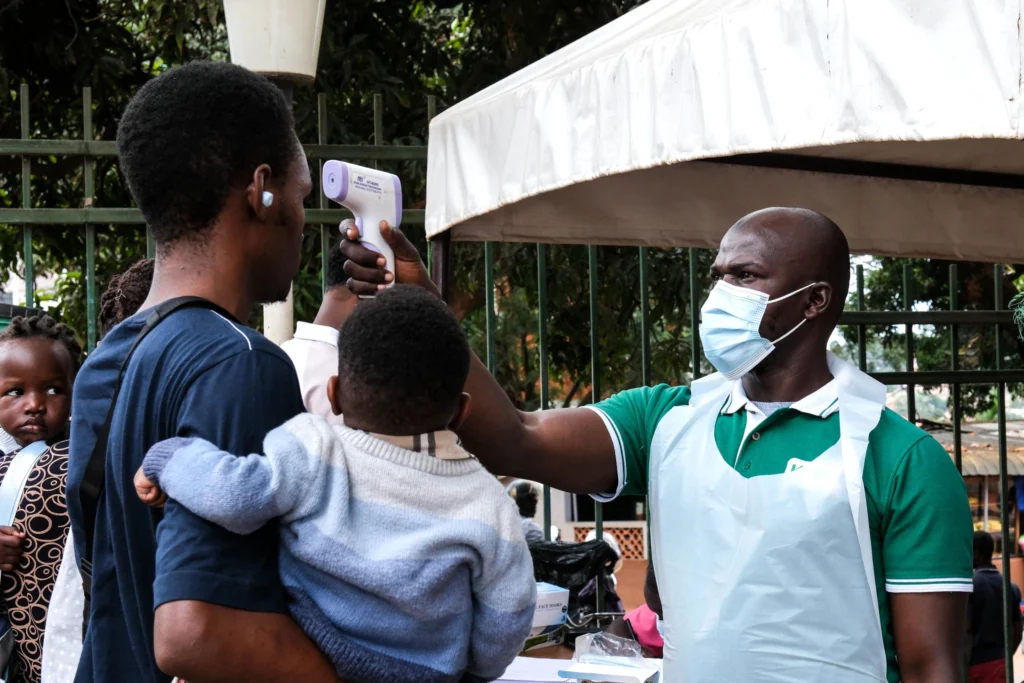
Uganda’s Health Ministry said the body of the patient who died in Kampala was later returned to Congo and that no local transmission had been confirmed in Uganda as of Saturday. Medical staff were screening people at the entrance of Kibuli Muslim Hospital on Saturday.
For residents near the hospital, the outbreak stirred memories of other losses. “I really get scared because I remember burying my father without looking at his body,” said Ismail Kigongo, a Kampala resident, recalling his father’s death during the COVID-19 pandemic.
Kenya, which borders Uganda and maintains active travel links across East Africa, said Saturday it assessed only a “moderate risk of importation” of Ebola given regional movement patterns. The Kenyan government said it had assembled an Ebola preparedness team and reinforced surveillance at all border crossings and points of entry.
The Challenge of Containing Ebola in a War Zone
Congo brings experience to every Ebola outbreak it faces. It also brings the same obstacles. Ituri province sits approximately 1,000 kilometers from Kinshasa. It is poorly connected by road, frequently cut off by violence, and has been ravaged for years by Islamic State-backed militants who target civilians and attack health infrastructure. Getting laboratory equipment, medical teams, and personal protective supplies to Mongwalu and Rwampara under those conditions is a genuine logistical and security challenge that no declaration from Geneva resolves on its own.
The Bundibugyo variant adds a layer of scientific complexity. Congo’s most deadly outbreaks have involved the Zaire strain, which carries a fatality rate of up to 90 percent in untreated patients but against which effective vaccines now exist. Bundibugyo, first identified in Uganda in 2007, has a somewhat lower fatality rate but has been less studied and the available vaccines have not been validated for this specific strain at scale.
Ebola spreads through direct contact with bodily fluids including blood, vomit, and semen from infected individuals. It does not travel through the air. But in communities where people care for sick relatives at home, where traditional burial practices involve physical contact with the deceased, and where awareness of transmission routes is limited, those biological facts provide cold comfort.
Resident Adeline Awekonimungu put the community’s expectation plainly. “My recommendation is that the government take this matter seriously and that it takes charge of the hospitals so that this matter can be brought under control,” she told the Associated Press in Bunia.
What a Global Emergency Declaration Actually Means
The WHO’s declaration of a public health emergency of international concern carries legal and procedural weight that its critics sometimes underestimate. It activates the International Health Regulations, obligating signatory countries to enhance surveillance and reporting. It signals to donors, pharmaceutical companies, and international responders that resources and attention are warranted at a level beyond what routine outbreak management provides. It enables WHO to coordinate a global response rather than simply advising national governments.
What it does not do is put medical teams in Mongwalu overnight or stop militants from blocking the roads they would need to use. The gap between declaration and operational reality in eastern Congo is measured in logistics, security clearances, and the willingness of armed groups to allow health workers to function. Those are not problems the WHO resolves by declaring an emergency. They are problems that require political engagement with the DRC government, the UN Mission in Congo, and the regional powers whose cooperation shapes access in Ituri.
The spread to Kampala, while described as imported and contained, is the detail that most worries global health authorities. Uganda is a regional transit hub. Kampala is connected by air to Nairobi, Addis Ababa, Johannesburg, Dubai, and beyond. Congo’s Ituri province is not. An outbreak that stays in Mongwalu is a Congo problem. An outbreak that reaches Kampala and then travels on a commercial flight to a city with international connections becomes a different category of challenge entirely.
Kenya’s “moderate risk” assessment and its preparedness team formation reflect exactly that logic. The disease has not left East Africa, but the infrastructure that could carry it elsewhere runs through the region. Every point of entry screening station that Kenya and Uganda staff effectively is a line of defense that reduces the distance between an Ituri outbreak and a global one.
The WHO has declared this emergency. The harder work is everything that comes after.
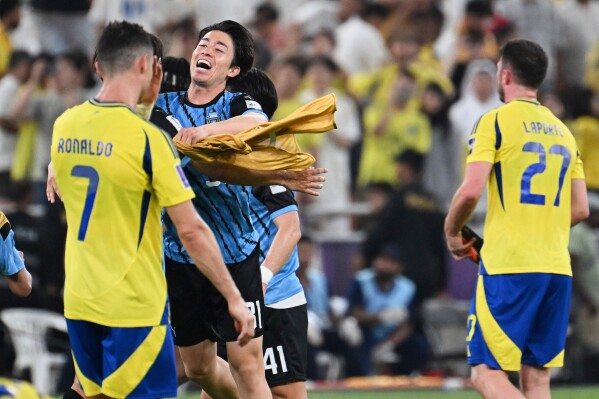
Cristiano Ronaldo and Al Nassr were denied a major title once again after a 1-0 defeat to Gamba Osaka in the AFC Champions League Two final on Saturday.
The decisive moment came in the 29th minute when Deniz Hummet converted with a low strike, capitalizing on one of the few chances created by the Japanese side. The goal proved enough to settle the contest despite sustained pressure from the home team.
Al Nassr controlled possession for long stretches and created several scoring opportunities, but struggled to break through a disciplined defensive setup. Goalkeeper Rui Araki played a key role, producing early saves to deny Abdulrahman Ghareeb and helping preserve his team’s narrow advantage.
Ronaldo came close to leveling the score just before halftime, but his header drifted wide. Later in the match, Joao Felix struck the post with a long range effort, while additional attempts were blocked as Osaka held firm under pressure.
The result marks another setback for Ronaldo since joining Al Nassr in late 2022. The club has now fallen short in multiple finals during his tenure, with its only success coming in a regional tournament that does not carry the same weight as major continental titles.
The loss also follows a recent disappointment in domestic competition, where Al Nassr conceded late in a crucial league match, leaving the title race unresolved heading into the final round.
For Gamba Osaka, the victory delivers a significant continental achievement, built on efficiency and defensive organization. The team converted its limited chances and maintained composure under sustained attacks to secure the title.
The latest defeat highlights a recurring challenge for Al Nassr: converting dominance into decisive results in high pressure matches. Despite a roster filled with experienced and high profile players, the team has struggled to find consistency in critical moments.
Ronaldo’s presence has elevated expectations, but the gap between individual quality and collective execution remains evident. Matches like this often hinge on precision and composure, qualities Osaka demonstrated by maximizing a single clear opportunity.
The result also reflects a broader pattern in football where structured, disciplined teams can neutralize more attack minded opponents. Osaka’s compact shape limited space, forcing Al Nassr into less effective attempts from distance or tight angles.
Looking ahead, Al Nassr still has an opportunity to secure domestic success, but the pressure to deliver silverware continues to grow. For Ronaldo, whose career has been defined by trophies, the wait for a major title in Saudi Arabia remains a defining storyline.
Manchester City secured a 1-0 victory over Chelsea in the FA Cup final on Saturday, with Antoine Semenyo delivering a decisive and inventive goal that settled a tightly contested match at Wembley Stadium.
The breakthrough came in the 72nd minute when Semenyo met a cross from Erling Haaland and improvised with a backheel finish that slipped past goalkeeper Robert Sanchez into the far corner. The moment stood out in a final that had produced few clear chances before the strike.
Semenyo later said the finish was instinctive, explaining that he reacted quickly as the ball came toward him. Chelsea’s interim coach described the effort as extremely difficult to defend, noting that it required both timing and creativity.
The result adds another trophy to City’s season under manager Pep Guardiola, who has guided the club to continued domestic success. The win keeps alive hopes of multiple trophies, with the team also competing at the top of the league standings.
City’s players marked the occasion at Wembley, where they have frequently appeared in recent years. Captain Bernardo Silva lifted the trophy alongside teammate John Stones, both of whom are expected to depart the club at the end of the season.
For Chelsea, the defeat caps a challenging campaign without silverware. The team has undergone managerial changes during the season, and the final was overseen by an interim coach still early in his tenure. Supporters also staged demonstrations ahead of kickoff, reflecting wider dissatisfaction with the club’s direction.
Despite those difficulties, Chelsea limited City’s attacking opportunities for much of the match before Semenyo’s decisive intervention.
The victory marks City’s eighth FA Cup title, placing the club among the competition’s most successful sides. It also ends a run of final losses in recent years, with the team returning to winning form on one of football’s biggest stages.
Semenyo’s goal not only secured the trophy but also highlighted the role of individual brilliance in high stakes matches where tactical systems often cancel each other out. In a game largely defined by discipline and limited space, a single moment of creativity proved decisive.
For Manchester City, the win reinforces a period of sustained dominance built on depth, tactical flexibility and consistent recruitment. Guardiola’s influence remains evident in the team’s ability to control matches even when chances are scarce.
Chelsea’s performance, while ultimately unsuccessful, suggested a level of resilience despite internal instability. However, the lack of cutting edge in attack continues to be a concern, particularly in matches where opportunities are limited.
Looking ahead, City’s ability to compete across multiple competitions underscores its status as a benchmark in domestic football, while Chelsea faces a period of rebuilding to return to consistent contention.
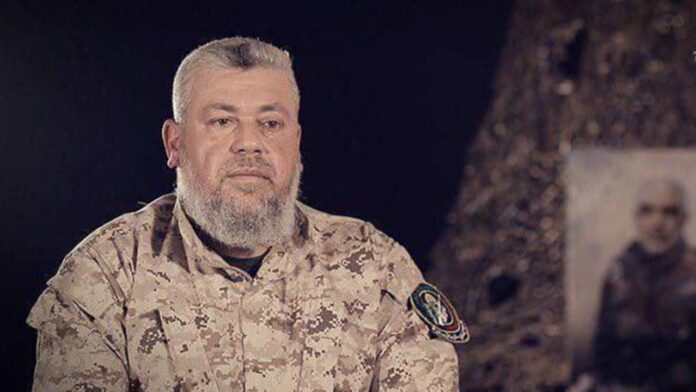
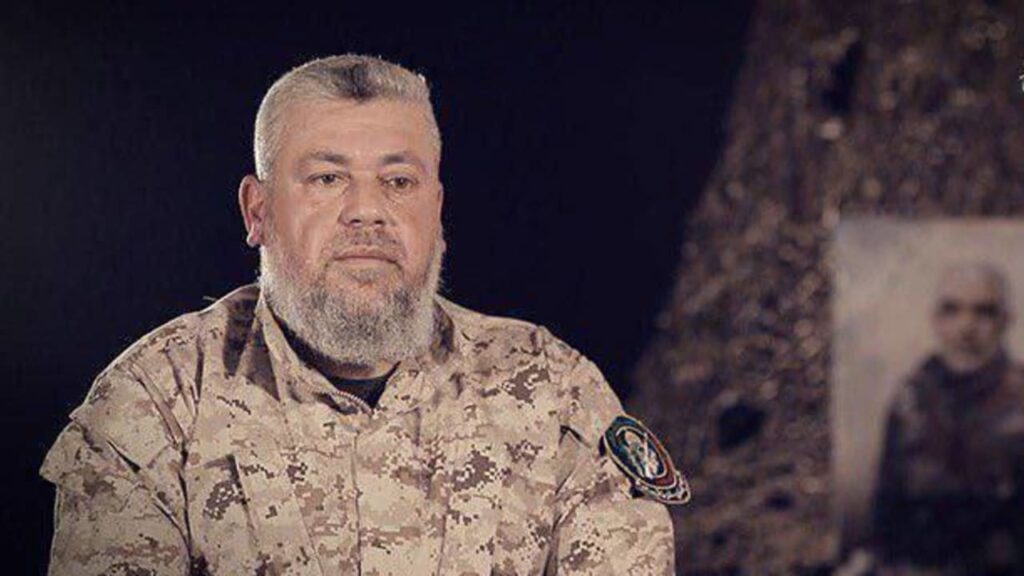
GAZA CITY — An Israeli airstrike killed the commander of Hamas’ military wing in Gaza City on Friday, eliminating one of the last senior figures who helped plan and execute the October 7, 2023 attacks that triggered the war, the Israeli military confirmed Saturday. Hamas acknowledged the death hours later.
Izz al-Din al-Haddad was struck in Gaza City in an operation the Israeli army described as a significant blow to the organization’s remaining command structure. Israeli Prime Minister Benjamin Netanyahu and Defense Minister Israel Katz said in a joint statement that al-Haddad was “one of the architects” of the October 7 assault, which killed approximately 1,200 people in southern Israel and resulted in more than 250 people being taken hostage into Gaza.
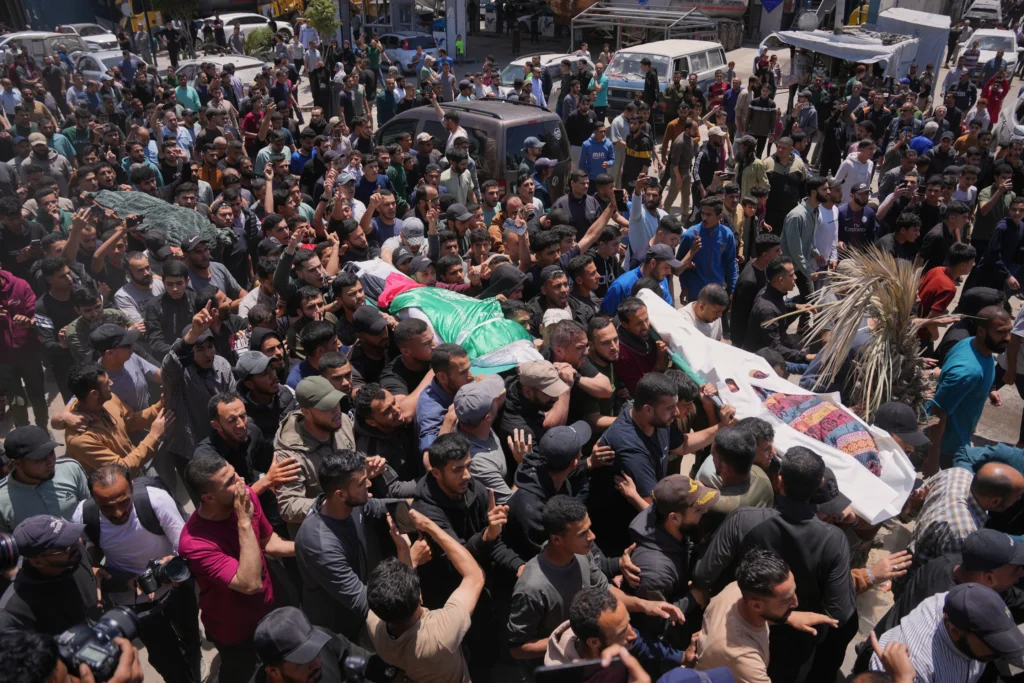
Hamas spokesperson Hazem Qassem confirmed the killing on social media. Al-Haddad’s family separately confirmed his death to the Associated Press. Six other people died in the same strike, among them his wife and daughter. His two sons had been killed earlier in the war. His body was carried through Gaza City wrapped in Hamas and Palestinian flags at a funeral Saturday.
Al-Haddad had assumed command of Hamas’ military wing after his predecessor, Mohammed Sinwar, was killed. Israel’s army said he had surrounded himself with Israeli hostages during the war, using them as protection against precisely the kind of strike that ultimately killed him.
Israel’s army chief of staff called the operation significant and said Israel would continue pursuing those it held responsible for the October 7 attacks. Netanyahu and Katz issued a direct warning to anyone who participated in the assault. “Sooner or later, Israel will reach you,” their statement read.
Who al-Haddad Was
Izz al-Din al-Haddad was among Hamas’ founding generation. He joined the organization when it was established in the 1980s and served in the Qassam Brigades’ Majd section, which was tasked with identifying and targeting Palestinians suspected of collaborating with Israel. Over the following decades he rose through the organization’s military hierarchy to become a member of Hamas’ Military Council, the senior body of commanders that coordinated the planning of the October 7 attacks.
His killing removed one of the last surviving members of that council who had directed the assault. Israel has spent nearly two years hunting the architects of October 7 across Gaza, with al-Haddad among the final high-value targets from the attack’s planning core.
Two Israeli strikes hit Gaza City on Friday evening. One targeted a residential building. A second targeted a vehicle. Seven people were killed and dozens more wounded across both strikes, according to health officials at Saraya Field Hospital and Shifa Hospital. Palestinian residents reported additional strikes that followed in the same area. The Israeli military did not immediately confirm what those subsequent strikes were targeting.
A Ceasefire That Keeps Bleeding
Al-Haddad’s killing came inside a ceasefire that has not stopped the killing. The agreement between Israel and Hamas, reached in October, remains technically in place but has been punctuated by near-daily Israeli fire across Gaza. More than 850 people have been killed in the territory since the ceasefire took effect, according to Gaza’s Health Ministry, which is part of the Hamas-run government but staffed by medical professionals whose detailed casualty records are broadly accepted as credible by the international community.
The ceasefire’s top diplomatic overseer has said the agreement has stalled because of the unresolved dispute over Hamas’ disarmament. Both sides have accused the other of violations. Israel has continued targeting Hamas commanders inside Gaza throughout the ceasefire period, including the son of Hamas lead negotiator Khalil al-Hayya, killed in an earlier strike.
The Health Ministry said Israel’s military campaign since October 2023 has killed more than 72,700 people in Gaza.
West Bank Violence Continues
Beyond Gaza, violence spread through the occupied West Bank on Saturday. Israeli troops shot and killed Hassan Fayyad, 34, in the Jenin refugee camp. The Palestinian Red Crescent said he was struck by a bullet in the thigh. Israel’s military said troops fired warning shots at a person attempting to infiltrate the camp, then fired when he did not comply, and subsequently provided medical assistance as he was transferred to a hospital.
On Thursday, Israeli troops killed a 15-year-old boy in Eastern Lubban, a town in the Nablus area, according to the Palestinian Health Ministry. Israel’s military said soldiers identified three people throwing rocks at Israeli vehicles and endangering lives, and opened fire.
On Friday, settlers set fire to a mosque and multiple vehicles in the village of Jibiya, northwest of Ramallah, Palestinian religious authorities confirmed. Security camera footage showed people pouring flammable material on the mosque and at least two vehicles. Hebrew-language graffiti was spray-painted on the mosque’s exterior walls, said Sabir Shalash, head of Jibiya’s municipal council.
The Ministry of Awqaf and Religious Affairs condemned the attack as a “cowardly terrorist act” and criticized what it called international inaction on rising settler violence against Muslim and Christian sites across the occupied West Bank. The Israeli military and police said they were deployed to the area but found no suspects and were investigating. The army said it “strongly condemns” attacks on religious institutions.
Decapitation Without Resolution
The killing of al-Haddad fits into a pattern Israel has pursued relentlessly since October 7: systematically eliminating the men who planned, approved, and led the attack. Yahya Sinwar, the political leader who is widely regarded as the attack’s chief architect, was killed in October 2024. Mohammed Sinwar, his brother and military wing predecessor to al-Haddad, was killed subsequently. Al-Haddad was among the last of that founding circle.
From Israel’s stated perspective, the campaign has accomplished what it set out to do in one specific dimension. The men who organized October 7 are nearly all dead. The military logic is real. Eliminating experienced commanders degrades organizational capacity, disrupts planning cycles, and sends a message to every surviving member of Hamas that Israel’s reach is long and its patience for accountability is indefinite.
What the campaign has not done is resolve the fundamental questions that will determine Gaza’s future. The ceasefire remains deadlocked over Hamas’ disarmament, a demand Hamas has shown no willingness to accept and that Israel has made a prerequisite for any durable agreement. More than 850 people have been killed since the ceasefire took effect — a figure that makes the word ceasefire increasingly difficult to defend as a description of what is happening in Gaza.
The 72,700 deaths the Health Ministry attributes to Israel’s offensive since October 2023 represent a humanitarian toll that has reshaped international opinion on the war in ways that targeted military strikes, however operationally sound, do not address. Israel’s argument is that it is fighting a legitimate war against a terrorist organization that started it. The rest of the world is increasingly focused on what comes after, and on whether the destruction of Gaza’s civilian infrastructure can be justified by the military objectives that guide each individual strike.
Al-Haddad is dead. The ceasefire is stalling. The hostages are not all home. Gaza is in ruins. The war that October 7 started is not over, and the killing of its last surviving architects has not produced the conditions under which it can end.
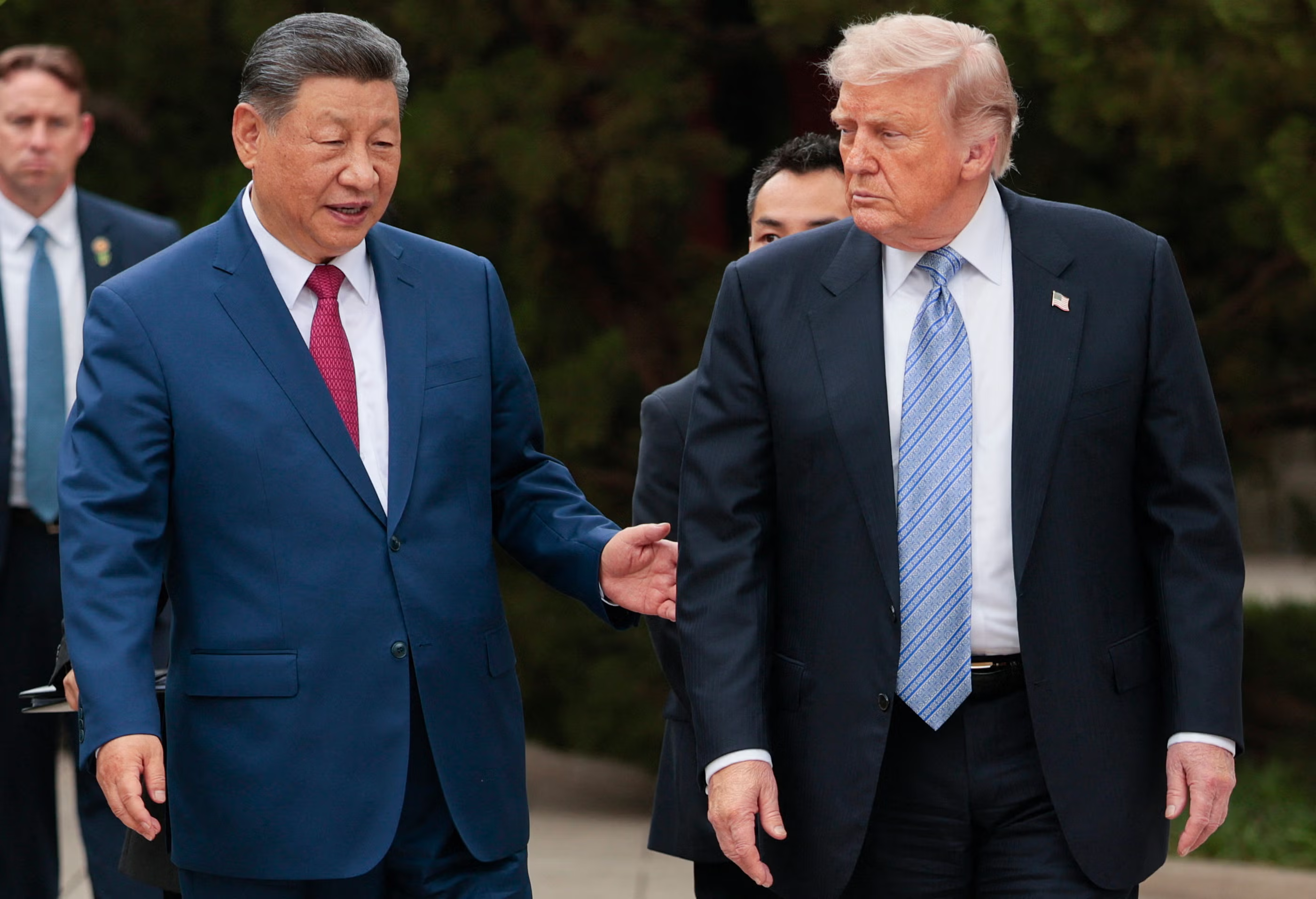
President Donald Trump said he has no interest in committing U.S. forces to a distant conflict over Taiwan, signaling a cautious approach as tensions with China remain a central global flashpoint.
In an interview that aired Friday with Bret Baier on Fox News, Trump emphasized that he wants both China and Taiwan to ease tensions rather than escalate toward confrontation. He underscored the geographic distance involved, saying he is not inclined to send American forces thousands of miles into a potential conflict.
“I’m not looking to have somebody go independent and then we’re supposed to travel 9,500 miles to fight a war,” Trump said, adding that he wants “both sides to cool down.”
The remarks come amid renewed diplomatic engagement between Washington and Beijing, including recent talks between Trump and Chinese President Xi Jinping. Taiwan remains one of the most sensitive issues in relations between the two powers.
China considers Taiwan part of its territory and has long vowed eventual unification. Taiwan, however, operates as a self-governing democracy, with public opinion largely favoring continued autonomy. The United States maintains a long-standing policy that acknowledges Beijing as the government of China while providing Taiwan with defensive support under the Taiwan Relations Act.
Trump downplayed suggestions that Beijing had issued threats during recent exchanges, describing the issue as historically significant but not newly confrontational. He framed the dispute as one requiring restraint rather than military escalation.
“We’ll see what happens,” he said when asked about continued U.S. weapons support for Taiwan.
Statements from Beijing have reiterated that Taiwan remains the most important issue in bilateral relations, warning that mishandling it could destabilize ties between the two nations.
Trump’s comments highlight a broader shift toward strategic restraint in U.S. foreign policy debates, particularly regarding conflicts that could draw the country into large-scale wars far from its borders. His emphasis on distance and reluctance to intervene militarily reflects ongoing domestic concerns about the cost and risks of overseas engagements.
At the same time, his stance introduces uncertainty into long-standing U.S. commitments to Taiwan’s defense. While avoiding direct confrontation may reduce immediate tensions, it could also embolden Beijing to increase pressure on the island, testing the limits of American resolve.
The remarks also come as global attention is divided across multiple geopolitical hotspots, increasing the stakes of any miscalculation involving China and Taiwan. Analysts note that even rhetorical shifts from U.S. leadership can influence military planning and diplomatic signaling in the region.
Balancing deterrence with de-escalation remains a central challenge. Trump’s call for both sides to “cool down” suggests a preference for stability, but the absence of a clear red line could complicate efforts to maintain the status quo in one of the world’s most sensitive security environments.
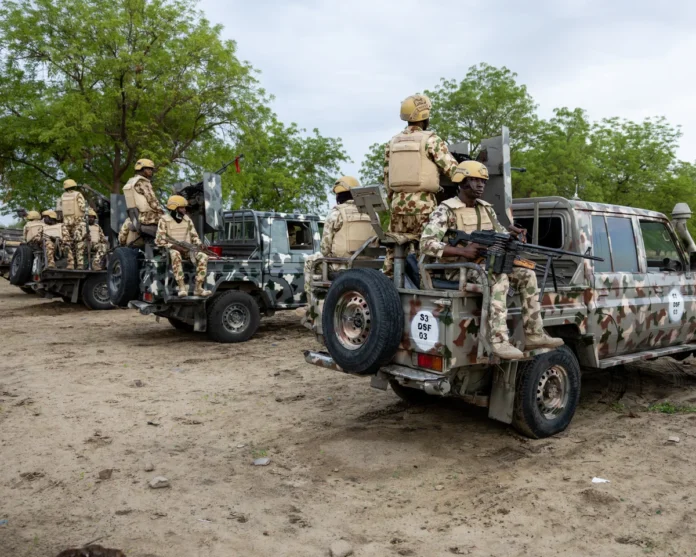
American and Nigerian forces killed the second-in-command of the Islamic State group globally in a joint operation in the Lake Chad Basin on Friday night, eliminating a Nigerian-born militant leader who had spent years organizing the terror network’s finances and plotting attacks against the United States while evading capture in the African interior.
President Donald Trump announced the mission in a late-night post on Truth Social, describing it as a precisely executed strike against what he called the most active terrorist in the world.
“Tonight, at my direction, brave American forces and the Armed Forces of Nigeria flawlessly executed a meticulously planned and very complex mission to eliminate the most active terrorist in the world from the battlefield,” Trump wrote. “Abu-Bilal al-Minuki, second in command of ISIS globally, thought he could hide in Africa, but little did he know we had sources who kept us informed on what he was doing.”
Nigerian President Bola Tinubu confirmed the operation Saturday in a personally signed statement, saying early assessments confirmed the killing of al-Minuki, also known as Abu-Mainok, along with several of his lieutenants during a strike on his compound in the Lake Chad Basin region.
“Nigeria appreciates this partnership with the United States in advancing our shared security objectives,” Tinubu said. “I extend my sincere gratitude to President Trump for his leadership and unwavering support in this effort.”
He praised the personnel on both sides for their professionalism and courage and said he looked forward to “more decisive strikes against all terrorist enclaves across the nation.”
Who al-Minuki Was
Abu-Bilal al-Minuki was born in Nigeria’s Borno State in 1982 and rose through the ranks of the Islamic State’s West African operations over more than a decade of violent activity across the Sahel and Lake Chad region. The Counter Extremism Project, which monitors militant organizations globally, said he took control of the Islamic State’s West Africa branch after the group’s previous regional leader, Mamman Nur, was killed in 2018.
Al-Minuki was considered the operational core of Islamic State’s West Africa Province. A U.S. official familiar with the operation told the Associated Press that he was the key figure in the organization’s financing and internal coordination and had been actively plotting attacks against the United States and American interests abroad. The official spoke without authorization to discuss sensitive details and requested anonymity.
The Biden administration designated al-Minuki a specially designated global terrorist in 2023 through the U.S. Federal Register, subjecting him to American sanctions. The Counter Extremism Project noted he was believed to have fought in Libya when Islamic State was active in North Africa more than a decade ago before returning to the Lake Chad Basin where he built and managed the group’s West African network.
Trump said al-Minuki would “no longer terrorize the people of Africa, or help plan operations to target Americans,” and added that with his removal, the Islamic State’s global operation was “greatly diminished.”
A Growing U.S.-Nigeria Security Partnership
Friday’s operation did not come without groundwork. In December, Trump directed U.S. forces to conduct strikes against Islamic State-linked militants in Nigeria, though few details of those missions were made public. In February, Washington deployed approximately 200 troops to Nigeria in an advisory and training capacity to assist the Nigerian military against Islamic State and al-Qaeda-linked insurgencies spreading across West Africa. In March, the U.S. also deployed surveillance drones to the region following Trump’s public accusations that Christians were being targeted in Nigeria’s security crisis.
Nigerian military officials had characterized the American troop presence earlier this year as operating strictly in a non-combat advisory role. Friday’s joint strike represents a step beyond that framing, with both governments openly acknowledging combined combat action resulting in the deaths of al-Minuki and multiple lieutenants.
Trump explicitly thanked Nigeria’s government for its partnership in the operation, a notable gesture given his previous criticism of Abuja over what he characterized as insufficient protection of Christian communities from Islamist militants in the northwest. Nigeria has consistently rejected those characterizations, maintaining that its security forces target armed groups without religious discrimination.
Tinubu’s statement framed the operation as a defining example of what effective bilateral security cooperation could achieve and signaled his intention to press forward with combined operations against remaining militant networks.
Nigeria’s Multilayered Security Crisis
The killing of al-Minuki addresses one dimension of a security environment in Nigeria that has no single source and no straightforward solution. Nigeria is simultaneously managing at least two Islamic State-affiliated groups, a separate Boko Haram network, banditry-driven kidnapping operations across the northwest, farmer-herder conflicts in the northcentral belt, and now, as Friday’s school attacks in Oyo State demonstrated, the southward creep of organized armed violence into regions historically insulated from insurgency.
The Islamic State West Africa Province, or ISWAP, of which al-Minuki was a central figure, has been the more operationally sophisticated of the two IS-linked organizations operating in Nigeria’s northeast. A second IS-affiliated network known regionally as Lakurawa has concentrated its activity farther west in Sokoto and Kebbi states. Both have sustained pressure on military formations and civilian communities in the Lake Chad region despite years of Nigerian military operations.
The collapse of the Islamic State’s territorial caliphate in Syria and Iraq in 2017 accelerated the decentralization of the group’s global operations into affiliate networks in Africa, the Sahel, and Southeast Asia. West Africa’s IS affiliates have emerged as among the continent’s most active and lethal, filling power vacuums in ungoverned border zones that span multiple countries and resist single-nation military responses.
Friday’s strike reinforces the U.S. strategic posture across the Sahel, where Washington has been recalibrating its counterterrorism presence as French influence has receded and Russian military contractors have expanded their footprint in several countries. Nigeria, as Africa’s largest economy and most populous nation, represents a counterterrorism partner of particular strategic value to Washington in that context.
What One Strike Can and Cannot Achieve
The killing of a senior militant leader is operationally significant and immediately consequential for the targeted organization. Al-Minuki was not merely a figurehead. His role in financing and coordinating the Islamic State’s West African operations made him irreplaceable in the short term. Disrupting those functions will slow planning cycles, complicate funding flows, and create internal competition for succession that historically generates additional vulnerabilities for intelligence services to exploit.
But counterterrorism history across multiple theaters, from Afghanistan to Somalia to the Sahel, offers a consistent caution: decapitation strikes disrupt organizations without dismantling them. Mamman Nur was killed in 2018. Al-Minuki filled his role. Someone will attempt to fill al-Minuki’s role. The speed and quality of that succession will depend on how much intelligence was gathered in Friday’s operation and how aggressively follow-on actions target the transitional period when leadership structures are most fragile.
The more durable question is whether the military partnership Trump and Tinubu celebrated Saturday translates into the kind of sustained, intelligence-driven operational tempo that degrades militant networks over time rather than producing headline-generating strikes that are tactically real but strategically insufficient on their own.
Nigeria’s northeast has been a counterterrorism theater for more than a decade. Communities in Borno State have endured Boko Haram and ISWAP attacks, mass kidnappings, displacement, and famine-level food insecurity for years. The killing of al-Minuki matters to those communities, but what they need is governance, economic activity, and security that reaches their villages before the next group of motorcycle-riding gunmen does.
Friday’s joint operation shows the U.S.-Nigeria partnership can hit high-value targets with precision. The harder test is whether it can build the sustained presence and community-level security architecture that makes those targets rarer in the first place.