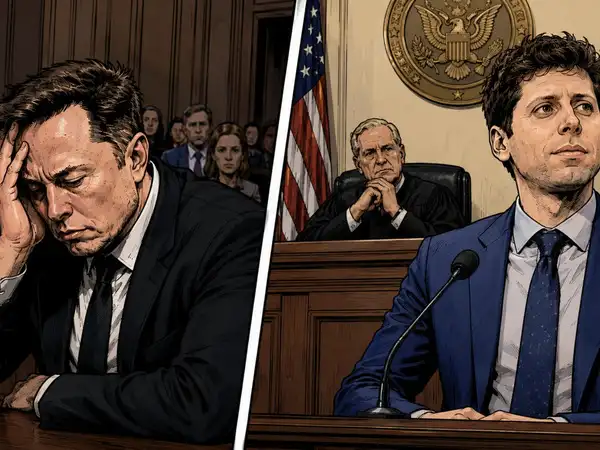
A federal jury in California has ruled in favor of OpenAI in a closely watched legal battle brought by Elon Musk, concluding the lawsuit was filed too late and finding no liability on the part of the artificial intelligence firm.
The unanimous decision, delivered Monday in federal court in Oakland, followed less than two hours of jury deliberation after a three-week trial that examined the company’s evolution from a nonprofit research group into a major commercial player in the artificial intelligence sector.
The verdict removes a significant legal hurdle for OpenAI as it considers a potential public offering that analysts say could value the company at up to $1 trillion.
Musk, an early investor in OpenAI, had alleged that the organization’s leadership—including Chief Executive Sam Altman and President Greg Brockman—deviated from its founding mission to develop artificial intelligence for the benefit of humanity. He argued that the company pivoted toward profit after securing substantial backing from Microsoft and other investors.
OpenAI countered that Musk was aware of its business direction years earlier and failed to act within the legal timeframe required to bring such claims. U.S. District Judge Yvonne Gonzalez Rogers, who presided over the case, indicated there was ample evidence supporting the jury’s conclusion that the statute of limitations had expired.
Following the ruling, Musk signaled plans to appeal, reiterating claims that OpenAI’s leadership enriched themselves at the expense of its original charitable purpose. In posts on his social platform X, he accused executives of exploiting a nonprofit structure for financial gain.
OpenAI’s legal team dismissed the lawsuit as unfounded, characterizing it as an attempt to undermine a rival in the rapidly expanding artificial intelligence market.
The case drew widespread attention not only for its high-profile figures but also for broader questions about how artificial intelligence companies balance public benefit with commercial growth. Testimony during the trial included sharp criticism of leadership credibility on both sides, with attorneys challenging the motives and integrity of key witnesses.
Microsoft, which faced related claims during the proceedings, welcomed the outcome, stating that the timeline and facts had long been clear.
The ruling represents more than a legal victory for OpenAI—it signals judicial reluctance to revisit early-stage governance disputes once companies transition into large-scale commercial enterprises. By focusing on timing rather than substance, the court avoided setting a precedent that could have reshaped how nonprofit-founded tech firms evolve.
For the artificial intelligence industry, the decision reinforces a trend already underway: the blending of public-interest research with profit-driven expansion. OpenAI’s structure—combining nonprofit oversight with a capped-profit model—has been closely watched and, at times, criticized. The outcome of this case may encourage similar hybrid models among emerging tech firms seeking both funding and mission-driven credibility.
At the same time, the trial exposed reputational risks. Allegations raised during testimony, particularly those questioning executive transparency, could linger even as legal obstacles fade. For Sam Altman, maintaining trust among regulators, investors, and the public may prove as critical as any courtroom victory.
Musk’s continued challenge also reflects intensifying competition in the artificial intelligence space. Since leaving OpenAI, he has launched his own venture, positioning himself as both a critic and competitor. The legal dispute underscores how strategic rivalries are shaping the future of advanced technology development.
Ultimately, the verdict clears a path for OpenAI’s next phase, but it does not resolve the broader debate over who should control powerful artificial intelligence systems—and who should benefit from them.
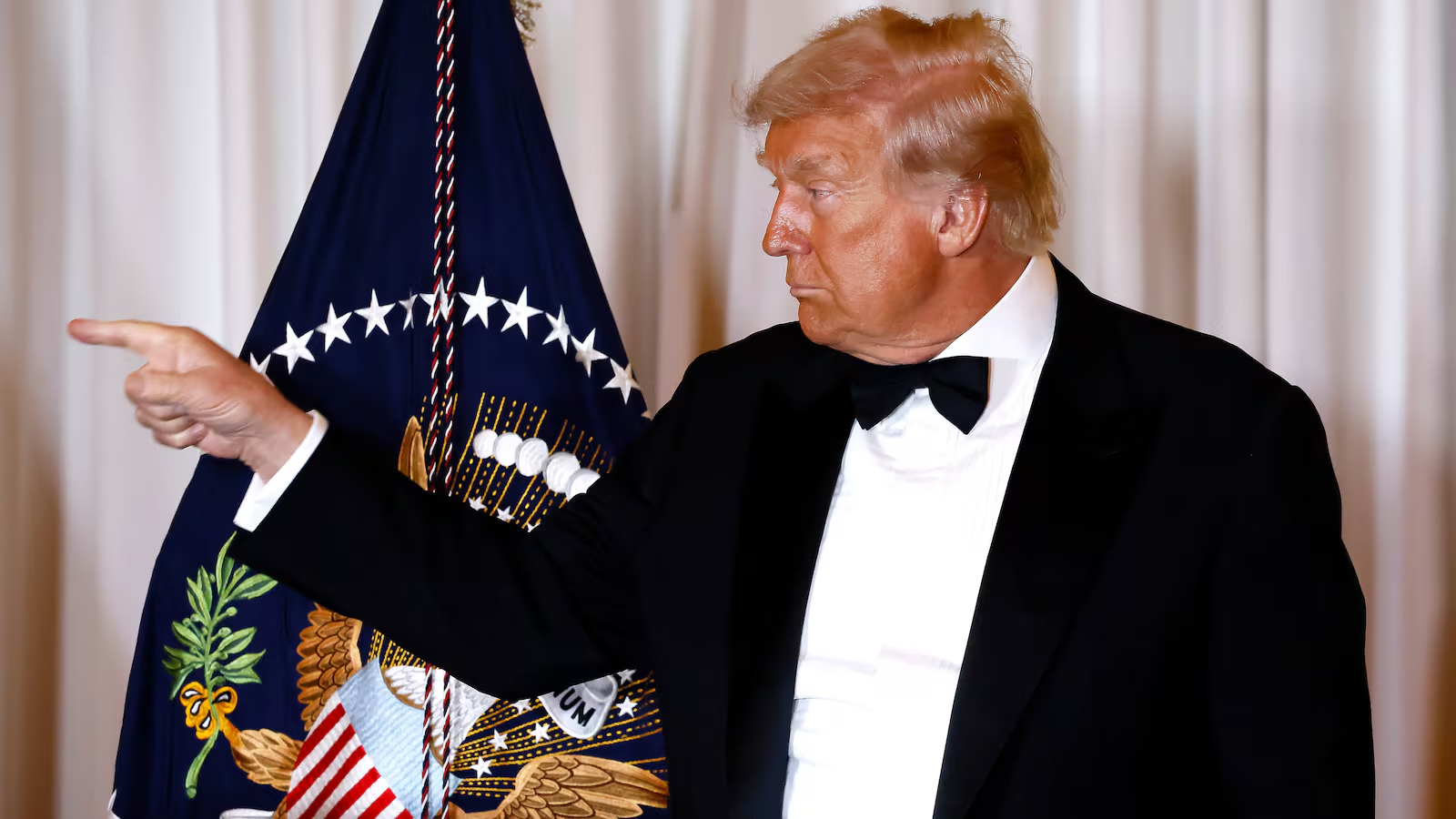
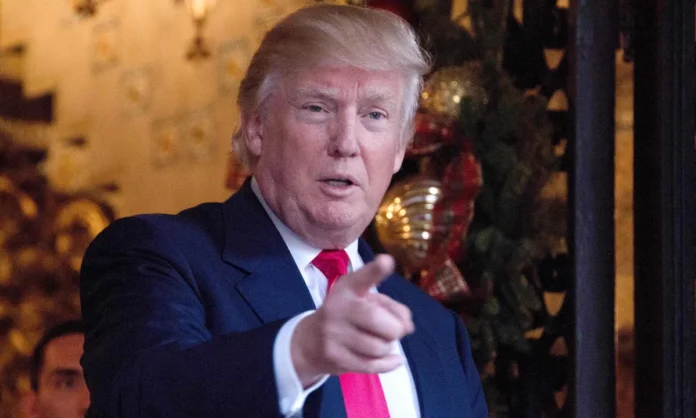
President Donald Trump said Monday he has postponed a planned U.S. military strike on Iran after regional allies requested time for ongoing negotiations that could end the conflict.
Speaking at the White House and in a message posted on Truth Social, Trump said the United States had prepared a large-scale military operation but decided to delay action as diplomatic efforts intensified.
“There seems to be a strong possibility they can reach an understanding,” Trump said. “If that happens without military action, that would be the best outcome.”
He added that leaders from Gulf nations, including Qatar, Saudi Arabia and the United Arab Emirates, urged Washington to allow a short window for talks, expressing confidence that progress was within reach.
Trump indicated the U.S. military remains on standby and could proceed with force if negotiations fail, describing the pause as temporary and dependent on whether an agreement materializes.
The development follows weeks of escalating rhetoric between Washington and Tehran, with Trump repeatedly warning that the fragile ceasefire reached in April could collapse if Iran does not agree to U.S. terms. Just days earlier, he cautioned that time was running out for Iranian leaders to act.
According to Reuters, the president had directed military planners to be ready for immediate action before reversing course to give diplomacy a chance. The proposed strike had not been publicly disclosed prior to his announcement.
Tensions remain high across the region. Iran has effectively restricted movement through the Strait of Hormuz, a key route for global energy shipments, while U.S. forces have increased pressure through maritime operations and enforcement measures.
Oil markets reacted swiftly to Trump’s statement. Prices, which had been rising amid fears of prolonged conflict, dropped immediately after news of the pause before stabilizing later in the day.
Iranian state media portrayed the delay as a sign of weakness, while military officials in Tehran warned that any renewed attack would be met with a strong response.
The White House confirmed that Trump has also discussed the situation with Israeli Prime Minister Benjamin Netanyahu and Chinese President Xi Jinping as part of broader diplomatic engagement.
The decision to delay a planned strike underscores the delicate balance between military pressure and diplomatic opportunity. By signaling readiness for force while pausing action, the administration appears to be leveraging the threat of escalation to push negotiations forward.
Gulf allies’ involvement is particularly significant. Their proximity to Iran and exposure to retaliatory attacks give them strong incentives to avoid open conflict, making their appeal for restraint a key factor in Washington’s decision-making.
At the same time, the repeated pattern of setting deadlines and then extending them may complicate U.S. credibility. While it allows flexibility, it can also create uncertainty about Washington’s red lines and long-term strategy.
The Strait of Hormuz remains a central pressure point. Any disruption there carries global economic consequences, especially for energy markets. The brief drop in oil prices following Trump’s announcement highlights how closely markets are tracking developments.
Negotiations themselves remain fragile. Key disputes, particularly over Iran’s nuclear program and sanctions relief, continue to stall progress. While both sides have signaled openness to dialogue, trust remains limited, and past efforts have repeatedly fallen short.
The coming days will likely determine whether the current pause leads to a breakthrough or simply delays further escalation. For now, the situation remains volatile, with diplomacy and military readiness advancing side by side.
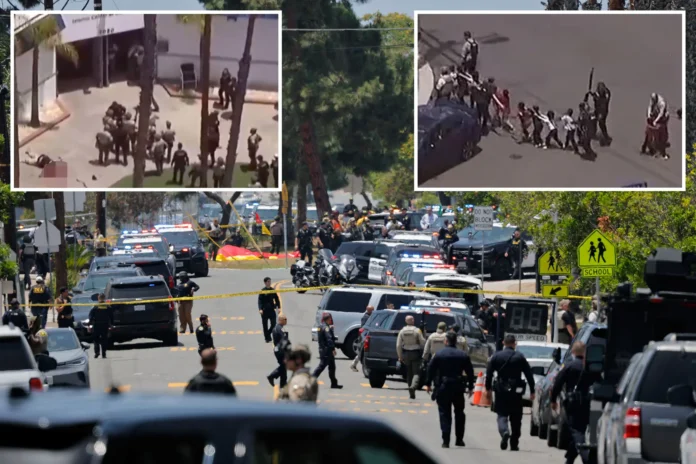
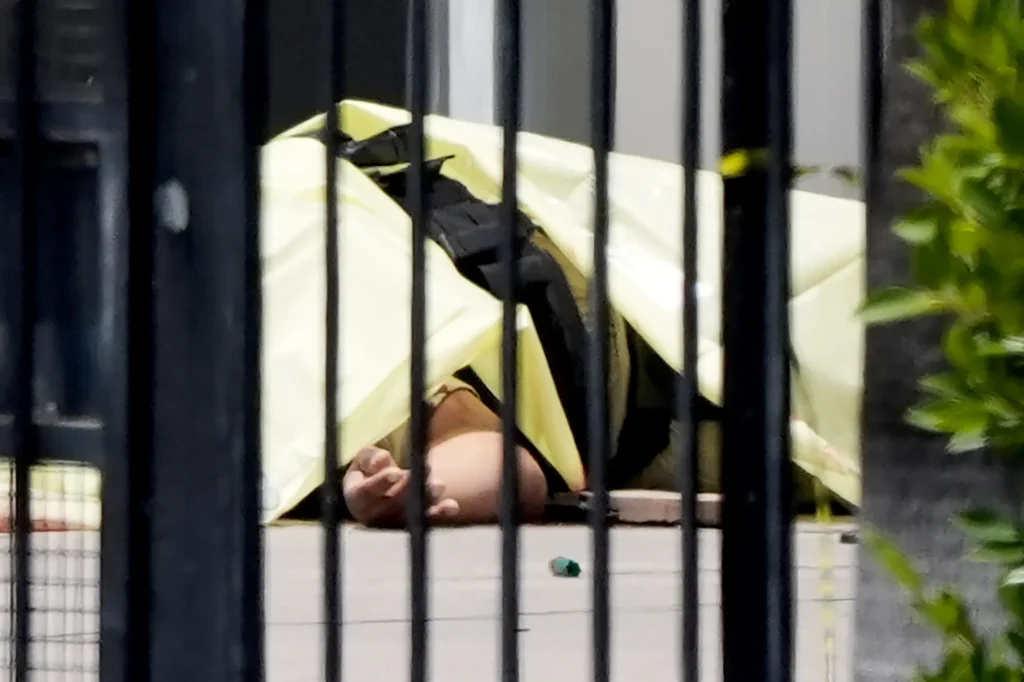
SAN DIEGO — Two teenage gunmen opened fire outside the Islamic Center of San Diego just before noon Monday, killing three men including a mosque security guard before fleeing in a white BMW and turning their weapons on themselves, leaving a city shaken and law enforcement agencies across the country moving to increase patrols at mosques in response to what police called a hate crime.
San Diego Police Chief Scott Wahl identified the dead suspects as a 17-year-old and a 19-year-old. Officers found them in their vehicle, stopped in the middle of a street a few blocks from the mosque, dead from what appeared to be self-inflicted gunshot wounds. The attack lasted less than 10 minutes from the first emergency call to the discovery of the suspects.
Three men were shot and killed outside the Islamic Center on the 7000 block of Eckstrom Avenue in the Clairemont neighborhood. One was identified as Amin Abdullah, a security guard at the mosque. Wahl credited Abdullah with likely limiting the death toll. “He played a pivotal role in assisting — this could have been worse,” a San Diego police officer said at the news conference.
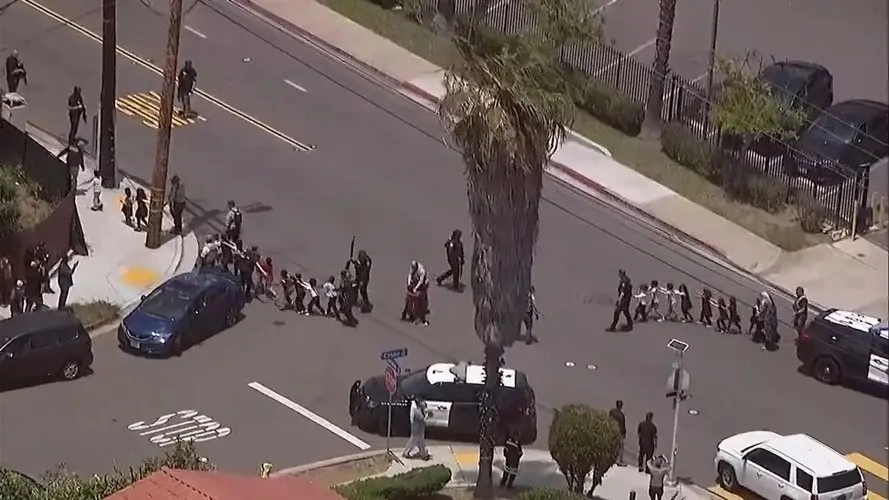
All children attending the Al Rashid School, an elementary school on the mosque’s campus that offers instruction in Arabic language, Islamic studies, and the Quran, were accounted for and safe. Aerial footage from television helicopters showed more than a dozen children holding hands as they were walked out of the parking lot, surrounded by scores of police vehicles.
The FBI was called in to assist with the investigation. Wahl said investigators were still piecing together what precipitated the attack and how the violence unfolded.
The Timeline
At 11:43 a.m., the San Diego Police Department received reports of an active shooter at the Islamic Center. Officers arrived four minutes later and found three adult men shot dead outside the building. They immediately entered the mosque and the adjacent school to search for the gunmen.
At 11:52 a.m., new calls came in from two blocks away on the 7100 block of Salerno Street, where a landscaper had been fired upon. He was not hit. Officers were then directed to the 3800 block of Hatton Street, where they located the white BMW stopped in the road with both suspects dead inside.
At 1:06 p.m., the San Diego Police Department posted on X: “The threat at the Islamic center has been neutralized.”
Between 50 and 100 officers swarmed the building and surrounding neighborhood in the interval between those two timestamps. Law enforcement went door to door through adjacent streets. The mosque’s adult occupants were evacuated. Three nearby schools, the Islamic School of San Diego, Clairemont Canyons Academy, and Kavod Charter School, were placed on alert given their proximity to the scene.
Community Response
Mosque Imam Taha Hassane sent a video to community members confirming that everyone inside was safe. “We are safe, the entire school is safe. All the kids, all the staff, and the teachers are safe and out of the Islamic Center,” Hassane said in the video, which circulated among California’s Muslim community.
San Diego Mayor Todd Gloria posted on X that he was monitoring the situation and receiving updates from law enforcement. “Emergency personnel are on scene and actively working to protect the community and secure the area,” Gloria wrote.
Tazheen Nizam of the Council on American-Islamic Relations San Diego chapter said in a statement that no one should ever have to fear for their safety while attending prayers or studying at an elementary school. “CAIR is working to learn more about this incident and we encourage everyone to keep this community in your prayers,” Nizam said.
CAIR also confirmed in a separate release that school children were inside the building during the attack and that at least one mosque member was killed.
The Islamic Center of San Diego is the largest mosque in San Diego County. It sits in a neighborhood of homes, apartments, and strip malls with Middle Eastern restaurants and markets, and its campus serves both a worshipping community and a school population.
Law Enforcement Response Across the Country
The attack rippled outward almost immediately. Law enforcement agencies in other cities, including the New York Police Department and the Fairfax County Police Department in Virginia, announced they were increasing patrols at mosques as a precautionary measure. The coordinated response reflected a recognition that a targeted hate crime attack on a house of worship carries implications beyond the immediate jurisdiction where it occurred.
Wahl did not provide details at Monday’s news conference about what the investigation had established regarding the suspects’ motivations, saying investigators were still working to reconstruct events. The FBI’s involvement signals the federal government’s entry into a hate crime investigation that could produce federal charges against the suspects’ estates or accomplices if any are identified.
Hate Crime, Children Present, a Guard Who May Have Saved Lives
The San Diego mosque shooting carries several elements that place it among the more disturbing targeted attacks on a religious community in recent American history. The victims were killed outside a house of worship that also housed an elementary school. Children were inside during the attack. The security guard who died at the scene may have engaged or diverted the shooters in a way that prevented the violence from reaching those children.
That last point deserves attention. Amin Abdullah died at his post. Police credited him publicly with likely preventing additional deaths. What the full circumstances of his final moments were remains part of an active investigation. But the chain of events — armed teenagers arriving at a mosque, a security guard present, and fewer than three deaths in a facility that was occupied by dozens of people including children — suggests that Abdullah’s presence and actions mattered in ways that the death toll alone does not capture.
Hate crime attacks on mosques in the United States have increased in frequency over the past decade, tracking a broader rise in religiously motivated violence against Muslim communities. The Council on American-Islamic Relations has documented this trend in annual reports, and the law enforcement response Monday, with agencies across the country immediately moving to increase mosque patrols, reflects an institutional acknowledgment that such attacks create fear and security concerns that extend far beyond the site of any individual incident.
The suspects being teenagers adds a dimension that investigators will now have to examine carefully. What radicalized them, where they obtained their weapons, whether they were acting alone or were influenced by networks online or in person, and whether there were warning signs that were missed or reported and not acted upon are all questions that the FBI’s involvement suggests will be pursued aggressively.
For the community at the Islamic Center of San Diego, Monday’s events leave a wound that will not close quickly. Three men came to their mosque and did not come home. A security guard who showed up to protect his community died doing his job. And hundreds of children who went to school on a Monday morning were walked out of a parking lot holding hands, past police vehicles, past the place where those men fell.
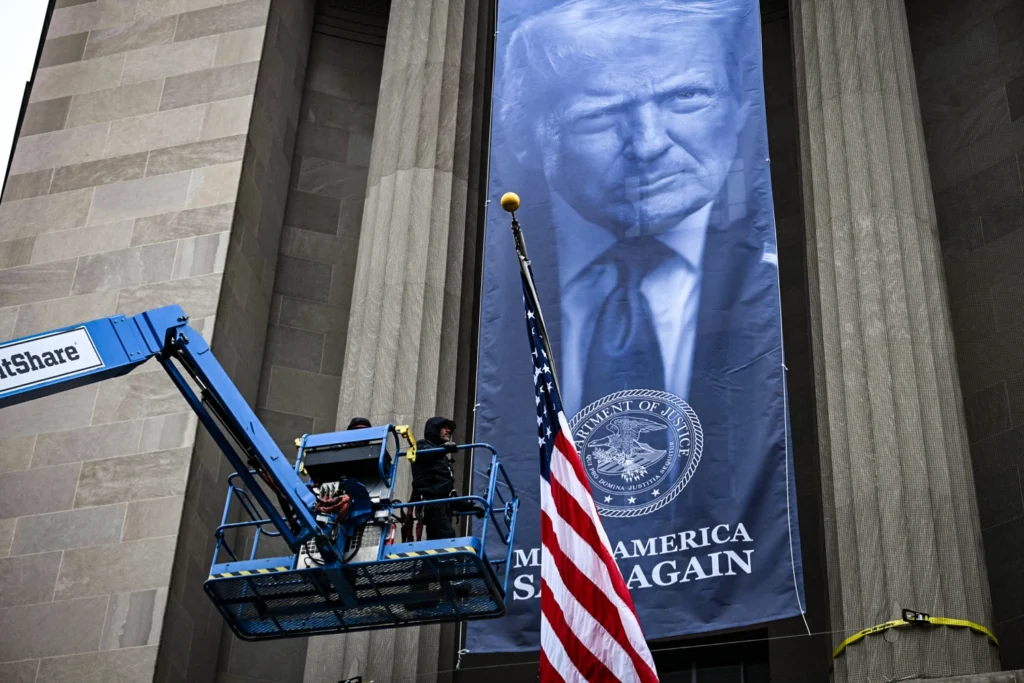
The Trump administration announced Monday it was creating a $1.7 billion taxpayer-funded compensation pool for people who claim they were wrongfully targeted by the Biden administration’s Justice Department, framing the arrangement as a settlement that would resolve President Donald Trump’s lawsuit against the Internal Revenue Service over the leak of his tax returns.
The fund, which the Justice Department named the Anti-Weaponization Fund, would be overseen by a five-member commission with authority to hand out more than a billion dollars with no legal obligation to publicly explain its decisions, identify recipients, or disclose its procedures. Trump would retain the power to remove commission members without cause. The money would be drawn from the Treasury Department’s Judgment Fund, a permanent federal appropriation used to pay court judgments and settlements.
Acting Attorney General Todd Blanche announced the fund in a statement, calling it “a lawful process for victims of lawfare and weaponization to be heard and seek redress.”
Trump’s personal lawyers filed papers the same day in federal court in Florida moving to voluntarily dismiss the president’s $10 billion lawsuit against the IRS. The president, his sons Donald Trump Jr. and Eric Trump, and the Trump Organization had filed the suit in January, alleging the IRS failed to prevent a former contractor from leaking their confidential tax records.
The settlement is also expected to resolve approximately $230 million in legal claims Trump filed related to the 2022 search of his Mar-a-Lago estate and the Russia investigation he faced during his first term, according to sources familiar with the matter who spoke to ABC News. Under the settlement terms, Trump himself is expected to be barred from directly receiving payments related to those three legal claims. Entities associated with Trump are not explicitly prohibited from filing additional claims.
Who Could Get the Money
The potential pool of beneficiaries is broad. The nearly 1,600 individuals charged in connection with the January 6, 2021 attack on the U.S. Capitol could apply, as could anyone alleging they were harmed by what the administration characterizes as the Biden-era weaponization of federal law enforcement. Trump blanket-pardoned the January 6 defendants when he returned to office, and hundreds have since sought financial compensation from the government.
Trump has spoken warmly about that group for years. “They were patriots as far as I was concerned,” he told Newsmax last year. “I talk about them a lot. They were treated very unfairly.”
The fund would also potentially cover individuals caught up in the Trump-Russia investigation, people prosecuted alongside Trump’s aides during his first term, and others who can argue they were targets of politically motivated legal action. The commission’s majority-vote process for awarding money and the identities of those who receive it could be kept entirely private, ABC News confirmed through sources familiar with the arrangement.
The IRS Lawsuit and Its Origins
Trump’s underlying lawsuit grew from the leak of his and the Trump Organization’s tax records between 2018 and 2020. In 2024, former IRS contractor Charles Edward Littlejohn, who worked for the defense technology firm Booz Allen Hamilton, was sentenced to five years in federal prison after pleading guilty to leaking the records to two news organizations. Charging documents did not name the outlets, but the description and timeframe match stories published by the New York Times and ProPublica. The 2020 New York Times investigation found Trump paid $750 in federal income taxes the year he first entered the White House and paid nothing in some prior years, attributing the outcome to colossal reported business losses.
Trump alleged in his lawsuit that the leak caused reputational harm, financial damage, public embarrassment, and unfairly tarnished his business reputation. His sons were named as co-plaintiffs.
The case was heading toward a difficult moment in court. U.S. District Judge Kathleen Williams had questioned in a ruling last month whether Trump and the government defendants, the Treasury Department and IRS, were sufficiently in conflict with each other for the case to legally proceed, given that Trump as president controls both agencies. She had ordered the parties to explain by Wednesday why the case should continue. The voluntary dismissal makes that deadline moot.
Trump’s lawyers argued in the dismissal filing that the court had no need to weigh in because they were withdrawing the case themselves, and that the administration had never formally replied to the underlying suit.
Democrats and Watchdogs React
The backlash was immediate and fierce. Rep. Jamie Raskin, the top Democrat on the House Judiciary Committee, called the fund a racket.
“This case is nothing but a racket designed to take $1.7 billion of taxpayer dollars out of the Treasury and pour it into a huge slush fund for Trump at DOJ to hand out to his private militia of insurrectionists, rioters, and white supremacists, including those who brutally beat police officers on January 6, 2021, and sycophant accomplices to his election stealing schemes,” Raskin said in a statement.
Skye Perryman, president and CEO of Democracy Forward, an advocacy group that had filed a friend-of-the-court brief challenging the lawsuit, called the resolution a sham. “This case was always a sham, and another ploy by the President to access taxpayer funds to line his pockets,” Perryman said, pledging to continue fighting the settlement.
A group of 93 members of Congress filed a legal brief flagging their intent to challenge the arrangement. A coalition of outside legal experts had previously written to the court warning that the case presented significant constitutional concerns about whether a sitting president could sue a federal agency he controls for damages to his personal interests.
“This case is unprecedented: A sitting president seeks monetary damages for alleged harm to his personal interests from an executive agency that he controls,” the legal experts wrote, adding that the court should examine whether settlement discussions were conducted at arm’s length and free from risk of collusion.
Trump’s lawyers countered that the voluntary dismissal rendered those concerns irrelevant.
The Broader Retribution Campaign
The Anti-Weaponization Fund fits within a pattern that has defined the second Trump administration’s approach to the Justice Department from its first weeks. Trump pardoned or commuted the sentences of January 6 defendants on his first day back in office. His Justice Department has since approved payouts to individuals caught up in the Trump-Russia investigation and has opened investigations and brought criminal charges against people Trump considers political opponents.
The administration has run a so-called Weaponization Working Group within the Justice Department for the past year, examining what it describes as anti-conservative and anti-Christian bias in the federal law enforcement and intelligence communities during the Biden years. Former Biden administration officials have consistently denied those characterizations. Merrick Garland, who served as Biden’s attorney general, repeatedly said his decisions followed facts, evidence, and law, and noted that his department also investigated Biden over classified documents and prosecuted Biden’s son Hunter on tax and gun charges.
No charges have been brought through the Weaponization Working Group investigation and it remains unclear whether any will be.
Trump himself acknowledged the unusual optics of the arrangement in a conversation last year. “It’s interesting because I’m the one that makes a decision, right, and that decision would have to go across my desk,” he said in the Oval Office. “It’s awfully strange to make a decision where I’m paying myself.”
When asked in February how potential damages from the IRS lawsuit might be handled, he suggested the money could go to charity. “We could make it a substantial amount,” he said at the time. “Nobody would care because it’s going to go to numerous very good charities.” The compensation fund announced Monday does not direct the money to charities.
A Fund Without Precedent or Oversight
The Anti-Weaponization Fund is difficult to place within any established category of American legal or governmental practice. It shares surface features with victim compensation funds set up after disasters like the Deepwater Horizon oil spill, which paid provable claims through a structured administrative process with defined eligibility criteria. It has been compared to truth and reconciliation commissions that governments have used in the aftermath of apartheid in South Africa and the Canadian residential school system.
Neither comparison holds. The Deepwater Horizon fund paid people who could demonstrate measurable economic harm from an industrial disaster. The proposed commission would pay people who claim political persecution, under standards the commission itself defines, through a process it is not required to explain, to recipients it is not required to name. The president whose allies stand to benefit retains removal power over the people making those decisions.
The constitutional dimension that Judge Williams identified is not resolved by dismissing the case. It is embedded in the fund itself. A president directing taxpayer money through a commission he controls, to compensate people he has already characterized as patriots and victims, toward purposes his own administration defines, is an arrangement that exists outside any established framework of government accountability. Congress appropriated no money for this fund. No legislation authorized it. The Judgment Fund from which it would draw was created to pay adjudicated claims, not to pre-fund politically defined compensation pools at presidential direction.
Democrats have vowed to fight it. Watchdog groups have pledged legal challenges. Ninety-three members of Congress have filed briefs signaling opposition. Whether any of those challenges succeed, and through what mechanism, is the central legal question the announcement Monday opened rather than closed.
What is already clear is that the administration’s willingness to use the full machinery of the executive branch to reward political allies and settle personal grievances has reached a new threshold. The IRS lawsuit was always unusual. Resolving it with a $1.7 billion taxpayer-funded compensation commission that the president controls is something else entirely.
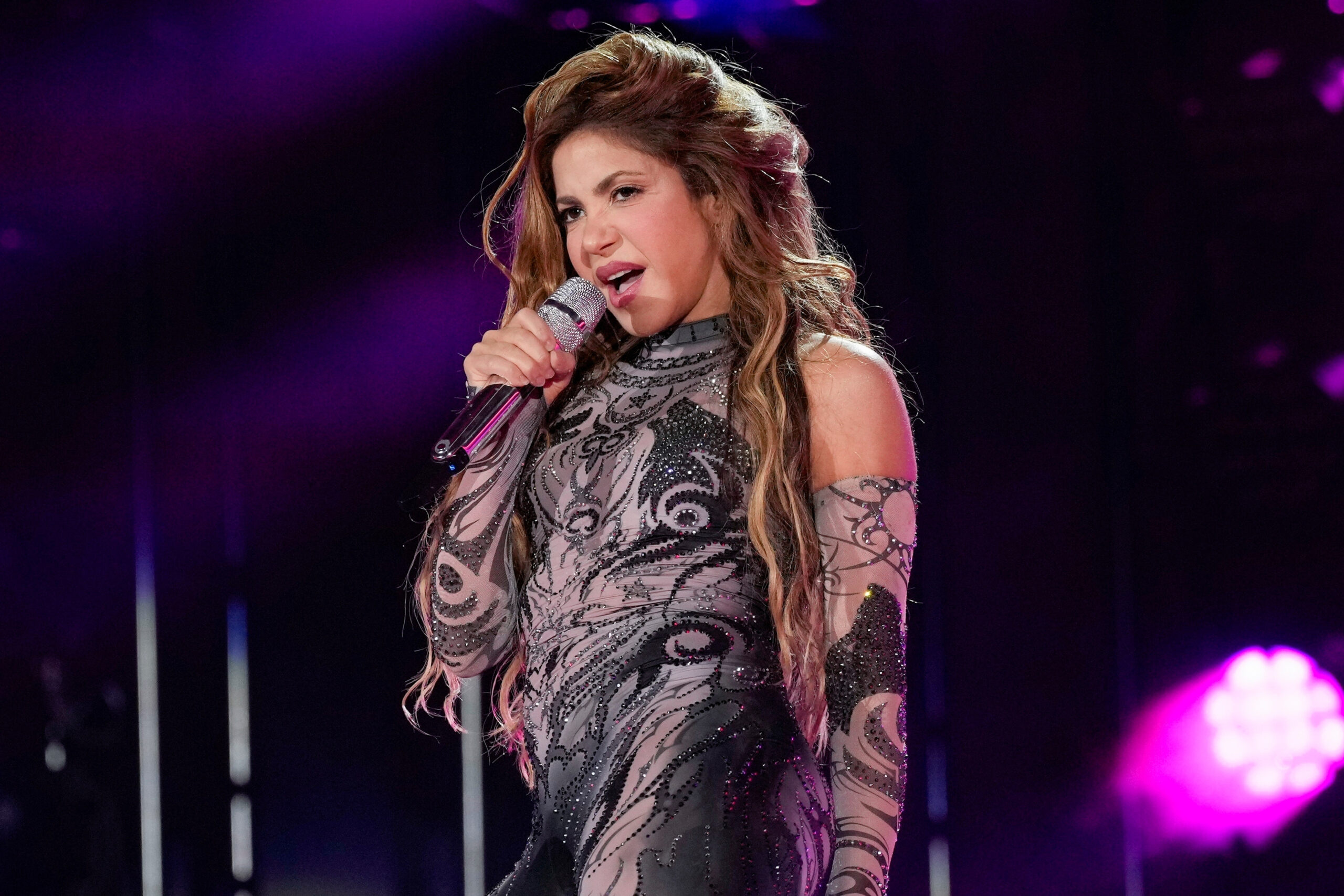
FILE - Shakira performs during the Global Citizen Festival in New York on Sept. 27, 2025. (Photo by Charles Sykes/Invision/AP, File)
A high court in Spain has cleared Colombian music star Shakira of tax fraud linked to the 2011 fiscal year, overturning a multimillion-euro penalty and directing authorities to return funds collected from the singer, court filings reviewed by Reuters and The Associated Press show.
The ruling from the Madrid-based High Court found that tax officials failed to establish that Shakira met the legal threshold required to be classified as a tax resident in Spain that year. Under Spanish law, individuals must spend more than 183 days in the country to be liable for full tax obligations. Judges determined that authorities could only verify her presence for 163 days.
FILE – Shakira performs during the Global Citizen Festival in New York on Sept. 27, 2025. (Photo by Charles Sykes/Invision/AP, File)
As a result, the court voided a fine originally set at more than 55 million euros and instructed Spain’s Treasury to reimburse over 60 million euros, including accrued interest, according to a statement issued by Shakira’s legal team.
The dispute centered on whether the singer’s personal and professional ties—particularly her relationship at the time with former Gerard Pique—amounted to a primary base of operations in Spain. Tax authorities had argued that her activities were sufficiently anchored in the country to justify residency status. The court rejected that position, concluding the claim lacked adequate proof.
The judgment applies strictly to the 2011 tax year and may still be challenged before Spain’s Supreme Court. It does not affect separate proceedings tied to later years.
In a statement, Shakira’s attorney, Jose Luis Prada, described the outcome as the end of a prolonged legal battle that placed significant strain on his client, pointing to what he called shortcomings in administrative handling of the case. The singer, quoted in the same statement, expressed hope that the decision would serve as a broader example for individuals facing similar disputes with tax authorities.
The case forms part of a wider crackdown by Spanish officials over the past decade targeting high-profile figures in sports and entertainment. Players such as Lionel Messi and Cristiano Ronaldo were previously found guilty in separate tax cases, though both avoided prison sentences under provisions for first-time offenders.
Separately, Shakira reached an agreement with prosecutors in November 2023 to resolve allegations tied to unpaid taxes between 2012 and 2014. She accepted responsibility in that case and paid a fine exceeding 7.3 million euros to avoid trial proceedings in Barcelona.
The court’s decision marks a significant moment in Spain’s aggressive enforcement of tax compliance among global celebrities. While authorities have secured convictions in several high-profile cases, this ruling underscores the legal limits of pursuing residency-based claims without clear evidence of physical presence.
The distinction is crucial. Spain’s tax framework relies heavily on the 183-day rule, and the court’s emphasis on verifiable time spent in the country reinforces the importance of measurable criteria over circumstantial ties such as relationships or business activity.
For Shakira, the outcome offers partial vindication after years of legal scrutiny. However, her earlier settlement over subsequent tax years complicates the broader narrative, highlighting how high-income individuals with international lifestyles often face overlapping legal challenges across different jurisdictions.
The case may also influence future enforcement strategies. Authorities could face greater pressure to strengthen documentation and avoid reliance on indirect indicators of residency. At the same time, the ruling may embolden other defendants to contest similar claims rather than pursue settlements.
Beyond Spain, the decision reflects a growing global tension between tax authorities and internationally mobile earners. As governments tighten oversight, disputes over residency, income allocation, and jurisdiction are likely to become more frequent and more complex.
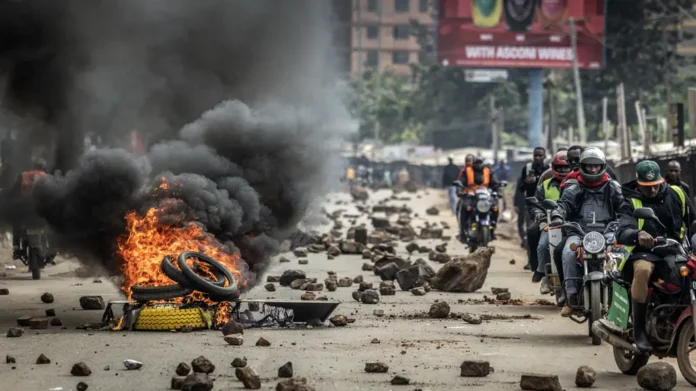
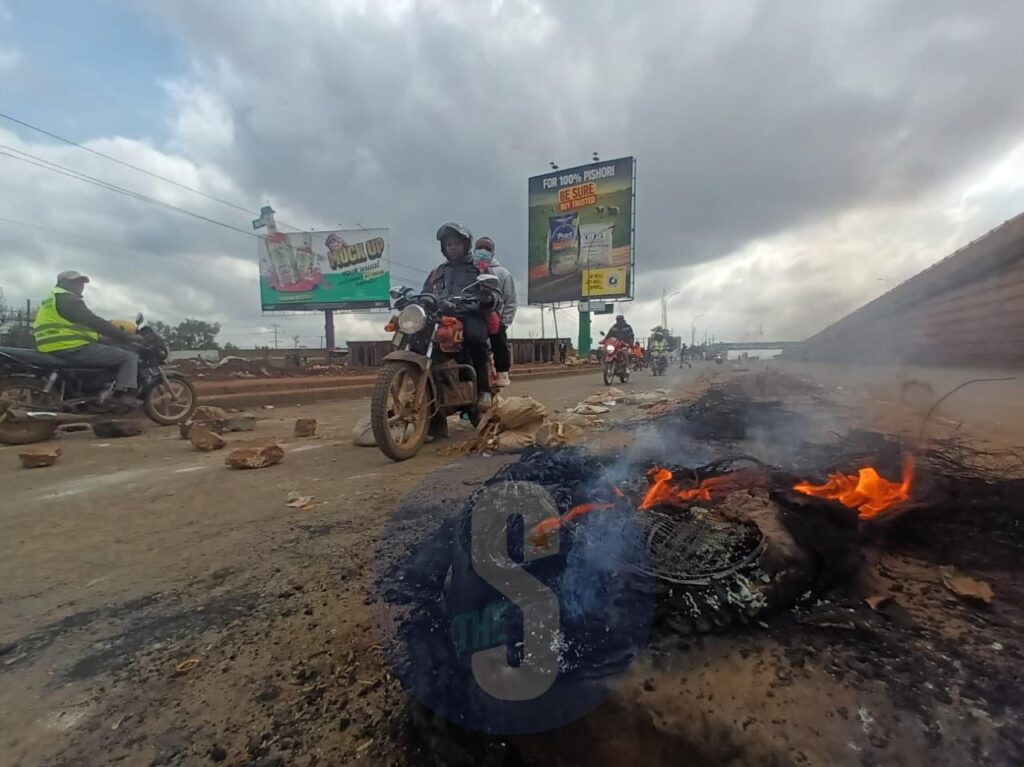
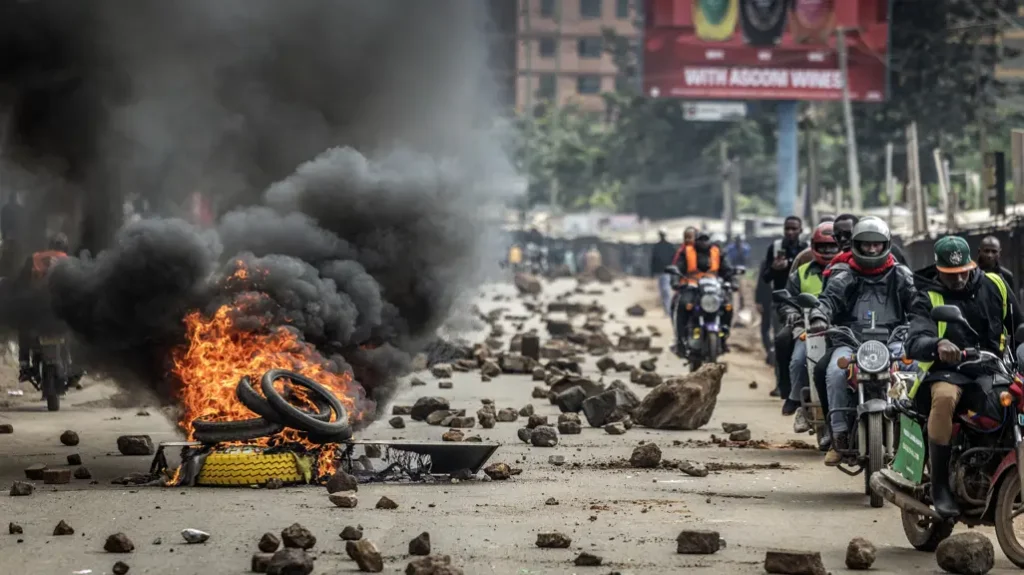
NAIROBI, Kenya — Fires burned on major roads, a car was set ablaze in traffic, guardrails were torn from highways, and hundreds of young protesters blocked streets across Kenya on Monday as a nationwide public transport strike over record fuel prices paralyzed Nairobi and other major cities, stranding thousands of commuters and forcing most businesses to shut their doors from dawn.
The Transport Sector Alliance had announced the strike Sunday evening, giving Kenyans overnight notice that matatus, buses, and other public service vehicles would not operate in protest of fuel price increases the government’s energy regulator imposed the previous Friday. The increases were steep. Diesel rose by 23.5 percent. Petrol climbed 8 percent. In Nairobi, a liter of petrol now costs 214.25 shillings. Diesel stands at 242.92 shillings per liter — levels that transport operators said had pushed their businesses to the breaking point.
By daybreak Monday, the streets told the story. Nairobi’s city center was largely deserted. Private motorists stayed home rather than navigate roads blocked by burning tires and stone barricades. Schools assessed the safety situation and most shifted to online learning, following guidance from the Kenya Association of Private Schools. Commuters in major suburbs faced the choice between walking long distances or paying sharply inflated fares from the handful of vehicles that did operate.
In Kitengela, a busy township in Kajiado county on the southern edge of Nairobi, the shutdown was total. Not a single shop, office, or business opened its doors Monday morning, The Star confirmed from the ground. Hundreds of young people sat in the road or camped in front of supermarkets and shops along Namanga Road, where protesters pulled down billboards and tore out guardrails. Police officers maintained their position without engaging the crowd despite being subjected to insults and taunts. There were no running battles in Kitengela as of the morning hours.
The situation was less contained elsewhere. On Thika Superhighway around Roysambu, youth protesters erected roadblocks using stones and burning tires, forcing motorists to reverse and find alternate routes. A black Mazda was set on fire in the middle of the road in Githurai, thick smoke rising above one of Nairobi’s busiest corridors as stunned commuters looked on. The circumstances that led to the burning car were not immediately established, and police had not confirmed by press time whether it was deliberately torched or caught in the surrounding disorder. No casualties from the vehicle fire were officially reported.
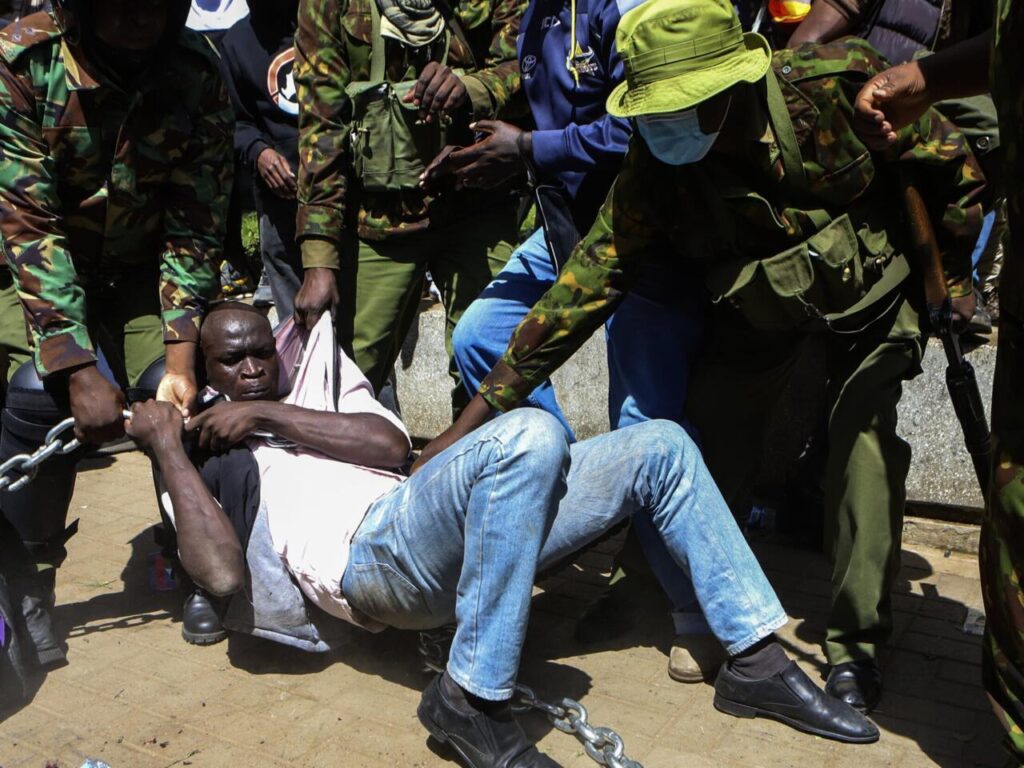
Running confrontations between demonstrators and police broke out in sections of Thika Road and along the Nairobi-Namanga Highway. The National Police Service had assured Kenyans of their safety early Monday and warned that disruptive conduct would be dealt with firmly under the law. The assurance did not calm the streets.
Transport stakeholders directed their anger specifically at the government and the Energy and Petroleum Regulatory Authority, known as EPRA, which sets Kenya’s fuel prices. Operators argued the government had ignored their repeated warnings that rising operational costs were making public transport unviable, and that the latest price adjustment was the tipping point many had been dreading.
The Numbers Behind the Anger
The Kenya National Chamber of Commerce and Industry put the fuel increase in stark perspective Friday when the new prices were announced. While global crude oil prices rose by roughly 10.7 percent between April and May, Kenya’s diesel price rose by 23.5 percent over the same period. The chamber pointed to domestic cost buildup as the primary driver of the gap between international oil prices and what Kenyans pay at the pump.
“The April-May comparison shows that while global crude oil prices increased by about 10.7%, Kenya’s diesel price rose by 23.5% over the same period. This points to the continued role of domestic cost buildup,” the chamber said in a statement.
President William Ruto was out of the country and had not commented on the new prices as of Monday. In the previous price review cycle in April, Ruto attributed fuel cost increases to the Iran war and reduced taxes to cushion the impact. No similar relief accompanied Friday’s announcement.
Former Deputy President Rigathi Gachagua, who was impeached and has since aligned himself with the political opposition, attributed the sharp increase to corruption and profit-seeking by fuel business interests rather than external cost pressures alone. He pointed to neighboring Uganda, a landlocked country that imports fuel through Kenyan ports, as evidence that lower prices were achievable. Uganda, despite paying transport costs to reach Mombasa and then road freight to its interior, is retailing fuel at prices below what Kenyans pay in Nairobi.
Kenya sits at the center of East Africa’s import supply chain. Its port of Mombasa is the primary entry point for goods reaching Uganda, Rwanda, eastern Congo, and South Sudan. When Kenyan fuel prices rise, the effect cascades across the region. When Kenyan transport operators go on strike, that regional supply chain locks up with them.
Kisumu and the Broader National Picture
The disruption was not limited to Nairobi. In Kisumu, Kenya’s third-largest city on the shores of Lake Victoria, a tense calm settled over the usually busy main bus terminus, which operated at a fraction of its normal capacity. Buses and matatus heading to western Kenya were largely absent from their usual stops. Passengers who needed to travel paid sharply higher fares to the limited vehicles that did operate, absorbing the cost of a crisis not of their making.
The pattern in Kisumu mirrored what played out in city after city across Kenya on Monday: nearly empty streets where normally packed public transport routes operate, passengers walking distances measured in kilometers, and an economic stillness that cost the country in ways that will be visible in business receipts and supply disruptions for days after the strike ends.
Fuel Prices as the Fuse Kenya Cannot Keep Defusing
Kenya has been through versions of this before. Fuel price protests are not new. Transport strikes are not new. But the combination of factors at play Monday carries a specific weight that distinguishes it from earlier cycles.
The Iran war has sent global oil prices higher and given the Kenyan government a ready external explanation for domestic price increases. But the chamber of commerce’s data cuts through that framing with precision. A 10.7 percent rise in global crude prices does not explain a 23.5 percent rise in Kenyan diesel prices. The difference lives in domestic policy choices, taxation, and what the chamber called cost buildup within the supply chain. Ruto’s government chose not to absorb those costs this time.
That choice landed on a population already squeezed by two years of cost-of-living pressure that stretches from food prices to utility bills to school fees. The fuel increase was not the only hardship Kenyans have been carrying. It was the one that finally hit the road in the most literal sense.
Gachagua’s intervention is also worth reading in context. His comparison to Ugandan fuel prices is politically pointed but substantively relevant. If landlocked Uganda, paying for sea freight to Mombasa and then road transport north, can retail fuel more cheaply than Nairobi does, the argument that global oil prices explain Kenya’s pump prices becomes harder to sustain in public debate.
What Monday demonstrated most clearly is that Kenya’s fuel pricing structure has accumulated enough public grievance to put thousands of people on the streets with very little notice. The Transport Sector Alliance announced the strike on a Sunday evening. By Monday morning, the country’s transport network was functionally paralyzed and guardrails were being pulled off highways.
President Ruto will return from travel to a set of choices that have no comfortable option. Reversing the price increase would cost the government revenue it has already committed. Sustaining it risks further protests in a country that has shown in recent years that street pressure can move policy faster than the legislative calendar. Finding a middle path between fiscal necessity and public anger is the governing challenge every Kenyan administration faces when fuel prices spike. This one is no exception.
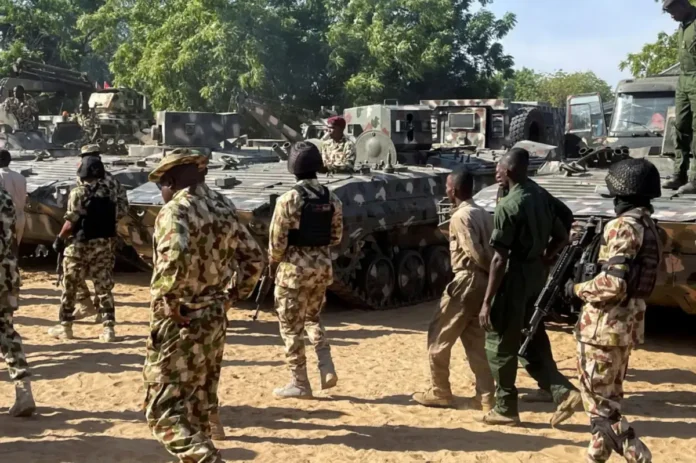
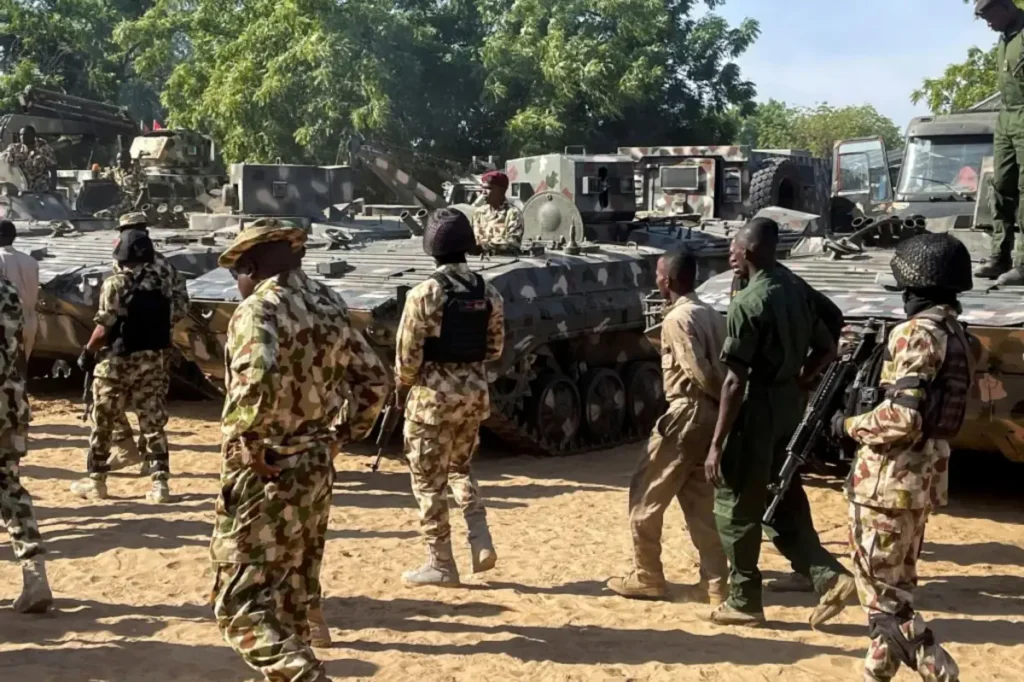
At least 17 police trainees were killed after armed militants stormed a military training facility in northeastern Nigeria, authorities said, in one of the deadliest recent assaults targeting security institutions in the region.
The attack occurred Friday at the Nigerian Army Special Forces School in Buni Yadi, located in Yobe State. Police spokesperson Anthony Okon Placid said the victims were officers undergoing specialized training when gunmen launched a coordinated assault from multiple directions.
Placid said several soldiers were also killed during the raid, though he did not provide a confirmed number. The Nigerian military has not issued an immediate response.
The strike highlights the persistent threat posed by militant groups operating in the northeast, where violence has continued for more than a decade. The conflict began in 2009 with the uprising of Boko Haram, which later fractured into rival factions, including the Islamic State West Africa Province.
The attack comes as regional and international forces intensify operations against armed groups. U.S. President Donald Trump and Nigerian President Bola Ahmed Tinubu both confirmed that a senior militant leader was killed in a separate joint operation in the Lake Chad Basin earlier Saturday.
Officials identified the slain figure as a senior commander linked to the Islamic State affiliate active in West Africa, underscoring the ongoing effort to weaken leadership structures within the group.
Nigeria has established specialized training centers such as the Buni Yadi facility to strengthen its response to insurgency threats. However, the latest attack raises concerns about the vulnerability of even fortified institutions tasked with preparing security personnel.
The assault on a military training school signals a strategic shift by militant groups, which are increasingly targeting not only civilian populations but also the infrastructure used to build state security capacity. By striking trainees, attackers may be attempting to disrupt recruitment pipelines and weaken morale among security forces.
The timing is also notable. The attack coincided with the reported killing of a senior militant leader, suggesting a possible retaliatory motive or an effort to demonstrate continued operational capability despite leadership losses.
While Nigeria has recorded tactical successes through joint operations with international partners, the persistence of large-scale attacks indicates that militant networks remain resilient. Their ability to coordinate multi-directional assaults on secured facilities points to ongoing gaps in intelligence and perimeter defense.
The broader implication is that Nigeria’s security crisis remains deeply entrenched. Even as high-profile targets are eliminated, the underlying conditions that sustain insurgency—such as remote terrain, limited state presence, and fragmented armed groups—continue to allow violence to persist.
For residents in the northeast, the attack reinforces a grim reality: progress against militant groups remains uneven, and the threat to both civilians and security personnel is far from over
President Donald Trump issued a stark warning to Tehran on Sunday, declaring that time is running out for its leadership to reach an agreement with the United States following a call with Israeli Prime Minister Benjamin Netanyahu.
In a message posted on Truth Social, Trump said Iran must act quickly or face serious consequences, emphasizing that negotiations cannot drag on indefinitely. He later reinforced the warning in remarks to French media, cautioning that failure to strike a deal would lead to what he described as severe repercussions.
The warning came after a phone conversation between Trump and Netanyahu, who was meeting with his security cabinet to review ongoing tensions in the region, Israeli media outlets indicated.
According to The Hill, the president’s remarks reflect growing frustration within the administration as talks between Washington and Tehran remain stalled. Trump recently rejected Iran’s latest response to a U.S. proposal, describing it as unacceptable after Iranian officials sought to separate nuclear discussions from broader peace negotiations.
Throughout the current standoff, Trump has repeatedly called on Iran to abandon its nuclear enrichment efforts. He has also suggested that Tehran’s negotiating position has weakened following sustained pressure on its military infrastructure.
The Associated Press and other outlets have reported that diplomatic efforts have struggled to gain traction, with a fragile ceasefire described by Trump as being in a precarious state after it was extended last month.
The president also referenced his recent discussions with Xi Jinping, noting that China had offered assistance in resolving the conflict. Trump indicated he declined the offer, suggesting that outside involvement often comes with conditions.
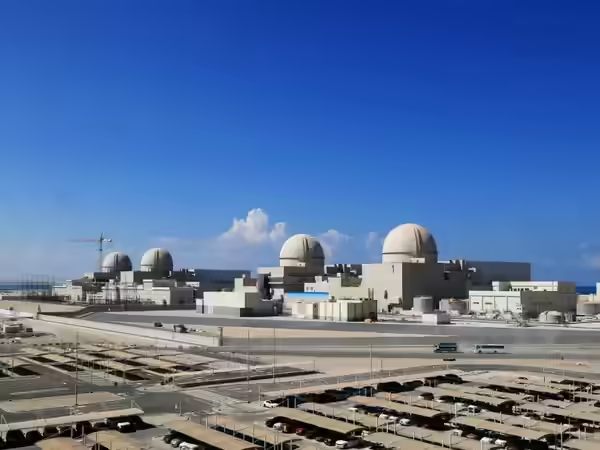
Separately, regional tensions were underscored by a drone-related incident that caused a fire at the Barakah nuclear power facility in Abu Dhabi. Authorities confirmed there were no injuries and that safety systems remained intact.
Trump’s latest remarks signal a sharper tone at a time when diplomatic channels appear increasingly strained. By framing the situation as urgent, the administration may be attempting to pressure Iran into concessions, particularly on nuclear issues that remain central to the dispute.
The involvement of Israel adds another layer of complexity. Netanyahu’s government has long taken a hard line on Iran’s nuclear ambitions, and coordination between Washington and Jerusalem suggests a unified front, at least publicly.
At the same time, the stalled negotiations highlight deeper challenges. Iran’s insistence on separating nuclear talks from broader political agreements reflects a strategic effort to narrow the scope of concessions, while the United States continues to push for a more comprehensive framework.
The rejection of China’s potential role also points to broader geopolitical competition. While Beijing has positioned itself as a possible mediator in global conflicts, Washington’s reluctance underscores concerns about influence and leverage in any negotiated outcome.
The situation remains fluid, with the risk of escalation still present. While both sides continue to signal openness to dialogue, the increasingly forceful rhetoric suggests that the window for a diplomatic resolution may be narrowing.
A drone pierced the air defenses surrounding the Arab world’s only nuclear power plant on Sunday and started a fire on its outer grounds, while Saudi Arabia intercepted three separate drones that crossed from Iraqi airspace, as the diplomatic standoff between the United States and Iran hardened into something that looked increasingly like the prelude to renewed war.
The strike on the Barakah Nuclear Power Plant in the UAE caused no injuries and released no radioactive material, Emirati officials confirmed. The drone hit an electrical generator outside the plant’s inner perimeter. The UAE’s Federal Authority for Nuclear Regulation said all units continued operating normally. The International Atomic Energy Agency said emergency diesel generators were supplying power to one reactor and called for maximum military restraint near any nuclear facility, adding that it was monitoring the situation closely.
UAE authorities said they were investigating the source of the strike, which the Abu Dhabi Media Office characterized as an unprovoked terrorist attack. Two other drones were intercepted before reaching the plant. The UAE defense ministry said all three had been launched from its western border but did not elaborate on their origin.
Anwar Gargash, a diplomatic adviser to the UAE president, framed the attack in terms that left little ambiguity about where suspicion pointed. The strike, he said on social media, “whether carried out by the principal actor or through one of its proxies, represents a dangerous escalation.”
Saudi Arabia condemned the Barakah strike and separately confirmed its forces had intercepted three drones entering from Iraqi airspace. Iran and allied militia groups based in Iraq have been launching drone attacks on Gulf Arab states throughout the war that began with U.S. and Israeli strikes on Iran on February 28.
Trump’s Warning, Israel’s Preparations
Within hours of the Barakah attack, President Donald Trump posted a blunt threat on Truth Social shortly after a call with Israeli Prime Minister Benjamin Netanyahu. “For Iran, the Clock is Ticking, and they better get moving, FAST, or there won’t be anything left of them. TIME IS OF THE ESSENCE!” Trump wrote.
Trump is expected to meet with senior national security advisers Tuesday to review military options against Iran, Axios reported. He has previously threatened to resume attacks if Iran refuses a deal and has set and then retreated from multiple deadlines throughout the conflict. Whether this one is different is a question his own officials have not answered publicly.
Two people familiar with the situation, including an Israeli military officer, told the Associated Press that Israel was actively coordinating with the United States on a possible resumption of strikes. Both spoke anonymously because they were discussing confidential military planning. Netanyahu, addressing his Cabinet Sunday, said Israel’s eyes were open regarding Iran. “We are prepared for any scenario,” he said.
Iranian state television offered its own image of where the country’s mood stood. On at least two channels, presenters appeared on air while armed. On one, a host named Hossein Hosseini received basic firearms training from a masked member of the Revolutionary Guard during a live broadcast and mimed firing toward a UAE flag. On another channel, host Mobina Nasiri said a weapon had been sent to her from a public gathering in Tehran. “From this platform, I declare that I am ready to sacrifice my life for this country,” she said.
Mohsen Rezaei, a military adviser to Iran’s supreme leader, said on state television: “Our armed forces’ fingers are on the trigger, while diplomacy is also continuing.”
A Deadlock With No Exit
The drone attack landed in a diplomatic environment that has produced no meaningful progress since a ceasefire took effect in April. More than five weeks have passed without the two sides closing the gap between their core positions.
Washington is demanding Iran dismantle its nuclear program and release its grip on the Strait of Hormuz. Tehran is demanding compensation for war damage, termination of the U.S. naval blockade of Iranian ports, and a halt to fighting across all fronts including Lebanon, where Israel continues battling the Iran-backed militant group Hezbollah despite a nominal ceasefire there. Israel and Lebanon agreed Friday to a 45-day extension of that ceasefire, though clashes have continued regardless.
Trump held talks with Chinese President Xi Jinping earlier in the week without securing any commitment from Beijing to help broker a resolution. Iranian Foreign Ministry spokesperson Esmaeil Baqaei said Sunday that the United States and Israel had tried to blame others for destabilizing global energy markets after what he called their unprovoked military aggression against Iran.
Ebrahim Azizi, who chairs the Iranian parliament’s national security committee, said Saturday that Tehran had developed a mechanism to manage traffic through the Strait of Hormuz along a designated corridor and planned to announce the details soon. That statement, if implemented, would further formalize Iranian control over the waterway and deepen the legal and operational conflict with Washington over who holds authority in the strait.
The U.S. naval blockade of Iranian ports remained in effect Sunday. American forces said they had redirected 81 commercial vessels and disabled four since the blockade began.
The Barakah Plant and What It Represents
The $20 billion Barakah Nuclear Power Plant was built with South Korean assistance and went online in 2020. It is the only nuclear power plant in the Arab world and can supply approximately a quarter of the UAE’s total energy needs. The facility sits in the emirate of Abu Dhabi and represents the most significant piece of civilian energy infrastructure in a country that has positioned itself as a model for non-weapons nuclear energy development in the region.
Unlike Iran’s nuclear program, which has enriched uranium close to weapons-grade levels and has long been the subject of international proliferation concerns, the UAE’s program operates under a strict agreement with the United States known as a 123 agreement. Under its terms, the UAE agreed to forgo domestic uranium enrichment and reprocessing of spent fuel entirely. Its uranium comes from abroad. The agreement was designed specifically to preclude the kind of ambiguity that surrounds Iran’s nuclear activities.
The IAEA said the Sunday strike caused a fire in an electrical generator at unit 3, which was subsequently powered by emergency diesel generators. The agency confirmed no radiological release occurred. It was the first confirmed strike on the four-reactor facility during the current war. Yemen’s Houthi rebel movement claimed in 2017 to have targeted the plant while it was under construction, a claim Abu Dhabi denied.
The targeting of nuclear facilities in warfare has become more common in recent years. Russia has repeatedly struck near Ukraine’s nuclear infrastructure since its 2022 invasion. Iran has claimed its own Bushehr nuclear power plant came under attack during the war, though no direct damage to its Russian-operated reactor or any radioactive release was confirmed.
The strike on Barakah crossed a threshold that both military planners and international law have long treated as categorically distinct from other forms of infrastructure targeting. Nuclear power plants present a specific category of risk that conventional military logic does not fully capture. A direct hit on a reactor, a cooling system failure caused by sustained attack on electrical infrastructure, or a radiological release triggered by secondary explosion near nuclear material represents a consequence that cannot be undone and cannot be contained within the borders of the country being targeted.
The IAEA’s call for maximum military restraint was measured in tone but urgent in implication. The agency does not issue that kind of appeal casually. It does so when it calculates that the trajectory of events near nuclear facilities has reached a point where a catastrophic accident becomes a realistic possibility rather than a distant theoretical risk.
The UAE’s 123 agreement with the United States is relevant beyond its nonproliferation purpose. It creates a specific American interest in the security of Barakah that goes beyond the UAE’s sovereignty. If a nuclear facility built under U.S. civilian nuclear cooperation terms is attacked and damaged in ways that cause radiological harm, the legal, reputational, and strategic consequences for American policy across the entire global civilian nuclear enterprise are severe.
Whether Iran directed Sunday’s strike, tolerated it from a proxy, or had no operational knowledge of it in advance will shape what follows. Gargash’s framing — “whether carried out by the principal actor or through one of its proxies” — was careful, but its meaning was clear. The UAE holds Iran responsible regardless of which hand held the controller.
Trump’s Tuesday meeting with national security advisers will be closely watched. He has threatened and retreated before. But the combination of a drone reaching a nuclear power plant, Iranian state television hosts brandishing weapons on live broadcasts, and Israeli military coordination on strike options creates a set of signals that looks different from the diplomatic theater of recent weeks.
The ceasefire is not holding. The diplomacy is stalled. The drones are getting through. And the plant that can power a quarter of the UAE just took a hit.
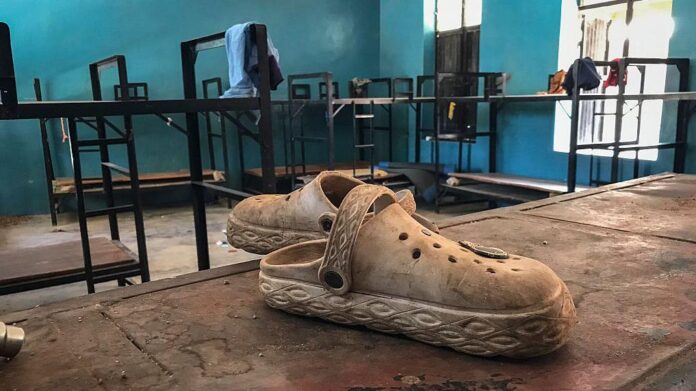
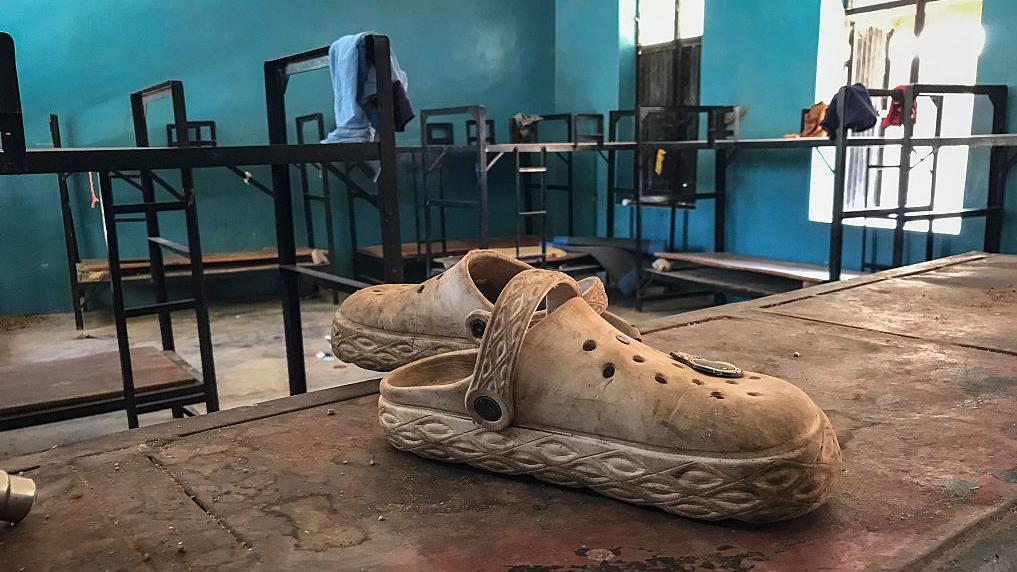
More than 80 children are unaccounted for following a series of armed attacks on schools across Nigeria, officials and a rights organization said Sunday, marking a troubling escalation in a long-running pattern of school abductions.
The most recent assault took place in the northeastern state of Borno State, where fighters raided a primary school between Wednesday and Thursday in the Askira Uba and Chibok areas. At least 42 children were taken during the attack, local authorities said.
Amnesty International said the incident occurred in Mussa village near the Sambisa Forest, a region known as a base for militant groups including Boko Haram and its offshoot, the Islamic State West Africa Province.
In a separate development, armed groups struck two secondary schools in Oyo State in the southwest, abducting at least 40 students within hours on Friday, Amnesty’s Nigeria office said. Such attacks are uncommon in that part of the country, raising fresh concerns about the spread of insecurity beyond its traditional hotspots.
Peter Wabba, a local official in Mussa, said community reports suggest the number of children taken in Oyo may be higher, placing the figure at 48. He told The Associated Press that families remain in distress as authorities work to locate the missing students.
Police spokesperson Ayanlade Olayinka said three suspects were detained in connection with the Oyo attacks in the Oriire area. He added that the arrests followed information provided by local residents, though it remains unclear whether more individuals were involved.
Amnesty International criticized what it described as a failure by authorities to consistently investigate such incidents and prosecute those responsible. The group warned that repeated attacks are forcing families to withdraw children from school, with some girls being pulled out of classrooms and married off early out of fear for their safety.
The Associated Press has previously documented similar incidents in the region, including attacks in Borno where students fled during raids and others were taken by armed groups. In some cases, families reported children as young as under 10 among those abducted.
Kidnappings targeting schools have become a defining feature of Nigeria’s broader security crisis. Armed groups frequently focus on educational institutions, viewing them as high-impact targets that attract attention and can generate ransom payments.
The latest wave of school attacks signals a troubling expansion of insecurity in Nigeria. While the northeast has long been affected by insurgent violence, incidents in southwestern states such as Oyo suggest that armed groups may be extending their reach or that copycat criminal networks are adopting similar tactics.
Schools have become symbolic targets in the conflict. Beyond the immediate harm to victims, these attacks disrupt education systems, deepen poverty, and create long-term social instability. Each abduction reinforces fear among families, undermining confidence in public safety and limiting access to education, particularly for girls.
The repeated targeting of children also places pressure on the government, both domestically and internationally. While security operations have intensified in some regions, gaps remain in intelligence, rapid response, and rural protection, especially in isolated communities near forested areas that serve as hideouts for armed groups.
Another emerging concern is the normalization of such attacks. As incidents recur, communities may begin to adapt by keeping children out of school or seeking alternative arrangements, which could have lasting consequences for literacy, workforce development, and national growth.
The arrests in Oyo may offer a measure of accountability, but broader systemic challenges remain. Without sustained security reforms and community-based protection strategies, analysts warn that school abductions could continue to spread geographically.
For now, families across affected regions are waiting for updates, hoping for the safe return of their children as search efforts continue.