Spanish coastguards rescued 231 migrants from a single wooden vessel off the Canary Islands on Sunday, marking the largest such rescue operation near Gran Canaria this year, authorities reported.
The rescued group included fourteen women and three children, all discovered aboard a precarious wooden boat near Gran Canaria’s main port. Coastguard vessels towed the migrant boat to safety after spotting it in nearby waters.
The operation highlights the growing pressure on the Atlantic migration route to Spain’s Canary Islands. Government data shows 32,878 migrants attempted the hazardous journey from West Africa between January and October 15 this year, representing a 39.7% increase from the same period in 2023.
A child is carried by an emergency team member after being rescued from a boat in the port in La Restinga on the Canary Island of El Hierro, Spain, Sunday, Aug. 18, 2024. Emergency services on Spain’s Canary Islands say 175 migrants have arrived in a boat on the Canary Island of El Hierro on Sunday, after a seven-day sailing from the coast of Senegal. (AP Photo/Maria Ximena)
While the Atlantic route to the Canary Islands has experienced the fastest growth in irregular migration in recent years, officials note that overall numbers remain below those recorded on the Central Mediterranean route toward Italy.
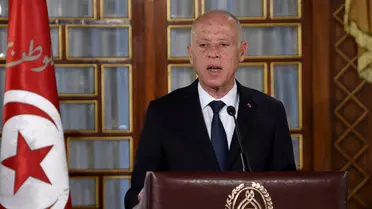
President Kais Saied took the oath of office Monday for his second term as Tunisia’s leader, following a sweeping electoral victory amid concerns over democratic regression and a continued crackdown on opposition figures.
The 66-year-old former law professor, who secured 90.7% of the vote, used his inauguration speech to call for a “cultural revolution” in Tunisia, focusing on unemployment, terrorism, and corruption. Addressing parliament, Saied declared, “The aim is to build a country where everyone can live in dignity.”
The inauguration comes after a turbulent first term marked by significant changes to Tunisia’s post-Arab Spring political landscape. Saied suspended parliament, rewrote the constitution, and orchestrated the arrest of dozens of critics across politics, media, business, and civil society sectors.
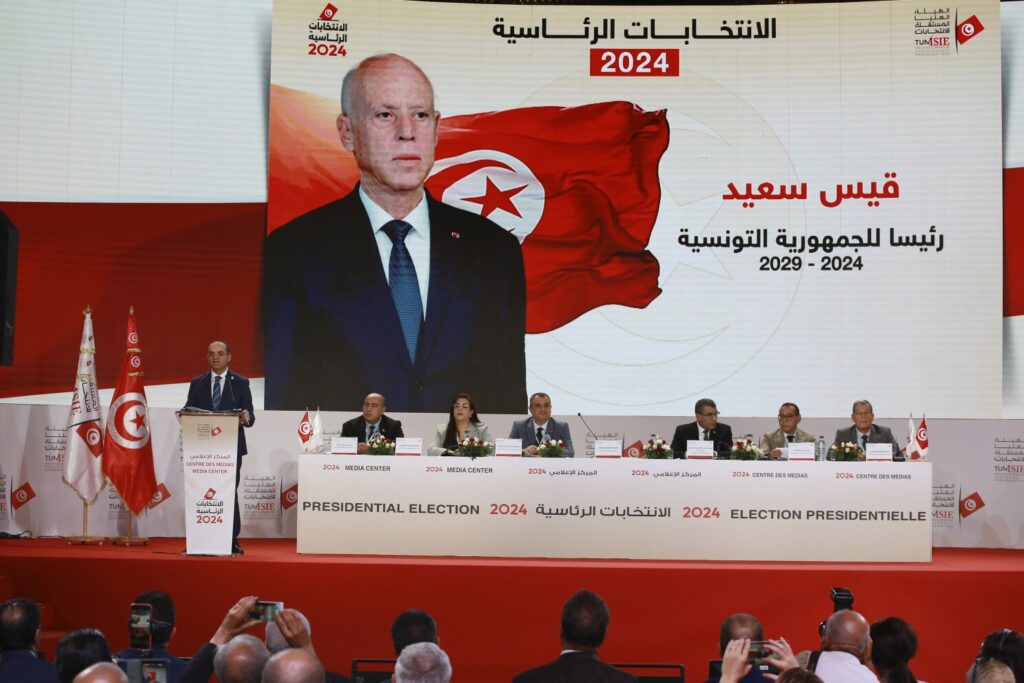
Election officials announce Tunisian president and candidate for re-election Kais Saied as the winner of the presidential elections, in the capital Tunis, Tunisia, Monday, Oct. 7, 2024. (AP Photo/Anis Mili)
In his address, Saied struck a combative tone against perceived enemies, promising to target “thieves and traitors on the payroll of foreigners.” He blamed “counterrevolutionary forces” for impeding economic progress during his first term.
“The task was not easy. The dangers were great,” Saied told lawmakers. “The arms of the old regime were like vipers circulating everywhere. We could hear them hissing, even if we couldn’t see them.”
The president has justified his actions as necessary measures against corruption and state enemies, appealing to Tunisians disillusioned with the country’s direction since the 2011 uprising that ousted longtime ruler Zine El Abidine Ben Ali.
Despite Saied’s proclaimed commitment to protecting freedoms, his inauguration ceremony highlighted ongoing tensions with the press. Many journalists were barred from covering the event, prompting the National Syndicate of Tunisian Journalists to issue a strong rebuke, condemning “the ongoing blackout policy and restrictions on journalistic work.”
The restrictions on media access underscore broader concerns about democratic backsliding in Tunisia, once hailed as the Arab Spring’s lone success story. Saied’s consolidation of power and crackdown on opposition have raised alarms among democracy advocates both domestically and internationally.
The Democratic Republic of Congo’s army and M23 rebels issued conflicting claims Tuesday over control of the strategic eastern town of Kalembe, highlighting ongoing tensions in the mineral-rich region.
Military spokesman Sylvain Ekenge announced the army had recaptured Kalembe on Monday, just one day after M23 rebels seized it from government forces and allied militia groups in North Kivu province. However, Corneille Nangaa, leader of the Congo River Alliance which includes M23, contradicted this claim, asserting rebels maintain control of the town.
The Tutsi-led M23’s advance into Kalembe violates an Angola-mediated ceasefire agreement reached in August, according to Angola’s government. The rebel group has been conducting renewed military operations in eastern Congo since 2022.
Walikale territory official Kabaki Alimasi confirmed the army’s claim of retaking the town but noted ongoing fighting in nearby areas. “The M23 are not far,” he said. “We can hear gunfire, the population that fled has not yet returned.”
Military spokesman Ekenge reported that helicopter-transported troops were deployed Monday morning to address the situation, with fighting continuing between pro-government militia and M23 forces in areas beyond army control.
The United Nations and Congolese authorities accuse neighboring Rwanda of supporting M23 with troops and weapons, allegations Rwanda consistently denies. The conflict has exacerbated a humanitarian crisis in North Kivu, where UN figures show approximately 2.6 million people were displaced by the end of September.
The battle for Kalembe, a small but strategically located town in militia-plagued North Kivu’s Walikale territory, represents the latest flashpoint in a prolonged regional conflict that has destabilized eastern Congo and strained relationships between neighboring countries.
A London police officer was acquitted Monday of murder charges in the 2022 shooting death of an unarmed Black man, Chris Kaba, a verdict that has intensified debate over policing and racial justice in Britain’s capital.
Officer Martyn Blake, 40, was found not guilty by a jury at London’s Old Bailey court after a three-week trial in the death of Chris Kaba, who died from a single gunshot to the head on September 5, 2022. The Metropolitan Police announced Blake’s suspension from duty would be lifted immediately.
The shooting occurred when Blake fired through the windscreen of Kaba’s vehicle after police boxed it in. The car had been linked to a reported shooting the previous evening.
Metropolitan Police Commissioner Mark Rowley characterized Blake’s actions as a split-second decision. “Any fatal use of force understandably prompts huge concern among communities, particularly in Black communities where trust in policing is low,” Rowley said, acknowledging the need to “strengthen confidence in our service.”
Kaba’s family, in a statement released through the charity Inquest, expressed profound disappointment. “The acquittal of Martyn Blake isn’t just a failure for our family, but for all those affected by police violence,” the statement read, describing “the deep pain of injustice adding to the unbearable sorrow we have felt since Chris was killed.”
The case highlighted the rarity of police prosecutions in fatal shootings. The Independent Office of Police Conduct reported that of 26 investigations into 28 police shooting deaths since 2013, only Blake and one other officer were referred to prosecutors, with the other officer not ultimately charged.
Prosecutor Tom Little had argued during the trial that Blake’s decision to shoot was “not reasonably justified or justifiable.” Blake maintained he perceived an “imminent threat” to his colleagues and intended to incapacitate, not kill, Kaba.
The verdict comes amid ongoing scrutiny of the Metropolitan Police, which was found to be institutionally racist, misogynistic, and homophobic in an independent 2023 review. Statistics from Inquest reveal that 83 people have been fatally shot by police in England and Wales since 1990, resulting in three prosecutions and no convictions.
“We know that Chris’ death is not an isolated case but part of systemic racism and stereotyping that equates Black men with dangerousness,” said Inquest’s director Deborah Coles.
Interior Minister Yvette Cooper acknowledged the case’s impact on communities, police, and families, stating, “The jury has come to a conclusion… and it is imperative that is respected and everyone is given the space to process the verdict.”
The case has reignited protests and anger among London’s Black community, which has long alleged discriminatory treatment by the Metropolitan Police.
Former U.S. President Donald Trump in New York City, U.S. May 30, 2024 and U.S. Vice President Kamala Harris in Washington, U.S., July 22, 2024 in a combination of file photos. REUTERS/Eduardo Munoz, Nathan Howard/File Photo
Vice President Kamala Harris holds a narrow lead over former President Donald Trump in the latest Reuters/Ipsos poll, though widespread voter dissatisfaction with the economy and immigration could shape the outcome of November’s presidential election.
The six-day poll, which concluded Monday, shows Harris leading Trump 46% to 43%, virtually unchanged from her 45% to 42% advantage in the previous week’s survey. When using unrounded figures, Harris’ lead shrinks to just two percentage points, within the poll’s margin of error of two percentage points.
The survey of 4,129 U.S. adults, including 3,481 registered voters, reveals deep voter concerns about the nation’s direction. Seventy percent of registered voters believe their cost of living is on the wrong track, while 60% express pessimism about the economy’s direction. Immigration policy draws similar criticism, with 65% saying the country is heading the wrong way.
Trump holds significant advantages on these key issues. Voters prefer his approach to the economy by eight points (46% to 38%) and immigration by thirteen points (48% to 35%). Immigration ranks as voters’ top priority for the next president’s first 100 days, with 35% citing it as the most crucial issue, followed by income inequality at 11%, and healthcare and taxes each at 10%.
Harris, however, leads substantially on other issues. She outpaces Trump by seven points (42% to 35%) on addressing political extremism and threats to democracy, while also holding advantages on abortion and healthcare policy.
The poll suggests heightened voter engagement compared to 2020, particularly among Democrats. Seventy-nine percent of registered voters declare themselves “completely certain” to vote, including 87% of Democrats and 84% of Republicans. This marks an increase from October 2020, when only 74% of Democrats and 79% of Republicans expressed such certainty.
Among the 3,307 respondents considered most likely to vote, Harris’ lead extends slightly to 48% versus Trump’s 45%.
The race’s dynamics shifted dramatically after President Joe Biden ended his reelection bid in July following a poor debate performance against Trump in June. Trump had been widely considered the frontrunner, benefiting from voter frustration with inflation under the Biden administration, though price increases have moderated in recent months.
Political analysts caution that Harris’ national lead might not translate to victory in the Electoral College system, which determines the presidency through state-by-state results. Trump won the 2016 election despite losing the popular vote to Hillary Clinton by two percentage points, and current polling shows Harris and Trump running neck-and-neck in seven crucial battleground states.
The electorate remains roughly divided into thirds between Democrats, Republicans, and independents or third-party supporters, according to Pew Research estimates. With voter turnout historically around two-thirds of eligible adults – though 2020 saw the highest participation in over a century – both campaigns’ ability to mobilize supporters could prove decisive.
The Reuters/Ipsos poll was conducted online nationwide, employing a methodology that has accurately tracked major political trends in recent years.
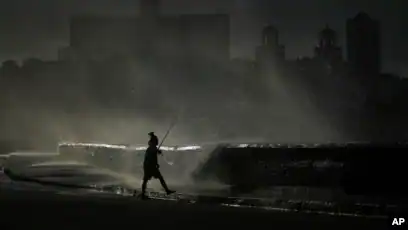
Hurricane Oscar has left at least six people dead in Cuba, where a prolonged nationwide blackout has paralyzed the capital and sparked scattered protests, leading to stern government warnings against civil unrest.
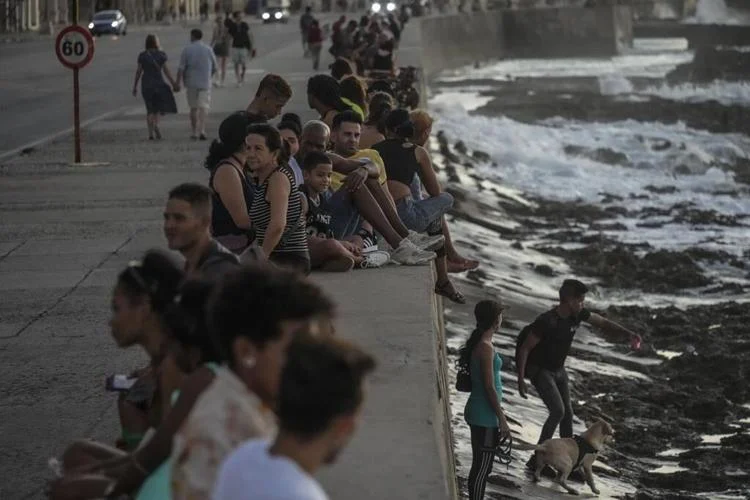
The storm made landfall Sunday before crossing the island’s eastern coast as a tropical storm Monday, bringing strong winds and heavy rain. The devastation has triggered small demonstrations in Havana neighborhoods, where residents faced their fourth night without power.
In urban areas like Santos Suárez and central Havana, dozens of protesters banged pots and pans in the streets while others demonstrated from their balconies. Some residents blocked streets with garbage in protest over water shortages.
“The country has completely halted,” said Mayde Quiñones, 55, a homemaker caring for her elderly mother-in-law. “This hurts everyone, but the elderly most of all.”
President Miguel Díaz-Canel addressed the nation Sunday on television, warning that authorities “won’t allow any vandalism, or let anyone disturb people’s tranquility.” The warning comes as Cuba grapples with its most severe blackout since Hurricane Ian in 2022.
Energy Minister Vicente de la O Levy said officials hope to restore reliable electricity by Tuesday morning. However, schools will remain closed through at least Thursday. The minister reported that about 80 percent of Havana had intermittent power by Monday afternoon, though residents expressed skepticism.
The crisis has forced many of Havana’s two million residents to cook with improvised wood stoves on streets as food spoils in unpowered refrigerators. Long lines formed at bakeries and the few operating gas stations, while people waited hours to purchase bread at functioning bakeries.
Cuba’s power grid is currently producing only 700 megawatts against a peak demand of 3 gigawatts. The situation worsened after Hurricane Oscar hit key power plants in the eastern region, including Felton in Holguín and Renté in Santiago de Cuba.
White House press secretary Karine Jean-Pierre attributed the crisis to “long-term mismanagement of economic policy and resources” by Cuban authorities, while Cuban officials blame the U.S. trade embargo.
The blackout has intensified Cuba’s ongoing economic crisis, which has already prompted more than half a million Cubans to emigrate to the United States, with thousands more heading to Europe.
Several nations, including Mexico, Colombia, Venezuela, and Russia, have offered assistance, according to Cuban officials. The government has implemented emergency measures, including suspending classes and shutting down non-essential state workplaces.
A Ugandan military tribunal under the influence of President Yoweri Museveni convicted sixteen members of the opposition National Unity Platform Monday on charges of illegal possession of explosives and treachery, in proceedings their defense lawyer described as questionable.
Bobi Wine, the opposition leader whose real name is Robert Kyagulanyi, claimed the group had been coerced into pleading guilty to secure a presidential pardon
The defendants, who have spent four years in detention, face sentencing Wednesday. Defense attorney Shamim Malende raised concerns about the circumstances surrounding their guilty pleas, which reversed previous denials of the charges.
Former singer and opposition leader Bobi Wine, whose legal name is Robert Kyagulanyi, alleged the accused were coerced into pleading guilty and seeking presidential pardons. “The accused have been blackmailed by state agents,” Wine told AFP. Media representatives were barred from attending the tribunal session.
Prosecutors alleged the opposition members possessed explosives between November 2020 and May 2021, during Uganda’s election period. Additional suspects remain at large, according to authorities.
The case highlights ongoing political tensions in Uganda, where President Museveni has maintained power since 1986. The country’s 2021 presidential election drew international criticism amid widespread allegations of fraud. Police violently suppressed demonstrations following Wine’s arrest during that period, resulting in at least fifty-four deaths.
President Yoweri Museveni
Wine warned of future accountability, stating, “Whatever Museveni’s government is doing, one day all those under him including himself will be called to account.”
The convictions come amid growing concerns over political freedom in Uganda, where opposition figures have faced increasing pressure from government authorities.
Five people were found dead Monday morning in a shooting at a home southeast of Seattle, Washington State, with authorities taking a teenager into custody in what appears to be a family-related incident.
Deputies responded to multiple 911 calls reporting gunfire around 5 a.m. in Fall City, Washington, King County Sheriff’s Office spokesperson Mike Mellis said at an afternoon news conference.
Responding officers immediately detained one teenager who lived at the residence and transported another injured teen resident to a Seattle hospital. Inside the home, deputies discovered five bodies, including two adults and three described as young teenagers, Mellis said.
“Once bodies were discovered, clearly we understand that this is a hugely significant crime scene,” Mellis said. While the shooting appears to involve family members, investigators are still working to determine exact relationships among the victims.
The detained teenager has been booked into King County’s juvenile detention facility and is scheduled for an initial court appearance Tuesday or Wednesday, according to the county Prosecuting Attorney’s Office.
A neighbor told KING-TV that a couple and their five children lived in the home. “I’m just in total shock, I keep bursting into tears,” resident Lynne Trowern said.
King County Councilmember Sarah Perry released a statement Monday evening confirming the incident involved a family of seven people.
Sheriff Patricia Cole-Tindall expressed distress over the shooting, telling KING-TV she was “very sad, very disturbed” by the incident.
Authorities stressed there is no ongoing threat to the community. “I have no reason to think that there will be any additional arrests,” Mellis said.
Names of the victims have not yet been released as the investigation continues.
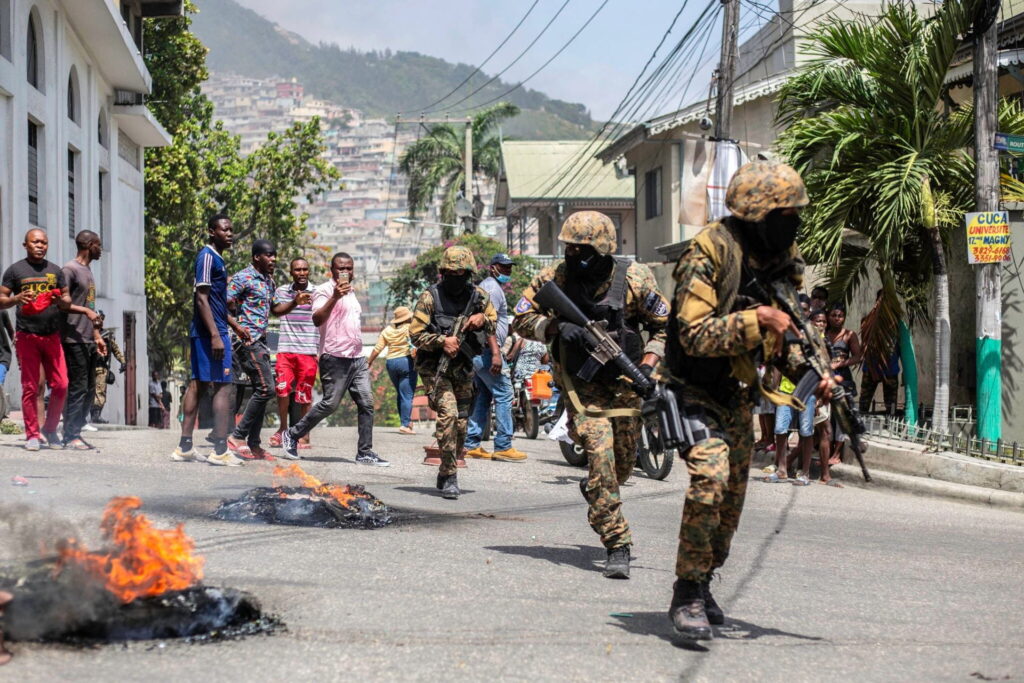
Haitian police forces are locked in fierce battles with armed gangs attempting to seize control of Solino, one of the capital’s few remaining gang-free neighborhoods, as violence escalates across Port-au-Prince.
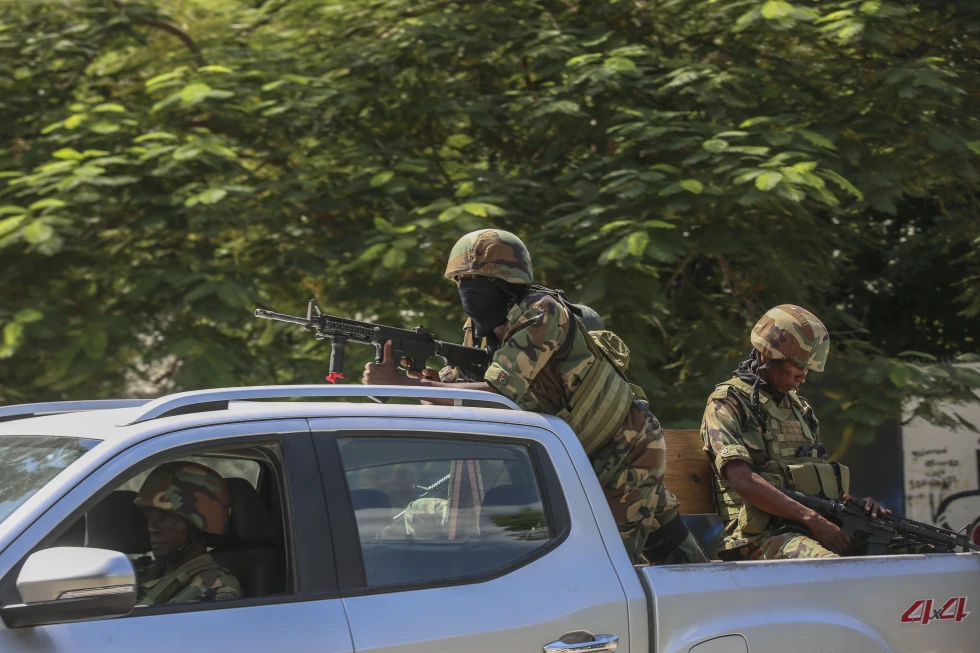
The confrontation, which began Thursday, prompted Prime Minister Garry Conille to order an emergency redeployment Monday of hundreds of elite police officers and soldiers from official protection duties to defend threatened neighborhoods.
“We will not cede strategic neighborhoods such as Solino and other recently liberated areas. The security of our citizens is non-negotiable,” Conille declared on social media platform X.
Police have secured several areas of Solino, according to a late Sunday statement from Haiti’s National Police, even as residents continue making desperate radio appeals for help while fleeing their homes.
The attacks are led by “Viv Ansanm” (Living Together), a powerful coalition formed in September 2023 between previously rival gang federations. Gang members, brandishing automatic weapons in social media videos, have threatened to “burn to ashes” anyone not aligned with their coalition.
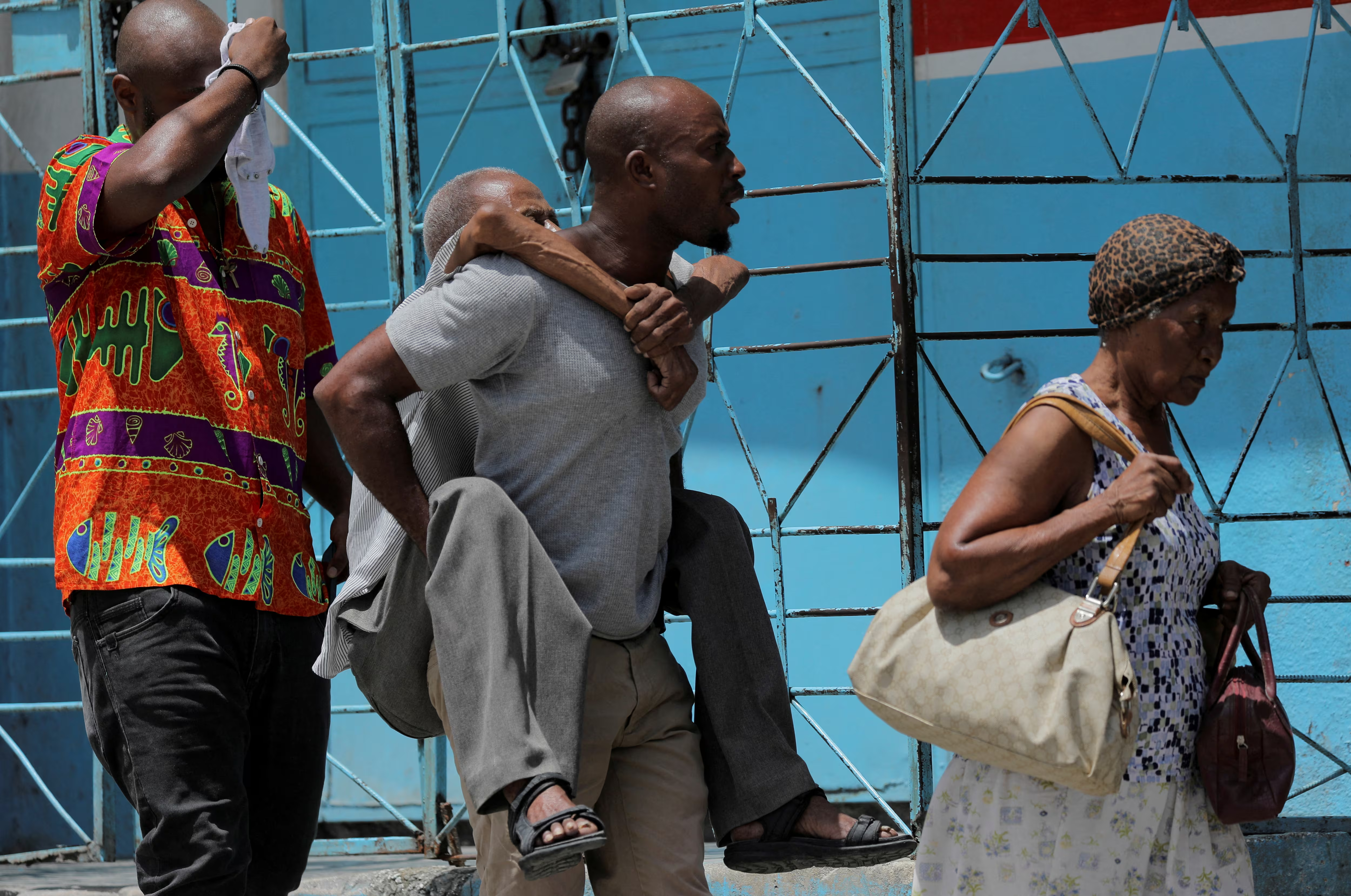
The United Nations’ International Organization for Migration reports the violence has displaced more than 4,200 people from affected areas, including Tabarre 27 neighborhood. Over sixty percent of these refugees have moved into already overcrowded makeshift shelters housing previous victims of gang violence, while others sought protection in schools, churches, and health centers.
Gangs currently control approximately eighty percent of Port-au-Prince and have explicitly threatened journalists covering the recent attacks, naming specific reporters and calling for their deaths.
The Viv Ansanm coalition gained prominence after launching major attacks on government infrastructure in February, contributing to Prime Minister Ariel Henry’s resignation. The group has also united to oppose a UN-backed Kenyan police mission aimed at reducing gang violence.
According to recent data from ACLED, a U.S. conflict research organization, the coalition’s formation led to a seventy-eight percent reduction in inter-gang violence between March and August compared to the previous six months. However, ACLED warns the alliance will likely persist as long as it faces the common threat of international intervention.
The coalition has redirected its focus from internal conflicts to criminal activities and confrontations with security forces, demonstrating a strategic shift in Haiti’s complex urban violence landscape.
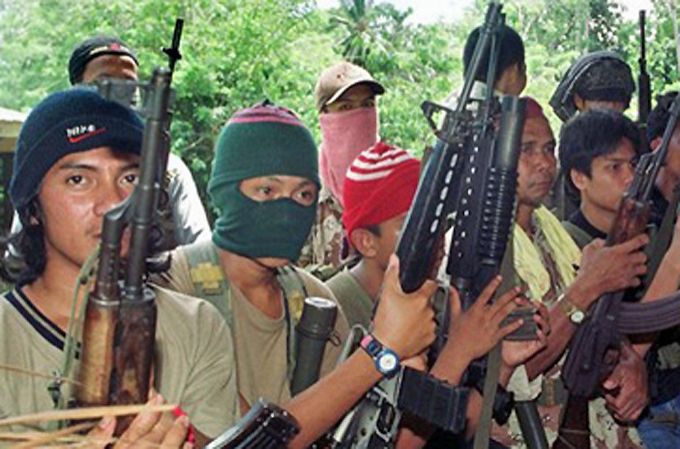
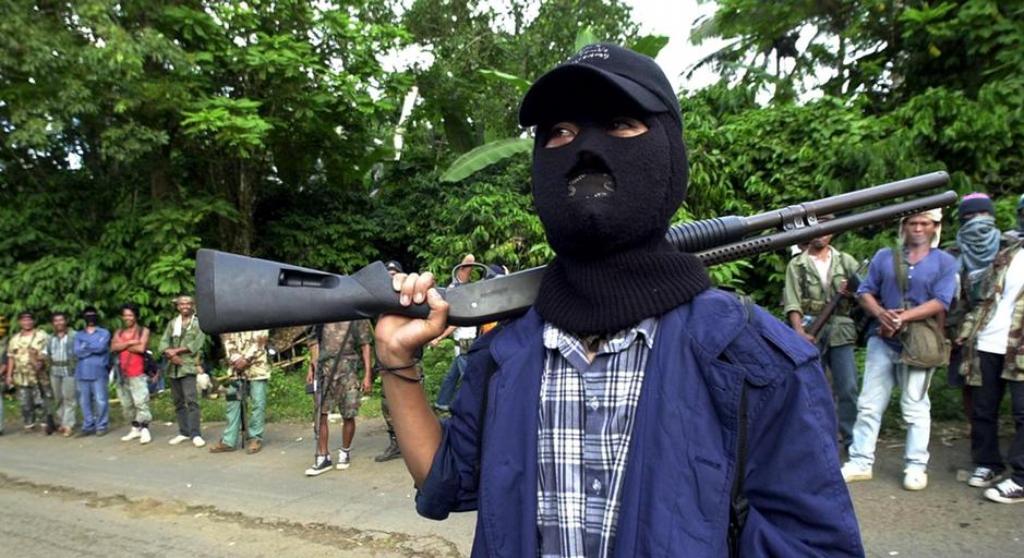
A Philippine court has sentenced seventeen Islamic militants to life imprisonment for the mass kidnapping of European tourists and Asian workers from a Malaysian dive resort more than two decades ago, justice officials announced Monday.
The Regional Trial Court in Taguig city near Manila convicted members of the Abu Sayyaf group, including two leaders on United Nations terrorism watchlists, Hilarion Santos and Redendo Dellosa. The militants will serve life terms with possibility of pardon after thirty years.
The convictions stem from an April 2000 raid on Malaysia’s Sipadan Island dive resort, where armed militants seized twenty-one hostages at gunpoint. The captives included three Germans, two Finns, two South Africans, a Lebanese woman, two French citizens, and several Malaysian and Filipino resort workers.
The attackers, wielding assault rifles and machetes, transported their hostages by speedboat to jungle hideouts in the southern Philippine province of Sulu. Hostages were later freed after ransom payments reportedly facilitated by then-Libyan leader Moammar Gadhafi.
Associated Press journalists permitted to interview the captives during their ordeal found them sitting on banana leaves within a makeshift fence of tree branches. Many wrote desperate letters begging families and embassies for food, water, medicine, and assistance securing their release.
The Abu Sayyaf group emerged from the decades-long Muslim separatist insurgency in the predominantly Catholic nation’s southern region. Both Philippine and U.S. governments classify it as a terrorist organization. The group gained notoriety in the late 1990s through bombings, ransoms, and beheadings, though military operations have since significantly weakened their capabilities.
Ghalib Andang, who led the Sipadan kidnapping, died in 2005 during an attempted jailbreak from a Manila detention facility. Years of military offensives following the hostage crisis resulted in the death or capture of most Abu Sayyaf leaders and fighters.
The Abu Sayyaf operated primarily from jungle strongholds in the southern Philippines, using the region’s remote islands and waterways to conduct raids and evade capture. The Sipadan incident highlighted the group’s ability to strike targets beyond Philippine borders, prompting increased regional security cooperation.