

Nigeria’s security agencies have intensified vigilance following intelligence indicating a possible large-scale attack targeting key infrastructure in the capital and surrounding regions, according to an internal government communication obtained by The Associated Press.
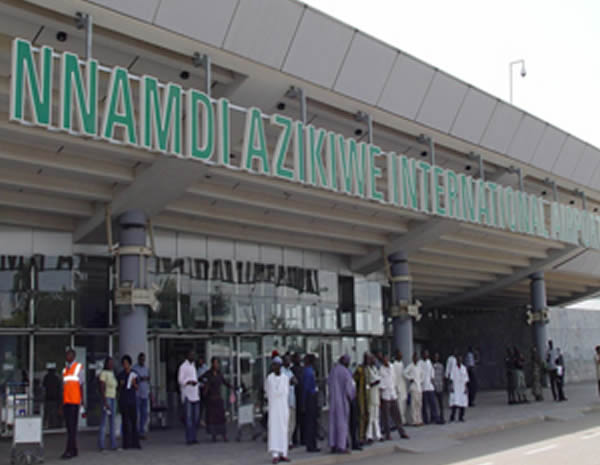
The document, dated April 13 and circulated within the Nigeria Customs Service, outlines a suspected plot by Islamist militants to strike major public facilities, including the Nnamdi Azikiwe International Airport in Abuja, a correctional center in the capital, and a military detention facility in neighboring Niger state.
The memo underscores concerns that the attackers aim to free detained fighters and cause extensive disruption to aviation operations. “Their intention is to release detained terrorists and inflict significant damage on critical aviation infrastructure,” the document states.
Security officials view the threat as part of a broader regional pattern. The communication highlights similarities to a January assault in neighboring Niger Republic, where militants targeted an air force installation in Niamey. That incident, cited in the memo, has heightened fears that comparable tactics could be deployed within Nigeria.
“An analysis of the intelligence indicates a troubling link between the potential targeting of the Nnamdi Azikiwe Airport Abuja and recent large-scale attacks on aviation facilities in Niger Republic, notably in Niamey and Tahoua,” the memo notes. “This points to a possible attempt by terrorist groups to replicate those attack patterns inside Nigeria.”
A senior customs official, speaking on condition of anonymity due to lack of authorization to brief the press, confirmed heightened readiness across agencies. The official indicated that both military and paramilitary units have been mobilized to prevent any attempted assault.
Requests for comment sent to the Nigeria Customs Service and the Nigerian military were not immediately answered.
Nigeria has faced persistent security challenges for more than a decade, particularly in its northern regions, where extremist groups and armed criminal networks operate. The insurgency has been driven largely by Boko Haram and its offshoot, the Islamic State West Africa Province, known as ISWAP. Both organizations have carried out attacks on civilian and government targets, including transportation hubs and detention facilities.
The internal memo indicates that sleeper cells linked to these groups could be involved in the latest plot. It also points to the growing presence of another armed faction, identified as Lakurawa, operating in northwestern communities near the border with Niger Republic.
The threat of prison breaks remains a critical concern for Nigerian authorities. In 2022, militants stormed a correctional facility near Abuja, enabling the escape of 879 inmates, including 64 individuals affiliated with ISWAP. That incident exposed vulnerabilities in the country’s security infrastructure and intensified calls for reforms.
Recent developments have further underscored the volatile security environment. Last week, the United States authorized the departure of non-emergency government personnel and their families from its embassy in Abuja, citing increased risks of terrorist activity, kidnapping, and violent crime. The embassy has since suspended operations.
Nigeria’s Information Minister Mohammed Idris downplayed the move, describing it as a standard safety measure. He maintained that the decision reflects internal U.S. procedures rather than a deterioration in Nigeria’s overall security conditions.
The intelligence warning highlights a critical moment for Nigeria as it navigates overlapping security threats that are increasingly interconnected across West Africa. The reference to attacks in Niger Republic suggests that militant groups are adapting strategies across borders, leveraging regional instability to test new targets and tactics.
Airports and prisons represent symbolic and strategic objectives. Aviation facilities are not only high-visibility targets but also essential economic lifelines. Disrupting airport operations could undermine investor confidence and strain international connectivity. Meanwhile, prison attacks serve a dual purpose: freeing experienced fighters and delivering a propaganda victory that demonstrates operational reach.
The mention of sleeper cells is particularly significant. Unlike large-scale coordinated assaults, sleeper cell operations are harder to detect and prevent, often relying on local networks and insider knowledge. This raises concerns about intelligence gaps and the need for improved coordination among security agencies.
Nigeria’s broader security landscape also complicates response efforts. In addition to extremist insurgencies, the country faces widespread kidnapping-for-ransom operations and banditry, particularly in rural and border regions. These overlapping threats stretch resources thin and create opportunities for militant groups to exploit weaknesses.
The U.S. embassy’s decision to reduce staff presence, while described as routine, may influence international perceptions. Even if precautionary, such actions can signal heightened risk to foreign investors and diplomatic partners, potentially affecting economic activity and cooperation.
Looking ahead, Nigeria’s ability to counter the threat will likely depend on intelligence-sharing, regional collaboration, and targeted security enhancements at vulnerable sites. Strengthening airport security protocols, reinforcing detention facilities, and improving surveillance in high-risk areas will be key steps.
At the same time, long-term stability will require addressing the root causes of militancy, including poverty, unemployment, and governance challenges in affected regions. Without these structural changes, security gains may remain temporary, and the cycle of attacks could persist.
AP





