

A powerful earthquake that struck the southern Philippines has left at least 37 people dead and forced more than 32000 residents from their homes, as emergency crews continue searching damaged buildings for survivors and assessing the full scale of destruction.
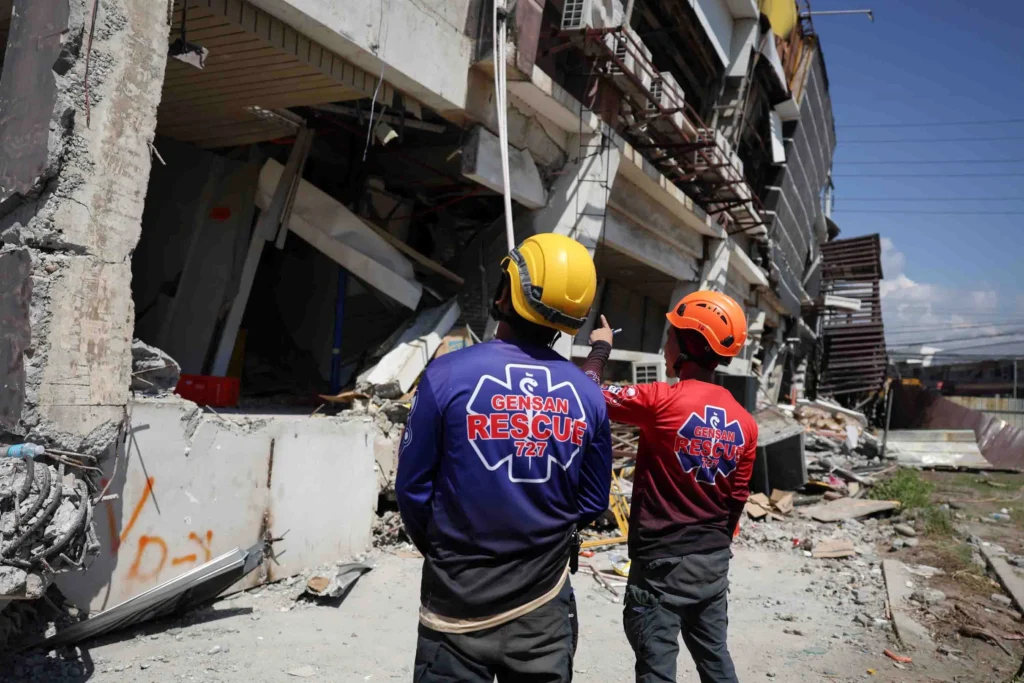
The magnitude 7.8 quake hit offshore near Mindanao early Monday, shaking communities across the region and sending thousands fleeing amid fears of aftershocks and possible tsunami waves. The tremor injured nearly 500 people and caused widespread structural damage, particularly in coastal and mountainous areas.
What we know so far
Authorities have confirmed at least 37 fatalities, with deaths linked largely to collapsing buildings, falling debris and landslides. The Office of Civil Defense said more than 32000 people have been displaced, many now sheltering in temporary evacuation centers.
Heavily affected areas include General Santos, where multiple structures collapsed, and Sarangani province, where landslides buried homes. Initial government assessments indicate that roughly 2500 houses and more than 100 public facilities were damaged.
Air travel has also been disrupted, with the main airport in General Santos remaining closed for a second day, forcing dozens of flight cancellations. Schools across several provinces have suspended classes while authorities inspect thousands of buildings for structural safety.
The Associated Press confirmed the casualty figures and scale of displacement, noting that tsunami waves of up to 1.4 meters were recorded but caused limited coastal damage.
What authorities are saying
Government officials say search and rescue operations remain active, particularly in buildings that partially collapsed. The Office of Civil Defense emphasized that inspections must be completed before residents can safely return.
President Ferdinand Marcos Jr. has deployed national disaster teams and ordered the rapid delivery of food, shelter materials and medical aid to affected communities. He reiterated that public safety remains the priority, especially with aftershocks continuing across the region.
International partners, including the United States and several allied nations, have signaled readiness to support relief operations if needed.
Why this matters
The disaster underscores the Philippines’ vulnerability to seismic activity due to its position along the Pacific Ring of Fire, one of the most active earthquake zones in the world. Major quakes in the country often trigger cascading crises, including landslides, infrastructure failure and mass displacement.
Beyond the immediate humanitarian toll, the quake threatens regional economic stability. Mindanao serves as a critical hub for agriculture, fisheries and export industries, particularly tuna production centered in General Santos. Damage to ports, roads and airports could disrupt supply chains and trade flows in the coming weeks.
The broader economic impact may also extend to insurance markets, infrastructure investment and disaster preparedness funding, as repeated high intensity events raise long term risk assessments for the region.
What happens next
Authorities are expected to continue search and rescue operations while expanding damage assessments across affected provinces. Engineers and safety inspectors will evaluate schools, hospitals and public infrastructure before reopening.
Relief efforts will likely shift toward long term recovery, including rebuilding homes and restoring transportation networks. Officials are also monitoring aftershock activity, which could pose additional risks to weakened structures.
Economic recovery measures, including government funding and possible international assistance, are expected to follow as the scale of losses becomes clearer.
As rescue teams press on and displaced families seek stability, the earthquake has once again exposed the fragile balance between rapid development and disaster resilience in the Philippines. The coming weeks will test not only emergency response systems but also the country’s ability to rebuild stronger in the face of recurring natural threats.
AP




