

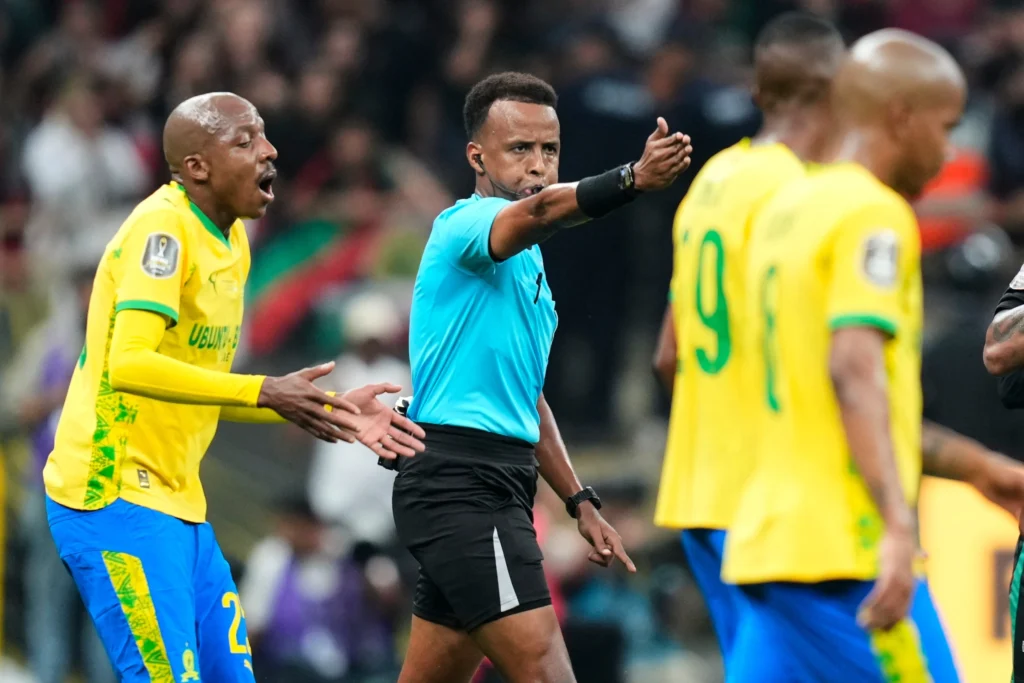
A Somali soccer referee poised to make history at the World Cup has been barred from entering the United States, halting his participation and casting a shadow over preparations for one of the world’s biggest sporting events.
FIFA confirmed that Omar Abdulkadir Artan would not officiate at the tournament after being denied entry upon arrival at Miami International Airport over the weekend. Artan, widely regarded as one of Africa’s top referees, had been selected to officiate matches in the competition, which begins Thursday in the United States.
What we know so far
U.S. Customs and Border Protection indicated that a Somali national arriving from Istanbul underwent additional screening and was ultimately deemed inadmissible due to unspecified vetting concerns. Officials did not publicly disclose the exact reasons behind the decision.
Artan had recently been issued a valid visa, as confirmed by Somali authorities. He was scheduled to join other referees in Miami for pre tournament training before taking charge of matches. His removal from the officiating roster marks a rare disruption in FIFA’s tightly coordinated tournament preparations.
Somalia’s government expressed disappointment, noting that Artan’s selection had been a milestone for the country. Reuters and Associated Press both confirmed that diplomatic efforts were made to reverse the decision, though those efforts have not succeeded.
What authorities are saying
A FIFA spokesperson said the organization does not control host nation immigration decisions and had been informed that Artan’s status would not change.
Somalia’s sports ministry described the referee’s achievements as a source of national pride and said it had attempted to engage both U.S. officials and FIFA to secure his participation.
U.S. Customs and Border Protection stated that all travelers, including World Cup participants, are subject to case by case review using available security and immigration information.
Artan, in a statement released through FIFA, said he remains focused on his career despite the setback and thanked the global football community for its support.
Why this matters
The incident underscores growing tension between global sporting events and national immigration policies, particularly as the United States prepares to host major international competitions. The World Cup relies on seamless coordination among players, officials and staff from dozens of countries, making entry restrictions a potential flashpoint.
The situation also highlights broader geopolitical concerns tied to immigration enforcement under Donald Trump, whose administration previously introduced travel restrictions affecting several countries, including Somalia. Critics argue such policies could complicate participation for athletes and officials, while supporters maintain they are necessary for national security.
From an economic standpoint, the World Cup represents billions of dollars in tourism, broadcasting rights and sponsorship revenue. Any perception of barriers to participation could influence future host country decisions and shape FIFA’s risk assessments when awarding tournaments. Competing nations such as Canada and Mexico, which are co hosts for upcoming events, may also face scrutiny over their ability to guarantee access for all participants.
What happens next
Somali officials have indicated that diplomatic engagement may continue, though time is running short before matches begin. FIFA is expected to finalize its officiating assignments without Artan, redistributing responsibilities among remaining referees.
The episode could prompt further dialogue between international sports bodies and host governments about visa guarantees and entry protocols for future tournaments. It may also lead to calls for clearer frameworks to prevent last minute disruptions.
Artan’s exclusion from the World Cup closes the door on what would have been a landmark moment for Somali football, while raising broader questions about how global events intersect with national policies. As the tournament opens, the focus will shift to the matches on the field, but the controversy serves as a reminder that the path to the world stage is shaped as much by politics and policy as by sport.
AP





