

Ceasefire negotiations between the United States and Iran unraveled Saturday before formal discussions could begin, as Iran’s top diplomat departed Pakistan and President Donald Trump announced he had instructed U.S. envoys not to proceed with planned travel to Islamabad.
The abrupt shift marked a new setback in efforts to revive diplomacy aimed at ending weeks of conflict that have disrupted global energy markets and heightened instability across the Middle East.
Iranian Foreign Minister Abbas Araghchi left Pakistan’s capital after meeting with senior officials, including Prime Minister Shehbaz Sharif and Army Chief Field Marshal Asim Munir. Two Pakistani officials, speaking to The Associated Press on condition of anonymity because they were not authorized to speak publicly, confirmed his departure without any indication of progress toward renewed talks.
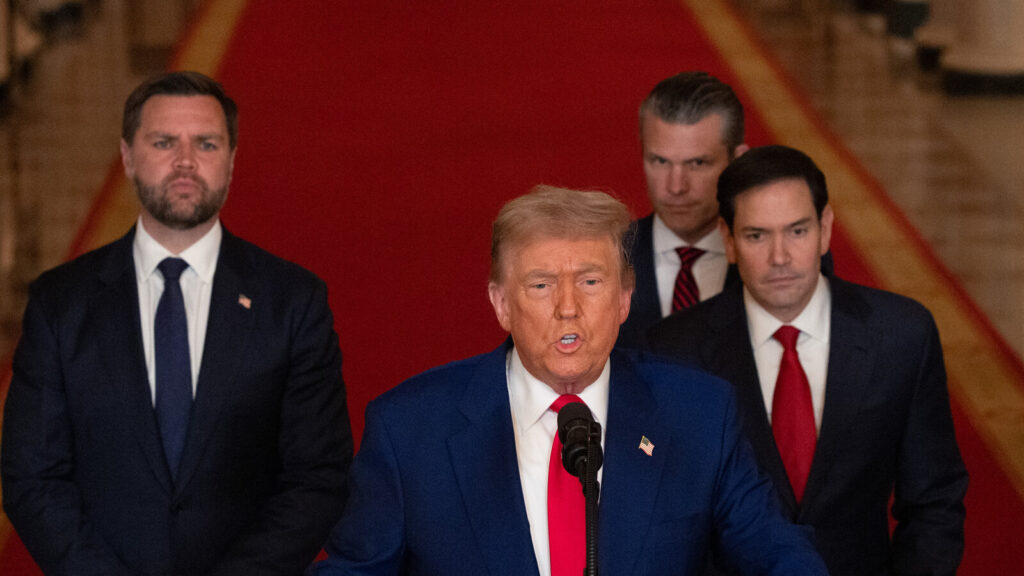
Shortly afterward, Trump said he had canceled the planned visit by U.S. envoys, including Steve Witkoff and Jared Kushner, dismissing the need for further travel while signaling frustration with the pace of negotiations.
“If they want to talk, all they have to do is call,” Trump wrote on social media, adding that time spent traveling had slowed progress.
In remarks later to reporters, Trump suggested Iran had revised a proposal shortly after the cancellation but said it still fell short of U.S. expectations. He reiterated that any agreement must ensure Iran does not develop nuclear weapons.
Araghchi, in a statement posted online, indicated that Iran had presented what he described as a workable framework for ending the conflict but questioned Washington’s commitment to diplomacy. Iranian officials have consistently maintained that any future discussions must occur indirectly, with intermediaries relaying messages between the two sides.
According to Reuters, Trump’s decision to cancel the envoy trip dealt a fresh blow to already fragile peace prospects, particularly after earlier signs that both sides might return to negotiations following an initial round of face-to-face talks led by Vice President JD Vance and Iranian parliamentary leadership earlier this month.
Those earlier discussions, held in Islamabad, were viewed as a rare breakthrough but failed to produce a concrete agreement.
Tensions between Washington and Tehran have intensified in recent weeks, driven in part by disputes over the Strait of Hormuz, a strategic waterway through which roughly one-fifth of global oil shipments pass under normal conditions. Iran has restricted traffic through the channel, while the United States has imposed a naval blockade targeting Iranian oil exports.
The standoff has sent global energy prices sharply higher. Brent crude, the international benchmark, has surged significantly since the conflict began, raising concerns about inflation and economic stability worldwide.
Iran has also stepped up military rhetoric. On Saturday, its joint military command warned that continued U.S. actions, including the blockade, would prompt a strong response. Meanwhile, U.S. forces remain on high alert in the region, and Trump has authorized aggressive measures to protect maritime traffic.
The diplomatic breakdown comes despite a ceasefire that Trump recently extended indefinitely to allow more time for negotiations. While the truce has reduced large-scale fighting, sporadic clashes and military threats persist, underscoring the fragile nature of the pause.
Regional tensions have also spilled into neighboring conflicts. In Lebanon, exchanges of fire between Israeli forces and the armed group Hezbollah have tested a separate ceasefire. Israeli Prime Minister Benjamin Netanyahu ordered intensified strikes on Hezbollah targets, further complicating efforts to stabilize the region.
Casualty figures from the broader conflict continue to rise. Authorities report that thousands have been killed across Iran and Lebanon since fighting began, with additional deaths in Israel and other parts of the region. Military personnel from multiple countries, including the United States, have also been among the casualties.
Despite the mounting toll, both sides remain entrenched in their positions. Iran has rejected what it describes as excessive demands from Washington, while U.S. officials insist that any agreement must address concerns over Iran’s nuclear program, missile capabilities, and regional influence.
Pakistan has attempted to mediate, positioning itself as a neutral facilitator. Prime Minister Sharif emphasized his country’s commitment to promoting dialogue and long-term stability, noting in a public statement that Pakistan would continue efforts to bridge the divide.
Araghchi is expected to continue consultations with regional partners, including a planned visit to Oman, which has previously played a key role in mediating between the United States and Iran.
The collapse of these talks highlights the deep mistrust that continues to define U.S.-Iran relations. While both sides publicly support diplomacy, their actions suggest competing strategies. Washington appears to be leveraging economic pressure and military positioning to extract concessions, while Tehran is using control over critical shipping routes as a counterweight.
The Strait of Hormuz has become the central pressure point in this standoff. By restricting access, Iran has demonstrated its ability to disrupt global supply chains, effectively turning geography into a strategic weapon. This dynamic complicates negotiations, as any concession risks being interpreted as weakness by domestic audiences on both sides.
Trump’s decision to cancel envoy travel may also reflect a broader negotiating tactic aimed at forcing Iran to engage on U.S. terms. However, such moves carry risks. Abrupt shifts can undermine diplomatic momentum and reinforce perceptions of unpredictability, making it harder to build trust.
At the same time, Iran’s insistence on indirect talks underscores its reluctance to engage directly under pressure. This approach allows Tehran to maintain a degree of political distance while testing U.S. intentions through intermediaries.
The involvement of multiple regional actors further complicates the situation. Conflicts in Lebanon and elsewhere are increasingly intertwined with the broader U.S.-Iran confrontation, raising the risk of escalation beyond bilateral tensions.
Global economic implications are already evident. Rising energy prices are affecting industries and consumers far beyond the Middle East, highlighting how regional conflicts can have far-reaching consequences.
Ultimately, the failure of these talks underscores a critical reality: while ceasefires can pause violence, they do not resolve underlying disputes. Without meaningful progress on core issues, including security guarantees and economic sanctions, the risk of renewed conflict remains high.
AP/Reuters





