Two students were killed and at least nine other people were wounded Saturday after a gunman opened fire inside an engineering classroom at Brown University, sending students scrambling for cover and triggering a massive law enforcement response in the Rhode Island capital.
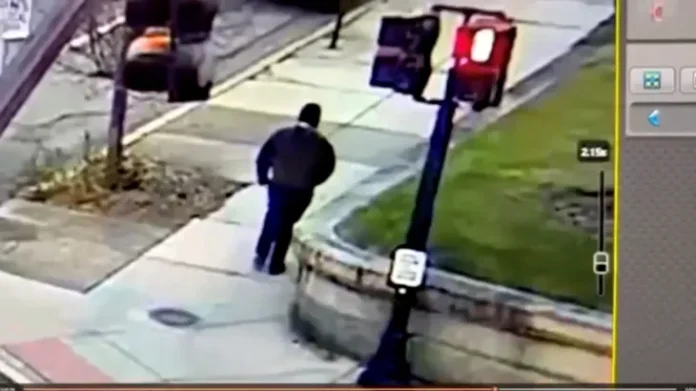
The suspect leaving scene of crime
Providence police said officers were dispatched shortly after 4 p.m. local time to the university’s Barus & Holley building, a seven-story complex housing much of Brown’s engineering and physics research. Authorities said the shooter fled the Ivy League campus before police arrived and remained at large late Saturday.
Deputy Police Chief Timothy O’Hara said the suspect was described as a male dressed in black, believed to be in his 30s. The weapon used in the shooting had not been recovered. Surveillance video released by police showed a person of interest walking away along Hope Street, though the footage did not clearly show the individual’s face.
NBC News confirmed that two people were killed in the attack, while Brown University Health, which operates Rhode Island Hospital, said seven of the injured remained in critical condition late Saturday and one had been stabilized. Officials later identified an 11th victim who suffered non-life-threatening injuries from debris.
Chaos During Final Exams
The shooting occurred during the university’s final exam period, when classroom doors were open to accommodate testing, Providence Mayor Brett Smiley said. O’Hara said investigators believe the gunman entered the building through an unlocked entrance and exited on the Hope Street side.
Students and staff described scenes of panic as shots rang out. Chiang-Heng Chien, a doctoral engineering student, told NBC affiliate WJAR that he and others hid beneath desks in a campus lab, turning off lights and locking doors.
“We decided to hide under our desks and stay completely silent,” Chien said. Police later escorted them out as officers swept the building room by room.
Brown University President Christina H. Paxson said in a message to the campus community that the shooting marked “a deeply tragic day for Brown, our families and our local community.”
Citywide Lockdown and Manhunt
A shelter-in-place order was imposed across the campus and surrounding Providence neighborhoods, affecting thousands of students and residents. City officials later corrected an earlier alert that had mistakenly indicated a suspect was in custody, a reversal that heightened anxiety across the city of roughly 190,000 people.
Mayor Smiley, who lives near the campus, said he watched emergency vehicles race past his home as police searched for the shooter.
“This is a day we prayed would never come,” Smiley said. “We’ve heard of these tragedies elsewhere, but not here.”
Federal Response and National Reaction
Federal agencies joined the investigation, including the FBI and the Bureau of Alcohol, Tobacco, Firearms and Explosives, Providence police said. FBI Director Kash Patel and Attorney General Pam Bondi publicly expressed support for the victims and first responders.
Speaking after returning to the White House aboard Marine One, President Donald Trump called the shooting “a terrible thing” and urged Americans to pray for the victims and the wounded.
Rhode Island Gov. Dan McKee described the attack as “an unthinkable tragedy” and said the state was providing all available resources to local authorities.
Broader Context and Implications
The shooting adds to growing concerns over campus security nationwide, particularly during periods of heightened foot traffic such as exams and public events. While Ivy League schools have historically been viewed as insulated from mass violence, recent incidents across U.S. universities have prompted renewed scrutiny of building access policies, emergency alerts, and coordination with local police.
Experts note that unlocked academic buildings — common during finals — can present vulnerabilities, even at institutions with extensive security infrastructure. The rapid correction of inaccurate emergency alerts Saturday also highlights the challenge universities face in balancing speed and accuracy during fast-moving crises.
As investigators work to identify a motive and locate the suspect, Brown University officials said counseling services would be expanded and exams rescheduled as needed. For a campus known for its tight-knit academic culture, the attack leaves lingering questions about safety, preparedness, and the emotional toll on students and staff navigating grief during an already stressful academic period.
Authorities urged anyone with information about the suspect to contact Providence police as the manhunt continued into Sunday.
Israel killed a senior Hamas commander in an airstrike Saturday that struck a vehicle west of Gaza City, marking a significant escalation in hostilities under a fragile ceasefire as both sides trade accusations of truce violations.
The Israel Defense Forces identified the target as Raad Saad, described as head of Hamas’s weapons manufacturing operations and one of the architects of the October 7, 2023, attack that sparked the war. The strike killed four people and wounded more than 20 others, Palestinian media reported.
Prime Minister Benjamin Netanyahu and Defense Minister Israel Katz said in a joint statement that Saad was eliminated in response to an explosive device that wounded two Israeli reserve soldiers in southern Gaza several hours earlier, the Times of Israel reported.
“Anyone who raises a hand against Israel and harms IDF soldiers, his hand will be cut off in Gaza and anywhere else,” Netanyahu and Katz said.
Hamas did not immediately confirm Saad’s death. In a statement, the militant group said a civilian vehicle had been struck and asserted the action violated the ceasefire that took effect October 10. The organization demanded that “mediators and countries that are guarantors of the agreement assume their responsibility surrounding these blatant violations and move urgently to restrain” Israel.
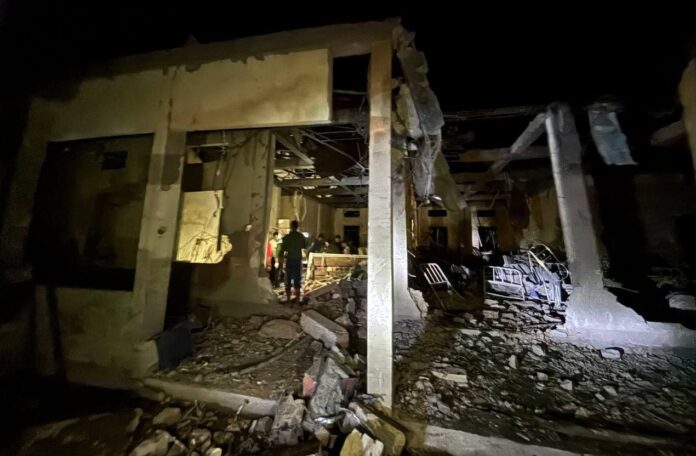
An Associated Press journalist who saw bodies arrive at Shifa Hospital confirmed four people were killed in the strike along the coastal Rashid Road. Another three wounded individuals were taken to Al-Awda Hospital.
Saad was considered one of the few remaining members of Hamas’s top military leadership in Gaza and ranked second only to current military chief Izz al-Din Haddad. Sunday marks 800 days since the Hamas-led attack that killed around 1,200 people in southern Israel and took 251 hostages.
“Saad was a leading figure in the leadership of Hamas’s military wing in recent months and was directly responsible for violations of the ceasefire agreement by the Hamas terror organization,” the IDF said in its statement. “In addition, in his role, he led the continued production of weapons in the Gaza Strip during the ceasefire.”
The military said that in recent weeks it had identified “repeated attempts by the Hamas terror organization to carry out terrorist attacks, including the use of explosive devices against IDF troops, actions that constitute a blatant violation of the agreement.”
The IDF released footage of the strike and said it was carried out following fresh intelligence on Saad’s location. A military source indicated that “Saad had long been a target for elimination.”
Israel did not provide advance notice to the United States before conducting Saturday’s airstrike, the Axios news site reported.
A defense official told Channel 13 news that Haddad, the Hamas military chief, “is also in the crosshairs.” The official said that “when there is an opportunity, he will be eliminated, even during the ceasefire.”
According to the IDF, Saad held multiple senior positions within Hamas’s military wing. He established and commanded Hamas’s Gaza City Brigade and helped form the organization’s naval force. He later served as chief of Hamas’s operations headquarters, where he participated in developing the “Jericho’s Walls” plan—the codename for the invasion strategy ultimately executed on October 7, 2023.
The military said Saad helped establish Hamas’s elite Nukhba Force, which spearheaded the October 7 assault. In 2021, he was dismissed from his operations chief role by then-Hamas leader in Gaza Yahya Sinwar due to reported personal disagreements between them, the Times of Israel stated.
Saad subsequently moved to other military wing roles and more recently oversaw Hamas’s weapons manufacturing headquarters as a deputy to Haddad. “Saad is responsible for the deaths of many soldiers who were killed in the Gaza Strip as a result of explosive devices manufactured by the weapons production headquarters during the war,” the military said.
The IDF noted that Saad was close to Hamas founder Sheikh Ahmed Yassin, who was assassinated in 2004; military chief Mohammed Deif, killed in July 2024; and deputy military wing head Marwan Issa, assassinated in March 2024.
Saad survived multiple Israeli assassination attempts, most recently in June 2024. He was believed to be at Gaza City’s Shifa Hospital when Israeli forces raided the medical facility in March 2024, though he apparently escaped. Israel jailed him in 1990 for his Hamas involvement, and the Palestinian Authority imprisoned him in the late 1990s.
Netanyahu and Katz stated that Saad “was one of the architects of the October 7 massacre and in recent days had been engaged in restoring the terror organization and in planning and carrying out attacks against Israel, as well as rebuilding an attack force, in blatant violation of the ceasefire rules and Hamas’s commitments to respect President [Donald] Trump’s plan.”
“Instead of advancing disarmament, he was engaged in rearmament for acts of terror,” they added.
Earlier Saturday, two reserve soldiers were lightly wounded by an explosive device while clearing the southern Gaza Strip of what the military described as terror infrastructure. The troops were hospitalized and their families notified.
The IDF also said it killed two Palestinian operatives who crossed the ceasefire line—known as the Yellow Line—in separate incidents over the weekend. On Saturday, forces killed an individual who crossed in northern Gaza and approached troops “in a way that posed an immediate threat.” Palestinian media identified him as Mohammed Sabri Al-Adham, 19, killed in the Jabalia area.
On Friday, troops killed one of two operatives who crossed the Yellow Line in southern Gaza and approached soldiers of the 7th Armored Brigade “in a way that posed an immediate threat,” the military said.
Israeli airstrikes and shootings in Gaza have killed at least 386 Palestinians since the ceasefire began, according to Palestinian health officials. Israel maintains recent strikes constitute retaliation for militant attacks against its soldiers and that troops have fired on Palestinians who approached the Yellow Line separating the Israeli-controlled majority of Gaza from the remaining territory.
Israel and Hamas have repeatedly accused each other of truce violations since the ceasefire took hold. Israel has demanded that Palestinian militants return the remains of the final hostage, Ran Gvili, from Gaza and called it a condition for advancing to the second and more complicated ceasefire phase, which envisions ending Hamas’s rule and rebuilding a demilitarized Gaza under international supervision.
Almost all hostages or their remains have been returned through ceasefires or other arrangements since the initial attack that seized 251 people.
Israel’s two-year campaign in Gaza has killed more than 70,650 Palestinians, roughly half of them women and children, according to the territory’s Health Ministry, which does not distinguish between militants and civilians in its count. The ministry, operating under the Hamas-run government, is staffed by medical professionals and maintains detailed records generally regarded as reliable by the international community.
Hamas claims more than 70,000 people in Gaza have been killed or are presumed dead in the fighting, though the toll cannot be independently verified and does not differentiate between civilians and combatants. Israel says it has killed over 22,000 Hamas fighters as of August and another 1,600 militants inside Israel during the October 7 assault.
Israel states it seeks to minimize civilian casualties and emphasizes that Hamas uses Gaza’s population as human shields, operating from residential areas including homes, hospitals, schools and mosques.
Much of Gaza has been devastated and most of the population exceeding 2 million has been displaced. Humanitarian aid entering the territory continues falling below levels stipulated by ceasefire terms. Palestinians who lost limbs in the war face shortages of prosthetic devices and extended delays in medical evacuations.
Israel’s military toll in ground operations against Hamas in Gaza and along the border stands at 476, including two police officers and three Defense Ministry civilian contractors.
The assassination of such a senior Hamas figure during a ceasefire raises fundamental questions about the truce’s viability and what actions constitute violations severe enough to warrant lethal retaliation. Israel argues that Hamas’s continued weapons production and attempted attacks justify targeted strikes against military commanders regardless of ceasefire status. Hamas contends that Israeli strikes on vehicles and individuals constitute violations that undermine the entire agreement.
The lack of U.S. advance notification about the strike suggests Israel conducted the operation without coordinating with its primary ally and ceasefire guarantor. Whether this reflects Israeli determination to act unilaterally against what it perceives as existential threats or signals potential friction with Washington over ceasefire implementation remains unclear.
The threat against Hamas military chief Haddad, explicitly stating he will be targeted “even during the ceasefire,” indicates Israel views eliminating Hamas’s senior military leadership as compatible with ceasefire obligations. This interpretation appears fundamentally incompatible with Hamas’s understanding of the truce, setting up potential cycles of retaliation that could collapse the ceasefire entirely.
For ordinary Gazans attempting to rebuild shattered lives amid the destruction, Saturday’s strike and the casualties it produced offer little hope that the ceasefire will hold long enough for meaningful reconstruction or return to normal life. The 386 Palestinian deaths since the ceasefire began demonstrate that even during ostensible peace, violence continues claiming lives in Gaza.
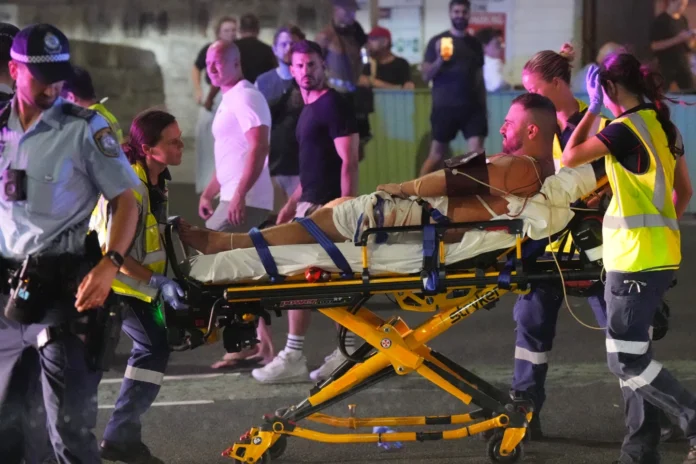
SYDNEY, Australia — Two gunmen opened fire on a Jewish Hanukkah celebration at Sydney’s iconic Bondi Beach, Australia, on Sunday evening, killing at least 12 people and wounding 29 others in what Australian authorities immediately classified as a terrorist attack deliberately targeting the nation’s Jewish community during one of its most sacred religious observances.
One gunman was fatally shot by police while the second was arrested and remained in critical condition, New South Wales Police Commissioner Mal Lanyon disclosed during late-night briefings as emergency responders continued evacuating casualties to hospitals across Sydney. The massacre unfolded as hundreds of families had gathered for “Chanukah by the Sea,” an annual community event celebrating the first night of Hanukkah near the beach’s children’s playground.
“This attack was designed to target Sydney’s Jewish community,” New South Wales Premier Chris Minns declared, his voice heavy with emotion as he addressed reporters outside the cordoned-off beach area where bloodstains and abandoned belongings littered the sand. The massacre was classified as a terrorist attack based on the event targeted and weapons deployed, Lanyon emphasized, marking one of the deadliest incidents of antisemitic violence in Australian history.
The Australian Broadcasting Corporation (ABC) detailed how initial emergency calls flooded into NSW Police about 6:45 p.m. local time concerning an active shooter situation at Bondi Beach. The public was immediately urged to avoid the area as armed officers raced toward what would become Australia’s worst mass shooting since stricter gun laws were implemented following the 1996 Port Arthur massacre.
NSW Police swiftly urged people at Bondi Beach to take shelter while directing others to avoid the vicinity entirely as the situation remained active and dangerous. A spokesperson for Prime Minister Anthony Albanese confirmed he was aware of the unfolding security crisis. “We urge people in the vicinity to follow information from NSW Police,” they emphasized, as the scope of the carnage gradually became apparent.
Sidney shooters
Randwick resident and former journalist Elizabeth Mealey described being in the Icebergs restaurant overlooking the beach when she heard shots ring out. “We thought it was fireworks, but it wasn’t — it was something much worse,” she told ABC News, her voice trembling with residual shock. “People started running right up the beach. It was panic, and the panic spread to Icebergs, and people are standing around still not knowing what’s going on, so it’s scary.”
“It felt like it took a long time to hear a siren, we’ve got a helicopter coming in now and an ambulance is arriving. It’s pandemonium and we really don’t know what’s happening,” Mealey recounted. She observed people fleeing from north Bondi to the south end attempting to escape what they could hear. “We did hear what sounded like another type of gunfire eventually, which we were hoping and assuming was police shooting back, and after that went a bit quieter but still kept up. At this point, we are assuming it’s over, but no-one really knows. It’s terrifying.”
Graphic videos circulating on social media captured people on Bondi Beach scattering as multiple gunshots and police sirens echoed across the normally tranquil shoreline. The footage documented the chaos and terror as beachgoers abandoned their belongings and sprinted for safety, with some people diving behind structures or into the water seeking cover from the sustained gunfire.
Prime Minister Albanese released a statement as the crisis unfolded, as broadcast by ABC Sydney. “The scenes in Bondi are shocking and distressing,” he acknowledged. “Police and emergency responders are on the ground working to save lives. My thoughts are with every person affected. I just have spoken to the AFP Commissioner and the NSW Premier. We are working with NSW Police and will provide further updates as more information is confirmed. I urge people in the vicinity to follow information from the NSW Police.”
Police disclosed there were multiple fatalities and that the active threat had been neutralized, with both shooters either killed or in custody. ABC correspondent Digby Werthmuller positioned at the scene obtained information from police media officers. “Police believe that there is to be multiple fatalities,” he transmitted. “They have told me that the active threat, those shooters have been neutralised by police and there’s no ongoing active threat to the public down here in Bondi. But it’s very much still an active scene down here with police and ambulance coming and going. So they do just want to reiterate for people to stay home and not come down to Bondi.”
The exact casualty count remained fluid throughout the evening as injured victims continued arriving at hospitals. NSW Ambulance confirmed it transported six patients to St Vincent’s hospital, three to Royal Prince Alfred, two to St George, two to Royal North Shore, one to Westmead, one to Sydney Children’s hospital and one to Prince of Wales. The 16 initial patients were in unknown conditions at the time of transport, though that number would eventually climb to 29 wounded.
ABC journalist Fiona Willan spoke with Richard Hasten, who had attended Chanukah by the Sea just before 5 p.m. “My grandson was playing at the petting zoo. Everything was fine,” he recounted. Around 6:30 p.m., he heard three bangs from the walkway bridge and initially thought it could have been a balloon bursting before he realized it was gunfire. “I took cover. I was laying down and a woman was right in front of me and I could see she was bleeding right in front of me … so I took my shirt off to stop the bleeding.”
He believes the bullet may have grazed her skull but she survived. Hasten’s son became “hysterical” when separated from his wife and child during the chaos, though they were eventually reunited. “A beautiful day in Bondi spoiled by someone full of hate,” Hasten lamented, his words capturing the profound violation felt by a community that had gathered for joyful celebration only to experience murderous violence.
Israeli President Isaac Herzog responded to the evening’s shooting at Bondi, where the Jewish celebration was taking place, though some information he initially shared proved incorrect, such as there being five shooters. His primary message emphasized prayers for victims alongside a pointed directive to the Australian government regarding antisemitism. “Our heart goes out to them. Our heart misses a beat. The entire nation of Israel misses a beat at this very moment as we pray for the recovery of the wounded … and we pray for those who lost their lives,” he expressed. “We send our warmest strength from here, from Jerusalem, and we repeat our words, time and again, to the Australian government, to take action to fight against the enormous wave of antisemitism which is plaguing Australian society.”
The Australian National Imams Council and the Council of Imams NSW released a statement on behalf of the Australian Muslim community unequivocally condemning the evening’s shootings at Bondi. “These acts of violence and crimes have no place in our society. Those responsible must be held fully accountable and face the full force of the law,” the statement emphasized. “Our hearts, thoughts and prayers are with the victims, their families, and all those who witnessed or were affected by this deeply traumatic attack. We acknowledge the pain, fear, and distress felt across the community and extend our sincere compassion and support to all who are grieving. We urge the community to remain vigilant, exercise caution, and support one another during this challenging time. This is a moment for all Australians, including the Australian Muslim community, to stand together in unity, compassion, and solidarity, rejecting violence in all its forms and affirming our shared commitment to social harmony and the safety of all Australians.”
The prime minister convened senior ministers for an emergency meeting of cabinet’s National Security Committee in response to the deadly Bondi attacks. Albanese was receiving briefings from “all security agencies,” including the Australian Federal Police, Home Affairs Minister Tony Burke confirmed. Burke serves as one of nine ministers on the NSC, which assembles to consider the “highest-priority and highest-risk national security matters.” Its decisions do not require cabinet approval, enabling rapid response to emerging threats.
ABC correspondent Digby Werthmuller interviewed Finn, a witness who was video-calling his family back home in London when the shooting erupted. “I could hear fireworks going off — that’s what it sounded like, anyway,” he recalled. “I told my mum I’d go have a look, almost show her the view, in a way, and the next thing you know I saw a white car with a guy firing from his car, and I saw an older lady who was killed,” providing chilling testimony about the attackers’ methodology.
Julian Leeser, a Jewish federal MP, characterized the shooting as a “terror attack” and a “horrifying tragedy.” “Tonight’s unfolding terror attack at Bondi Beach, occurring on the first night of Chanukah, is a horrifying tragedy,” he declared. “For Australians, tonight has turned into one of grief and shock. We must come together, check in on one another, support our Jewish friends, and to offer comfort where it is needed. My heart goes out to those who were in Bondi, spending time with their family and friends, only to be confronted with fear and violence. Our Jewish community, which is known for its courage and stoicism, is shaken tonight. I want to thank the NSW Police officers, paramedics, other first responders and members of the public who moved swiftly to protect lives and secure the area under extremely difficult circumstances. Even in darkness, light endures. Tonight, the values at the heart of Chanukah matter more than ever.”
Both The Associated Press and NBC News, in their coverage from the United States, confirmed that two gunmen shot dead at least 11 people on Sunday at a Jewish event being held at Sydney’s Bondi Beach, with Australian authorities declaring it a terrorist attack. One gunman was fatally shot by police and the second arrested. The suspect was in critical condition, authorities confirmed. A massive emergency response was underway, with injured people loaded into ambulances as medical personnel worked frantically to save lives.
At least 29 people were confirmed wounded, Lanyon disclosed. Two of those hurt were police officers who engaged the gunmen during the active shooting. “This attack was designed to target Sydney’s Jewish community,” Premier Minns emphasized. The massacre was declared a terrorist attack due to the event targeted and weapons used, Lanyon elaborated, invoking Australia’s counterterrorism legal frameworks.
Hundreds had gathered for the event at Bondi Beach called Chanukah by the Sea, celebrating the start of the Hanukkah Jewish festival. Dramatic footage apparently filmed by a member of the public and broadcast on Australian television channels showed someone appearing to tackle and disarm one of the gunmen, before pointing the man’s weapon at him in a remarkable act of civilian heroism that potentially saved numerous lives.
NBC News described how the shooting occurred as the Hanukkah event was taking place at Bondi Beach. An event marking the first day of the Jewish celebration Hanukkah was underway on Bondi Beach, confirmed by a digital flyer for an event named Chanuka by the Sea 2025. The flyer indicated the event was scheduled to take place near the beach’s children’s playground from 5 p.m. local time (1 a.m. ET) on Sunday. The event, organized by Jewish center Chabad of Bondi, listed live entertainment, music, games, and activities “for all ages,” making the targeting of families with children particularly heinous.
The Associated Press detailed how Lachlan Moran, 32, from Melbourne, was waiting for his family nearby when he heard shots. He dropped the beer he was carrying for his brother and ran. “You heard a few pops, and I freaked out and ran away. … I started sprinting. I just had that intuition. I sprinted as quickly as I could,” Moran recounted. He indicated he heard shooting off and on for approximately five minutes. “Everyone just dropped all their possessions and everything and were running and people were crying and it was just horrible,” Moran described, capturing the raw terror experienced by hundreds of beachgoers.
Police emphasized their operation remained “ongoing” and that a “number of suspicious items located in the vicinity” were being examined by specialist officers, including an improvised explosive device discovered in one of the suspects’ vehicles. Emergency services were summoned to Campbell Parade about 6:45 p.m. responding to reports of shots being fired. Local news outlets interviewed distressed and bloody bystanders as the scope of the carnage became evident.
Lanyon indicated the death toll from the shooting remained “fluid” and that injured people were still arriving at hospitals throughout the evening, making immediate casualty counts difficult to confirm with certainty. “Our heart bleeds for Australia’s Jewish community tonight,” Minns told reporters in Sydney. “I can only imagine the pain that they’re feeling right now to see their loved ones killed as they celebrate this ancient holiday,” acknowledging the profound trauma inflicted on a community already experiencing elevated anxiety about antisemitic incidents.
Prime Minister Albanese reiterated in a statement that his thoughts were with all those affected. “The scenes in Bondi are shocking and distressing,” he acknowledged. “Police and emergency responders are on the ground working to save lives,” praising first responders’ courage while the situation remained dangerous and uncertain.
Mass shooting deaths in Australia are extremely rare due to stringent gun control measures implemented following the 1996 massacre in the Tasmanian town of Port Arthur, where a lone gunman killed 35 people. That tragedy prompted the government to drastically tighten gun laws and made it significantly more difficult for Australians to acquire firearms, establishing one of the world’s most restrictive regulatory frameworks that has been credited with preventing subsequent mass casualty events.
Significant mass shootings this century included two murder-suicides with death tolls of five people in 2014, and seven in 2018, in which gunmen killed their own families and themselves. In 2022, two police officers were shot and killed by Christian extremists at a rural property in Queensland state. The three shooters in that incident, conspiracy theorists who hated police, were also shot and killed by officers after a six-hour siege in the region of Wieambilla, along with one of their neighbors.
Man bypassing disarms Sidney shooter
The Bondi Beach attack represents a disturbing escalation in antisemitic violence globally, occurring as Jewish communities worldwide have experienced heightened security threats and incidents of harassment, vandalism, and assault. The deliberate targeting of a family-oriented religious celebration amplifies the terroristic intent to instill fear and undermine Jewish Australians’ sense of security in public spaces traditionally associated with joy, leisure, and community gathering.
Australia’s Jewish community, numbering approximately 120,000 people concentrated primarily in Sydney and Melbourne, has voiced increasing concerns about rising antisemitism manifesting through both online harassment and physical incidents. The attack’s timing on the first night of Hanukkah—a festival celebrating religious freedom and resilience against persecution—carries symbolic significance that compounds the trauma inflicted on a community already grappling with security anxieties.
The swift classification of the incident as terrorism rather than a hate crime or mass shooting reflects Australian authorities’ recognition that the attack was designed to achieve political objectives through violence directed at a specific religious community. This designation triggers enhanced investigative resources, potential national security implications, and specific legal frameworks for prosecution that carry more severe penalties than ordinary criminal charges.
The discovery of an improvised explosive device in one suspect’s vehicle suggests premeditation and planning rather than spontaneous violence, indicating the attackers prepared for a potentially even more devastating assault had their plans fully materialized. Bomb disposal experts’ involvement highlights the multi-dimensional threat first responders confronted while simultaneously treating casualties and securing a chaotic crime scene spanning a popular public beach.
Bondi Beach’s status as an iconic Australian landmark frequented by both locals and international tourists amplifies the attack’s symbolic impact. The beach has long represented Australia’s outdoor lifestyle and multicultural society, making its transformation into a terrorism scene particularly jarring for a nation that has largely avoided the mass casualty terrorist attacks experienced by other Western democracies in recent decades.
The civilian who tackled and disarmed one gunman demonstrated extraordinary courage under circumstances where most people’s instinct would be to flee. This individual’s actions potentially prevented additional casualties and enabled police to apprehend the suspect rather than kill him, preserving the opportunity for investigation into the attack’s planning, motivation, and whether the perpetrators received assistance or inspiration from external sources.
As Australia mourns its victims and the Jewish community processes this traumatic assault on their religious observance, questions will intensify about how the attackers acquired weapons, whether they expressed extremist views that authorities might have detected, and what additional security measures might protect vulnerable communities from similar attacks. The incident will likely generate renewed debate about balancing civil liberties with security imperatives in an era of evolving terrorist threats targeting religious and ethnic minorities.
GREENBELT, Md. — A federal judge issued a temporary restraining order early Friday preventing the Trump administration from detaining Kilmar Abrego Garcia again, just hours after ordering his release from immigration custody in the latest twist in a case that has transformed him into a national symbol of contentious enforcement policies.
The emergency order by U.S. District Judge Paula Xinis came after Abrego Garcia’s attorneys rushed back to court seeking protection when they learned authorities might attempt to re-arrest him. The ruling represents another setback for the government’s prolonged efforts to deport a man whose wrongful removal to El Salvador and subsequent return has spotlighted questions about due process in immigration enforcement, CNN reported.
Xinis had ordered Abrego Garcia released Thursday evening from the Moshannon Valley Processing Center in Pennsylvania, approximately 115 miles northeast of Pittsburgh, finding the government was unlawfully holding him partly because no removal order from an immigration judge existed during that detention period. Immigration and Customs Enforcement freed him just before the 5 p.m. deadline the judge imposed, allowing him to return home to Maryland hours later.
“Yesterday’s order from Judge Xinis and now the temporary restraining order this morning represent a victory of law over power,” his attorney Simon Sandoval-Moshenberg said Friday, while emphasizing the legal battle was far from finished.
Speaking through a translator after his release, Abrego Garcia expressed gratitude and defiance. “I stand before you a free man and I want you to remember me this way, with my head held up high,” he said, PBS.com reported, citing the Associated Press. “I come here today with so much hope and I thank God who has been with me since the start with my family.”
He urged others facing similar struggles to continue fighting. After addressing supporters, he entered an ICE field office for a check-in, escorted by advocates. When Sandoval-Moshenberg emerged to announce his client would walk out free again, the crowd assembled outside erupted in relief.
Check-ins represent how ICE monitors individuals released while pursuing asylum or other immigration cases through a backlogged court system. The appointments were once routine, but many people have been detained at their check-ins since Trump’s second term began.
The Department of Homeland Security sharply criticized Xinis’s orders and vowed to appeal, characterizing the rulings as “naked judicial activism” by a judge appointed during the Obama administration.
“This order lacks any valid legal basis, and we will continue to fight this tooth and nail in the courts,” DHS Assistant Secretary Tricia McLaughlin said.
Sandoval-Moshenberg countered that the judge made clear the government cannot detain someone indefinitely without legal authority. “His client has endured more than anyone should ever have to,” he said in a statement.
Abrego Garcia, a Salvadoran citizen married to an American with whom he has a child, has resided in Maryland for years after immigrating illegally as a teenager to join his brother, who had become a U.S. citizen. An immigration judge granted him protection in 2019 from deportation to his home country, where he faces danger from a gang that targeted his family.
The 2019 settlement determined he had a “well founded fear” of danger in El Salvador if returned there. While allowed to live and work in the United States under ICE supervision, he was not granted residency status.
Earlier this year, he was mistakenly deported despite the protection order and held in a notoriously brutal Salvadoran prison despite having no criminal record. Facing mounting public pressure and a court mandate, the Trump administration brought him back to the United States in June—but only after issuing an arrest warrant on human smuggling charges in Tennessee. He has pleaded not guilty to those charges and asked a federal judge to dismiss them.
Since he cannot be removed to El Salvador, ICE has attempted to deport him to a series of African countries. Abrego Garcia filed a lawsuit claiming the Trump administration is illegally weaponizing the removal process to punish him for the public embarrassment his wrongful deportation caused.
In her Thursday order releasing him, Xinis wrote that federal authorities “did not just stonewall” the court. “They affirmatively misled the tribunal.” The judge referenced the government’s successive proposals to remove Abrego Garcia to multiple African countries without securing their agreement, as well as false claims that Costa Rica had withdrawn an acceptance offer.
Xinis also rejected the government’s argument that she lacked jurisdiction to intervene regarding a final removal order, determining no final order had been filed.
The human smuggling charges against Abrego Garcia stem from a 2022 traffic stop in Tennessee for speeding. Body camera footage from a Tennessee Highway Patrol officer shows a calm exchange with Abrego Garcia, who was transporting nine passengers. Officers discussed among themselves their suspicions of smuggling but ultimately allowed Abrego Garcia to continue driving with only a warning.
Prosecutors allege he accepted money to transport people within the United States who were in the country illegally. A Department of Homeland Security agent testified at an earlier hearing that he did not begin investigating the traffic stop until after the U.S. Supreme Court ruled in April that the Trump administration must work to bring Abrego Garcia back from El Salvador.
That testimony has fueled defense arguments that the prosecution is vindictive. Abrego Garcia has asked the Tennessee federal court to dismiss the case on those grounds. A judge in that case has ordered an evidentiary hearing after previously finding some evidence the charges “may be vindictive,” noting several statements by Trump administration officials that “raise cause for concern,” including remarks by Deputy Attorney General Todd Blanche that seemed to suggest the Justice Department charged Abrego Garcia because he won his wrongful deportation case.
The temporary restraining order issued Friday morning provides Abrego Garcia immediate protection while broader legal questions about his detention and deportation proceed through the courts. How long that protection lasts depends on whether higher courts uphold Xinis’s rulings or grant the government’s promised appeals.
The case has drawn intense scrutiny from immigration advocates who view Abrego Garcia’s ordeal as emblematic of what they characterize as punitive enforcement divorced from legal authority. His wrongful deportation despite a valid protection order, subsequent detention without legal basis, alleged government misrepresentations to the court, and criminal charges filed only after he successfully challenged his removal collectively paint a picture of retaliation, his supporters argue.
The government maintains it is simply enforcing immigration law and that Abrego Garcia’s illegal entry and alleged human smuggling justify his detention and prosecution. Officials assert that judicial intervention undermines lawful immigration enforcement and prevents ICE from executing its congressionally mandated duties.
For Abrego Garcia himself, Friday’s court victory provided temporary respite after months of detention following his traumatic experience in El Salvador’s prison system. Whether he will ultimately remain free, secure asylum, or face deportation to a third country remains uncertain as multiple legal proceedings unfold simultaneously in Maryland and Tennessee courts.
The broader implications extend beyond one man’s case. The judicial findings of unlawful detention and government misrepresentations could influence how courts scrutinize ICE’s authority to hold immigrants indefinitely and evaluate official claims about deportation options. Other immigrants facing similar circumstances may cite Abrego Garcia’s case as precedent for challenging their own detention or removal proceedings.
As the legal battles continue, Abrego Garcia’s status as a symbol of immigration enforcement controversies ensures his case will remain in the spotlight, offering fodder for both critics of Trump’s policies and defenders of aggressive enforcement. The outcome may help define the boundaries of executive power in immigration matters and the role of courts in checking that authority.
Ukraine has struck Russian oil infrastructure in the Caspian Sea for a second time this week, expanding its long-range campaign to weaken Moscow’s energy sector, a key source of funding for the war, a Ukrainian security official said Friday.
Drones operated by Ukraine’s Security Service, known as the SBU, hit the Filanovsky and Korchagin offshore oil platforms, both owned by Russian energy giant Lukoil, according to the official, who spoke on condition of anonymity because the operation was not publicly authorized. The Filanovsky platform, part of Russia’s largest oil field in the Caspian, was also targeted earlier this week, marking the first known Ukrainian attack on Russian energy assets in the region since the war began.
The official said the drones damaged critical equipment on both platforms, forcing production to be suspended. Reuters reported it could not independently verify the claims and said it had contacted Lukoil for comment.
The Caspian Sea lies more than 700 kilometers, or about 435 miles, from Ukraine’s nearest border, underscoring Kyiv’s growing ability to reach deep into Russian energy infrastructure far from the front lines. Ukrainian officials did not disclose where the drones were launched from or the route they took to reach the platforms.
Ukraine has intensified attacks on Russia’s oil facilities throughout the year, aiming to disrupt revenue streams that help sustain the Kremlin’s military campaign. The strikes have focused largely on refineries in the European part of Russia, where repeated drone attacks have forced temporary shutdowns and repairs, according to Russian and industry statements.
The Caspian strike signals a widening of that strategy. Last month, Ukraine began targeting tankers carrying Russian oil through the Black Sea, hitting three vessels with sea drones over a two-week period, according to Ukrainian officials. Those attacks focused on ships operating outside international regulatory frameworks, Kyiv said.
The renewed strike on Caspian oil platforms reflects Ukraine’s evolving doctrine of economic warfare, one that seeks to offset Russia’s battlefield advantages by constraining its ability to generate revenue. Oil and gas exports remain the backbone of Russia’s economy, even under Western sanctions, and offshore platforms such as Filanovsky represent high-value, technically complex assets that are difficult to repair quickly.
By demonstrating the ability to hit infrastructure hundreds of miles from Ukrainian territory, Kyiv is signaling both to Moscow and to its Western partners that Russian energy assets are no longer insulated by geography. Analysts say the Caspian Sea, long viewed as a relatively secure production zone for Russia, may now require additional air defenses, diverting military resources from the front lines in Ukraine.
The strikes also raise broader geopolitical implications. The Caspian is bordered by several countries with competing energy and security interests, and repeated attacks could increase insurance costs, disrupt shipping routes and heighten regional tensions. While the immediate production impact may be limited, the psychological and strategic effects could be significant, forcing Russia to reassess the vulnerability of its offshore energy network.
For Ukraine, the campaign underscores a calculated shift toward long-range precision operations designed to erode Russia’s war-fighting capacity over time. As Kyiv continues to face ammunition shortages and manpower challenges on the battlefield, targeting energy infrastructure offers a way to impose sustained costs on Moscow without direct confrontation, signaling that the economic front of the war is becoming as critical as the military one.
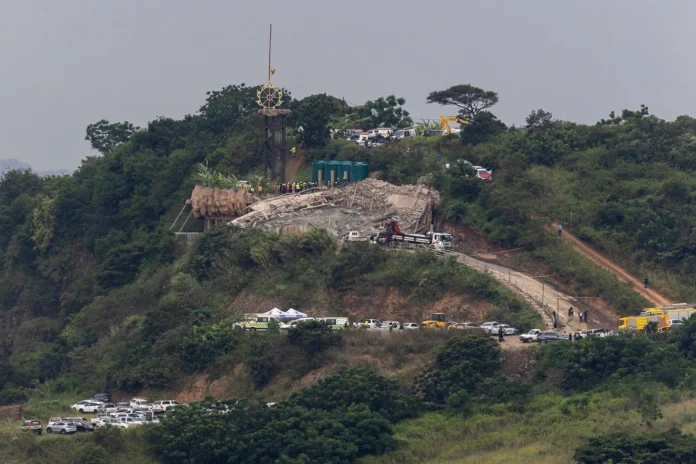
VERULAM, South Africa — At least two people were killed and six others remained trapped beneath rubble Friday after a multi-story building under illegal construction collapsed onto a Hindu temple in this town north of Durban, South Africa, prompting a massive rescue operation as survivors communicated their locations to family members via cellphone from beneath the debris.
Eight injured individuals have been treated and transported to nearby hospitals, while rescue teams continue efforts to locate those still buried under concrete and twisted metal, local authorities said.
The EThekwini Municipality said in a statement that preliminary investigations revealed no building plans had been approved and the structure appeared to be under construction illegally. “Several injuries and entrapments” occurred, and rescue teams were deployed to the site, the municipality said.
The building being constructed atop the temple was three or four stories high and appeared to be an extension of the religious facility, according to Prem Balram, an official with the privately operated Reaction Unit South Africa security and emergency response company, who spoke with national broadcaster SABC.
Whether those trapped include construction workers, temple worshippers, or both remained unclear Friday evening, Balram said. He indicated that one of the temple owners might be among those buried under the rubble, though he did not identify them by name.
Some trapped individuals were communicating with family members on cellphones, providing information about their locations beneath the collapsed structure, Balram told SABC. Emergency responders from his company were working alongside official rescue teams in what he characterized as a “mammoth task” to extract survivors.
The temple sits atop a hill overlooking a ranch. Photographs released by the municipality showed twisted metal beams, collapsed pillars and massive piles of rubble where the structure once stood.
Xinhua reported that rescue operations continued through Friday evening as teams worked methodically to reach those still believed alive beneath the debris. The complexity of the collapse, with multiple floors pancaked onto the temple below, has complicated extraction efforts and raised fears about the stability of remaining sections.
The Associated Press confirmed that authorities did not immediately specify the exact number of people trapped, though initial reports from emergency response officials indicated approximately six individuals remained buried. The discrepancy between preliminary casualty figures and confirmed numbers reflects the chaotic nature of the rescue scene and the difficulty of accounting for everyone who may have been present when the structure failed.
The illegal nature of the construction raises serious questions about regulatory enforcement and oversight in the rapidly developing areas surrounding Durban. The EThekwini Municipality’s confirmation that no building plans had been approved suggests construction proceeded without permits, inspections, or compliance with safety codes designed to prevent exactly this type of catastrophic failure.
South Africa has experienced recurring building collapses involving unauthorized or substandard construction. Last year, more than 30 construction workers died when an apartment building under construction collapsed in the city of George on South Africa’s south coast. Rescuers searched for more than a week for survivors following that disaster, which an investigation later determined resulted from design flaws, use of substandard construction materials, and negligence, the Associated Press reported.
The George collapse prompted calls for stricter enforcement of building codes and more rigorous oversight of construction projects, particularly those involving multi-story structures. Friday’s temple collapse suggests those reforms have either not been implemented or have failed to prevent unauthorized construction from proceeding.
The decision to construct a multi-story addition atop an existing temple raises additional structural concerns. Adding substantial weight and height to a building not originally designed to support such loads can compromise the foundation and load-bearing capacity of the original structure. Without proper engineering assessments and reinforcement, such expansions risk catastrophic failure.
Religious facilities in South Africa sometimes undertake construction projects through community fundraising and volunteer labor rather than engaging licensed contractors and architects. While such community-driven efforts reflect dedication and resourcefulness, they can result in construction that fails to meet safety standards or obtain required permits, particularly when cost considerations take precedence over regulatory compliance.
The use of cellphones by trapped survivors to communicate their locations represents both hope and urgency for rescue teams. Knowing victims remain alive and conscious beneath the rubble intensifies pressure to reach them before injuries worsen, air supplies diminish, or shifting debris causes further harm. However, cellphone signals also guide rescuers to specific locations, potentially accelerating extraction efforts.
The “mammoth task” characterization reflects the dangerous and painstaking nature of collapse rescue operations. Teams must carefully remove debris without triggering secondary collapses that could kill both victims and rescuers. Heavy equipment can destabilize remaining structures, while manual excavation proceeds slowly. Rescuers must balance speed against safety as they work to reach people whose survival may depend on swift action.
The toll of two confirmed dead and six trapped, plus eight injured, suggests the collapse occurred when multiple people were present at the site. Whether the building housed equipment, materials, or people for religious services when it failed will determine whether the casualty count could rise significantly as rescue operations continue.
For Verulam’s Hindu community, the temple collapse represents both a human tragedy and the loss of a sacred space central to religious and cultural life. Temples serve as gathering places for worship, festivals, and community events, making their destruction particularly devastating for congregations that invested years of effort and resources in their construction and maintenance.
The incident also highlights broader challenges facing South African municipalities struggling to enforce building codes amid rapid urbanization, limited resources, and sometimes inadequate coordination between permitting offices and enforcement agencies. Illegal construction often proceeds undetected until disaster strikes, by which point regulatory failures have already enabled the conditions for tragedy.
As rescue operations extend into the night, families of the trapped wait anxiously for news while emergency responders work systematically through debris fields. The outcome of these efforts will determine whether the current death toll of two represents the final casualty figure or merely the beginning of a larger tragedy that could have been prevented through proper permitting, inspection, and enforcement of construction standards.
WASHINGTON — House Democrats unveiled photographs Friday from Jeffrey Epstein’s estate depicting President Donald Trump, former President Bill Clinton, tech billionaire Bill Gates, and other prominent figures in the orbit of the late sex trafficker, reigniting scrutiny of relationships between powerful men and the disgraced financier.
The 19 images, which Democratic members of the House Oversight Committee said originated from Epstein’s estate, collectively reinforce that the financier maintained connections to a wide array of influential and high-profile individuals whose associations with him now face intense examination.
One photograph shows Trump surrounded by six women wearing leis whose faces were obscured by committee redactions. Another depicts a bowl of novelty condoms bearing a caricature of Trump’s face with text reading “I’m HUUUUGE!” The condoms, displayed with a sign advertising “Trump condom $4.50,” were manufactured by Fishs Eddy, a New York City novelty shop. The National Museum of American History’s online collection describes the item as a “political satire condom.”
Additional images show Steve Bannon and Epstein photographing themselves in a mirror, Clinton with Epstein, Ghislaine Maxwell and another couple, and Gates with former Prince Andrew. Former Harvard President Larry Summers and attorney Alan Dershowitz also appeared in photographs from the estate.
None of the released images depict sexual misconduct or are believed to show underage girls. The timing, locations and photographers behind the images were not immediately clear.
White House spokeswoman Abigail Jackson dismissed the release as Democrats “selectively releasing cherry-picked photos with random redactions to try and create a false narrative.”
She highlighted Democrats previously linked to Epstein through document releases, including House Minority Leader Hakeem Jeffries and Democratic Del. Stacey Plaskett. Plaskett exchanged text messages with Epstein during a 2019 congressional hearing. A Democratic consulting group asked Epstein in March 2013 whether he wanted to participate in a fundraising dinner with Jeffries, though Jeffries has said he has no memory of the message.
“The Democrat hoax against President Trump has been repeatedly debunked and the Trump Administration has done more for Epstein’s victims than Democrats ever have by repeatedly calling for transparency, releasing thousands of pages of documents, and calling for further investigations into Epstein’s Democrat friends,” Jackson said.
The Republican-controlled committee obtained the photographs from Epstein’s estate as part of its ongoing investigation. The panel has released tens of thousands of documents, emails and communications received from the estate that continue opening new investigative avenues.
Lawyers for the estate wrote to the committee Thursday noting that members could review videos and photographs “taken at any property owned, rented, operated, or used by Epstein from January 1, 1990 through August 10, 2019.”
“Like yesterday’s production, it also includes documents that may not be responsive, but that the Estate was unable to confirm whether they were taken at a property owned, rented, operated, or used by Epstein. The Estate has provided minimal redactions to these photographs; the redactions are limited to nudity,” the attorneys wrote.
Rep. Robert Garcia, the ranking Democrat on the House Oversight Committee, told reporters the released photographs were “significant” and noted that Democrats on the panel have examined roughly one quarter of the 95,000 images handed over.
“I think anything that we release is significant. I think – clearly, I think people should be able to make judgments on their own as to what they see in these photos. For us, this is about transparency,” Garcia said.
In an earlier statement, Garcia declared it was “time to end this White House cover-up and bring justice to the survivors of Jeffrey Epstein and his powerful friends.”
“These disturbing photos raise even more questions about Epstein and his relationships with some of the most powerful men in the world. We will not rest until the American people get the truth. The Department of Justice must release all the files, NOW,” he said.
A committee spokesperson accused Democrats of “cherry-picking photos and making targeted redactions to create a false narrative about President Trump.”
“We received over 95,000 photos and Democrats released just a handful. Democrats’ hoax against President Trump has been completely debunked. Nothing in the documents we’ve received shows any wrongdoing. It is shameful Rep. Garcia and Democrats continue to put politics above justice for the survivors,” the spokesperson said.
CNN has contacted representatives for Bannon, Clinton, Gates, Branson, Summers, Dershowitz and Mountbatten-Windsor seeking comment.
Clinton has never faced accusations by law enforcement of wrongdoing related to Epstein, and a spokesperson has repeatedly stated he severed ties with Epstein before his 2019 arrest on federal charges and didn’t know about his crimes.
A Gates spokesperson has repeatedly denied that Epstein ever worked for him. Gates previously expressed regret about meeting Epstein, telling CNN’s Anderson Cooper in 2021: “It was a huge mistake to spend time with him, to give him the credibility of being there.”
Trump’s connections to Epstein are well documented. The two moved in the same social circles in Manhattan and Palm Beach. However, Trump has not faced accusations of criminal wrongdoing, and he and his team have previously characterized Epstein as a “creep” whom Trump banned from his club.
The images released by Democrats Friday also included photographs of sex toys.
In a recent batch of emails released by the committee, Epstein claimed Trump “spent hours” with one of Epstein’s most prominent accusers, the late Virginia Giuffre. Epstein also wrote in an email that Trump “knew about the girls” — an apparent reference to Trump’s assertion that he expelled Epstein from his Mar-a-Lago club for pursuing young women employed there.
Following those email revelations, Trump and the White House dismissed the issue as a “hoax,” with press secretary Karoline Leavitt stating the emails “prove absolutely nothing, other than the fact that President Trump did nothing wrong.”
CNN’s examination of thousands of pages of Epstein’s emails reveals that over years, Epstein repeatedly mentioned Trump — sometimes offering analysis of his behavior, sometimes gossiping, and sometimes simply positioning himself as someone with rare insight into the man who had become president.
Others associated with Epstein have faced professional or other consequences for those relationships, despite not being accused of criminal wrongdoing.
Summers took leave from teaching at Harvard and resigned from his position on OpenAI’s board. He has said he is “deeply ashamed” of maintaining ties to Epstein and would work to “rebuild trust and repair relationships with the people closest to me” while stepping back from public roles. Andrew Mountbatten-Windsor relinquished use of his royal titles and has denied allegations of misconduct.
Under legislation passed by Congress last month, the Justice Department must release all Epstein files in its possession by December 19.
Republican Rep. Thomas Massie, who led efforts to circumvent GOP leadership and force the legislation through, warned that DOJ would be committing a crime if it fails to meet next week’s deadline.
“It’s a crime if they don’t. It’s not like they’re in contempt of Congress because they didn’t respond to a subpoena. This is a new law with criminal implications if they don’t follow it,” the Kentucky Republican said.
Massie noted, however, that he was “encouraged” that additional grand jury materials have been released to the DOJ.
Garcia called Friday for the administration to release available materials immediately rather than waiting until the deadline, noting that other photographs are “incredibly disturbing.”
“Right now, our plan is to demand that the president release the files, and we’ll see what he does on the, on the 19th, but I think again, these pictures, some of these photos, are really disturbing. And I know we’ve put some out today. There are many others. And some of the other photos that we did not put out today are incredibly disturbing,” he said.
The photo release occurs amid broader questions about accountability for individuals who associated with Epstein despite mounting evidence of his criminal behavior. While many prominent figures maintained social or business relationships with him after his 2008 conviction on solicitation charges involving a minor, they have offered varying explanations for those continued connections.
The selective nature of the Democratic release—19 photos from a cache of 95,000—inevitably raises questions about what criteria guided the choices. Republicans’ accusation of “cherry-picking” suggests the released images were chosen for maximum political impact rather than representing a comprehensive or random sample.
The redactions applied to faces in some photographs, ostensibly to protect individuals not accused of wrongdoing, create another layer of interpretation challenge. Without knowing who was redacted or why, observers cannot fully assess the significance of social gatherings depicted.
The novelty Trump condoms photograph illustrates the mix of serious criminal investigation and tabloid curiosity that has characterized Epstein coverage. While the item is a commercially available political satire product with no apparent connection to criminal activity, its presence in Epstein’s estate adds to the complex mosaic of his relationships with powerful figures.
The deadline for DOJ file release adds urgency to the controversy. If the department complies with the December 19 mandate, substantially more material about Epstein’s connections and activities will enter the public domain, potentially answering longstanding questions while likely generating new controversies.
For Trump, already facing scrutiny over past associations with Epstein, the photo release creates additional political headaches even as his administration characterizes the matter as a partisan attack. The White House strategy of pivoting to Democratic ties with Epstein reflects attempts to neutralize the issue by emphasizing that connections crossed party lines.
Whether the photo release and impending DOJ document dump ultimately produce new revelations about criminal activity or simply confirm what was already known about Epstein’s social network remains unclear. What is certain is that his victims continue seeking accountability while powerful men who knew him navigate the reputational consequences of those associations.
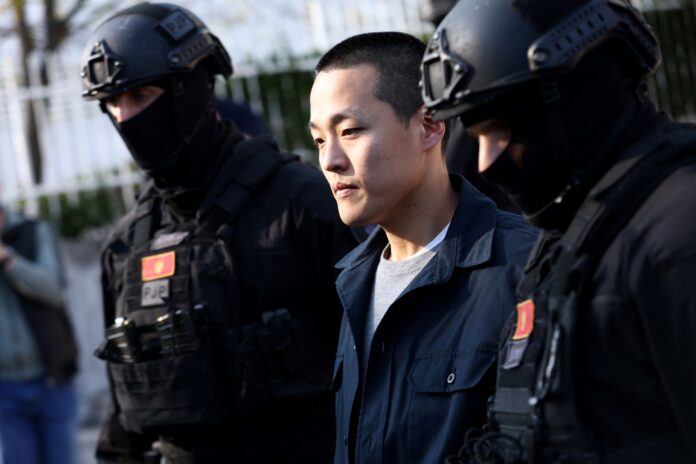
Do Kwon, the Stanford-educated cryptocurrency entrepreneur once hailed as a visionary in the digital-asset world, was sentenced Thursday to 15 years in federal prison, capping a dramatic fall from grace after the collapse of his TerraUSD stablecoin and its sister token, Luna — a combined implosion that erased about $40 billion in value and rippled across global markets.
The Associated Press reported that U.S. District Judge Paul A. Engelmayer rejected prosecutors’ recommendation of 12 years as “unreasonably lenient,” while dismissing the defense’s request for five years as “wildly unreasonable.” Engelmayer told Kwon that the losses were “real money” and that the scheme amounted to “a fraud on an epic, generational scale.”
Kwon apologized in court after listening to victims describe how their financial lives had been wiped out. One person told the court by phone that his wife left him and his children could no longer afford college, while another said family investments plummeted from $190,000 to $13,000. A nonprofit advocate, speaking in person, said charities he worked with lost millions. Some victims, read aloud by a prosecutor from more than 300 submitted letters, said they contemplated suicide as their savings vanished.
AP reported that Kwon sat in court wearing a yellow jail uniform as Engelmayer spoke of the “human wreckage” left behind.
International Manhunt and Arrest in Montenegro
Le Monde noted that Kwon, now 34, was captured in March 2023 at the Podgorica airport in Montenegro while trying to board a Dubai-bound flight with a forged Costa Rican passport. He spent 17 months in detention there before being extradited to the United States. He still faces prosecution in South Korea, where media once celebrated him as a prodigy and where many retail investors poured personal savings into his Terra ecosystem.
Le Monde reported that Kwon was on the run for months across Asia and Europe, seeking “political protection” from multiple jurisdictions.
Terraform Labs and the Collapse of a False Promise
Terraform Labs, founded by Kwon in 2018, marketed TerraUSD as a “stablecoin” designed to maintain a one-dollar peg. Prosecutors told the court that the token’s stability was an illusion held together by covert cash infusions rather than sound design. When TerraUSD lost its peg in May 2022, Luna crashed alongside it, igniting what one prosecutor described as “a cascade of crises” through the broader crypto market.
The Associated Press reported that the losses surpassed those tied to FTX’s Sam Bankman-Fried and OneCoin’s Karl Sebastian Greenwood, a comparison that underscored the vast scale of the damage. Judge Engelmayer estimated that as many as one million people may have been affected.
Le Monde added that Kwon’s rise — fueled by hype, heavy media praise in South Korea, and his inclusion in the Forbes 30 Under 30 Asia list — made his fall even more dramatic. Experts told the French outlet that Terraform Labs operated as what amounted to a “glorified pyramid scheme.”
Government Argument: Fraud Built on Deception
Assistant U.S. Attorney Sarah Mortazavi told the court that Kwon built “an illusion of resilience while covering up systemic failure,” characterizing the plan as driven by arrogance and indifference to ordinary people. A U.S. Justice Department filing cited recordings in which Kwon boasted that his strategy for dealing with investigators was to “tell them to fuck off,” a quote also noted by Le Monde.
U.S. Attorney Jay Clayton said in a statement, as reported by Le Monde, that Kwon “devised elaborate schemes to mislead investors and inflate the value of Terraform’s cryptocurrencies for his own benefit.”
Alongside the prison term, Kwon was ordered to forfeit more than $19 million in illicit proceeds.
Aftermath and Global Implications
Kwon’s sentencing marks one of the most consequential judgments in the history of cryptocurrency regulation — a moment that prosecutors and analysts say signals the U.S. government’s growing insistence that digital-asset innovators face consequences on par with traditional financial fraud.
The Terra crash accelerated global momentum for stablecoin oversight, prompting regulatory frameworks from the European Union, Singapore, and South Korea. The U.S. has lagged behind, but the Department of Justice has used cases like Kwon’s and that of FTX to argue that crypto products promising stability or investment returns must be subject to market-rigor laws and consumer-protection requirements.
Financial analysts say that TerraUSD’s collapse contributed to a broader erosion of trust in algorithmic stablecoins, which have struggled to attract major investor confidence since 2022. Kwon’s sentencing may also hasten the consolidation of the crypto sector under more heavily regulated centralized exchanges and government-approved stablecoin issuers.
While prosecutors signaled that he may be able to finish the latter portion of his sentence in South Korea, they stressed that at least half must be served in the United States. Whether South Korea will pursue its own charges afterward remains uncertain, but observers note that his case there is politically sensitive due to the large number of domestic retail losses.
Kwon’s downfall has already been compared to the collapse of Theranos founder Elizabeth Holmes, another case of a charismatic entrepreneur who sold a vision that authorities later described as impossible from the outset.
A federal judge ordered the immediate release Thursday of an immigrant whose erroneous deportation to a notorious El Salvador prison transformed him into a flashpoint for Trump administration immigration policies, ruling that authorities lacked any legal basis to continue holding him while he fights to remain in the United States.
U.S. District Judge Paula Xinis directed Immigration and Customs Enforcement to free Kilmar Abrego Garcia from detention immediately, finding that federal authorities had re-arrested him following his return to America without lawful authority.
“For this reason, the Court will GRANT Abrego Garcia’s Petition for immediate release from ICE custody,” Xinis wrote in her ruling ordering his discharge from the Moshannon Valley Processing Center in Pennsylvania.
The Department of Homeland Security sharply criticized the decision and pledged to appeal, characterizing the ruling as “naked judicial activism” by a judge appointed during the Obama administration, the Associated Press reported.
“This order lacks any valid legal basis, and we will continue to fight this tooth and nail in the courts,” DHS Assistant Secretary Tricia McLaughlin said. The judge gave prosecutors until 5 p.m. EST to formally respond to the release order.
Xinis wrote that Abrego Garcia’s removal “cannot be considered reasonably foreseeable, imminent, or consistent with due process,” citing the absence of a final removal order, NBC stated. “Since Abrego Garcia’s wrongful detention in El Salvador, he has been re-detained, again without lawful authority.”
The ruling represents the latest development in a case highlighting the Trump administration’s enforcement tactics as President Donald Trump pursues what he has characterized as a mass deportation campaign.
After Abrego Garcia returned to the United States following his wrongful March deportation, the Trump administration detained him again and threatened to remove him to multiple African nations and Costa Rica. The judge found these removal threats lacked substance and that officials misled the court about deportation options.
“Respondents serially ‘notified’ Abrego Garcia—while he sat in ICE custody—of his expulsion to Uganda, then Eswatini, then Ghana; but none of these countries were ever viable options, and at least two had not even been asked to take Abrego Garcia before Respondents claimed supposed removal to each,” Xinis wrote.
The judge said the court was “affirmatively misled” by the government during a November hearing where administration officials claimed Liberia represented the only viable removal option and that Costa Rica had allegedly withdrawn an offer to receive Abrego Garcia.
“Costa Rica had never wavered in its commitment to receive Abrego Garcia, just as Abrego Garcia never wavered in his commitment to resettle there,” Xinis wrote in her memo.
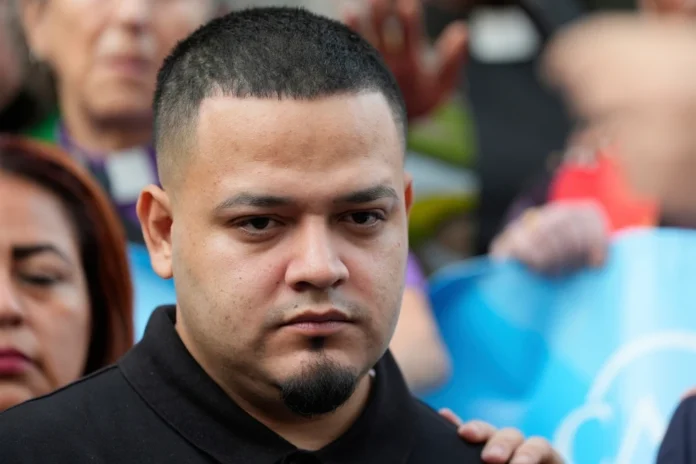
Abrego Garcia’s attorney, Simon Sandoval-Moshenberg, said the ruling clarified that the government cannot detain someone indefinitely without legal authority and that his client “has endured more than anyone should ever have to.”
“At the same time, we are mindful of the government’s past conduct in this case and will stay vigilant to ensure that nothing undermines the court’s decision,” Sandoval-Moshenberg said in a statement.
Abrego Garcia, a Salvadoran national married to an American citizen with whom he has a child, has resided in Maryland for years but entered the United States illegally as a teenager. An immigration judge determined in 2019 that he could not be deported to El Salvador because he faced danger from a gang that had targeted his family.
When authorities mistakenly sent him to El Salvador in March despite the protection order, his case became a rallying point for critics opposing Trump’s immigration enforcement methods. A court subsequently ordered his return to the United States.
Since he cannot be removed to El Salvador, ICE has attempted to deport him to a succession of African countries. His federal lawsuit contends the Trump administration is illegally weaponizing the removal process to punish Abrego Garcia for the public embarrassment his wrongful deportation caused.
In ordering his release, Xinis wrote that federal authorities “did not just stonewall” the court. “They affirmatively misled the tribunal.” The judge referenced the sequential list of four African countries officials claimed as removal destinations seemingly without securing commitments from those nations, as well as officials’ false assertions that Costa Rica withdrew its acceptance offer.
Xinis also rejected the government’s argument that she lacked jurisdiction to intervene regarding a final removal order for Abrego Garcia, determining no final order had been filed.
The judge’s scathing criticism of government conduct suggests a pattern of administrative dishonesty that undermined judicial proceedings. By documenting serial notifications of deportation to countries that had not agreed to accept Abrego Garcia, Xinis exposed what appears to be either bureaucratic incompetence or deliberate deception designed to maintain detention indefinitely.
The fabricated claim about Costa Rica withdrawing its offer represents perhaps the most damaging revelation, as it demonstrates officials made false statements directly to the court about a critical fact in the case. Such misrepresentations strike at the heart of the judicial system’s ability to function when courts must rely on government representations about deportation logistics and international negotiations.
Separately, Abrego Garcia is seeking to reopen his immigration case to pursue asylum in the United States, a process that could take months or years to resolve.
He also faces criminal charges in Tennessee, where he has pleaded not guilty to human smuggling allegations. He has asked the federal court to dismiss the case, arguing the prosecution is vindictive. His Tennessee defense attorney, Sean Hecker, declined to comment.
A judge in the Tennessee case has scheduled an evidentiary hearing after previously finding some evidence that the charges “may be vindictive.” The judge noted several statements by Trump administration officials that “raise cause for concern,” including comments by Deputy Attorney General Todd Blanche that appeared to suggest the Justice Department charged Abrego Garcia because he prevailed in his wrongful deportation case.
The potential vindictiveness finding in the criminal case adds another dimension to what Abrego Garcia’s legal team characterizes as government retaliation.
If prosecutors filed human smuggling charges in response to his successful challenge of the wrongful deportation rather than based on legitimate law enforcement priorities, such vindictive prosecution would violate constitutional due process protections.
The convergence of civil immigration proceedings, criminal charges, and allegations of government dishonesty creates an extraordinarily complex legal landscape.
Abrego Garcia simultaneously battles deportation efforts, defends against criminal allegations, and accuses federal officials of retaliatory prosecution while documenting instances where those officials misled a federal court.
For immigration attorneys and advocacy groups monitoring the case, Thursday’s release order represents a significant judicial rebuke of Trump administration detention practices.
The finding that ICE held Abrego Garcia “again without lawful authority” establishes precedent that could benefit other detainees challenging the legal basis for their custody.
However, the government’s vow to appeal means Abrego Garcia’s freedom may prove temporary if higher courts reverse Xinis’s decision. The administration’s characterization of the ruling as “judicial activism” signals its intention to pursue the case aggressively through the appellate system.
The deadline Xinis imposed for prosecutors to respond by 5 p.m. Thursday reflects urgency to implement the release order before government attorneys could seek emergency stays from appellate courts. Whether ICE complied with the release directive or whether prosecutors successfully obtained a stay will determine Abrego Garcia’s immediate fate.
Beyond the individual circumstances, the case has become emblematic of broader debates about immigration enforcement, due process, and government accountability.
Supporters view Abrego Garcia as a victim of bureaucratic error compounded by vindictive retaliation when he successfully challenged that error. Critics see him as someone who entered illegally, was properly ordered removed, and now exploits legal procedures to delay deportation.
The March wrongful deportation to El Salvador, where Abrego Garcia feared gang violence that prompted the original protection order, represented a catastrophic failure of the immigration system’s safeguards.
That an individual with a court order prohibiting removal to a specific country could be mistakenly deported there anyway suggests systemic problems beyond isolated error.
His subsequent re-detention and the documented pattern of government misrepresentations about removal options compound concerns about whether immigration enforcement operates with appropriate oversight and accountability.
The judge’s finding that officials “affirmatively misled” the court raises questions about institutional culture within agencies implementing deportation policies.
As Abrego Garcia emerges from detention pending appeals, his case continues to test fundamental questions about government power, judicial oversight, and the rights of immigrants caught in an enforcement system that critics argue prioritizes removal numbers over individual justice.
At least 34 people were killed and dozens more wounded when Myanmar’s military bombed a hospital in rebel-controlled territory Wednesday night, marking the latest attack on civilian infrastructure as the junta intensifies its campaign to reclaim areas lost to ethnic armies fighting the military regime.
The air strike hit the hospital in Mrauk-U town in Rakhine state around 9 p.m. local time (14:30 GMT), according to ground sources who spoke with the BBC. The facility serves an area under control of the Arakan Army, one of the most powerful ethnic militias battling Myanmar’s military rulers since they seized power in a 2021 coup that triggered civil war.
Khaing Thukha, a spokesperson for the Arakan Army, told the BBC that most casualties were patients receiving treatment at the hospital. “This is the latest vicious attack by the terrorist military targeting civilian places,” he said, demanding the military “must take responsibility” for bombing civilians.
The Arakan Army health department said the strike killed 10 patients immediately and injured many others. By Thursday morning, the death toll had climbed to at least 34 as rescue workers searched through rubble and debris.
Photographs believed to be from the scene circulated on social media showing collapsed roofs across sections of the building complex, destroyed hospital beds and wreckage scattered across the grounds. Images shared by Wai Hun Aung, which he also posted online, showed the facility in complete ruins with shattered columns and beams, and victims’ bodies laid out on the ground. Reuters could not immediately verify the images.
“The remaining patients have been moved to a safe location,” Wai Hun Aung told Reuters.
A 23-year-old Mrauk-U resident who rushed to the site after hearing explosions described a scene of devastation. “When I arrived, the hospital was on fire,” he said, requesting anonymity due to security concerns. “I saw many bodies lying around and many injured people.”
The Myanmar military has not issued comment on the strikes. However, pro-military accounts on Telegram claimed attacks this week were not aimed at civilians.
The bombing comes as Myanmar prepares to hold its first election since the coup on December 28, a vote critics characterize as a sham designed to provide the junta with a veneer of legitimacy. Tom Andrews, the United Nations human rights expert on Myanmar, has denounced the planned election as a “sham.”
Thousands have died and millions have been displaced since military forces overthrew the elected government in 2021, plunging the Southeast Asian nation into civil conflict. In recent months, the junta has escalated air bombardment to retake territory seized by ethnic armies, deploying conventional aircraft and even motorized paragliders to drop bombs on opposition forces.
The junta, which maintains Myanmar’s only air force, has dramatically increased its use of air strikes against targets in rebel-held regions. From January through late November this year, military forces conducted 2,165 air strikes, compared to 1,716 such attacks during all of 2024, the Armed Conflict Location & Event Data Project documented.
Earlier this year, more than 20 people were killed when an army motorized paraglider dropped two bombs on protesters gathered at a religious festival, demonstrating the regime’s willingness to use aerial attacks against civilian gatherings.
The military has been locked in a years-long bloody struggle with ethnic militias, at one point losing control of more than half the country’s territory. However, recent influxes of military technology and equipment from China and Russia appear to have helped the junta reverse its losses. The regime has achieved significant territorial gains through sustained campaigns of air strikes and heavy artillery bombardment.
Resistance groups that formed following the coup have combined forces with major ethnic armies including the Arakan Army to challenge military rule across multiple frontlines. Since a ceasefire collapsed in 2023, the Arakan Army has expelled military forces from 14 of Rakhine state’s 17 townships, controlling territory larger than Belgium, analysis published by the ISEAS-Yusof Ishak Institute showed.
Mrauk-U township in northern Rakhine state has remained under Arakan Army control since last year with no recent fighting reported in the area, Khine Thu Kha said. The lack of active combat makes the hospital bombing particularly striking, as it occurred in territory the ethnic army has held securely rather than in contested zones where military operations might more plausibly claim collateral damage.
The attack on medical infrastructure violates international humanitarian law principles protecting hospitals and medical personnel during armed conflict. Deliberate strikes on medical facilities constitute war crimes under the Geneva Conventions, though Myanmar’s military regime faces no realistic prospect of accountability through international courts given the country’s isolation and the protection powerful allies provide.
Civil liberties have collapsed under junta rule, with rights groups estimating tens of thousands of political dissidents have been arrested. The military government has systematically targeted opposition voices, journalists, activists and ordinary citizens suspected of supporting resistance movements.
In recent weeks, authorities have arrested civilians accused of disrupting the planned election, including one man who allegedly sent anti-election messages on Facebook. The junta announced Monday it was seeking 10 activists involved in an anti-election protest. At least one election candidate in central Myanmar’s Magway Region was detained by an anti-junta group, the Associated Press reported.
Ethnic armies and other opposition groups have pledged to boycott the December 28 vote, which the junta portrays as a pathway to political stability. Critics argue the election will be neither free nor fair, noting that genuine opposition parties remain banned, thousands of political prisoners languish in detention, and vast swaths of territory remain outside government control.
The timing of the hospital attack, occurring just weeks before the scheduled election, underscores the disconnect between the junta’s narrative of returning normalcy and the reality of ongoing military operations against civilian populations. While the regime attempts to project an image of stability through electoral processes, its forces continue conducting air strikes that kill patients in hospitals and protesters at religious festivals.
For residents of Rakhine state and other areas under ethnic army control, the hospital bombing reinforces the impossibility of normal life under current conditions. Medical care represents a fundamental necessity, and attacks on healthcare facilities force populations to choose between seeking treatment and risking death from military strikes.
The international community has imposed sanctions on Myanmar’s military leaders and condemned human rights abuses, but these measures have failed to alter the junta’s behavior or compel it to negotiate with opposition forces. China and Russia continue providing diplomatic cover and military equipment that enables the regime’s ongoing operations.
As the December 28 election approaches, the hospital bombing illustrates the chasm between the junta’s rhetoric about restoring democracy and the lived reality of Myanmar’s population enduring air strikes, arbitrary detention, and suppression of fundamental freedoms. The 34 people who died seeking medical treatment become the latest victims of a conflict that shows no signs of resolution through either military victory or political compromise.