Home Blog Page 132

15 Kenyans on U.S. List of Criminal Immigrants Targeted for Deportation

0

At least 15 Kenyan nationals have been identified among thousands of immigrants the U.S. Department of Homeland Security has classified as the “worst of the worst” criminal foreign nationals arrested across America and slated for deportation, according to a newly launched government database that exposes the identities of arrested immigrants nationwide.
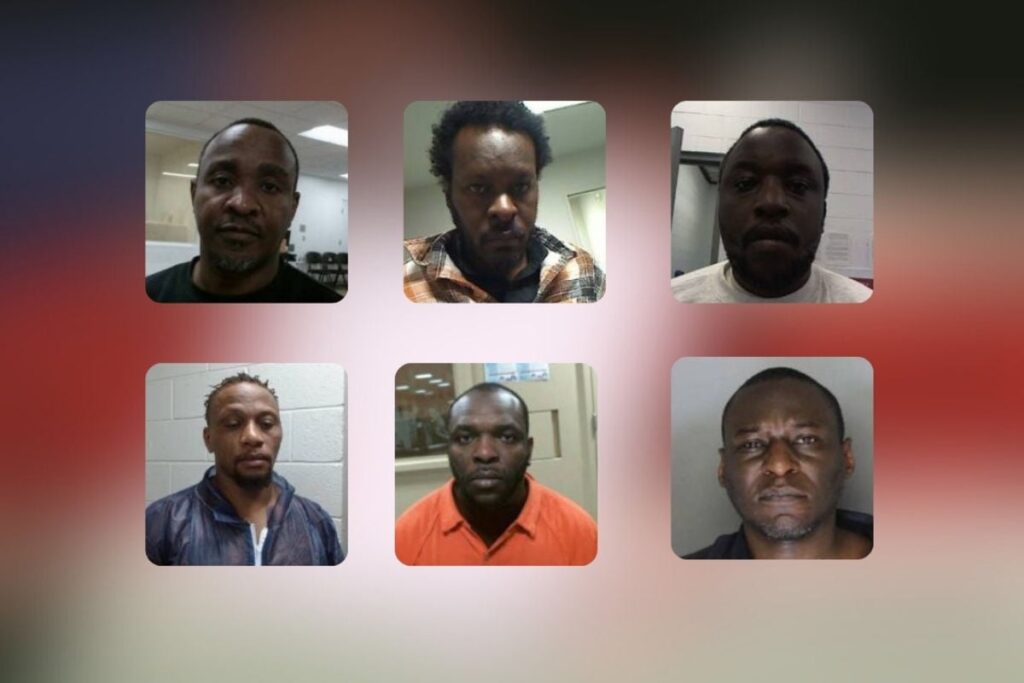
The term “worst of the worst” represents official terminology used by U.S. security agencies to describe individuals they characterize as criminal immigrants with serious convictions. The designation places the 15 Kenyans alongside nationals from countries worldwide who face deportation under the Trump administration’s intensified immigration crackdown.

The Department of Homeland Security launched the searchable webpage Monday, December 8, displaying photographs, names, nationalities and criminal histories of an initial 10,000 immigrants arrested since President Donald Trump assumed office. The database allows Americans to search for arrested individuals across all 50 states by name, country of origin, and location of arrest.

Several Kenyans feature prominently among those whose personal information was published on the platform, with the majority arrested on assault-related charges. The accusations against Kenyan nationals span a broader range of alleged offenses including aggravated assault with weapons, possession of stolen property, terroristic threats, money laundering, check forgery, driving under the influence, domestic violence, robbery, resisting arrest, fraud, kidnapping a minor, violating court orders, and receiving stolen property.

The database features immigrants accused of what authorities describe as the most serious criminal offenses, including homicide, rape, drug trafficking, child molestation, cruelty toward children, battery, and armed robbery. Many listed individuals face multiple charges or have alleged criminal histories involving several offenses.

“This new Worst of the Worst webpage allows every American to see for themselves the criminal illegal aliens that we are arresting, what crimes they committed, and what communities we removed them from. This is all about transparency and showing results,” DHS Assistant Secretary Tricia McLaughlin said, as CBS19 reported.

The inclusion of 15 Kenyans on the list comes amid unprecedented enforcement action by the Trump administration targeting undocumented residents. The Department of Homeland Security has pledged frequent updates to the database as arrests continue and additional cases are processed.

The latest development follows Trump’s broader immigration offensive that has significantly affected African nationals. On November 28, the president announced plans to implement what he characterized as a sweeping freeze on immigration from third-world countries, with particular focus on several African nations including Kenya’s neighbors.

To accelerate removal of undocumented immigrants, the administration introduced a self-deportation mobile application in March and dramatically increased Immigration and Customs Enforcement operational capacity. The enforcement budget saw a $9 trillion expansion to support the administration’s stated goal of conducting the largest deportation operation in American history.

During the first 10 months of the Trump administration, more than two million undocumented immigrants were removed from the United States, CBS19 stated, citing The Center Square. This figure includes 1.6 million who agreed to voluntary self-deportation and more than 527,000 who were apprehended and deported involuntarily.

For Kenya, the appearance of 15 nationals on a U.S. government list explicitly labeling them among the “worst of the worst” criminals carries diplomatic and reputational implications. While the individuals listed face serious criminal allegations, their prominence on a searchable public database affects perceptions of Kenyan immigrants broadly, potentially influencing how Americans view the Kenyan diaspora community.

The Kenyan community in the United States numbers in the tens of thousands, with significant populations in states including Texas, California, Massachusetts, Maryland, and Minnesota. Most Kenyan immigrants maintain lawful status and contribute positively to their communities through professional careers, small businesses, and civic engagement. The criminal allegations against 15 individuals represent a tiny fraction of Kenyan nationals residing in America.

Nevertheless, the public nature of the database and its framing as identifying the “worst of the worst” creates associations between Kenyan nationality and criminality that could affect how immigration authorities, employers, landlords, and the general public perceive Kenyan immigrants regardless of individual circumstances. The searchability by country of origin specifically enables users to view all arrested Kenyans collectively, reinforcing such associations.

Kenya’s government has not issued official comment on the inclusion of its nationals on the U.S. database. Historically, Kenyan diplomatic officials have maintained cooperative relationships with American counterparts on matters including security cooperation, trade relations, and consular services for Kenyan citizens abroad.

The database launch reflects the Trump administration’s broader strategy of publicizing immigration enforcement actions and emphasizing criminal behavior among undocumented populations. McLaughlin specifically criticized media coverage of immigration issues, stating that “malicious lies and hoaxes, driven by hateful rhetoric from the mainstream media, continue to distort the work of the brave men and women of ICE and CBP.”

She emphasized that the database eliminates American dependence on news outlets for immigration enforcement information. “Americans don’t have to rely on the press for this information – with this transparent tool, they can see for themselves what public safety threats were lurking in their neighborhoods and communities,” McLaughlin said.

The website emerged following escalating tensions between federal immigration authorities and state governments over cooperation in deportation efforts. ICE Acting Director Todd Lyons contacted attorneys general in California, Illinois and New York earlier this year about their states’ refusal to comply with ICE detainer requests, The Center Square reported.

Those states prohibit local law enforcement from honoring ICE requests to hold immigrants in custody pending federal pickup. More than 14,000 detainer requests went unheeded in New York alone, with over 7,000 individuals with criminal convictions released onto streets rather than transferred to immigration authorities, The Center Square confirmed.

The database launch also followed a dramatic increase in violence targeting immigration enforcement personnel. Assaults against ICE officers surged by 1,153 percent while death threats jumped by 8,000 percent over 11 months, The Center Square reported. Vehicular attacks against ICE officers increased by 1,300 percent during the same period.

For the 15 Kenyans named on the database, the public identification carries consequences extending beyond their immediate legal proceedings. The permanent online record of their arrests, regardless of whether convictions ultimately result, affects future employment prospects, housing applications, family relationships, and standing within Kenyan diaspora communities.

The fact that individuals appear on the list following arrests rather than convictions raises questions about fairness and due process. Under American law, accused individuals are presumed innocent until proven guilty in court. The database presents arrested immigrants alongside their alleged crimes in a format that suggests established guilt rather than pending allegations.

Immigration attorneys and civil liberties advocates have questioned whether government agencies should publicly identify arrested individuals who have not been convicted, particularly when the presentation implies criminality. The practice differs from traditional approaches where arrest records, while technically public, require specific requests rather than being compiled in searchable databases designed for mass public consumption.

For Kenya’s diplomatic corps and diaspora organizations, the database presents both a challenge and an opportunity. Consular officials may need to provide support to arrested nationals navigating the American legal system while also working to ensure the actions of 15 individuals do not define perceptions of tens of thousands of law-abiding Kenyan immigrants.

Community organizations serving Kenyan immigrants in the United States may face increased scrutiny or questions from members concerned about how the database affects their standing or safety. Leaders within these communities will likely emphasize the distinction between the small number of individuals facing serious charges and the broader population of Kenyan immigrants who contribute positively to American society.

As the database expands beyond its initial 10,000 entries and undergoes the frequent updates DHS has promised, the number of Kenyans listed may increase or decrease. Whether additional Kenyan nationals appear or whether some of the current 15 are removed following case resolutions will shape how this controversy evolves and what lasting impact it has on Kenya-U.S. relations and perceptions of Kenyan immigrants in America.

Sources: Kenyans.co/Nation.Africa
Ukrainian Sea Drones Cripple Russian Shadow Fleet Tanker in Third Strike Targeting Oil Revenue Stream

0

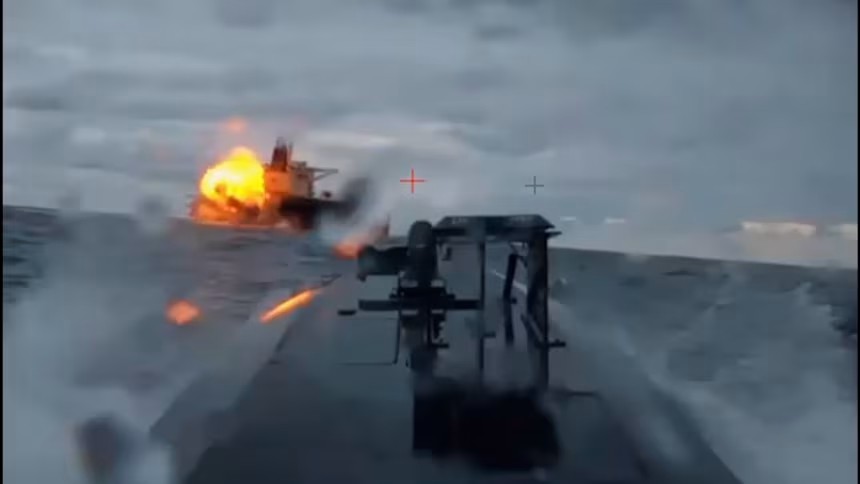
Ukrainian maritime drones on Wednesday struck and disabled an oil tanker involved in transporting Russian petroleum as it navigated through Ukraine’s exclusive economic zone in the Black Sea toward the Russian port of Novorossiysk, a Ukrainian official disclosed, marking the third assault in two weeks targeting vessels that Kyiv accuses of helping Moscow circumvent international sanctions and finance its military operations.

The attack represents part of an escalating campaign against Russia’s so-called “shadow fleet”—unregulated vessels which Ukrainian authorities contend are enabling the Kremlin to export substantial quantities of oil and generate war funding despite Western economic restrictions designed to constrain Russia’s energy revenues. The strikes have sent war insurance costs for ships sailing to the Black Sea soaring, with insurers reviewing policies on a daily basis as the conflict in Ukraine increasingly spills into critical maritime shipping lanes.

The Dashan tanker was traveling at maximum velocity with its transponders deliberately switched off when powerful explosions struck its stern section, inflicting critical damage on the vessel, the official at the Security Service of Ukraine (SBU) disclosed. He made no mention of possible casualties in the incident, leaving uncertainty about whether crew members were killed or injured during the explosive assault.

The strike on the Dashan, which operates under European Union and British sanctions and is sailing without a known flag registry, was also confirmed by three maritime security sources with knowledge of the incident. The vessel’s lack of proper registration exemplifies the shadowy nature of operations that enable sanctioned Russian oil to reach international markets despite restrictions.

There was no immediate comment from Russia on the incident, maintaining the Kremlin’s typical pattern of silence following Ukrainian strikes on maritime assets involved in oil transportation.

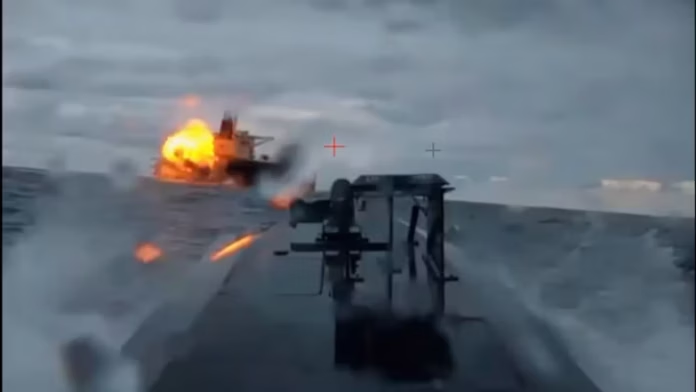
Naval drones could be seen speeding toward the hulking tanker followed by powerful explosions as they reached the vessel, video footage provided by the official demonstrated. The dramatic imagery captured the moment of impact as the unmanned craft executed their mission against the moving target.

Reuters was able to verify it was the Dashan tanker in the video by comparing the deck configuration, cranes and structural features with archival imagery. The location and date were confirmed by the SBU source’s account and ship tracking data that monitors vessel movements across global waterways.

“The SBU continues to take active measures to reduce petrodollar revenues to the Russian budget,” the official declared. “Over the past two weeks, this is the third tanker of the shadow fleet put out of action that had helped the Kremlin circumvent international sanctions,” emphasizing Ukraine’s strategic focus on degrading Russia’s economic capacity to sustain military operations.

Russian President Vladimir Putin, who ordered a full-scale invasion of Ukraine in February 2022, threatened last week to sever Ukraine’s access to the Black Sea in response to the attacks on tankers, which he characterized as piracy rather than legitimate military operations. Putin’s threat represents an escalation of rhetoric regarding Ukraine’s maritime warfare tactics that have increasingly targeted Russia’s energy export infrastructure.

Ukraine has been attacking Russian oil refineries for months, deploying long-range aerial drones to strike deep behind the front lines of Moscow’s war against Ukraine. The strikes on tankers represent a complementary line of attack that targets Russia’s ability to export processed petroleum products rather than simply disrupting refining capacity.

There have been at least seven explosive incidents on other tankers that called at Russian ports since December 2024 at locations including in the Mediterranean Sea. Ukraine is suspected of executing those attacks using limpet mines attached to vessel hulls, maritime security sources indicated, but Kyiv has not confirmed or denied any involvement in those operations, maintaining strategic ambiguity about the scope of its maritime campaign.

CNN documented that Ukraine struck an oil tanker belonging to Russia’s so-called shadow fleet in the Black Sea on Wednesday, according to an official in the Security Service of Ukraine (SBU). A Ukrainian security source conveyed to CNN that Sea Baby maritime drones were utilized in a joint operation coordinated by the SBU and the navy, representing the third assault against Russian tankers in two weeks.

Russia has been employing hundreds of tankers, flying different national flags, to clandestinely ship its oil to customers in defiance of Western sanctions designed to limit Moscow’s energy export revenues. This vast shadow fleet operates through complex ownership structures and flag-of-convenience registrations that obscure the ultimate beneficiaries and complicate enforcement of international restrictions.

The Dashan tanker, which was flying the flag of the Comoro Islands, suffered “critical damage,” with preliminary information indicating the ship was “disabled,” the source revealed. There was no immediate comment from Russia regarding the vessel’s status or the extent of damage sustained in the attack.

Video obtained by CNN shows a Sea Baby drone diving beneath the tanker before a series of explosions in the vessel’s stern area. Thick plumes of smoke then engulf the tanker, creating dramatic visual evidence of the strike’s effectiveness against the large commercial vessel.

It was not immediately clear what cargo the vessel was carrying or whether the strike caused an oil spill that could create environmental hazards in the Black Sea. The potential for ecological damage represents a secondary concern when military operations target petroleum-carrying vessels in sensitive marine environments.

The ship was traveling at top speed through Ukraine’s exclusive economic zone, with its transponder turned off to avoid detection, when it was hit, the SBU source noted. The disabled transponder represents standard practice for shadow fleet vessels seeking to evade monitoring by authorities enforcing sanctions compliance.

The vessel had been moving toward Russia’s Novorossiysk port terminal, a key Russian oil hub responsible for handling substantial volumes of crude oil and refined products destined for international markets, the source added. Novorossiysk represents one of Russia’s most strategically important energy export facilities, making vessels servicing the terminal high-value targets for Ukrainian interdiction efforts.

The port was struck last month, when Ukraine attacked one of Moscow’s largest oil export facilities. The assault, acknowledged by officials from both countries, marked an escalation of Kyiv’s efforts to target a key source of Russian war revenue by directly hitting infrastructure rather than only intercepting vessels at sea.

“The SBU continues to take active measures to reduce oil dollar revenues to the Russian budget,” the source emphasized, framing the maritime campaign as economic warfare designed to constrain Russia’s ability to finance military operations through energy exports.

The Ukrainian military operation follows a similar strike on two Russian shadow fleet tankers in late November. The SBU characterized that strike as dealing a “significant blow to the transportation of Russian oil,” claiming measurable impact on Russia’s ability to move petroleum products to international customers.

The latest Ukrainian assault followed US President Donald Trump’s assertion Tuesday that Moscow has the “upper hand” in its ongoing invasion of Ukraine and that Kyiv is “losing” the war, comments that sparked immediate pushback from Ukrainian and European officials who disputed his characterization of battlefield dynamics.

Multiple Ukrainian and European officials have challenged Trump’s claims, although Ukraine’s military position is acknowledged to be difficult. There are no new US or European assessments to suggest there have been significant changes on the battlefield that indicate Russian President Vladimir Putin’s forces will triumph imminently, the officials conveyed to CNN, contradicting Trump’s bleak assessment of Ukrainian prospects.

Meanwhile, negotiations over a US-proposed peace settlement between Ukraine and Russia are continuing but have not achieved a breakthrough that would end the nearly three-year conflict. The talks represent ongoing diplomatic efforts to find an acceptable resolution while military operations continue on multiple fronts.

US and Ukrainian delegations met virtually Wednesday to discuss plans for the reconstruction and economic development of Ukraine after the war with Russia concludes, Ukrainian President Volodymyr Zelensky disclosed in a post on X. The meeting focused on post-conflict planning even as active combat operations persist across Ukrainian territory.

The US delegation included Treasury Secretary Scott Bessent; Trump’s son-in-law, Jared Kushner; and Larry Fink, chairman and CEO of BlackRock, according to the Ukrainian leader. The high-level participation signals American interest in post-war economic opportunities and reconstruction financing arrangements.

“We discussed key elements for recovery, various mechanisms and visions for reconstruction. There are many ideas that, with the right approach, could succeed in Ukraine,” Zelensky observed, projecting optimism about Ukraine’s economic prospects despite ongoing hostilities.

The Ukrainians also “updated our reflections on the 20 points of the framework document for ending the war,” he noted. Zelensky thanked Trump and his team “for their substantive work and support,” maintaining diplomatic courtesy despite Trump’s controversial recent comments about Ukraine’s battlefield position.

The strategic significance of targeting Russia’s shadow fleet extends beyond immediate tactical impacts to address fundamental questions about sanctions effectiveness and economic warfare strategies. Western sanctions on Russian oil exports have proven difficult to enforce given the emergence of alternative shipping networks operating outside regulated maritime commerce systems. Ukraine’s direct military action against these vessels represents an attempt to achieve through kinetic means what diplomatic and financial pressure has struggled to accomplish.

The shadow fleet phenomenon has frustrated Western policymakers seeking to limit Russia’s oil export revenues without triggering global energy price spikes that could harm their own economies. These vessels, often aging tankers purchased at discount prices and operating through opaque ownership structures, have enabled Russia to maintain substantial oil export volumes despite restrictions that theoretically should have severely constrained its market access.

Maritime insurance markets have responded to the escalating risks by dramatically increasing premiums for vessels operating in the Black Sea region or calling at Russian ports. Some insurers have withdrawn coverage entirely for certain routes, forcing shipowners to seek alternative coverage through less reputable providers or operate without adequate insurance protection, further pushing legitimate operators out of Russian oil trade and leaving the field to shadow fleet vessels willing to accept higher risks.

The use of maritime drones represents a significant evolution in Ukraine’s military capabilities, demonstrating how unmanned systems can project power across maritime domains despite Ukraine’s limited conventional naval assets. The Sea Baby drones, developed domestically by Ukrainian defense enterprises, provide cost-effective means to threaten high-value targets at sea without risking crewed vessels or aircraft that would be vulnerable to Russian air defenses and naval forces.

Putin’s threat to sever Ukraine’s Black Sea access carries significant implications if implemented. Ukraine relies on the Black Sea corridor for agricultural exports that constitute a major portion of its economy and provide critical food supplies to global markets. Any Russian attempt to close off Ukrainian access would likely trigger international response given the broader economic consequences beyond the bilateral conflict.

The environmental risks posed by strikes on oil tankers represent genuine concerns that complicate the tactical calculus. A major oil spill in the Black Sea could cause extensive ecological damage to coastal ecosystems and fisheries that multiple nations depend upon. Ukraine’s apparent calculation is that the economic and military benefits of disrupting Russian oil exports justify the environmental risks, though this position may prove controversial if a catastrophic spill occurs.

The escalating maritime warfare campaign illustrates how the conflict continues evolving with new tactics and targeting priorities emerging as both sides adapt to changing battlefield conditions. Ukraine’s ability to conduct effective operations against Russian economic interests hundreds of kilometers from Ukrainian-controlled territory demonstrates that Kyiv retains offensive capabilities despite being on the strategic defensive across most of the land war’s fronts.

As negotiations continue regarding potential peace frameworks, Ukraine’s maritime campaign against Russian oil infrastructure may serve as bargaining leverage by demonstrating Kyiv’s capacity to impose economic costs on Moscow even if battlefield momentum has shifted. The ability to disrupt Russia’s primary revenue source provides Ukraine with strategic options beyond conventional military operations along the contact line.

CNN/Reuters

US Seizes Oil Tanker Off Venezuela as Trump Increases Pressure While Maduro Warns of Resistance

0

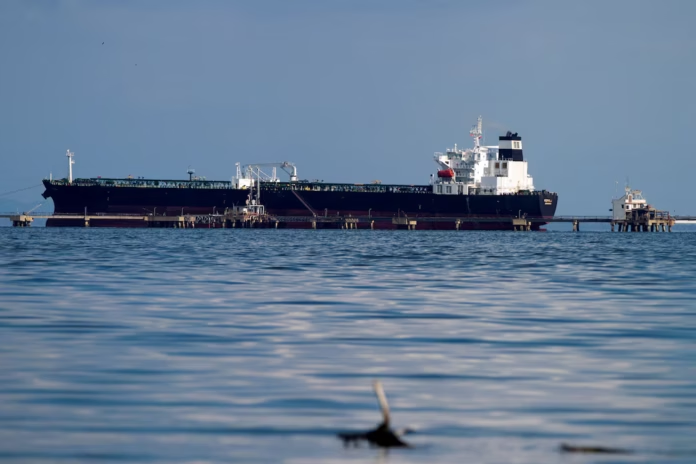
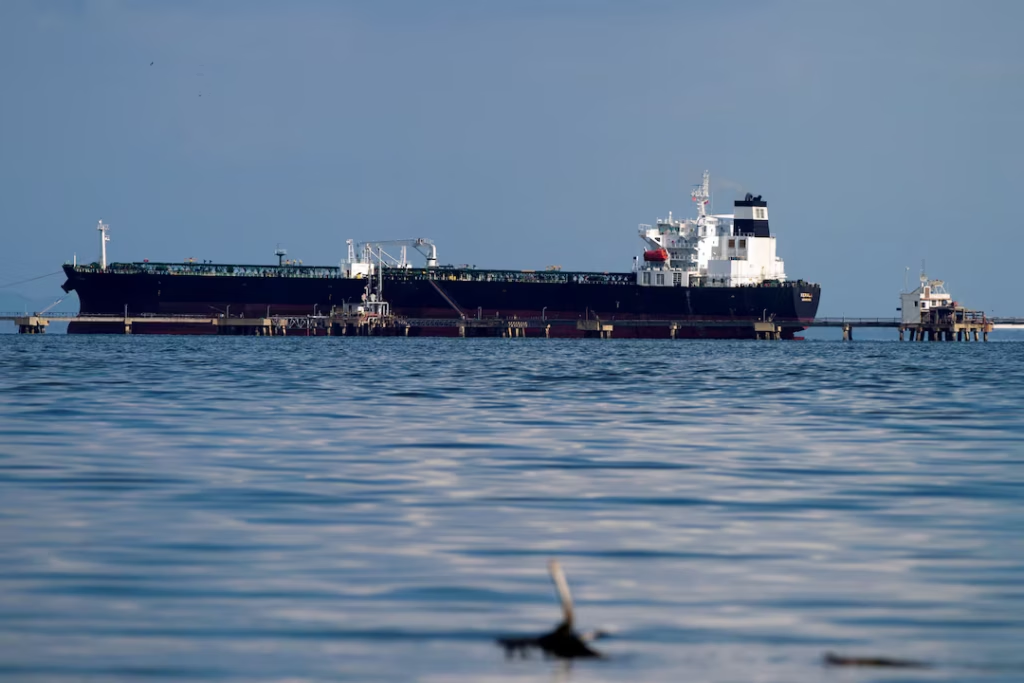
President Donald Trump said Wednesday that the United States has seized an oil tanker off the coast of Venezuela, a move that marks a significant intensification of his administration’s effort to squeeze President Nicolás Maduro. The interdiction, Trump said, comes as Washington expands a pressure strategy that has already included narcoterrorism charges against Maduro and an expanding military footprint in the region.

A U.S. official, speaking anonymously because of the sensitivity of the operation, told The Associated Press that the seizure was carried out by the U.S. Coast Guard with support from the U.S. Navy. The official did not disclose whether the tanker was carrying cargo, which flag it was flying, or the precise location of the interception.

The operation occurred just a day after a pair of U.S. Navy F/A-18 fighter jets flew over the Gulf of Venezuela in what public flight-tracking platforms showed to be one of the closest American military flyovers to Venezuelan territory since the beginning of Trump’s campaign against Maduro. Trump has repeatedly hinted that land operations could follow, though he has provided no further detail.

Maduro, speaking hours later at a government-organized demonstration in Caracas, did not mention the tanker seizure but delivered one of his most combative speeches in months. Surrounded by senior loyalists, he said Venezuela was “prepared to break the teeth of the North American empire if necessary,” insisting that only the ruling movement could “guarantee peace, stability, and the harmonious development of Venezuela, South America, and the Caribbean.” He added that “the only president who has the preparation, the history, and the unwavering support of the people and the armed forces … is named Nicolás Maduro.”

Reuters reported that the tanker believed to have been seized is the Skipper, according to Vanguard, a British maritime risk management firm. The vessel had previously been sanctioned by Washington for alleged involvement in Iranian oil shipments when it operated under the name Adisa. Reuters also noted that oil markets reacted immediately, with Brent crude edging up 27 cents to settle at $62.21 a barrel and U.S. West Texas Intermediate increasing 21 cents to close at $58.46.

Three U.S. officials told Reuters, again on condition of anonymity, that the Coast Guard oversaw the operation. Venezuela’s government did not immediately respond to requests for comment.

The seizure occurs at a moment when Venezuela has been exporting more than 900,000 barrels per day, its third-highest monthly average this year, buoyed by increased naphtha imports used to dilute its extra-heavy crude. Even with those gains, Venezuela has been forced to sharply discount its oil to compete with sanctioned barrels from Russia and Iran in the Chinese market. 

Commodity analyst Rory Johnston told Reuters that the tanker seizure adds “yet another geopolitical/sanctions headwind hammering spot supply availability,” though he suggested the immediate market impact may be limited because “these barrels were already going to be floating around for a while.”

Washington’s move also comes against the backdrop of a sweeping U.S. maritime strike campaign that has killed more than 80 people in at least 20 strikes on suspected drug-smuggling vessels since early September. 

Critics, including several lawmakers, have questioned the legality of the operations, arguing that the administration has offered limited public evidence that the boats targeted were carrying narcotics or posed immediate threats. Concerns grew after reports that U.S. forces conducted a second strike that killed two survivors after the initial attack on one vessel.

A Reuters/Ipsos poll released Wednesday found broad opposition among Americans to the boat-strike campaign, including significant dissent among Trump’s own Republican base. Trump has repeatedly framed the operations as part of an “armed conflict” with drug traffickers and said last week, in a sweeping strategy document, that reasserting U.S. dominance in the Western Hemisphere would remain a top foreign policy priority.

The U.S. tanker seizure deepens a standoff already infused with geopolitical, economic and domestic political consequences. For Trump, the action showcases an aggressive enforcement posture that aligns with his broader foreign policy message of reclaiming influence across the Western Hemisphere. But it also risks raising the stakes with a government that has long framed U.S. actions as attempts at regime change. The overlapping operations—the air patrol, the maritime strikes, and now a tanker seizure—signal a dramatic expansion of military and law-enforcement activity around Venezuelan waters.

The seizure also threatens to tighten the pressure on Venezuela’s fragile oil sector, the backbone of its economy. While Maduro has managed to increase exports modestly through discounted deals and strategic alliances, U.S. interference in maritime flows signals a new phase where Washington may attempt to disrupt the logistical infrastructure that keeps Venezuela’s oil moving. This approach could impose short-term costs on global markets, which remain sensitive to volatility around crude supply routes, particularly involving sanctioned producers.

For Maduro, the event provides an opportunity to rally domestic supporters around nationalist rhetoric. His fiery speech in Caracas underscores how the government will use such U.S. actions to reinforce a narrative of external aggression. Yet analysts caution that the risk of miscalculation is rising. Expanded U.S. interdictions and Trump’s public hints of “coming” land operations could increase the chances of confrontation in the Caribbean, especially with Venezuelan forces on heightened alert.

The seizure also intensifies legal and congressional scrutiny over U.S. operations. Lawmakers alarmed by the boat-strike campaign may view this latest move as part of an unchecked escalation conducted with limited transparency. As the 2025 political season accelerates, Trump’s Venezuela strategy—combining military projection, sanctions and high-risk interdictions—will likely become a flashpoint in debates over presidential authority, regional security and the balance between counter-narcotics policy and international law.

US Fighter Jets Fly Over Gulf of Venezuela as Scrutiny of Trump Military Operations Deepens

0

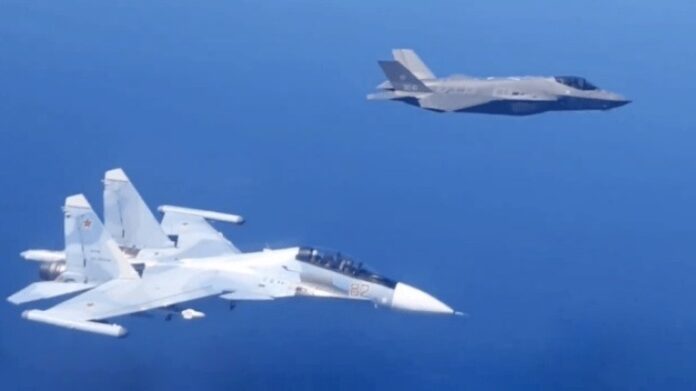
The U.S. military sent two Navy F/A-18 fighter jets soaring over the Gulf of Venezuela on Tuesday, a flight path that appears to mark the closest approach by American warplanes to the country’s airspace since the beginning of President Donald Trump’s pressure campaign against Nicolás Maduro. Public flight tracking platforms showed the pair moving across the narrow gulf—only around 150 miles at its widest span—and lingering above international waters for more than half an hour.

A U.S. defense official confirmed the flight and described the mission as a “routine training flight,” speaking on condition of anonymity to address sensitive operations. The official said the jets remained in international airspace and would not specify whether they carried weapons. The official compared the flight to earlier U.S. maneuvers intended to demonstrate the range and readiness of American aircraft, adding that the mission was not designed to provoke Venezuela.

While the U.S. has previously deployed long-range B-52 Stratofortress and B-1 Lancer bombers to the broader region, those aircraft traveled along the Venezuelan coastline. There is no public indication that earlier flights brought U.S. planes as close to Venezuelan territory as Tuesday’s F/A-18s.

The overflight comes amid the largest U.S. military presence in the region in decades and following a stretch of deadly strikes on boats in the Caribbean Sea and eastern Pacific Ocean that U.S. officials say were involved in drug smuggling. Trump has repeatedly signaled that land operations could follow, though he has offered no specifics.

Maduro has accused Washington of using military operations as cover for efforts to remove him from office, a charge U.S. officials deny. But the Trump administration now faces mounting questions from lawmakers about the maritime strike campaign. At least 87 people have been killed in 22 publicly known strikes since early September, including two survivors killed in a follow-up attack while clinging to the wreckage of a destroyed vessel.

Members of Congress have demanded unedited footage of the operations. Defense Secretary Pete Hegseth told congressional leaders Tuesday that he was still evaluating whether the military should release the videos. Hegseth participated in a classified briefing with Secretary of State Marco Rubio and senior national security officials to discuss the widening questions around the campaign.

Also on Tuesday, Adm. Alvin Holsey—who is retiring this week from U.S. Southern Command—met separately with the Republican chairman and the top Democrat on the Senate Armed Services Committee, underscoring the growing concern on Capitol Hill.

Trump has defended the strikes as an essential escalation in what he calls an “armed conflict” against drug cartels, arguing that stronger force is needed to stop narcotics from reaching U.S. shores.

The fighter jet mission also drew attention online. Flightradar24, one of the publicly accessible tracking sites that displayed the jets in real time, said the aircraft became the most watched flights on its platform during the mission.

Venezuela has long asserted that the entire gulf is part of its national territory, a claim that U.S. military officials and legal scholars have dismissed for decades. Washington maintains that the waters traversed by Tuesday’s jets are indisputably international.

The rare U.S. fighter jet flight underscores a moment of escalating tension between Washington and Caracas as the Trump administration’s regional strategy draws intensified scrutiny. Though the Pentagon insists the maneuver was routine, its timing—amid growing political pressure over the boat strikes—suggests Washington may also be signaling its operational reach at a moment when its actions face bipartisan questioning.

The unusually lethal maritime campaign has raised legal and ethical concerns in the U.S. Congress, where lawmakers want clarity about rules of engagement, intelligence thresholds and accountability. Some lawmakers worry the administration’s broad framing of an “armed conflict” with drug cartels could justify expanding military actions without congressional authorization.

For Venezuela, any U.S. military movement feeds long-standing fears of external intervention. Maduro, already isolated internationally, has used the overflights to reinforce his narrative that Washington’s true objective is regime change. The U.S., meanwhile, views the occasional high-visibility flight as a way to reassure regional allies and dissuade adversaries at a time when illicit trafficking networks remain entrenched.

The episode also highlights a shifting balance in the Caribbean and Latin America, where U.S. military activity—once relatively limited—has expanded dramatically on air, sea and land. With Trump’s repeated hints of possible land operations and the Pentagon weighing whether to release strike footage, the region is bracing for potentially sharper geopolitical friction and growing humanitarian questions tied to U.S. targeting decisions.

The Associated Press

One Student Killed, Another Critical in Kentucky State University Dorm Shooting

0

FRANKFORT, Ky. — A student was killed and another left critically wounded in a shooting at a Kentucky State University residence hall Tuesday, disrupting final exams at the historically Black institution just days before winter break as authorities arrested a suspect and locked down the campus, officials said.

The violence erupted at Whitney M. Young Jr. Hall, where police responding to what they described as “an active aggressor” secured the scene and took a suspect into custody, Frankfort police said. The wounded student remained in critical but stable condition Tuesday evening, according to university officials who declined to immediately release the names of either victim.

Video footage from Louisville television station WLKY showed multiple police cruisers positioned outside a cluster of dormitories with crime scene tape cordoning off a courtyard area. Law enforcement agencies maintained a presence on campus as the lockdown continued into the evening hours, the Associated Press reported.

“We are in close contact with the families and are providing every available support to them,” the university said in a statement announcing that counseling and support services had been made available to the campus community.

Gov. Andy Beshear said in a video message posted on social media platform X that the shooting “appears to be an isolated incident” and that “there is no ongoing threat.” He urged prayers for affected families and the broader campus community.

“Violence has no place in our commonwealth or country. Let’s please pray for the families affected and for our KSU students. Let’s also pray for a world where these things don’t happen,” Beshear said, as both the Associated Press and CNN confirmed.

Authorities planned to release additional information at an evening news conference, though key details about the circumstances surrounding the shooting, the relationship between the suspect and victims, and what prompted the violence remained unclear as of Tuesday evening.

The shooting represents the 73rd incident of gun violence on school grounds this year, with the majority occurring on college campuses, analysis by CNN of events tracked by the Gun Violence Archive, Education Week and Everytown for Gun Safety showed.

Kentucky State University, chartered in 1886 as one of America’s historically Black colleges and universities, enrolls more than 2,200 students and employs approximately 450 faculty and staff members, the school’s website indicates. The public institution sits roughly 2 miles east of Kentucky’s Capitol building in the state’s capital city.

The timing of the violence, occurring during the final examination period when students face heightened academic stress while anticipating winter break, compounds the trauma for a campus community already navigating the pressures of completing the fall semester. Finals week typically represents both an ending and beginning—closure on months of coursework and the promise of holiday respite with family and friends.

For Kentucky State students, that transition has been violently interrupted. The lockdown prevented students from leaving campus or moving freely between buildings, trapping many in locations far from their dormitories as they awaited clearance from law enforcement that the threat had passed. Those who witnessed the aftermath or heard about the shooting through campus alerts faced the immediate shock of violence penetrating what many considered a safe haven.

Historically Black colleges and universities have long served as cultural anchors and educational lifelines for Black students, offering supportive environments where they can thrive academically while celebrating their heritage. Violence on HBCU campuses carries particular resonance given these institutions’ histories as sanctuaries during eras when Black Americans faced systematic exclusion from predominantly white universities.

The shooting also highlights the persistent challenge of campus safety in an era when gun violence has become disturbingly routine at American educational institutions. While much public attention focuses on K-12 school shootings, college campuses face their own security vulnerabilities. Residence halls, where students live in close quarters and often leave doors unlocked or propped open, present particular challenges for maintaining secure environments while preserving the community atmosphere essential to college life.

The 73rd school shooting this year, as tracked by multiple gun violence monitoring organizations, underscores the scale of armed violence affecting American education. That figure encompasses incidents ranging from targeted attacks to accidental discharges to disputes that escalate into gunfire, but each represents a breach of the fundamental expectation that schools should be spaces insulated from the violence plaguing broader society.

Kentucky State’s response, including immediate family contact and provision of counseling services, reflects protocols that universities nationwide have developed as campus shootings have unfortunately become contingencies for which institutions must prepare. The fact that such protocols exist and are regularly updated speaks to the normalization of gun violence in American educational settings—a reality that advocacy groups and many educators find deeply troubling.

For the families of the killed and wounded students, the shooting transforms what should have been a celebratory end to the fall semester into unspeakable tragedy. Parents who sent their children to college anticipating they would return home for the holidays instead face a nightmare scenario that has become all too familiar to communities across America touched by gun violence.

The investigation will likely examine how the suspect accessed the residence hall, whether security measures were in place and functioning, what warning signs may have existed, and whether the shooting could have been prevented through different policies or interventions. These questions often emerge in the aftermath of campus violence as institutions and law enforcement agencies conduct reviews aimed at preventing future incidents.

As Kentucky State students, faculty and staff process the shock of violence invading their campus, the broader community of historically Black colleges and universities will undoubtedly rally in support. HBCUs maintain tight-knit networks, with administrators, alumni and students across institutions feeling connections to sister schools facing crises.

The lockdown’s eventual lifting will not end the trauma for a campus community that must now navigate grief, fear, and the difficult work of healing while completing a semester interrupted by violence. For many students, the shooting will forever mark their Kentucky State experience, a dark chapter in the story of an institution founded nearly 140 years ago to provide educational opportunity in the face of discrimination and exclusion.

CNN/AP

Australia Enforces World’s First Social Media Ban for Children Under 16

0

Australia implemented the world’s first nationwide prohibition on social media access for children under 16 when the law took effect at midnight Wednesday, ordering major platforms including TikTok, Instagram, Facebook and YouTube to block young users or face penalties reaching A$49.5 million ($33 million).

The legislation targets ten of the largest social media platforms and has drawn intense scrutiny from technology companies and free speech advocates while winning praise from parents and child safety groups. Governments across multiple continents are monitoring the rollout closely as concerns intensify about social media’s impact on youth mental health and safety, Reuters reported.

“While Australia is the first to adopt such restrictions, it is unlikely to be the last,” Tama Leaver, a professor of internet studies at Curtin University, said. “Governments around the world are watching how the power of Big Tech was successfully taken on. The social media ban in Australia is very much the canary in the coal mine.”

The implementation marks the beginning of a live experiment that lawmakers globally will study as they consider whether countries can effectively block children from accessing technology woven into modern daily life. The measure closes out a year of intense debate over whether such intervention is feasible and appropriate.

Hours before the ban took effect, two 15-year-olds filed a legal challenge at Australia’s highest court arguing the legislation violates their right to free communication. Noah Jones and Macy Neyland, backed by the Digital Freedom Project, contend that teenagers rely on social media for information and social connection, and blocking access could particularly harm vulnerable youth including those with disabilities, Indigenous teenagers, rural children, and LGBTQ+ adolescents, the BBC reported.

The advocacy group warned that the ban could isolate precisely those young people who benefit most from online communities where they find support unavailable in their immediate physical environments.

Australia’s Communications Minister Anika Wells dismissed the legal challenge during parliamentary remarks, vowing the government would not retreat. “We will not be intimidated by threats. We will not be intimidated by legal challenges. We will not be intimidated by big tech. On behalf of Australian parents, we will stand firm,” she said.

The minister’s defiant tone reflects the government’s characterization of the ban as a “delay” rather than permanent prohibition, framing it as giving children more time to mature before encountering social media’s pressures. Officials describe the approach as a treatment plan rather than cure, acknowledging implementation will likely prove messy while insisting they won’t absolve technology companies of responsibility.

For young Australians accustomed to spending hours daily on platforms, the ban represents an abrupt severance from digital social lives. Paloma, a 12-year-old Sydney resident, told the BBC she feels “sad” and “upset” about losing access to communities she built on Snapchat and TikTok where she spends 30 minutes to two hours daily.

“I am part of several communities on Snapchat and TikTok,” Paloma explained. “I’ve developed good friendships on the apps, with people in the US and New Zealand, who have common interests like gaming, and it makes me feel more connected to the world.”

She regularly discusses her life with a same-age boy in New Jersey whom she knows through gaming and TikTok. “I feel like I can explore my creativity when I am in a community online with people of similar ages,” she said, adding that everyone she knows is “a bit annoyed” about the restrictions. “The government is taking away a part of ourselves.”

The legislation places enforcement responsibility on technology companies themselves, requiring them to take “reasonable steps” to prevent children from accessing accounts. The law advises using multiple age assurance technologies including government identification documents, facial recognition, voice analysis, or bank account verification.

Meta, which owns Instagram, Facebook and Threads, began removing Australian children under 16 from its platforms last week in anticipation of the deadline. A company spokesperson told the BBC that “compliance with the law will be an ongoing and multi-layered process.” Snapchat indicated users can verify age through bank accounts, photo identification or selfies.

Of the ten platforms initially covered, all except Elon Musk’s X have pledged compliance using age inference—estimating a person’s age from their online activity—or age estimation, typically based on selfies. Some may also verify through uploaded identification documents or linked financial account details.

How difficult enforcement proves remains uncertain. Young users could potentially circumvent restrictions through fake profiles, joint accounts with family members, or virtual private networks that mask their location. The government acknowledges the platform list will evolve as new products emerge and young users migrate to alternatives.

The rollout begins an experiment that lawmakers frustrated by what they characterize as the technology industry’s sluggish response to harm minimization will watch intently. Countries from Denmark to Malaysia, and even some U.S. states where platforms are rolling back trust and safety features, have announced plans for similar measures.

The push gained momentum following 2021 leaks of internal Meta documents showing the company knew its products contributed to body image problems and suicidal thoughts among teenagers while publicly denying such connections existed. Those revelations, known as the Facebook Papers, intensified pressure on governments to intervene directly rather than relying on voluntary industry reforms.

For social media businesses, the ban inaugurates an era of structural constraints as user growth stagnates and time spent on platforms contracts, studies indicate. While platforms claim they generate limited advertising revenue from under-16 users, they acknowledge the ban disrupts their pipeline of future customers. Just before implementation, 86 percent of Australians aged 8 to 15 used social media, government figures showed.

The Australian approach represents a fundamental shift in how governments conceive their role in regulating technology platforms. Rather than setting content moderation standards or privacy requirements, the legislation attempts to categorically exclude an entire age demographic from accessing services that have become ubiquitous communication tools for hundreds of millions globally.

Critics question whether such categorical exclusion appropriately balances child protection against rights to information access, free expression, and social connection. The legal challenge filed by Jones and Neyland will test whether Australian constitutional protections for political communication extend to minors’ social media access, potentially setting precedent for how democratic societies weigh competing interests in the digital age.

Technology policy experts note the ban’s success or failure will likely influence regulatory approaches worldwide. If Australia demonstrates that age restrictions can be effectively enforced without catastrophic unintended consequences, other nations may follow rapidly. Conversely, if implementation proves technically unfeasible or generates significant backlash from affected youth and families, governments elsewhere may reconsider similar proposals.

The legislation also raises privacy concerns about the verification methods platforms will deploy. Requiring government identification documents or biometric data like facial scans to prove age creates new datasets that could be misused, hacked, or subjected to government surveillance. Advocacy groups warn that privacy invasions required to enforce age restrictions could harm users of all ages, not just children ostensibly being protected.

As Australian teenagers navigate their first day without legal access to platforms that shaped their social lives, the global technology industry confronts a new reality where democratic governments are willing to fundamentally restructure how young people interact with digital services. Whether other nations replicate Australia’s approach or chart different courses will depend heavily on how the next months unfold down under, making Australia’s 5 million children under 16 unwitting participants in a consequential social experiment.

BBC/Reuters

Zelenskyy Refuses to Cede Land to Russia as He Rallies European Support

0

President Volodymyr Zelenskyy sharpened his message to Western allies on Monday, declaring that Ukraine will not surrender any of its territory to Russia as part of a peace deal and insisting that Europe must stand firm against growing pressure from President Donald Trump. The shift in tone came during a day of high-stakes diplomacy in London, where Zelenskyy met British Prime Minister Keir Starmer, French President Emmanuel Macron and German Chancellor Friedrich Merz to bolster Kyiv’s negotiating position.

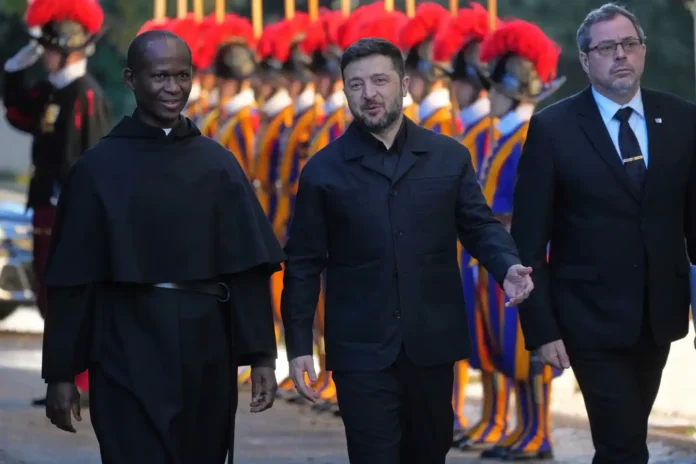
The Vatican remained a symbolic presence in the background of the day’s diplomacy. The Holy See has attempted to remain neutral while expressing solidarity and humanitarian concern for what it calls the “martyred” people of Ukraine. Leo, who has met Zelenskyy three times and spoken once by phone with Russian President Vladimir Putin, has repeatedly urged Moscow to take steps toward peace and called publicly for a ceasefire.

Zelenskyy’s latest push came as U.S. and Ukrainian negotiators concluded three days of talks aimed at narrowing differences in the U.S. administration’s evolving peace proposal. The most contentious element of the plan is the suggestion that Kyiv concede control of the Donbas region, which Russia illegally occupies but does not fully control. Zelenskyy and his European allies have rejected the idea outright, viewing territorial surrender as a dangerous precedent that could embolden Moscow.

Trump defended the concept in an interview with Politico. “You know, a lot of people are dying,” he said, claiming without naming them that unnamed Ukrainian officials favored the U.S. proposal. “His people loved the proposal. They really liked it. His lieutenants, his top people, they liked it, but they said he hasn’t read it yet.” He added that Russia’s size and power would ultimately prevail, arguing, “At some point, size will win, generally.”

The former president also renewed his insistence that Ukraine hold national elections despite martial law, saying Ukraine could “get to a point where it’s not a democracy anymore.” Zelenskyy, whose 2019 term was extended because of the war, responded cautiously, saying Trump “certainly wants to end the war. … Surely, he has his own vision. We live here, from within we see details and nuances, we perceive everything much deeper, because this is our motherland.”

Zelenskyy said the U.S. peace plan had been revised to remove “obvious anti-Ukrainian points,” shrinking the document from 28 to 20 items. But senior Ukrainian officials privately stressed that no version of the plan granting Russia permanent control of Ukrainian land could be politically or strategically acceptable.

European leaders echoed him. Starmer said the push for peace had entered a “critical stage” and emphasized the need for “a just and lasting ceasefire.” Merz, expressing reservations about some U.S. proposals, said Europe needed detailed discussions, noting, “The coming days … could be a decisive time for all of us.”

Macron, according to French officials, stressed that Europe must provide Kyiv with security guarantees strong enough to discourage future Russian attacks. Trump has not publicly offered such guarantees, fueling concern among European diplomats that Ukraine could be pushed into a vulnerable ceasefire.

The diplomatic tensions unfolded as both sides in the war escalated nighttime aerial attacks. Ukraine’s Air Force said Russia launched 110 drones of various types nationwide; air defenses intercepted 84, while 24 struck targets. Ukrenergo, the national energy operator, warned of emergency blackouts in several regions following earlier Russian hits on power infrastructure.

Ukraine answered with a broad drone assault on Russian territory. Russia’s Ministry of Defense reported destroying 121 Ukrainian drones across multiple regions and occupied Crimea. In Chuvashia, roughly 900 kilometers northeast of the border, regional governor Oleg Nikolayev said the attack damaged residential buildings and injured nine people.

A Ukrainian official confirmed to The Associated Press that Ukraine’s Security Service carried out a drone strike Dec. 5 on an LPG terminal at the port of Temryuk in Russia’s Krasnodar region. The attack set more than 20 LPG tanks ablaze, the official said, and the fire burned for over three days, damaging rail tankers and a fuel transfer facility.

Zelenskyy’s refusal to consider territorial concessions marks one of his clearest public positions since peace discussions intensified. His stance reflects deep domestic opposition to any deal perceived as rewarding Russian aggression, but it also signals concern that Trump’s growing influence may reshape the diplomatic landscape. European leaders fear that if Trump succeeds in framing territorial concessions as the fastest path to peace, Ukraine could be cornered into accepting a settlement that leaves the region unstable and encourages further Russian opportunism.

For Zelenskyy, rallying Europe has become as vital as deterring Russia. European nations see the war not merely as a regional conflict but as a test of the continent’s long-term security architecture. Any settlement that cements Russian control over Ukrainian territory risks redrawing the map of Europe by force—an outcome EU leaders say they cannot accept.

The Vatican’s call for a ceasefire underscores a broader moral urgency but also highlights its limited leverage. With Russia making slow gains on the ground and Ukraine struggling to safeguard its energy grid amid relentless drone attacks, the gap between diplomatic proposals and battlefield realities continues to widen. The coming weeks may determine whether the U.S., Europe and Ukraine can reconcile their approaches—or whether Zelenskyy will be forced to navigate a geopolitical divide that complicates both the war effort and the path to peace.

Source: AP

Burkina Faso Detains 11 Nigerian Soldiers After Forcing Military Aircraft to Land

0

Burkina Faso forced a Nigerian Air Force transport plane carrying 11 soldiers to land Monday after determining the aircraft violated its airspace without authorization, escalating tensions between Nigeria and three breakaway Sahel nations that recently severed ties with the regional bloc Nigeria leads.

The C130 aircraft touched down in Bobo Dioulasso following what authorities described as an in-flight emergency while operating in Burkinabe airspace, the Confederation of Sahel States announced in a statement published by Agence d’Information du Burkina, the state-run news agency. The military transport carried two crew members and nine passengers, all military personnel.

“The Confederation of Sahel States informs the public that a C130 aircraft belonging to the Air Force of the Federal Republic of Nigeria was forced to land today, December 8, 2025, in Bobo Dioulasso, Burkina Faso, following an in-flight emergency while operating in Burkinabe airspace,” the statement read, translated from French.

An investigation by Burkinabe authorities “highlighted the absence of authorisation to fly over the territory of Burkina Faso for this military device,” the confederation said. The bloc condemned what it characterized as a sovereignty violation, stating it “condemns with the utmost firmness this violation of its airspace and the sovereignty of its member States.”

The statement, signed by Assimi Goita, the junta leader who heads the confederation, warned that air and anti-aircraft defenses across confederal space had been placed on maximum alert with authorization to “neutralise any aircraft that would violate the Confederate space,” Punchng reported.

“Faced with this unfriendly act carried out in defiance of international law and international civil and/or military aviation rules, arrangements are made to guarantee the security of the Confederal airspace, the sovereignty and territorial integrity of its Member States, as well as the safety of the Populations of the Confederation AES,” TheCableng quoted the statement as saying.

Reports indicated Burkinabe authorities have detained the 11 Nigerian soldiers, though their current status and location remain unclear. Neither the Nigerian Air Force nor the Federal Government had issued official comment as of Monday evening.

The forced landing occurred just one day after Nigerian Air Force jets conducted strikes on fleeing plotters of a failed coup attempt in neighboring Benin Republic. Bayo Onanuga, presidential spokesperson, confirmed President Bola Tinubu authorized the operation at the request of Beninese authorities.

The air strikes, which lasted more than 30 minutes and involved multiple coordinated bombardments by Nigerian fighter jets operating within Beninese airspace, targeted individuals who attempted to overthrow Benin’s government, Onanuga said. Benin authorities also requested support from Nigerian ground troops, though it remains unclear whether those forces were deployed.

Onanuga noted that a separate request from Benin wanted Nigerian Air Force assets to remain within Beninoise airspace for “surveillance and rapid intervention operations” under Benin-led coordination. Whether the mission that ended in Burkina Faso was connected to operations in Benin Republic remains uncertain, though Burkina Faso lies northwest of Benin.

The incident highlights deepening fractures in West Africa’s security architecture following military coups that toppled civilian governments in Burkina Faso, Mali, and Niger Republic. The three nations formally exited the Economic Community of West African States in January after being suspended from the bloc following their respective coups. Regional officials’ efforts to reintegrate the countries into ECOWAS proved unsuccessful.

The trio subsequently formed the Confederation of Sahel States, known by its French acronym AES, creating a rival bloc that has positioned itself in opposition to ECOWAS, which Nigeria dominates both economically and militarily. The new confederation has adopted increasingly assertive postures toward its former regional partners, including coordination on security matters and mutual defense commitments.

The forced landing and detention of Nigerian military personnel represents one of the most serious confrontations between Nigeria and the breakaway Sahel states since their ECOWAS departure. Nigeria, as West Africa’s most populous nation and largest economy, has historically played a stabilizing role in regional security through ECOWAS mechanisms, including peacekeeping operations and military interventions.

The timing of the incident, occurring immediately after Nigeria conducted military operations in Benin at that government’s request, raises questions about whether the aircraft’s presence in Burkinabe airspace was accidental, the result of navigational error, or potentially related to extended surveillance operations across the Sahel region. The claim of an in-flight emergency could explain an unplanned entry into Burkina Faso’s airspace, though Burkinabe authorities appear skeptical.

International aviation protocols typically require military aircraft to obtain diplomatic clearance before entering foreign airspace, even in emergency situations. If the C130 experienced a genuine emergency requiring an unscheduled landing, standard procedure would involve immediately notifying air traffic control and requesting permission for emergency landing rights. Whether Nigerian pilots followed these protocols remains unclear from available information.

The confederation’s threat to “neutralise” unauthorized aircraft reflects heightened security concerns across the Sahel, where armed insurgencies, terrorist networks, and intercommunal violence have proliferated in recent years. 

All three AES member states face ongoing battles with jihadist groups affiliated with al-Qaeda and the Islamic State, contributing to a siege mentality among military governments that seized power promising to restore security.

Relations between ECOWAS and the breakaway states have grown increasingly tense since the confederation’s formation. ECOWAS imposed economic sanctions on the coup governments and threatened military intervention to restore civilian rule, though those threats never materialized. The regional bloc’s decision following Benin’s foiled coup to deploy elements of its standby force to the West African nation further complicates the security landscape.

Nigeria’s role in authorizing that ECOWAS deployment while simultaneously conducting unilateral military operations in Benin at that government’s request demonstrates the complex, sometimes contradictory nature of West African security cooperation in the post-coup environment. The detention of Nigerian soldiers by Burkina Faso adds another volatile element to an already unstable regional order.

For Nigeria, the incident creates diplomatic complications at a moment when President Tinubu is attempting to maintain regional stability while respecting sovereignty concerns. Nigeria’s traditional role as West Africa’s hegemon—using its military and economic weight to shape regional outcomes—now faces pushback from governments that view such influence as neo-colonial interference.

The fate of the 11 detained soldiers will likely depend on diplomatic negotiations between Abuja and Ouagadougou, possibly mediated through neutral parties given the absence of normal diplomatic channels between Nigeria and the AES confederation. 

Whether the incident escalates into a prolonged diplomatic crisis or gets resolved quietly through back-channel communications could signal whether the growing divide between ECOWAS and its former members remains manageable or hardens into permanent antagonism.

Trump Administration Halts Citizenship Oaths for Immigrants From 19 Nations

0

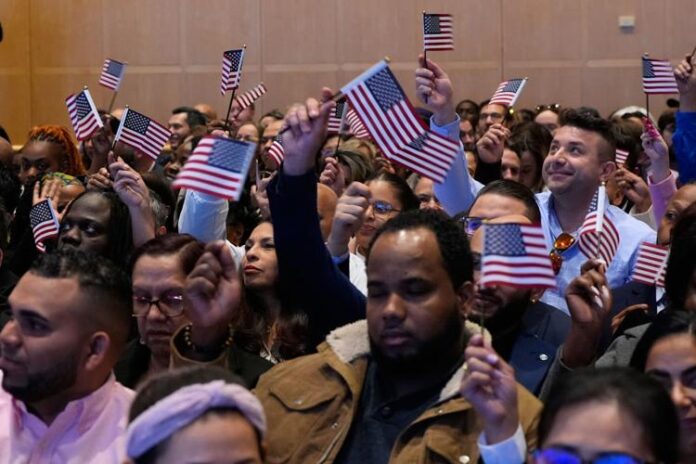
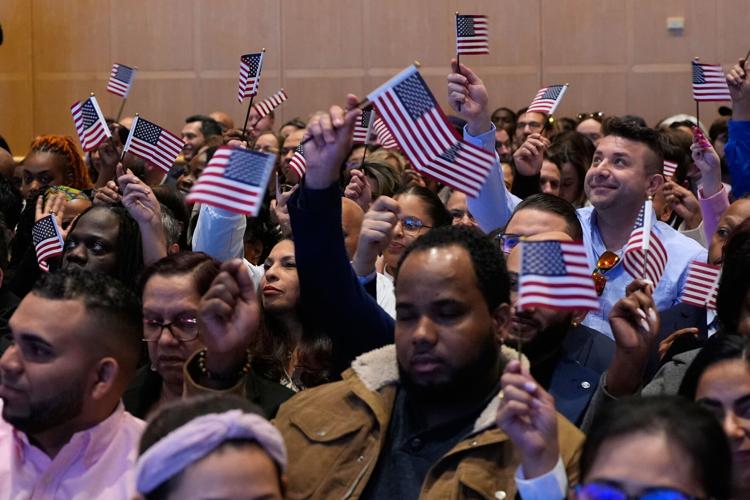
BOSTON — Immigrants preparing to complete the final step toward American citizenship found themselves abruptly turned away from oath ceremonies nationwide this week after the Trump administration ordered a freeze on naturalizations for people from 19 countries, leaving dozens in legal limbo just moments before they would have become U.S. citizens.

At Boston’s historic Faneuil Hall, prospective citizens scheduled to take their oaths were pulled from line based on their countries of birth and told their ceremonies had been canceled without explanation, witnesses said. The scene repeated itself at naturalization venues across the country as U.S. Citizenship and Immigration Services instructed employees to halt all immigration pathways for people from nations the administration deems high risk.

“One of our clients said that she had gone to her oath ceremony because she hadn’t received the cancellation notice in time,” Gail Breslow, executive director of Project Citizenship, a nonprofit serving immigrants in Massachusetts and New England, told WGBH. 

“She showed up as scheduled, and when she arrived, officers were asking everyone what country they were from, and if they said a certain country, they were told to step out of line and that their oath ceremonies were canceled.”

The citizenship oath represents the culmination of a years-long process involving background checks, interviews, testing on U.S. history and civics, and payment of substantial fees. Twenty-one clients of Project Citizenship alone received cancellation notices this month, Breslow said, describing the emotional toll on families who thought they were hours away from achieving citizenship.

“People are devastated and they’re frightened,” Breslow said, as the Daily Beast reported. “People were plucked out of line. They didn’t cancel the whole ceremony.”

Boston Mayor Michelle Wu expressed outrage over the weekend at the scene that unfolded in a building synonymous with American revolutionary ideals. “It’s despicable and it is deeply painful to see this happening across the country but to feel it at the cradle of liberty in Boston at Faneuil Hall, a place that represents the foundation of this country and the very values that have made our nation who we are,” Wu said.

The administration’s directive targets immigrants from 19 countries classified as “of concern”: Afghanistan, Burma, Chad, the Republic of the Congo, Equatorial Guinea, Eritrea, Haiti, Iran, Libya, Somalia, Sudan, Yemen, Cuba, Burundi, Laos, Sierra Leone, Togo, Turkmenistan, and Venezuela. 

The list encompasses nations across multiple continents with varying relationships to the United States, from countries experiencing humanitarian crises to those under authoritarian rule to nations with historically complex diplomatic ties to Washington.

President Trump intensified scrutiny of applicants from these countries following last month’s shooting of two National Guardsmen in Washington that killed 20-year-old Sarah Beckstrom and wounded 24-year-old Andrew Wolfe. Authorities identified the suspect as 29-year-old Rahmanullah Lakanwal, an Afghan immigrant granted asylum in April under the current administration.

USCIS Director Joseph B. Edlow vowed in a statement after the shooting to “ensure that every alien is vetted and screened to the maximum degree possible.” He announced immediate policy changes authorizing officers to consider country-specific factors as “significant negative factors when reviewing immigration requests,” adding, “American lives come first.”

Edlow wrote Friday in a press release announcing a new screening center headquartered in Atlanta that the administration had reversed previous approaches to immigration vetting. “We changed that approach on day one of the Trump administration. 

Under President Trump, we are building more protective measures that ensure fraud, deception, and threats do not breach the integrity of our immigration system,” NBC confirmed Edlow said.

Internal guidance obtained by CBS News instructed USCIS staff to “stop final adjudication on all cases,” including “all form types and making any final decisions (approvals, denials) as well as completing any oath ceremonies” for applicants from the targeted countries.

Several applicants said they received cancellation notices through an online portal but the messages provided no explanation, timeline for resolution, or guidance on next steps, leaving them uncertain whether their applications remained active or had been suspended indefinitely.

The freeze has created widespread confusion among immigration attorneys struggling to advise clients who completed every requirement for citizenship only to be blocked at the final moment. “There is no time frame—nobody knows how long this is going to be,” immigration lawyer Teresa Coles-Davila told the New York Times. “Literally, no one knows what is happening.”

Rosanna, a student in Texas who was born in Libya and holds Canadian citizenship, told the Times she anticipated receiving an email setting the date for her oath ceremony but instead got a cancellation notice. “It’s definitely disappointing. Having come from a third-world country, it’s just never-ending disappointment,” she said. “I definitely feel unwelcome here.”

USCIS and its parent agency, the Department of Homeland Security, did not respond to requests for comment Sunday. The White House also declined to address questions about the policy.

The administration’s decision to single out applicants by country of origin during naturalization ceremonies raises complex legal and ethical questions about discrimination in the citizenship process. 

While federal law grants broad authority to set immigration policy and conduct security screening, pulling approved applicants from ceremony lines based solely on their birthplace tests the boundaries of that discretion.

Legal experts note that applicants who reached the oath ceremony stage had already undergone extensive vetting, including FBI fingerprint checks, reviews of their immigration history, verification of continuous residence and physical presence requirements, assessment of good moral character, and demonstration of English language proficiency and civic knowledge.

 The sudden reversal after clearing these hurdles suggests either a fundamental reassessment of screening adequacy or a policy shift using national origin as a proxy for security risk.

The freeze particularly impacts refugees and asylum seekers who fled persecution, conflict, or violence in their home countries—precisely the populations the targeted nations list comprises. Many applicants from Afghanistan assisted U.S. military operations during two decades of war, putting their lives at risk as interpreters, guides, and cultural advisors. 

Others escaped authoritarian regimes in Cuba, Venezuela, and Iran. The irony of denying citizenship to people who sought America as refuge from the very conditions that made their home countries unstable has not escaped critics.

The timing of cancellations, occurring literally as applicants stood in line ready to take their oaths, amplifies the cruelty of the policy in the eyes of immigrant advocates. Families who arranged time off work, traveled significant distances, dressed in their finest clothing, and brought relatives to witness their citizenship moment instead experienced public rejection and humiliation.

Beyond the immediate human impact, the freeze creates practical complications. Applicants in limbo cannot enjoy benefits of citizenship including voting rights, eligibility for federal jobs requiring citizenship, ability to sponsor family members for immigration, protection from deportation, and access to U.S. passports for international travel. Some may face expired work authorizations or other immigration statuses while their citizenship applications remain suspended.

The administration’s citation of the National Guard shooting as justification for the sweeping freeze glosses over the fact that the suspect had already been granted asylum and undergone screening before the current policy was announced. 

Using a single incident involving an individual who entered through asylum channels to justify blocking citizenship for thousands who completed the naturalization process conflates distinct immigration pathways and treats an entire category of applicants as presumptively suspect based on national origin.

As the policy enters its second week with no clear timeline for resolution, the 21 Project Citizenship clients and potentially hundreds more across the country remain suspended between their former status and the citizenship they believed was within grasp. 

Whether the administration will resume ceremonies after implementing enhanced screening procedures, indefinitely maintain the freeze, or deny applications outright remains unclear, leaving families to navigate uncertainty about their futures in the only country many of their children have ever known.

DailyBeast/NBC

Texas Democrat Crockett Jumps Into Senate Race as Allred Abandons Campaign

0

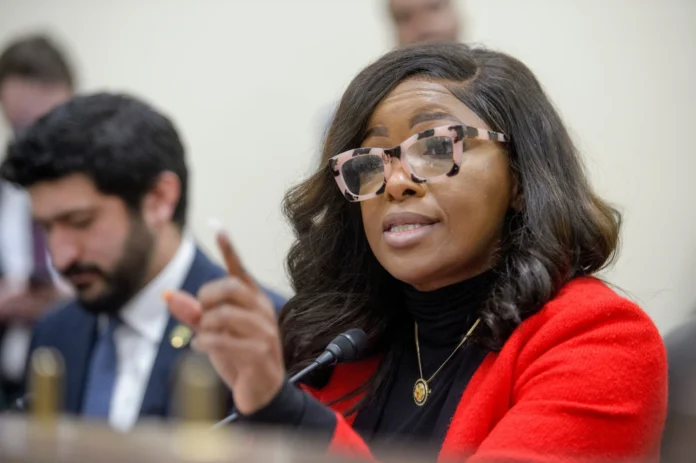
AUSTIN, Texas — Democratic Rep. Jasmine Crockett submitted paperwork Monday to challenge Republican Sen. John Cornyn in 2026, entering the contest on the final day of qualifying just hours after former Rep. Colin Allred abandoned his own Senate bid to pursue a House comeback instead, dramatically reshuffling the political landscape for a seat Democrats view as potentially winnable amid Republican disarray.

Crockett, the 44-year-old congresswoman who has built a national following through sharp-tongued criticism of President Donald Trump, announced her candidacy with a provocative social media video in which she remains silent while Trump’s voice plays offscreen calling her a “very low IQ person.” She turns to face the camera, smiles, and the clip cuts to the message: “Crockett for US Senate,” CNN reported.

The wordless announcement signals Crockett intends to embrace her combative reputation and opposition to Trump even in deep-red Texas, where national Democrats believe Republican infighting could create an opening. Some party operatives privately question whether Crockett’s confrontational style makes an already difficult race even harder to win.

Cornyn dismissed Crockett’s chances in blunt terms Monday. “I think she wins the Democratic primary, and she is the worst possible candidate they could have in Texas,” Cornyn told reporters, as CNN confirmed. “She’s not electable.”

Allred, who unsuccessfully challenged Republican Sen. Ted Cruz in 2024, launched his second Senate campaign in July but reversed course Monday, announcing he would instead seek election to Texas’ redrawn 33rd Congressional District. CNN previously confirmed that Crockett asked Allred to drop out and cited polling showing her in strong position for the Democratic nomination.

Allred acknowledged speaking with Crockett, whom he described as “a friend,” about the race in what he characterized as “a professional, friendly conversation.” He told the network that avoiding a protracted primary battle influenced his decision.

“To me, going through a bruising primary, and in Texas, we have a runoff — and we would certainly have a runoff in this case — was not in the best interest of the state or the party,” Allred said in an interview. “I needed to try and decide what I thought would be best for the state, for the party in a time and in a year where there is so much at stake.”

Crockett now faces Texas State Sen. James Talarico in the March 3 Democratic primary. Talarico, a former teacher who elevated his profile through high-profile battles over Republican redistricting efforts this summer, entered the race in September and has already surpassed Allred’s fundraising totals, network reporting showed.

“We’re building a movement in Texas — fueled by record-breaking grassroots fundraising and 10,000 volunteers who are putting in the work to defeat the billionaire mega-donors and puppet politicians who have taken over our state,” Talarico said in a statement. “Our movement is rooted in unity over division — so we welcome Congresswoman Crockett into this race.”

The Democratic field reshuffle follows seismic shifts in Texas politics that have altered strategic calculations heading into next year’s midterm elections. State Republicans executed unprecedented mid-decade redistricting this summer that scrambled the House map, while a contentious GOP Senate primary has emboldened Democratic hopes of capturing Cornyn’s seat.

Cornyn, who has held office in Texas since the 1990s and served in the Senate since 2002, faces the toughest primary challenge of his career from Texas Attorney General Ken Paxton and Rep. Wesley Hunt from the 38th District. Trump has declined to endorse any candidate, triggering a fierce competition among GOP contenders for his supporters’ allegiance.

Democrats hope to exploit Republican divisions and finally put a statewide Texas race within reach after years of frustration watching the state slip further from their grasp despite demographic changes and urbanization that should theoretically favor their party. Whether Crockett or Talarico gives Democrats their best opportunity remains an open question dividing party strategists.

Democrats need a net gain of four Senate seats to reclaim majority control from Republicans next November. Most seats up for reelection sit in states Trump won last year, making Texas part of a challenging map for the party. The state has remained stubbornly Republican at the statewide level for decades despite Democrats’ repeated predictions that changing demographics would flip it blue.

Crockett spent recent weeks floating a potential Senate candidacy, making calls and gauging support among potential backers as Democrats gamed out a reshuffled slate for 2026, sources familiar with the discussions said. She coordinated with Rep. Marc Veasey, a fellow Dallas Democrat whose current district was carved up through gerrymandering, on timing so he could file to run in her House district shortly after she submitted Senate paperwork.

The rapid-fire developments Monday injected fresh intrigue into a Texas Senate contest already marked by high drama. If Crockett had joined the race while Allred remained, three viable candidates competing in the Democratic primary would have virtually guaranteed no one captured a majority in March, forcing a May runoff that could deplete resources and expose divisions before the general election.

Allred’s House comeback bid sets up a competitive primary against Rep. Julie Johnson, who plans to move from the 32nd District to run in the redrawn 33rd. Johnson issued a pointed statement Monday questioning Allred’s decision to return after his Senate campaign faltered.

“This new district deserves representation that has been present in the tough moments, including throughout the redistricting fight, instead of parachuting back when another campaign doesn’t work out,” Johnson said. “Families here are dealing with rising costs, housing pressures, and real economic strain. They deserve someone with a strong record in Democratic collaboration and support.”

Rep. Joaquin Castro, who considered running for Texas attorney general before opting to seek reelection, defended Crockett’s Senate ambitions on CNN’s “The Situation Room.” “Jasmine is a fighter, she’s an incredibly dynamic person,” Castro said. “She’s got a message that’s resonating, not only with the Democratic base, but I think with Americans across the country.”

Crockett’s decision to lean into her status as a Trump antagonist represents a calculated gamble in Texas, where the former president remains popular among Republican voters but has shown vulnerability in suburban areas that have trended Democratic in recent cycles. Her confrontational style has made her one of Congress’ most outspoken Democrats and a frequent target of GOP attacks, raising her national profile while potentially limiting her appeal to moderate and independent voters crucial to winning statewide in Texas.

The chaotic redistricting process that scrambled multiple House districts created the opening for Crockett’s Senate bid by forcing several Democratic incumbents to reconsider their political futures. State Republicans’ controversial decision to redraw congressional maps mid-decade sparked legal challenges and accusations of partisan gerrymandering designed to entrench Republican advantages despite population growth concentrated in Democratic-leaning urban and suburban areas.

Talarico has built his own following through viral social media posts challenging Republican education policies, including private school vouchers and requirements to display the Ten Commandments in public school classrooms. His ability to outraise Allred despite entering the race later demonstrates fundraising prowess that could make the March primary competitive, according to the Associated Press.

The Republican primary battle between Cornyn, Paxton, and Hunt has generated its own fireworks. Paxton, who survived impeachment proceedings last year on corruption allegations, commands fierce loyalty among Trump’s most devoted supporters but carries significant baggage that could complicate a general election. Hunt, an African American congressman and military veteran, offers Republicans demographic diversity but lacks statewide name recognition. Cornyn’s establishment credentials and fundraising advantage make him the frontrunner, but Trump’s refusal to weigh in has left the race fluid.

As both parties sort out their primary fields, the 2026 Texas Senate contest has already become one of the most closely watched races of the midterm cycle. Whether Democrats can finally crack the code in Texas after decades of disappointment may depend on factors beyond any single candidate’s control, including national political winds, turnout patterns, and whether Republican divisions persist through November 2026.