Home Blog Page 146

Trump Immigration Crackdown Leaves Nearly 200,000 Ukrainians in US Legal Limbo- Reuters

0
FILE Ñ President Trump meets with Ukraine's President Volodymyr Zelenskyy in the Oval Office of The White House in Washington on Aug.18, 2025. In the Trump administrationÕs latest effort to pressure Ukraine into accepting a 28-point peace plan, officials from the two countries will hold talks in Geneva. (Doug Mills/The New York Times)

 Kateryna Golizdra hasn’t worked in six months, can no longer afford health insurance for a chronic liver condition, and lives each day wondering if federal immigration agents might arrest her. The 35-year-old former Ritz-Carlton manager who fled Ukraine’s war now finds herself trapped in an unexpected American nightmare: bureaucratic limbo that has stripped away her legal status, income and sense of security.

FILE Ñ President Trump meets with Ukraine’s President Volodymyr Zelenskyy in the Oval Office of The White House in Washington on Aug.18, 2025. In the Trump administrationÕs latest effort to pressure Ukraine into accepting a 28-point peace plan, officials from the two countries will hold talks in Geneva. (Doug Mills/The New York Times)

Golizdra represents one face of a humanitarian crisis unfolding across the United States, where nearly 200,000 Ukrainian refugees face deportation risk as the Trump administration’s immigration crackdown has ground a Biden-era refugee program to a virtual standstill. Internal U.S. government data reviewed by Reuters reveals the scope of the crisis, previously unreported, affecting individuals who followed legal channels to escape Russian invasion only to find themselves effectively abandoned by American bureaucracy.

The scale of those affected—197,000 Ukrainians as of March 31 according to government records—represents roughly three-quarters of all Ukrainians admitted under the humanitarian program launched in April 2022. When her permission to remain in the United States expired in May, Golizdra instantly became vulnerable to arrest and deportation despite having committed no violation. She lost not only her work authorization but her job earning over $50,000 annually, her employer-provided health coverage, and her ability to financially support her own displaced mother living in Germany.

From War Zone to Work Authorization Void

The humanitarian parole program for Ukrainians, introduced by former President Joe Biden in the early months of Russia’s full-scale invasion, ultimately admitted nearly 260,000 refugees for an initial two-year period. This represents a fraction of the 5.9 million Ukrainian refugees worldwide, with 5.3 million sheltered in European nations according to United Nations refugee agency figures. The program offered temporary haven but required periodic renewal—a process that has effectively collapsed under the current administration.

Reuters interviewed two dozen Ukrainians who lost work permits and employment due to processing delays, painting a portrait of cascading consequences affecting individuals across professional sectors. The group included technology workers, educators, financial professionals, designers and students—people who had established lives, careers and tax-paying status in American communities before administrative dysfunction stripped away their legal foundation.

Their accounts describe a desperate scramble to maintain survival: depleting personal savings accumulated before arrival, seeking emergency assistance from community organizations, accumulating debt to cover basic living expenses, and confronting the psychological toll of indefinite uncertainty. Several individuals interviewed expressed fear of arrest by Immigration and Customs Enforcement agents, prompting some to limit outdoor activities or avoid employment that might bring them into contact with authorities.

The Human Cost of Administrative Paralysis

Golizdra’s experience in Bucha, a Kyiv suburb, explains why return to Ukraine remains impossible for many refugees caught in America’s legal limbo. Russian forces set her home ablaze in March 2022 during their assault on the capital region. When Ukrainian troops retook Bucha, investigators discovered hundreds of bodies including civilians executed by occupying forces in what international observers characterized as war crimes. The community Golizdra knew no longer exists, destroyed by violence that made global headlines for its brutality.

Yet the alternative—remaining in the United States without legal status—creates what Golizdra describes as life on a “hamster wheel” of constant anxiety. “It’s constant stress, anxiety,” she told Reuters. “If I will need to leave the States, then I will have to build something again.” The prospect of uprooting once more, after fleeing war and establishing a foothold in America, represents psychological exhaustion layered atop material hardship.

Three former immigration officials interviewed by Reuters confirmed that Ukrainians whose humanitarian parole has expired face potential arrest by federal authorities, despite having entered the country legally and violated no terms of their admission. This creates a perverse outcome where individuals who followed established legal procedures now face the same enforcement actions as those who entered without authorization.

Policy Whiplash and Processing Collapse

The Trump administration’s approach to Ukrainian humanitarian parole has undergone multiple shifts, creating confusion and instability for refugees attempting to maintain legal status. Officials paused application and renewal processing in January, citing security concerns that were not elaborated upon publicly. This freeze affected not only new applications but renewals for individuals whose two-year parole periods were approaching expiration.

In March, following what sources described as a contentious Oval Office meeting with Ukrainian President Volodymyr Zelenskiy, Trump publicly contemplated completely revoking legal status for all Ukrainians admitted under the program. Reuters first reported the administration was considering this dramatic action, which would have rendered quarter-million people immediately deportable regardless of their circumstances or compliance with program requirements.

The administration ultimately did not terminate the program entirely. In May, a federal judge ordered officials to resume processing renewal applications, seemingly resolving the crisis. However, government data released last week as part of ongoing litigation reveals the minimal impact of that court order: U.S. immigration officials processed only 1,900 renewal applications for Ukrainians and other nationalities in the months since the judge’s directive—a tiny fraction of those with expiring status.

Kateryna Golizdra holds her Ukrainian passport for a photograph outside her home in Margate, Florida, U.S., November 17, 2025. REUTERS/Maria Alejandra Cardona

Financial Barriers Compound Processing Failures

Beyond processing paralysis, the Trump administration and Congress have erected new financial obstacles. A spending package signed into law by Trump in July added a $1,000 fee to humanitarian parole applications, supplementing an existing $1,325 per-person charge. For families, these fees create substantial barriers. A family of four now faces over $9,300 in government fees simply to request renewal of status that previously cost nothing to maintain.

These fees hit hardest for Ukrainians who have already lost work authorization and income while awaiting processing. Golizdra and others interviewed described the cruel paradox: they need renewed status to work legally, but cannot afford renewal fees without employment income. Some have borrowed money from friends, family or community organizations to pay fees while uncertain if applications will even be processed in time.

The White House referred questions about the Ukrainian humanitarian program to the Department of Homeland Security, which did not respond to multiple requests for comment from Reuters. This silence from officials leaves refugees and their advocates without clarity about processing timelines, approval standards, or policy intentions.

Congressional Response and Grassroots Support Networks

U.S. Representative Mike Quigley, a Democrat representing the Chicago area, told Reuters his congressional office has received requests for assistance from more than 200 Ukrainians caught in legal limbo. “There’s a fear that if they haven’t completed their application, if they haven’t gone through the whole process, they’re vulnerable for deportation,” Quigley explained. His office has attempted to intervene with immigration agencies on behalf of constituents, though with limited success given the systemic nature of processing failures.

Anne Smith, who serves as executive director and regulatory counsel of the Ukraine Immigration Task Force—a legal coalition formed specifically to assist war refugees—reported her attorney network receives multiple calls weekly from Ukrainians reporting family members detained by immigration authorities. These arrests occur in various contexts: at construction sites, during food delivery work, while driving for Uber or trucking companies, and in broader enforcement sweeps conducted in cities including Chicago and Cleveland.

The arrests illustrate how Ukrainians with expired parole become indistinguishable in enforcement terms from individuals who never possessed legal status, despite fundamentally different circumstances. Immigration and Customs Enforcement agents do not distinguish between someone whose paperwork expired due to government processing failures versus someone who entered the country without authorization.

Brian Snyder, a product marketing manager in Raleigh, North Carolina who has sponsored three Ukrainian families through the humanitarian program, described the unfairness of penalizing people who followed established legal processes. One Ukrainian woman recently asked if he would serve as her emergency contact should immigration officers arrest her—a request reflecting the fear pervading these communities. Snyder knows another family where authorities renewed parole for a teenage son while leaving parents and two younger children in expired status, creating the nightmare scenario of potential family separation.

“All of this dysfunction and uncertainty is just introducing a tremendous amount of stress in these families’ lives,” Snyder told Reuters, his frustration evident at watching people he helped bring to America now facing consequences for bureaucratic failures beyond their control.

The Self-Deportation Phenomenon

Six of the 24 Ukrainians interviewed by Reuters have chosen to leave the United States rather than risk immigration detention or deportation to unexpected destinations. The Trump administration has developed a practice of deporting individuals to third countries—including locations in Latin America and Africa—when their home countries prove difficult deportation destinations. This policy creates additional uncertainty for Ukrainians weighing whether to remain in legal limbo or depart voluntarily.

Yevhenii Padafa’s story exemplifies the impossible choices facing refugees whose legal status has expired. The 31-year-old software engineer moved to Brooklyn in September 2023, building a life and career in New York’s technology sector. He applied to renew his humanitarian parole in March, following procedures exactly as required. His application languished in bureaucratic processing until his status expired in September, rendering him deportable despite having done nothing wrong.

Worried that remaining in the United States without legal status could result in a bar preventing future return, Padafa decided to attempt “self deportation” using a government application called CBP One. The Trump administration announced in May it would provide free outbound plane tickets and $1,000 “exit bonuses” for those using the app to voluntarily depart—an incentive program designed to reduce detention and formal deportation costs.

Padafa chose Argentina as his destination, drawn by lower living costs compared to Western Europe and by Argentina’s own humanitarian program accepting Ukrainian refugees. However, the CBP One application would not process a ticket to Buenos Aires. When Padafa contacted a U.S. border official for clarification, he received a stark answer: the system would only book flights to Ukraine itself.

This policy effectively forces refugees to choose between remaining illegally in America or returning directly to an active war zone. For Padafa, neither option was acceptable. He scraped together money for a commercial ticket to Argentina, arriving in Buenos Aires in mid-November with minimal funds and planning to sell his laptop to cover initial apartment rent.

“If I return to Ukraine, I’ll just go to the frontline,” Padafa told Reuters, referring to mandatory military conscription awaiting men of fighting age. “I’d rather be homeless somewhere than go to Ukraine.”

The lawsuit that prompted release of government processing data represents one avenue advocates are pursuing to force administrative action. The litigation revealed the stark gap between judicial orders to resume processing and actual implementation—only 1,900 renewals processed despite tens of thousands pending. Courts can order agencies to perform duties, but enforcing compliance and ensuring adequate processing speed remains challenging.

Legal experts note that humanitarian parole, by its nature, offers less robust protections than formal refugee status or asylum. The program grants temporary permission to remain in the United States for urgent humanitarian reasons, but does not provide a pathway to permanent residency. Parole recipients must continually renew their status and remain vulnerable to policy changes that can eliminate the program or refuse renewals.

This legal vulnerability distinguishes Ukrainians admitted under humanitarian parole from refugees admitted through traditional resettlement programs, who receive more stable legal status with eventual pathways to citizenship. The Biden administration chose humanitarian parole for speed and simplicity, allowing rapid admission of Ukrainians fleeing invasion without navigating complex refugee processing. That choice, pragmatic in 2022, now leaves quarter-million people dependent on discretionary renewals that the current administration appears unwilling to process efficiently.

Comparative Context: Other Humanitarian Programs Face Similar Fate

The collapse of Ukrainian parole processing fits within broader Trump administration immigration policies that have paralyzed multiple humanitarian programs. Similar parole initiatives for nationals of Haiti, Venezuela, Cuba and Nicaragua have faced processing delays, fee increases, and policy uncertainty. The pattern suggests systematic administrative decisions to slow or halt programs associated with the previous administration, regardless of humanitarian need or legal obligations.

European nations, by contrast, have maintained relatively stable policies toward Ukrainian refugees, with 5.3 million finding haven primarily in Poland, Germany, Czech Republic and other countries geographically closer to the conflict. European Union temporary protection directives grant Ukrainians work authorization and social benefits with clearer renewal processes, though pressures exist there as well as the war extends into its third year.

The United States, geographically distant from the conflict, admitted far fewer Ukrainian refugees proportionally but offered an important alternative for those with family connections, professional opportunities, or other ties to America. The program’s deterioration damages America’s credibility as a humanitarian refuge and contradicts stated policies of supporting Ukraine against Russian aggression.

Economic and Social Integration Interrupted

Before processing collapsed, many Ukrainian parolees had successfully integrated into American communities and workforce. They paid taxes, rented or purchased homes, enrolled children in schools, and contributed to local economies. Golizdra’s $50,000 annual salary at the Ritz-Carlton represented not only her financial stability but value added to her employer and tax revenue to federal and state governments.

The forced departure from employment of thousands of Ukrainians represents lost economic productivity and tax revenue. Tech workers, healthcare professionals, educators and skilled tradespeople who were filling labor market needs now sit idle, unable to work legally despite willingness and ability. Employers lose trained workers and face recruiting costs to replace them, while communities lose contributing members who had begun establishing roots.

Some Ukrainians interviewed described initial welcome from American communities transforming into awkward interactions once their legal status expired. Neighbors and friends who had embraced their arrival now don’t know how to respond to news that friendly Ukrainians down the street may be subject to deportation. Children established in schools face potential uprooting mid-year if parents decide to leave preemptively rather than risk arrest.

Looking Ahead: Uncertain Futures and Policy Questions

Golizdra told Reuters she believes she can endure another six months of limbo—matching the six months already survived. This calculation reflects both determination and desperation: she can deplete remaining savings, perhaps find cash-paying work, and maintain hope that processing will eventually resume meaningfully. But the timeframe is speculation; she has no information about when, or if, her renewal application will be adjudicated.

The broader question facing nearly 200,000 Ukrainians in similar situations is whether the Trump administration intends to process renewals at scale or allow the program to wither through administrative neglect. The latter approach avoids politically difficult decisions to formally terminate the program while achieving similar practical results—forcing Ukrainians to leave due to inability to work legally or fear of arrest.

Congressional intervention could mandate processing timelines, appropriate additional resources for adjudications, or create alternative legal pathways for affected Ukrainians. However, immigration policy remains deeply partisan, making legislative solutions unlikely absent bipartisan coalition willing to prioritize this issue over competing immigration debates.

Advocacy organizations continue providing legal assistance, financial support and policy pressure, but face resource limitations given the scale of need. The Ukraine Immigration Task Force and similar groups operate largely on donations and volunteer lawyer time, insufficient to address systemic failures in government processing.

For Ukrainians like Golizdra and Padafa, abstract policy debates translate into daily anxiety about survival, housing, medical care and basic security. They fled violence only to encounter bureaucratic violence—perhaps less visibly brutal than warfare but destructive of stability and dignity nonetheless. Whether through resumed processing, congressional action, or policy changes, resolution cannot come soon enough for those whose lives remain suspended between countries and legal categories.

Walmart makes African debut with South African store launch

0

Walmart opened its first South African store on Saturday, marking the U.S. retail giant’s long-anticipated entry into the African continent as it moves to capture a foothold in one of the region’s most competitive retail markets. The launch drew large crowds before sunrise, with more than a hundred shoppers forming lines outside the new location to seize promotional Black Friday-weekend deals and browse international products that are typically unavailable in South Africa.

Shoppers who waited for hours said they were eager to purchase items such as Drew Barrymore-branded designer countertop air fryers, Labubu collectible dolls and Dr Pepper soft drinks. “I’m actually here for a specific product that you can’t really get in South Africa. It’s a children’s toy, Labubu,” said Refilwe Mabale, who spoke to Reuters while standing in line.

Some customers said they were drawn by hopes of lower prices on sought-after technology items. Tshepo Rambau, 44, said he planned to take advantage of Black Friday discounts. “Hopefully I’ll get them cheaper here,” he said, noting he was searching for Wi-Fi extenders and other electronics.

Walmart said the new store will also offer a sixty-minute online delivery service, placing the U.S. retailer in direct competition with Checkers’ Sixty60 service, a dominant on-demand platform operated by Shoprite, South Africa’s largest grocery chain. Andrea Albright, Walmart’s executive vice president, said in a statement that the store opening represents more than a commercial expansion. “Opening the first Walmart store in South Africa is about much more than a business milestone,” she said. “It is a commitment to helping customers save money and live better by consistently delivering the lowest total cost for the basket of products they need.”

The store is located in Roodepoort, west of Johannesburg, and has created 80 new jobs, Walmart said. The retailer said it has also partnered with 15 local small- and medium-size enterprises as part of its supply network.

Walmart’s arrival with a fully branded location follows years of speculation about when the company would bring its flagship identity into the South African market. While Walmart already has a sizable presence in the country through Massmart subsidiaries such as Makro, Game and Builders Warehouse, the new storefront marks the first time the Walmart name has appeared on a retail outlet in South Africa.

Industry chatter intensified after TheSouthAfrican and MyBroadband reported that Walmart planned to open its first store inside Fourways Mall in Gauteng. That site, formerly occupied by Game, became the center of speculation after Massmart social-media accounts posted photos in October 2025 showing the recognizable Walmart Spark logo being installed on the building exterior. Days later, additional images showed a nearly complete storefront consistent with Walmart’s branding. A Fourways Mall employee later confirmed to MyBroadband that Walmart was preparing to take over the location, though the store has not yet opened.

Walmart International President and CEO Kath McLay said South African shoppers can expect a broad selection of merchandise, including groceries, household essentials, apparel and technology products. She said the stores were designed to combine affordability and convenience through open layouts, wide aisles and digital tools intended to streamline the shopping experience. According to McLay, the stores will cater to families and emphasize accessible pricing while leveraging Walmart’s global scale.

Reuters

Israeli strikes across Gaza kill 22 Palestinians, medical and civil defence officials say

0

Israeli airstrikes across the Gaza Strip killed at least 22 Palestinians on Saturday, Gaza’s Civil Defence said, marking what Palestinian factions described as a serious new breach of the ceasefire agreement that has been in place since October. Civil Defence officials said the death toll is likely to rise as rescue crews continue searching collapsed structures in multiple neighborhoods.

A spokesman for the agency said Saturday’s casualties included three people killed when a vehicle was struck near Gaza City, three others who died when a home in Deir al-Balah was bombed, and one person killed in a strike on the Nuseirat refugee camp. Officials said ongoing recovery efforts in several districts were slowed by heavy damage and unstable debris.

The latest round of airstrikes deepened concerns about violations of the ceasefire that was brokered by Egypt, Qatar, Turkey and the United States on Oct. 11 to halt Israel’s two-year military campaign in the enclave. Palestinian resistance groups said the continued strikes amounted to a deliberate undermining of the agreement, which had been intended to stop new military incursions and allow greater humanitarian access.

Since the truce took effect, more than 300 Palestinians have been killed and hundreds more wounded in what Gaza officials describe as repeated Israeli attacks, many of them hitting areas where displaced families have sought refuge. Humanitarian agencies say the Israeli government’s restrictions on aid convoys have contributed to worsening hunger among Gaza’s 2.3 million residents, who are now enduring winter storms and frigid temperatures with limited food, heat or shelter.

The United Nations Children’s Fund reported that Israeli forces have killed an average of two Palestinian children every day during the ceasefire period, underscoring what the agency called a sharply deteriorating situation despite the presence of a formal truce.

In a statement Thursday, Hamas accused Israel of expanding its military footprint inside Gaza by pushing past the truce-mandated yellow demarcation line. The group said Israeli forces had re-entered territories they were required to vacate under the agreement and were displacing families through continued air and artillery bombardment. Hamas urged the ceasefire’s mediators and the United States to intervene, warning that Israel’s actions were destabilizing the entire framework of the agreement.

Civil Defence officials said Israeli forces advanced roughly 250 meters into areas east of Gaza City on Friday, forcing hundreds of families to flee again toward zones without adequate shelter or services. Residents said they feared a return to the large-scale displacement that marked the earliest months of the war.

Saturday’s escalation unfolded less than a week after the United Nations Security Council approved a U.S.-backed plan intended to bolster the ceasefire and lay the groundwork for stabilizing the territory. The plan aims to halt Israel’s war, which Gaza authorities say has killed more than 69,000 Palestinians, wounded more than 170,000 and destroyed or damaged about 90 percent of civilian infrastructure.

Despite the truce, residents and rescue workers in Gaza say airstrikes and ground incursions have persisted on an almost daily basis, raising new questions about whether the ceasefire is fragmenting. Civil Defence teams working in central and northern districts said they have struggled to respond quickly to each incident as shifting front lines and damaged roads hinder movement.

Trump Insists Nigeria Is ‘Disgrace,’ Calls Violence ‘Genocide’ as Anger Escalates

0

WASHINGTON (BN24) — U.S. President Donald Trump has intensified his criticism of the Nigerian government, accusing it of committing “genocide” against Christians amid rising violence from extremist groups. Speaking on a conservative radio show Friday, Trump condemned the Nigerian government for its failure to curb attacks on Christian communities, claiming that thousands have been killed in what he described as an ongoing genocide.

“Nigeria is a disgrace. The whole thing is a disgrace,” Trump said during the interview. “They’re killing people by the thousands. It’s a genocide, and I’m really angry about it.”

Trump’s remarks, which were later highlighted by Fox News, come amid heightened international concerns over religious persecution in Nigeria. The U.S. government has already designated Nigeria as a “Country of Particular Concern” due to the widespread violence against religious minorities, particularly Christians, who are often targeted by Islamist militant groups such as Boko Haram and Islamic State affiliates.

The former president reiterated his administration’s stance on Nigeria, warning that the U.S. could take further actions if the situation does not improve. We give a lot of subsidies to Nigeria. We’re going to end up stopping,” Trump added, referring to U.S. financial aid to the country. He also renewed his threat of military intervention, stating that the U.S. would take action against jihadist groups if the Nigerian government “does not do more” to protect its citizens.

Trump’s comments reflect growing frustration in Washington over the Nigerian government’s response to the escalating violence. On the same day, a U.S. Department of War official confirmed that American officials had been working closely with Nigeria’s leadership to address the growing threat posed by jihadist groups, which have increasingly targeted Christian communities in northern and central parts of the country.

Secretary of the War Department said he had met with Nigeria’s National Security Advisor to discuss the ongoing violence, with a focus on coordinating efforts to combat extremism and protect vulnerable populations. The official posted on X (formerly Twitter), saying, “Under @POTUS leadership, DOW is working aggressively with Nigeria to end the persecution of Christians by jihadist terrorists.”

The U.S. government’s concerns were echoed during a meeting between Congressman Riley M. Moore and senior Nigerian officials in Washington earlier this week. Among the Nigerian delegation were key figures such as National Security Advisor Nuhu Ribadu and Minister of State for Foreign Affairs Bianca Ojukwu. The discussions centered on Nigeria’s counterterrorism efforts, the protection of religious communities, and strengthening cooperation between the U.S. and Nigeria to address the violence.

Following the meeting, Moore released a statement reaffirming the U.S. commitment to combating religious persecution in Nigeria. “The United States stands ready to coordinate and cooperate with Nigeria,” Moore said. “As President Trump made abundantly clear, the United States will not tolerate continued violence against Christians or other forms of religious persecution.”

The statement from Moore also noted that the Nigerian delegation had shared the country’s ongoing challenges in tackling terrorism, security threats, and the protection of vulnerable communities. The U.S. government has made it clear that it will continue to monitor the situation closely and push Nigeria’s government to accept international cooperation to stop the bloodshed.

The situation in Nigeria remains dire, with ongoing reports of violent attacks on Christian villages, religious leaders, and schools. The international community, led by the U.S., has called on Nigerian authorities to take more decisive action to protect all citizens, regardless of their religion.

Trump’s comments come at a time of increasing scrutiny on Nigeria’s security forces, which have been criticized for their inability to contain the violence. The country has struggled to curb the influence of extremist groups like Boko Haram and ISWAP, which have ravaged the northeast and other regions, causing widespread displacement and loss of life.

As tensions continue to rise, both the U.S. and Nigerian governments face mounting pressure to address the humanitarian crisis and prevent further atrocities. The situation in Nigeria remains a point of contention in U.S.-Nigeria relations, with critics demanding more effective action from the Nigerian government to safeguard its citizens from the violence that has plagued the country for years.

Ukraine Allies Push Back on U.S. Peace Plan Seen as Favoring Moscow

0

KYIV, Ukraine (BN24) — Ukraine’s Western allies voiced strong opposition on Saturday to a U.S.-crafted peace proposal that many in Kyiv and Europe believe could favor Russia despite its ongoing invasion of Ukraine. The 28-point blueprint, designed to bring an end to the war that has lasted nearly four years, has sparked alarm among Ukrainian leaders and European capitals, who warn that the plan could undermine Ukraine’s sovereignty.

The U.S. proposal, which foresees Ukraine ceding territory to Russia and limiting the size of its military, has been met with resistance from Kyiv, with President Volodymyr Zelenskyy vowing that Ukraine will “always defend” its home. The plan also includes provisions that would block Ukraine’s path to NATO membership, another major point of contention.

A Ukrainian delegation, supported by officials from France, Germany, and the U.K., is set to meet with Washington in Switzerland on Sunday to discuss the proposal. The diplomatic talks are seen as a crucial moment in the ongoing international effort to resolve the conflict, with Ukraine’s allies emphasizing the need for any peace agreement to uphold Ukraine’s territorial integrity and its right to self-defense.

The U.S. proposal has raised serious concerns. Zelenskyy and other leaders in Kyiv fear that it could leave the country vulnerable to further aggression from Russia. Ukrainian officials have consistently rejected the idea of territorial concessions to Moscow, a key demand of the Russian government, and have emphasized that they will not compromise on their sovereignty.

On Saturday, leaders from the European Union, Canada, and Japan issued a joint statement expressing support for U.S. peace efforts but pushing back on several elements of the plan. “We are ready to engage to ensure that a future peace is sustainable,” the statement said. “We are clear on the principle that borders must not be changed by force,” it added, voicing concerns about the proposed limitations on Ukraine’s armed forces, which they argue would leave the country vulnerable to future Russian attacks.

German Chancellor Friedrich Merz, speaking at the G20 summit in Johannesburg, South Africa, reiterated European leaders’ insistence that any peace agreement must involve Ukraine’s full participation. “Wars cannot be ended by major powers over the heads of the countries affected,” Merz said, stressing that Kyiv needs strong security guarantees. “From my perspective, there is currently a chance to end this war,” Merz added, though he cautioned, “we are still quite a way from a good outcome for everyone.”

French President Emmanuel Macron also voiced his concerns, emphasizing the importance of respecting Ukraine’s sovereignty. In a speech at the G20 summit, Macron stated, “There can be no peace in Ukraine without respect for Ukraine’s sovereignty.”

The European pushback highlights the growing divide over how to end the war, with Kyiv’s allies insisting that Russia’s ongoing aggression and refusal to honor previous peace agreements should not be rewarded in any final settlement. U.K. Prime Minister Keir Starmer, commenting ahead of the G20 summit, criticized Russia for undermining diplomatic efforts while continuing its brutal attacks on Ukraine.

“Time and again, Russia pretends to be serious about peace, but their actions never live up to their words,” Starmer said, referencing a recent Russian strike in western Ukraine that killed over two dozen civilians.

In the wake of growing tensions, European leaders have repeatedly warned against rushing into peace talks, stressing the need for a solution that reflects Ukraine’s needs and interests. EU Commission President Ursula von der Leyen emphasized that “nothing about Ukraine without Ukraine” must be the guiding principle of any peace process.

For his part, Zelenskyy remained defiant. In a video address on Saturday, he reiterated Ukraine’s commitment to defending its national interests and vowed to prevent any further Russian invasions. “Real peace is always based on security and justice,” he said, underscoring that Ukraine would not be coerced into compromising its territorial integrity.

The upcoming talks in Switzerland, which will include key Ukrainian officials such as Zelenskyy’s chief of staff Andrii Yermak and envoy Rustem Umerov, are seen as a critical juncture in the conflict. Zelenskyy confirmed that the talks would allow Ukrainian negotiators to discuss directly with Russia’s representatives.

Saturday also marked the anniversary of the Soviet-era famine, known as the Holodomor, which Ukrainians commemorate as a reminder of the devastating suffering caused by Soviet policies. Zelenskyy referenced the tragic event in his remarks, drawing parallels to the current situation. “We defended, defend, and will always defend Ukraine. Because only here is our home. And in our home, Russia will definitely not be the master,” he said.

As the U.S. peace plan remains under scrutiny, the world watches closely to see whether Ukraine’s allies and Kyiv’s leadership can find common ground on a path to end the war while securing Ukraine’s future.

Pope Accepts Resignation of Spanish Bishop Accused of Sexual Abuse

0

ROME (BN24) — Pope Leo XIV has accepted the resignation of 76-year-old Cádiz Bishop Rafael Zornoza, marking the first known time that the pontiff has removed a bishop accused of sexual abuse. The resignation, which had been submitted by Zornoza in 2022 when he turned 75, the typical retirement age for bishops, was delayed until this month, following revelations that the bishop was under investigation by a church tribunal for alleged sexual abuse dating back to the 1990s.

A brief statement from the Vatican on Saturday confirmed the acceptance of Zornoza’s resignation but did not specify the reasons behind the decision. The timing follows a report in the Spanish daily El País, which highlighted the investigation into Zornoza, accusing him of abusing a former seminarian during his time as a young priest and director of the diocesan seminary in Getafe. The allegations, which stem from incidents that allegedly took place when the seminarian was between the ages of 14 and 21, include accusations of sexual abuse and manipulation.

The former seminarian, who has remained anonymous, wrote to the Vatican earlier this year, describing how Zornoza allegedly fondled him and regularly slept with him during his youth. According to the letter, Zornoza also attempted to manipulate the seminarian’s psychological well-being, pressuring him to seek psychiatric help to “cure” his homosexuality. These revelations prompted the Vatican’s intervention and the opening of an investigation by the church’s tribunal, the Rota, in Madrid.

In response, the Diocese of Cádiz denied the allegations but confirmed that an investigation was underway. A statement from the diocese on November 10 confirmed that Zornoza was cooperating with the investigation, noting that he had temporarily suspended his official duties to focus on his health, as he is reportedly undergoing treatment for an aggressive form of cancer.

“The accusations made, referring to events that took place almost 30 years ago, are very serious and also false,” the diocese statement said. Zornoza himself has not publicly addressed the specific charges but has made clear his intention to clear his name.

The case is particularly significant as it represents the first publicly known instance of a bishop being retired and placed under investigation for allegations of abuse, particularly amid Spain’s growing reckoning with decades of sexual abuse and cover-up within the Catholic Church. While the Spanish church has faced years of criticism, the resignation of a high-ranking official like Zornoza marks a critical moment in the institution’s efforts to address these long-standing issues.

In recent years, Spain has seen an increasing number of abuse cases come to light, with the country’s first official investigation, launched in 2023, revealing that the number of victims could potentially number in the hundreds of thousands. The investigation, conducted by Spain’s ombudsman, documented 487 cases of alleged abuse, with many of the victims recounting their experiences in the church’s care. In response to these findings, Spain’s bishops issued a public apology. Still, the church hierarchy rejected parts of the report, calling some conclusions “false” and arguing that many victims had been abused outside of the church.

The Catholic Church in Spain has since undertaken its own internal review, with a 2024 report confirming that at least 728 church officials had been identified as abusers since 1945. This prompted the Spanish bishops’ conference to announce plans to compensate victims, following the approval of a government initiative that would require the church to pay economic reparations to survivors.

Zornoza’s resignation is the latest in a series of developments that have underscored the Catholic Church’s ongoing struggle to confront its past and build trust with victims of sexual abuse. As the church faces mounting scrutiny and criticism, Pope Leo XIV’s acceptance of Zornoza’s resignation could be seen as a symbolic step toward greater accountability within the institution. However, the investigation into the allegations against Zornoza and similar cases remains ongoing, as the church grapples with its troubled history.

Olise Inspires Bayern Munich’s 6-2 Comeback Win Over Freiburg

0

MUNICH (BN24) — Michael Olise produced a commanding performance with two goals and three assists as Bayern Munich stormed back from a two-goal deficit to defeat Freiburg 6-2 at home on Saturday, tightening their grip on the top of the Bundesliga.

Bayern trailed early after Freiburg struck twice from set pieces. Yuito Suzuki opened the scoring before Johan Manzambi doubled the visitors’ lead, leaving Bayern momentarily unsettled as manager Vincent Kompany’s rotation with Joshua Kimmich benched and Serge Gnabry rested ahead of Wednesday’s trip to Arsenal appeared to backfire.

But Bayern responded with force. Seventeen-year-old winger Lennart Karl began the comeback after collecting an Olise pass and sliding his finish into the net. Moments later, Karl repaid the favor, setting up Olise to score Bayern’s second with a deflected close-range shot.

Karl had another goal disallowed for offside early in the second half, but Bayern surged ahead soon after when Dayot Upamecano tapped in an Olise-delivered corner. The hosts continued to press, and Harry Kane extended the lead with a powerful close-range finish. The England captain now has 24 goals in 18 games in all competitions, including 14 in 11 Bundesliga matches.

Olise’s influence continued as he created a fifth Bayern goal for Nicolas Jackson, who finished from close range. The French forward then capped his exceptional outing with a late goal, securing Bayern’s sixth and closing out one of the club’s most emphatic performances of the season. Bayern have now dropped just two points across 18 matches in all competitions.

Karl, reflecting on the win, told Sky Germany that Bayern “came back well, scoring six goals” after a difficult start marked by two set-piece concessions. Midfielder Aleksander Pavlovic, who had earlier set up Kane’s goal, praised Karl’s poise, saying he had “never seen a player with so much self-confidence at his age.”

The victory lifted Bayern eight points clear at the top after Borussia Dortmund were held to a 3-3 draw at home by Stuttgart. Dortmund led 2-0 at halftime through an Emre Can penalty and a Maximilian Beier tap-in, but Germany striker Deniz Undav completed a second-half hat trick, including a stoppage-time equalizer, to deny them all three points. Dortmund have not beaten Stuttgart since October 2022.

Elsewhere, Bayer Leverkusen moved into second place with a 3-1 win at Wolfsburg, with Jonas Hofmann, Edmond Tapsoba, and Malik Tillman on target. Augsburg edged Hamburg 1-0 thanks to Anton Kade’s goal, while Borussia Moenchengladbach defeated last-place Heidenheim 3-0 away. Promoted Cologne were set to host Eintracht Frankfurt later on Saturday.

EPL: Nottingham Forest Beat Liverpool 3-0

0

LIVERPOOL, England (BN24) — Nottingham Forest delivered a comprehensive 3-0 victory over Liverpool at Anfield on Saturday, tightening the pressure on the defending Premier League champions and extending a steep decline that has reshaped the early-season standings.

Forest took control midway through the first half when Murillo broke the deadlock in the 33rd minute. The Brazilian defender reacted sharply after a corner confused the penalty area, sweeping his finish beyond Alisson and silencing the home crowd. The goal punctuated a period in which Liverpool struggled to maintain possession, with Forest repeatedly disrupting their buildup play.

Liverpool began the second half seeking a lift, but Forest struck again before momentum could shift. Nicolo Savona doubled the visitors’ advantage shortly after the restart, finishing clinically to extend the gap and deepen the frustration inside Anfield. Forest continued to press higher up the pitch, capitalizing on Liverpool’s inability to impose structure or sustain attacks.

Any faint hopes of a Liverpool comeback faded with 12 minutes left when Morgan Gibbs-White secured Forest’s third. After Alisson parried Omari Hutchinson’s effort, Gibbs-White was quickest to the rebound, steering the ball into the net and sealing the outcome. The goal reflected the broader pattern of the match: loose marking, slow reactions and a Liverpool side visibly drained of confidence.

The defeat marked Liverpool’s sixth loss in their last seven Premier League matches and their second consecutive home defeat to Forest. The champions now sit eight points behind league leaders Arsenal and have lost eight of their past 11 matches in all competitions. The 3-0 margin also made unwelcome history, with Liverpool losing back-to-back league matches by three goals for the first time since 1965.

Manager Arne Slot acknowledged Friday that the squad remains emotionally affected by the death of Diogo Jota in a July crash in Spain. That lingering grief appeared again in the performance, as Liverpool produced another low-energy display marked by slow ball movement and a lack of urgency in midfield.

Liverpool’s slump arrives despite a summer spending spree exceeding £400 million. Among the new arrivals is striker Alexander Isak, who joined for a British-record fee from Newcastle. Isak was substituted during the second half of his fourth Premier League start for the club. The Swedish international is yet to score in the league for Liverpool, adding to the growing concerns surrounding the team’s attack.

Forest’s strong showing left Liverpool languishing in 11th place, far adrift of the title pace and struggling to regain any rhythm. The result highlighted the widening gulf between Liverpool’s preseason expectations and their current form, as pressure mounts on the squad to arrest an alarming downturn.

Barcelona vs Athletic Club, La Liga: Final Score 4-0, Barça Dominate on Historic Return to Camp Nou

0

BARCELONA, Spain (BN24) — Barcelona marked their long-awaited return to the renovated Spotify Camp Nou with a commanding 4-0 win over Athletic Club on Saturday, a result that lifted the Catalan side to the top of the La Liga table for at least 24 hours. Playing in front of 45,000 fans, Barça were not at their sharpest throughout the match but were decisive at key moments, punishing Athletic’s missed chances and taking full advantage after the visitors were reduced to 10 men in the second half.

Barcelona struck first when high pressing from Gerard Martín and Eric Garcia forced a turnover that led to Robert Lewandowski scoring the first goal at the new Camp Nou. Athletic responded well and pressed aggressively, exposing Barcelona’s difficulties playing out from the back without injured midfielders Frenkie de Jong and Pedri. Garcia, operating as a makeshift defensive midfielder, endured early discomfort in the role, and Dani Olmo struggled to ease the pressure during the opening phase.

Athletic created two major chances to level the match. Unai Gómez, deployed unexpectedly as a false nine by Ernesto Valverde, failed to convert a clear opportunity in front of the goal. Moments later, Nico Williams was jeered by the home crowd but nearly silenced them before missing Athletic’s best chance of the night.

Barcelona doubled their lead before halftime through a brilliantly crafted moment from Lamine Yamal, whose trivela assist found Ferran Torres. Unai Simón appeared positioned to make the stop but could not prevent the shot, giving Barça an advantage they had not entirely earned through overall play.

The hosts quickly extended their lead after the break as Fermín López finished off another sequence created through high pressing, this time again initiated by Garcia. Soon after, Athletic’s challenge unraveled when Oihan Sancet was sent off following a VAR review for a reckless kick on López. The referee had initially shown a yellow card, but the video review revealed no attempt to play the ball, resulting in what became one of the clearest red cards of the season.

With Athletic down to 10, Barcelona controlled the final half-hour. Yamal produced a stream of chances, several of which teammates failed to convert, but the teenager remained the most dynamic player on the pitch and was central to nearly every attacking movement. His dazzling solo run and assist created Barça’s fourth goal, allowing Torres to score his second of the night while Yamal delivered one of the first signature highlights of the new Camp Nou.

Manager Xavi Hernández used the opportunity to introduce young winger Dro Fernández, who played more than 30 minutes in a pressure-free environment. Garcia, who overcame his shaky start to excel in the pivot role, earned a standing ovation when he was replaced by Marc Bernal with 15 minutes left. The crowd also welcomed back Raphinha, who returned from injury and immediately tested Simón with a shot that curled just wide.

Barcelona’s convincing win marked a triumphant homecoming, showcasing their blend of youth and experience while reasserting their position near the top of La Liga. The performance was far from flawless, but it was decisive and delivered in front of a home crowd eager to celebrate their return to a stadium rebuilt for a new era.

Top of Form

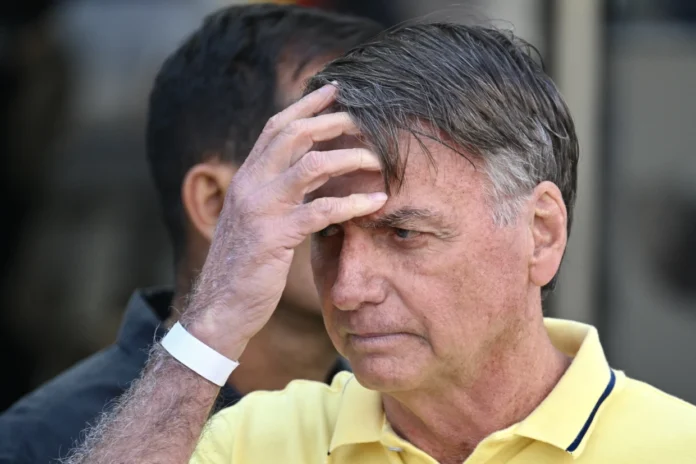
Brazil’s ex-president Bolsonaro arrested over alleged plot to escape and avoid 27-year prison term

0

Brazil’s federal police on Saturday arrested former President Jair Bolsonaro on suspicion that he attempted to engineer an escape to avoid the beginning of a 27-year prison sentence tied to his role in a failed coup attempt. The preemptive detention, ordered by a Supreme Court justice, marked a dramatic turn in one of Brazil’s most polarizing political chapters and ignited immediate celebrations among his critics even as his supporters mobilized prayer vigils and public displays of loyalty.

Federal agents entered Bolsonaro’s Brasília residence early Saturday under authorization from Justice Alexandre de Moraes, who has overseen the case examining Bolsonaro’s efforts to cling to power following his defeat to President Luiz Inácio Lula da Silva in the 2022 election. De Moraes said the former president violated the terms of his house arrest by tampering with an electronic ankle monitor shortly after midnight. Bolsonaro’s lawyers disputed the claim, but custody reports reviewed by The Associated Press show he acknowledged using a soldering iron to pry open the device. Court footage also captured his admission, and video images revealed the monitor’s cap visibly damaged.

Bolsonaro, 70, had been required to wear the device after the court deemed him a flight risk. His aide Andriely Cirino confirmed the arrest occurred shortly after dawn. Supporters quickly assembled outside federal police headquarters in Brasília, where authorities kept rival groups apart as tension grew and car horns echoed through the area.

De Moraes wrote that the arrest was necessary to prevent Bolsonaro from using a protest organized by his son, Senator Flávio Bolsonaro, as cover for an escape attempt. In a video posted earlier, Flávio Bolsonaro urged supporters to gather at his father’s home Saturday evening, framing the demonstration as a patriotic duty. The justice said the plan created conditions for “confusion” that could facilitate the former president’s flight, including a possible dash to the U.S. Embassy in Brasília, which lies just 13 kilometers from Bolsonaro’s residence.

Prosecutors had previously uncovered messages linking Bolsonaro to a political-asylum request in Argentina, governed by his ideological ally President Javier Milei. When asked about the arrest at the White House on Saturday, U.S. President Donald Trump, who maintains an alliance with Bolsonaro, said he had only just learned the news and called the development “too bad.” He also noted he had spoken with Lula the previous night and suggested the two leaders may meet soon.

Bolsonaro’s legal team said his detention was based on a “vigil for prayer,” not a protest, and accused the justice of mischaracterizing events. The Supreme Court panel of five justices that convicted Bolsonaro in September by a 4-1 margin is expected to review the preemptive arrest order Monday.

Local media reported that the former president is likely to begin serving his 27-year sentence as early as next week once remaining appeals are resolved. Organizers of the prayer vigil cited by Bolsonaro’s lawyers said they planned to relocate the gathering to the federal police facility, while his detractors scheduled celebrations in major cities.

In his ruling, de Moraes accused Bolsonaro’s circle of engaging in “pathetic illegal initiatives” designed to undermine the Constitution, judicial authority and the country’s democratic institutions. Bolsonaro and several allies were convicted for leading a conspiracy to overturn the 2022 election and for plotting violence, including alleged plans to kill Lula, Vice President Geraldo Alckmin and de Moraes himself. Bolsonaro has denied wrongdoing.

Fabio Wajngarten, a former Bolsonaro adviser and current lawyer, called the arrest a “terrible stain on the institutions” and challenged claims the ankle monitor had been violated. In a social-media statement, he said the device appeared functional hours after the alleged tampering and described Bolsonaro’s Friday evening activities, which he said included dinner with relatives and medication for persistent hiccups.

Bolsonaro’s political allies quickly defended him. Congressman Sóstenes Cavalcante accused de Moraes of “psychopathy at the highest level,” while former First Lady Michelle Bolsonaro said supporters “will not give up on our nation.” She was traveling outside Brasília when authorities detained her husband.

With Lula abroad at a G20 summit in South Africa, prominent government figures said the arrest followed efforts by Bolsonaro to intimidate members of the Supreme Court. Analysts said the move is likely to reshape the political landscape ahead of the 2026 election. Lula is expected to seek reelection, while Bolsonaro, already barred from holding office, may become a symbolic centerpiece of the campaign.

Creomar de Souza, a Brasília-based political analyst, said Bolsonaro’s allies had hoped to cast the 2026 race as a referendum on the former president’s legacy. Instead, he said, the arrest forces the Bolsonaro family to confront the need to cultivate a new political standard-bearer. “They wanted Bolsonaro to emerge as a martyr and a powerful popular figure,” de Souza said. “Now they must build an alternative for the next election.”

An Associated Press story