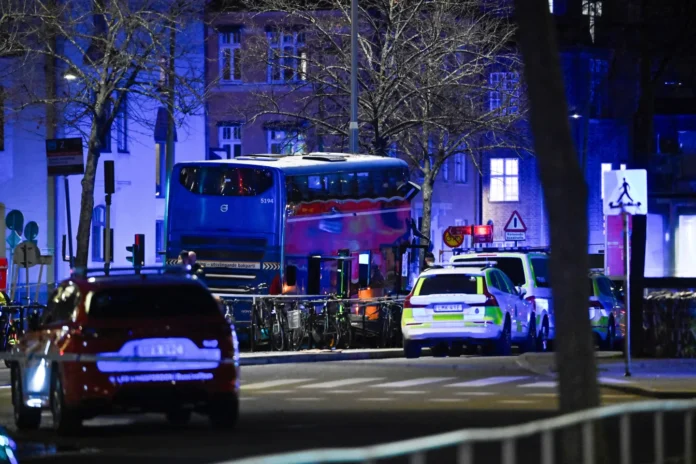
A double-decker bus plowed into a bus stop in Stockholm on Friday afternoon, killing three people and injuring three others in one of the capital’s deadliest recent transport accidents, according to police.
Authorities said they received reports of the crash at 3:23 p.m. The bus, which was not in service and carrying no passengers, drove into a bus shelter along Valhallavägen in the Östermalm district, a busy corridor in the city’s northern sector near the Royal Institute of Technology. Photos from the scene showed the front of the vehicle heavily damaged after striking the structure.
Police opened an investigation on suspicion of involuntary manslaughter, though the cause of the crash remains unclear. Swedish news agency TT reported that the driver was detained and would be questioned as part of the inquiry. Emergency officials confirmed that only the driver was aboard at the time.
Prime Minister Ulf Kristersson wrote on X that he had “received the tragic news that several people have been killed and injured at a bus stop … people who were perhaps on their way home to family, friends, or a quiet evening at home.” He added that while the cause is still unknown, his thoughts were with the victims and their families.
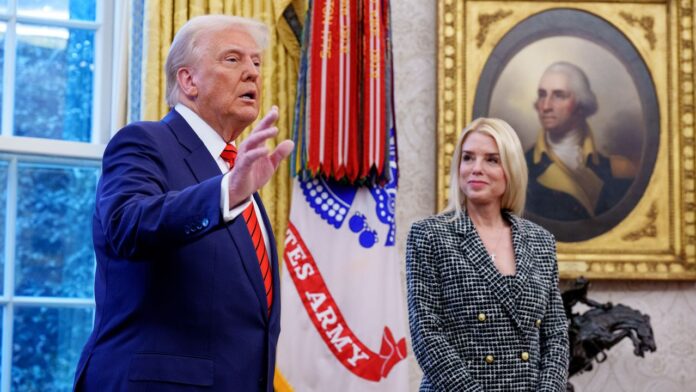
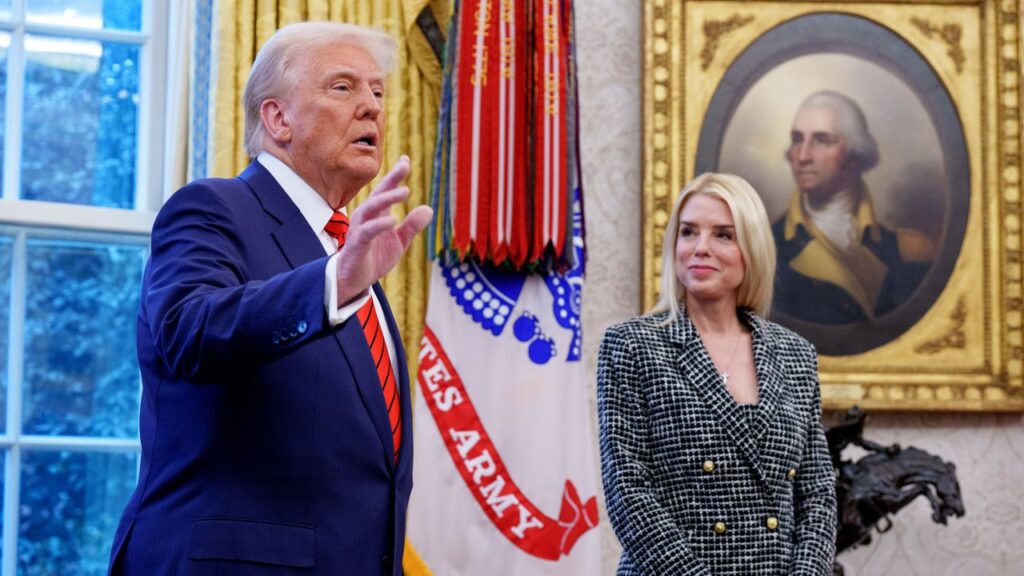
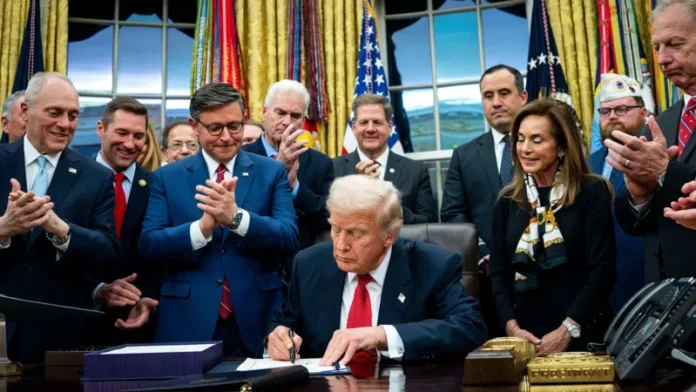
WASHINGTON (BN24) — President Trump on Friday asked the Justice Department and FBI to investigate convicted sex offender Jeffrey Epstein’s involvement with prominent Democrats, including former President Bill Clinton, and major financial institutions.
In a post on Truth Social, Trump accused Democrats of focusing on what he calls the “Epstein hoax” to deflect blame for the government shutdown, which ended Wednesday and was the longest in U.S. history.
“I will be asking A.G. Pam Bondi, and the Department of Justice, together with our great patriots at the FBI, to investigate Jeffrey Epstein’s involvement and relationship with Bill Clinton, Larry Summers, Reid Hoffman, J.P. Morgan, Chase, and many other people and institutions, to determine what was going on with them, and him,” the president wrote. “This is another Russia, Russia, Russia Scam, with all arrows pointing to the Democrats. Records show that these men, and many others, spent large portions of their life with Epstein, and on his ‘Island.’ Stay tuned!!!”
Attorney General Pam Bondi soon said she had asked Jay Clayton, the U.S. attorney for the Southern District of New York, to lead the investigation. Clayton’s office covers matters from Manhattan and the Bronx, as well as the counties north of New York City.
“As with all matters, the Department will pursue this with urgency and integrity to deliver answers to the American people,” she wrote on social media.
Trump’s announcement comes as the House is expected to vote next week on a bill that would force the Justice Department to release files from its investigation into Epstein. The president opposes the release of that material and has accused Republicans who backed the effort to force a vote on the proposal of being “soft and foolish.” GOP Rep. Marjorie Taylor Greene of Georgia told “CBS Mornings” on Friday that she believes the president’s stance on the Epstein files is a “huge miscalculation.”
The House Oversight and Government Reform Committee, which is conducting its own investigation into the federal government’s handling of its probe into Epstein, released earlier this week more than 20,000 pages of material it obtained from Epstein’s estate.
Among the records are emails and messages exchanged with Epstein that mention Trump. In one email from Epstein to author Michael Wolff in January 2019, Epstein wrote, “Of course he knew about the girls as he asked ghislaine to stop,” referencing Trump and Ghislaine Maxwell, a longtime associate of Epstein’s. It is unclear what Epstein was referring to.
Maxwell was convicted in 2021 and is serving a 20-year prison sentence for her role in helping Epstein recruit, groom and abuse underage girls.
In another email from Epstein to Maxwell in April 2011, he wrote, “I want you to realize that that dog that hasn’t barked is trump.. virginia spent hours at my house with him ,, he has never once been mentioned.”
The president has not been accused of wrongdoing. While he and Epstein ran in the same social circles in New York and Palm Beach, Florida, from the late 1980s to early 2000s, Trump has said the two had a falling out around 2004 and had not spoken in the years leading up to Epstein’s 2019 death.
He died by suicide at a Manhattan correctional facility after he was indicted on federal sex-trafficking charges.
The latest release from the Oversight Committee also shows that Epstein corresponded regularly with Summers, who was treasury secretary during Clinton’s presidency and led the National Economic Council under former President Barack Obama.
The Wall Street Journal reported in 2023 on Epstein’s contacts with Summers. A spokesperson for Summers said at the time that he “deeply regrets being in contact with Epstein after his conviction.” Epstein was investigated by federal and state officials between 2005 and 2006. Under a deal reached with federal prosecutors in 2007, Epstein agreed to plead guilty to two state prostitution charges and serve an 18-month sentence to avoid federal charges. He served less than 13 months and was released in 2009.
As part of its review, the House Oversight panel issued a subpoena to Clinton in August for testimony because of his past ties to Epstein and Maxwell in the early 2000s.
A spokesperson for Clinton said in 2019 after Epstein was indicted that the former president took four trips on Epstein’s plane in 2002 and 2003, traveling to Europe, Asia and Africa. Angel Ureña, the spokesperson, said the trips included stops in connection with the Clinton Foundation, and staff, foundation supporters and Clinton’s Secret Service detail were on every leg of every trip. Clinton also had a meeting with Epstein in 2002 and made “one brief visit” to Epstein’s apartment with a staff member and his security detail, Ureña said.
Trish Wexler, a spokesperson for JPMorganChase, said Friday that the federal government “had damaging information” about Epstein’s crimes and failed to share it with JPMorganChase or other financial institutions.
“We regret any association we had with the man, but did not help him commit his heinous acts,” she said. “We ended our relationship with him years before his arrest on sex trafficking charges.”
In 2023, JPMorgan agreed to settle a lawsuit filed by an unnamed victim of Epstein’s on behalf of herself and others that alleged the bank overlooked his sex trafficking and abuse in order to profit from its financial relationship with him. JPMorgan agreed to pay $290 million to the victims as part of the settlement.
Hoffman, a co-founder of LinkedIn and a major Democratic donor, said in 2019 after Epstein’s arrest that he had some interactions with Epstein and regretted participating in fundraising activity with him, according to Axios. Hoffman said in an email to the news outlet that his last interaction with Epstein had been in 2015.
Still, during testimony before the Senate Judiciary Committee in October, Bondi attacked Sen. Sheldon Whitehouse, a Rhode Island Democrat, for accepting political contributions from Hoffman, who she claimed was “one of Epstein’s closest confidants.”
The Justice Department and FBI said in a July memo that they had conducted an “exhaustive review” of material related to Epstein and “did not uncover evidence that could predicate an investigation against uncharged third parties.” They also wrote there was no “client list” or “credible evidence” that Epstein blackmailed prominent figures.
The Justice Department and FBI said that while they worked to provide the public with “maximum information” about Epstein, they determined “no further disclosure would be appropriate or warranted.”
The conclusions from the Trump administration sparked immense backlash against Trump and Bondi from some of the president’s supporters, many of whom were skeptical of the Justice Department’s claim that there was nothing further to be released.
Meanwhile, the Oversight Committee has continued to release records as part of its investigation, including court filings, flight records, videos and messages. In September, the panel made public pages from a book compiled by Maxwell for Epstein’s 50th birthday in 2003, which includes a letter allegedly signed by Trump and a drawing that appears to be the outline of a woman’s body. The president has denied penning the message.
Documents released by the committee show Trump and Clinton’s names are listed under the “friends” subheading in the book’s table of contents. Clinton appears to have written a handwritten note that reads, in part, “It’s reassuring isn’t it, to have lasted as long, across all the years of learning and knowing … and also to have your childlike curiosity, the drive to make a difference and the solace of friends.”
Trump’s directive to investigate Epstein’s Democratic connections comes amid a complex political landscape where both the president and Clinton appear in Epstein’s communications and records. The timing, following the end of the government shutdown, aligns with Trump’s characterization of scrutiny into his Epstein ties as a political distraction.
The appointment of Clayton to lead the investigation places responsibility with a U.S. attorney whose office has jurisdiction over Manhattan, where much of Epstein’s financial activity was centered. The Southern District of New York previously prosecuted Epstein on federal sex-trafficking charges before his death.
The tension between Trump’s call for investigation into Democrats’ Epstein ties and his opposition to releasing Justice Department files on Epstein creates a seemingly contradictory position. While demanding transparency regarding others’ connections to Epstein, the president has characterized efforts to release federal investigation materials as problematic.
Greene’s characterization of Trump’s opposition to file release as a “huge miscalculation” reflects division within the Republican Party on handling Epstein-related matters. Her comments suggest some GOP lawmakers believe transparency on all Epstein connections, regardless of political affiliation, would be politically advantageous.
The House Oversight Committee’s release of more than 20,000 pages of materials obtained from Epstein’s estate provides the documentary basis for much of the current controversy. The emails mentioning Trump, including Epstein’s references to the president knowing “about the girls” and Virginia Giuffre spending “hours” at Epstein’s house with Trump, have fueled questions about the extent of Trump’s awareness of Epstein’s activities.
The July Justice Department and FBI memo concluding there was no basis for investigating uncharged third parties or evidence of blackmail represented the administration’s initial position that further Epstein-related disclosures were unwarranted. The subsequent political backlash from Trump supporters and continued document releases by Congress have kept the issue prominent.
JPMorgan’s $290 million settlement with Epstein victims in 2023 acknowledged the bank’s financial relationship with the sex offender while the bank maintained it did not knowingly facilitate his crimes. The spokesperson’s statement that federal authorities failed to share information about Epstein’s activities with financial institutions attempts to deflect responsibility for the continued business relationship.
The various figures named by Trump in his call for investigation represent a mix of political and financial connections to Epstein spanning multiple Democratic administrations and major financial institutions. Summers’ role in both Clinton and Obama administrations, Hoffman’s status as a major Democratic donor, and the involvement of major banks like JPMorgan Chase encompass both political and financial dimensions of Epstein’s network.
Clinton’s documented interactions with Epstein, including multiple flights on his private plane and visits to his properties, make him a central figure in questions about prominent individuals’ relationships with the convicted sex offender. The Clinton spokesperson’s detailed accounting of these interactions in 2019 provided context but has not ended scrutiny of the former president’s connection to Epstein.
A minibus carrying Chinese tourists lost control on a steep, winding road in Bali on Friday morning, veering off the asphalt and crashing into a garden, killing five passengers and injuring eight others, according to police in the Buleleng regency.
Authorities said the vehicle was traveling from southern Bali toward the island’s northern region when the driver failed to safely navigate a downhill turn. The minibus then careened off the roadway and struck a tree inside a community garden. Buleleng police chief Ida Bagus Widwan Sutadi said the crash stemmed from the driver’s “lack of caution when turning and descending,” adding that road conditions were dry at the time.
The eight surviving passengers were taken to two nearby hospitals for treatment, while the Indonesian driver — who was not injured — was arrested following the incident. Road accidents remain common across Indonesia, where safety standards and infrastructure often fall short of international norms.
Lionel Messi was left astonished as more than 20,000 fans filled Elche’s Martínez Valero Stadium just to watch Argentina hold a training session ahead of its friendly against Angola. What was planned as a routine workout transformed into an unforgettable football celebration, with the Inter Miami star receiving a personalized Elche jersey to mark the moment.
Official attendance reached 20,085, turning the modest venue into a sea of light blue and white. Long before gates opened, supporters formed massive queues around the stadium, waving homemade banners, singing, and displaying Messi’s image. The giant screen lit up with Argentina’s colors, while the phrase “Coronados de gloria vivamos” appeared across the main stand, surrounded by towering images of Maradona, Messi, and Argentina’s current squad. When the players walked out to the national anthem, the crowd erupted. Every touch from Messi prompted thunderous cheers, and even a simple wave sent the stands into a frenzy. The loudest applause came when Elche presented Messi with a No. 10 shirt emblazoned with his name.
The session came after Argentina closed its training earlier in the week, a decision that led determined fans to climb rooftops, fences, and surrounding hills for a glimpse of Messi or Rodrigo De Paul. Their persistence moved the AFA to open Thursday’s session to the public. Messi later took to social media to thank the supporters, saying the affection shown in Elche “still moves me” and expressing his joy at seeing so many Argentinians among the crowd.
The display of devotion came just days after Messi quietly visited the newly renovated Camp Nou at midnight, reigniting speculation about a possible short-term Barcelona return before the 2026 World Cup. Barcelona president Joan Laporta quickly dismissed any chance of Messi rejoining as a player but confirmed the club is preparing a grand tribute once Camp Nou’s renovations are complete. He called Messi’s late-night visit a spontaneous gesture and said the finished stadium, with a capacity of 105,000, would host “the most beautiful tribute in the world.”
Despite his sentimental ties to Barcelona, Messi remains committed to Inter Miami. He recently extended his MLS contract through 2028 and has spoken about balancing his life in Florida with the emotional pull of his former home. Messi acknowledged that he and his family “miss Barcelona a lot,” noting they still dream of living there again and look forward to visiting the completed Camp Nou.
Messi is expected to start when Argentina face Angola on Friday before returning to Inter Miami for the MLS Conference semifinals on November 23, when the team meets Cincinnati.
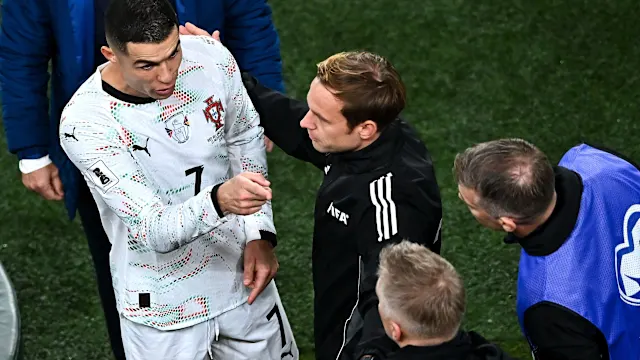
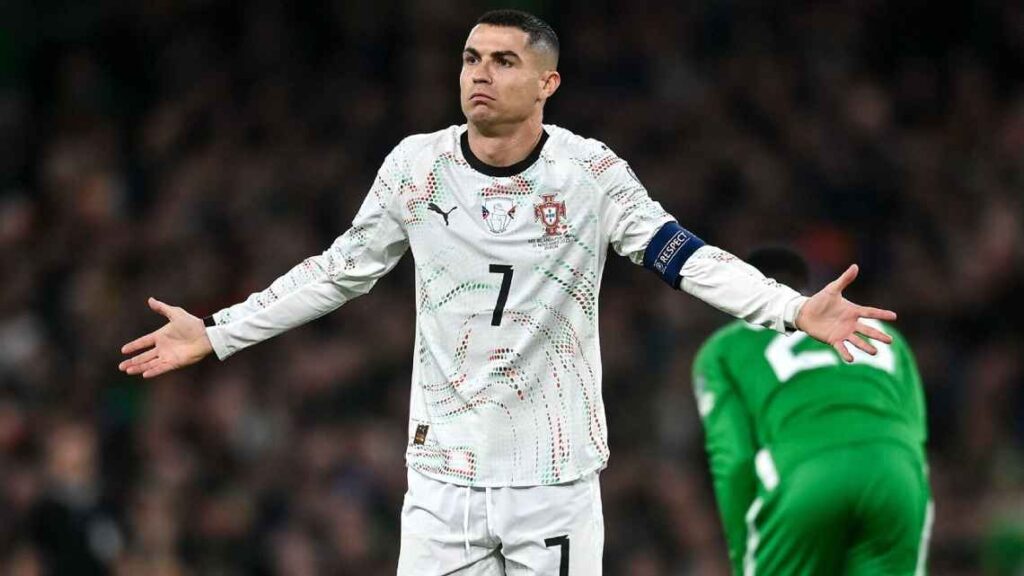
Cristiano Ronaldo faces the possibility of missing at least the opening match of the 2026 World Cup after receiving the first red card of his international career during Portugal’s 2–0 loss to the Republic of Ireland. The Portugal captain was dismissed in the 61st minute for violent conduct after elbowing defender Dara O’Shea. The referee initially issued a yellow card but upgraded it to red after reviewing the incident on the pitchside monitor at the request of the video assistant referee.
The ejection ended Ronaldo’s run of 225 previous Portugal appearances without a sending-off, a record in men’s international soccer. Although he has been sent off 13 times at club level, he had never received a red card while representing his country until Thursday’s defeat in Dublin.
Under FIFA disciplinary rules, Ronaldo will serve a mandatory one-match ban when Portugal host Armenia on Sunday, a game in which a win would secure Portugal’s place in the World Cup hosted by the United States, Canada and Mexico. FIFA guidelines also call for “at least two matches for serious foul play” and “at least three matches for violent conduct,” raising the possibility that the suspension could extend into next year and apply to competitive World Cup fixtures rather than pre-tournament friendlies.
Portugal coach Roberto Martínez defended his captain, calling the decision “a bit harsh” and arguing that Ronaldo had endured constant grappling inside the box leading up to the incident. Martínez said the action looked worse on replay and insisted it was not a deliberate elbow, adding that Ronaldo’s longstanding discipline record should be given credit.
Ireland entered the match as underdogs but stunned Portugal with two goals from Troy Parrott, delaying Portugal’s qualification bid. Despite the loss, Portugal remain two points ahead of Hungary in Group F and can still clinch qualification with a victory over Armenia.
Ronaldo had vowed before the match to be a “good boy,” knowing he would face a hostile reception after past controversies against Ireland, including his celebration in front of defender Jake O’Brien during their last meeting. Ireland coach Heimir Hallgrimsson had publicly urged Swedish referee Glenn Nyberg not to allow Ronaldo to “referee the game” himself.
As Ronaldo exited the field, he appeared to mock the jeering crowd with sarcastic applause and a thumbs-up. Hallgrimsson later said Ronaldo told him he was being complimented for putting pressure on the referee. “It was his action on the pitch that cost him the red card,” Hallgrimsson said, adding there was nothing more to discuss after the final whistle. “This was just a moment of a little silliness from him, I would say.”
LONDON (BN24)— Premier League players are among more than 70 sports figures urging the Union of European Football Associations (UEFA) to suspend Israel from international football competition, citing alleged human rights abuses in Gaza.
The initiative, spearheaded by the group Athletes 4 Peace, comes amid renewed international scrutiny of Israel following a United Nations commission of inquiry that concluded Israel has committed genocide against Palestinians in Gaza. The letter, addressed to UEFA President Aleksander Ceferin, accuses the governing body of failing to take moral action in response to these findings.
“No shared venue, stage, or arena in international civil society should welcome a regime that commits genocide, apartheid, and other crimes against humanity,” the Athletes 4 Peace letter stated. “Israel’s continued impunity for such crimes will only be ended by the weight of collective conscientious action, including measures to block their entry to sporting or cultural events and activities.”
Prominent signatories include Premier League players Chadi Riad and Cheick Doucoure of Crystal Palace, former England cricket star Ali, and ex-Leicester City manager Nigel Pearson. The coalition also received backing from pro-Palestine advocacy groups such as Game Over Israel, which recently lobbied UEFA to restrict Maccabi Tel Aviv fans from attending a controversial Europa League fixture against Aston Villa.
Ashish Prashar, campaign director for Game Over Israel, criticized UEFA’s decision to postpone consideration of Israel’s suspension. “For President Ceferin to pause his vote to suspend Israel from European football over a peace plan in name only is either grossly naive, or purposefully blind,” Prashar said.
UEFA previously suspended consideration of a ban for Israel at the end of September after former U.S. President Donald Trump unveiled a controversial peace plan for the region, which has been widely criticized by international observers and human rights groups as favoring Israeli interests.
Athletes 4 Peace’s letter emphasizes that sports figures have a responsibility to uphold ethical standards, noting that sporting events should not provide legitimacy or normalcy to regimes accused of serious international crimes. The group argues that collective action, including boycotts and sanctions, is essential to hold nations accountable for human rights violations.
The campaign highlights the growing intersection of sports and politics, particularly in instances where athletes and organizations utilize their platforms to advocate for human rights. This effort marks one of the largest coordinated calls from professional athletes demanding UEFA take a stand against a national federation accused of grave abuses.
As UEFA weighs its response, the letter from Athletes 4 Peace adds to mounting pressure on sports governing bodies to consider human rights criteria in decisions about international participation, raising questions about the role of ethics in football and other global sporting arenas.
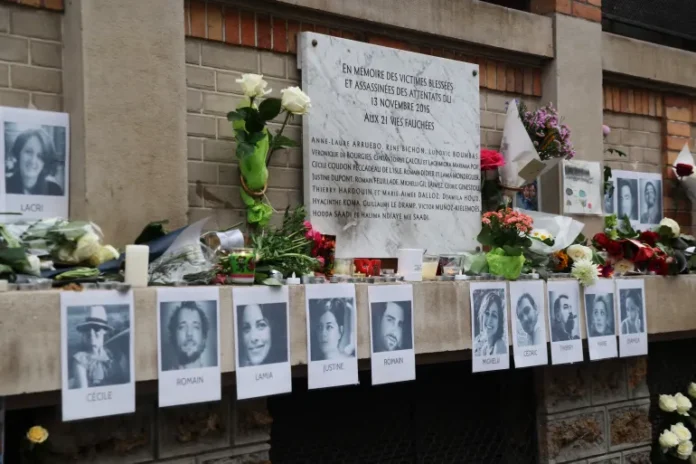
PARIS (BN24)— France on Thursday marked the 10th anniversary of the November 13, 2015, Paris attacks, paying tribute to 132 people killed and hundreds more wounded in a series of coordinated assaults carried out by Islamic State gunmen and suicide bombers. The attacks, which targeted cafes, restaurants, the Bataclan concert hall, and the Stade de France, remain the deadliest acts of terrorism in France since World War Two and left an indelible mark on the nation’s collective memory.
The violence began outside the Stade de France stadium in Saint-Denis, where three suicide bombers detonated explosives, killing bus driver Manuel Dias. Gunmen then moved through central Paris, opening fire at five crowded locations, including bars and restaurants, before storming the Bataclan, where a rock concert was underway. Survivors recall scenes of chaos, smoke, and blood as attackers targeted ordinary citizens enjoying a night out.
“Since that November 13, there is an emptiness that cannot be filled,” said Sophie Dias, Manuel Dias’ daughter, speaking at a ceremony at the Stade de France. Her voice trembled as she recounted the frantic phone calls her family made that night, trying to locate her father before learning he was the first victim of the attackers. “May we raise awareness among younger generations, pass on the values of our republic, and remind them of all those innocent lives lost, like my dad, who left far too soon, for no reason at all.”
President Emmanuel Macron joined officials, survivors, and relatives of victims in paying tribute at the Stade de France, observing a minute of silence and laying wreaths. Ceremonies were held throughout the day at each attack site, culminating at the Bataclan, where 90 people were killed. Victims’ associations noted that two survivors later took their own lives, bringing the total death toll to 132.
Historian Denis Peschanski emphasized the unique horror of the attacks. “What made November 13 different is that it targeted places where people were simply out enjoying themselves,” he said. “Everyone was a potential victim. There was no safe space that night in Paris.” Paris Mayor Anne Hidalgo told RTL radio that the attackers sought to strike at France’s cultural identity. “The terrorists wanted to attack this culture that is ours, this culture of joy, celebration, diversity, sharing, and music,” she said.
Survivors continue to grapple with lasting trauma. Sebastian Lascoux, 46, recalled attending the Eagles of Death Metal concert at the Bataclan, where concertgoers were “all squashed together and collapsed as one” amid the gunfire. One of his friends was shot while shielding another person. Lascoux now suffers from post-traumatic stress disorder, avoiding crowded and enclosed spaces, and is triggered by sudden loud noises reminiscent of gunshots.
A decade on, French authorities say the threat of terrorism persists but has evolved. Interior Minister Laurent Nunez told BFM TV that attacks on the scale of November 13 are less likely due to the weakening of the Islamic State. “However, the threat remains high,” he said, “with individuals present on national territory who radicalize very quickly and plot violent actions.” France has since strengthened security measures, many of which are now enshrined in law, covering public spaces, events, and cultural venues.
The anniversary ceremonies underscored the enduring impact of the attacks on survivors, families, and the French nation. They highlighted the resilience of the country in the face of terror, while emphasizing the importance of remembering the victims, preserving the values of the republic, and maintaining vigilance against evolving threats.
ABUJA (Bn24)— Nigeria has officially reversed its controversial policy requiring the use of indigenous languages as the primary medium of instruction in early education, reinstating English from pre-primary through to university. The decision, announced Thursday by Education Minister Tunji Alausa, comes after three years of implementation failed to produce the expected improvements in academic performance.
The mother-tongue policy, introduced in 2022 under former Education Minister Adamu Adamu, was intended to improve learning outcomes in early childhood by teaching children in their native languages. Adamu and many child development experts argued that children comprehend concepts more readily when taught in a familiar language. Several UN studies have also highlighted the benefits of mother-tongue instruction in early education, particularly in multilingual societies.
However, according to Alausa, the policy’s implementation was uneven and contributed to significant academic underperformance in some regions. “Data from WAEC, NECO, and JAMB indicate alarming failure rates in certain geo-political zones where mother-tongue instruction was adopted widely. The program has failed to deliver the expected results and is therefore being scrapped with immediate effect,” he said during the announcement in Abuja.
Nigeria’s education system faces long-standing structural challenges. Low teacher salaries, inadequate training, frequent strikes, and insufficient learning materials have long hindered the sector. While roughly 85% of children attend primary school, less than half complete secondary education. The UN estimates that approximately 10 million children are out of school in Nigeria, the highest number globally.
Experts and parents expressed mixed reactions to the reversal. Education specialist Dr. Aliyu Tilde praised the government’s decision, emphasizing that Nigeria lacks a sufficient number of trained teachers to instruct students across its dozens of indigenous languages. Exams such as WAEC and JAMB are conducted exclusively in English. Without properly trained educators and teaching resources in multiple languages, the policy was impractical,” he told the BBC.
Parents like Hajara Musa, whose two children are in early education, welcomed the move. “English is a global language used in higher education, business, and daily life. Children should learn it from the start rather than waiting until they are older,” Musa said.
Nevertheless, critics argue that the policy was abandoned prematurely. Social affairs analyst Habu Dauda described the three-year trial period as insufficient to judge a major reform of this scale. “Implementing mother-tongue instruction requires a long-term commitment, including investment in teacher training, curriculum development, and learning materials. Scrapping it after three years ignores its potential benefits,” he said.
The debate underscores Nigeria’s ongoing struggle to balance the promotion of its rich linguistic heritage with the practical demands of a national curriculum and a globalized economy where English proficiency remains crucial. Some education advocates argue that a hybrid approach — incorporating both mother-tongue instruction and early English exposure could provide a sustainable path forward, preserving cultural identity while enhancing academic outcomes.
As the government moves to reinstate English across the education system, attention will shift to improving teacher quality, learning materials, and exam preparation. Observers say the policy reversal highlights the broader challenges facing Nigeria’s schools: achieving meaningful reform in a system constrained by underfunding, overcrowding, and a persistent teacher shortage.
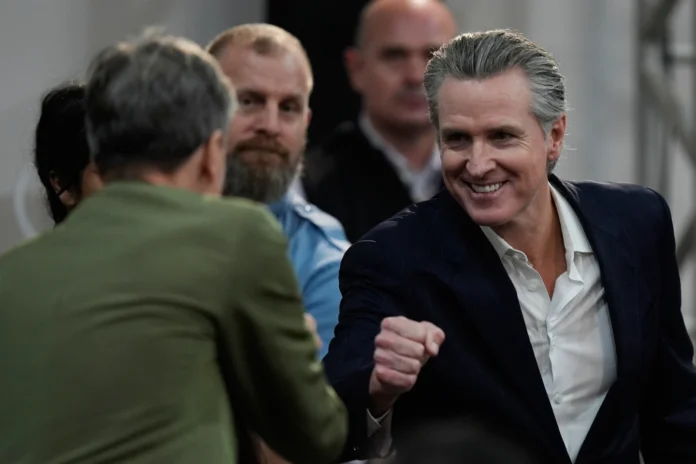
Los Angeles (BN24) – California will revoke 17,000 commercial driver’s licenses issued to immigrant truck and bus drivers following federal scrutiny over how the state granted permits to noncitizens. But Gov. Gavin Newsom insists the move is unrelated to the Trump administration’s concerns about immigrants in the country illegally obtaining permission to operate semitrucks and buses.
Newsom said the revocations stem from unspecified violations of state law, though he did not elaborate. His office noted the violations involve standards established long before the Trump administration launched a nationwide audit of commercial driver licensing practices. That audit began after a Florida crash in which a driver in the country illegally made a U-turn, killing three people.
A string of deadly crashes involving noncitizen truck drivers in Texas, Alabama, and California has intensified national attention on the issue. The latest California crash last month, which killed three people, heightened pressure on the state’s licensing system.
Federal Officials Say California Was “Caught Red-Handed”
U.S. Transportation Secretary Sean Duffy sharply criticized California’s actions, calling the revocations evidence that the state had improperly issued thousands of commercial licenses while defending standards the federal government deemed flawed.
Duffy already imposed restrictions on which immigrants may qualify for commercial licenses and accused six states — including California — of allowing noncitizens to bypass federal requirements. California, he said, failed to enforce English-language proficiency rules, prompting him to revoke $40 million in federal funding, with an additional $160 million threatened.
“After weeks of claiming they did nothing wrong, Gavin Newsom and California have been caught red-handed,” Duffy said. “Now that we’ve exposed their lies, 17,000 illegally issued trucking licenses are being revoked. This is just the tip of the iceberg.”
Newsom Pushes Back, Calls Claims “Falsehoods”
Newsom’s office strongly rejected Duffy’s assertions, saying every driver whose license is being revoked had valid federal work authorization.
“Once again, Sean ‘Road Rules’ Duffy fails to share the truth — spreading easily disproven falsehoods in a sad and desperate attempt to please his dear leader,” spokesman Brandon Richards said.
The governor’s office emphasized that the new federal restrictions did not exist when the 17,000 licenses were issued. Drivers have been notified that their licenses will expire within 60 days.
New Federal Rules Could Dramatically Limit Immigrant Truckers
Under the new guidelines announced in September, immigrants will face far stricter limits. Only those with H-2A, H-2B, or E-2 visas would qualify for a commercial driver’s license — a shift that could disqualify 190,000 of the 200,000 noncitizens currently licensed, though their permits will remain valid until renewal.
States must also verify each applicant’s immigration status through a federal database.
Duffy previously said that an audit of 145 California-issued licenses revealed that one-quarter should not have been approved, citing cases where licenses remained valid long after a driver’s work permit had expired.
Newsom’s office countered that California followed guidance provided by the Department of Homeland Security at the time these licenses were issued.
State transportation officials did not respond to detailed questions regarding the specific violations that triggered the mass revocations.
WASHINGTON (BN24)— After 43 days, the longest government shutdown in U.S. history officially ended, restoring pay to federal employees, reopening national parks, and resuming government services that had been delayed or suspended. Air travel, which had descended into chaos for many Americans, is returning to more familiar levels of disruption.
For President Donald Trump, the conclusion of the shutdown marked a political triumph. Speaking at Arlington Cemetery during a Veteran’s Day commemoration on Tuesday, Trump praised congressional Republicans for their role in reopening the government, calling the vote “a very big victory.” He emphasized the symbolic importance of restoring operations. “We’re opening up our country. It should have never been closed,” he said, portraying himself as a leader who had stood firm throughout the impasse.
The shutdown, which began when Senate Democrats used the parliamentary filibuster to block a temporary funding measure, was triggered by their demand that Republicans extend health insurance subsidies for low-income Americans. These subsidies, which are set to expire at the end of the year, had become the focal point of a bitter partisan standoff.
When a small number of Democrats broke ranks on Sunday to vote in favor of reopening the government, they received few concessions in return. The agreement included only a promise of a future Senate vote on the subsidies, with no guarantee of Republican cooperation or subsequent approval in the House. Many Democratic lawmakers expressed frustration at Senate Minority Leader Chuck Schumer, accusing him of failing to secure tangible benefits despite the party’s leverage.
The political fallout has been significant within the Democratic Party. California Governor Gavin Newsom, a possible 2028 presidential contender, called the shutdown resolution “pathetic” and a “surrender,” criticizing the party for capitulating to Trump without achieving legislative gains. “I’m not coming in to punch anybody in the face,” he said, “but I’m not pleased that, in the face of this invasive species that is Donald Trump, who’s completely changed the rules of the game, we’re still playing by the old rules of the game.”
For Trump, the days following the Senate deadlock allowed him to shift from cautious optimism to public celebration. In a Fox News interview Monday night, he further attacked Schumer, saying, “He thought he could break the Republican Party, and the Republicans broke him.” While Trump at times appeared frustrated, publicly berating Senate Republicans last week for refusing to eliminate the filibuster to reopen government, he ultimately emerged from the shutdown with no significant concessions made to the Democrats.
While Trump’s national approval ratings dipped over the 43-day impasse, the timing of the shutdown means the former president faces little immediate electoral risk, with over a year remaining before the midterm elections and no personal reelection obligations under current constitutional rules.
As government functions resume, Congress now faces the challenge of addressing routine legislation. Several departments were funded through September under the shutdown-ending deal, but full-year funding must be approved by the end of January to avoid another standoff. Republicans hope to leverage this period to pass substantive legislation before the next election cycle.
The shutdown’s resolution also exposes ongoing political vulnerabilities for Democrats. Healthcare subsidies, the central issue in the standoff, could become a pressing concern for tens of millions of Americans as premium costs are expected to rise sharply at year’s end. Failure to secure these subsidies risks voter dissatisfaction in upcoming elections, highlighting the stakes for the party.
Meanwhile, the political landscape remains complex as Congress faces other high-profile matters. On Wednesday, newly sworn-in Congresswoman Adelita Grijalva became the 218th signatory on a petition requiring a House vote to demand the Justice Department release all files on the late convicted sex offender Jeffrey Epstein. Trump criticized the focus on Epstein, posting on Truth Social that Democrats were attempting to distract from their “failure” during the shutdown.
The end of the record-setting shutdown underscores the unpredictable nature of U.S. politics, where well-laid plans can collapse suddenly. Democrats are left facing internal divisions, political blame, and potential backlash from voters, while Trump emerges largely unscathed, using the outcome to reinforce his image as a decisive political player.
The shutdown, while technically over, may leave lingering consequences for federal employees, ordinary Americans, and partisan relations in Congress. The healthcare debate, in particular, promises to remain a flashpoint, with millions of Americans potentially impacted by expiring subsidies and rising insurance costs. For both parties, the 43-day shutdown will be remembered as a stark example of the high stakes and human costs of political brinkmanship.