Home Blog Page 17

Russia Kills at Least 22 in Ukraine Including 12 in Zaporizhzhia Strike

0

Russian forces killed at least 22 people across Ukraine on Tuesday in a sustained wave of missile, drone, and aerial bomb attacks that struck a residential neighborhood, a gas production facility, and a frontline city — all while both sides announced competing ceasefires neither appeared ready to honor.

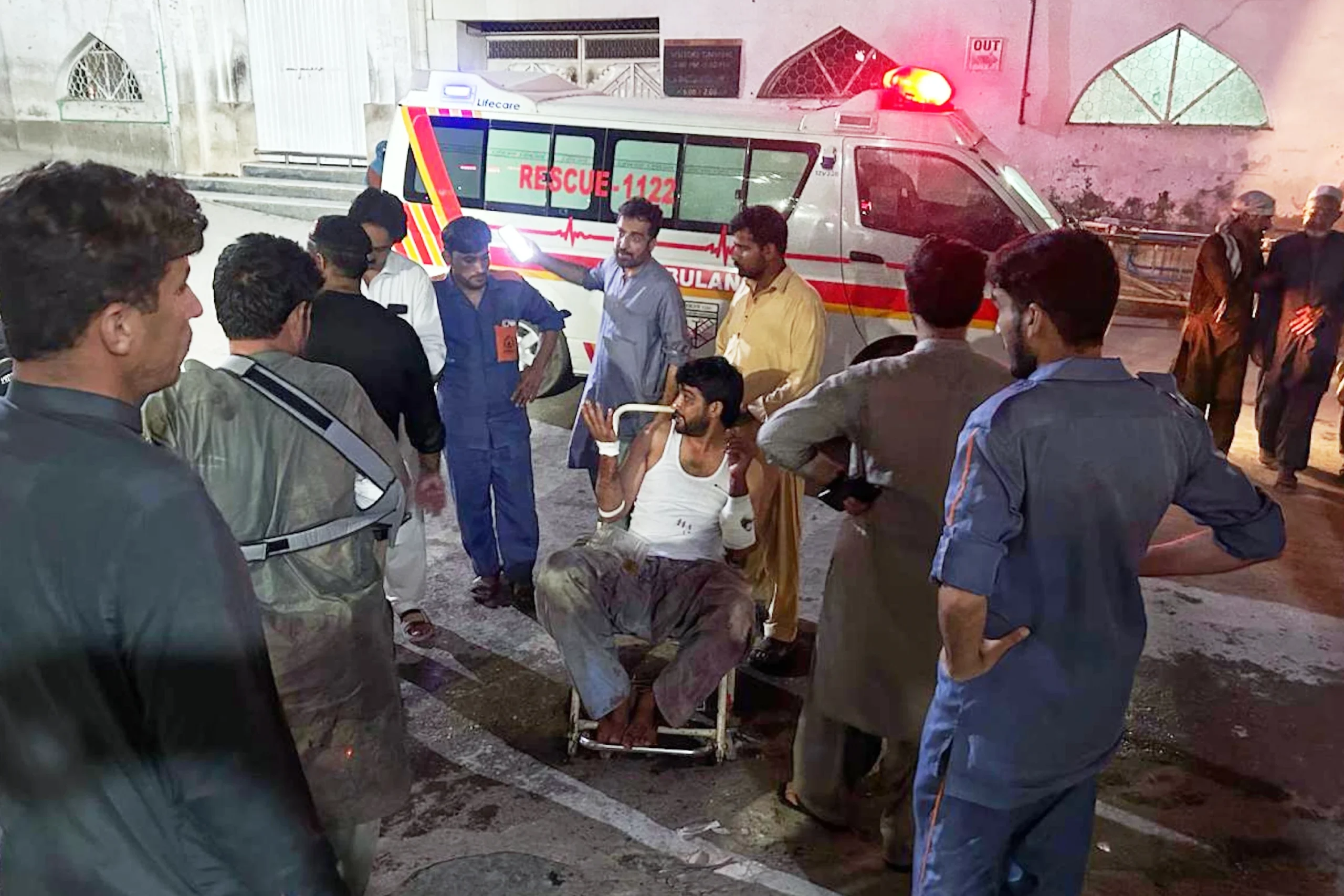
The deadliest single strike hit Zaporizhzhia, where at least 12 people were killed and 16 wounded when Russian munitions tore into residential buildings, a car repair shop, and a car wash. Regional governor Ivan Fedorov shared images from the scene showing a heavily damaged structure engulfed in fire and smoke, burning cars, and bloodied survivors being helped away from the wreckage by first responders.

Five people died when Russian forces dropped three aerial bombs on Kramatorsk, a city on the eastern front line. Ukrainian President Volodymyr Zelensky confirmed the strike on Telegram and warned the death toll could climb. Five others were wounded.

A Russian overnight strike on gas production facilities in the Poltava region killed five more. In that same region, governor Vitaliy Dyakivnych confirmed four people died and 37 were injured in missile and drone strikes at two separate locations, with an industrial plant and railway infrastructure damaged. Two emergency responders were among the dead — killed in a deliberate double-tap strike, a tactic where Russian forces hit a target a second time specifically to kill the rescue workers who respond to the first explosion. Another 23 rescue workers were among the injured.

In Russia, a Ukrainian drone strike on the Chuvashia region killed two people, Russian state media confirmed.

Rival Ceasefires, Continued Killing

The bloodshed unfolded against a backdrop of dueling ceasefire announcements that underlined the gulf between the two sides’ visions of how this war might pause — or end.

Moscow declared a ceasefire for May 8 and 9, the dates Russia commemorates the Soviet Union’s victory over Nazi Germany in World War II with its annual Victory Day military parade. This year’s celebrations are to be scaled back, Russian authorities said, because of the threat posed by Ukrainian drone attacks on Moscow.

Kyiv responded with a counter-proposal: an open-ended ceasefire beginning at midnight Wednesday, with a direct challenge to Moscow to match it. Zelensky made his position plain. It was not acceptable, he said, for Russia to halt strikes for one day to stage a military parade while having spent the preceding days pounding Ukrainian cities.

“Utter cynicism,” Zelensky called it — pushing for a ceasefire to hold “propaganda celebrations” while the attacks continued.

Russia’s Defense Ministry delivered its own message in parallel, warning that any Ukrainian attempt to disrupt Victory Day commemorations would be met with missile strikes on Kyiv.

Russia said its air defenses intercepted 289 Ukrainian drones overnight, with air raid alerts issued across 18 regions.

Ukraine Strikes Deep Into Russia

Ukrainian forces did not limit themselves to defense. Long-range strikes penetrated deep into Russian territory on Tuesday, targeting military-industrial infrastructure hundreds of miles from the front line.

Zelensky confirmed Ukrainian forces deployed long-range “Flamingo” cruise missiles that traveled more than 1,500 kilometers to strike military-industrial targets inside Russia. Regional authorities said three people were wounded in drone attacks on Cheboksary, a city on the Volga River, with one hospitalized.

A cruise missile struck a defense plant in the area producing navigation modules used in Russian drones and missiles — a direct hit on the supply chain feeding the weapons killing Ukrainians on the other end.

Ukrainian forces also targeted Russian energy infrastructure. A fire broke out at an industrial site in Kirishi in the Leningrad region after a strike on a major refinery. Authorities said the blaze was brought under control and no casualties were reported.

The dueling ceasefire announcements from Moscow and Kyiv are less a sign of peace seeking than a competition for the moral high ground — and a window into how each side is managing the narrative around a war now grinding through its fifth year.

Russia’s offer is narrow and self-serving by design. A 48-hour pause timed to Victory Day protects the optics of a parade celebrating a historical triumph while imposing no real constraint on the military campaign. It asks Ukraine to stop fighting while Russia’s army remains positioned across Ukrainian territory. It offers nothing about the occupation, nothing about prisoners, nothing about the thousands of Ukrainian civilians displaced or killed since February 2022.

Zelensky’s counter-offer — an open-ended ceasefire starting midnight Wednesday — is shrewder politically. It calls Russia’s bluff. If Moscow genuinely wants peace, it can match the offer. If it refuses, the refusal speaks louder than any parade. The problem is that an open-ended ceasefire without defined terms, verified withdrawal, and enforceable guarantees is not a peace agreement. It is a pause that one side can end at the moment of its choosing.

Both proposals arrive in the context of a broader diplomatic stalemate. The United States under Trump has pushed for negotiations while maintaining pressure on both sides. European governments have backed Ukraine’s right to determine its own ceasefire terms. None of the external pressure has produced a framework both Kyiv and Moscow will accept.

What Tuesday demonstrated, as it has on so many Tuesdays before it, is that the killing continues regardless of what is announced in press releases. Twelve people died in Zaporizhzhia while ceasefire proposals were being drafted. First responders were deliberately targeted in Poltava while diplomats discussed pauses. A gas facility burned while both governments competed to appear more committed to peace than the other.

The people of Ukraine are not waiting for the narrative to resolve. They are living inside it.

Alarabiya

Texas Mall Shooting Leaves 2 Dead, 3 Injured; Suspect in Custody After Brief Chase

0

CARROLLTON, Texas (AP) — Two people were killed and three others wounded Tuesday morning when gunfire broke out at a shopping center north of Dallas, sending shoppers scrambling for cover and drawing a heavy law enforcement response.

Authorities in Carrollton said the suspect, identified as 69-year-old Seung Han Ho, was taken into custody after a short foot pursuit. Police believe the shooting was tied to a prior relationship between the suspect and the victims.

Carrollton Police Chief Roberto Arredondo told reporters the violence was not random. He said early findings point to a meeting linked to business dealings that turned deadly.

“We don’t know exactly what led up to the confrontation,” Arredondo said. “But what we do understand is that the people involved knew each other through a business relationship.”

The shooting unfolded just before 10 a.m. at K Towne Plaza, a busy retail center at the intersection of State Highway 121 and West Hebron Parkway. The plaza sits in an area widely known as Koreatown, a growing hub for Korean businesses and culture in the Dallas-Fort Worth metro area.

Video from the scene showed officers moving carefully through storefront corridors with weapons drawn as they secured the area. Federal agents, including personnel from the FBI, joined local police as the investigation expanded.

Emergency crews rushed the injured to nearby hospitals. Officials did not immediately release the identities of the victims or details about their conditions. Authorities confirmed that two people died at the scene.

Police said the suspect fled on foot after the shooting but was quickly tracked down and arrested a few miles away at another shopping area. The swift arrest, officials said, helped prevent further harm.

Investigators stressed there is no ongoing threat to the public. Arredondo also said there is no indication the attack was motivated by hate.

“This was targeted,” he said. “It was not a hate crime. It was not random.”

The shopping center, which includes grocery stores, restaurants and small businesses, is a central gathering place in Carrollton’s Korean American community. According to U.S. Census data, the city of more than 130,000 residents includes over 4,000 people of Korean descent, a number that has steadily grown over the past two decades.

Local business owners described the scene as chaotic in the moments after shots rang out. Some customers hid inside stores, while others ran toward exits as sirens filled the air.

Law enforcement officials urged the public to avoid the area while investigators collected evidence and interviewed witnesses. Portions of the plaza were sealed off with police tape for several hours.

While police have pointed to a business dispute, the shooting highlights a broader pattern seen in many acts of targeted violence across the United States. Incidents tied to personal or financial disagreements often unfold in public spaces, where the risk to bystanders increases sharply.

Shopping centers, once viewed mainly as commercial hubs, have increasingly become settings for violent confrontations. Experts say this reflects how everyday disputes can escalate quickly, especially when firearms are involved.

The location of the shooting adds another layer of concern. Koreatown in Carrollton has grown into a cultural and economic center, attracting investment and tourism. Incidents like this can shake confidence among residents and business owners, even when authorities confirm there is no broader threat.

There is also the question of how disputes tied to business dealings are handled before they reach a breaking point. Mediation, legal channels and regulatory oversight exist to resolve conflicts, but they do not always prevent escalation. When individuals take matters into their own hands, the consequences can be immediate and irreversible.

The involvement of federal agents signals that authorities are taking a close look at the circumstances surrounding the case. While local police lead the investigation, federal support often comes into play when there are questions about interstate activity, financial transactions or broader criminal links.

For now, officials are focused on piecing together what led to the meeting and why it turned violent. Witness accounts, surveillance footage and forensic evidence are expected to play key roles in building the case.

Authorities said the suspect will face multiple charges, though formal counts had not been announced as of Tuesday afternoon. Investigators continue to gather details about the relationship between the suspect and the victims.

Police have asked anyone with information or video footage from the area to come forward.

The case remains under active investigation.

AP

Court Orders Mental Evaluation for Man Accused of Stealing Police Armored Vehicle in Ghana

0

A court in Kumasi, Ghana, has directed that a 26-year-old man accused of taking a police armored vehicle undergo a mental evaluation as legal proceedings move forward.

The order came from the Kwadaso Circuit Court on Monday after the suspect, Ebenezer Frimpong, denied a charge of theft. The presiding judge, Jephtha Appau, issued the directive without offering an explanation in court.

Frimpong is accused of taking a police armored vehicle in Nkawie, a town in the Ashanti Region. Prosecutors say the incident took place on April 14 when the vehicle was being moved for routine servicing.

Assistant Superintendent of Police Albert Asagre told the court that a police driver, General Lance Corporal Joshua Denkyi, had been assigned to transport the vehicle, identified by registration number GP 1131, to a workshop.

During the trip, the officer reportedly felt unwell and stopped near the Nkawie market to buy medicine from a nearby pharmacy. While he was away from the vehicle, prosecutors say the suspect got inside and drove off toward the Abuakwa–Kumasi road.

An alert was quickly raised. Officers from the Motor Traffic and Transport Department and a tactical police unit launched a search. The suspect was later stopped and arrested near Mim, close to Abuakwa, after what authorities described as a coordinated operation.

Frimpong, who lives in Antwi Agyei Nkwanta in the Atwima Mponua District, appeared in court days later. During an earlier appearance on April 17, he asked the judge for help joining the Ghana Police Service and pleaded for leniency as the case began, Myjoyonline noted.

In the latest hearing, he again denied the charge when it was read in court. Following that plea, the judge ordered a mental evaluation and directed that he remain in custody until his next court date. He is expected back in court on May 18.

PulseGhana also confirmed the court’s decision, noting that the evaluation will help determine the next steps in the case.

The charge falls under Ghana’s Criminal Offences Act, which covers theft-related crimes. If convicted, the accused could face significant penalties under the law.

The case has drawn attention not only because of the unusual nature of the allegation but also because it involves a high-security vehicle. Armored police vehicles are typically used in sensitive operations and are not easily accessed by civilians.

Legal experts say a mental evaluation in such cases is not uncommon. Courts may order it when questions arise about a defendant’s state of mind at the time of the alleged offense or their ability to stand trial. The outcome of the evaluation could influence how the case proceeds, including whether the accused is fit to face trial.

The incident also raises concerns about security procedures. Leaving an armored vehicle unattended, even briefly, creates risks. While the officer involved reportedly stepped away due to a medical issue, the situation highlights the need for strict handling protocols for sensitive equipment.

For law enforcement agencies, the case may prompt a review of procedures when transporting specialized vehicles. Ensuring that such assets remain secure at all times is critical, especially in public areas.

At the same time, the suspect’s earlier request to join the police service has added another layer to the case. It has sparked discussion about motive and whether the act was driven by intent, confusion, or other factors that may emerge during the mental evaluation.

As the case moves forward, the court’s next steps will likely depend on the findings of that assessment. For now, the focus remains on determining the facts and ensuring due process.

Myjoyonline/PulseGhana

Nigeria Begins Voluntary Evacuation of 130 Citizens as Tensions Rise in South Africa After Anti-Immigration Protests

0

Nigeria has moved to bring home at least 130 of its citizens from South Africa following renewed anti-immigration protests that have unsettled foreign communities and drawn diplomatic concern from Abuja.

Foreign Minister Bianca Odumegwu-Ojukwu said the return process is voluntary, with more Nigerians expected to opt in as uncertainty grows. The development comes after Nigerian authorities called in South Africa’s acting high commissioner for urgent talks, signaling rising unease over the safety of its nationals.

Odumegwu-Ojukwu said the meeting was aimed at conveying Nigeria’s strong concern about recent events and their potential impact on long-standing ties between both countries. She noted that while no Nigerians were killed during the latest protests, the situation has created fear among those living and working across South Africa.

The protests, which unfolded in several areas, targeted foreign nationals accused by some local groups of taking jobs in a country struggling with high unemployment. South African officials have condemned the violence and pledged firm action against those responsible for attacks and intimidation.

At the same time, diplomatic engagement between both nations has continued. South African Foreign Minister Ronald Lamola held discussions with his Nigerian counterpart, focusing on migration pressures and the need for joint solutions. Both sides acknowledged the broader challenge posed by irregular migration and agreed on the importance of cooperation.

Tensions between the two countries have also been shaped by recent deadly incidents. Two Nigerian nationals were killed last month in separate encounters involving South African security personnel. Nigerian officials have called for a full investigation into those deaths.

A spokesperson for Nigeria’s Ministry of Foreign Affairs said Abuja is seeking detailed documentation, including post-mortem findings and case files, while also urging cooperation to ensure families of the victims have access to legal processes. Reuters quoted ministry spokesperson Kimiebi Ebienfa as stressing the need for accountability, including disciplinary and legal action if wrongdoing is established.

South Africa has faced repeated episodes of violence against foreign nationals over the years, with earlier outbreaks drawing strong reactions across the continent. Governments, including Ghana and others, have previously raised concerns after their citizens reported harassment and attacks.

Authorities in South Africa have again pledged to act against such incidents, warning that those behind violence will face consequences. However, additional protests planned in the coming days have heightened concerns that tensions could flare again.

Nigeria said it is closely tracking developments, with its diplomatic missions in South Africa working alongside local authorities to support citizens and reduce risks. The decision to facilitate voluntary returns reflects both caution and an effort to provide immediate relief to those who feel unsafe.

The unfolding situation underscores a recurring strain in relations between two of Africa’s largest economies. Nigeria and South Africa share deep commercial and political ties, yet episodes of violence against foreign nationals have repeatedly tested that relationship.

For many Nigerians, South Africa represents opportunity. Over the years, thousands have built businesses, pursued careers, and contributed to local economies. Each wave of unrest disrupts that stability, forcing individuals to weigh safety against livelihood.

Nigeria’s move to organize voluntary returns reflects a careful balance. It avoids a forced evacuation while offering a path home for those who no longer feel secure. That approach helps limit panic while acknowledging the seriousness of the situation.

Beyond immediate safety concerns, the issue carries broader economic and political weight. Persistent tensions over migration risk undermining efforts to deepen cooperation across Africa. Trade agreements and regional partnerships depend heavily on trust and stability. When violence targets foreign workers, that foundation weakens.

At the same time, the unrest highlights domestic challenges within South Africa. High unemployment and economic pressure have fueled resentment in some communities, with migrants often blamed for broader structural issues. Analysts say that without sustained economic reforms and effective law enforcement, such tensions are likely to resurface.

There is also a diplomatic dimension. Nigeria’s firm response signals that it expects stronger protections for its citizens abroad. At the same time, both governments appear intent on keeping dialogue open rather than allowing the situation to escalate into a deeper dispute.

The coming days may prove critical. If planned protests remain peaceful and authorities act swiftly against any violence, tensions could ease. But if attacks continue, pressure will likely grow for stronger diplomatic measures.

For now, Nigeria’s decision to repatriate willing citizens marks a step focused on safety while preserving room for dialogue. The outcome of ongoing engagement between Abuja and Pretoria will shape whether the current strain becomes another brief episode or a deeper challenge in relations between the two nations.

AP/Reuters

U.S. Military Kills 2 More in Caribbean Drug Boat Strike as Total Death Toll Hits 188

0

 A U.S. military strike killed two people on a boat in the Caribbean Sea on Monday, the latest in a sustained campaign of attacks on vessels the Trump administration labels drug-trafficking operations — a campaign that has now taken at least 188 lives since it began in early September, with the military yet to produce evidence that any of the targeted boats were actually carrying drugs.

U.S. Southern Command announced the strike and posted a video on X showing a vessel moving across open water before a massive explosion consumed it in flames. The command repeated its standard justification, saying it had targeted alleged drug traffickers operating along known smuggling routes.

No further details were provided about who was on the boat, what evidence existed that drugs were aboard, or whether any survivors were recovered.

A Campaign That Has Not Slowed

The boat strikes began as the United States assembled its largest military footprint in Latin America and the Caribbean in a generation. They have continued without interruption — and in recent weeks have actually intensified — despite the simultaneous demands of the Iran war pulling on American military resources and attention across the globe.

President Donald Trump has characterized the campaign as an armed conflict with cartels across the Western Hemisphere, framing the strikes as a necessary response to the flow of narcotics into the United States and the American overdose deaths that follow. He has called the targets “narcoterrorists” and placed the operations within his administration’s broader posture of military assertiveness in the region.

The strikes have taken place in both the Caribbean Sea and the eastern Pacific Ocean. At least 188 people have been killed across all the attacks combined. The military has presented no evidence in any individual case that the destroyed vessels were carrying drugs at the time they were hit.

The campaign unfolded in the months leading up to January’s raid that captured then-Venezuelan President Nicolás Maduro. American forces seized Maduro and brought him to New York to face federal drug trafficking charges. He has pleaded not guilty.

The Legal Question Nobody Has Answered

Legal scholars and members of Congress have raised sustained challenges to the strikes’ legitimacy under both U.S. and international law. The core problem is straightforward: the United States is not formally at war with any of the countries in whose waters these strikes are taking place. Blowing up a boat and killing the people on it, without a declaration of war, without arrest, without trial, and without publicly available evidence of wrongdoing, sits in deeply contested legal territory.

The Trump administration has not resolved that tension. It has instead asserted the authority to act and continued acting, posting videos of explosions on social media while declining to address the legal framework in any detail.

Congress has received no formal war powers notification covering these operations. The administration’s position appears to rest on the president’s commander-in-chief authority combined with the designation of cartels as terrorist organizations — a designation that, critics argue, does not by itself authorize the killing of people on boats in sovereign or international waters without due process.

Accountability in an Evidence-Free Campaign

The number 188 deserves to sit with readers for a moment. That is how many people the U.S. military has killed in these strikes since September. Not arrested. Not indicted. Not tried. Killed — in explosions, on boats, in waters far from any American court.

The administration says they were drug traffickers. It has shown videos of boats burning. It has not shown drugs. It has not identified victims by name. It has not explained what intelligence justified each individual strike, what legal authority permitted it, or what review process — if any — preceded the decision to fire.

In any conventional law enforcement context, killing 188 people without charges, evidence, or trial would produce immediate institutional reckoning. In the framing of armed conflict that Trump has applied to cartel operations, those questions get pushed to the margins — which may be precisely the point of that framing.

The strikes are popular with a segment of the American public that wants aggressive action on drug trafficking. They are cheap to execute relative to other military operations. They generate shareable content. And they impose no immediate political cost on an administration that has shown little interest in the legal challenges its critics raise.

What they have not done is demonstrably reduce the flow of drugs into the United States. Cocaine and fentanyl do not move exclusively by boat. Trafficking networks reroute. The people on the boats — whoever they actually were — are replaceable within the organizations that send them. The 188 people killed since September are not coming back.

Whether that exchange — lives taken, no evidence presented, trafficking networks intact — constitutes an effective counter-narcotics strategy or a legally dubious use of military force against people who may or may not have been doing what the government claims, is a question the administration has so far declined to answer in any forum where it could be seriously tested.

The Associated Press

Dolly Parton Cancels Las Vegas Residency as Health Treatment Continues, Assures Fans Recovery Is Underway

0

Country music legend Dolly Parton has called off her planned Las Vegas residency as she continues treatment for ongoing health issues, telling fans she is improving but not yet ready to return to the stage.

The 80-year-old singer shared the update in a video posted to social media, explaining that while her condition is manageable, recovery will take time. She said recent treatments have left her feeling unsteady, making it difficult to perform at the level she expects.

“The good news is I’m responding really well to meds and treatments, and I’m improving every day,” Parton said in the video. “The bad news is it’s going to take a little while before I’m ready for the stage again.”

The performances were scheduled at The Colosseum at Caesars Palace, marking her long-awaited return to Las Vegas after more than three decades. The shows had already been postponed once last year due to what she described at the time as health challenges.

Parton, known for hits like Jolene and 9 to 5, said the treatments have caused dizziness, making it unsafe to perform. She added that her doctors remain optimistic.

“I’ve got great doctors, and they tell me everything I have is treatable,” she said. “So I’m holding on to that.”

She did not go into full medical detail but noted she has dealt with recurring kidney stones and recent issues affecting her immune and digestive systems. She said those systems are now being rebuilt and strengthened after several difficult years.

The Associated Press confirmed the cancellation, noting that Parton reassured fans her condition is under control even as she steps back from live performances. A representative for the singer referred inquiries back to her video message.

Despite the setback, Parton made it clear she is not stepping away from her career. She continues to work on several projects, including a new stage production titled Dolly: A True Original Musical, which is expected to open in New York later this year. She is also involved in expanding her brand, including projects tied to Dollywood.

Her message struck a familiar tone — honest, calm, and lightly humorous. She joked that performing in high heels and heavy stage outfits while feeling dizzy would not be a good idea.

“I can’t be unsteady carrying guitars in five-inch heels,” she said with a laugh.

Parton’s health has drawn attention in recent months. She previously postponed the same Las Vegas shows, and she missed a public appearance last year due to complications from kidney stones. At the time, she reassured fans she was recovering and not planning to retire.

In March, she made a return to public life at Dollywood following the death of her husband, Carl Dean, ending a period of relative quiet. She said then that she had taken time to rebuild her strength physically and emotionally.

“I had to get myself back together,” she said during that appearance.

Parton’s decision highlights a broader reality facing veteran performers. Touring and residency shows demand physical endurance, and even the most experienced artists are not immune to the toll. Las Vegas residencies, in particular, often require tightly scheduled performances over extended periods, leaving little room for recovery between shows.

For the entertainment industry, her absence is notable. Las Vegas has leaned heavily on legacy performers to draw steady crowds, especially as tourism patterns shift. A cancellation from an artist of Parton’s stature leaves a gap that is not easily filled.

At the same time, her transparency may strengthen her connection with fans. Rather than stepping away quietly, she chose to explain the situation in plain terms. That approach reflects a long-standing pattern in her career — direct communication and a willingness to share personal challenges without overdramatizing them.

Her comments also point to a careful balance. She is stepping back from performing, but not from working. That distinction matters. It suggests a shift in how artists at her stage of life manage their careers, focusing more on creative projects and less on physically demanding tours.

There is also a business angle. Parton remains one of the most recognizable figures in American entertainment. Her ventures extend beyond music into film, publishing, and tourism. Even without live shows, her influence — and revenue streams — remain strong.

For fans, the message is mixed. There is disappointment over the canceled shows, especially for those who had already made plans. But there is also reassurance. Parton’s condition, by her own account, is treatable, and she is improving.

That leaves the door open for a return — even if not on the original timeline.

“I’ll see you somewhere down the road,” she told fans.

For now, that promise carries weight.

AP/Euronews

Deadly Explosion at China Fireworks Factory Kills 26, Triggers Massive Rescue Effort

0

A powerful explosion tore through a fireworks factory in central China, killing at least 26 people and injuring dozens more, as rescue crews rushed to search for survivors amid flattened buildings and thick smoke rising into the sky.

The blast struck Monday afternoon at a factory complex in Liuyang, a city widely known for its role in the country’s fireworks industry. Officials said the explosion happened around 4:40 p.m. at the Huasheng Fireworks Manufacturing and Display Company.

Emergency teams moved in quickly. More than 1,500 firefighters, medical workers, and police officers were deployed, along with drones and robotic equipment, to comb through debris and reduce ongoing risks at the site.

Authorities ordered evacuations in nearby areas due to concerns about highly flammable materials stored in warehouses at the factory. Large quantities of black powder remained a major hazard for rescue crews working through the wreckage.

Images from the scene showed buildings reduced to rubble, with smoke pouring into the air and debris scattered across a wide area. Witnesses described strong shock waves that uprooted trees and left a sharp smell of gunpowder lingering over the site.

A reporter at the scene said much of the area had been leveled, with structures collapsed and access routes blocked by debris, complicating rescue operations.

Officials in Changsha, the provincial capital that oversees Liuyang, said search efforts at the site were largely complete by Tuesday. Authorities confirmed that the person in charge of the company had been detained as investigators work to determine the cause of the explosion.

City officials expressed deep regret over the loss of life.

“We feel extremely sad and extremely guilty,” said Chen Bozhang, a senior official in Changsha’s leadership, offering condolences to victims and their families.

In response to the disaster, authorities ordered all fireworks manufacturers in the city to halt production while safety inspections are carried out. Officials said broader checks would also be launched across industries to identify risks and close gaps in oversight.

Chinese leader Xi Jinping called for a swift investigation and demanded accountability. He also urged stronger safety measures in high-risk industries and renewed efforts to protect lives and property.

The explosion adds to a long list of industrial accidents in China, particularly in sectors that handle flammable or hazardous materials. Just last year, another blast at a fireworks facility in the same province killed nine people and injured dozens.

The Associated Press noted that authorities have detained the factory’s manager and launched an inquiry into what caused the latest explosion, while ordering a shutdown of similar operations for inspection.

Separately, Reuters confirmed the death toll and scale of the injuries, citing officials and footage from the scene showing widespread destruction.

Liuyang sits at the heart of China’s fireworks production. The city’s industry is massive, supplying a large share of both domestic demand and global exports. That scale brings economic benefits, but it also carries serious risks.

Factories in this sector often store large amounts of explosive materials in close proximity. When safety controls fail, the consequences can be catastrophic, as seen in this latest incident.

Despite repeated accidents over the years, enforcement remains uneven. Local governments face pressure to support industries that drive jobs and revenue, which can sometimes clash with strict safety oversight.

This latest explosion may renew scrutiny of how regulations are applied. Shutting down production across the city, even temporarily, signals a serious response. But past patterns suggest that enforcement can weaken once public attention fades.

There is also a broader question about industrial safety in fast-growing economies. As production expands, so does the need for stronger systems to manage risk. Incidents like this one highlight gaps that can have deadly consequences.

For residents, the impact is immediate and personal. Families have lost loved ones. Workers face uncertainty about their jobs as factories close for inspections. Communities near industrial zones are once again reminded of the dangers nearby.

The use of drones and robots in the rescue effort shows how emergency response is evolving. These tools help teams reach dangerous areas and reduce risk to human rescuers. Still, they cannot fully eliminate the hazards posed by unstable structures and explosive materials.

The global dimension also matters. China dominates the fireworks market, exporting billions of dollars’ worth of products each year. Disruptions in production could ripple through supply chains, especially ahead of major celebrations in other countries.

At the same time, international buyers may pay closer attention to safety standards following repeated incidents. Pressure from outside markets can sometimes push for improvements that local enforcement alone struggles to achieve.

For now, the focus remains on understanding what went wrong. Investigators will examine storage conditions, handling procedures, and compliance with safety rules. Their findings could shape future regulations and enforcement efforts.

But for many, the outcome will not change what has already been lost.

As rescue crews clear debris and authorities promise accountability, the explosion stands as another reminder of the risks tied to industries built around explosive materials—and the cost when safety measures fail.

AP/Reuters

 Secret Service Shoots Armed Man Near White House as Trump Event Continues

0

An armed man was shot by United States Secret Service officers Monday afternoon near the White House after he opened fire, leaving both the suspect and a young bystander injured, officials said.

The shooting unfolded near the Washington Monument, a short distance from the White House grounds, where plainclothes agents on patrol spotted a man they believed was carrying a weapon.

Speaking to reporters, Secret Service Deputy Director Matthew Quinn said agents first noticed what appeared to be the outline of a firearm on the individual. They alerted uniformed officers, who moved in to approach him.

When officers made contact, the man ran briefly, then pulled out a gun and fired toward law enforcement, Quinn said. Officers returned fire, striking the suspect. He was taken to a nearby hospital. His condition was not immediately known.

Authorities also said a juvenile bystander was wounded during the exchange. The injuries were not life-threatening, and the individual was receiving medical care.

Quinn noted that investigators believe the bystander was likely hit by gunfire from the suspect, though officials said medical teams would determine that conclusively.

The incident prompted a rapid security response across the White House complex. Journalists working on the grounds were quickly ushered indoors as a precaution, and parts of the surrounding area were sealed off with police tape.

Despite the disruption, an event hosted by Donald Trump with small business owners continued inside the White House. The president did not address the shooting publicly.

Officials said there was no immediate sign that the suspect was targeting the White House or a specific individual. Quinn added that investigators are still working to determine a motive.

Vice President JD Vance had passed through the area shortly before the shooting, though authorities said there is no evidence linking the incident to his motorcade.

The Secret Service said plainclothes agents routinely patrol areas surrounding the White House to identify potential threats before they reach secure zones. Monday’s encounter followed that pattern, with agents noticing suspicious behavior and coordinating with uniformed officers.

The agency urged the public to avoid the area as emergency crews and investigators continued their work.

The shooting comes just over a week after another security scare near the White House. In that case, a man identified by authorities as Cole Tomas Allen allegedly forced his way through a security checkpoint during a high-profile dinner event attended by journalists and government officials. Prosecutors said he was armed and fired at a Secret Service officer, who was protected by body armor and survived.

Allen now faces multiple federal charges, including attempting to assassinate the president.

The latest shooting underscores the constant pressure on security agencies tasked with protecting one of the most sensitive locations in the United States.

The area around the White House is among the most heavily guarded in the country. Still, it remains accessible to tourists and residents, creating a complex balance between openness and security.

Incidents like Monday’s highlight how quickly routine patrols can turn into life-threatening situations. The presence of plainclothes agents is designed to spot risks early, before they escalate closer to the White House itself. In this case, officials say that early detection likely prevented a more serious outcome.

The timing also raises concerns. Two security incidents within days of each other suggest a heightened threat environment, even if investigators have not established a direct link between them.

Security experts often point out that high-profile locations attract individuals seeking attention or driven by personal grievances. While motives can vary widely, the response from law enforcement tends to follow strict protocols aimed at neutralizing threats as quickly as possible.

There is also the question of public safety. The injury to a bystander, even if not severe, shows the risks that come with armed confrontations in busy public areas. The National Mall and surrounding landmarks draw large crowds, making any incident there especially dangerous.

For the Secret Service, each event becomes part of a broader assessment. Agencies review response times, communication, and coordination to refine their approach for future situations.

At the same time, political leaders face pressure to maintain normal operations despite security concerns. The decision to continue the president’s event inside the White House reflects an effort to project stability and avoid disruption.

Still, repeated incidents can shape public perception. Even isolated events may raise questions about safety in areas that many view as symbolic and secure.

Investigators are expected to review surveillance footage, witness accounts, and forensic evidence to determine exactly what happened and whether the suspect had any specific intent.

For now, officials emphasize that there is no clear indication the White House itself was the target. But the investigation remains active, and more details are likely to emerge in the coming days.

AP/NYPost

U.S. and Iran Trade Missiles and Drones Over Persian Gulf

0

STRAIT OF HORMUZ — The U.S. and Iran traded missiles, drones, and conflicting claims across the Persian Gulf on Monday in the most volatile day of naval confrontation since their war began in February, as President Donald Trump’s attempt to force merchant ships through the world’s most critical energy chokepoint ended with an oil port on fire, six Iranian boats destroyed, and global shipping companies saying they would wait before risking the passage.

Trump called it “Project Freedom.” Iran’s foreign minister called it “Project Deadlock.” By the end of Monday, the evidence leaned toward Tehran’s characterization.

Explosions and fires were reported on several merchant vessels in the Gulf. Iranian missiles struck and set ablaze the port of Fujairah in the United Arab Emirates — one of the few oil export routes in the Middle East that bypasses the Strait of Hormuz entirely. The UAE, which hosts a large American military base, called the strikes a serious escalation and said it reserved the right to respond. The Emirati state oil company ADNOC confirmed one of its empty tankers was hit by Iranian drones. British maritime security agency UKMTO reported two additional ships struck off the UAE coast.

South Korea reported that one of its merchant vessels, the HMM Namu, suffered an explosion and fire in its engine room while transiting the strait. No crew members were hurt. A South Korean government spokesman said it remained unclear whether the fire resulted from an attack or started internally.

Oil prices surged more than 5 percent in volatile trading as the day’s events unfolded.

A Chokepoint That Won’t Open

The Strait of Hormuz has been effectively closed since the United States and Israel launched attacks on Iran in February — a war that has killed thousands of people across the region. Roughly a fifth of the world’s oil supply moves through the strait in normal times. Since February, almost none has. Shipping insurance costs have surged to levels that make most commercial transits economically prohibitive, and Iran’s Islamic Revolutionary Guard Corps has made clear that no vessel passes without its permission.

Trump announced “Project Freedom” on social media two days after a legal deadline passed requiring him to obtain congressional authorization for the war. He told Congress the war was “terminated” and the deadline no longer applied — a position disputed by lawmakers on both sides of the aisle. He provided few specifics about how the operation would work.

The U.S. military said two American merchant ships made it through the strait Monday with Navy guided-missile destroyer escorts. Maersk confirmed that its vessel Alliance Fairfax, a U.S.-flagged ship, exited the Gulf through the strait under American military escort. Iran denied any crossings had taken place.

U.S. Admiral Brad Cooper, commander of American forces in the region, said his fleet destroyed six small Iranian military boats during the operation and issued a direct warning to Iranian forces to stay clear of U.S. military assets. Iran denied the boats were destroyed.

The competing claims were impossible to independently verify. Reuters confirmed it could not independently establish the full picture of what happened in the strait Monday as both sides issued flatly contradictory accounts throughout the day.

Major shipping companies said that regardless of Monday’s reported crossings, they would not resume regular transits until a formal end to hostilities was agreed upon. Two ships getting through under destroyer escort is not a reopened shipping lane. It is a demonstration — and on Monday, it was a demonstration that came at a significant cost.

Iran Expands Its Map

Iranian authorities released a new map Monday showing an expanded maritime zone they claimed as under their control — stretching far beyond the strait to include long sections of the UAE’s coastline. The move was both a tactical statement and a political one, signaling that Tehran intended to contest American naval dominance across a broader stretch of Gulf waters than Washington had anticipated.

Iran also said it fired on a U.S. warship approaching the strait, forcing it to turn back. An initial Iranian report claimed the warship was struck. The U.S. denied it. Iranian officials subsequently walked back the claim, describing the fire as warning shots. The sequence illustrated the fog of contested information that has surrounded every significant event in this conflict since February.

Iranian Foreign Minister Abbas Araqchi said Monday’s violence only confirmed that there was no military path to resolving the crisis. He said peace talks were continuing through Pakistani mediation and warned the U.S. and the UAE against being drawn deeper into a conflict he said was being fueled by outside parties with their own agendas.

“Project Freedom is Project Deadlock,” Araqchi wrote on social media.

Peace Talks, Nuclear Standoff

The military confrontation is running parallel to halting diplomatic efforts that have so far produced one round of direct U.S.-Iran talks and little else. The U.S. and Israel suspended their bombing of Iran four weeks ago. Attempts to schedule further face-to-face meetings have broken down.

Iran submitted a 14-point proposal through Pakistani intermediaries. Iranian state media said Sunday that the U.S. had conveyed its response through the same channel and Tehran was reviewing it. Neither government disclosed the substance of either document.

The Iranian proposal would defer discussion of the country’s nuclear program until after a broader agreement ends the war and resolves the shipping standoff. Trump said over the weekend he was still reviewing the proposal but would probably reject it.

At the heart of the nuclear dimension is a straightforward but unresolved dispute. Trump wants Iran’s stockpiles of enriched uranium removed from the country to prevent further enrichment toward weapons-grade material. Iran insists its nuclear program is entirely civilian. U.S. intelligence assessments reviewed by Reuters showed limited damage to Iran’s nuclear infrastructure from the bombings conducted by the U.S. and Israel last year — meaning the program remains largely intact despite months of strikes.

 A War With No Exit Ramp in Sight

Monday’s events illustrated the central dilemma facing both Washington and Tehran. Neither side can fully achieve its objectives through continued fighting, and neither has yet accepted the concessions that a negotiated settlement would require.

Trump’s decision to launch “Project Freedom” without congressional authorization, two days after the legal deadline for that authorization expired, creates a domestic political vulnerability that his opponents will press. More immediately, the operation’s mixed results — two ships through, an oil port on fire, insurance costs unchanged, major shippers still standing down — suggest that military force alone cannot reopen the strait against determined Iranian resistance.

For Iran, Monday’s strikes on the UAE represent a significant escalation that carries its own risks. The Emirates hosts American forces and has largely tried to stay out of the direct line of fire. Hitting Fujairah, which sits outside the strait and serves as an alternative oil export route, tells the region that Tehran is willing to expand the conflict’s geography when it feels pressured. That message will land in Riyadh, Abu Dhabi, and every other Gulf capital calculating its exposure.

The Pakistani mediation channel remains the most credible path to talks, but the 14-point Iranian proposal and the American response to it have not moved either side visibly closer to an agreement. With congressional pressure building in Washington, shipping markets in turmoil, and oil prices climbing on every new exchange of fire, the costs of continued stalemate are rising for everyone — including the two governments that appear most committed to staying in it.

13 People Hospitalized in Oklahoma Lake Party Mass Shooting; Suspects at Large Near Arcadia Lake

0

A warm Sunday evening at a lakeside party turned violent just after 9 p.m. when gunfire tore through a crowd of young people near Arcadia Lake, sending at least 13 to hospitals and scattering witnesses across one of Oklahoma City’s most popular outdoor recreational spots.

Nobody was in custody by Monday morning. No motive had been established. And detectives were still fanning out across the Oklahoma City metro area, tracking down victims and witnesses one by one.

“This is obviously a very terrifying situation and we understand the concern from the public and those involved,” Edmond police spokesperson Emily Ward told reporters Sunday night. “We are working extremely hard to find the suspects.”

Emergency crews transported 10 victims by ambulance to hospitals across the area. Several others, bleeding and frightened, skipped the ambulances entirely and drove themselves to the nearest emergency rooms. Ward described victims as being in “various conditions” but confirmed no fatalities.

Ten patients were being treated at Integris Health Baptist Medical Center in Oklahoma City as of Monday morning. Three more were at Integris Health Edmond Hospital. A hospital system spokesperson confirmed all were victims of the Edmond shooting.

What Led to the Shots

The gathering appears to have been a “Sunday Funday” event — a social outing advertised on social media and held near East 15th Street and Air Depot Boulevard, east of Arcadia Lake. Edmond police said the shooting appeared to have started with a fight at a pavilion on the grounds before weapons were drawn and shots fired into the crowd.

Ward said detectives were conducting interviews across the metro Sunday night and into Monday. Anyone with information was urged to contact police at (405) 359-4338. No arrests had been announced as of early Monday.

Arcadia Lake sits roughly 13 miles north of Oklahoma City, carved out in 1987 through a partnership between the City of Edmond and the U.S. Army Corps of Engineers for flood control. It became one of the region’s go-to destinations for fishing, boating, camping, and picnicking — exactly the kind of place young people gather on a Sunday when the weather holds.

Edmond itself is a suburb of about 100,000 people, prosperous and generally quiet. But the city carries a dark chapter in American history. On Aug. 20, 1986, postal worker Patrick Sherrill walked into his Edmond workplace and shot 20 colleagues, killing 14 before turning the gun on himself. It remains one of the deadliest workplace shootings in U.S. history and the event that embedded the phrase “going postal” into the American vocabulary.

Sunday’s shooting did not approach that toll. But for the families of 13 people now in hospital beds, and for a community that woke Monday to police tape where a party had been, the number barely matters.

Mass casualty shootings at public social events have become a pattern so familiar in the United States that the shock has begun to dull — which is itself part of the problem. A lakeside party on a Sunday evening, advertised on social media, drawing young people out for an afternoon of sun and music, is not a context that should require a threat assessment. Yet the data on shootings at outdoor gatherings, festivals, and community events tells a consistent story: accessible crowds, limited security, and the ready availability of firearms create conditions where a single argument can become a mass casualty event within seconds.

The Edmond shooting followed that template almost exactly. A fight broke out. Guns came out. Thirteen people ended up in hospitals before anyone fully understood what had happened. Suspects were gone before police arrived.

The question of who fired, why, and whether any of the victims were intended targets or simply standing nearby will take days or weeks to establish. What is already clear is that a community gathering meant to close out a weekend with friends ended with ambulances, emergency rooms, and a city’s worth of unanswered questions before Monday morning arrived.

A warm Sunday evening at a lakeside party turned violent just after 9 p.m. when gunfire tore through a crowd of young people near Arcadia Lake, sending at least 13 to hospitals and scattering witnesses across one of Oklahoma City’s most popular outdoor recreational spots.

Nobody was in custody by Monday morning. No motive had been established. And detectives were still fanning out across the Oklahoma City metro area, tracking down victims and witnesses one by one.

“This is obviously a very terrifying situation and we understand the concern from the public and those involved,” Edmond police spokesperson Emily Ward told reporters Sunday night. “We are working extremely hard to find the suspects.”

Emergency crews transported 10 victims by ambulance to hospitals across the area. Several others, bleeding and frightened, skipped the ambulances entirely and drove themselves to the nearest emergency rooms. Ward described victims as being in “various conditions” but confirmed no fatalities.

Ten patients were being treated at Integris Health Baptist Medical Center in Oklahoma City as of Monday morning. Three more were at Integris Health Edmond Hospital. A hospital system spokesperson confirmed all were victims of the Edmond shooting.

What Led to the Shots

The gathering appears to have been a “Sunday Funday” event — a social outing advertised on social media and held near East 15th Street and Air Depot Boulevard, east of Arcadia Lake. Edmond police said the shooting appeared to have started with a fight at a pavilion on the grounds before weapons were drawn and shots fired into the crowd.

Ward said detectives were conducting interviews across the metro Sunday night and into Monday. Anyone with information was urged to contact police at (405) 359-4338. No arrests had been announced as of early Monday.

Arcadia Lake sits roughly 13 miles north of Oklahoma City, carved out in 1987 through a partnership between the City of Edmond and the U.S. Army Corps of Engineers for flood control. It became one of the region’s go-to destinations for fishing, boating, camping, and picnicking — exactly the kind of place young people gather on a Sunday when the weather holds.

Edmond itself is a suburb of about 100,000 people, prosperous and generally quiet. But the city carries a dark chapter in American history. On Aug. 20, 1986, postal worker Patrick Sherrill walked into his Edmond workplace and shot 20 colleagues, killing 14 before turning the gun on himself. It remains one of the deadliest workplace shootings in U.S. history and the event that embedded the phrase “going postal” into the American vocabulary.

Sunday’s shooting did not approach that toll. But for the families of 13 people now in hospital beds, and for a community that woke Monday to police tape where a party had been, the number barely matters.

Mass casualty shootings at public social events have become a pattern so familiar in the United States that the shock has begun to dull — which is itself part of the problem. A lakeside party on a Sunday evening, advertised on social media, drawing young people out for an afternoon of sun and music, is not a context that should require a threat assessment. Yet the data on shootings at outdoor gatherings, festivals, and community events tells a consistent story: accessible crowds, limited security, and the ready availability of firearms create conditions where a single argument can become a mass casualty event within seconds.

The Edmond shooting followed that template almost exactly. A fight broke out. Guns came out. Thirteen people ended up in hospitals before anyone fully understood what had happened. Suspects were gone before police arrived.

The question of who fired, why, and whether any of the victims were intended targets or simply standing nearby will take days or weeks to establish. What is already clear is that a community gathering meant to close out a weekend with friends ended with ambulances, emergency rooms, and a city’s worth of unanswered questions before Monday morning arrived.

NBC/AP