Home Blog Page 20

Terror Investigation Opened After Knife Attacker Targets Jewish Men on North London Street in Latest Antisemitic Assault

0

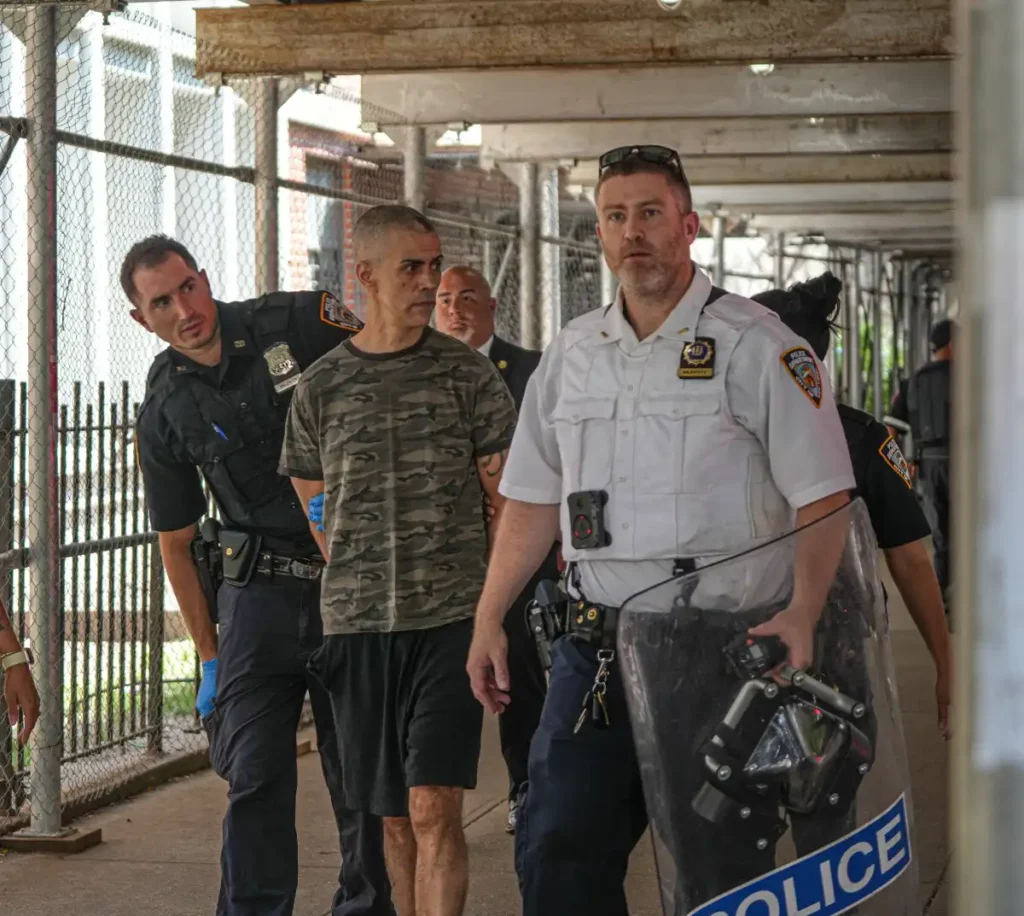
A man armed with a knife sprinted down a north London street Wednesday targeting Jewish pedestrians in broad daylight, stabbing two men before turning on police officers in what Scotland Yard characterized as a suspected terrorist attack — the most visceral episode yet in an escalating campaign of antisemitic violence that has shaken Britain’s Jewish community and drawn condemnation from heads of state on two continents.

The two victims, a 76-year-old man and a 34-year-old man, were both hospitalized in stable condition following the assault. Officers subdued the attacker with a Taser stun gun after he attempted to stab responding police, though no officers sustained injuries. A 45-year-old British national born in Somalia was taken into custody, treated at a hospital for his own injuries, and subsequently transferred to a London police station where he remained under questioning on suspicion of attempted murder as of Wednesday evening.

Metropolitan Police Commissioner Mark Rowley disclosed that the suspect carried a documented history of serious violence and mental health issues. Detectives are also investigating whether the same man was involved in a separate knife-related altercation in southeast London earlier the same morning, during which another person suffered minor wounds.

Unverified footage circulated on social media appeared to capture a man wearing a traditional Jewish skullcap being attacked at a bus stop. Subsequent footage showed officers wrestling repeatedly with the suspect in an effort to disarm him. The scenes, raw and disturbing, spread rapidly across platforms and amplified a sense of alarm that had been building for weeks across London’s Jewish neighborhoods.

A Community Under Siege

Wednesday’s stabbings did not emerge from a vacuum. They arrived as the culmination of a sustained and intensifying pattern of attacks on Jewish targets across the British capital that authorities and community leaders have struggled to contain. Over the preceding month, arsonists struck Jewish ambulances, attempted to torch synagogues, and carried out a series of fire attacks on Jewish-linked premises concentrated in and around Golders Green — a north London neighborhood home to one of Britain’s largest Jewish communities — and near the Israeli Embassy in west London. More than two dozen people have been arrested in connection with those incidents.

Last October, two people and their attacker were killed after a man drove a vehicle into a synagogue in Manchester. The cumulative toll has pushed Britain’s approximately 290,000 Jewish citizens into a state of heightened anxiety that community leaders say is now indistinguishable from genuine fear.

Metropolitan Police Commissioner Rowley acknowledged that reality without deflection. “It is completely understandable why Jewish Londoners feel afraid. Jewish communities are understandably angry. There have been too many attacks,” he told reporters at the scene.

His candor did not insulate him from the anger that had been building. A crowd gathered at the scene heckled Rowley as he spoke, shouting that he had failed and demanding his resignation — a confrontation that captured the degree to which institutional reassurances have ceased to carry weight with people who feel targeted in their own neighborhoods.

International Condemnation, Iranian Shadows

The attack drew immediate and pointed responses from foreign leaders. Israeli President Isaac Herzog called for urgent action, warning that it had become “dangerous to openly walk the streets as a Jew” in London. Israeli Prime Minister Benjamin Netanyahu also condemned the assault. A spokesperson for King Charles confirmed that the monarch was “being kept fully informed and is naturally deeply concerned, in particular about the impact for the Jewish community.”

Prime Minister Keir Starmer, who described the stabbing as “utterly appalling,” acknowledged in a statement that the violence was part of a recognizable and unacceptable pattern. “Let’s be frank, this is not an isolated incident. There have been a series of antisemitic attacks,” Starmer said. He pledged further government funding for security protecting Jewish communities and committed to confronting what he characterized as “malign state actors” operating within or directing violence from outside Britain’s borders.

That phrase carried specific weight. British detectives are actively examining whether the string of arson incidents over the past month carries possible Iranian fingerprints, amid warnings from senior security officials that Tehran has sought to deploy criminal intermediaries to conduct hostile operations on British soil. Just one day before Wednesday’s stabbings, the British government summoned the Iranian ambassador to account for what it characterized as “unacceptable and inflammatory” commentary posted by the Iranian Embassy on social media.

A pro-Iranian organization calling itself Harakat Ashab al-Yamin al-Islamiyya, which had previously asserted involvement in some of the London arson attacks and similar incidents across Europe, claimed responsibility on social media for Wednesday’s stabbings as well. Scotland Yard has previously said it was assessing such online claims but has not confirmed their authenticity. Rowley addressed the broader pattern directly: “We know that some individuals are being encouraged, persuaded or paid to commit acts of violence on behalf of foreign organisations and hostile states.”

Britain’s Chief Rabbi Ephraim Mirvis challenged the government to move beyond statements. Words, Mirvis said, were no longer adequate to confront the “hatred” now manifesting in attacks on Jewish Londoners. The government, he argued, owed the community concrete and visible protection.

A Global Surge Reaching British Streets

The violence in London is part of a wider international deterioration in the safety of Jewish communities that accelerated sharply following the Hamas assault on Israel in October 2023, which triggered the ongoing war in Gaza and unleashed a global wave of antisemitic incidents. In December of last year, a gunman opened fire at a Hanukkah celebration at Bondi Beach in Australia, killing 15 people in one of the deadliest antisemitic attacks in the country’s history.

Britain has not been immune to that global current. The concentration of incidents in London — a city that has historically prided itself on its diversity and tolerance — has made the erosion of Jewish safety in the capital feel particularly acute to those who have watched the pattern develop.

When Terrorism and Policy Collide

Wednesday’s attack forces a convergence of several deeply uncomfortable questions for the British government simultaneously. The first is operational: whether existing security resources, community policing strategies, and intelligence-sharing arrangements are sufficient to detect and prevent attacks that appear to be growing both in frequency and in severity. The answer, judging by the accumulating evidence on London’s streets, is plainly that they are not.

The second is geopolitical. If British investigators confirm Iranian state involvement in directing or financing the campaign of violence against Jewish targets, the implications extend far beyond domestic law enforcement. Britain is simultaneously managing a delicate diplomatic posture toward Tehran, navigating its relationship with Washington over the Iran war, and attempting to reassure a Jewish community that questions whether its government grasps the existential dimension of what they are experiencing.

The third is social. Antisemitism in Britain has historically drawn from multiple ideological sources — far-right nationalism, certain strands of Islamist extremism, and more diffuse currents of hostility that resist easy categorization. The current wave, concentrated in a post-Gaza political environment, carries a particular charge that makes political consensus on how to respond correspondingly difficult to achieve.

Starmer’s government has promised more resources and signaled a willingness to name foreign state actors as contributors to domestic violence — a rhetorical escalation that, if followed by substantive action, could mark a turning point in how Britain approaches the protection of its Jewish citizens. What that action looks like in practice, and whether it arrives before more blood is shed on London’s streets, is the question that Britain’s Jewish community is now asking with unmistakable urgency.

U.S. War With Iran Reaches $25 Billion Cost as Pentagon Faces Pressure From Lawmakers

0

The U.S. military campaign against Iran has cost an estimated $25 billion so far, a senior Pentagon official told lawmakers Wednesday, offering the first detailed figure as the conflict approaches the 60-day mark and scrutiny intensifies on Capitol Hill.

Jules Hurst, who is performing the duties of Pentagon comptroller, disclosed the estimate during testimony before the House Armed Services Committee, where he appeared alongside Defense Secretary Pete Hegseth and Joint Chiefs of Staff Chairman Dan Caine.

“Approximately, as of today, we’re spending about $25 billion on Operation Epic Fury,” Hurst said in response to questions from Rep. Adam Smith of Washington, the panel’s top Democrat. He explained that the bulk of the spending has gone toward munitions, as well as operational costs, maintenance and equipment replacement.

The figure marks a sharp increase from earlier disclosures. Pentagon officials had previously told Congress that the first six days of the conflict alone cost $11.3 billion, highlighting the rapid pace of military expenditures since the United States began strikes on Feb. 28.

Hurst told lawmakers that the Defense Department is preparing a supplemental funding request that will be submitted through the White House once a full accounting of the conflict’s financial impact is completed. He also committed to providing a detailed breakdown of spending after further questions from Rep. Maggie Goodlander of New Hampshire.

The lack of immediate clarity on how the $25 billion has been allocated drew criticism during the hearing. Goodlander pressed defense officials on why lawmakers had not yet received a comprehensive accounting of taxpayer dollars tied to the war.

“We are 60 days into this conflict and still do not have a basic breakdown of the costs,” she said, questioning whether existing defense funds had been redirected to sustain operations.

Hurst responded that the Pentagon routinely manages contingency operations within its existing budget framework, though he did not specify which accounts had been tapped.

Defense Secretary Hegseth defended the spending, framing it as necessary to prevent Iran from developing nuclear weapons. “What would you pay to ensure Iran does not get a nuclear bomb?” he asked lawmakers during the hearing, emphasizing the administration’s strategic objective.

The disclosure comes as the conflict nears a critical legal threshold under the War Powers Resolution of 1973, which limits a president’s ability to conduct military operations without congressional authorization to 60 days. Lawmakers may soon be required to vote on whether to approve continued military engagement or demand a withdrawal.

So far, efforts in Congress to curtail the conflict have fallen short. The Senate has rejected multiple measures seeking to end U.S. involvement, while a similar resolution in the House failed by a narrow margin.

Beyond Washington, the financial toll of the war is being felt across the broader economy. The ongoing closure of the Strait of Hormuz, a key global shipping route, has disrupted energy markets and driven up fuel prices. Data from the American Automobile Association shows gasoline prices in the United States have climbed to their highest levels in nearly four years.

The Associated Press and Reuters both highlighted that disruptions to oil and natural gas shipments have contributed to rising costs for consumers, including increases in fertilizer and other essential goods tied to global supply chains.

The White House confirmed that President Donald Trump met this week with energy industry executives to discuss the economic fallout and potential next steps, including whether to maintain the blockade of Iranian ports. Trump also signaled frustration with stalled diplomatic efforts, warning that Iran “better get smart soon” as negotiations remain at an impasse.

Meanwhile, U.S. officials have acknowledged that Iranian strikes have inflicted more damage on American military installations in the region than initially disclosed, potentially adding billions more in repair costs.

According to Reuters, the $25 billion price tag is roughly equivalent to the annual budget of NASA, underscoring the scale of the financial commitment. The report also noted that 13 U.S. service members have been killed and hundreds wounded since the conflict began.

Public opinion appears to be shifting as the war continues. A Reuters/Ipsos poll found that support for the conflict has declined in recent weeks, with approval ratings dropping as economic pressures mount.

The $25 billion cost figure underscores how rapidly modern military operations can escalate in financial terms, particularly when they involve sustained air campaigns and high-tech weaponry. Munitions, especially precision-guided systems, are among the most expensive components of contemporary warfare, and their heavy use suggests a strategy reliant on sustained strikes rather than limited engagement.

The timing of the disclosure is significant. As the 60-day threshold under the War Powers Resolution approaches, lawmakers are under increasing pressure to assert their constitutional role in authorizing military action. The absence of a detailed spending breakdown may complicate that process, as legislators weigh both strategic and fiscal considerations.

Economic consequences are also emerging as a central factor in the political debate. The disruption of the Strait of Hormuz has amplified global energy volatility, directly affecting fuel prices and inflation. For consumers, the war’s financial burden is not limited to government spending but extends to everyday costs, from transportation to food production.

The comparison to NASA’s annual budget provides a stark illustration of opportunity cost. Funds directed toward military operations could otherwise support domestic programs, infrastructure, or scientific research, a point likely to feature prominently in ongoing policy discussions.

At the same time, the administration’s emphasis on preventing nuclear proliferation reflects a broader strategic calculation that prioritizes long-term security concerns over short-term financial costs. This tension between fiscal restraint and national security objectives has historically shaped U.S. foreign policy decisions and is likely to remain a defining feature of the current debate.

Looking ahead, the ultimate cost of the conflict will depend on its duration, the extent of damage to U.S. assets, and whether diplomatic efforts succeed in producing a lasting resolution. If the conflict continues or escalates, the $25 billion figure may represent only an early snapshot of a much larger financial commitment.

NBC/Reuters

Uganda Detains Over 200 Foreign Nationals in Anti-Trafficking Sweep Linked to Cybercrime Networks

0

Ugandan authorities have detained more than 200 foreign nationals in a sweeping security operation targeting suspected human trafficking networks and cybercrime activity, officials said Tuesday, as the government intensifies efforts to curb illegal migration.

The Ministry of Internal Affairs said at least 231 individuals were taken into custody beginning Monday in coordinated raids across multiple locations. The operation focused on groups of foreign nationals living in northern Uganda and in a tightly controlled residential compound in the capital, Kampala.

Officials said the Kampala compound housed 169 people from several countries, including Pakistan, India, Bangladesh, Ghana, Myanmar, Ethiopia, Sri Lanka, Cambodia and Malaysia. Authorities described the facility as a restricted environment with its own internal services, including dining areas, and designed in a way that limited residents’ movement.

Thirty-six women were among those found at the site, the ministry said.

A separate operation in northern Uganda targeted a group of Nigerian nationals. Authorities said both actions were driven by intelligence suggesting that large numbers of foreign nationals were residing and working in the country without proper documentation.

In a statement, the ministry indicated that many of those detained did not possess valid passports or legal permits. Officials also disclosed that some individuals told investigators they had been brought into Uganda under false promises of employment.

“Some individuals have claimed they were trafficked into Uganda with promises of employment,” the ministry said. “Others were engaged in cyber-scamming activities, while a number were found with materials that may indicate involvement in additional criminal conduct.”

Simon Peter Mundeyi, a spokesperson for the Ministry of Internal Affairs, told The Associated Press that those detained fall into three main categories: suspected victims of human trafficking, individuals believed to be involved in criminal operations, and people who had overstayed their visas without engaging in illegal activity.

Mundeyi said authorities are working to separate victims from suspected organizers. Those identified as trafficking victims or immigration violators without criminal involvement will be assisted in returning to their home countries, though they will be required to cover their travel expenses. Individuals believed to be key figures in trafficking or cybercrime operations are expected to face prosecution and possible deportation after legal proceedings.

Authorities have not disclosed how long the investigation will take or whether additional arrests are expected.

Uganda has long been regarded as a relatively open destination for migrants and refugees, particularly from neighboring countries affected by conflict, including Congo, Burundi and South Sudan. The country hosts hundreds of thousands of displaced people and has maintained relatively flexible visa policies for visitors from across Africa and beyond.

All factual details, including the number of detainees, locations of the operations, and official statements, were provided by Uganda’s Ministry of Internal Affairs and comments made by spokesperson Simon Peter Mundeyi to The Associated Press.

The large-scale detentions highlight growing concerns across Africa about the intersection of human trafficking, illegal migration, and cybercrime networks. Uganda’s operation reflects a broader regional trend in which authorities are increasingly targeting organized groups that exploit vulnerable individuals under the guise of employment opportunities.

The discovery of a controlled residential compound in Kampala raises questions about how such operations can function undetected. Facilities designed to restrict movement suggest a level of organization often associated with trafficking rings or coordinated cybercrime hubs, where victims may be isolated and pressured into illegal activities such as online fraud.

The mention of cyber-scamming is particularly significant. Across several parts of Africa and Asia, authorities have uncovered networks where trafficked individuals are forced to participate in online scams targeting victims globally. These operations often rely on deceptive recruitment practices, bringing individuals into foreign countries with promises of legitimate work before coercing them into criminal activity.

Uganda’s response also illustrates the challenge governments face in distinguishing between victims and perpetrators. In many cases, individuals involved in such operations may have initially entered as victims but later become participants under duress. This complicates legal and humanitarian responses, requiring careful screening and coordination with international partners.

The government’s decision to require non-criminal detainees to fund their own return travel could draw scrutiny from human rights organizations. While it reflects a practical approach to managing resources, it may place additional burdens on individuals who were already vulnerable or exploited.

At the same time, the crackdown may signal a shift in Uganda’s immigration enforcement strategy. While the country has traditionally maintained an open-door policy, particularly toward refugees, increasing concerns about transnational crime could lead to tighter controls and more frequent operations targeting undocumented migrants.

The international dimension of the arrests, involving individuals from multiple continents, underscores the global nature of trafficking and cybercrime networks. These systems often span several countries, making enforcement efforts dependent on cross-border cooperation and intelligence sharing.

As investigations continue, the outcome of this operation may influence how Uganda and other countries in the region approach similar threats. It could also prompt calls for stronger oversight, improved victim protection mechanisms, and greater international collaboration to address the root causes of trafficking and exploitation.

Trump Image to Appear in Limited-Edition U.S. Passports for America’s 250th Anniversary

0

 The U.S. State Department will issue a limited run of commemorative passports featuring President Donald Trump’s image as part of celebrations marking the nation’s 250th anniversary, a move that would place a sitting president inside the official travel document for the first time.

State Department spokesperson Tommy Pigott said Tuesday that the special passports are being prepared to coincide with the July anniversary milestone. He described the design as part of a broader effort to mark what officials view as a historic national moment.

“As the United States celebrates America’s 250th anniversary in July, the State Department is preparing to release a limited number of specially designed U.S. passports to commemorate this historic occasion,” Pigott said in a statement shared with NBC News. He added that the documents would incorporate custom artwork and enhanced imagery while maintaining existing security protections.

The Associated Press indicated that between 25,000 and 30,000 of the commemorative passports are expected to be issued, primarily through the Washington passport agency. Applicants seeking passports in person at that location during the release window will receive the special edition by default, while standard versions will remain available through online applications and other passport offices.

The redesigned passport will include an image of Trump layered over elements of the Declaration of Independence and the American flag, along with his signature rendered in gold lettering. Additional interior pages will feature historical imagery tied to the nation’s founding, including artwork depicting the signing of the Declaration of Independence.

Officials have not confirmed whether any previous U.S. passport has included the likeness of a sitting president. Current passport designs highlight national symbols and historical figures, including images of Mount Rushmore featuring George Washington, Thomas Jefferson, Theodore Roosevelt and Abraham Lincoln, as well as landmarks such as the Statue of Liberty and Independence Hall.

A White House spokesperson, Olivia Wales, described the commemorative passport as part of a broader initiative to promote national pride during the anniversary year. She said the design offers Americans another way to take part in the country’s milestone celebration and reflects what she called a renewed emphasis on patriotism under Trump’s leadership.

The passport initiative comes alongside other efforts to incorporate the president’s name and image into official and symbolic government materials. Federal officials have already approved a commemorative gold coin bearing Trump’s likeness, while the Treasury Department has announced plans to include his signature on U.S. paper currency, breaking with long-standing tradition in which only the treasury secretary and treasurer sign banknotes.

Trump’s name has also been added to federal buildings and programs, including the exterior of the U.S. Institute of Peace and the John F. Kennedy Center for the Performing Arts. Banners featuring the president’s image have appeared at several federal agencies, including the departments of Justice, Agriculture and Labor.

Details regarding the passport design, distribution, and official statements were provided by the State Department and reported by NBC News and The Associated Press. Information about related initiatives involving currency and commemorative items was attributed to federal agencies and prior announcements referenced in those reports.

The introduction of a U.S. passport featuring a sitting president marks a notable departure from longstanding design traditions that have emphasized national symbols rather than contemporary political figures. Historically, passport imagery has been carefully curated to reflect shared heritage and foundational ideals, avoiding direct association with current officeholders.

This shift may signal a broader evolution in how national identity is presented through official documents. By incorporating Trump’s image into the passport, the administration appears to be blending political leadership with national symbolism in a way that could reshape expectations for future commemorative materials.

The timing of the release, tied to the 250th anniversary of American independence, adds another layer of significance. Milestone anniversaries often serve as opportunities for governments to reinforce national narratives and identity. In this case, the inclusion of a living president introduces a contemporary political dimension to what has traditionally been a historical commemoration.

The move is also likely to generate debate over precedent and institutional norms. Critics may question whether featuring a sitting president risks politicizing a document that serves as a universal identifier for citizens regardless of political affiliation. Supporters, on the other hand, may view it as a reflection of current leadership during a historic moment.

Beyond symbolism, the initiative reflects a broader strategy of increasing presidential visibility across government institutions and public-facing materials. From currency changes to building signage, the integration of Trump’s name and likeness suggests a coordinated effort to shape the visual and cultural imprint of his presidency.

There are also practical considerations. Because the commemorative passports will be issued only in limited numbers and through a specific location, their long-term impact on standard passport design may be limited. However, their existence could influence future decisions about how major national milestones are marked through official documentation.

Finally, the development underscores the intersection of politics, branding, and governance in the modern era. As governments increasingly recognize the symbolic power of design and imagery, decisions about what appears on official documents carry both cultural and political weight.

Whether viewed as a celebration of leadership or a break from tradition, the commemorative passport initiative represents a significant moment in the evolution of one of the United States’ most widely recognized documents.

King Charles Urges Congress to Guard the Anglo-American Alliance as Britain-U.S. Ties Hit Lowest Point in Decades

0

WASHINGTON — King Charles III stood before a joint session of the United States Congress Monday and delivered a carefully calibrated appeal for enduring alliance, invoking shared democratic values and centuries of intertwined national destiny at a moment when the bond between Britain and America has frayed to its most strained point in generations — strained by war, tariff disputes, and a deepening diplomatic chill that the monarch’s four-day state visit was implicitly designed to address without appearing to do so.

Speaking to assembled lawmakers from both parties in the chamber where American democracy has conducted its most consequential debates, Charles acknowledged what he called “times of great uncertainty” while insisting that the two nations’ fates remained permanently bound together regardless of whatever turbulence their governments currently navigated.

“Whatever our differences, whatever disagreements we may have, we stand united in our commitment to uphold democracy, to protect all our people from harm, and to salute the courage of those who daily risk their lives in the service of our countries,” the king told Congress.

The address made Charles only the second British monarch ever to speak before a joint session of Congress. His mother, Queen Elizabeth II, delivered a comparable address in 1991, similarly centered on democratic solidarity and the historic depth of the Anglo-American bond.

A Visit Freighted With Diplomatic Weight

The state visit arrived against a backdrop that few in either capital were willing to describe publicly as anything other than difficult. President Donald Trump has leveled sustained public criticism at British Prime Minister Keir Starmer over Britain’s refusal to participate in the initial wave of U.S.-Israeli military strikes against Iran — a rupture that analysts have characterized as the lowest point in the so-called special relationship since the 1956 Suez Crisis, when Washington actively opposed London’s attempt to seize the Suez Canal by force.

Before his congressional address, Charles met privately with top Republican and Democratic lawmakers and joined Queen Camilla for a closed-door session with Trump at the White House. Trump characterized the meeting positively, calling it “really good” and “a real honor,” and separately told the BBC in a phone interview conducted last week that he believed the king’s visit could help restore warmer ties between the two governments. “Absolutely, the answer is yes,” Trump said when asked whether the royal visit might repair the relationship, adding of the king: “He’s a brave man, and he’s a great man.”

The state dinner hosted by Trump at the White House Monday evening marked the ceremonial centerpiece of the visit, a ritual display of alliance that both governments have a clear interest in projecting even as their working relationship grinds through one of its most contentious periods.

The Special Relationship Under Examination

The term “special relationship” — first coined by Winston Churchill to describe the unique intelligence-sharing, military coordination, and cultural kinship binding Britain and the United States — has faced pointed scrutiny in recent weeks. The Financial Times disclosed Tuesday that Britain’s current ambassador to Washington, Christian Turner, told a group of British high school students visiting the United States in February that the phrase carried “a lot of baggage” and was “quite nostalgic.” Turner went further, suggesting that the United States probably reserved its singular bond for Israel rather than Britain.

A Foreign Office spokesperson moved quickly to contain the fallout, characterizing Turner’s remarks as private and informal and explicitly disavowing them as any reflection of official British government policy. Turner had hosted a garden party for Charles and Camilla at the British Embassy shortly after the royal couple’s arrival in Washington on Monday — an occasion that underscored the awkward proximity of his earlier candor to the pageantry now surrounding him.

Britain has for decades anchored its international identity in significant measure around its relationship with Washington, a tradition sustained by a succession of prime ministers — Winston Churchill with Franklin D. Roosevelt, Margaret Thatcher with Ronald Reagan, Tony Blair with George W. Bush — who cultivated personal chemistry with their American counterparts into strategic leverage. Starmer, by contrast, has found himself the target of repeated Trump rebukes, a dynamic that Charles navigated delicately in his congressional address by quoting his prime minister while carefully framing the citation within a broader appeal to institutional permanence.

“As my Prime Minister said last month: ‘Ours is an indispensable partnership. We must not disregard everything that has sustained us for the last 80 years. Instead, we must build on it,'” Charles told Congress, threading a passage of political endorsement into what was formally a nonpolitical address.

Former British Ambassador to Washington Nigel Sheinwald, who held the post from 2007 to 2012, offered perhaps the clearest articulation of what the visit was and was not intended to accomplish. Speaking to Reuters, Sheinwald pushed back against the idea that Charles had arrived in Washington to patch a bilateral rupture at the governmental level. The visit’s purpose, he argued, ran deeper than any current disagreement between administrations.

“Pretty much more than any other visit, this is about the long term. This is about the fundamentals of the relationship between our peoples, our countries,” Sheinwald told Reuters.

250 Years of Interlinked Destiny

Charles’ address coincided with the 250th anniversary of American independence from Britain — a historical milestone that lent the occasion an added layer of symbolic resonance. That the country which once fought a revolutionary war to sever itself from the British Crown was now receiving that Crown’s living embodiment with full state honors in its legislative chamber captured something essential about how thoroughly the relationship between the two nations had been transformed over two and a half centuries.

“For all that time,” Charles told Congress, “our destinies have been interlinked.”

The formulation was deliberate. Charles is constitutionally barred from engaging in partisan politics and has consistently maintained a posture of careful neutrality on matters that could entangle the monarchy in governmental disputes. Yet the choice to appear before Congress during a period of open tension between London and Washington — and to quote Starmer directly — reflected a calibrated willingness to use the monarchy’s singular soft-power standing in service of national interest 

The Crown as Diplomatic Instrument

The state visit illuminated a dynamic that has characterized British foreign policy at its most resourceful: the deployment of the monarchy as a diplomatic asset that transcends the transactional friction of day-to-day governmental relations. Prime ministers come and go, trade disputes rise and subside, and military coalitions form and fracture — but the image of a British king addressing the American Congress in the Capitol Rotunda projects a continuity and gravity that no bilateral summit communiqué can replicate.

For Trump, who has made no secret of his personal admiration for the British royal family, the visit offered something valuable as well: a moment of ceremonial grandeur that reinforced his own brand as a leader commanding the attention of world figures, even as his administration’s confrontational posture toward London has complicated the alliance at the operational level.

Whether Charles’ visit translates into any measurable warming between the two governments on the substantive disagreements over Iran, trade, or the terms of their security partnership remains genuinely uncertain. Sheinwald’s framing — that this was about the long term, about peoples rather than policies — may prove prophetic, or it may prove to be the diplomatic equivalent of a gracious understatement masking a relationship that requires more than royal pageantry to repair.

What is beyond dispute is that Charles accomplished what he came to do: he stood in the most visible forum American democracy offers, spoke without flinching about the bonds his nation shares with this one, and reminded an audience that has grown accustomed to thinking of the Atlantic alliance in purely transactional terms that some relationships are measured in centuries rather than in any single administration’s ledger.

AP

U.S. Army Soldier Arrested After Alleged Online Threats Targeting Synagogue Spark Federal Case

0

WASHINGTON — A U.S. Army soldier based in Louisiana has been taken into federal custody after authorities alleged he made violent online threats targeting a synagogue, prompting swift action by investigators and raising renewed concerns about extremist rhetoric circulating on digital platforms.

Federal prosecutors identified the suspect as Jakob Marcoulier, 22, who was stationed at a military installation in Louisiana. Officials said he was detained last week on a charge of transmitting threats across state lines, a federal offense that carries significant prison time if convicted.

Court filings indicate that investigators were alerted earlier this year after a tip was submitted to the Federal Bureau of Investigation’s National Threat Operations Center regarding a user operating under the name “el.bostino” on a messaging and gaming platform. Authorities say they reviewed recorded audio conversations in which the individual allegedly outlined plans to carry out a mass shooting inside a synagogue.

Prosecutors allege the recordings captured explicit threats describing the use of firearms and tactical gear, along with statements expressing intent to carry out violence against Jewish worshippers. Investigators later linked the account and voice recordings to Marcoulier, according to the U.S. Attorney’s Office for the Western District of Louisiana.

Law enforcement officials moved to detain the soldier following the review of the evidence. He now faces a federal charge that could result in up to five years in prison if he is found guilty.

In a statement issued by the U.S. Attorney’s Office, federal prosecutor Zachary A. Keller emphasized the seriousness of threats targeting religious communities. He said such actions strike at the core of constitutionally protected freedoms and will be met with decisive legal action.

“Threats against places of worship represent a direct challenge to the freedoms guaranteed to all Americans,” Keller said, adding that federal and local authorities remain committed to protecting communities from acts of violence.

The FBI also underscored its role in identifying and responding to threats before they escalate. Officials pointed to the case as an example of coordinated efforts between federal agencies and technology platforms to detect and address potential acts of violence.

A spokesperson for the messaging platform confirmed that the user account tied to the case had been removed for violating policies related to hateful conduct. The company said it actively monitors for harmful activity and works with law enforcement when credible threats emerge.

Marcoulier remains in custody as the case proceeds through the federal court system. Authorities have not disclosed whether he had access to weapons at the time of the alleged statements or whether additional charges could follow.

Details of the arrest, the suspect’s identity, the nature of the alleged threats, and the federal charge were provided by the United States Attorney’s Office for the Western District of Louisiana and statements from federal investigators. Information regarding the platform’s response was attributed to a company spokesperson.

The case highlights a growing challenge for law enforcement agencies confronting the intersection of online communication, extremism, and real-world threats. Digital platforms have become a central space where individuals can express grievances, organize, and, in some cases, signal intentions to commit acts of violence.

Authorities increasingly rely on tip lines, algorithmic monitoring, and partnerships with private companies to detect such threats early. In this instance, the involvement of the FBI’s National Threat Operations Center demonstrates how critical public reporting and digital surveillance tools have become in preventing potential attacks.

The alleged statements also reflect a broader trend of rising concern over threats directed at religious institutions in the United States. Synagogues, churches, and mosques have all faced heightened security risks in recent years, prompting increased coordination between federal agencies and local law enforcement.

Another key issue raised by the case is the role of individuals within trusted institutions, such as the military, who may become involved in extremist activity. While such cases remain relatively rare, they draw significant attention because of the access to training and resources that service members may possess. The military has taken steps in recent years to strengthen screening and monitoring processes, but incidents like this continue to test those safeguards.

The response from the messaging platform also underscores the evolving responsibility of technology companies in policing harmful content. While platforms have expanded enforcement efforts, balancing user privacy with proactive threat detection remains a complex and often controversial task.

Finally, the swift law enforcement response suggests a continued emphasis on prevention rather than reaction. By acting on early warning signs, authorities aim to disrupt potential attacks before they can be carried out, even when the threat exists primarily in the digital sphere.

As the case moves forward, it is likely to draw further scrutiny not only on the individual accused but also on the broader systems designed to identify and prevent extremist violence in an increasingly connected world.

NewYorkPost

Five Wounded in Dual Athens Shootings as 89-Year-Old Suspect Remains at Large

0

An 89-year-old man remained on the run Tuesday after opening fire at two locations in Athens, wounding five people in a rare outbreak of gun violence in the Greek capital, authorities said.

Police said the suspect first carried out the attack at a branch of Greece’s EFKA social security agency in central Athens, where he used a shotgun to fire inside the building, injuring an employee. The victim sustained wounds to the leg and was taken to a hospital for treatment.

The gunman then fled the scene and traveled by taxi to a nearby court complex, where he entered the building, moved to an upper floor and fired several shots inside an office. Four female court employees were injured in the second attack, though officials described their injuries as minor.

Authorities said the suspect abandoned the shotgun at the courthouse before escaping on foot. He remained at large as of the latest update, with police launching a search operation across the city.

Officials have not publicly released the man’s name, but local media identified him as a resident of Athens known to authorities from previous encounters. He has been described as tall and thin and was reportedly wearing a blue coat during the attacks.

Law enforcement sources indicated that the entire sequence of events unfolded over a short period, with the suspect moving quickly between locations and targeting public institutions. Police have not confirmed a motive, and it remains unclear whether the attacks were directed at specific individuals.

The head of a judiciary employees’ union in Athens told the state broadcaster ERT that four women working in the court were lightly injured during the shooting, underscoring the sudden and chaotic nature of the incident.

Local media accounts suggest the suspect left behind written materials at the scene, which he claimed explained his actions. Authorities have not released the contents of those documents.

The suspect had reportedly come to the attention of law enforcement in the past. In 2018, he was linked to a threat involving the Athens prosecutor’s office and was later admitted to a psychiatric facility, according to local reports.

Greek media have also described the man as someone who collected discarded materials for resale, though officials have not confirmed those details.

The shootings are considered highly unusual in Greece, where strict gun control laws limit civilian access to firearms. Ownership is generally restricted to specific purposes such as hunting or personal protection under tightly regulated conditions, and carrying weapons in public is largely prohibited.

The Athens shootings highlight the rare but impactful nature of gun violence in countries with stringent firearm regulations. While such incidents are uncommon in Greece, they tend to generate heightened concern due to the expectation of relative safety in public spaces.

The fact that the suspect is an elderly individual adds a layer of complexity to the case. Violent acts involving older offenders are statistically uncommon, which may prompt investigators to focus closely on mental health history and personal circumstances as potential contributing factors.

The movement between two separate locations suggests a level of planning or determination, even if the attacks were not aimed at specific targets. This pattern raises questions about security measures in public buildings and the ability to respond quickly to evolving threats.

The reported use of a shotgun, combined with the suspect’s ability to enter multiple facilities, may lead to a review of access controls and emergency protocols in government offices and courts. Even in countries with strict firearm laws, isolated incidents can expose gaps in preparedness.

Mental health considerations are also likely to be central to the investigation. Previous contact with authorities and reported treatment in a psychiatric facility could shape how officials assess both motive and risk factors. The case may renew discussions in Greece about the intersection of mental health care and public safety.

From a broader perspective, the incident underscores the unpredictability of lone-actor attacks. Even in environments with strong legal restrictions on weapons, determined individuals can still carry out acts of violence, often with limited warning signs.

Public reaction to the shootings may influence policy discussions, particularly around monitoring individuals with prior threats or behavioral concerns. Authorities may face pressure to strengthen preventive measures without compromising civil liberties.

As police continue their search for the suspect, the focus remains on ensuring public safety and understanding what led to the attacks. The incident has shaken confidence in the security of public institutions and prompted renewed attention to emergency preparedness in Athens.

Officials have urged anyone with information to come forward as the investigation continues.

Reuters/Telegraph

Mexican Forces Arrested Jalisco Cartel’s Top Commander in Precision Raid Outside Puerto Vallarta

0

PUERTO VALLARTA, Mexico — Mexican special forces pulled one of the hemisphere’s most wanted drug traffickers out of a roadside drainage ditch Monday, capturing the Jalisco New Generation Cartel’s top regional commander in a nighttime operation outside this Pacific coast resort city that law enforcement officials on both sides of the border immediately hailed as a watershed moment in the war against organized crime.

Audias Flores Silva, known within cartel circles and to international investigators as “El Jardinero” — The Gardener — was taken into custody without a single shot fired after a 19-month surveillance operation culminated in a precisely choreographed assault on a mountain cabin roughly 20 kilometers north of Puerto Vallarta in the western state of Nayarit. Mexican Navy forces, backed by more than 500 troops, six helicopters, and several fixed-wing aircraft, encircled the compound as Flores sheltered behind a defensive perimeter of approximately 30 pickup trucks and more than 60 armed escorts.

When security forces closed in, the gunmen scattered across multiple directions in a calculated diversion attempt. It did not work. Ground tracking teams and aerial surveillance units followed Flores as he abandoned the cabin and attempted to conceal himself in a drainage channel along a nearby road, where he was apprehended. Mexican Security Minister Omar Garcia Harfuch shared aerial footage of the arrest on social media, showing helicopters maintaining a constant hover above the operation zone as it unfolded.

The Navy confirmed in an official release that American authorities contributed aerial surveillance intelligence that proved critical to the successful capture — information provided by a Mexican security official who spoke without attribution. The United States government had placed a $5 million reward on Flores following the February killing of cartel supreme commander Nemesio Oseguera Cervantes, known globally as “El Mencho,” for whom Flores was widely regarded as the most credible successor.

Garcia Harfuch confirmed Monday that U.S. authorities are seeking Flores’ extradition, though it remained unclear whether he would first face prosecution in Mexico.

Bigger Than El Mencho

The significance of the arrest, according to those with the deepest knowledge of the Jalisco cartel’s internal architecture, may actually exceed that of El Mencho’s killing earlier this year — a remarkable assessment given that Oseguera Cervantes was among the most hunted men in the Western Hemisphere for more than a decade.

Carlos Olivo, a former assistant special agent in charge at the U.S. Drug Enforcement Administration who has spent years tracking the Jalisco cartel’s operations, characterized Flores as a figure whose removal from the field would reverberate far more deeply through the organization’s day-to-day functioning. Olivo said the arrest “will have a bigger effect on CJNG operations than El Mencho being taken out” — a judgment grounded in Flores’ specific operational role.

According to a Mexican security official, Flores controlled a sprawling network of drug manufacturing laboratories, oversaw smuggling corridors running up Mexico’s Pacific coast, and managed distribution infrastructure reaching directly into the United States. El Mencho held symbolic and strategic authority at the apex of the cartel’s hierarchy; Flores held the operational machinery that kept product moving and revenue flowing.

Later Monday, Mexican authorities announced the arrest of a second JNGC figure: Cesar Alejandro, known by the alias “El Güero Conta,” whom officials identified as a primary money launderer for Flores and a key node in the cartel’s financial concealment network.

Post-El Mencho Turbulence

El Mencho’s death in February ignited a wave of retaliatory and destabilizing violence across Mexico as factions jostled for position within the suddenly leaderless cartel structure. Armed gunmen attacked businesses, vehicles were set ablaze on major thoroughfares, and roads were blockaded in coordinated disruption campaigns. The turmoil claimed more than 70 lives in the immediate aftermath, among them 25 members of the National Guard — a toll that intensified pressure on President Claudia Sheinbaum’s government to demonstrate control.

Flores had emerged as one of several senior regional commanders whom security analysts believed capable of consolidating leadership over the cartel’s fractured command structure. His capture removes a central figure from that succession contest at a moment when the organization remains structurally vulnerable.

The U.S. Treasury Department had designated Flores a “significant foreign narcotics trafficker” in 2021, and a U.S. federal grand jury had charged him with conspiracy to distribute cocaine and heroin, among other offenses. The United States formally designated the Jalisco New Generation Cartel a foreign terrorist organization in 2025, a classification that elevated the legal and diplomatic stakes surrounding the pursuit of its leadership.

U.S. Ambassador to Mexico Ronald Johnson marked the arrest on social media Monday, characterizing the capture of “a key leader of the violent CJNG” as “a significant step forward in the fight against those who profit from fentanyl and fuel violence in our communities.”

The World Cup Factor and Washington’s Shadow

Monday’s operation unfolded against a backdrop of extraordinary external pressure on Mexico’s security establishment. The Sheinbaum administration has faced escalating demands from U.S. President Donald Trump, who has repeatedly threatened to authorize unilateral American military action on Mexican soil if he concludes that Mexico City is not doing enough to dismantle cartel operations and curtail fentanyl trafficking into the United States. Trump’s administration has also linked tariff threats to what it characterized as insufficient Mexican action on drug flows and migration — a pressure campaign that has complicated the ongoing review of the shared North American free trade framework.

Sheinbaum has consistently rejected American offers of drone strikes or the deployment of U.S. ground forces on Mexican territory, insisting that sovereignty concerns preclude foreign military operations within the country’s borders. Monday’s arrest, executed with American intelligence support but under full Mexican military command, reflects the architecture of cooperation both governments have publicly endorsed while navigating their sharper disagreements.

The timing carries additional weight: Mexico, the United States, and Canada are preparing to co-host the FIFA World Cup this summer, placing Mexico’s security credibility under an international microscope at a moment when the government can least afford high-profile demonstrations of cartel impunity.

A Structural Test for the Jalisco Cartel

The consecutive blows dealt to the Jalisco cartel — El Mencho’s killing in February followed by Flores’ capture in April — represent the most consequential disruption to the organization’s leadership in its history. Yet analysts who have tracked the cartel’s resilience over more than a decade caution against premature declarations of strategic victory.

The JNGC expanded from a regional Jalisco-based force into Mexico’s most geographically expansive criminal enterprise precisely because it built redundant command structures, deep financial reserves, and territorial control mechanisms that do not depend on any single individual’s continued freedom. El Mencho’s absence has already proven that the cartel can absorb leadership shocks and continue operating — violently, if chaotically.

Flores’ removal tests whether that institutional resilience holds when the organization simultaneously loses its symbolic figurehead and its most operationally capable successor within the span of a single season. The answer will determine not just the Jalisco cartel’s trajectory, but the broader contours of Mexico’s security landscape heading into a summer when the eyes of the world will be fixed on its stadiums.

DW/Reuters

South Korean Appeals Court Quadruples Prison Term for Ousted President Yoon’s Wife on Corruption Conviction

0

SEOUL — A South Korean appeals court handed former first lady Kim Keon Hee a four-year prison sentence Tuesday, significantly toughening an earlier conviction on corruption charges tied to gifts she accepted from the Unification Church — a ruling that arrives roughly two months after her husband, ousted President Yoon Suk Yeol, received a life sentence for rebellion.

The Seoul High Court more than doubled the 20-month term a district court had imposed in January, finding Kim guilty of accepting an additional Chanel handbag from the church beyond the items that formed the basis of the original conviction, and reinstating a stock price manipulation charge from which she had previously been acquitted. The district court had found her culpable for receiving a Graff diamond necklace and a separate Chanel bag from Unification Church representatives in exchange for pledges of political assistance.

In its ruling, the Seoul High Court drew a sharp distinction between the obligations of an ordinary citizen and those of a sitting first lady, noting that a president’s spouse occupies a position uniquely proximate to national power, carries influence over the head of state, and bears a corresponding responsibility to uphold public trust. The court determined Kim had not only failed that standard but had exploited her elevated standing to extract luxury gifts from a religious organization with active political interests.

Both Kim and independent counsel Min Joong-ki have one week to petition the Supreme Court for review. Min’s team had sought a 15-year sentence, arguing the original term drastically underestimated the gravity of the offenses. Kim’s defense has maintained that Min’s prosecution was politically motivated rather than driven by legitimate evidentiary concerns.

A Presidential Marriage Under Legal Siege

The sentencing marks the latest chapter in the cascading legal reckoning that has consumed South Korea’s most prominent political couple since Yoon’s stunning imposition of martial law in December 2024 triggered a constitutional crisis that ultimately ended his presidency.

Kim has been held in custody since last August, when the Seoul district court approved an arrest warrant citing concern that she might tamper with or destroy evidence if left free. During Yoon’s tenure, she had become a persistent liability — a figure whose repeated controversies drained his approval ratings and handed opposition forces an unending supply of political fodder.

On the night of Dec. 3, 2024, Yoon abruptly declared martial law and dispatched military units and police officers to surround the National Assembly, framing the move as a necessary measure to neutralize what he characterized as anti-state forces and North Korea sympathizers embedded in the liberal opposition. Lawmakers physically broke through the cordon and convened an emergency session, voting to lift the decree within hours. Yoon was subsequently impeached by the National Assembly and removed from office by the Constitutional Court.

In February, the Seoul Central District Court convicted Yoon of rebellion, finding that he had mobilized armed forces in an unlawful bid to seize the legislature, detain political opponents, and establish unchecked executive authority over an indefinite period. The court sentenced him to life in prison — the stiffest penalty permissible under the rebellion statute short of execution. Yoon has defended his conduct throughout, casting the martial law declaration as a desperate act of political self-defense against a Democratic Party majority he accused of systematically obstructing his governing agenda.

Investigators have drawn a clear separation between Yoon’s martial law conduct and Kim’s legal exposure, determining she played no role in the planning or execution of the military deployment.

The Unification Church at the Center

The corruption charges against Kim center on her relationship with the Unification Church, the organization founded by the late Sun Myung Moon that maintains deep and enduring roots within South Korea’s conservative political establishment. Prosecutors alleged that Kim accepted luxury goods from church representatives with the understanding that her husband’s administration would extend favorable treatment — an arrangement the courts determined crossed into criminal bribery territory.

The Unification Church’s proximity to South Korean conservative politics has drawn sustained scrutiny for decades, but the Kim prosecution represents one of the most prominent judicial findings linking church gift-giving to explicit promises of political reciprocity. The Seoul High Court’s decision to reinstate the stock manipulation charge, which the lower court had dismissed, further expanded the scope of Kim’s criminal accountability beyond the church-related counts.

A Legal Reckoning With Political Aftershocks

The convergence of life imprisonment for Yoon and a four-year term for Kim represents an extraordinary moment in South Korean democratic history — a sitting president and his spouse simultaneously imprisoned following the collapse of an administration that began with substantial electoral support and ended in constitutional rupture.

South Korea has now prosecuted two former presidents in the post-democratization era, with Yoon joining the ranks of predecessors whose tenures ended in disgrace and criminal conviction. The breadth and speed of the legal proceedings against both Yoon and Kim signal an institutional willingness to apply accountability measures regardless of the political costs — a posture that analysts note reflects both the strength of South Korea’s judicial independence and the depth of public anger over the martial law episode.

For the Democratic Party, now dominant in the National Assembly and holding the political initiative, the twin convictions offer validation of years of pressure campaigns against the Yoon administration. For South Korea’s conservative bloc, the rulings present a generational reckoning — the need to rebuild credibility on rule-of-law grounds while simultaneously managing a base that views elements of the prosecution as partisan overreach.

Kim’s legal fate now rests with the Supreme Court if either side pursues the remaining appeal window. Whatever the outcome at that final tier, the Seoul High Court’s ruling Tuesday ensures she will enter the history of the South Korean republic as the first former first lady convicted of corruption by an appellate bench — a distinction her husband’s own legal catastrophe has done nothing to soften.

The Associated Press

Islamic State Kills 29 in Nigerian Village Assault as Bandits Abduct Six Female Students in Kaduna Ambush

0

GOMBI, Nigeria — Islamic State militants descended on a remote northeastern Nigerian village under cover of darkness Sunday, slaughtering at least 29 residents in an assault that drew swift condemnation from the state’s top official, even as a separate armed attack hundreds of miles away left one female student dead and six others seized at gunpoint in Kaduna State.

The twin episodes of bloodshed unfolded on the same day, exposing once more the depth and geographic reach of a security breakdown that has come to define daily life across large swaths of Africa’s most populous nation.

The nighttime rampage struck Guyaku, a settlement within the Gombi local government area of Adamawa State, where gunmen affiliated with the Islamic State group opened fire on residents and torched properties before withdrawing into the surrounding terrain. Adamawa State Governor Ahmadu Umaru Fintiri traveled to the village Monday and condemned the slaughter as tragic and wholly unacceptable, vowing that those responsible would face accountability.

The Islamic State group formally acknowledged carrying out the attack through a posting on the Telegram messaging platform, though authorities did not immediately confirm which of two IS-aligned factions operating in Nigeria was responsible. The Islamic State West Africa Province, widely known as ISWAP, has maintained an operational foothold in the northeast, including in Adamawa State, for years. A second IS-connected network, known regionally as Lakurawa, tends to concentrate its violence farther west in the northcentral states of Sokoto and Kebbi.

A Nation Engulfed

Nigeria has wrestled with compounding security emergencies for more than two decades, particularly across its northern corridor, where jihadist insurgencies, criminal banditry networks, and intercommunal violence have displaced millions and claimed tens of thousands of lives. In February, the United States deployed military advisers to the country to assist Nigerian forces in confronting the overlapping threats — a move underscoring Washington’s recognition that instability in West Africa’s largest economy carries consequences well beyond its borders.

The Guyaku assault coincided with yet another mass abduction unfolding simultaneously in north-central Nigeria, where gunmen raided an orphanage in Lokoja, the capital of Kogi State, seizing 23 pupils. Fifteen of the children were subsequently rescued through security operations, and the federal government announced that intensive pursuit efforts were continuing to recover the remaining eight and bring the attackers to justice. The facility targeted, identified as Dahallukitab Group of Schools, was operating without official authorization, according to Kogi State Commissioner Kingsley Femi Fanwo, who described the compound as situated in an isolated section of Lokoja.

No organization immediately claimed responsibility for the Kogi orphanage attack. Officials declined to specify the ages of the abducted children, though the designation “pupil” in Nigerian educational parlance typically refers to students in kindergarten or primary school, generally spanning ages up to 12.

Kaduna Ambush: One Student Killed, Six Seized

In a parallel episode that same Sunday, armed bandits ambushed a vehicle transporting female students through the Southern Kaduna region, killing one and abducting six others in a brazen roadside assault that security forces had not publicly addressed as of Monday.

The attack unfolded in Akwando village, within the Kachia Local Government Area of Kaduna State, according to Reuben Buhari, a community member originally from the area whose account was first brought to light by Sahara Reporters. The students, all residents of Akwando village, had boarded the truck before dawn to travel to Kachia, where they were scheduled to resume school attendance Monday morning.

Fewer than ten minutes into the journey, the vehicle was intercepted by armed men who overpowered the occupants and forced several passengers off the truck. One student, identified as Purity Babangida, was found dead after she apparently attempted to flee on foot during the ambush.

Among those taken captive, Buhari identified the following individuals: Augustina Muntari, an SS2 student at Government Secondary School Gumel; Happy Muntari, a JS2 student at the same institution; Favour Tanimu, a JS2 student at Government Secondary School Kachia; Patience Joseph, also a JS2 student at GSS Kachia; Peace Irimiya, a student at St. John’s School in Kachia; and Bishara Irimiya, likewise enrolled at St. John’s School in Kachia. The driver, identified as Irimiya Galadima, was also among those seized, along with two adults — Fatu Danladi and Laraba Caleb.

In a desperate bid to escape, 15 other students leapt from the moving truck and fled into surrounding bush, trekking for several hours through rugged terrain before reaching nearby villages, Buhari told Sahara Reporters. The Kaduna State government and the Kaduna State Police Command had issued no formal statement on the incident by Monday.

Schools as Strategic Targets

Security analysts have long cautioned that armed networks across Nigeria view educational institutions and the students within them as deliberately chosen targets — high-visibility objectives that amplify media attention, generate ransom leverage, and expose governmental impotence in areas where the state struggles to project authority. Mass abductions of students have recurred with alarming regularity since the 2014 seizure of 276 schoolgirls from Chibok in Borno State — an atrocity that galvanized international outrage but failed to produce lasting policy change sufficient to stop further attacks.

The pattern has since metastasized far beyond the northeast. Successive governments have invested in military reinforcements, pursued peace negotiations with some armed factions, and accepted foreign military assistance — yet the frequency and geographic spread of attacks suggests those measures have not yet reversed the underlying dynamics enabling armed groups to move and strike with apparent impunity.

The back-to-back violence on Sunday — a jihadist massacre in Adamawa, a school abduction in Kogi, and a student kidnapping in Kaduna — laid bare the scale of the challenge facing Nigerian authorities. With national elections on the political horizon and civilian frustration mounting over the human cost of prolonged insecurity, the government faces escalating pressure to demonstrate that its security architecture can do more than respond to attacks after they occur.

For the families of those killed in Guyaku, the parents of the abducted Kaduna students, and the children still missing from the Kogi orphanage, that shift cannot arrive soon enough.

AP/SaharaReporters