A proposal to name a planned Mississippi River bridge after President Donald Trump has stalled in the Louisiana Legislature after failing to advance in the state Senate, despite earlier approval in the House.
The measure, introduced by Republican state Representative Michael Echols, sought to designate a future bridge linking Highway 30 and Highway 1 as the “President Donald J. Trump Expressway.” The project has long been discussed as part of efforts to improve transportation infrastructure across the Mississippi River.
The bill cleared the Louisiana House in March with a 68 to 26 vote. However, it did not receive consideration in the Senate before the legislative session concluded on June 1, effectively halting its progress for the year.
Echols said he was informed by Senate leadership that there was little appetite among lawmakers to move forward with proposals to name roads or bridges after presidents at this time. He expressed disappointment, noting that attaching Trump’s name to the project could have helped attract federal attention and funding support.
The proposal would have required the state’s Department of Transportation and Development to install signage reflecting the designation once the bridge is constructed.
The stalled measure comes amid broader debates in Louisiana over infrastructure naming. A separate proposal introduced by Democratic state Representative Pat Moore sought to rename a portion of Louisiana Highway 15 in honor of former President Barack Obama. That measure advanced through committee but did not reach a full vote in either chamber.
Louisiana remains a stronghold for Republicans, with President Donald Trump receiving a significant share of the vote in the 2024 election. Even so, the failure of the bridge naming proposal highlights limits within the legislature on symbolic measures tied to political figures.
The debate also reflects a wider national trend, as infrastructure naming has increasingly become entangled in political identity and public perception.
Recent efforts to place Trump’s name on public sites have drawn both support and legal challenges. A federal court recently ruled against efforts to add his name to the John F. Kennedy Center for the Performing Arts, concluding that such decisions fall under congressional authority.
In Florida, a separate initiative approved by Governor Ron DeSantis allows for renaming several major airports, including Palm Beach International Airport, after President Donald Trump. That move has already prompted legal challenges, including concerns raised by aviation professionals about potential confusion and safety risks.
Members of the Trump family have rejected claims that such branding efforts could result in financial gain, pointing to agreements that limit revenue from on site merchandise while leaving open the possibility of off site commercial activity.
The collapse of the Louisiana proposal underscores a growing divide between symbolic political gestures and legislative priorities. While naming infrastructure after prominent figures can serve as a form of recognition, lawmakers often weigh such proposals against practical concerns, including funding, timing, and public reception.
In this case, the Senate’s decision not to act suggests a cautious approach to politically charged naming efforts, even within a state that strongly supports the president. It reflects an awareness that such measures can quickly become polarizing, potentially overshadowing the infrastructure projects themselves.
The episode also highlights how infrastructure funding strategies are evolving. While proponents argued that associating the bridge with a sitting president could unlock federal resources, critics question whether such branding meaningfully influences funding decisions or merely politicizes public works.
More broadly, the growing number of disputes over naming rights points to a shift in how public spaces are used to reflect political narratives. As legal challenges increase and public scrutiny intensifies, future efforts to rename major landmarks may face higher barriers, both in legislatures and in the courts.
For now, the proposed Mississippi River bridge project remains without a presidential name, as lawmakers appear to prioritize moving forward with construction over engaging in symbolic debates.
Two men have been sentenced to more than 24 years in prison for their roles in a high speed crash that killed a UK based Nigerian man in Manchester, in a case authorities say highlights extreme reckless driving and rare legal accountability for passengers.
Greater Manchester Police said Uways Hussain, 20, received 11 years and eight months in prison, while Usmon Mahmood, 23, was handed 12 years and nine months after both were found guilty in connection with the March 2026 collision that claimed the life of Sylvester Abayomi.
Investigators established that the two men had spent hours driving at dangerous speeds across South Manchester in the lead up to the crash, recording their actions on mobile phones. Authorities said the vehicle, owned by Mahmood, was driven by Hussain throughout the night as they repeatedly exceeded speed limits and ignored traffic rules.
Police evidence presented in court showed the pair traveling at speeds above 100 miles per hour on roads restricted to 30 miles per hour. In some instances, the car reached more than 130 miles per hour, with data later confirming it was moving at 139 miles per hour moments before the fatal impact.
The collision occurred at about 4:36 a.m. at the junction of Green End Road and Kingsway. Abayomi, who was on his way to work, had entered the junction on a green signal when his vehicle was struck by the speeding car, which ran a red light.
Emergency crews responded quickly, but Abayomi died from his injuries at the scene.
Authorities said the case is believed to be among the first in the United Kingdom where a passenger was convicted of aiding and abetting dangerous driving that resulted in death. Prosecutors argued that Mahmood not only allowed the use of his vehicle but actively encouraged the behavior captured on video.
Investigators also recovered footage showing both men inhaling from balloons while driving at high speed, raising further concerns about impairment during the incident.
An automatic crash alert triggered by a smartwatch worn by Hussain captured audio moments after the collision. Police said the recording revealed the pair discussing plans to flee the scene and conceal evidence, including the possibility of falsely reporting the vehicle as stolen.
Officers located and arrested both suspects within minutes of the first emergency call, bringing a swift end to their attempted escape.
The sentencing underscores a growing shift in how UK courts handle fatal road incidents involving extreme recklessness. By holding both the driver and passenger criminally responsible, the case sets a precedent that could influence future prosecutions, particularly in situations where passengers play an active role in dangerous behavior.
Road safety advocates have long warned about the rise of high speed driving fueled by social media and peer validation, where individuals record and share risky behavior for attention. This case provides a stark example of how such actions can escalate into deadly consequences.
It also raises broader questions about enforcement and prevention. While law enforcement agencies continue to rely on surveillance, vehicle data and digital evidence, experts argue that stronger deterrents and public awareness campaigns may be needed to address the culture of reckless driving among young motorists.
For immigrant communities in the UK, the death of Abayomi adds another layer of tragedy, highlighting the vulnerability of everyday road users who can become victims of actions entirely beyond their control.
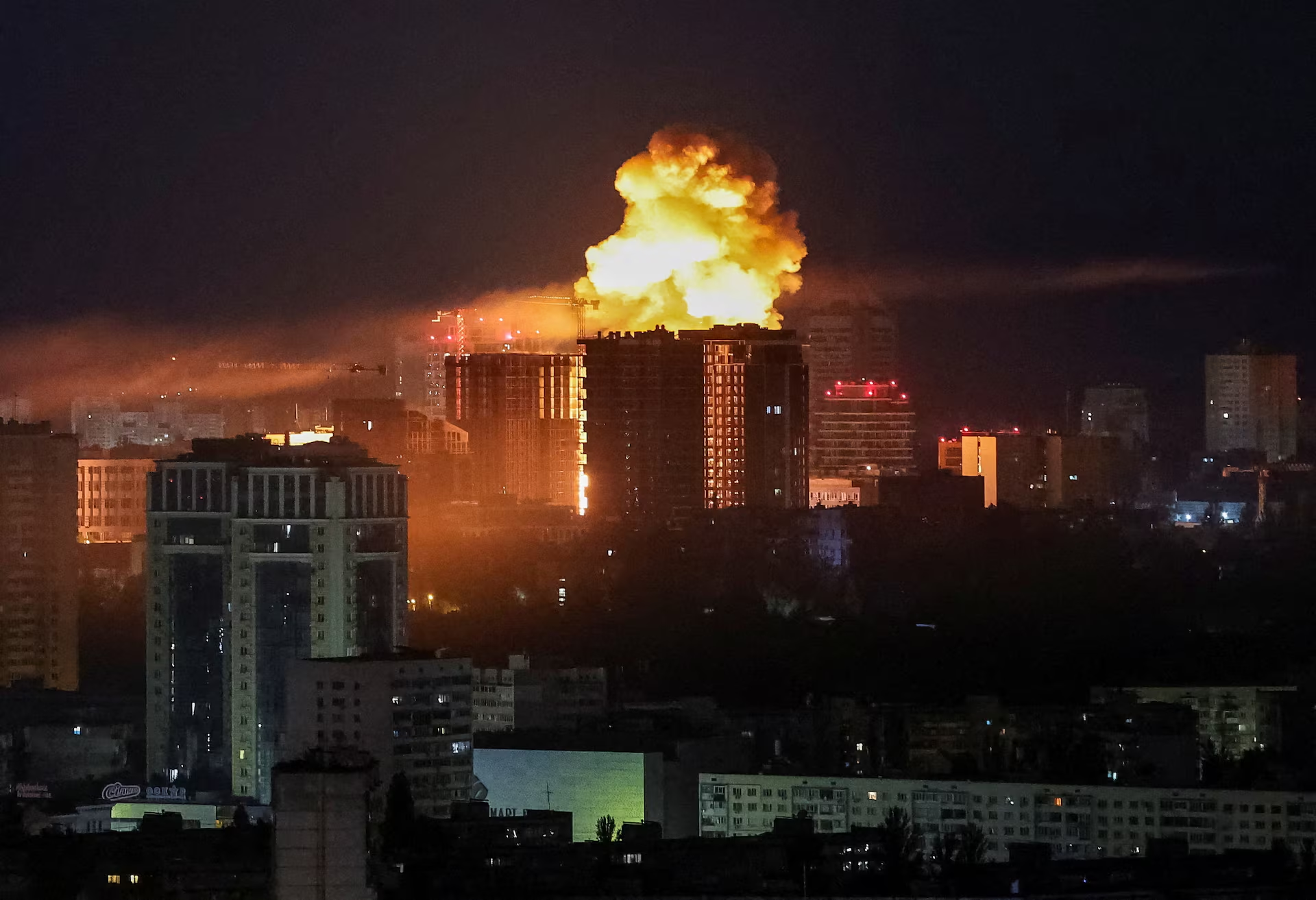
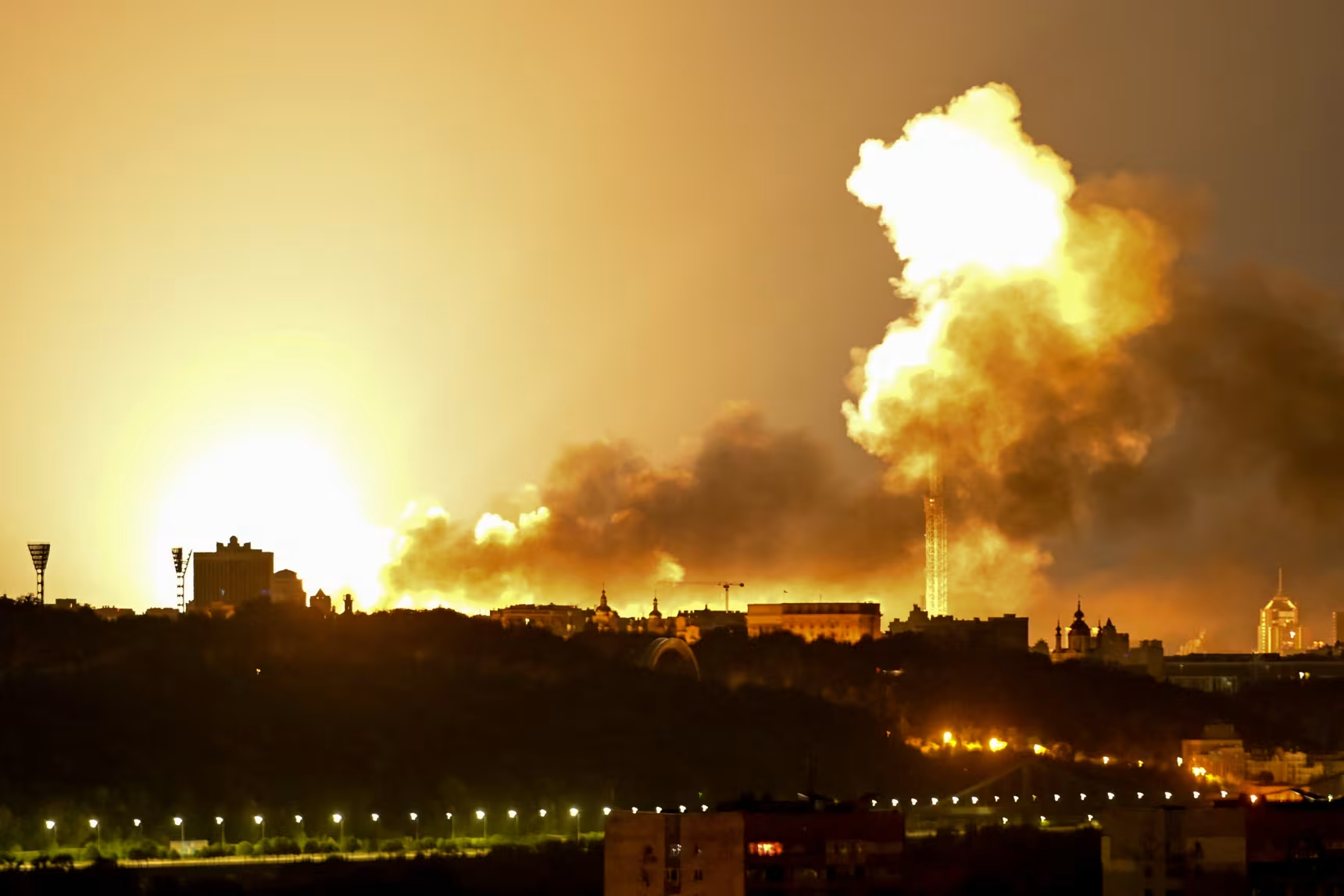
Russia launched one of the most ferocious aerial assaults of the war on Tuesday, firing 73 missiles including eight Zircon hypersonic weapons and 656 drones at Ukrainian cities overnight and into the morning, killing at least 18 people including children buried under apartment rubble, wounding more than 100 others, and cutting electricity to 140,000 residents in Kyiv as Ukraine’s depleted air defenses struggled to absorb the scale of the attack.
The worst single toll came from Dnipro, where at least 12 people were killed, among them a 3-year-old child and a mother and her 8-year-old son whose bodies were pulled from the ruins of collapsed apartment buildings by emergency crews working through the rubble. A rescuer also died in what appeared to be a deliberate double-tap strike, where Russian forces hit a site a second time to kill first responders. Approximately 50 buildings were damaged in Dnipro alone.
At least six people were killed in Kyiv, where a suspected missile strike caused a partial collapse of a 24-story apartment building, leaving people trapped. Sixty-four people were wounded in the capital, including three children. Poland scrambled military jets to secure its airspace as the attack unfolded across its neighbor’s territory.
The Kremlin had warned last week it intended systematic strikes on Kyiv in retaliation for a Ukrainian drone attack on a dormitory in the Russian-controlled Luhansk region on May 22 that Moscow said killed 21 people. Ukraine denied striking civilians, saying it had targeted an elite drone command unit in the area. Russian President Vladimir Putin said Monday that Ukraine had “opened a new page” in the war with the Starobilsk attack and told officials the Kyiv leadership had committed serious crimes against children.
Russia’s Defense Ministry confirmed the assault Tuesday, describing it as a massive strike with high-precision long-range weapons on military-industrial facilities across seven regions. Moscow maintained it does not target civilians, a claim contradicted by years of attacks that have leveled neighborhoods, killed thousands of civilians, and destroyed hospitals, schools, and apartment buildings across Ukraine.
What Hit and Where
Ukraine’s air force said defenses shot down or neutralized 40 missiles and 602 drones. Thirty ballistic missiles, three cruise missiles, and 33 additional drones struck confirmed locations across at least 38 sites. The eight Zircon hypersonic missiles Russia deployed in Tuesday’s attack would represent the largest single use of that weapon system in the four-plus years of war. The Zircon travels at nine times the speed of sound and has a range of approximately 1,000 kilometers, making it extremely difficult to intercept with existing air defense systems.
Hits were recorded in Kyiv, Dnipro, Kharkiv, Poltava, Zaporizhzhia, Khmelnytsk, and Sumy. In Kharkiv, at least 14 people were wounded, residential homes, garages, and vehicles were damaged, and people were trapped under the rubble of a four-story apartment block. Debris from drones that were shot down fell across 15 additional locations, generating secondary damage in areas that the primary defense intercepts were meant to protect.
Power company DTEK told Reuters that electricity was cut to 140,000 Kyiv residents. Utility workers restored power to 110,000 by mid-morning. Two of the company’s engineers were injured during the outage response.
Ukrainian military strikes simultaneously hit the Ilsky oil refinery in Russia’s Krasnodar region. The facility, which has a capacity of 138,000 barrels per day and has been struck multiple times this year, caught fire. Ukrainian military officials confirmed they had targeted the refinery, describing it as producing fuel for Russian forces fighting in Ukraine.
The People Inside the Buildings
Thousands of Kyiv residents flooded the city’s subway system during the overnight attack, some carrying mattresses and bags of belongings, sheltering on platforms as defense systems fired above ground. The sound of intercepting explosions reverberated across the city through the night and into the early morning hours.
Iryna Salikova, 37, spent the night in a bathtub with her 3-year-old daughter as windows shattered and a cobblestone flew into her child’s bedroom. “Thank God we’re alive. Today we’re alive, today we’re lucky,” she said.
Olena Dniprovska, 65, and her husband Yevhen, 64, were wounded in their Kyiv apartment. A blast blew the door off and sent glass and debris across the hallway where she had sought safety. “I went out into the corridor with the phone, and before I understood what happened, everything fell on my head, the glass, and the door blew off,” she said, dried blood on her face and a bandage around her chin. “I ran out into the front door and started calling my husband from the room, but he was also blown out by the blast wave.”
Her apartment was destroyed completely. “Now I have nowhere to live, the apartment is completely destroyed, no doors, no windows, no balcony. You can step straight from the room out onto the street,” she said.
Zelenskyy’s Appeal and the Air Defense Crisis
Ukrainian President Volodymyr Zelenskyy called Tuesday’s assault a transparent statement of Russian intent. “A large-scale attack and a completely transparent statement from Russia: if Ukraine is not protected from ballistic and other missile strikes, these strikes will continue,” Zelenskyy said in a post on X.
He appealed directly to Washington for Patriot interceptor missiles, repeating a request he has made repeatedly as Ukraine’s air defense stocks have been depleted. “Assistance from the United States in supplying missiles for Patriot systems is absolutely necessary,” he said, adding that Europe needed its own anti-ballistic defense capability to end the war.
In a letter to Trump and Congress last week, Zelenskyy said ballistic missiles remained Russia’s last major battlefield advantage and urged immediate resupply. Ukraine has been short of interceptors throughout the four-year conflict, and the Iran war has created competing demands on American Patriot missile stocks globally, reducing what can flow to Kyiv.
Russia’s strategy, Western analysts have noted, exploits this shortage deliberately. By saturating Ukrainian air defenses with simultaneous waves of drones and ballistic missiles, Russia forces Ukraine to expend limited interceptors against drones, leaving fewer available for the harder-to-intercept ballistic weapons that cause the most structural damage.
A War Without Diplomatic Progress
The massive attack landed against a diplomatic backdrop that has produced no movement in weeks. U.S.-led peace efforts have stalled as the Trump administration has focused on the Iran war and Middle East negotiations. Zelenskyy accepted an unconditional ceasefire proposal from Trump. Putin refused.
Western officials and analysts say Ukrainian drone strikes have pinned down Russian troops on the front line, disrupted supply chains in Russian-occupied territory, and hit oil facilities deep inside Russia that generate revenue for the war effort. That pressure has made the conflict more visible to ordinary Russians and increased domestic pressure on Putin, even as Russia maintains territorial control over approximately one-fifth of Ukraine including the Donbas, Kherson, Zaporizhzhia, and Crimea.
Putin’s escalation of the air campaign, including the third Oreshnik hypersonic missile strike earlier this month and Tuesday’s mass attack, reflects a strategy of applying maximum civilian pressure to extract political concessions that the battlefield has not delivered.
Hypersonics and the Erosion of Ukraine’s Shield
Tuesday’s deployment of eight Zircon hypersonic missiles, if confirmed as the largest single use of that weapon in the war, is a data point that Western defense planners will examine carefully. Hypersonic weapons are designed specifically to defeat air defense systems that can handle conventional ballistic missiles. Their speed and maneuverability reduce the time available for intercept to seconds, and existing Patriot batteries have limited effectiveness against them at the extreme velocities these weapons reach in terminal flight.
Russia appears to be probing the ceiling of Ukraine’s defenses systematically. The Oreshnik has now been used three times. Zircon use is increasing. Each deployment tests which combinations of weapon types and simultaneous launch volumes can exhaust Ukraine’s intercept capacity within a single attack window, allowing more warheads to reach populated areas.
The civilian impact of that strategy is visible in Tuesday’s body count: 18 dead, more than 100 wounded, a 3-year-old child recovered from rubble, a mother and her 8-year-old son pulled from the same collapse. These are not the incidental casualties of strikes aimed at military targets. They are the predictable consequence of ballistic missiles fired at a city whose air defenses are running out of interceptors.
Zelenskyy’s appeal is specific and urgent because the threat is specific and urgent. Patriot interceptor missiles are not a general request for support. They are the technical answer to the particular weapons Russia is now deploying in the largest numbers the war has seen. Whether Washington provides them in the quantities Kyiv needs, or continues to prioritize Middle East demands on a finite supply, will determine whether the next mass attack produces the same death toll or a worse one.
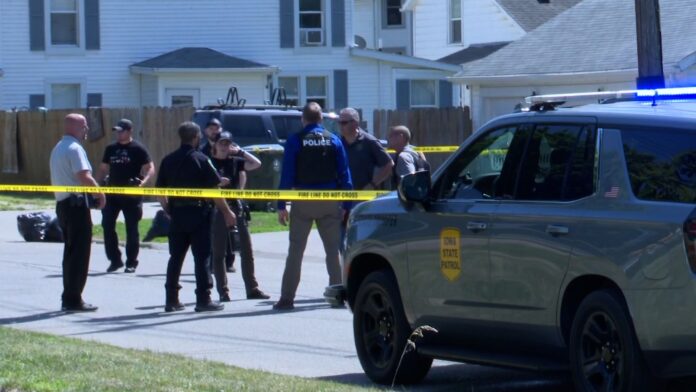
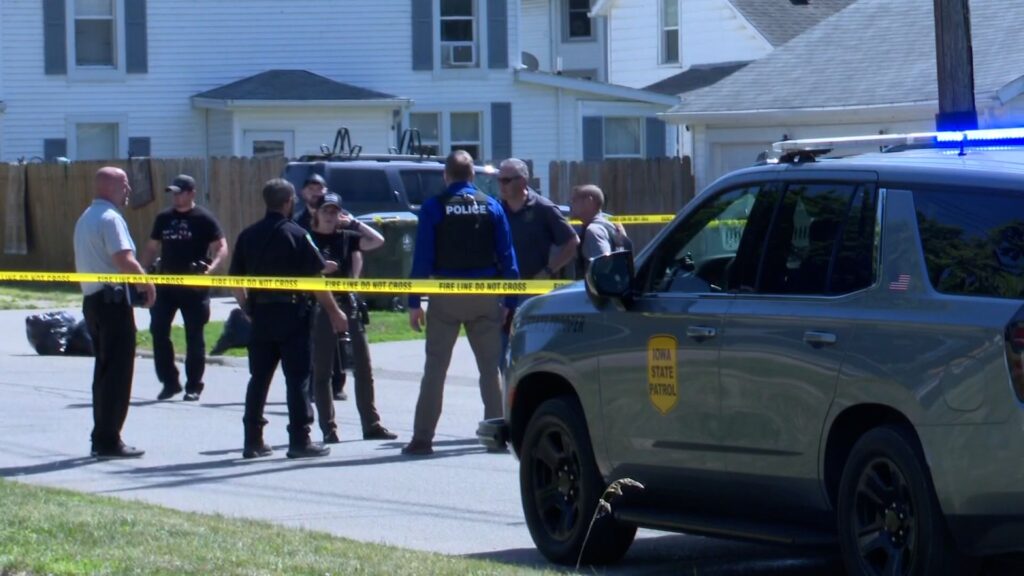
Seven people, including the suspected gunman, are dead after a series of shootings across multiple locations in southeastern Iowa, in what authorities describe as a domestic violence incident involving members of the same family.
Police in Muscatine said officers were called shortly after noon Monday to a report of gunfire at a residence. When first responders entered the home, they found four individuals with fatal gunshot wounds. All were pronounced dead at the scene.
Investigators later identified the suspected shooter as 52 year old Ryan Willis McFarland of Muscatine. Authorities said he had left the initial location before officers arrived.
Police located McFarland a short time later on a nearby trail. During an encounter with officers, he suffered a self inflicted gunshot wound. Emergency personnel attempted life saving measures, but he was pronounced dead at the scene, Police Chief Anthony Kies said during a briefing.
As detectives continued their investigation, they uncovered evidence pointing to additional crime scenes. Officers subsequently discovered two more adult male victims who had been fatally shot at separate locations, including a residence and a business within the city.
Authorities said preliminary findings indicate all six victims were relatives of the suspect. Officials have not released their names pending notification of next of kin.
“This act of violence has deeply shaken our community,” Kies said, describing the incident as an “act of evil.”
Local institutions have also begun to assess the impact. The Muscatine Community School District said two of the victims were students and two others were district employees, underscoring the far reaching consequences of the tragedy.
Law enforcement officials confirmed that McFarland had a prior criminal record but declined to provide details during the early stages of the investigation. Public records cited in media reports indicate past convictions, including a case involving child endangerment resulting in death and other felony offenses.
Authorities continue to process multiple scenes and are urging anyone with information to contact investigators as the case remains active.
Coverage from The Associated Press, NBC News, and Euronews confirms that the shootings unfolded across several locations and were likely driven by a domestic dispute. Officials said no ongoing threat to the public has been identified.
The Muscatine killings reflect a pattern seen in some of the most severe cases of domestic violence, where disputes within families escalate into multiple fatal incidents across different locations. Experts note that such cases often involve prior warning signs, including a history of violence or criminal behavior, though those indicators do not always lead to intervention before tragedy occurs.
The discovery of victims at multiple sites suggests a level of planning and mobility that can complicate response efforts. In incidents like this, the time between initial emergency calls and the identification of additional victims can be critical, as authorities work to determine whether the threat is contained.
The impact on the local community is likely to be long lasting. With victims tied to schools and workplaces, the ripple effects extend beyond immediate families to classmates, colleagues, and first responders who encountered the scene. Communities often face a prolonged period of recovery that includes counseling services and public safety reviews.
The case also highlights ongoing challenges in addressing domestic violence in the United States. While law enforcement agencies respond to immediate threats, prevention efforts often depend on earlier reporting, intervention, and access to support systems for families in crisis.
As investigators continue to piece together the timeline and motive, the focus is expected to shift toward understanding whether warning signs were missed and how similar tragedies might be prevented in the future.
Hundreds of bandits on motorcycles rode into the Dangulbi community in Sokoto State on Sunday morning during Eid-el-Kabir celebrations, opening fire indiscriminately, killing 17 people including visitors who had traveled for the holiday, looting approximately 20 shops, and holding the community under siege for nearly nine hours before withdrawing as darkness fell.
The assault on Dangulbi in Tureta Local Government Area began between 10 a.m. and 11 a.m., residents said. The attackers came armed and numerous, firing as soon as they entered the community and scattering residents into surrounding forests. Among the dead were people identified as Munde, Nagoma, Abdullahi, Danbala, Munden Chana, Muhammadu Dan Amo, Hassan, Abubakar Danbaba, and Yidi Bafillace. Five of the victims were visitors from Adarawa in Gummi Local Government Area of Zamfara State. Two others had traveled from Gidan Gambo in Shagari Local Government Area specifically to celebrate the Sallah holiday with family.
The bandits did not leave after killing. They remained in Dangulbi until approximately 7 p.m., preventing survivors from retrieving or burying their dead. Funeral prayers were not held until after 9:30 p.m. when the attackers finally withdrew.
“They started shooting as soon as they arrived,” a resident who requested anonymity for security reasons told Punch Nigeria. “People ran in different directions in search of safety, but 17 people lost their lives during the attack.”
Local sources said the attackers appeared to have traveled from Bagega village in Zamfara State through Barayar Zaki in Bukkuyum Local Government Area, spending the night in Gizazza village before the Sunday morning raid, suggesting advance planning and deliberate movement rather than a random opportunistic strike.
After Dangulbi, the bandits moved through nearby communities including Kukoki and Birnin Magaji, where residents said additional people were abducted. Those abductees reportedly escaped later that night when a heavy rainstorm created confusion among their captors.
Mass displacement followed. Many residents of Dangulbi and surrounding communities fled to safer areas across Tureta, Shagari, Gummi, and Bukkuyum Local Government Areas. Sokoto State Police Command spokesperson DSP Ahmed Rufai confirmed the incident to Punch Nigeria and said security operatives were working to restore order. He offered no further details.
Plateau State: Eight Dead at a Birthday Party
The same Sunday night that Sokoto buried its dead, gunmen opened fire on a birthday celebration in Gwon-Ajang village in Foron District of Barkin Ladi Local Government Area in Plateau State, killing eight people and wounding 10 more.
The attack began at approximately 10 p.m. when the assailants arrived at the gathering and started shooting without warning. Resident Bishop Iliya, who witnessed the aftermath, described the scene to Premium Times. “The people were gathered for a birthday celebration when the gunmen arrived and started shooting at everything in sight. It is a painful and unfortunate situation for our community,” Iliya said. Those wounded were hospitalized. Security personnel were deployed to the area afterward.
The Barkin Ladi attack was not Plateau’s first this month. On May 11, two young men — Peter Dung, 22, and Amos Danbwarang, 19 — were killed in an ambush in Kyeng village in the Bachi District of Riyom Local Government Area. On May 9, at least 12 people including pregnant women and children were killed in a midnight assault on Ngbra-Zongo village in Bassa Local Government Area. Amnesty International condemned that attack, saying entire families were struck inside their homes and describing it as evidence of the Nigerian government’s failure to address persistent insecurity in Plateau.
On May 5, gunmen attacked Nding Susut community in Barkin Ladi, killing five people including four women and a nine-year-old boy.
Governor Caleb Mutfwang has visited affected communities and reiterated a ban on night mining and night grazing as part of a broader security framework. He has assured residents that perpetrators will be identified and brought to justice. The violence has continued.
Kogi: One Killed, More Than 15 Abducted in Pre-Dawn Attack
In Kogi State, suspected gunmen struck Ayegunle Bunu in Kabba-Bunu Local Government Area at approximately 2:25 a.m. Monday, killing one person, injuring another, and abducting more than 15 people before fleeing with their captives to an unknown location.
The Egbe Mekun Parrot, a community newspaper covering Kogi West, confirmed the attack and said the assailants operated for several minutes before withdrawing. Among those taken were a man and a woman whose identities had not been confirmed. The remaining victims were passengers aboard a commercial bus that the gunmen intercepted as it passed through the community.
The attack in Ayegunle Bunu came less than 24 hours after the Kogi State Government suspended the Echane Festival in Ebiraland, citing credible security intelligence that activities connected to the festival could threaten public order. State Commissioner for Information Kingsley Fanwo said Governor Ahmed Ododo directed the suspension as a preventive measure and warned that anyone organizing or participating in festival activities would face legal consequences.
Security agencies in Kogi had been conducting multiple operations in recent weeks. The Nigerian Army’s 12 Brigade rescued kidnapped victims from the Daarul-Kitab Islamic Orphanage in Lokoja following Operation Tiger Paw II. Troops also ambushed suspected terrorists in the Adankolo Forest Reserve in Lokoja, killing one suspect and recovering weapons, ammunition, and communication devices. A suspected terrorist logistics courier was separately intercepted transporting 500 rounds of ammunition concealed in a bag of maize from Obajana toward Niger State.
On Tuesday, the Kogi State Police Command confirmed two people were killed in renewed hostilities between the Itale and Ishi communities in Ibaji Local Government Area, with several homes and food stores destroyed.
No official statement on the Ayegunle Bunu attack had been issued as of filing time. Calls and text messages to Kogi Police Command spokesperson Saliu Afusat were not returned.
Violence on Eid, Insecurity Without Borders
Three states, three attacks, one weekend. The clustering of violence during the Eid-el-Kabir holiday was not incidental. Armed groups across Nigeria’s northwest and northcentral zones have demonstrated across multiple years that religious and public holidays represent operational opportunities rather than pauses. Celebrations concentrate people in predictable places at predictable times, often in communities where security presence is thinnest and where the social disruption of an attack, grieving families, mass displacement, interrupted farming, shuttered shops, is maximized.
The Sokoto attack’s nine-hour occupation of Dangulbi captures something about the current security environment that casualty figures alone do not. Bandits who kill 17 people and then remain in a community for nearly nine hours, preventing burial of the dead, looting shops at leisure, and moving through neighboring villages afterward are not constrained by any serious risk of military interception. They planned the movement across state lines. They stopped overnight. They attacked at midday. They left when they were finished.
The Plateau violence follows a pattern that has persisted across that state’s volatile Barkin Ladi, Bassa, Riyom, and Mangu districts for years, with attacks on farming communities, birthday gatherings, and sleeping families occurring with sufficient frequency that Amnesty International has framed them as evidence of systemic government failure rather than isolated criminal incidents.
Residents in all three states are asking the same question in different local dialects: when does help arrive before people are killed rather than after? The answer from security agencies across all three states this weekend was the same: after. The deployments come after the shooting stops. The confirmations come after the bodies are counted. The investigations begin after the attackers have returned to whichever forest or border crossing sheltered their approach.
The rainy season that residents in Sokoto mentioned with specific dread is approaching. Farming communities that are simultaneously managing grief, displacement, and fear of returning to their own land will not plant what needs to be planted. The security crisis in Nigeria’s northwest and northcentral zones is also a food security crisis, a displacement crisis, and an economic crisis, all of them feeding each other in the same communities that the state has repeatedly failed to protect.
Lebanon announced a partial ceasefire between Israel and Hezbollah on Monday that would limit Israeli strikes on Beirut and its southern suburbs in exchange for Hezbollah halting rocket attacks on Israel, but the agreement left the fighting in southern Lebanon entirely intact and did almost nothing to calm a situation that was already escalating by the time the announcement was made.
President Donald Trump declared the arrangement on social media after a call with Israeli Prime Minister Benjamin Netanyahu, saying Hezbollah had agreed through intermediaries that all shooting would stop and that Israel would not attack the group’s territory if the group did not attack Israel. He said Israeli troops heading toward Beirut had been turned back.
Netanyahu confirmed the conversation but offered a substantially different framing. He said he told Trump that Israel would strike Beirut if Hezbollah attacks do not stop, and that Israeli forces would continue operations in southern Lebanon as planned.
There was no direct statement from Hezbollah.
Within minutes of Trump’s announcement, the Israeli military detected missile launches from Lebanon and issued cover warnings to residents in parts of northern Israel. Israeli airstrikes overnight killed six people in southern Lebanon. A strike Monday afternoon hit the Jabal Amel Hospital in the port city of Tyre, blowing out windows and sending women and children fleeing through damaged corridors, video released by Lebanon’s Health Ministry showed.
In Beirut, Israeli military Arabic-language spokesman posted on X that residents of the Dahiyeh neighborhood and southern suburbs should evacuate, warning that continued Hezbollah attacks on Israeli communities would trigger strikes on those areas. Large numbers of people were seen abandoning their homes and jamming roads out of the area within hours of the warning.
Mohammed Farhat, 23, fled Haret Hreik on a motorcycle with his mother, heading to relatives elsewhere in the city. “We are worried. I am used to it but left for my parents,” he said.
What the Agreement Actually Does
According to a statement from Lebanon’s embassy in Washington, Lebanese authorities secured Hezbollah’s approval of a proposal by Secretary of State Marco Rubio under which Israel would refrain from striking Beirut’s southern suburbs and Hezbollah would halt attacks on northern Israel. The agreement does not cover southern Lebanon, where Israeli ground forces have pushed to their deepest position inside Lebanese territory in more than 25 years, advancing toward the Zaharani River.
Trump described the arrangement as a meaningful de-escalation. Netanyahu described it as a conditional warning. Hezbollah lawmaker Hassan Fadlallah said the group would support a full ceasefire across all of Lebanon as a precursor to Israeli troop withdrawal but did not confirm whether the group would stop attacks on Israeli territory.
Lebanon said it would seek to expand the ceasefire through direct talks with Israel in Washington on Tuesday and Wednesday. Those talks, the first direct Israel-Lebanon diplomatic contact in more than three decades between two countries that have no formal diplomatic relations, began in April in Washington. Beirut remains committed to the negotiating track despite the escalating violence, a Lebanese diplomatic official told the Associated Press anonymously in line with regulations.
Iran Threatens to Walk Away
The Lebanon escalation arrived at the worst possible moment for negotiations over the broader Iran war. Iranian state media said Monday that Tehran was halting indirect peace talks with the United States and might terminate the ceasefire that has largely held since early April, citing the fighting in Lebanon as justification.
Iranian Foreign Minister Abbas Araghchi made the Iranian position explicit. “The ceasefire between Iran and the U.S. is unequivocally a ceasefire on all fronts, including in Lebanon,” Araghchi wrote on X. “Its violation on one front is a violation of the ceasefire on all fronts.”
Trump, asked by an NBC reporter whether he had heard from Iran, said he had not. In a CNBC interview Monday, he said the peace talks had become tedious and that he was indifferent to their status. “I really don’t care, I couldn’t care less,” Trump said.
There was no direct official confirmation from Iranian authorities that talks had been suspended, and the mixed signals from Tehran and Washington left the actual state of the negotiations genuinely unclear. The Iran-U.S. ceasefire has held in a technical sense since early April but has been punctuated by multiple mutual strikes in recent weeks as both sides have accused the other of violations.
Adding a sharper edge to Monday’s tensions, the head of Iran’s Revolutionary Guards Quds Force, Esmaeil Qaani, threatened to expand Iran’s blockade of the Strait of Hormuz to the Bab El Mandeb Strait at the mouth of the Red Sea, an additional chokepoint for global shipping whose closure would compound already severe disruptions to the oil and gas trade. Oil prices rose 4 percent Monday on the heightened tensions.
The Broader War’s Unresolved Link to Lebanon
The Israel-Hezbollah conflict erupted March 2 when Hezbollah fired rockets into northern Israel in solidarity with Iran, two days after the U.S. and Israeli strikes on Iran began. Since then, it has been entangled with the broader Iran war even as the United States has insisted the two conflicts are separate and must be resolved independently.
Iran has consistently made a halt to Israeli operations in Lebanon a non-negotiable condition of any peace agreement with the United States. The U.S. has consistently resisted that linkage. The emerging framework for an Iran deal contains language calling for a ceasefire between the U.S. and its allies against Iran and its proxies, while preserving Israel’s right to act in self-defense. Israel has used that self-defense language to justify continuing its Lebanon operations throughout the ceasefire period.
At the United Nations, Assistant Secretary-General Martha Pobee told an emergency Security Council meeting Monday that Israel’s military advance into Lebanon violates Lebanese territorial integrity and contravenes the 2006 Security Council resolution requiring Israel to withdraw south of the U.N.-drawn border. She also said Hezbollah remained in violation of the same resolution’s requirement that the group disarm.
U.S. Ambassador Mike Waltz said at the Security Council that de-escalation would come quickly “if Hezbollah immediately ceases its attacks, as apparently it’s promised, and the government of Lebanon asserts its full sovereignty, rebuilds, and brings its people home.”
Saudi Arabia condemned Israeli military operations in Lebanon in a statement, saying it categorically rejected Israel’s advance into Lebanese territory and called on the international community to prevent Israel from pushing further in.
The Human Toll
The latest round of fighting between Israel and Hezbollah has killed 3,433 people in Lebanon and displaced more than 1 million, according to figures cited by the Associated Press. Israel’s military said a soldier was killed in southern Lebanon overnight in a Hezbollah drone strike. Netanyahu’s office said at least 26 Israeli soldiers and one defense contractor had been killed in or near southern Lebanon, with two Israeli civilians also killed in the north.
Hezbollah’s use of fiber-optic guided drones has proven particularly lethal for Israeli forces, which have struggled to develop effective countermeasures against a guidance technology that operates without the radio signals that conventional drone jamming systems target.
Lebanese parliament speaker Nabih Berri, a Hezbollah ally, said Sunday he could guarantee the group’s “full, comprehensive and immediate commitment to a ceasefire” but posed the harder question directly: “But who will force Israel to stop its aggression?”
Lebanese President Joseph Aoun reaffirmed his government’s commitment to negotiations Monday, saying talks were “safer” than continued war.
A Ceasefire That Covers Half the Conflict
The partial ceasefire announced Monday is an agreement whose most notable characteristic is the significant portion of the fighting it does not cover. Beirut’s suburbs may be spared for now, assuming Hezbollah holds to what Trump described as its commitment. But southern Lebanon, where Israeli ground forces have made their deepest incursion in 25 years and where the bulk of the killing is occurring, remains a fully active combat zone. The agreement pauses the most visible dimension of the conflict, the risk of Beirut being struck, while the underlying military campaign continues unaffected.
That structure reflects the incompatible positions the parties actually hold. Israel wants to continue its southern Lebanon operations until Hezbollah is militarily degraded below the threshold it considers a security threat. Hezbollah wants a full ceasefire that requires Israeli withdrawal as a precondition for any further negotiation. Lebanon wants exactly what it said: to expand Monday’s partial arrangement into something comprehensive through Washington talks. Iran wants Lebanon included in any Iran-U.S. deal as a non-negotiable condition.
None of these positions have moved toward each other. Monday’s arrangement is the smallest possible agreement that all parties could claim some version of without conceding anything they were not already prepared to give up. Whether the Washington talks Tuesday and Wednesday produce something more substantive will determine whether the partial ceasefire becomes the foundation for a broader settlement or simply the framework that describes what was already happening while the bombs keep falling in the south.
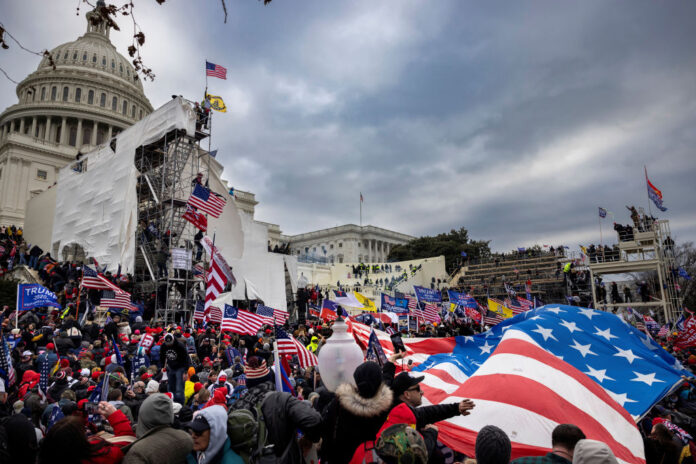
WASHINGTON, DC - JANUARY 6: Trump supporters clash with police and security forces as people try to storm the US Capitol on January 6, 2021 in Washington, DC. Demonstrators breeched security and entered the Capitol as Congress debated the 2020 presidential election Electoral Vote Certification. (photo by Brent Stirton/Getty Images)
President Donald Trump is reassessing plans for a $1.8 billion compensation fund as the Justice Department announced a temporary halt to its rollout following a federal court order and growing resistance from Republican lawmakers.
A source familiar with the president’s thinking said Monday that Trump is reconsidering whether to proceed with the initiative, which was designed to compensate individuals who claim they were targeted by federal authorities. The pause comes after a judge in Virginia intervened, blocking implementation of the program pending further legal review.
The Justice Department said it disagrees with the court’s decision but will comply with the ruling while legal proceedings continue. A hearing is scheduled for June 12 to determine whether the pause should remain in place.
The proposed fund, valued at approximately $1.776 billion and described by administration officials as the “Anti Weaponization Fund,” emerged from a legal settlement tied to Trump’s lawsuit against the Internal Revenue Service over the disclosure of his tax records. Officials argued the fund would provide relief to individuals affected by what they characterize as politically motivated enforcement actions.
However, the proposal has drawn sharp criticism on Capitol Hill, including from members of Trump’s own party. Several Republican senators have raised concerns about the lack of oversight governing how the funds would be distributed and the possibility that individuals involved in the January 6, 2021, attack on the U.S. Capitol could qualify for payments.
The backlash intensified during a recent closed door meeting between senators and acting Attorney General Todd Blanche. Senator Ted Cruz described the session as one of the most contentious he has witnessed during his time in office.
The controversy has complicated negotiations over a broader spending package tied to immigration enforcement. Lawmakers returning to Washington after the Memorial Day recess signaled that progress on the funding bill could stall unless the administration clarifies or abandons the fund.
Senator Jim Lankford said lawmakers are seeking a clear commitment from the administration. Senate Majority Leader John Thune also indicated that the most effective path forward would be for the White House to withdraw the proposal.
Despite the Justice Department’s decision to pause implementation, some lawmakers remain uncertain whether the move represents a temporary delay or a more permanent shift in policy.
Additional legal scrutiny is unfolding in Florida, where a federal judge overseeing Trump’s case against the IRS has ordered his legal team to respond to allegations that the settlement arrangement was designed to avoid judicial review. The court has given attorneys until June 12 to address claims that the agreement may have undermined proper legal oversight.
Under the settlement terms, the IRS agreed to drop ongoing and previous inquiries into Trump, his family, and associates related to tax matters. It remains unclear whether the current pause on the fund could affect those provisions.
Reuters, citing multiple sources familiar with internal discussions, indicated that the plan has effectively been put on hold following strong opposition from Republican lawmakers. The dispute highlights a rare moment of resistance within the party, as some members push back against a proposal they view as politically and legally risky.
The controversy surrounding the fund underscores a growing tension between the executive branch and congressional Republicans over fiscal oversight and political accountability. While the administration framed the initiative as a corrective measure, critics within the party have questioned both its scope and its potential consequences.
The legal challenges also reflect broader concerns about the boundaries of executive authority in managing large financial settlements. Courts are increasingly being asked to examine whether such arrangements meet statutory requirements and adhere to established oversight mechanisms.
Politically, the episode may signal a shift in how some Republican lawmakers engage with the White House. The willingness to challenge a high profile proposal suggests that internal party dynamics are evolving, particularly as lawmakers balance loyalty with concerns about electoral and legal risks.
At the same time, the outcome of the pending court decisions could shape future administrations’ ability to structure similar funds. If the judiciary imposes stricter limits, it may set a precedent affecting how government settlements are negotiated and implemented.
The situation remains fluid, with key questions unresolved about whether the fund will be revised, abandoned, or revived in another form. For now, both legal scrutiny and political pressure appear to have forced a pause on a proposal that quickly became one of the administration’s most contentious initiatives.
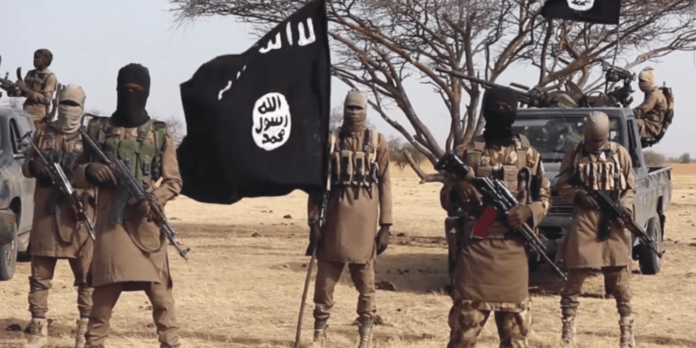
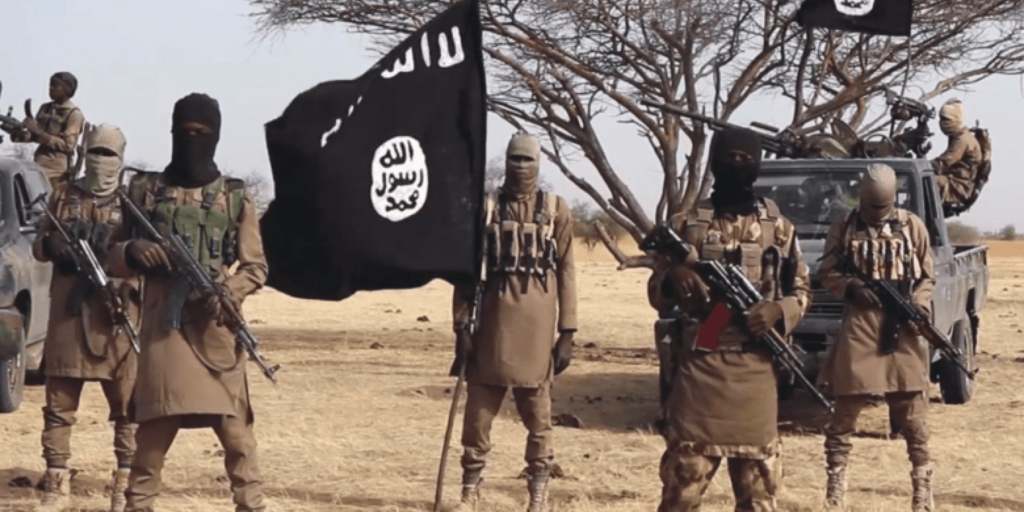
The families of more than 100 women and children held captive by Boko Haram militants since a deadly raid on a Kwara State community months ago have received a chilling message from their captors: the insurgents are planning a graduation ceremony to mark the completion of Quranic studies they say the abductees have completed while in captivity, and they intend to present the cost of that ceremony as a future ransom demand.
Relatives of the abductees told Sahara Reporters that the militants disclosed the planned ceremony during recent phone calls in which family members reached out to check on the condition of their loved ones. The terrorists, according to the families, said they had spent months teaching the captive women and children Islamic knowledge, religious etiquette, and Quranic memorization, and that many were now prepared to graduate.
“They told us that many of our women and children have now memorised portions of the Quran and undergone Islamic teachings,” a family source told Sahara Reporters. “They said they are preparing a graduation ceremony for them. They claimed they have invested resources, food and time into teaching them and that they want to celebrate their achievements.”
The insurgents attached a financial warning to the announcement. According to the families, the militants said every expense incurred for the graduation ceremony would be added to whatever demands they place on the government and families when negotiations eventually begin.
“They said all the money they are going to spend on the graduation will not be wasted,” the source said. “They specifically warned that when the time comes for negotiations, the government and families will pay for everything they spent on the ceremony.”
The Attack That Started It
The abductees were seized during a devastating raid on Woro community in Kaiama Local Government Area of Kwara State in February. More than 200 residents were killed in that assault, including two wives of the Emir of Woro, some of his children, the community’s chief imam, a school principal, a headmistress, and multiple students. Attackers set parts of the Emir’s palace ablaze and forced 176 women and children into the surrounding forest. The scale and brutality of the raid drew national attention and prompted protests from community members demanding government intervention.
Months later, the abductees remain in captivity. No rescue operation has been publicly confirmed. Government authorities have maintained what families describe as prolonged silence on the matter.
Sahara Reporters had previously reported on a video released by the terrorists in which dozens of the abductees appeared on camera and appealed to the Kwara State Government and the public for help. One of the women in the footage described their conditions directly. “Please, we’re begging you. They teach us Islamic etiquette. What we don’t know at home, we have known them. We did not know so many things, but they taught us,” she said. She added that while captives were being fed, many were ill and that pregnant women and children were among those still being held.
The Human Cost of Prolonged Captivity
Family members described the graduation announcement as emotionally devastating, a disclosure that brought fear and grief simultaneously.
“We don’t know whether to cry or to be afraid,” one relative said. “These are people who should be reunited with their families, yet the terrorists are talking about graduating them as if they belong to them. Every day they remain there, we fear they are being indoctrinated and separated further from their families.”
A community leader familiar with efforts to secure the abductees’ release said the graduation ceremony plans demonstrated how completely the situation had slipped beyond official control.
“It is painful that these women and children have spent so much time with the terrorists that they are now talking about graduation ceremonies,” the source said. “This shows how prolonged this tragedy has become and how urgently government intervention is needed.”
Earlier in the year, families also expressed alarm that some pregnant women among the captives may have given birth in captivity or that certain victims may have died without any word reaching their relatives. Young people in Kaiama staged public protests demanding urgent action from state and federal authorities and calling for the safe return of those still held.
Kogi: 23 Rescued After Highway Ambush
In a related security development in neighboring Kogi State, troops of the 12 Brigade of the Nigerian Army rescued 23 kidnap victims Monday after armed bandits ambushed vehicles along the Ayegunle-Bunu road in Kabba-Bunu Local Government Area.
The attack occurred in the early hours of Monday when assailants barricaded the road and abducted an unspecified number of passengers from vehicles that had been stopped. When soldiers from the brigade’s Kabba deployment responded to a distress call, the attackers had already fled. Troops arriving at the scene found two dead bodies, five injured victims, and two Toyota commercial buses and a heavy truck abandoned by the roadside.
Soldiers launched pursuit operations along the kidnappers’ withdrawal routes and, under sustained pressure, the attackers abandoned 23 passengers who were then recovered by the troops. The five injured victims were transported to St. Joseph Hospital in Kabba for medical treatment. An operational report made available to the News Agency of Nigeria confirmed that efforts to track the remaining kidnappers and recover any additional victims were still ongoing.
Two Crises, One Pattern
The Kwara abduction and the Kogi highway ambush unfolded in neighboring states on the same week and reflect the same underlying reality: armed groups across Nigeria’s northcentral region are operating with a level of freedom that the state’s security architecture has not been able to meaningfully constrain.
The Boko Haram captivity situation in Kwara carries a dimension that goes beyond the immediate humanitarian emergency. When militants hold 176 people for months, teach them religious doctrine, and announce graduation ceremonies while simultaneously warning that the costs will be added to future ransom demands, they are not simply engaging in criminal kidnapping. They are demonstrating organizational permanence, ideological commitment, and a confidence that no intervention will disrupt their operations on any near-term timeline. The graduation ceremony framing is not incidental. It is a message to the government, to the families, and to the communities that the militants are in control of the timeline and the terms.
The 23 people rescued in Kogi represent a genuine operational success for the 12 Brigade, and the swift response to a distress call is exactly what security forces should be doing. But the attack itself, a road barricade and mass abduction in a busy local government area in broad operational terms, reflects the same pattern of criminal impunity that makes northern communities feel perpetually exposed.
Both situations demand what neither is currently receiving at sufficient scale: sustained, coordinated, intelligence-driven operations that reduce armed groups’ freedom of movement rather than simply responding after attacks have occurred and people have already been taken.
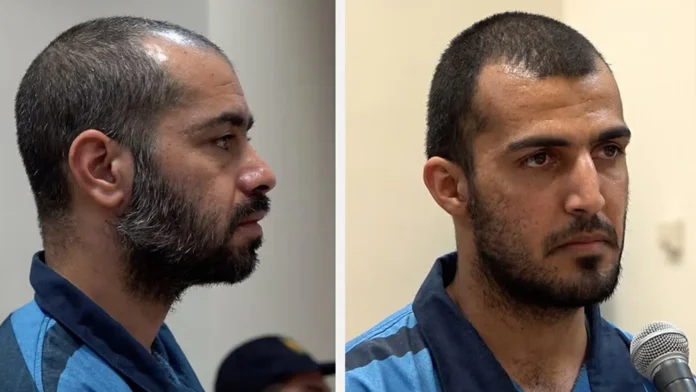
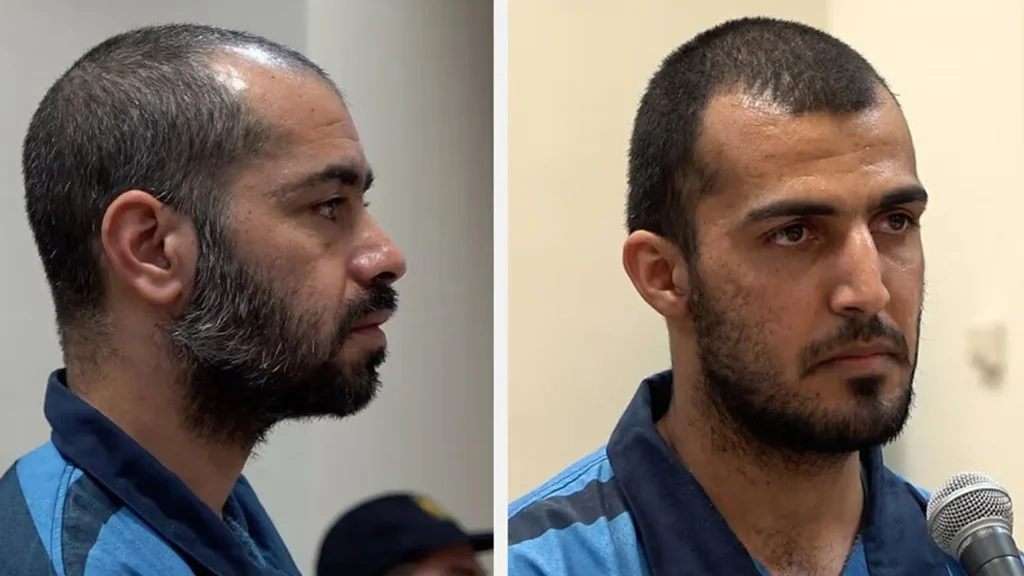
Iranian authorities on Monday carried out the execution of two men convicted of setting fire to a mosque during anti government protests, as rights groups point to a sharp increase in arrests and political executions since the outbreak of conflict earlier this year.
The judiciary, through its Mizan News Agency, announced that Mehrdad Mohammadi Nia and Ashkan Maleki were put to death after the Supreme Court upheld their sentences. Officials identified the pair as key figures in an attack on the Jafari Mosque in Tehran’s Gisha district during demonstrations that spread across the country in late 2025 and early 2026.
Authorities said the men were found guilty of arson, damaging public property, confronting security forces, blocking roads, and engaging in actions deemed harmful to national security. The judiciary also ordered the seizure of their assets. The specific capital charge applied in the case was not disclosed.
The executions come amid a broader crackdown linked to protests that erupted following the sharp collapse of Iran’s currency, the rial. What began as economic unrest quickly evolved into widespread demonstrations across major cities.
Security forces responded with force in early January, leading to a high number of casualties. Iran’s Supreme Council of National Security has acknowledged more than 3,000 deaths, while a United Nations investigator has placed the toll at no fewer than 5,000. Other estimates from humanitarian groups suggest the number could be significantly higher, though verification remains difficult due to a government imposed internet blackout at the time.
Human rights organization Amnesty International said last week that more than 6,000 people have been detained since the conflict began in February. Those detained include protesters, journalists, lawyers, and activists. The group documented at least 39 executions tied to political cases during the same period, raising concerns about the pace and fairness of judicial proceedings.
Amnesty also cited allegations of enforced disappearances, torture, and coerced confessions, along with trials that failed to meet international legal standards. Iranian officials have repeatedly rejected such claims, maintaining that all convictions follow due legal process and involve serious criminal offenses.
Separate figures from rights monitors indicate Iran remains among the world’s most active countries in carrying out executions. Amnesty’s annual review recorded more than 2,100 executions in 2025 alone, accounting for a large share of global totals.
State media coverage, including reporting cited by Aawsat, framed the executed men as central perpetrators of violence during the protests. Authorities have also accused foreign actors, including the United States and Israel, of encouraging unrest, claims that outside observers and rights groups dispute.
The executions highlight an intensifying strategy by Iranian authorities to reassert control through the judicial system following months of unrest. By linking protest related actions to national security charges, the government appears to be signaling a zero tolerance approach to dissent, particularly during a period of heightened regional tensions.
The scale of arrests and reported executions suggests a coordinated effort to deter future demonstrations. However, such measures may carry long term risks. Analysts note that harsh crackdowns can deepen public grievances, especially when driven by economic hardship and political frustration.
The lack of transparency surrounding charges and trial procedures also raises questions about due process. In high profile cases tied to protests, limited access to independent legal representation and rapid sentencing timelines have drawn sustained criticism from international observers.
At the same time, the broader geopolitical context cannot be ignored. With Iran engaged in ongoing tensions involving the United States and regional actors, domestic stability has taken on added importance for the government. Authorities may view internal dissent as a vulnerability that could be exploited externally.
If current trends continue, Iran could face increasing diplomatic pressure over human rights concerns, even as it prioritizes internal control. The situation underscores a growing divide between domestic policy priorities and international expectations regarding legal standards and civil liberties.
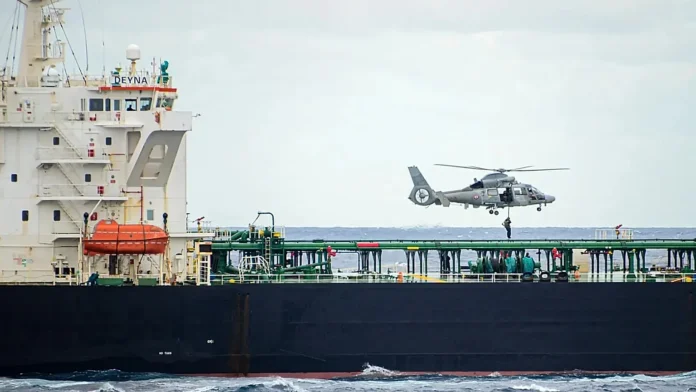
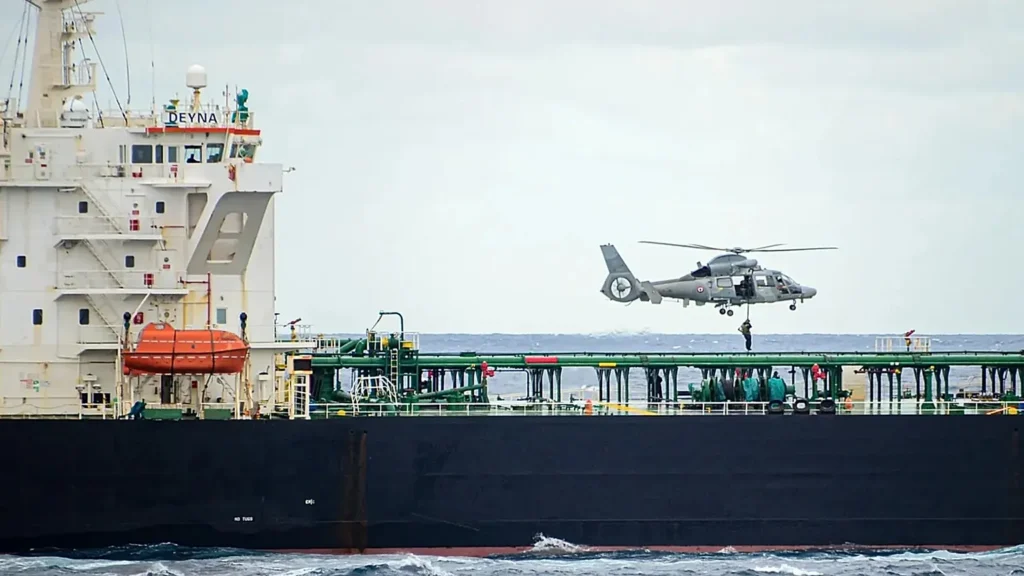
French naval commandos rappelled from helicopters onto a sanctioned oil tanker in the Atlantic Ocean on Sunday, seizing the vessel more than 400 nautical miles west of France in international waters and ordering it escorted to the French mainland, as President Emmanuel Macron posted video of the boarding operation and Russia called the action illegal piracy.
The tanker, identified as the Tagor, had traveled from Russia’s Arctic port of Murmansk and was flying what French authorities said was a false flag. Vessel tracking data from MarineTraffic showed the 252-meter ship sailing under a Madagascar flag. French maritime authorities said inspection of the vessel’s papers confirmed the flag irregularity. The Russian captain refused to comply with the French navy’s orders, and a Brest prosecutor confirmed that forcibly taking control of the vessel became necessary. A criminal investigation was opened on charges of failure to prove a vessel’s nationality, absence of a legitimate flag, and refusal to comply with naval instructions.
The operation was carried out with support from the United Kingdom, Macron confirmed in a post on X Monday showing commandos descending onto the ship’s deck from a hovering helicopter.
“It is unacceptable for ships to circumvent international sanctions, violate the law of the sea, and fund the war that Russia has been waging against Ukraine for more than four years,” Macron wrote. “These ships, that don’t respect the most elementary rules of maritime navigation, are also a threat to the environment and everyone’s security.”
By Monday, the Tagor was steaming under naval escort toward an anchorage off northwestern France for further inspection.
Russia’s Response
The Kremlin reacted with immediate condemnation. Spokesman Dmitry Peskov told reporters Monday that Russia considered the interception illegal and that it bordered on piracy. “We absolutely disagree that they are being carried out in full compliance with international law,” Peskov said.
Russia previously deployed a naval frigate in April to escort two sanctioned vessels through the English Channel after similar interception operations, and the Kremlin said at that time Moscow reserved the right to defend against what it characterized as piracy. Estonia subsequently announced it would stop detaining Russian shadow fleet tankers, citing concern that such actions risked provoking a Russian military response.
Peskov said Monday that Russia would take measures to ensure the safety of its shipping cargo in response to the latest seizure.
The Fourth French Interception
The Tagor is the fourth sanctioned tanker France has boarded since September. French forces seized the Benin-flagged tanker Boracay off the Atlantic coast in October, and Macron later said a probe was examining whether the vessel had been used as a launch platform for a drone incursion into Danish airspace that forced the closure of airports in Denmark. The Grinch was intercepted in the Mediterranean in January and released in February after paying a multimillion-euro penalty. The Deyna was boarded in the Mediterranean in March, and its owners paid an undisclosed fine to secure its release in April.
The pattern of seizure, penalty, and release has drawn criticism from sanctions advocates who argue the fines have not been large enough to meaningfully deter the use of shadow fleet vessels. Russia has assembled what Western intelligence assessments estimate to be a flotilla of nearly 600 vessels under EU sanctions, typically old tankers of deliberately opaque ownership, carrying Russian oil to buyers including India and China at discounted prices that still generate substantial revenue for Moscow.
The Economics Behind the Fleet
Oil revenue is a structural pillar of Russia’s war financing. The income from petroleum exports allows the Kremlin to continue funding military operations without forcing the kind of domestic austerity that would generate political pressure on Putin’s government. The EU has now issued 19 successive packages of sanctions against Russia since the February 2022 invasion, but Moscow has adapted to most measures and continues to move millions of barrels of oil to non-Western markets.
The current moment offers Russia an additional incentive to keep its shadow fleet moving. The Iran war has pushed global oil prices sharply higher, meaning the premium on any barrel that reaches an international buyer has increased. The combination of discounted Russian crude and elevated global prices has made shadow fleet operations particularly profitable, even accounting for the higher insurance and operational costs that come with vessels of uncertain status.
Reuters noted that the greatest practical disruption to Russian oil exports has come not from European naval interceptions but from Ukrainian drone and missile strikes on Russian oil production and refining facilities, which have reduced Moscow’s capacity to capitalize on the price spike.
British Prime Minister Keir Starmer said in March that he had authorized the British military to board shadow fleet vessels. Shipping data shows that dozens of sanctioned tankers have continued to cross British waters since that authorization, suggesting enforcement has been selective rather than comprehensive.
Interceptions as Signal, Not Solution
France’s fourth shadow fleet seizure in eight months, executed with helicopter-deployed commandos and posted to social media with the unmistakable quality of a political statement, is more accurately understood as a message than as a meaningful constraint on Russian oil exports.
The shadow fleet comprises hundreds of vessels. Four interceptions, however operationally impressive, do not dent a network of that scale. The vessels that have been seized and fined have generally been released after financial penalties that their operators have demonstrated willingness to absorb as a cost of doing business. The Grinch paid a multimillion-euro fine and returned to operation. The Deyna’s owners paid and recovered their ship. The economic logic of shadow fleet operations, particularly at current oil prices, can withstand a fine at the end of each voyage more easily than the vessels can be permanently removed from service.
The interceptions do serve genuine purposes beyond the individual vessels involved. Each seizure creates uncertainty for shadow fleet operators about which routes and which national enforcement zones carry elevated risk. Each one generates diplomatic pressure on the countries whose flags these vessels fly falsely, since the Madagascar and Benin flag links in recent cases create conversations with those governments about how their maritime registries are being exploited. And each one forces Russia to spend political and diplomatic capital defending operations that it publicly characterizes as legitimate commercial activity.
What the interceptions have not done is stop Russian oil from reaching its buyers. India and China are purchasing Russian crude at scale, and neither country has shown any indication of accepting Western pressure to curtail those purchases. Until either the buyers change their behavior or the sanctions enforcement is applied at a scale that genuinely disrupts the shadow fleet’s economics rather than penalizing its occasional participants, the Tagor’s successors will keep sailing.