Home Blog Page 46

Stampede at Haiti’s Citadelle Laferriere Leaves At Least 30 Dead During Annual Event

(DW/Reuters) — At least 30 people were killed in a crowd crush at Haiti’s historic Citadelle Laferriere on Saturday, officials said, as emergency teams warned the number of victims could increase.

The incident unfolded at the entrance to the mountaintop fortress during a major public gathering that drew large numbers of visitors, including many students. Jean Henri Petit, head of civil protection in the northern region, said heavy rainfall contributed to chaotic conditions that led to the deadly surge of people.

The site, a landmark dating back to the early 19th century, was hosting its annual celebration as a recognized UNESCO World Heritage location, attracting crowds from across the country.

Government officials indicated that dozens of people were injured, with many transported to nearby medical facilities. Search and rescue teams continued combing the area for those still unaccounted for.

Prime Minister Alix Didier Fils-Aime expressed condolences in a public statement, offering support to grieving families and pledging that authorities were fully mobilized to respond to the disaster.

Culture Minister Emmanuel Menard said emergency services were working to provide treatment to the injured while coordinating efforts to locate missing individuals.

The fortress, located near the northern city of Cap-Haitien, is one of Haiti’s most visited landmarks and a symbol of the country’s independence following its break from France in the early 1800s.

The tragedy underscores ongoing concerns about crowd management and safety infrastructure at major public events in Haiti. Large gatherings at historic sites often outpace available security and emergency resources, particularly in remote or elevated locations like the Citadelle.

The disaster also highlights broader systemic challenges facing the country. Haiti has been grappling with prolonged instability, including widespread violence and strained public services, which can hinder effective disaster response and preparedness.

In recent years, the nation has faced multiple large-scale emergencies, from industrial explosions to natural disasters, exposing gaps in safety enforcement and crisis management systems. The latest incident is likely to intensify scrutiny over how authorities plan and secure high-attendance events.

Beyond the immediate loss of life, the stampede may have lasting effects on tourism and public confidence. The Citadelle Laferriere is not only a cultural symbol but also an economic asset, drawing both local and international visitors.

As investigations continue, pressure is expected to mount on officials to implement stronger safety protocols, improve crowd control measures, and ensure that historic sites can safely accommodate large numbers of visitors without risking further tragedy.

Airstrike Near Nigeria Market Leaves 200 Feared Dead as Military Cites Militant Operation

A Nigerian military airstrike targeting suspected militants near a busy market along the Yobe-Borno border has left dozens feared dead, with local officials and residents warning the toll could climb significantly as rescue efforts continue.

Witnesses and a local councillor described a devastating strike late Saturday in the Jilli area, where traders had gathered in large numbers. Lawan Zanna Nur Geidam, a district official, told Reuters that the blast caused widespread casualties, estimating that more than 200 people may have been killed, though the figure has not been independently verified.

Nigeria’s Air Force acknowledged carrying out an operation in the region, stating that it struck positions linked to Boko Haram fighters in Borno state. However, its statement, issued to Reuters, did not reference any impact on a civilian market, and officials did not immediately respond to follow-up questions.

The strike occurred near a trading hub that draws merchants from surrounding communities in both Yobe and Borno states, an area long affected by insurgent activity. Residents said the market is frequently visited by armed groups seeking supplies and collecting levies from traders.

The Yobe State Emergency Management Agency confirmed it had received initial information about casualties at the market and had activated response teams. Emergency workers and security personnel were deployed to assess the situation and assist the injured.

Local police spokesperson Dungus Abdulkarim told Punch Nigeria that authorities were still verifying details. He said security agencies were gathering information at the scene and would release confirmed figures once assessments were complete.

Survivors recounted scenes of panic and destruction. Ahmed Ali, a trader who was injured in the blast, said he dropped to the ground as explosions erupted around him. Victims were transported to hospitals across Yobe and neighboring Borno for treatment.

Accounts from the area suggest the airstrike may have missed its intended target while tracking suspected militants operating nearby. Some local sources cited by Punch Nigeria indicated a smaller confirmed death toll, though emphasized that many more were wounded.

The northeast region remains the center of a prolonged conflict between Nigerian forces and extremist groups, including Boko Haram, which has carried out attacks for more than a decade, displacing millions and killing thousands.

The incident highlights the persistent challenges facing Nigeria’s military operations in densely populated conflict zones. Airstrikes, while a key tool in targeting insurgent groups, carry a high risk of civilian casualties when militants operate near markets and residential areas.

Conflicting casualty figures underscore the difficulty of obtaining accurate information in remote and insecure regions. Initial estimates often vary widely, particularly in the immediate aftermath of attacks where access is limited and communication infrastructure is weak.

The reported strike also raises broader concerns about intelligence accuracy and operational precision. If confirmed, a large-scale civilian toll could intensify scrutiny of military tactics and fuel local resentment, potentially undermining counterinsurgency efforts.

At the same time, the presence of militants in civilian spaces reflects the evolving strategy of armed groups, who often embed themselves within communities to complicate military responses. This dynamic continues to blur the line between combat zones and civilian life.

As investigations continue, the incident may prompt renewed calls for stricter safeguards in military operations, improved coordination with local authorities, and greater transparency in reporting outcomes of air campaigns in Nigeria’s northeast.

Punchng/AP

Trump Orders Naval Blockade of Strait of Hormuz After Iran Peace Talks Collapse

WASHINGTON — President Trump announced Sunday that the United States will begin a sweeping blockade of the Strait of Hormuz, vowing to fight back against what he characterized as “WORLD EXTORTION” and ensure that no vessels paying tolls to Iran will transit the critical oil chokepoint that once handled one-fifth of global petroleum supplies.

Trump claimed that negotiations with Iran that concluded Saturday without agreement “went well,” but faulted the Islamic Republic for refusing to budge on its nuclear program, which he described as “the only point that really mattered.” The claim that talks proceeded positively contradicted the evident failure to reach any understanding after 21 hours of negotiations.

“Effective immediately, the United States Navy, the Finest in the World, will begin the process of BLOCKADING any and all Ships trying to enter, or leave, the Strait of Hormuz,” Trump declared on Truth Social Sunday, employing capital letters for emphasis while announcing a dramatic escalation that will likely further destabilize global energy markets.

“At some point, we will reach an ‘ALL BEING ALLOWED TO GO IN, ALL BEING ALLOWED TO GO OUT’ basis, but Iran has not allowed that to happen by merely saying, ‘There may be a mine out there somewhere,’ that nobody knows about but them,” Trump continued, characterizing Iran’s strait closure as arbitrary obstruction rather than legitimate response to American and Israeli attacks.

“THIS IS WORLD EXTORTION, and Leaders of Countries, especially the United States of America, will never be extorted,” he proclaimed, framing the conflict as resistance to Iranian blackmail rather than acknowledging American military aggression precipitated the strait’s closure.

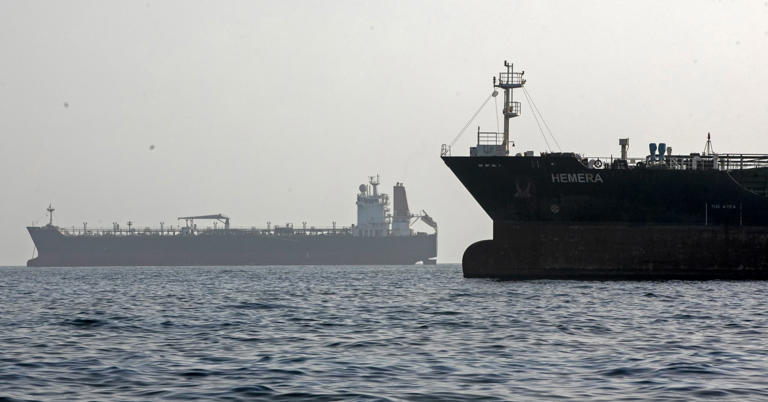
Over one-fifth of the world’s seaborne oil supply once traversed through the Strait of Hormuz before Iran used drones and missiles to deter petroleum vessels from traveling through the critical chokepoint. Recently, Iran claimed to have deployed mines in the strait but has lost track of their locations—an assertion that may be deliberate ambiguity designed to create uncertainty among ship operators or genuine operational failure reflecting chaos from weeks of warfare.

Iran has attempted to charge a toll of $1 per barrel of oil for ships to transit safely—a fee that would generate substantial revenue while establishing Iranian sovereignty over international waters that the United States insists must remain open without tolls or restrictions.

According to New York Post, Iran disclosed it has no plans for further peace talks with the United States after the marathon summit with Vice President JD Vance collapsed Saturday with no agreement reached. “No plan has yet been announced for the time, place, or next round of negotiations,” Iranian state news agency Nour conveyed Saturday, citing the country’s Supreme National Security Council.

The Iranian regime will also maintain its stranglehold over the Strait of Hormuz—the vital chokepoint in the Persian Gulf through which flows one-fifth of the world’s oil supplies—according to state media. “Iran is not in a hurry, and until the US agrees to a reasonable deal, there will be no change in the situation of the Strait of Hormuz,” Fars News Agency documented, quoting an unnamed Iranian official.

The statements followed grueling 21 hours of talks in the Pakistani capital Islamabad between U.S. and Iranian delegations that ended Sunday morning local time with no agreement reached and no clarity about next steps. Vance told a press conference that Iran’s refusal to abandon its nuclear program had been the main sticking point preventing any understanding.

The vice president characterized the failure to reach agreement as “bad news” for Iran, while Iran’s former Vice President Ataollah Mohajerani countered it was “worse news … for the United States,” speaking to Fars. The competing claims about who faces greater consequences from negotiations’ collapse reflected each side’s effort to project strength despite evident failure to achieve objectives.

“We leave here with a very simple proposal, a method of understanding that is our final and best offer. We’ll see if the Iranians accept it,” Vance told journalists as he prepared to board Air Force Two and return to the United States. None of the American delegation—which included special envoy Steve Witkoff and the President’s son-in-law Jared Kushner—remained behind in Islamabad, suggesting zero expectation that productive talks could resume.

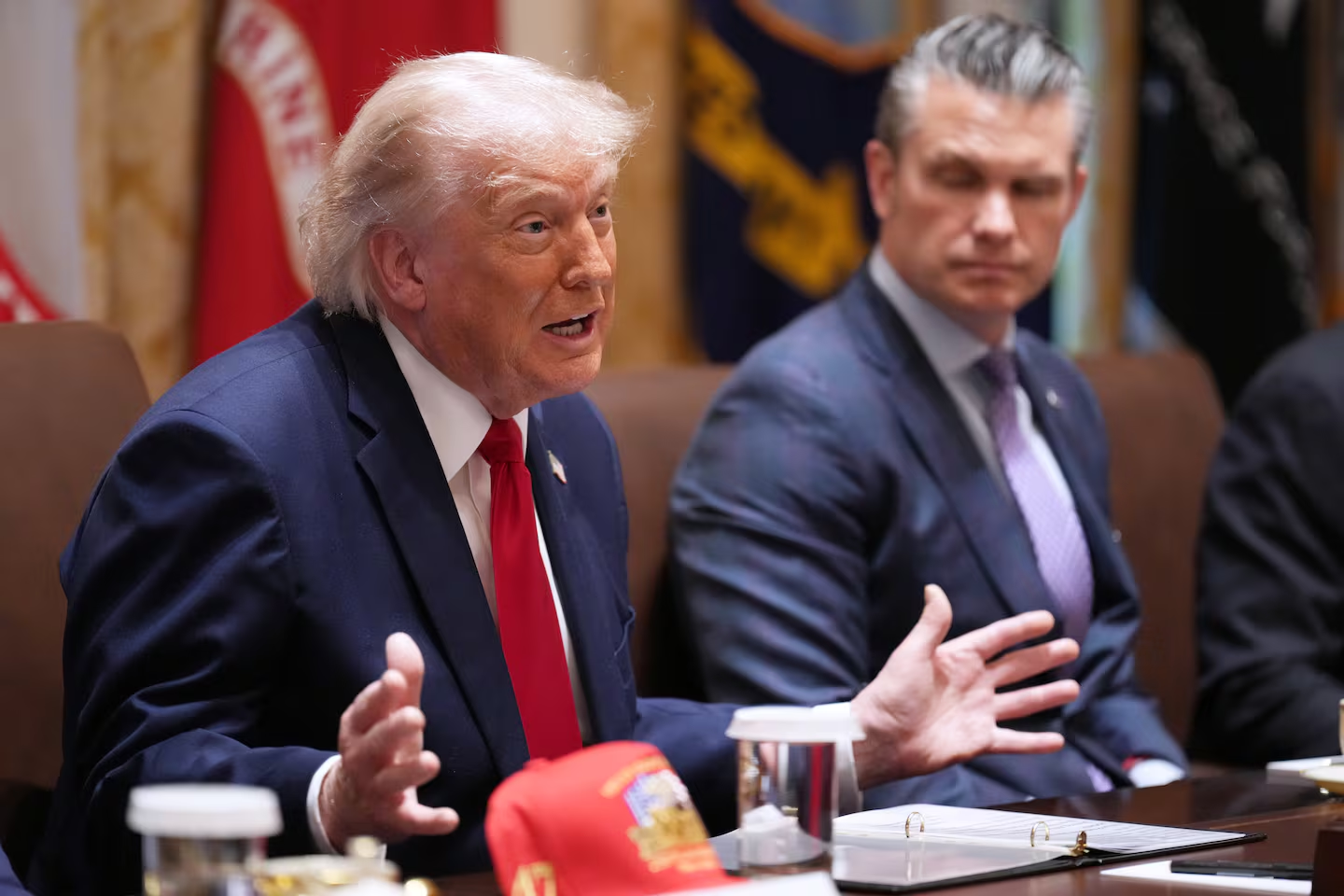
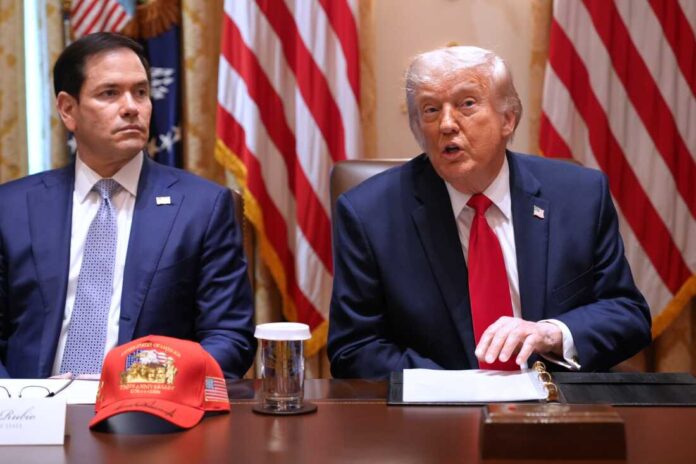
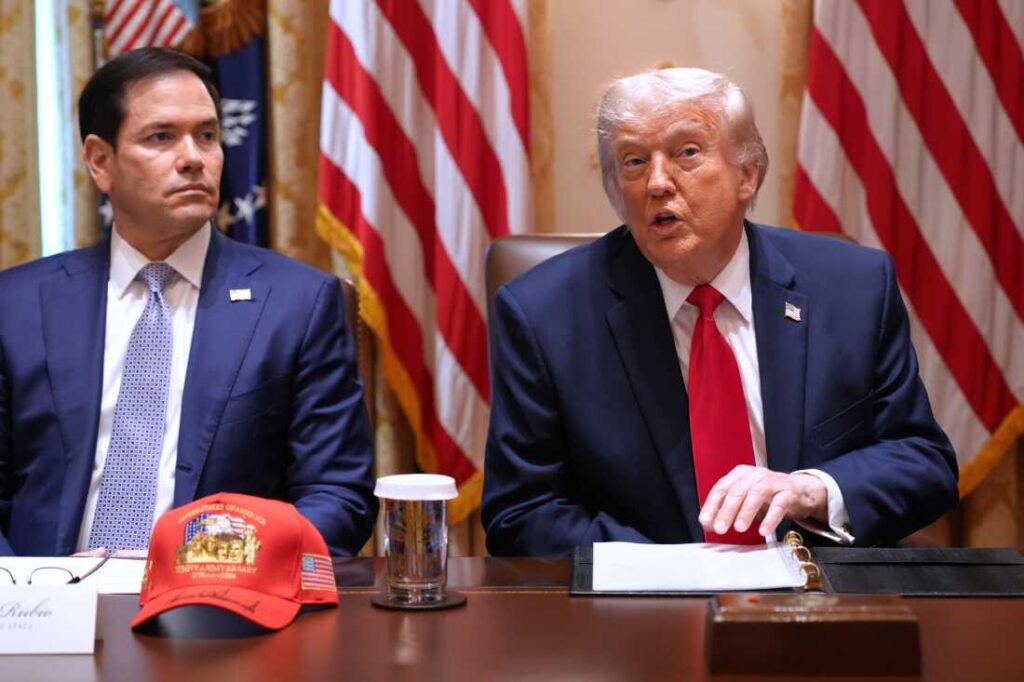
Iranian state media blamed “US overreach and ambitions” for blocking “a common framework and agreement” to bring about war termination, which started February 28. As talks broke down in Pakistan, President Trump was photographed at a UFC fight in Miami with Secretary of State Marco Rubio—imagery suggesting the president was unconcerned about negotiations’ failure while enjoying entertainment during the diplomatic crisis.

The president earlier declared it “makes no difference to me” whether the United States and Iran reached agreement—language conveying indifference to diplomatic solutions and preference for military approaches to resolving the conflict.

The Associated Press confirmed that Trump in his first public comments after the 21 hours of talks sought to exert strategic control over the waterway that was responsible for shipping 20 percent of global oil supplies before the war, hoping to eliminate Iran’s key source of leverage.

The prospect of a U.S. blockade will likely further rattle global energy markets and prices for oil, natural gas, and related products. It was not immediately clear how the blockade might be executed or when operations would commence given the massive naval resources required to enforce complete interdiction of a waterway 21 miles wide at its narrowest point.

Trump disclosed he has “instructed our Navy to seek and interdict every vessel in International Waters that has paid a toll to Iran. No one who pays an illegal toll will have safe passage on the high seas.” Other nations would participate in the planned blockade, he indicated, but did not identify them—raising questions about whether any allies have actually agreed to join American operations.

Trump emphasized that Tehran’s nuclear ambitions were at the core of the failure to end the war, and declared the United States was ready to “finish up” Iran at the “appropriate moment”—threatening language suggesting potential military escalation beyond current operations.

Face-to-face talks ended earlier Sunday, representing the highest-level negotiations between the longtime rivals since the 1979 Islamic Revolution that severed diplomatic relations for nearly five decades. Iranian officials blamed the United States for negotiations’ breakdown without specifying sticking points. Both delegations subsequently departed Islamabad.

Neither side indicated what will happen after the 14-day ceasefire expires April 22. Pakistani mediators urged all parties to maintain the pause in hostilities. Both sides proclaimed their positions were clear and placed responsibility on the other, underscoring how little the gap had narrowed throughout extensive negotiations.

“We need to see an affirmative commitment that they will not seek a nuclear weapon, and they will not seek the tools that would enable them to quickly achieve a nuclear weapon,” Vance, leading the U.S. side, stated afterward, articulating demands that Iran abandon even civilian nuclear capabilities.

Iran’s parliament speaker Mohammad Bagher Qalibaf, who led Iran’s delegation, declared it was time for the United States “to decide whether it can gain our trust or not.” Iranian officials earlier indicated talks fell apart over two or three key issues, blaming what they characterized as U.S. overreach and unreasonable demands.

Pakistani Foreign Minister Ishaq Dar confirmed his country will attempt to facilitate new dialogue between Iran and the United States in coming days despite the breakdown. Iran indicated openness to continuing dialogue, Iran’s state-run IRNA news agency documented. The European Union urged further diplomatic efforts to prevent resumed warfare.

Since the United States and Israel launched the war February 28, fighting has killed at least 3,000 people in Iran, 2,020 in Lebanon, 23 in Israel, and more than a dozen in Gulf Arab states, while causing lasting damage to infrastructure in half a dozen Middle Eastern countries. Iran’s grip on the Strait of Hormuz has largely severed the Persian Gulf and its oil and gas exports from the global economy, sending energy prices soaring to recession-inducing levels.

Tensions have long centered on Iran’s nuclear program. Tehran has consistently denied seeking nuclear weapons but insisted on its right to a civilian nuclear program under international treaties. Iran has offered “affirmative commitments” in the past in writing, including in the landmark 2015 nuclear deal that took well over a year of negotiations to complete and from which Trump withdrew during his first presidency.

Experts confirm Iran’s stockpile of enriched uranium, though not weapons-grade, is only a short technical step away from levels required for nuclear weapons—creating what analysts call “breakout capability” measured in weeks rather than months.

The current deadlock—and Vance’s take-it-or-leave-it proposal that Iran terminate its nuclear program—mirrored February’s nuclear talks in Switzerland that preceded the war’s launch. An Iranian diplomatic official, speaking on condition of anonymity because of the sensitivity of closed-door talks, denied that negotiations had failed over Iran’s nuclear ambitions.

“Iran is not seeking to acquire nuclear weapons, but it has the right to nuclear energy for peaceful purposes,” the official emphasized, articulating Iran’s longstanding position that civilian nuclear power represents sovereign right that cannot be surrendered to foreign pressure.

In Iran, there was fresh exhaustion and anger after months of unrest that began with nationwide protests against economic issues and political grievances, then weeks of sheltering from U.S. and Israeli bombardment. “We have never sought war. But if they try to win what they failed to win on the battlefield through talks, that’s absolutely unacceptable,” 60-year-old Mohammad Bagher Karami declared in Tehran.

During the talks, the U.S. military announced two destroyers transited the critical strait ahead of mine-clearing work—a first since the war began and signal of American determination to reopen the waterway regardless of Iranian consent. Iran’s state media disclosed the country’s joint military command denied the transit occurred, creating uncertainty about whose account was accurate.

“We’re sweeping the strait. Whether we make a deal or not makes no difference to me,” Trump stated during the talks, conveying that military solutions were equally acceptable as diplomatic agreements.

Before talks commenced, the ceasefire was already threatened by deep disagreements and Israel’s continued attacks against Iranian-backed Hezbollah in Lebanon. Iran’s 10-point proposal had called for guaranteed war termination and sought control over the Strait of Hormuz. It demanded ending fighting against Iran’s “regional allies,” explicitly calling for halting Israeli strikes on Hezbollah.

Pakistani officials earlier told The Associated Press that the U.S. 15-point proposal included rollback of Iran’s nuclear program. Speaking on condition of anonymity as they lacked authorization to discuss details, they disclosed it also covered reopening the Strait of Hormuz—the economic pressure point causing global concern.

The impasse raises new questions about Lebanon where Israel has continued operations. Israel has maintained the agreement did not apply there, but Iran and Pakistan claimed otherwise. Negotiations between Israel and Lebanon are expected to begin Tuesday in Washington after Israel’s surprise announcement authorizing talks despite lack of official relations between the countries.

The day the Iran ceasefire deal was announced, Israel pounded Beirut with airstrikes, killing more than 300 people in the deadliest day in Lebanon since the war began, according to the country’s Health Ministry. Though Israel’s strikes over Beirut have calmed, its attacks on southern Lebanon have intensified alongside the ground invasion it renewed after Hezbollah launched rockets toward Israel in the war’s opening days.

Lebanon’s state-run National News Agency confirmed six people were killed Sunday in an Israeli strike in Maaroub village near the coastal city of Tyre—demonstrating continued violence despite ceasefire claims.

Israel wants Lebanon’s government to assume responsibility for disarming Hezbollah, but the militant group has survived efforts to curb its strength for decades through popular support among Shiite communities and integration into Lebanese political structures.

As Trump’s blockade announcement reverberated through global capitals and energy markets, fundamental questions remained about whether the United States Navy possesses sufficient resources to enforce complete interdiction of the strait, whether other nations will participate as Trump claimed, and whether such operations will provoke Iranian military responses that escalate the conflict beyond current parameters.

For global oil markets already stressed by the strait’s partial closure, complete American blockade preventing even Iranian-authorized traffic could send prices to unprecedented levels that trigger worldwide recession. Whether Trump has considered these economic consequences or views them as acceptable costs for asserting American control over the waterway remains unclear.

Ugandan Army Chief Gives Turkey 30-Day Ultimatum, Seeks $1 Billion and Bride Over Somalia Dispute

Uganda’s army chief, Muhoozi Kainerugaba, has issued a 30-day deadline to Turkey, calling for $1 billion in compensation tied to Uganda’s military operations in Somalia and warning that diplomatic ties could be cut if the matter is not resolved.

In a series of social media messages later removed, Kainerugaba — the son of President Yoweri Museveni — argued that Uganda’s long-standing deployment against Al-Shabab warrants financial recognition from countries benefiting economically in Somalia.

Uganda’s army chief, Muhoozi Kainerugaba.

Coverage by Hindustan Times indicated that the general accused Turkey of profiting from infrastructure and port projects in Somalia while Ugandan troops have spent years engaged in combat operations. He said Uganda should receive what he described as a “security dividend” for its role.

Kainerugaba also warned that Kampala could shut down Turkey’s embassy and downgrade bilateral relations if his demands are not addressed within the stated timeframe, signaling a sharp escalation in rhetoric.

The posts included additional remarks that drew criticism, including a reference to a personal request involving marriage, which further fueled backlash online before the messages were deleted.

Turkey has expanded its presence in Somalia through construction, port management and military training, particularly in the capital, Mogadishu. Kainerugaba suggested these investments have generated significant returns for Ankara, contrasting them with Uganda’s security contributions.

Officials in Turkey have not publicly responded to the statements.

The Ugandan general has previously attracted attention for controversial public comments. In 2022, he made headlines after expressing interest in marrying Italian Prime Minister Giorgia Meloni, a remark that also prompted criticism.

The ultimatum reflects deeper tensions over how international security efforts are valued and compensated. Uganda has been a central contributor of troops to operations in Somalia, often facing direct conflict with armed groups, while other nations have focused on economic and infrastructure engagement.

Kainerugaba’s comments highlight a broader debate about whether countries providing frontline security should receive greater financial or political returns compared with those benefiting from reconstruction and development opportunities.

The episode also underscores the risks of high-level officials using personal communication platforms to address sensitive diplomatic issues. Such statements can blur the distinction between official policy and individual expression, potentially complicating foreign relations.

For Uganda, the challenge will be maintaining strategic partnerships while seeking recognition for its military role. For Turkey, the remarks may be seen as an isolated escalation, but they touch on wider geopolitical competition in the Horn of Africa.

As international involvement in Somalia continues, disputes over influence, investment and security contributions are likely to intensify, making coordination among partners increasingly complex.

Hindustantimes

U.S. and Iran End Peace Talks Without Agreement, Blame Each Other for Collapse

(AP)-The United States and Iran ended face-to-face talks on Sunday without an agreement to end the war, leaving a fragile two-week ceasefire in doubt as both nations blamed each other for the negotiations’ collapse and provided no clarity about what happens when the truce expires April 22.

U.S. officials characterized the negotiations’ breakdown as resulting from what they described as Iran’s refusal to commit to abandoning its nuclear program, while Iranian officials blamed the United States for the talks’ failure without specifying precise sticking points. Neither side indicated what will occur after the 14-day ceasefire expires Tuesday, though Pakistani mediators urged all parties to maintain the pause in hostilities.

Vice President JD Vance, center, walks up a flight of stairs to meet with Pakistan’s Prime Minister Shehbaz Sharif for talks about Iran, Saturday, April 11, 2026, in Islamabad. (AP Photo/Jacquelyn Martin, Pool)

Both nations declared their positions were clear and placed responsibility on the other side, underscoring how little the gap had narrowed throughout the marathon talks that stretched 21 hours. The failure suggests that six weeks of warfare killing thousands and devastating regional economies produced no meaningful shift in either party’s fundamental demands.

“We need to see an affirmative commitment that they will not seek a nuclear weapon, and they will not seek the tools that would enable them to quickly achieve a nuclear weapon,” Vice President JD Vance disclosed after the prolonged negotiations, articulating American demands that Iran abandon enrichment capabilities even for civilian purposes.

Iran’s parliament speaker Mohammad Bagher Qalibaf, who led Iran’s delegation in the negotiations, declared it was time for the United States “to decide whether it can gain our trust or not”—language suggesting Tehran views American credibility as the fundamental obstacle rather than substantive policy disagreements.

Qalibaf did not mention the core disputes in a series of social media posts, though Iranian officials earlier indicated the talks fell apart over two or three key issues, blaming what they characterized as U.S. overreach. The vagueness about specific disagreements may reflect internal Iranian debates about how much to disclose publicly or desire to preserve diplomatic flexibility for potential future negotiations.

Iran has long denied seeking nuclear weapons but has insisted on its right to a civilian nuclear program under the Nuclear Non-Proliferation Treaty. Experts confirm its stockpile of enriched uranium, though not weapons-grade, is only a short technical step away from levels required for nuclear weapons—a “breakout time” measured in weeks rather than months or years.

Since the United States and Israel launched the war on February 28, it has killed at least 3,000 people in Iran, 2,020 in Lebanon, 23 in Israel, and more than a dozen in Gulf Arab states, while causing lasting damage to infrastructure in half a dozen Middle Eastern countries. The casualty figures illustrate how the conflict has spread far beyond the original combatants to engulf the entire region.

Iran’s grip on the Strait of Hormuz has largely severed the Persian Gulf and its oil and gas exports from the global economy, sending energy prices soaring to levels that threaten recession in petroleum-importing nations. The strait’s closure represents Iran’s most effective leverage in negotiations, demonstrating that despite massive military disadvantages versus American forces, Tehran possesses asymmetric capabilities to inflict economic pain globally.

Pakistani Foreign Minister Ishaq Dar announced his country will attempt to facilitate new dialogue between Iran and the United States in coming days despite the breakdown. “It is imperative that the parties continue to uphold their commitment to cease fire,” Dar emphasized, though he provided no indication either nation had agreed to extend the truce beyond Tuesday.

The deadlock—and Vance’s take-it-or-leave-it proposal that Iran terminate its nuclear program—mirrored February’s nuclear talks in Switzerland that preceded the war. Though President Donald Trump has claimed the subsequent military campaign was designed to compel Iran’s leaders to abandon nuclear ambitions, each side’s positions appeared unchanged in negotiations following six weeks of fighting that killed thousands and devastated regional infrastructure.

There was no confirmation whether negotiations would resume, though Iran indicated openness to continuing dialogue, Iran’s state-run IRNA news agency documented. The willingness to keep talking suggests neither side views complete diplomatic rupture as beneficial despite inability to reach agreement on fundamental issues.

“We have never sought war. But if they try to win what they failed to win on the battlefield through talks, that’s absolutely unacceptable,” 60-year-old Mohammad Bagher Karami declared in downtown Tehran, expressing widespread Iranian sentiment that military pressure should not force concessions that diplomacy alone could not achieve.

The United States and Iran entered talks with sharply different proposals and contrasting assumptions about their leverage to end the war. Before negotiations commenced, the ceasefire was already threatened by deep disagreements and Israel’s continued attacks against Iranian-backed Hezbollah in Lebanon—operations that undermined claims about genuine commitment to peace.

Iran’s 10-point proposal ahead of the talks called for guaranteed war termination and sought control over the Strait of Hormuz. It included ending fighting against Iran’s “regional allies,” explicitly demanding a halt to Israeli strikes on Hezbollah—conditions the United States and Israel rejected as rewarding Iranian regional influence.

In this photo released by the Pakistan Foreign Ministry, Iran’s Parliament Speaker Mohammad Bagher Qalibaf, center right, and Iran’s Foreign Minister Abbas Araghchi, center left, are greeted by Pakistan Foreign Minister Ishaq Dar, right, and Army Chief Field Marshal Gen. Asim Munir, left, upon their arrival at Nur Khan airbase in Rawalpindi, Pakistan, Saturday, April 11, 2026. (Pakistan Ministry of Foreign Affairs via AP)


Pakistani officials told The Associated Press in March that the U.S. 15-point proposal included monitoring mechanisms and rollback of Iran’s nuclear program. Speaking on condition of anonymity because they lacked authorization to discuss details, they disclosed it also covered reopening the Strait of Hormuz—the economic pressure point causing most global concern.

Indeed, Iran’s closure of the strait has proved its biggest strategic advantage in the war. Around one-fifth of the world’s traded oil typically passed through on over 100 ships daily before Iran deployed mines and threatened attacks that virtually halted commercial traffic.

During the talks, the U.S. military announced two destroyers transited the critical waterway ahead of mine-clearing work—a first since the war began and signal that America intends reopening the strait regardless of Iranian consent. Iran’s state media, however, denied the country’s joint military command acknowledged the transit, suggesting either the U.S. announcement was false or Iran was concealing American operations.

“We’re sweeping the strait. Whether we make a deal or not makes no difference to me,” Trump declared as talks extended into early Sunday morning, employing language suggesting he views military solutions as equally acceptable as diplomatic agreements.

The impasse raises new questions about fighting in Lebanon that has continued despite ceasefire announcements. Israel pressed ahead with strikes after the truce was declared, maintaining the agreement did not apply to Lebanese operations. Iran and Pakistan claimed otherwise, creating fundamental disagreement about the ceasefire’s scope that doomed it from inception.

Lebanon’s state-run National News Agency confirmed six people were killed Sunday morning in an Israeli strike in Maaroub, a village near the southern coastal city of Tyre. Though Israel’s strikes over Beirut have calmed in recent days, its attacks on southern Lebanon have intensified alongside a ground invasion it renewed after Hezbollah launched rockets toward Israel in the opening days of the Iran war.

Negotiations between Israel and Lebanon are expected to begin Tuesday in Washington, Lebanese President Joseph Aoun’s office disclosed, after Israel’s surprise announcement authorizing talks despite the lack of official relations between the countries. Protests erupted in Beirut Saturday over the planned negotiations that many Lebanese view as capitulation to Israeli demands.

Israel wants Lebanon’s government to assume responsibility for disarming Hezbollah, much like was envisaged in a November 2024 ceasefire that Hezbollah violated within weeks. But the militant group has survived efforts to curb its strength for decades, maintaining popular support among Lebanese Shiite communities and parliamentary representation that makes any government unable to confront it militarily.

The day the Iran ceasefire deal was announced, Israel pounded Beirut with airstrikes, killing more than 300 people in the deadliest day in Lebanon since the war began, according to the country’s Health Ministry. The massive strikes demonstrated Israeli determination to degrade Hezbollah regardless of diplomatic efforts to end the broader regional conflict.

As the April 22 ceasefire deadline approaches, fundamental questions remain about whether either side will resume military operations, whether Pakistan or other mediators can broker renewed negotiations, or whether the conflict will simply continue indefinitely with periodic pauses that neither side genuinely respects.

For civilians across Iran, Lebanon, and Israel who have endured six weeks of bombardment, displacement, and economic hardship, the talks’ failure represents another disappointment in a conflict where diplomatic solutions appear as distant as when fighting commenced. The mounting death toll—exceeding 5,000 across multiple countries—illustrates the human cost of intractable disputes about nuclear programs, regional influence, and strategic waterways that nations prove willing to fight over indefinitely rather than compromise.

The economic consequences extend far beyond the immediate war zone as global oil prices remain elevated, threatening recession in energy-dependent economies and creating political pressures on governments worldwide to either broker peace or accept prolonged disruption to petroleum markets. Whether those economic incentives will eventually force concessions that military pressure cannot remains uncertain.

As Sunday’s failed talks concluded and delegations departed Islamabad without agreement or even clarity about next steps, the most likely outcome appeared to be resumed warfare once the ceasefire expires Tuesday—returning the region to violence that has proven easier to initiate than conclude through either military victory or diplomatic settlement.

Djibouti’s Guelleh Secures 6th Term in Landslide Vote Amid Limited Opposition

(AP) — Djibouti President Ismaïl Omar Guelleh has secured a sixth term in office after official results showed he won 97.81% of the vote in Friday’s presidential election, extending more than two decades of leadership in the strategically located Horn of Africa nation.

Election authorities indicated the vote proceeded without major disruptions, while celebrations broke out at the presidential palace, where supporters gathered to congratulate the 78-year-old incumbent on his decisive victory.

Guelleh faced only one challenger, Mohamed Farah Samatar, a former member of the ruling party. Analysts have long suggested that elections in Djibouti offer limited competition, with opposition groups frequently boycotting the process over concerns about political restrictions and lack of transparency.

Guelleh first took office in 1999, succeeding his uncle, Hassan Gouled Aptidon, and has since maintained a firm hold on power. Legislative changes in recent years, including the removal of presidential age limits, have further solidified his ability to remain in office.

Djibouti’s geopolitical importance continues to shape both its domestic and international standing. The country hosts military bases from several global powers, including the United States, China, France and Japan, due to its position along a vital maritime corridor connecting the Red Sea to the Gulf of Aden. Revenue from these bases, along with port services supporting neighboring Ethiopia, remains central to the national economy.

While officials highlighted the orderly nature of the vote, critics argue that the absence of robust political competition raises questions about democratic governance in the country. Opposition leaders have repeatedly pointed to constraints on free expression and political participation, concerns that persist despite the government’s emphasis on stability.

Guelleh’s latest victory reinforces a broader pattern across parts of Africa where long-serving leaders maintain power through dominant-party systems and constitutional adjustments. In Djibouti’s case, stability and strategic alliances have often been prioritized over political pluralism, particularly given the country’s role in global security and trade routes.

The overwhelming margin of victory may strengthen Guelleh’s position internationally, especially with foreign partners reliant on Djibouti’s military and logistical infrastructure. However, the lack of competitive electoral dynamics could deepen scrutiny from democracy advocates and international observers.

Looking ahead, the key challenge for Djibouti lies in balancing its strategic importance with internal political reform. As global attention on governance standards increases, sustained one-party dominance may come under greater pressure, even as the country continues to benefit from its critical geographic location.

Child found locked in van for 9 months in eastern France, malnourished and unable to walk

A 9-year-old boy was rescued in eastern France after being confined inside a utility van for months, where he was found severely malnourished and unable to walk, authorities said Saturday.

Police intervened earlier this week in the village of Hagenbach after a neighbor reported hearing what sounded like a child coming from a parked vehicle. Prosecutor Nicolas Heitz said officers forced entry into the van and discovered the boy in distressing conditions.

He was found lying curled up, unclothed and covered by a blanket, surrounded by trash and human waste, the prosecutor said. Officials indicated the child had suffered prolonged neglect and had lost the ability to walk after remaining in a seated position for an extended period. He was taken to a hospital for treatment.

Investigators said the boy had been confined since late 2024. His father, who has been detained, told authorities he kept the child in the vehicle to shield him from being placed in a psychiatric facility at the urging of his partner.

Prosecutors said there was no evidence the boy had a history of mental health issues prior to his disappearance, noting that he had been performing well in school.

The child told investigators he had difficulties with his father’s partner and believed his father felt compelled to isolate him. He also said he had not bathed during the period he was held in the vehicle.

The father is facing preliminary charges including kidnapping, while his partner has been charged with failing to assist a minor in danger and placed under judicial supervision. Authorities said she denied knowing the boy was being held in the van.

Two other children connected to the household — the boy’s sister and the partner’s daughter — have been placed under the care of social services.

Officials are examining whether others were aware of the child’s confinement. Family members and acquaintances told investigators they believed the boy had been transferred to another school or was receiving care at a medical facility.

Authorities have not released the identities of those involved. Residents of the village expressed shock at the discovery, describing the case as deeply disturbing.

The case has drawn attention to gaps in child protection systems, particularly when a child disappears under seemingly plausible explanations such as school transfers or medical placement. The ability of the situation to go undetected for months raises questions about communication between schools, social services and local authorities.

It also underscores the challenges in identifying hidden abuse within private family settings. Without regular oversight or reporting mechanisms triggered by absence from school, vulnerable children can remain isolated for extended periods.

The father’s justification reflects a troubling dynamic in which extreme actions are framed as protective, highlighting the need for accessible mental health and family support services that could prevent such situations from escalating.

From a broader perspective, the case may prompt calls for stricter monitoring of prolonged school absences and improved coordination among institutions responsible for child welfare. Early intervention systems are often the first line of defense, and failures at that stage can have severe consequences, as demonstrated in this incident.

AP

Iran warns it could strike U.S. Navy ships after American vessels pass through Strait of Hormuz

(NewYorkPost)-Iran warned it could target U.S. Navy ships entering the Strait of Hormuz after American warships passed through the strategic waterway for the first time since the conflict began, raising tensions as diplomatic talks continue.

Multiple U.S. military vessels, including at least two guided-missile destroyers, transited the strait on Saturday in what officials described as an uncoordinated move. The passage marked a significant development in the standoff over control of the narrow shipping route, a critical artery for global energy supplies.

President Donald Trump appeared to confirm the operation in a series of social media posts, stating that the United States had begun efforts to reopen the route to international shipping. He framed the move as part of a broader effort to ensure the flow of energy supplies to global markets.

Iranian officials responded with warnings that any U.S. naval presence in the strait could be treated as a hostile act. A government spokesperson indicated that Iranian forces had tracked one American destroyer approaching the area and cautioned that further movement could trigger a military response.

Despite the warnings, the U.S. vessels completed their transit without incident. A report by The Wall Street Journal described the operation as a routine freedom-of-navigation mission, adding that the ships were not escorting commercial traffic.

The episode unfolded as U.S. and Iranian representatives met in Pakistan for high-level negotiations aimed at preserving a fragile ceasefire. Iranian officials signaled that military activity in the strait could complicate those discussions, warning that continued U.S. movements might undermine diplomatic progress.

Iran has maintained that control over the waterway is central to any broader agreement, while the United States has insisted on unrestricted access for international shipping. The competing positions have emerged as a key obstacle in ongoing efforts to de-escalate the conflict.

The transit of U.S. warships through the Strait of Hormuz represents a calculated show of force designed to reinforce freedom of navigation while testing Iran’s red lines. By proceeding without coordination, Washington signaled it does not recognize any unilateral restrictions on the waterway, even as negotiations continue.

Iran’s response reflects its reliance on the strait as a strategic lever. Control over the route provides Tehran with significant influence over global energy markets, allowing it to exert pressure far beyond the immediate conflict. The threat to target U.S. vessels, even if not acted upon, underscores the risk of rapid escalation in a confined and heavily trafficked maritime corridor.

The timing is particularly sensitive. With talks underway in Pakistan, both sides appear to be balancing diplomacy with displays of strength. Such parallel strategies can increase leverage at the negotiating table but also heighten the risk of miscalculation, especially in a region where military forces operate in close proximity.

For global markets, the incident highlights the fragility of supply routes that handle a large share of the world’s oil and natural gas. Even limited disruptions or threats can drive price volatility and ripple through international economies.

Ultimately, the episode illustrates how the Strait of Hormuz has become the central pressure point in the conflict. Whether it remains open or becomes a flashpoint for further confrontation may determine the trajectory of both the negotiations and the broader regional stability.

Police fatally shoot knife attacker after subway stabbings injure 3 at Grand Central

A man armed with a large knife was shot and killed by police Saturday after he attacked three people in a busy New York City subway station, authorities said.

Officers responded to an emergency call shortly before 10 a.m. at Grand Central Terminal, where they encountered the suspect behaving erratically and holding a weapon. Police Commissioner Jessica Tisch said the man ignored repeated commands to drop the knife and advanced toward officers before he was shot.

“He continued to pose a serious threat after injuring multiple people,” Tisch said at a news briefing, adding that officers attempted to calm the situation before using force.

Authorities identified the suspect as Anthony Griffin, 44. He was taken to Bellevue Hospital, where he was pronounced dead. Officials said he had prior arrests.

Three victims — two men, ages 84 and 65, and a 70-year-old woman — were injured in the attack. Police said their wounds were not believed to be life-threatening, though one man suffered severe cuts to the head and face and another sustained a skull fracture. The woman had a shoulder injury.

Investigators said the suspect first attacked a person on one platform before moving to another area of the station and injuring two more individuals. Transit Chief Joseph Gulotta said early findings suggest the violence was random.

New York Gov. Kathy Hochul praised officers for their swift response, saying they acted quickly to stop the threat as the investigation continues.

Transit officials temporarily suspended some train stops at the station and urged commuters to avoid the area as police secured the scene.

Witness Beau Lardner described hearing loud bangs before seeing crowds rush toward exits. He said the surge of passengers fleeing the platforms was unlike anything he had experienced during years of commuting through the station.

The incident highlights ongoing concerns about safety in one of the nation’s busiest transit systems, even as officials have increased police presence in recent years. While violent crime in the subway remains relatively rare compared to overall ridership, high-profile attacks continue to shape public perception and commuter behavior.

The response by officers reflects a broader shift in policing strategy that emphasizes rapid intervention when a suspect poses an immediate threat. In this case, authorities stressed that de-escalation efforts were attempted before deadly force was used, underscoring the challenges officers face in fast-moving situations involving armed individuals in crowded public spaces.

The apparent randomness of the attack adds to concerns about unpredictability in urban transit environments. Unlike targeted incidents, such acts can heighten anxiety among riders and complicate prevention efforts.

From a policy standpoint, the event may renew debate over mental health services, transit security measures and the balance between enforcement and prevention. Officials have increasingly pointed to the need for coordinated responses that combine policing with social services to address underlying risks before they escalate into violence.

AP

 Vance lands in Pakistan for pivotal U.S.-Iran talks as fragile ceasefire faces mounting pressure

U.S. Vice President JD Vance arrived in Pakistan on Saturday to lead high-level negotiations with Iranian officials, marking the first direct engagement between the two sides since the conflict began more than a month ago and testing whether a fragile ceasefire can hold.

The American delegation, which includes special envoy Steve Witkoff and adviser Jared Kushner, is seeking to stabilize a temporary halt in fighting brokered by Shehbaz Sharif’s government and lay the groundwork for a broader peace agreement.

Iranian representatives, led by parliament speaker Mohammad Bagher Ghalibaf, arrived earlier in the capital. Ghalibaf indicated that meaningful discussions would depend on conditions including a halt to Israeli military actions in Lebanon and the release of frozen Iranian assets.

Tensions remain high despite the ceasefire, with continued exchanges of fire between Israeli forces and Hezbollah fighters along southern Lebanon’s border raising doubts about the agreement’s durability.

President Donald Trump has publicly pressed Iran ahead of the talks, portraying its negotiating position as weak while accusing Tehran of leveraging control over the Strait of Hormuz to influence global energy flows. In social media posts, Trump said the negotiations represent a critical moment for determining whether a lasting deal is possible.

Security across Islamabad was tightened ahead of the meetings, with major roads sealed and residents urged to remain indoors. The usually busy capital appeared largely deserted as authorities implemented sweeping precautions.

Sharif described the negotiations as entering a decisive stage, calling the current moment critical as both sides attempt to transition from a temporary pause in fighting to a more durable settlement.

Before departing Washington, Vance expressed cautious optimism about the talks but warned that the United States would not respond favorably to what he described as insincere engagement.

Meanwhile, diplomatic efforts are expanding beyond the U.S.-Iran channel. The office of Lebanese President Joseph Aoun said direct talks between Israel and Lebanon are expected to begin Tuesday in Washington. The discussions are aimed at ending hostilities involving Hezbollah and addressing long-standing security concerns along the border.

Israel, led by Prime Minister Benjamin Netanyahu, has maintained that its operations in Lebanon fall outside the scope of the ceasefire with Iran, a position that has fueled friction and threatened to derail broader peace efforts. Recent airstrikes in Lebanon have caused significant casualties, further complicating negotiations.

At the center of the dispute remains the Strait of Hormuz, a vital shipping route through which a significant portion of the world’s oil supply passes. Iran’s restrictions on traffic through the waterway have disrupted global markets, driving up energy prices and adding urgency to the talks. Only a limited number of vessels have transited the route since the ceasefire took effect, far below normal levels.

The Islamabad talks represent a high-stakes diplomatic effort shaped as much by military leverage as by negotiation strategy. The United States is entering discussions from a position of force, reinforced by military deployments and public messaging from President Trump, while Iran is relying on its control of a critical global energy route to strengthen its hand.

This dynamic creates a delicate balance. While both sides have incentives to avoid renewed conflict, their core demands remain far apart. Iran’s insistence on linking the ceasefire to developments in Lebanon adds a regional dimension that complicates what might otherwise be a bilateral negotiation.

The continued fighting involving Hezbollah underscores the risk that parallel conflicts could undermine diplomatic progress. Even if Washington and Tehran reach a framework, unresolved tensions involving Israel and Lebanon could quickly destabilize any agreement.

Economically, the disruption of shipping through the Strait of Hormuz has already demonstrated how regional conflict can ripple across global markets. Sustained restrictions could intensify inflationary pressures worldwide, making the outcome of these talks significant far beyond the Middle East.

Ultimately, the negotiations in Pakistan may determine whether the current pause in fighting evolves into a lasting settlement or collapses into another phase of escalation. The presence of senior officials from both sides signals the seriousness of the effort, but the competing conditions and ongoing violence suggest the path to peace remains uncertain.

NewYorkPost