Home Blog Page 50

Congo to Accept U.S. Deportees Under Third-Country Agreement

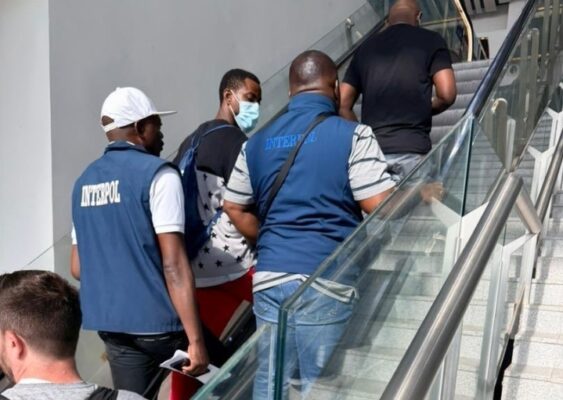
Congo will begin receiving migrants deported from the United States under a new third-country agreement with the Trump administration, the government said Sunday, becoming the latest African nation to participate in the program.

The Congolese Ministry of Communications said deportees are expected to arrive later this month, though officials did not provide details on the number of individuals or an exact timeline.

The government described the arrangement as temporary and said it reflects Congo’s commitment to humanitarian principles and international cooperation. It added that the United States would cover all logistical costs associated with the transfers.

The agreement is part of a broader effort by the Trump administration to deport migrants to countries other than their own. Similar deals have been reached with several other African nations.

According to a report by Democratic staff on the Senate Foreign Relations Committee, the United States has spent tens of millions of dollars to relocate hundreds of migrants under the program.

The policy has drawn criticism from lawyers and human rights advocates, who have raised concerns about the conditions in some of the receiving countries and the legal status of the deportees. Critics note that some migrants subject to these agreements have protections from U.S. immigration courts preventing their return to their countries of origin due to safety risks.

Congolese officials said each case would be reviewed individually in line with national laws and security considerations, and that there would be no automatic acceptance of deportees.

The development highlights ongoing debate over U.S. immigration policy and the use of third-country agreements, as well as broader concerns about the treatment and relocation of migrants.

The agreement underscores the expansion of third-country deportation policies as the United States seeks alternatives for migrants who cannot be returned to their home countries.

While Congo has framed the move as a humanitarian gesture, the lack of detailed information about implementation and oversight raises questions about how the arrangement will function in practice.

The involvement of countries with varying human rights records has been a central concern for critics, particularly regarding the safety and legal protections afforded to deportees.

As the program grows, its legal and ethical implications are likely to face increasing scrutiny both domestically and internationally.

AP

Lionel Messi Scores Inter Miami’s First Goal at New Stadium as Club Opens Landmark Venue

Lionel Messi made history Saturday night by scoring Inter Miami’s first goal at the club’s new stadium, marking the opening of the long-awaited venue in a 2-2 draw against Austin FC.

Messi’s equalizer came just minutes after Austin stunned the home crowd with an early goal, ensuring the Argentine star would become the first Inter Miami player to score at the new ground. The goal also added to his remarkable career total, pushing him past 900 goals.

The opening match at the 26,000-seat stadium drew a packed crowd and high-profile attendees, including club co-owner David Beckham, who celebrated the milestone moment alongside fans and family.

Austin took the lead in the sixth minute when Guilherme Biro scored with a header, briefly spoiling the celebratory atmosphere. Inter Miami responded quickly, with Messi rising to meet a cross and heading in the equalizer in the 11th minute.

The home side controlled much of the play and created several scoring opportunities, but the match remained level heading into halftime. Austin regained the lead in the second half when substitute Jayden Nelson finished a breakaway chance in the 54th minute.

Inter Miami pushed for another equalizer, with coach Javier Mascherano bringing on veteran forward Luis Suarez. The move paid off when Suarez scored from close range in the 83rd minute to level the match at 2-2.

Suarez appeared to have won the game late with a second goal, but it was disallowed for offside, leaving both teams to share the points.

The match marked Inter Miami’s first game in the city after years of playing in Fort Lauderdale, underscoring a new chapter for the club.

Before kickoff, Beckham addressed supporters and praised Messi’s impact, calling him the greatest player in the history of the sport. The stadium also features a section dedicated to Messi in recognition of his influence on the team.

The new venue is part of a larger development project valued at approximately $1 billion, which includes a hotel, retail space, public parks and community sports facilities. Club officials said the project was privately funded, though public funds were used for nearby road improvements.

The opening drew widespread attention, including from state officials, as fans celebrated the arrival of a permanent home for the team.

Inter Miami will return to action at the stadium next weekend when they host the New York Red Bulls.

Messi’s goal provided a fitting highlight for the stadium’s debut, reinforcing his central role in Inter Miami’s rise in global profile.

The event also represents a significant milestone for soccer in the United States, with the new venue positioning the club as a major presence in the league.

While the result itself was evenly balanced, the occasion carried greater importance, symbolizing both the club’s growth and its long-term ambitions.

The combination of star power, infrastructure investment and fan engagement suggests Inter Miami is entering a new phase as it seeks sustained success on and off the field.

Onefootball/Dailymail

Missing U.S. Aviator Rescued After Fighter Jet Shot Down in Iran

The United States has rescued a service member who had been missing behind enemy lines after a fighter jet was shot down over Iran, officials said Sunday, marking a dramatic recovery as the conflict continues to escalate.

The airman was recovered following a search-and-rescue operation launched after the Friday downing of an F-15E Strike Eagle. President Donald Trump said the service member was injured but in stable condition. A second crew member had already been rescued earlier.

“This brave warrior was behind enemy lines in the mountains of Iran, being hunted by our enemies,” Trump said in a social media post.

The aircraft was the first U.S. plane to go down inside Iran since the war began, highlighting the risks facing American forces despite repeated claims that Iran’s military capabilities have been severely weakened.

The war, which began with U.S. and Israeli strikes on Feb. 28, has killed thousands, disrupted global markets and driven up energy prices. Both sides have carried out attacks that have raised concerns about civilian casualties and potential violations of international law.

Iran has continued to strike economic and infrastructure targets in neighboring Gulf countries, showing no sign of backing down. Drone attacks in Kuwait damaged power plants and disrupted water facilities, while a separate strike in Bahrain caused a fire at an oil storage site. In the United Arab Emirates, debris from intercepted attacks sparked fires at a major industrial plant, halting production.

At the center of rising tensions is the Strait of Hormuz, a critical route for global energy shipments. Trump renewed his warning that Iran must reopen the waterway or face severe consequences, setting a new deadline and threatening further military action.

Iranian officials responded with warnings of their own, signaling the possibility of broader retaliation across the region.

Despite the escalating rhetoric, diplomatic efforts are ongoing. Officials said mediators from several countries are working to bring both sides to the negotiating table, with proposals that include a temporary halt in fighting to allow for talks.

The rescue operation itself underscored the complexity and danger of missions conducted deep inside hostile territory. U.S. officials said multiple aircraft were involved, and additional complications arose during the mission, including equipment failures and reports of enemy fire.

Iranian state media claimed several U.S. aircraft were destroyed during the operation, though American officials have disputed those accounts.

The incident also drew attention to the vulnerability of U.S. aircraft operating over Iran. In a separate event, an A-10 aircraft supporting the rescue mission was damaged and later crashed after its pilot safely ejected and was recovered.

The conflict has already resulted in significant casualties across the region, including U.S. service members, civilians and combatants. It has also displaced large numbers of people and heightened fears of a wider regional war.

The successful rescue of the missing aviator represents a significant operational achievement for the U.S. military, particularly given the risks of conducting missions in hostile territory.

However, the downing of the aircraft and the challenges faced during the recovery highlight the limits of air dominance in a contested environment. Iran’s ability to continue targeting U.S. assets suggests that, despite sustained strikes, it retains operational capabilities.

At the same time, the broader conflict is placing increasing strain on regional stability, with attacks on critical infrastructure and threats to key shipping routes carrying global economic implications.

As diplomatic efforts continue, the situation remains highly volatile, with the potential for further escalation still looming.

AP/NBC

U.S. Military Aircraft Shot Down in Iran Mark First Combat Losses in Over 20 Years

0

The downing of U.S. military aircraft during the ongoing war with Iran marks the first time in more than two decades that American planes have been brought down by enemy fire, underscoring the continued threat posed by Iran despite claims its military capabilities have been significantly weakened.

Iranian forces shot down a U.S. F-15E Strike Eagle fighter jet on Friday, according to American officials. One crew member has been rescued, while search efforts continue for a second. Iranian state media also reported that a U.S. A-10 attack aircraft crashed after being struck during operations.

The last confirmed instance of a U.S. fighter jet being shot down in combat occurred in 2003 during the invasion of Iraq, when an A-10 aircraft was hit by a surface-to-air missile over Baghdad. The pilot in that case successfully ejected and was rescued.

Military analysts say such incidents have been rare in recent decades largely because U.S. forces have primarily faced insurgent groups lacking advanced air defense systems. The situation in Iran, however, presents a more capable adversary with the means to target aircraft.

“This had not happened until now largely because of the nature of previous conflicts,” said a retired Air Force general and former fighter pilot. “U.S. aircraft have been operating in contested environments here and facing threats daily.”

U.S. Central Command said American forces have flown more than 13,000 missions and struck over 12,000 targets since the conflict began. Despite sustained airstrikes by the United States and Israel, Iran has continued to launch attacks across the region, contributing to instability and economic disruption.

Experts say the aircraft may have been brought down by a portable, shoulder-fired missile, which is more difficult to detect than larger systems. Others noted that U.S. aircraft have been operating at lower altitudes, increasing their vulnerability to such weapons.

While the U.S. maintains a strong advantage in the air, analysts caution that the distinction between air superiority and complete control remains significant. Even weakened air defense systems can still pose a danger.

“This shows that even a degraded system can still be effective,” said a defense analyst. “It should not be surprising that they are still able to fight back.”

Despite the losses, some defense experts described the broader air campaign as effective, noting that historically, wartime aircraft losses have been far higher. However, they also pointed out that public tolerance for casualties in modern conflicts is significantly lower.

Pilots operating in high-risk environments are trained extensively for such scenarios, including how to evade incoming missiles, eject safely and communicate their location for rescue. Recovery operations themselves carry significant risk, particularly for helicopters, which are more vulnerable due to their lower speed and altitude.

The recent rescue mission highlighted those dangers, as helicopters involved in retrieving a downed pilot came under fire, resulting in injuries to personnel.

The incidents highlight both the intensity of the conflict and the evolving risks faced by U.S. forces, as the war shows no immediate signs of ending.

The loss of U.S. aircraft in Iran represents a notable shift in the conflict, demonstrating that despite sustained strikes, Iran retains the ability to challenge American air operations.

While the overall campaign may still favor the United States, the incidents expose vulnerabilities that could influence military strategy, particularly regarding flight altitude and mission planning.

At the same time, the psychological and political impact of such losses may weigh heavily, especially in a conflict where public support is limited.

As operations continue, the balance between maintaining pressure and managing risk will remain a central challenge for U.S. military leadership.

The Associated Press

Burkina Faso Military Ruler Says Democracy ‘Isn’t for Us’

Burkina Faso’s military leader Ibrahim Traoré said the country’s people should abandon the idea of democracy, declaring it “isn’t for us” in remarks that signal his intention to extend military rule.

Traoré, who seized power in a coup in September 2022, made the comments during an interview with the state broadcaster. His government has increasingly tightened control, banning political parties earlier this year after previously suspending political activity.

“We must tell the truth,” Traoré said. “People need to forget about democracy.”

The 37-year-old leader dismissed democratic governance as harmful, arguing that it leads to violence against civilians and destruction of infrastructure. He also indicated that elections are not a priority, despite earlier promises of a transition back to civilian rule.

Following the coup, the military government had pledged to hold elections by 2024. However, the timeline was later extended, allowing Traoré to remain in power until at least 2029. He has since said elections will not be held until the country is secure enough for nationwide voting.

Burkina Faso has been grappling with a long-running armed insurgency that has killed thousands and displaced millions over the past decade. The violence continues to strain the country’s security forces and complicate any return to civilian governance.

Traoré has gained support in parts of Africa for his criticism of Western influence, often invoking the legacy of former leader Thomas Sankara. However, his administration has faced mounting criticism over its human rights record and inability to curb the violence.

A recent report by Human Rights Watch alleged that more than 1,800 civilians have been killed since 2023 by government forces, allied militias and armed groups. The report accused all sides of committing serious abuses, including unlawful killings and forced displacement. The government has denied the allegations and banned the organization, along with several international media outlets that reported on its findings.

The military leadership in Burkina Faso mirrors developments in neighboring Mali and Niger, where coups have also led to the suspension of democratic institutions and the dissolution of political parties.

As the security crisis persists, Traoré’s remarks underscore a broader shift away from democratic governance in parts of West Africa, raising concerns about long-term stability and the future of civilian rule in the region.

Traoré’s rejection of democracy reflects a growing trend among military-led governments in the region, where security concerns are increasingly used to justify prolonged rule without elections.

While the government argues that stability must come before democratic processes, critics say the suspension of political freedoms risks deepening instability and alienating large segments of the population.

At the same time, the continued violence and allegations of human rights abuses highlight the challenges facing the military government as it attempts to assert control over the country.

The absence of a clear path back to civilian rule is likely to remain a key point of tension both domestically and internationally.

Reuters

Rescued U.S. Crew Member Found After Fighter Jet Downed in Iran as Search Continues

One crew member from a United States fighter jet shot down over Iran has been rescued, while efforts continue to locate a second service member still missing, according to U.S. officials cited in media reports.

The rescued pilot was recovered by two U.S. military helicopters after ejecting from the aircraft, identified as an F-15E Strike Eagle. During the operation, one of the helicopters came under small arms fire, injuring personnel on board. The aircraft was able to land safely, and those wounded are receiving medical treatment before being transferred for further care.

Search operations remain underway for the second crew member, a weapons systems officer who was also aboard the jet when it was downed.

In a separate incident tied to the rescue mission, a U.S. A-10 aircraft was damaged after coming under fire. Its pilot ejected over nearby waters and was successfully recovered, according to officials.

The downing of the aircraft and subsequent rescue efforts underscore the dangers facing U.S. forces operating in the region amid the ongoing conflict. The Pentagon has not issued an official statement on the incidents.

Officials from both the United States and Israel, speaking on condition of anonymity due to the sensitivity of the situation, confirmed that at least one crew member had been safely recovered.

Meanwhile, civilians in Iran reported witnessing the intensifying conflict firsthand. A resident in central Tehran described seeing a projectile streak overhead followed by an explosion, with smoke rising from an area that includes key government buildings and a major medical research center.

Iranian authorities confirmed that the facility was struck, while residents also reported damage to nearby police stations.

Iranian state media has claimed responsibility for shooting down the U.S. aircraft. The F-15E is a two-seat fighter jet equipped with advanced systems and emergency locator equipment designed to assist in recovery operations after an ejection.

The incident comes as fighting between Iran, the United States and Israel continues to escalate, with both sides carrying out strikes across multiple locations.

The successful recovery of one crew member highlights the effectiveness of U.S. search-and-rescue operations, even in hostile environments. However, the injuries sustained during the mission and the ongoing search for a second crew member illustrate the significant risks involved.

The damage to an additional aircraft during the rescue effort further emphasizes the contested nature of the airspace, challenging earlier claims of full operational control.

At the same time, reports from civilians in Tehran point to the widening impact of the conflict on populated areas and critical infrastructure. As strikes extend deeper into urban centers, the risk to civilians and essential services increases.

The situation remains fluid, with the fate of the missing crew member and the potential for further escalation continuing to shape the course of the conflict.

Iran Downs U.S. Fighter Jet, Escalating Tensions in Ongoing War

Iran shot down a United States fighter jet on Friday, marking the first confirmed loss of a U.S. warplane in the five-week conflict and sharply raising tensions between the two sides, officials said.

According to a U.S. source, one crew member ejected and was rescued, while a second remains missing. The aircraft was identified by analysts as a two-seat F-15E Strike Eagle, based on images circulating online.

The incident highlights the continuing risks facing U.S. and Israeli aircraft operating over Iran, despite claims by President Donald Trump and Defense Secretary Pete Hegseth that their forces have achieved full control of the airspace.

In a separate incident, a second U.S. Air Force aircraft crashed in the Gulf region on the same day, with its pilot safely recovered, according to a report citing U.S. officials.

Iranian state media reported that local residents fired at U.S. helicopters involved in search and rescue efforts following the downing of the jet. Iran’s elite military force said it was searching the area where the aircraft came down in the southwest of the country, while a regional official promised rewards for capturing or killing what were described as enemy personnel.

The Pentagon and U.S. Central Command did not immediately comment on the reports.

The downing of the aircraft adds urgency to a conflict that shows no signs of easing. The possibility that a U.S. service member may still be on the ground inside Iran increases pressure on Washington, particularly as the war continues with limited public support at home.

Diplomatic efforts to end the fighting appear stalled. Iran has reportedly told mediators it will not engage in upcoming talks, and attempts to secure a ceasefire have reached an impasse.

The war began on Feb. 28 with a wave of U.S. and Israeli strikes and has since expanded across the region. Thousands have been killed, and the conflict has begun to strain the global economy.

The United States has reported 13 military deaths and more than 300 wounded since the fighting began. Iran has launched repeated missile and drone attacks on Israel and has also targeted countries in the Gulf aligned with the United States, though those nations have largely avoided direct involvement.

Security concerns are growing beyond the immediate battlefield. The U.S. Embassy in Lebanon issued an alert warning that Iran and allied armed groups could target civilian locations, urging American citizens to leave while commercial flights remain available.

Meanwhile, Israel has intensified operations in Lebanon against an armed group aligned with Iran, further widening the conflict.

President Trump on Friday threatened additional strikes on Iranian infrastructure, including bridges and power plants. Iran responded by targeting critical facilities in the region, including a power and water site in Kuwait, highlighting the vulnerability of infrastructure in Gulf countries.

Drone strikes also hit an aid warehouse in southern Iran, while attacks were reported or intercepted in Saudi Arabia and the United Arab Emirates. In Israel, missile debris landed near a major port city that houses key energy facilities.

Global markets reacted to the escalating conflict, with oil prices rising sharply amid concerns about prolonged instability and disruptions to supply.

The downing of a U.S. fighter jet marks a significant escalation in the conflict, demonstrating that Iran retains the capability to challenge advanced military aircraft. This development undermines claims of complete air superiority and introduces new risks for ongoing operations.

The possibility of a missing U.S. service member inside Iran adds a sensitive dimension, as recovery efforts could further intensify military activity or complicate diplomatic options.

At the same time, the conflict continues to expand geographically, drawing in additional countries and increasing the risk of a broader regional war. Attacks on infrastructure, particularly energy and water facilities, signal a shift toward targeting systems critical to civilian life and economic stability.

With diplomatic efforts stalled and both sides signaling continued military action, the likelihood of a near-term resolution appears low. The situation remains highly volatile, with potential consequences for global security and economic stability.

AP/Reuters

UK-Led Coalition of 40 Nations Pledges Action to Reopen Key Oil Shipping Route

A coalition led by the United Kingdom and involving about 40 countries has pledged to take action to restore shipping through a critical global oil route after Iran effectively shut it down during the ongoing war with the United States and Israel.

Britain’s Foreign Secretary Yvette Cooper, right, attends a virtual summit at the Foreign & Commonwealth Office in London, on Thursday April 2, 2026, with around 35 countries to discuss ways of reopening the Strait of Hormuz. (Leon Neal/Pool Photo via AP)

British Foreign Secretary Yvette Cooper accused Iran of blocking the passage and disrupting the global economy, saying the move has put international trade at risk. Speaking at a virtual meeting Thursday, she said Iran had “seized control of a vital shipping route to pressure the global economy.”

The narrow waterway, which connects oil-producing states to international markets, has seen traffic nearly come to a halt following repeated attacks on commercial vessels and growing security threats. Before the conflict began, about one-fifth of the world’s traded oil moved through the route.

The meeting brought together major economies including the United Kingdom, France, Germany, Italy, Canada and Japan, along with several Gulf nations. Participants signed a joint statement calling on Iran to stop interfering with shipping and committing to efforts to ensure safe passage for vessels.

The United States did not take part in the talks. President Donald Trump has said that securing the route should not be the responsibility of the United States alone, urging other nations that rely on the shipments to take the lead.

Despite the strong language, officials indicated that any response would focus on diplomacy and coordination rather than military action while fighting continues. British Prime Minister Keir Starmer has made clear that his government does not intend to enter the conflict directly.

Military planners from several countries are expected to meet in the coming days to discuss how to protect shipping once hostilities end. Possible measures include clearing hazards from the water and providing security assurances to commercial operators.

French President Emmanuel Macron said a military effort to force the route open during the conflict would not be practical, warning that ships would face significant risks from coastal defenses and advanced weapons systems.

The disruption has already had major economic consequences. Oil prices have surged sharply, with global benchmarks rising significantly since the start of the conflict. The increase has raised concerns about inflation, higher fuel costs and broader impacts on global supply chains.

Shipping data shows that attacks on vessels have effectively stopped most traffic through the route. Several countries have begun exploring alternative ways to move energy supplies, including pipelines and land transport, though these options are limited.

Iran has indicated that some ships may still pass under certain conditions but has warned that vessels linked to countries involved in the conflict could be targeted. Officials in Tehran have also proposed new rules that would require ships to obtain permission before entering the waterway, a move that has drawn criticism from European leaders who say it would violate international law.

European Union officials have rejected any system that would require payments or special approval for passage, arguing that the route must remain open to all under existing global agreements.

The conflict, which began in late February, has expanded across the region and continues to drive instability in financial markets. Stock prices have fluctuated, and energy costs have climbed, increasing pressure on governments to find a resolution.

The formation of a broad international coalition reflects growing concern over the vulnerability of global energy supply routes. The disruption of a single passage has had an outsized impact on markets, highlighting how dependent the global economy remains on a small number of critical transit points.

At the same time, the reluctance to use military force underscores the risks of further escalation. Any direct intervention could widen the conflict and expose shipping and infrastructure to even greater danger.

The situation also reveals shifting dynamics in global security. With the United States stepping back from a leading role in securing the route, other nations are being pushed to take greater responsibility, though their willingness and capability to do so remain uncertain.

If the route remains restricted, the long-term effects could include sustained high energy prices, supply shortages and increased pressure on economies worldwide. The crisis may also accelerate efforts to diversify energy transport routes and reduce reliance on vulnerable chokepoints.

Aljazeera/Reuters

At Least 43 Killed in Islamic State Rebel Attack in Eastern Congo as Violence Intensifies

At least 43 people were killed in a brutal attack by a rebel group in the eastern Democratic Republic of Congo, the army said Thursday, as violence against civilians continues to escalate in the region.

The assault took place Wednesday in the village of Bafwakoa in Ituri province, where attackers also burned dozens of homes. Army spokesperson Lt. Jules Tshikudi Ngongo said at least 44 houses were destroyed and warned that the death toll could rise as search operations continue.

Authorities blamed the attack on the Allied Democratic Forces, a long-running armed group with ties to a global extremist network. The group has carried out repeated attacks in eastern Congo, often targeting civilians in remote communities.

Local officials described a scene of devastation. Some victims were killed with machetes, while others were trapped and burned inside their homes as buildings were set on fire. At least two people were abducted during the нападение, according to local leaders.

Baptiste Munyapandi, the territorial administrator of Mambasa, said search teams are still working in the area and that additional victims may be found. Community members reported that the attackers struck quickly and left before security forces could respond.

The Congolese army has struggled to contain the group, which operates in dense forest areas near the border with Uganda. Despite joint military operations launched in 2021 by Congolese and Ugandan forces, the rebels remain active and continue to carry out deadly raids.

Ngongo said the group typically avoids direct confrontations with the military and instead targets civilians. “They attack the population in a way that undermines peace efforts and serves as retaliation against communities,” he said.

Violence in eastern Congo has grown more complex as multiple armed groups compete for control of territory and resources. Among them is another major rebel movement that seized key cities in the region last year, further destabilizing the area.

Data from research organizations tracking violence shows the Allied Democratic Forces are responsible for a significant share of attacks on civilians in eastern Congo over recent years. The group originated in Uganda in the late 1990s and later aligned itself with an international extremist network.

Attacks by the group have intensified in recent months across Ituri and neighboring North Kivu province. Last year alone, dozens of civilians were killed in similar assaults, with many others abducted.

The ongoing violence has displaced thousands of people and deepened a humanitarian crisis in eastern Congo, where communities remain vulnerable despite continued military efforts to restore stability.

The latest attack highlights the persistent insecurity in eastern Congo, where armed groups exploit weak state control and difficult terrain to operate with relative freedom. Despite years of military campaigns, including cross-border cooperation, rebel groups have adapted their tactics to avoid direct battles and instead focus on soft targets.

Targeting civilians allows these groups to spread fear, disrupt local governance and undermine confidence in security forces. It also complicates efforts to stabilize the region, as communities are left exposed even when military operations are ongoing.

The continued presence of multiple armed factions further complicates the situation. Competition among groups not only fuels violence but also makes coordinated responses more difficult for government forces and international partners.

Unless there is sustained improvement in security coordination and governance, attacks like this are likely to continue, prolonging instability and humanitarian suffering in one of Africa’s most conflict-affected regions.

Reuters/CNN/Aljazeera

Iran Launches New Missile Strikes on Israel and Gulf States as Trump Says Threat Is Fading

Iran launched a fresh wave of missile attacks targeting Israel and several Gulf states on Thursday, signaling that its military capabilities remain intact even as President Donald Trump declared that the threat from Tehran was close to being neutralized.

Explosions were heard across parts of the region as air defense systems responded to incoming missiles. In Dubai, blasts echoed shortly before Trump addressed the American public, while sirens sounded in Bahrain, home to the U.S. Navy’s Fifth Fleet, soon after his remarks concluded. Israel also confirmed it was intercepting missiles as alerts spread across multiple areas.

The renewed strikes came as Trump said U.S. military operations had achieved major progress, stating in a national address that “core strategic objectives are nearing completion.” He also argued that Iran was no longer a significant threat, a claim quickly rejected by officials in Tehran.

A spokesperson for Iran’s military, Lt. Col. Ebrahim Zolfaghari, said the country retains undisclosed weapons stockpiles and production sites, adding that facilities hit so far by U.S. strikes were of limited importance. His comments reflected a defiant tone from Iran’s leadership as the conflict continues to escalate.

The fighting has spread across several countries, with Israeli operations in Lebanon intensifying. Health authorities there said at least 27 people were killed in the past 24 hours. Since the war began on Feb. 28, more than 1,900 people have been killed in Iran, compared with 19 reported deaths in Israel. Additional casualties have been recorded in Gulf countries and the West Bank, while the United States has confirmed the deaths of 13 service members.

The conflict has also caused widespread displacement. In Lebanon alone, more than 1 million people have been forced from their homes, with over 1,300 fatalities reported. Israeli forces have also lost 10 soldiers in the fighting there.

Beyond the battlefield, the war is having a major impact on global energy markets. Iran’s actions in the narrow waterway that connects the Gulf to open seas have sharply reduced shipping traffic, disrupting oil supplies worldwide. Before the conflict began, roughly one-fifth of the world’s traded oil passed through the route.

Shipping data cited by Reuters shows traffic through the waterway has dropped by more than 90 percent compared with the same period last year. Attacks on commercial vessels and the threat of further strikes have effectively halted most transit.

Countries that rely heavily on energy shipments have begun seeking alternatives. Saudi Arabia redirected large volumes of oil through pipelines, while Iraq has started transporting crude by land routes to bypass the affected area.

Nearly three dozen nations held talks on Thursday to address the situation, focusing on diplomatic and logistical measures to restore shipping once hostilities subside. The discussions included major industrial economies and several Gulf states, though the United States did not participate.

British Foreign Secretary Yvette Cooper said military planners from several countries are preparing options to secure the route after the conflict ends, including clearing hazards and providing protection for commercial vessels. However, no country has signaled a willingness to use force to reopen the passage while fighting continues.

French President Emmanuel Macron, speaking during a visit to South Korea, described the idea of a military operation to secure the route as unrealistic under current conditions.

Trump, in his address, suggested that nations dependent on energy supplies should take responsibility for reopening the route, urging them to act rather than rely on U.S. intervention. He indicated that while force could be used, it would not necessarily be led by the United States.

Meanwhile, strikes continued inside Iran. State media said an attack hit a major bridge project, with reports of casualties. Trump shared video online that he said showed the structure collapsing, warning that further actions could follow. Iran’s foreign minister criticized the strike, describing it as an attack on civilian infrastructure.

The economic effects of the conflict are becoming increasingly visible. Oil prices have surged sharply, with U.S. crude trading above $111 per barrel, up roughly 50 percent since the start of the war. Rising fuel costs are beginning to affect household budgets and could drive up prices for goods and services worldwide.

Air travel has also been affected, with disruptions to jet fuel supplies adding pressure to an already strained global transportation network.

The latest exchange of strikes underscores a key reality of the conflict: while military operations may degrade certain capabilities, they rarely eliminate them entirely. Iran’s continued ability to launch coordinated attacks suggests that its military infrastructure is more resilient and dispersed than initially assumed.

At the same time, control over critical energy routes has emerged as one of Iran’s strongest strategic tools. By disrupting shipping rather than relying solely on direct military confrontation, Tehran is able to exert pressure on the global economy, affecting countries far beyond the immediate conflict zone.

The sharp reduction in shipping traffic highlights how vulnerable global supply chains remain to geopolitical shocks. Even temporary disruptions can lead to significant price increases, with ripple effects across industries and national economies.

Trump’s stance that other nations should take the lead in securing the route reflects a broader shift in U.S. foreign policy, placing greater responsibility on allies. However, the reluctance of other countries to engage militarily suggests limits to that approach, particularly in a high-risk environment.

If the conflict continues, energy markets are likely to remain volatile, and the risk of further escalation will persist. The situation also raises longer-term questions about energy security and the need for diversified supply routes to reduce dependence on critical chokepoints.

The Associated Press