Home Blog Page 33

Iran Downs U.S. Fighter Jet, Escalating Tensions in Ongoing War

0

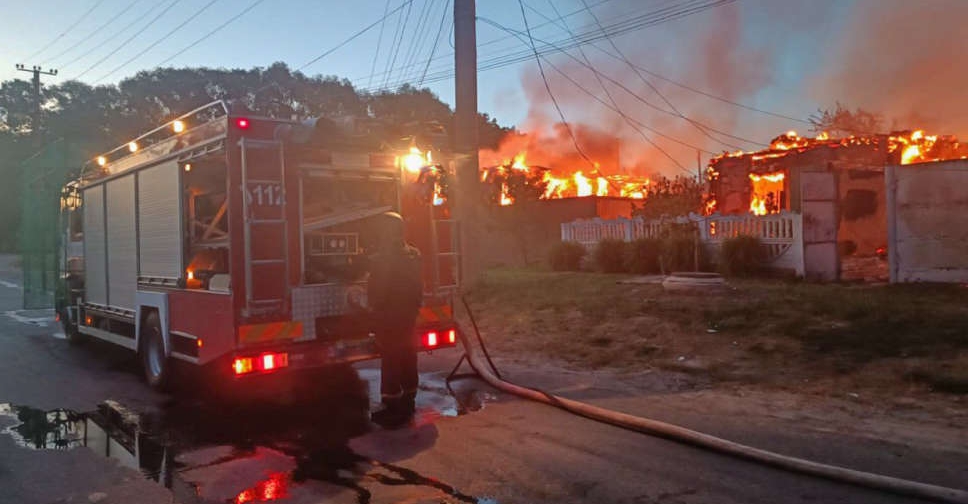
Iran shot down a United States fighter jet on Friday, marking the first confirmed loss of a U.S. warplane in the five-week conflict and sharply raising tensions between the two sides, officials said.

According to a U.S. source, one crew member ejected and was rescued, while a second remains missing. The aircraft was identified by analysts as a two-seat F-15E Strike Eagle, based on images circulating online.

The incident highlights the continuing risks facing U.S. and Israeli aircraft operating over Iran, despite claims by President Donald Trump and Defense Secretary Pete Hegseth that their forces have achieved full control of the airspace.

In a separate incident, a second U.S. Air Force aircraft crashed in the Gulf region on the same day, with its pilot safely recovered, according to a report citing U.S. officials.

Iranian state media reported that local residents fired at U.S. helicopters involved in search and rescue efforts following the downing of the jet. Iran’s elite military force said it was searching the area where the aircraft came down in the southwest of the country, while a regional official promised rewards for capturing or killing what were described as enemy personnel.

The Pentagon and U.S. Central Command did not immediately comment on the reports.

The downing of the aircraft adds urgency to a conflict that shows no signs of easing. The possibility that a U.S. service member may still be on the ground inside Iran increases pressure on Washington, particularly as the war continues with limited public support at home.

Diplomatic efforts to end the fighting appear stalled. Iran has reportedly told mediators it will not engage in upcoming talks, and attempts to secure a ceasefire have reached an impasse.

The war began on Feb. 28 with a wave of U.S. and Israeli strikes and has since expanded across the region. Thousands have been killed, and the conflict has begun to strain the global economy.

The United States has reported 13 military deaths and more than 300 wounded since the fighting began. Iran has launched repeated missile and drone attacks on Israel and has also targeted countries in the Gulf aligned with the United States, though those nations have largely avoided direct involvement.

Security concerns are growing beyond the immediate battlefield. The U.S. Embassy in Lebanon issued an alert warning that Iran and allied armed groups could target civilian locations, urging American citizens to leave while commercial flights remain available.

Meanwhile, Israel has intensified operations in Lebanon against an armed group aligned with Iran, further widening the conflict.

President Trump on Friday threatened additional strikes on Iranian infrastructure, including bridges and power plants. Iran responded by targeting critical facilities in the region, including a power and water site in Kuwait, highlighting the vulnerability of infrastructure in Gulf countries.

Drone strikes also hit an aid warehouse in southern Iran, while attacks were reported or intercepted in Saudi Arabia and the United Arab Emirates. In Israel, missile debris landed near a major port city that houses key energy facilities.

Global markets reacted to the escalating conflict, with oil prices rising sharply amid concerns about prolonged instability and disruptions to supply.

The downing of a U.S. fighter jet marks a significant escalation in the conflict, demonstrating that Iran retains the capability to challenge advanced military aircraft. This development undermines claims of complete air superiority and introduces new risks for ongoing operations.

The possibility of a missing U.S. service member inside Iran adds a sensitive dimension, as recovery efforts could further intensify military activity or complicate diplomatic options.

At the same time, the conflict continues to expand geographically, drawing in additional countries and increasing the risk of a broader regional war. Attacks on infrastructure, particularly energy and water facilities, signal a shift toward targeting systems critical to civilian life and economic stability.

With diplomatic efforts stalled and both sides signaling continued military action, the likelihood of a near-term resolution appears low. The situation remains highly volatile, with potential consequences for global security and economic stability.

AP/Reuters

UK-Led Coalition of 40 Nations Pledges Action to Reopen Key Oil Shipping Route

0
Britain's Foreign Secretary Yvette Cooper, right, attends a virtual summit at the Foreign & Commonwealth Office in London, on Thursday April 2, 2026, with around 35 countries to discuss ways of reopening the Strait of Hormuz. (Leon Neal/Pool Photo via AP)

A coalition led by the United Kingdom and involving about 40 countries has pledged to take action to restore shipping through a critical global oil route after Iran effectively shut it down during the ongoing war with the United States and Israel.

Britain’s Foreign Secretary Yvette Cooper, right, attends a virtual summit at the Foreign & Commonwealth Office in London, on Thursday April 2, 2026, with around 35 countries to discuss ways of reopening the Strait of Hormuz. (Leon Neal/Pool Photo via AP)

British Foreign Secretary Yvette Cooper accused Iran of blocking the passage and disrupting the global economy, saying the move has put international trade at risk. Speaking at a virtual meeting Thursday, she said Iran had “seized control of a vital shipping route to pressure the global economy.”

The narrow waterway, which connects oil-producing states to international markets, has seen traffic nearly come to a halt following repeated attacks on commercial vessels and growing security threats. Before the conflict began, about one-fifth of the world’s traded oil moved through the route.

The meeting brought together major economies including the United Kingdom, France, Germany, Italy, Canada and Japan, along with several Gulf nations. Participants signed a joint statement calling on Iran to stop interfering with shipping and committing to efforts to ensure safe passage for vessels.

The United States did not take part in the talks. President Donald Trump has said that securing the route should not be the responsibility of the United States alone, urging other nations that rely on the shipments to take the lead.

Despite the strong language, officials indicated that any response would focus on diplomacy and coordination rather than military action while fighting continues. British Prime Minister Keir Starmer has made clear that his government does not intend to enter the conflict directly.

Military planners from several countries are expected to meet in the coming days to discuss how to protect shipping once hostilities end. Possible measures include clearing hazards from the water and providing security assurances to commercial operators.

French President Emmanuel Macron said a military effort to force the route open during the conflict would not be practical, warning that ships would face significant risks from coastal defenses and advanced weapons systems.

The disruption has already had major economic consequences. Oil prices have surged sharply, with global benchmarks rising significantly since the start of the conflict. The increase has raised concerns about inflation, higher fuel costs and broader impacts on global supply chains.

Shipping data shows that attacks on vessels have effectively stopped most traffic through the route. Several countries have begun exploring alternative ways to move energy supplies, including pipelines and land transport, though these options are limited.

Iran has indicated that some ships may still pass under certain conditions but has warned that vessels linked to countries involved in the conflict could be targeted. Officials in Tehran have also proposed new rules that would require ships to obtain permission before entering the waterway, a move that has drawn criticism from European leaders who say it would violate international law.

European Union officials have rejected any system that would require payments or special approval for passage, arguing that the route must remain open to all under existing global agreements.

The conflict, which began in late February, has expanded across the region and continues to drive instability in financial markets. Stock prices have fluctuated, and energy costs have climbed, increasing pressure on governments to find a resolution.

The formation of a broad international coalition reflects growing concern over the vulnerability of global energy supply routes. The disruption of a single passage has had an outsized impact on markets, highlighting how dependent the global economy remains on a small number of critical transit points.

At the same time, the reluctance to use military force underscores the risks of further escalation. Any direct intervention could widen the conflict and expose shipping and infrastructure to even greater danger.

The situation also reveals shifting dynamics in global security. With the United States stepping back from a leading role in securing the route, other nations are being pushed to take greater responsibility, though their willingness and capability to do so remain uncertain.

If the route remains restricted, the long-term effects could include sustained high energy prices, supply shortages and increased pressure on economies worldwide. The crisis may also accelerate efforts to diversify energy transport routes and reduce reliance on vulnerable chokepoints.

Aljazeera/Reuters

At Least 43 Killed in Islamic State Rebel Attack in Eastern Congo as Violence Intensifies

0

At least 43 people were killed in a brutal attack by a rebel group in the eastern Democratic Republic of Congo, the army said Thursday, as violence against civilians continues to escalate in the region.

The assault took place Wednesday in the village of Bafwakoa in Ituri province, where attackers also burned dozens of homes. Army spokesperson Lt. Jules Tshikudi Ngongo said at least 44 houses were destroyed and warned that the death toll could rise as search operations continue.

Authorities blamed the attack on the Allied Democratic Forces, a long-running armed group with ties to a global extremist network. The group has carried out repeated attacks in eastern Congo, often targeting civilians in remote communities.

Local officials described a scene of devastation. Some victims were killed with machetes, while others were trapped and burned inside their homes as buildings were set on fire. At least two people were abducted during the нападение, according to local leaders.

Baptiste Munyapandi, the territorial administrator of Mambasa, said search teams are still working in the area and that additional victims may be found. Community members reported that the attackers struck quickly and left before security forces could respond.

The Congolese army has struggled to contain the group, which operates in dense forest areas near the border with Uganda. Despite joint military operations launched in 2021 by Congolese and Ugandan forces, the rebels remain active and continue to carry out deadly raids.

Ngongo said the group typically avoids direct confrontations with the military and instead targets civilians. “They attack the population in a way that undermines peace efforts and serves as retaliation against communities,” he said.

Violence in eastern Congo has grown more complex as multiple armed groups compete for control of territory and resources. Among them is another major rebel movement that seized key cities in the region last year, further destabilizing the area.

Data from research organizations tracking violence shows the Allied Democratic Forces are responsible for a significant share of attacks on civilians in eastern Congo over recent years. The group originated in Uganda in the late 1990s and later aligned itself with an international extremist network.

Attacks by the group have intensified in recent months across Ituri and neighboring North Kivu province. Last year alone, dozens of civilians were killed in similar assaults, with many others abducted.

The ongoing violence has displaced thousands of people and deepened a humanitarian crisis in eastern Congo, where communities remain vulnerable despite continued military efforts to restore stability.

The latest attack highlights the persistent insecurity in eastern Congo, where armed groups exploit weak state control and difficult terrain to operate with relative freedom. Despite years of military campaigns, including cross-border cooperation, rebel groups have adapted their tactics to avoid direct battles and instead focus on soft targets.

Targeting civilians allows these groups to spread fear, disrupt local governance and undermine confidence in security forces. It also complicates efforts to stabilize the region, as communities are left exposed even when military operations are ongoing.

The continued presence of multiple armed factions further complicates the situation. Competition among groups not only fuels violence but also makes coordinated responses more difficult for government forces and international partners.

Unless there is sustained improvement in security coordination and governance, attacks like this are likely to continue, prolonging instability and humanitarian suffering in one of Africa’s most conflict-affected regions.

Reuters/CNN/Aljazeera

Iran Launches New Missile Strikes on Israel and Gulf States as Trump Says Threat Is Fading

0

Iran launched a fresh wave of missile attacks targeting Israel and several Gulf states on Thursday, signaling that its military capabilities remain intact even as President Donald Trump declared that the threat from Tehran was close to being neutralized.

Explosions were heard across parts of the region as air defense systems responded to incoming missiles. In Dubai, blasts echoed shortly before Trump addressed the American public, while sirens sounded in Bahrain, home to the U.S. Navy’s Fifth Fleet, soon after his remarks concluded. Israel also confirmed it was intercepting missiles as alerts spread across multiple areas.

The renewed strikes came as Trump said U.S. military operations had achieved major progress, stating in a national address that “core strategic objectives are nearing completion.” He also argued that Iran was no longer a significant threat, a claim quickly rejected by officials in Tehran.

A spokesperson for Iran’s military, Lt. Col. Ebrahim Zolfaghari, said the country retains undisclosed weapons stockpiles and production sites, adding that facilities hit so far by U.S. strikes were of limited importance. His comments reflected a defiant tone from Iran’s leadership as the conflict continues to escalate.

The fighting has spread across several countries, with Israeli operations in Lebanon intensifying. Health authorities there said at least 27 people were killed in the past 24 hours. Since the war began on Feb. 28, more than 1,900 people have been killed in Iran, compared with 19 reported deaths in Israel. Additional casualties have been recorded in Gulf countries and the West Bank, while the United States has confirmed the deaths of 13 service members.

The conflict has also caused widespread displacement. In Lebanon alone, more than 1 million people have been forced from their homes, with over 1,300 fatalities reported. Israeli forces have also lost 10 soldiers in the fighting there.

Beyond the battlefield, the war is having a major impact on global energy markets. Iran’s actions in the narrow waterway that connects the Gulf to open seas have sharply reduced shipping traffic, disrupting oil supplies worldwide. Before the conflict began, roughly one-fifth of the world’s traded oil passed through the route.

Shipping data cited by Reuters shows traffic through the waterway has dropped by more than 90 percent compared with the same period last year. Attacks on commercial vessels and the threat of further strikes have effectively halted most transit.

Countries that rely heavily on energy shipments have begun seeking alternatives. Saudi Arabia redirected large volumes of oil through pipelines, while Iraq has started transporting crude by land routes to bypass the affected area.

Nearly three dozen nations held talks on Thursday to address the situation, focusing on diplomatic and logistical measures to restore shipping once hostilities subside. The discussions included major industrial economies and several Gulf states, though the United States did not participate.

British Foreign Secretary Yvette Cooper said military planners from several countries are preparing options to secure the route after the conflict ends, including clearing hazards and providing protection for commercial vessels. However, no country has signaled a willingness to use force to reopen the passage while fighting continues.

French President Emmanuel Macron, speaking during a visit to South Korea, described the idea of a military operation to secure the route as unrealistic under current conditions.

Trump, in his address, suggested that nations dependent on energy supplies should take responsibility for reopening the route, urging them to act rather than rely on U.S. intervention. He indicated that while force could be used, it would not necessarily be led by the United States.

Meanwhile, strikes continued inside Iran. State media said an attack hit a major bridge project, with reports of casualties. Trump shared video online that he said showed the structure collapsing, warning that further actions could follow. Iran’s foreign minister criticized the strike, describing it as an attack on civilian infrastructure.

The economic effects of the conflict are becoming increasingly visible. Oil prices have surged sharply, with U.S. crude trading above $111 per barrel, up roughly 50 percent since the start of the war. Rising fuel costs are beginning to affect household budgets and could drive up prices for goods and services worldwide.

Air travel has also been affected, with disruptions to jet fuel supplies adding pressure to an already strained global transportation network.

The latest exchange of strikes underscores a key reality of the conflict: while military operations may degrade certain capabilities, they rarely eliminate them entirely. Iran’s continued ability to launch coordinated attacks suggests that its military infrastructure is more resilient and dispersed than initially assumed.

At the same time, control over critical energy routes has emerged as one of Iran’s strongest strategic tools. By disrupting shipping rather than relying solely on direct military confrontation, Tehran is able to exert pressure on the global economy, affecting countries far beyond the immediate conflict zone.

The sharp reduction in shipping traffic highlights how vulnerable global supply chains remain to geopolitical shocks. Even temporary disruptions can lead to significant price increases, with ripple effects across industries and national economies.

Trump’s stance that other nations should take the lead in securing the route reflects a broader shift in U.S. foreign policy, placing greater responsibility on allies. However, the reluctance of other countries to engage militarily suggests limits to that approach, particularly in a high-risk environment.

If the conflict continues, energy markets are likely to remain volatile, and the risk of further escalation will persist. The situation also raises longer-term questions about energy security and the need for diversified supply routes to reduce dependence on critical chokepoints.

The Associated Press

Trump Sacks Attorney General Pam Bondi After Mounting Pressure Over Epstein Files and Justice Department Strategy

0

President Donald Trump removed Attorney General Pam Bondi from her post on Thursday, ending a turbulent tenure marked by internal tensions, political pressure and controversy over the handling of records tied to financier Jeffrey Epstein.

President Donald Trump arrives to speak during a roundtable on criminal cartels in the State Dining Room of the White House, Thursday, Oct. 23, 2025, in Washington, as Defense Secretary Pete Hegseth and Attorney General Pam Bondi watch. (AP Photo/Evan Vucci)

Trump announced the decision in a message on social media, saying Deputy Attorney General Todd Blanche, a former personal lawyer to the president, will take over leadership of the Justice Department on an interim basis. In the same message, Trump praised Bondi as “a great American patriot and a loyal friend,” crediting her with overseeing a broad crackdown on crime and signaling she will move into a private sector role.

Bondi confirmed her departure in a separate message, calling her time leading the department “the honor of a lifetime” and saying she would assist with the transition over the coming weeks. Blanche also responded publicly, thanking Trump and vowing to continue enforcing the law and supporting law enforcement agencies.

The move follows months of growing dissatisfaction within the White House over Bondi’s performance, particularly her handling of the Epstein case files and the pace of legal action against individuals Trump has criticized. People familiar with the matter told Reuters that Trump had expressed frustration repeatedly in recent months and had discussed replacing her with several potential candidates, including Environmental Protection Agency administrator Lee Zeldin.

According to those sources, Trump informed Bondi of his decision during a meeting at the White House on Wednesday after allies urged him to act decisively. Her dismissal makes her the second senior cabinet official to be removed in recent weeks, following the departure of Homeland Security Secretary Kristi Noem in early March.

Bondi’s tenure was defined in large part by controversy surrounding the release of documents connected to Epstein, who faced accusations of running a sex trafficking operation involving underage girls. Critics, including some of Trump’s political allies and lawmakers from both parties, accused the Justice Department of mishandling the release of records and failing to provide full transparency.

The issue became a persistent political challenge for the administration, drawing renewed attention to Trump’s past association with Epstein, which the president has said ended decades ago. The department eventually released millions of pages of documents following a law passed by Congress, but the disclosures did little to quiet criticism due to redactions and concerns about the handling of sensitive information.

Bondi defended the department’s actions, arguing that the administration had been more transparent than previous ones and that legal teams worked quickly to review large volumes of material. Still, the controversy intensified, leading to a congressional subpoena and a planned appearance by Bondi before lawmakers.

During her time in office, Bondi also drew scrutiny for reshaping the Justice Department’s operations. Critics said she weakened long-standing norms designed to keep federal investigations independent from political influence, while supporters argued she was aligning the department more closely with the administration’s priorities.

The department pursued a number of high-profile investigations involving individuals seen as opponents of Trump, including cases against former Federal Bureau of Investigation Director James Comey and New York Attorney General Letitia James. Those cases were later dismissed in court, with a judge ruling that the prosecutor who brought them had not been properly appointed.

Bondi’s leadership also coincided with a significant departure of career attorneys from key divisions within the department. Advocacy groups and former officials argued that the changes undermined institutional stability, while administration allies said the moves were necessary to restore trust among supporters.

“Pam Bondi took a sledgehammer to the Justice Department,” said Stacey Young, a former department lawyer and head of an advocacy group supporting career staff, reflecting criticism from opponents of her approach.

At the same time, Bondi maintained that her focus was on addressing violent crime and rebuilding confidence among the president’s supporters after Trump faced legal challenges while out of office. She frequently defended the department’s direction in public appearances, including contentious exchanges with lawmakers during congressional hearings.

According to reporting from NPR and PBS, Bondi’s removal follows a 14-month period marked by clashes with lawmakers, internal upheaval and continued debate over the role of the Justice Department in politically sensitive cases. Both outlets noted that her leadership represented a sharp shift from previous practices, particularly in how investigations were initiated and pursued.

Bondi’s removal highlights the continuing tension between political leadership and the traditional independence of federal law enforcement. The Justice Department has long operated under norms intended to separate prosecutorial decisions from direct political influence, and her tenure tested those boundaries in ways that drew strong reactions from both supporters and critics.

The Epstein file controversy proved especially damaging because it combined public demand for transparency with political sensitivities. Even a large release of documents failed to resolve concerns, illustrating how issues tied to high-profile figures can remain politically charged regardless of official actions.

Trump’s decision to replace Bondi with a close ally, even on a temporary basis, suggests a continued emphasis on loyalty and alignment with his agenda within the department. This approach may lead to further shifts in how federal investigations are prioritized and conducted.

The broader impact could extend beyond the Justice Department. Changes in leadership and strategy may influence ongoing and future legal actions, as well as the relationship between the executive branch and the judicial system.

In the longer term, the episode may shape debates over the balance between political authority and institutional independence in law enforcement, an issue that has become increasingly prominent in recent years.

Reuters/PBS/NPR

Trump Makes Historic Supreme Court Appearance as Justices Hear Birthright Citizenship Challenge

0

 President Donald Trump made a historic visit to the U.S. Supreme Court on Wednesday to attend oral arguments over the legality of a policy he considers crucial to his hardline immigration approach—a directive he signed last year on his first day back in office that would dramatically limit birthright citizenship guaranteed by the Fourteenth Amendment to the Constitution.

The Republican president became the first sitting president to attend Supreme Court oral arguments, according to Clare Cushman, resident historian at the Supreme Court Historical Society. 

Trump sat in the first row of the public seating section in the ornate courtroom but departed not long after the lawyer arguing for his administration completed his presentation and the attorney representing challengers began hers.

Trump was driven by motorcade from the White House and arrived before arguments commenced, wearing a red tie and dark suit. Trump and other attendees rose to their feet as the court marshal made the customary announcement beginning with “Oyez! Oyez! Oyez!”—meaning “Hear ye!”—marking the beginning of the court session that would determine the fate of one of his signature immigration policies.

The president was seated directly beside White House Counsel David Warrington and in the same row as Commerce Secretary Howard Lutnick and Attorney General Pamela Bondi. He remained at the courthouse for slightly more than an hour and a half before departing quietly, accompanied by Secret Service personnel.

During the arguments, which lasted more than two hours, members of the court signaled skepticism toward Trump’s directive restricting citizenship for children born on U.S. soil when neither parent is an American citizen or legal permanent resident. 

The court is expected to issue its ruling by the end of June—a decision that will determine whether Trump’s executive order survives or joins a growing list of presidential actions struck down by the judiciary.

“We are the only Country in the World STUPID enough to allow ‘Birthright’ Citizenship,” Trump wrote in a post on his Truth Social platform after arriving back at the White House, employing capital letters for emphasis and making a factually inaccurate claim about American exceptionalism on the issue.

The United States is among 33 countries with automatic birthright citizenship policies, according to the Pew Research Center—contradicting Trump’s assertion that America uniquely grants citizenship to all children born on its soil. 

Countries including Canada, Mexico, Brazil, Argentina, and numerous others similarly recognize birthright citizenship as fundamental to their national identities.

Critics characterize Trump’s directive as plainly unconstitutional action rooted in racially discriminatory anti-immigrant views. The executive order challenges settled constitutional interpretation dating to ratification of the Fourteenth Amendment following the Civil War, when the citizenship clause was adopted specifically to overturn the Supreme Court’s infamous 1857 Dred Scott decision.

That ruling declared that enslaved people were not citizens of the United States and therefore were not entitled to protection from the federal government—a decision that helped precipitate the Civil War and prompted the constitutional amendment Trump’s order now seeks to reinterpret. The historical context underscores how Trump’s policy confronts legal precedents established to remedy one of American history’s gravest constitutional injustices.

In the case known as Trump v. Barbara, challengers argue that the president’s efforts violate the citizenship clause of the Fourteenth Amendment, which declares that “all persons born or naturalized in the United States, and subject to the jurisdiction thereof, are citizens of the United States and of the State wherein they reside.” The plain language appears to contradict Trump’s attempt to exclude children of non-citizens from automatic citizenship.

According to The Guardian, the Trump administration argues it is not attempting to eliminate birthright citizenship entirely but rather returning to the original meaning of the citizenship clause, which it contends should not apply to “the children of aliens who are temporarily present in the United States.” This interpretive approach challenges more than a century of legal understanding and immigration practice.

Trump’s motorcade drove from the White House along Constitution Avenue and then Independence Avenue, passing the Washington Monument and the National Mall as crowds watched from sidewalks. 

The symbolic route traversed the heart of American constitutional government as Trump traveled to challenge one of the Constitution’s most fundamental protections.

There exist examples of 19th century presidents arguing cases before the court—though not while in office—including John Quincy Adams, Grover Cleveland, and Benjamin Harrison. 

William Howard Taft, who served as president from 1909 to 1913, later became Chief Justice on the Supreme Court. However, no sitting president had previously attended oral arguments as an observer until Trump’s Wednesday appearance.

Outside the neoclassical courthouse on Capitol Hill, demonstrators gathered ahead of arguments, some holding anti-Trump signs including ones reading “Trump must go now.” The protests reflected broader opposition to the president’s immigration policies and concerns about constitutional governance.

Chief Justice John Roberts did not acknowledge Trump’s presence before announcing the beginning of arguments in the case, maintaining the court’s traditional separation from political pressures. 

Above Trump in the courtroom were friezes featuring symbols and personages of law and order, from the biblical figure Moses bearing the Ten Commandments to the Chinese philosopher Confucius through former Chief Justice John Marshall, whose opinion in Marbury v. Madison established the Supreme Court’s power of judicial review over executive actions.

There appeared to be more security personnel than usual in the courtroom, reflecting both the president’s presence and the sensitive nature of the case being argued. The heightened security illustrated how Trump’s attendance transformed routine judicial proceedings into an extraordinary political event.

The Supreme Court has backed Trump in a series of rulings issued on an emergency basis since he returned to the presidency last year. Those decisions came on matters including immigration, mass federal layoffs, cutting foreign aid, dismantling the Education Department, banning transgender people from the military, and other areas—establishing a pattern of judicial deference to executive authority that emboldened Trump’s increasingly aggressive policy agenda.

However, the court on February 20 ruled against Trump in a major case testing the legality of sweeping global tariffs he imposed last year under a law intended for use in national emergencies. Since the tariffs ruling, Trump has lashed out repeatedly at the Supreme Court and the six justices who ruled against him in that case, attacking judges he appointed in extraordinarily harsh personal terms.

The Supreme Court’s 6-3 conservative majority includes three justices appointed by Trump during his first term—Neil Gorsuch in 2017, Brett Kavanaugh in 2018, and Amy Coney Barrett in 2020. 

Trump clearly expected loyalty from these appointees and has expressed fury when they have ruled against his policies based on constitutional principles rather than political allegiance.

Three of the court’s six conservative justices—Chief Justice Roberts as well as Gorsuch and Barrett—joined with the court’s three liberal members in ruling that Trump had overstepped his authority in imposing tariffs. Trump was incensed at Gorsuch and Barrett in particular, calling them on the day of that ruling “an embarrassment to their families.”

Last week, Trump maintained his condemnation of his two appointees, declaring that “they sicken me because they’re bad for our country.” The extraordinary attacks on justices he personally selected for the nation’s highest court illustrated his transactional view of the judiciary as political operatives rather than independent constitutional interpreters.

After the tariffs ruling, Trump proclaimed he was “ashamed” of the three conservative justices who ruled against him, calling them “fools and lapdogs for the RINOs and the radical-left Democrats.” RINO—meaning “Republican in name only”—is a term sometimes employed by conservative Republicans to insult fellow Republicans viewed as disloyal to the party’s most ideological positions.

A lower court blocked Trump’s executive order directing U.S. agencies not to recognize the citizenship of children born in the United States if neither parent is an American citizen or legal permanent resident, also called a “green card” holder. 

The preliminary injunction forced the administration to continue recognizing birthright citizenship while the case proceeds through the judicial system.

Trump wrote on social media last year: “Birthright Citizenship was not meant for people taking vacations to become permanent Citizens of the United States of America, and bringing their families with them, all the time laughing at the ‘SUCKERS’ that we are!” 

The inflammatory language characterized immigrants as deliberately exploiting American generosity—a narrative central to his political appeal among supporters who view immigration as threatening national identity.

The historic nature of Trump’s Supreme Court attendance overshadowed the substantive constitutional questions at stake in the case. Legal scholars across the ideological spectrum have expressed skepticism that Trump’s executive order can survive scrutiny, given the Fourteenth Amendment’s clear language and the historical context establishing its intended broad application.

However, the conservative supermajority on the court—including Trump’s three appointees—creates uncertainty about whether traditional constitutional interpretation will prevail or whether political alignment might influence judicial reasoning. Trump’s willingness to personally attend arguments suggested he hoped his presence might remind justices of the political stakes and his expectations of loyalty.

Whether Trump’s appearance will influence the justices remains doubtful, as Supreme Court members typically resist overt political pressure and maintain institutional independence even when facing criticism from presidents who appointed them. 

The tariffs decision demonstrated that at least some conservative justices will rule against Trump when they conclude he has exceeded constitutional authority.

As oral arguments concluded and Trump departed the courthouse, the fundamental question remained unresolved: whether birthright citizenship guaranteed by the Fourteenth Amendment can be restricted by presidential executive order or whether such changes require constitutional amendment. 

The court’s decision—expected by June—will determine whether one of the Constitution’s most important post-Civil War protections survives or whether executive power can override clear constitutional text through reinterpretation of historical intent.

For the millions of children born annually in the United States to non-citizen parents, the stakes could not be higher. The court’s ruling will either confirm their status as American citizens entitled to all constitutional protections or render them stateless individuals lacking the fundamental rights that citizenship confers—a distinction with lifelong consequences for their opportunities, security, and belonging in the only country they have ever known.

TheGuardian/Reuters

Explosion at Burundi Military Depot Kills 13, Injures Dozens in Capital

0

An explosion at a military ammunition depot in Burundi’s commercial capital killed at least 13 people and injured 57 others, the army said Wednesday, after a blast triggered by an electrical fault sent shockwaves across the city and forced residents to flee for safety.

The incident occurred late Tuesday at a major storage site for ammunition in the Musaga area, a densely populated district in the southern part of Bujumbura. Military officials said the blast was caused by a short circuit that ignited stored munitions, leading to a chain of explosions that lasted for hours.

Army spokesperson Gaspard Baratuza told reporters that the force of the blasts caused widespread destruction, damaging homes, vehicles and military facilities. He added that equipment at the base was destroyed and several buildings were burned.

“Houses were damaged in several areas, along with private vehicles. Military equipment and installations were also destroyed,” Baratuza said during a briefing.

The explosions echoed throughout the city, sending thick smoke into the air and sparking panic among residents. Witnesses described a prolonged and chaotic scene as projectiles from the depot flew in multiple directions.

A resident living near the site told Reuters that the explosions continued for hours, forcing people to take shelter wherever they could. The individual, who declined to be identified for safety reasons, described a constant barrage of debris falling unpredictably.

“There were hours of blasts, and objects were flying overhead and landing at random,” the resident said.

In nearby neighborhoods, residents reported casualties as people attempted to flee the area. One witness said a young woman was struck and killed during the chaos, while another resident described a man who died shortly after leaving a church gathering in a different part of the city.

The Burundian army did not confirm whether any soldiers were among the dead, but said at least three military personnel were injured in the blast.

Emergency crews responded to the scene, but efforts to contain the fire were slowed by limited resources. A senior police officer involved in the response said firefighters faced challenges due to a shortage of water, allowing the flames to spread and intensify.

The officer described the destruction as severe, saying the base was largely reduced to ruins by the fire. Smoke and smaller fires were still visible hours after the initial explosion, indicating the scale of the damage.

The ammunition depot is located near a military training institute, where officer candidates live and study. Its position within a crowded urban area raised the risk to civilians, contributing to the high number of casualties and injuries.

Authorities urged residents to remain cautious in the aftermath of the blast, warning that unexploded munitions could still be present. Officials asked the public to report any suspicious objects and avoid handling them.

President Evariste Ndayishimiye expressed condolences to those affected in a message shared publicly, offering support to victims and their families.

According to regional media coverage citing Reuters and other outlets, the explosion has drawn attention to safety conditions at military storage facilities, particularly those located near residential areas.

Burundi, one of the world’s poorest countries based on income per person as measured by global financial institutions, has faced ongoing economic challenges, including shortages of fuel and limited infrastructure. These conditions can complicate emergency responses and increase the risks associated with industrial or military accidents.

The deadly explosion in Bujumbura highlights the dangers posed by storing large quantities of ammunition in densely populated areas. When such facilities are located close to homes and public spaces, even a single technical failure can lead to catastrophic consequences.

The reported cause, an electrical fault, raises questions about maintenance standards and safety oversight at military installations. In environments where resources are limited, routine inspections and infrastructure upgrades may not receive sufficient attention, increasing the likelihood of accidents.

The prolonged nature of the explosions suggests that significant amounts of ammunition were stored at the site, amplifying the scale of the disaster. The inability to quickly control the fire due to water shortages further underscores the challenges faced by emergency services.

This incident also reflects broader structural issues, including urban planning and the placement of high-risk facilities. As cities expand, military sites that were once isolated can become surrounded by residential neighborhoods, elevating the potential impact of any incident.

For Burundi, the explosion may prompt a review of safety procedures and storage practices within the military. It could also lead to calls for relocating hazardous facilities away from populated areas.

In the wider context, the event serves as a reminder of the risks associated with aging infrastructure and limited emergency preparedness. Without significant investment in safety measures and response capabilities, similar incidents could occur in other regions facing comparable challenges.

Reuters

Italian Coast Guard Recovers 19 Dead, Rescues 58 Migrants From Overcrowded Boat Near Lampedusa

0

Italian coast guard crews recovered the bodies of 19 migrants and rescued 58 others from an overcrowded inflatable boat in waters near the island of Lampedusa, authorities said, as the central Mediterranean crossing continues to claim lives.

The vessel was located during a search and rescue operation south of Lampedusa, a small island that has long served as a primary arrival point for people attempting the dangerous journey from North Africa to Europe. Officials said the boat was in distress when rescuers reached it, with survivors in critical condition after hours at sea.

Coast guard personnel brought the survivors ashore, where emergency teams provided medical assistance. Many of those rescued were suffering from dehydration, exhaustion and exposure, officials said. The bodies of those who died were also transported to Lampedusa.

Authorities have not yet released details about the nationalities of those on board or the point of departure. Survivors are expected to be interviewed as part of efforts to determine the circumstances of the voyage and identify those responsible for organizing it.

The latest tragedy adds to a growing number of deadly incidents along the central Mediterranean route, one of the world’s most perilous migration corridors. Humanitarian groups have repeatedly warned that overcrowded and unseaworthy boats, often operated by smuggling networks, continue to place thousands of lives at risk.

Italian officials said the operation began after reports of a vessel in difficulty reached maritime authorities. Rescue teams were dispatched quickly, but conditions at sea and the fragile state of the inflatable boat complicated the effort.

Lampedusa has been at the center of migration flows for years due to its proximity to the North African coast. The island’s reception facilities have frequently come under strain during periods of increased arrivals, with local authorities calling for greater support from the national government and European partners.

The deaths highlight the persistent dangers faced by migrants who attempt the crossing in search of safety or better economic prospects. Many rely on smugglers who launch overcrowded boats with limited fuel, food or safety equipment.

The incident near Lampedusa underscores the continuing humanitarian crisis in the central Mediterranean, where migration pressures remain high despite increased patrols and enforcement measures. The repeated loss of life points to the limitations of current strategies focused primarily on border control rather than safe migration pathways.

Search and rescue operations, while critical, often occur only after vessels are already in distress, leaving little margin to prevent fatalities. The reliance on inflatable boats, which are prone to deflation and capsizing, further increases the risk.

The situation also reflects broader instability in parts of North Africa and beyond, where conflict, economic hardship and political uncertainty continue to drive migration. Without coordinated international efforts addressing both the causes of migration and the conditions of transit, such tragedies are likely to persist.

For Italy, the pressure on frontline regions like Lampedusa raises ongoing political and logistical challenges. Balancing humanitarian obligations with domestic concerns about migration levels has remained a central issue for policymakers.

As investigations continue into the latest incident, attention will likely turn to the networks facilitating these journeys and the need for stronger international cooperation to prevent further loss of life.

AP

Russian Military Transport Plane Crashes in Crimea, Killing 29 Aboard

0

A Russian military transport plane crashed on the Crimean Peninsula, killing all 29 people on board, including crew members and passengers, Russian authorities said early Wednesday.

The aircraft, identified as an An-26, was on a scheduled flight over Crimea when it lost contact with air traffic control around 6 p.m. Tuesday, according to statements carried by Russian state news agencies, including TASS and Interfax, citing the Defense Ministry.

Officials said the plane went down in a mountainous area and struck a cliff, with search teams later locating the crash site. Emergency crews were deployed to the scene, which authorities described as difficult to access due to rugged terrain and forested surroundings.

The Defense Ministry indicated that six crew members and 23 passengers were killed in the crash. Russia’s Investigative Committee gave a slightly different account of the crew total, saying seven crew members were aboard along with 23 passengers, leaving uncertainty over whether any crew member may have survived. No survivors were immediately confirmed.

Preliminary findings point to a technical malfunction as the likely cause of the crash. The Defense Ministry said there was no evidence of external impact or interference, ruling out the possibility of a missile strike, drone involvement or other outside factors.

“There was no external effect on the aircraft,” the ministry said in remarks carried by TASS, signaling that investigators are focusing on mechanical failure as the primary cause.

The Investigative Committee has opened a criminal case on suspicion of violations of flight safety rules, a standard procedure in aviation disasters in Russia. Officials said a military commission is working at the crash site, while search and recovery efforts continue.

The An-26 is a twin-engine turboprop transport aircraft designed during the Soviet era and widely used by military forces for cargo and personnel transport. The model has been in service for decades and is capable of carrying up to 40 passengers over short to medium distances.

According to Reuters, the crash occurred during a routine flight over Crimea, a region that Russia annexed from Ukraine in 2014. The peninsula’s terrain includes steep mountains descending toward the Black Sea, conditions that can complicate navigation, particularly in poor weather or in the event of mechanical failure.

Authorities did not immediately release details about weather conditions at the time of the crash or whether the crew had issued any distress signal before contact was lost.

The An-26 has been involved in several fatal accidents in recent years, raising ongoing concerns about the safety of aging aircraft still in active use. In 2022, a similar plane crashed during a technical flight in southeastern Ukraine, killing one person. In 2020, another An-26 went down during a training exercise in northeastern Ukraine, resulting in the deaths of nearly all those on board.

Outside the region, the aircraft has also been linked to deadly incidents. Eight people, including several Russian nationals, were killed in a crash in South Sudan in 2020. In 2017, an An-26 crash during landing in Ivory Coast left four people dead.

The crash of a military transport aircraft in Crimea highlights ongoing risks associated with the continued use of older aviation systems, particularly in demanding operational environments. While the An-26 has long been a reliable workhorse, its extended service life increases the likelihood of mechanical issues, especially without comprehensive modernization.

The lack of evidence pointing to external interference may offer some reassurance in a region affected by conflict, but it also shifts attention to maintenance standards and operational readiness. Military aircraft often operate under conditions that place added strain on equipment, making consistent upkeep essential.

The incident also carries broader implications given the location. Crimea remains a focal point of tension between Russia and Ukraine, and any aviation incident in the region is likely to draw scrutiny. Although officials have emphasized a technical cause, the geopolitical sensitivity of the area ensures that such events are closely watched.

Repeated accidents involving the same aircraft model could prompt renewed evaluation of fleet safety and replacement timelines. For military forces relying on older platforms, balancing operational needs with modernization efforts remains a persistent challenge.

As investigators work to determine the precise cause of the crash, attention will likely focus on maintenance records, flight conditions and crew actions in the final moments. The findings could influence future safety measures and decisions about the continued use of similar aircraft.

AP/Reuters

Trump Announces U.S. Could Withdraw From Iran Within  3 Weeks, Says Deal Not Required

0

President Donald Trump declared Tuesday that the United States could conclude military attacks on Iran within two to three weeks and that Tehran does not need to accept a diplomatic agreement as a prerequisite for the conflict to wind down, underscoring the shifting and at times contradictory statements emanating from Washington about how the war—now in its fifth week—might terminate.

“We’ll be leaving very soon,” Trump told journalists at the White House on Tuesday, projecting the exit could occur “within two weeks, maybe two weeks, maybe three.” When questioned whether successful diplomacy with Iran represented a prerequisite for the U.S. to conclude what it has dubbed “Operation Epic Fury,” Trump emphatically rejected that formulation.

“Iran doesn’t have to make a deal, no,” he stated plainly. “No, they don’t have to make a deal with me.” The comments marked a dramatic reversal from previous administration rhetoric demanding Iranian capitulation to American terms as the price for cessation of hostilities.

The White House subsequently announced that Trump would address the nation “to provide an important update on Iran” at 9 p.m. EDT Wednesday, suggesting significant policy shifts or operational developments might be forthcoming regarding the conflict that has killed thousands, disrupted global energy supplies, and threatened to plunge the world economy into recession.

Washington previously threatened to intensify military operations if Tehran rejected a 15-point U.S. ceasefire framework whose core demands included Iranian commitments not to pursue nuclear weapons, halt all uranium enrichment activities, and fully reopen the Strait of Hormuz that Iran has kept partially closed since hostilities commenced. Trump’s Tuesday comments suggested those demands no longer constitute non-negotiable requirements.

Earlier Tuesday, U.S. Defense Secretary Pete Hegseth indicated Trump remained willing to negotiate an agreement with Iran to end the war that has spread across the region and generated political headaches for the administration as gasoline prices soar and public support for military operations erodes. Talks were ongoing and gaining strength, Hegseth maintained, though the U.S. remained prepared to continue warfare if Iran refused compliance with unspecified American demands.

“We have more and more options, and they have less … in only one month we set the terms, the upcoming days will be decisive,” Hegseth declared in Washington, employing language suggesting imminent resolution despite five weeks of combat producing no tangible progress toward ending hostilities.

Iranian Foreign Minister Abbas Araqchi disclosed he has been receiving direct messages from U.S. special envoy Steve Witkoff but emphasized they do not constitute “negotiations” in the formal diplomatic sense, Qatar’s Al Jazeera television cited him as conveying. The messages include threats or exchanged views delivered through intermediary “friends,” he elaborated, suggesting communication channels remain open despite absence of structured peace talks.

Iran’s Revolutionary Guards on Tuesday issued new threats against U.S. companies operating in the region, declaring that targets would be struck starting Wednesday at 8 p.m. Tehran time. When questioned whether he felt concerned about threats to American corporations, Trump dismissed the danger. “They don’t have much left to threaten,” he said of Iran, projecting confidence about the Islamic Republic’s degraded military capabilities.

Trump also criticized countries that have declined supporting the U.S. war effort, singling out Britain for particular condemnation. In a social media post, he declared that in response to global fuel shortages, these countries should purchase energy from the United States or find “some delayed courage, go to the strait and just TAKE IT”—language suggesting military seizure of petroleum resources.

France and Italy have pushed back against certain U.S.-Israeli military operations, sources disclosed, highlighting how divisions between NATO allies have been exposed by the war. The public disagreements among Western nations illustrate how the Iran conflict has strained alliance relationships and complicated coordinated responses to regional crises.

The war has revived conflict between Israel and the Iran-backed Lebanese organization Hezbollah. At least seven people were killed and 24 wounded in two Israeli strikes in the Beirut area, the Lebanese health ministry announced Wednesday, in attacks targeting vehicles in Beirut’s southern outskirts and in an area just south of the capital.

Israel’s military confirmed Wednesday it conducted two separate strikes targeting a senior Hezbollah commander and another senior member of the Iran-aligned group in the Beirut area. Israeli officials did not identify the targets or confirm whether they had been killed. There was no immediate comment from Hezbollah regarding the strikes.

With the conflict in the Middle East showing no signs of easing, Pakistan is seeking to mediate between combatants. The foreign ministers of China and Pakistan called Tuesday for immediate ceasefire, urging peace talks to commence as soon as possible following their meeting in Beijing. The diplomatic initiative reflects growing international concern that the war could expand further or produce uncontrollable escalation.

Iran has remained defiant despite heavy U.S. and Israeli attacks over the past month as neighboring countries have been drawn into the expanding conflict. Syrian state television confirmed that explosions heard in Damascus resulted from Israeli air defenses intercepting Iranian missiles—illustrating how the war has spread beyond Iran’s borders to involve regional powers.

A weather station’s radar and building in the Iranian port of Bushehr were disabled Tuesday after being struck twice in U.S.-Israeli attacks, a regional official told state media. The Mobarakeh steel plant in the central city of Isfahan was attacked for the second time in one week, according to the semi-official Tasnim news agency, while portions of the Sefiddasht Steel Complex in Borujen were targeted, Fars news agency conveyed. Reuters could not immediately verify the battlefield reports.

Higher oil and fuel prices have begun weighing heavily on U.S. household finances and constitute a political headache for Trump and his Republican Party before November midterm elections. The U.S. national average retail gasoline price crossed $4 per gallon for the first time in over three years on Monday, data from price-tracking service GasBuddy demonstrated—a threshold politically damaging for incumbents seeking reelection.

Two-thirds of Americans believe the U.S. should work to end its involvement in the Iran war quickly, even if that means not achieving goals set out by the Trump administration, a Reuters/Ipsos poll determined. The polling data suggests substantial public opposition to continuing military operations despite administration claims of strategic necessity.

According to the Associated Press, the president declared the military could end its offensive in two to three weeks and that the U.S. “will not have anything to do with” what happens next in the strait that has been closed by the Islamic Republic. Instead, he informed reporters, responsibility for keeping the vital waterway open will rest with countries that rely on it for petroleum imports.

There’s “no reason for us to do this,” Trump said after signing an executive order seeking to restrict mail-in voting. “That’s not for us. That’ll be for France. That’ll be for whoever’s using the strait.” The comments suggested Trump was attempting to shift burden for securing international shipping lanes to European and Asian nations whose economies depend on Persian Gulf oil and gas.

Trump lashed out at allies who have proven unwilling to do more supporting the U.S. war effort against Iran, telling them to “go get your own oil” and insisting it was not America’s job to secure the Strait of Hormuz. The harsh rhetoric toward traditional allies illustrated Trump’s transactional approach to international security relationships and his frustration that European nations have declined joining American military operations.

Al Jazeera confirmed that Trump said the United States could stop attacking Iran within two to three weeks and that a deal is not necessary to end a war that has disrupted energy supplies and shaken the global economy. His comments arrived as Iranian Foreign Minister Araqchi told Al Jazeera on Tuesday that no negotiations are occurring with Washington despite direct and indirect message exchanges, nearly five weeks after the U.S. and Israel commenced attacking Iran.

Trump, who previously claimed Iran was engaged in negotiations and “begging” for an agreement, appeared to reverse course Tuesday on the alleged diplomatic drive. “When we feel that they are, for a long period of time, put into the Stone Ages and they won’t be able to come up with a nuclear weapon, then we’ll leave,” he explained, articulating objectives focused on long-term Iranian weakness rather than diplomatic resolution.

Iran has consistently maintained its nuclear activities serve exclusively peaceful purposes and that it has never sought producing nuclear weapons—assertions Western intelligence agencies dispute while acknowledging Tehran has not yet made final decisions about weaponization.

Trita Parsi, a foreign policy expert on Iran at the Quincy Institute, told Al Jazeera that Trump’s statements should be treated cautiously. He noted it would not prove “as easy for Trump to just walk out” of a conflict that has spread across the region and killed thousands—mostly in Iran and Lebanon where Israel has launched ground invasion alongside aerial bombardment—including numerous civilians.

“Remember, at first they said that this war would be over in four days. Then, three weeks ago, they said it would take three weeks. Three weeks have passed, and now we hear that it’s two to three weeks,” Parsi observed. “The timeline just keeps on being extended because, at the end of the day, the United States is no longer in control of this war,” which has transformed into a “debacle,” he added.

“It would be much better for Trump to just end it as quickly as possible through real negotiations. Not these types of coercive measures that have been tried so far. Otherwise, three weeks from now, we’re likely going to hear that it’s going to take another three weeks,” Parsi predicted.

Trump’s comments arrived as domestic gasoline prices jumped past an average of $4 per gallon as a result of Iran’s attacks on Gulf petroleum facilities and its continued constricting of fuel supplies through the Strait of Hormuz—a vital waterway through which one-fifth of the world’s oil and liquified natural gas transits. The price increases threaten Trump’s political standing heading into midterm elections where economic issues traditionally dominate voter concerns.

With the war reaching new intensity levels, Trump has continued lashing out at allied countries that have refused calls for military assistance to secure freedom of navigation through the Strait of Hormuz. In a Truth Social post, the president targeted countries “like the United Kingdom” which have “refused to get involved in the decapitation of Iran,” instructing them to either purchase U.S. fuel or participate in the rapidly escalating war.

“You’ll have to start learning how to fight for yourself, the U.S.A. won’t be there to help you anymore, just like you weren’t there for us. Iran has been, essentially, decimated. The hard part is done. Go get your own oil!” he wrote, employing language suggesting permanent shifts in American security commitments to traditional allies.

Defense Secretary Hegseth also highlighted Britain’s reluctance about joining the war, observing that “last time I checked, there was supposed to be a big, bad Royal Navy that could be prepared to do things like that as well.” UK Defense Secretary John Healey addressed the criticism during a Qatar trip, insisting his country remained a key U.S. ally despite declining to participate in military operations against Iran.

In a separate Truth Social post, Trump attacked France for being “VERY UNHELPFUL,” particularly in refusing to allow “planes headed to Israel, loaded up with military supplies, fly over French territory.” President Emmanuel Macron’s office noted that its position—including not authorizing use of French bases for attacks on Iran—had been clear from the conflict’s commencement.

“We are surprised by this tweet. France has not changed its position since day one [of the conflict] and we confirm this decision,” the French statement declared, defending Paris’s sovereign right to determine which military operations it would support.

Parsi suggested Trump was “trying to create a narrative of success” by claiming that opening the Strait of Hormuz is not part of U.S. objectives in the Iran war. However, the president simultaneously demonstrated frustration that European countries remain unwilling helping him reopen the important waterway.

“The US has the largest and most powerful navy in the world. If the US cannot do it, what difference can the French make and other Europeans going in?” Parsi questioned, predicting Iran “will continue to control the Strait of Hormuz, and will probably continue to shoot at it.”

Parsi also noted Trump’s claim about sending Iranians back to the “Stone Age” represented “essentially the Israelisation of America’s war aims.” Israeli Prime Minister Benjamin Netanyahu—wanted by the International Criminal Court on war crimes charges over Israel’s operations in Gaza—argued during a Monday U.S. broadcaster interview that the Iran war was “definitely beyond the halfway point … in terms of missions, not necessarily in terms of time,” though he declined specifying timelines.

As Trump’s projected two-to-three week withdrawal timeline begins, fundamental questions persist about whether American forces can actually disengage from a conflict that has expanded far beyond initial expectations, whether Iran will accept implicit victory through American departure without formal agreement, and whether regional stability can be restored after weeks of devastating bombardment that killed thousands and crippled infrastructure across multiple countries.

Reuters/AP/Aljazeera