Home Blog Page 48

Nigerian Army General, Soldiers Killed in Attack on Northeastern Base

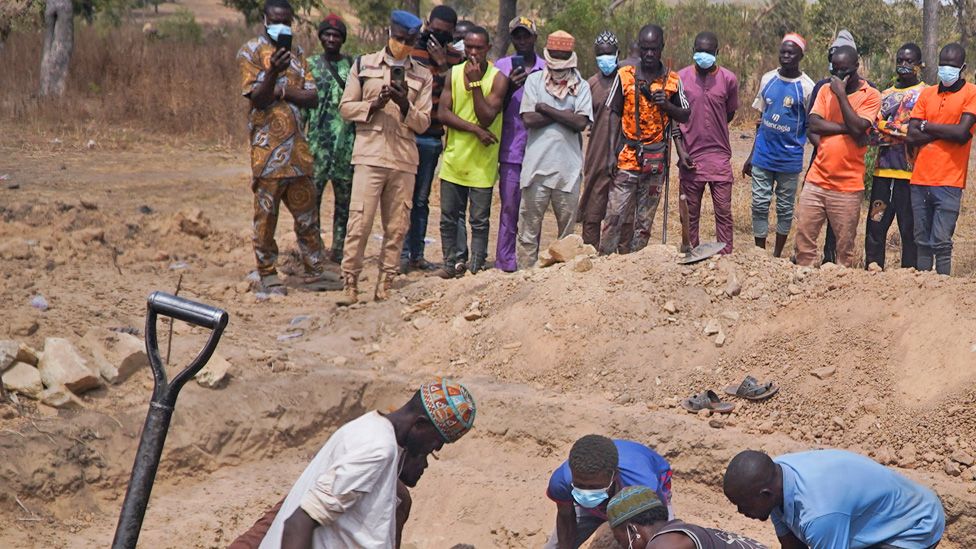
A Nigerian army general and several soldiers were killed during an attack on a military base in the country’s northeast early Thursday, officials said, in one of the latest assaults linked to the long-running conflict in the region.

The attack took place in the town of Benisheikh in Borno State when armed fighters attempted to overrun a military installation, according to a statement from army spokesman Michael Onoja. Troops stationed at the base fought back and ultimately forced the attackers to retreat.

President Bola Tinubu confirmed that a senior officer, Brigadier General Oseni Omoh Braimah, was among those killed in the clash. He described the attack as a sign that the armed groups are under pressure following recent military operations.

“I extend my condolences to the families of our soldiers who made the ultimate sacrifice in the defense of our country,” Tinubu said in a statement, adding that their efforts would not be in vain.

Onoja did not provide an exact number of casualties but said several soldiers were killed during the fighting. He described the attackers as militants, a term used by the military for armed groups operating in the northeast.

According to military officials, the assault began around 12:30 a.m. as fighters attempted to breach the base’s defenses. Troops responded with heavy fire and launched a counterattack that pushed the assailants back after hours of fighting.

A military source said the attack also killed other personnel at the base, including a religious officer, and left several others wounded or missing.

The Defense Headquarters said the response by troops demonstrated strong readiness and coordination, emphasizing that the attackers were unable to achieve their objective.

Despite the successful defense of the base, the military acknowledged losses among its ranks and said families of the fallen would be notified before further details are released.

Nigeria continues to face a complex security crisis, particularly in the north, where armed groups have carried out attacks, kidnappings and raids for more than a decade.

Among the most prominent groups are Boko Haram and a breakaway faction aligned with the Islamic State group, both of which have carried out repeated attacks on civilians and military targets. Other armed groups have also emerged in recent years, expanding the conflict into new areas.

The situation has worsened with the presence of fighters from neighboring regions, increasing pressure on Nigerian security forces.

Earlier this year, the United States deployed about 200 troops and surveillance drones to Nigeria to support the country’s military. U.S. officials said the forces would not take part in direct combat operations but would assist with intelligence and coordination.

The deployment followed a new security agreement between Washington and Abuja after President Donald Trump raised concerns about violence in Nigeria. The U.S. military has also conducted strikes against extremist groups in the region.

Thousands of people have been killed in the conflict, according to United Nations data, with analysts warning that more needs to be done to protect civilians and stabilize affected areas.

Following Thursday’s attack, the Nigerian military said additional operations are underway to track down the fleeing attackers and prevent them from regrouping. Authorities also urged the public to remain calm and avoid spreading unverified information that could interfere with ongoing operations.

Officials said security forces remain committed to restoring stability in the region despite continued threats from armed groups.

The attack underscores the persistent threat faced by Nigerian forces in the northeast, where armed groups continue to demonstrate the ability to launch coordinated assaults on military positions. While officials described the failed raid as a sign of weakening opposition, the loss of a senior officer highlights the ongoing risks for troops on the ground.

The killing of a general may also carry symbolic weight, potentially affecting morale and drawing increased public attention to the conflict. At the same time, the military’s ability to repel the attack suggests that defensive capabilities at key installations remain strong.

The broader security situation remains challenging. Multiple armed groups operate across northern Nigeria, often overlapping in tactics and territory. This has complicated efforts to fully stabilize the region despite years of military campaigns.

International involvement, including support from the United States, reflects growing concern about the spread of violence across West Africa. However, the limited role of foreign troops means that the primary burden of security operations continues to fall on Nigerian forces.

As operations continue in the aftermath of the attack, the focus will likely remain on preventing further assaults while addressing the underlying conditions that allow armed groups to persist.

AP

Melania Trump Denies Epstein Ties in Rare White House Statement, Calls Claims False

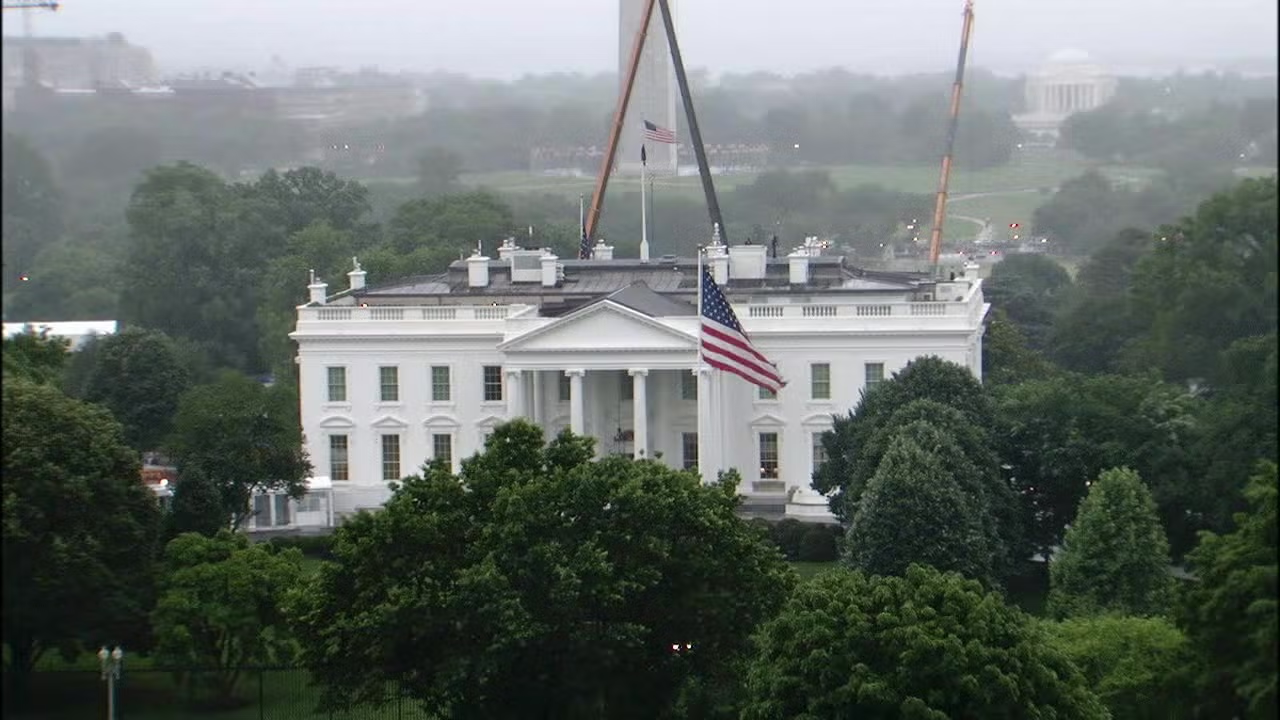
First lady Melania Trump publicly rejected any connection to Jeffrey Epstein on Thursday, delivering a rare and forceful statement at the White House in which she dismissed allegations linking her to the late financier as false and damaging.

Speaking from the White House, Melania Trump said claims suggesting she had ties to Epstein or knowledge of his crimes were “completely false” and described the accusations as deliberate attempts to harm her reputation.

“The lies linking me with the disgraceful Jeffrey Epstein need to end today,” she said. “The individuals lying about me are devoid of ethical standards, humility and respect.”

She added that she and her legal team are responding to what she characterized as baseless claims regarding her past interactions with Epstein, a convicted sex offender whose network included high-profile figures across business and politics.

The Associated Press noted that the first lady’s remarks came at a time when attention on Epstein had begun to fade in Washington, particularly as the conflict involving Iran dominated the national agenda. Her statement, however, placed the issue back into public focus.

Melania Trump also called for Congress to hold a public hearing centered on survivors of Epstein’s crimes, urging lawmakers to provide a platform for victims to share their experiences.

“Each and every woman should have her day to tell her story in public if she wishes,” she said. “Then, and only then, we will have the truth.”

Her appeal drew a response from Democratic lawmakers. Representative Robert Garcia, a senior member of the House Oversight Committee, said in a social media post that he supported the call for hearings and urged committee leadership to schedule proceedings without delay.

The timing of the first lady’s remarks followed the release of millions of pages of documents tied to Epstein under a transparency law passed by Congress. The legislation requires federal authorities to disclose records related to Epstein and his longtime associate, Ghislaine Maxwell.

Lawmakers had previously criticized the Justice Department for releasing only a portion of the records last month. Officials said additional time was needed to review newly discovered materials and protect sensitive information related to victims.

Addressing her own connection to individuals named in the documents, Melania Trump said she was not friends with Epstein or Maxwell, though they moved in similar social circles in New York and Florida.

She referenced a brief email exchange with Maxwell from 2002 that was included in the released records, describing it as routine communication with no deeper significance.

“My polite reply to her email doesn’t amount to anything more than a trivial note,” she said.

Documents released by the Justice Department include a short email signed “Love, Melania,” referencing a magazine article about Epstein. The message, dated the same month a New York Magazine profile on Epstein was published, reflects casual correspondence but does not indicate a close relationship.

Other materials include photographs recovered from Epstein’s residence that show him alongside President Donald Trump, Melania Trump and Maxwell. The first lady said such images reflected overlapping social settings rather than personal ties.

She also addressed claims about how she met her husband, stating that Epstein played no role in their introduction. She said she met Donald Trump by chance at a New York City event in 1998.

“I never had a relationship with Epstein or his associate,” she said, adding that she first encountered Epstein at a public event in 2000 and had no knowledge of his criminal conduct at the time.

Reuters confirmed her statement, including her assertion that she had not been aware of Epstein’s activities and was not connected to his actions.

President Donald Trump has said his association with Epstein ended in the mid-2000s and has denied any knowledge of the financier’s crimes. Epstein was arrested in 2019 on federal charges related to sex trafficking of minors and died later that year in a New York jail. His death was ruled a suicide.

The Epstein case has remained a persistent political issue due to his connections with prominent individuals and ongoing public interest in the circumstances surrounding his crimes and death.

A senior adviser to the first lady told Reuters that her decision to speak publicly was driven by a desire to end what he described as false claims and shift attention to her work and public initiatives.

Melania Trump’s decision to address the issue publicly marks a significant moment, as first ladies rarely engage directly in legal or political controversies of this nature. By speaking from the White House, she elevated the response beyond a typical denial, signaling the seriousness with which her office views the allegations.

Her call for congressional hearings introduces a notable shift in the conversation. While the Epstein case has long been the subject of legal proceedings and investigative reporting, renewed public hearings could expand scrutiny and potentially introduce new testimony into the public record.

The timing is also significant. With the release of additional documents, public attention has returned to Epstein’s network and the extent of his connections. By responding now, the first lady appears to be addressing both the renewed visibility of the case and its political implications.

The broader impact may depend on how Congress responds. If hearings move forward, they could reshape public understanding of the case while also influencing political narratives tied to accountability and transparency.

At the same time, the continued focus on Epstein highlights enduring questions about how individuals with significant influence were able to evade scrutiny for years. The release of documents, combined with calls for further investigation, suggests that the issue is likely to remain part of the national conversation.

AP/Reuters

4 Dead in Channel Boat Sinking as France Rejects UK Plan to Return Migrants at Sea

Four people died after a small boat carrying migrants sank while attempting to cross the English Channel, French authorities said Thursday, as tensions between France and the United Kingdom deepened over proposals to intercept vessels at sea.

Local officials in Calais said a search-and-rescue operation was underway following what they described as a “taxi-boat” sinking. Authorities use the term to describe vessels operated by smuggling networks that move along northern French and Belgian coastlines, collecting migrants from multiple points before attempting the crossing.

“The situation is still being assessed and remains subject to change,” local authorities said in a statement.

The incident underscores the continuing dangers faced by migrants attempting to reach Britain عبر one of the world’s busiest shipping routes. Data from the University of Oxford’s Migration Observatory shows about 2,200 people crossed the Channel in the first two months of 2026, following roughly 41,500 crossings in 2025.

British media outlet The Sun also reported the deaths, noting the sinking occurred amid ongoing disputes between London and Paris over how to manage migration across the Channel.

The tragedy comes as France rejected a proposal from the British government that would have allowed UK vessels to intercept migrant boats at sea and return passengers to French shores.

The plan, put forward by Home Secretary Shabana Mahmood, called for a more active role for the UK’s Border Force fleet. The proposal included deploying up to 11 British vessels, including six large patrol cutters, to support French operations.

Under the proposal, British crews would have intercepted small boats before they entered UK waters, taken those onboard and returned them to northern France.

A French government source said the plan was dismissed outright, emphasizing that British officials are not authorized to operate in French territorial waters.

Details of the proposal were first disclosed by French investigative newspaper Le Canard Enchaîné, which also reported that British funding has supported French enforcement efforts in the region, including the purchase of police vehicles used to track migrants and smugglers.

Despite ongoing cooperation, negotiations between the two countries remain stalled. France and the United Kingdom have agreed to a temporary two-month extension of their current arrangement, under which Britain funds French patrols along the coast.

The extension, valued at £16.5 million, will support nearly 700 French officers patrolling beaches through May. Officials said the short-term agreement is intended to prevent a surge in crossings during favorable weather conditions.

Talks on a longer-term, three-year deal have hit an impasse. British officials have pressed for increased patrols and performance-based funding measures, proposals that French authorities have resisted.

Meanwhile, crossings continue. On Tuesday alone, 137 migrants reached Britain aboard two small inflatable boats, pushing the total number of arrivals this year above 5,000.

The latest deaths in the Channel highlight the persistent risks associated with irregular migration routes, even as enforcement efforts intensify. Smuggling networks have adapted their tactics, using more mobile pickup methods along the coastline to evade detection, which complicates prevention strategies.

The disagreement between France and the United Kingdom reflects deeper structural challenges in managing migration across shared borders. While both countries have invested heavily in enforcement, their approaches differ on operational control and jurisdiction, particularly in territorial waters.

France’s rejection of British interception efforts signals concerns about sovereignty and legal authority, which remain central to any cross-border enforcement agreement. Without alignment on these issues, joint operations are likely to face continued limitations.

At the same time, the financial scale of cooperation underscores how significant the issue has become. British funding for French patrols illustrates a reliance on external enforcement, but also raises questions about accountability and effectiveness when crossings continue at high levels.

The steady flow of migrants, despite increased patrols and funding, suggests that enforcement alone may not be sufficient to deter crossings. Broader factors, including conflict, economic hardship and migration networks, continue to drive movement toward Europe and the United Kingdom.

As negotiations remain stalled, the risk is that policy gaps between the two countries will persist, leaving migrants vulnerable to dangerous journeys while political tensions rise on both sides of the Channel.

TheSun

Trump Vows Military Forces Will Remain in Middle East Until Iran Complies With Peace Terms

U.S. President Donald Trump issued an online statement Thursday insisting that his surge of warships and troops will remain deployed around Iran “until such time as the REAL AGREEMENT reached is fully complied with,” applying pressure on Tehran as uncertainty hangs over the tentative two-week ceasefire that appears increasingly fragile just days after being announced.

Trump’s comments on his Truth Social platform appear designed to pressure Iran as questions mount about whether the truce will hold given contradictory interpretations of its scope, minimal evidence of Strait of Hormuz reopening, and continued Israeli military operations in Lebanon that have killed hundreds since the ceasefire was supposedly implemented.

“If for any reason it is not, which is highly unlikely, then the ‘Shootin’ Starts,’ bigger, and better, and stronger than anyone has ever seen before,” Trump wrote, employing threatening language and capital letters for emphasis while characterizing potential military escalation as exceeding anything in modern warfare.

Trump also insisted Iran would not be able to build nuclear weapons and “the Strait of Hormuz WILL BE OPEN & SAFE”—claims contradicted by observable reality as vessels are not moving through that waterway in any meaningful numbers. The strait represents the narrow mouth of the Persian Gulf through which 20 percent of all oil and natural gas traded globally once passed before Iran closed it in response to American and Israeli attacks.

According to Reuters, Trump vowed to retain military assets in the Middle East until a peace deal with Iran is reached and warned of major escalation in fighting if Tehran failed to comply, as oil prices rose on concerns over supply and restrictions in the Strait of Hormuz that show no signs of genuine easing despite ceasefire proclamations.

Trump disclosed in a social media post that U.S. ships, aircraft, and personnel with additional ammunition and weaponry would remain in place to destroy, if necessary, “a substantially degraded enemy”—though he expressed confidence that a lasting deal would be agreed upon and followed despite mounting evidence suggesting otherwise.

“If for any reason it is not, which is highly unlikely, then the ‘Shootin’ Starts,’ bigger, and better, and stronger than anyone has ever seen before,” Trump reiterated, adding that contrary to “fake rhetoric,” Iran had agreed not to pursue nuclear weapons and to reopen the Strait of Hormuz—assertions not supported by Iranian statements or maritime traffic data.

“In the meantime our great Military is Loading Up and Resting, looking forward, actually, to its next Conquest. AMERICA IS BACK!” Trump continued, employing triumphalist language suggesting the military views the ceasefire as temporary pause before resuming operations rather than genuine peace agreement.

Though both the United States and Iran declared victory in a five-week war that has killed thousands and devastated regional economies, their core disputes remained unresolved, with each side maintaining competing demands for a deal that could shape the Middle East for generations. The fundamental contradictions between American and Iranian positions suggest the two-week ceasefire may represent diplomatic theater rather than pathway to sustainable peace.

Trump’s latest post followed the largest coordinated strike of the war by Israel on Wednesday that killed more than 250 people in Lebanon, prompting a warning from Iran’s lead negotiator that Israel’s ramping up its parallel war and Washington’s insistence on Tehran abandoning its nuclear ambitions could jeopardize talks to forge a permanent peace deal.

“In such a situation, a bilateral ceasefire or negotiations were unreasonable,” Iran’s parliament speaker Mohammed Bager Qalibaf declared in a statement Wednesday, suggesting Tehran viewed continued Israeli strikes on Lebanon as ceasefire violations that undermined diplomatic efforts.

Oil prices climbed Thursday with investors concerned about the fragility of the truce and elevated geopolitical risks over Middle East supply, with doubts that restrictions in the Strait of Hormuz would soon ease despite American and Iranian claims about reopening the vital waterway.

Brent crude futures were up $1.96, or 2.07 percent, at $96.71 a barrel at 0325 GMT, while U.S. West Texas Intermediate crude rose $2.6, or 2.75 percent, to $97.01 a barrel—a day after both benchmarks had fallen sharply on the ceasefire announcement before reality about its limitations set in.

Brent crude and West Texas Intermediate remain far above the $70.75 and $65 per barrel levels that prevailed before the joint U.S.-Israel military campaign began, reflecting how the conflict has permanently altered global energy market dynamics and increased risk premiums for Persian Gulf petroleum supplies.

Asian share markets were in a sober mood Thursday amid unease about the ceasefire, with Japan’s Nikkei lingering either side of flat having jumped 5.4 percent the previous session on optimistic ceasefire news that subsequent developments undermined. The MSCI’s broadest index of Asia-Pacific shares outside Japan eased 0.7 percent as investors reconsidered initial enthusiasm.

On Wall Street, S&P 500 futures and Nasdaq futures were both off 0.2 percent as Wednesday’s surge ended and reality set in about the ceasefire’s fragility. In Europe, the EUROSTOXX 50 futures eased 0.1 percent, DAX futures fell 0.5 percent while FTSE futures were up 0.4 percent—reflecting mixed assessments about whether peace would hold.

Israel’s blitz of air strikes Wednesday raised fundamental questions about regional truce efforts, with conflicting messages on the ceasefire’s scope and sharply contrasting agendas for peace talks scheduled to commence Saturday in Pakistan. The United States and Israel maintain Lebanon is not included in the agreement, while Iranian President Masoud Pezeshkian has emphasized that halting hostilities in Lebanon was an essential condition of Tehran’s deal with Washington.

The Iran-backed Hezbollah disclosed it fired rockets early Thursday at the small kibbutz of Manara, citing what it characterized as Israel’s ceasefire violations and warning of more attacks until there was a halt in “Israeli-American aggression.” The retaliation demonstrated how quickly the ceasefire could unravel if parties continue military operations while claiming compliance with agreements.

Pakistan’s foreign ministry condemned the Israeli operations Thursday, declaring they “undermine international efforts to establish peace and stability” in a region where multiple conflicts now threaten to merge into broader warfare involving numerous nations.

French President Emmanuel Macron earlier emphasized Lebanon “must be fully covered” by the ceasefire, directly contradicting American and Israeli interpretations and exposing European frustration with what they view as bad-faith negotiating by Washington and Tel Aviv.

Iran’s delegation for the talks was scheduled to arrive in Islamabad Thursday night for negotiations that both sides acknowledge face enormous obstacles. “Despite scepticism of Iranian public opinion due to repeated ceasefire violations by Israeli regime … Iranian delegation arrives tonight in Islamabad for serious talks based on 10 points proposed by Iran,” Ambassador Reza Amiri Moghadam disclosed in a post on X Thursday before deleting it without explanation.

There was scant evidence that the Strait of Hormuz was open in any meaningful way since the truce agreement, with Iran still asserting control over the vital artery—a conduit for one-fifth of the world’s oil and liquefied natural gas supply—and demanding tolls for safe passage that shipping companies view as unacceptable.

Tehran’s newly demonstrated ability to cut off Gulf energy supplies through its grip on the strait, despite decades of massive U.S. military investment in the region, shows how the conflict has already altered power dynamics in the Gulf in ways that may prove permanent regardless of ceasefire outcomes.

Las Vegas Sun documented that semiofficial news agencies in Iran published a chart Thursday suggesting the country’s paramilitary Revolutionary Guard deployed sea mines into the Strait of Hormuz during the war—a likely pressure tactic as Iran, Israel, and the United States navigate an uneasy two-week ceasefire ahead of possible negotiations in Islamabad.

Meanwhile, in unusually strong language, U.N. Secretary-General António Guterres “unequivocally” condemned Israeli strikes in Lebanon that killed and injured hundreds Wednesday after the ceasefire was announced, according to a statement by his spokesperson Stéphane Dujarric. The rare use of such emphatic language reflected international frustration with violations occurring immediately after agreements are reached.

Israel has maintained the ceasefire agreement does not extend to its war in Lebanon with the Iran-backed Hezbollah militant group, although Iran and mediator Pakistan insisted it does—creating fundamental disagreement about what was actually agreed upon. Sirens sounded in northern Israel early Thursday as Hezbollah claimed it was attacking with rocket fire in retaliation for Israeli ceasefire violations.

Iran closed the Strait of Hormuz again Wednesday in response to Israeli attacks against Hezbollah in Lebanon, demonstrating how quickly Tehran can weaponize energy supplies when it perceives Western violations of agreements.

Mourners across Iran began ceremonies Thursday marking the 40th day after the death of Supreme Leader Ali Khamenei, who was killed at the war’s start. In Iran’s capital Tehran, mourners wearing black began their rally from major squares to the neighborhood of Khamenei’s office.

Iranian state television aired similar commemorations in other cities, confirming the ceremonies will continue into the night. Khamenei’s body has yet to be buried since his death February 28—an unusual delay reflecting both the chaos from ongoing conflict and uncertainty about succession dynamics. His son, Mojtaba Khamenei, now serves as Iran’s supreme leader despite lacking the religious credentials traditionally required for the position.

An Israeli strike killed at least seven people in the southern Lebanese village of Abbasiyeh Thursday morning, wounding others in what the National News Agency characterized as a preliminary toll. The Israeli military did not immediately acknowledge the strike, maintaining silence about operations it insists are outside ceasefire scope.

Israel intensified its strikes in Lebanon Wednesday, declaring that its fight with the Iran-backed Hezbollah militant group is not part of the two-week ceasefire deal with Iran—an interpretation that Iran and mediating nations reject as violating the agreement’s spirit and potentially its letter.

Lebanon’s Health Ministry confirmed the strikes Wednesday killed at least 182 people and wounded 890 others—the highest single-day death toll in the latest Israel-Hezbollah war and evidence of massive escalation occurring simultaneously with ceasefire announcements.

French President Macron called for “each of the belligerents” to fully respect the ceasefire, including in Lebanon, as he spoke separately with Iran’s President Pezeshkian and U.S. President Trump. Macron disclosed he “told both of them that their decision to accept a ceasefire was the best possible one” and “must open the way to comprehensive negotiations” in a message posted on X late Wednesday.

Macron also confirmed he spoke with Lebanon’s President Joseph Aoun and Prime Minister Nawaf Salam to express “France’s full solidarity in the face of the indiscriminate strikes carried out by Israel” in the country. “We condemn these strikes in the strongest possible terms,” Macron emphasized, stressing they pose direct threats to the ceasefire’s sustainability.

Pakistan’s Interior Minister Mohsin Naqvi met U.S. Chargé d’Affaires Natalie Baker Thursday to discuss the situation in the Middle East and upcoming high-level talks between the United States and Iran in Islamabad, according to an official statement. During the meeting, they reviewed arrangements for negotiations being held in Islamabad later this week.

The statement quoted Naqvi as disclosing that visiting foreign dignitaries, including U.S. Vice President JD Vance, Steve Witkoff, and Jared Kushner, would be “special guests” and assured that a comprehensive security plan had been implemented to provide full protection to all foreign guests—precautions reflecting concerns about potential attacks targeting the high-profile diplomatic gathering.

Pakistan has shut schools and government offices for two days in the capital Islamabad to keep people off roads as authorities ramp up security ahead of U.S.-Iran talks. Officials have imposed sweeping restrictions across the city, including blocking key roads connecting Islamabad with neighboring Rawalpindi and placing shipping containers at multiple points to restrict movement and limit public access to sensitive areas.

Islamabad appeared unusually quiet Thursday, with many residents staying home as traffic diversions forced longer commutes. The restrictions follow recent unrest in March when protests by Shiite groups erupted across Pakistan in response to U.S. and Israeli strikes on Iran, with more than two dozen people killed in those demonstrations nationwide. In Karachi, 12 people perished when protesters stormed the U.S. consulate and attempted to set it on fire—violence underscoring the domestic political risks Pakistan faces by hosting these negotiations.

Ship-tracking data from trade analytics platform Kpler showed only four vessels with their Automatic Identification System trackers activated passed through the Strait of Hormuz Wednesday—the first day of the ceasefire. However, this total excludes so-called “dark fleet” vessels—those with AIS trackers turned off, many of which carry sanctioned Iranian crude oil to market. The minimal traffic demonstrates the strait remains effectively closed despite American and Iranian claims about reopening.

The Soufan Center, a New York-based think tank, warned that the tentative ceasefire in the Iran war “hovers on the verge of collapse.” The organization declared Israeli strikes on Lebanon Wednesday risked the deal falling apart entirely. “Even if Lebanon was formally outside the deal, the scale of Israel’s strikes was likely to be viewed as escalatory, nonetheless,” it wrote in analysis published Thursday.

“Israel’s strikes can be understood both as an effort to drive a wedge between Iran and its proxies and as a response to being allegedly sidelined in the original ceasefire discussions,” the analysis continued, suggesting Israeli actions reflected strategic objectives beyond mere military necessity.

As the fragile ceasefire entered its third day with minimal evidence of genuine peace implementation, fundamental questions remained about whether diplomatic talks in Pakistan could bridge enormous gaps between American demands for Iranian nuclear disarmament and strait reopening versus Iranian insistence on security guarantees, reparations, and regional influence preservation.

For regional populations enduring bombardment, displacement, and economic hardship, the distinction between ceasefire on paper and actual peace proves irrelevant as military operations continue killing hundreds while diplomats parse agreement language and assign blame for violations that occur within hours of truces being announced.

AP/Lasvegassun/Reuters

Israeli Strikes Kill 182 in Central Beirut Hours After Iran Ceasefire, Trump Says Lebanon Not Included

Israeli strikes slammed busy commercial and residential areas in central Beirut without warning Wednesday, killing at least 182 people just hours after a ceasefire was announced in the U.S.-Israeli war with Iran, making it the deadliest day in the latest Israel-Hezbollah conflict and exposing fundamental disagreements about whether the truce covers Lebanon.

U.S. President Donald Trump told PBS News Hour that Lebanon was not included in the ceasefire deal because of the Lebanese militant Hezbollah group. When questioned about Israel’s latest strikes, he characterized the violence as “a separate skirmish”—language minimizing the massive civilian death toll and suggesting American acquiescence to continued Israeli military operations despite the broader regional ceasefire.

Israel had declared the agreement does not extend to its war with the Iran-backed Hezbollah, although Iran and mediator Pakistan insisted it does—creating immediate confusion about the ceasefire’s scope and raising questions about whether the two-week pause announced just hours earlier had any meaningful effect on regional violence.

The fleeting sense of relief among Lebanese after the ceasefire announcement transformed into panic with what Israel’s military described as its largest coordinated strike in the current war, claiming it had hit more than 100 Hezbollah targets within 10 minutes in Beirut, southern Lebanon, and the eastern Bekaa Valley. The massive barrage suggested Israel was exploiting ambiguity about the ceasefire’s geographic scope to intensify operations against Hezbollah.

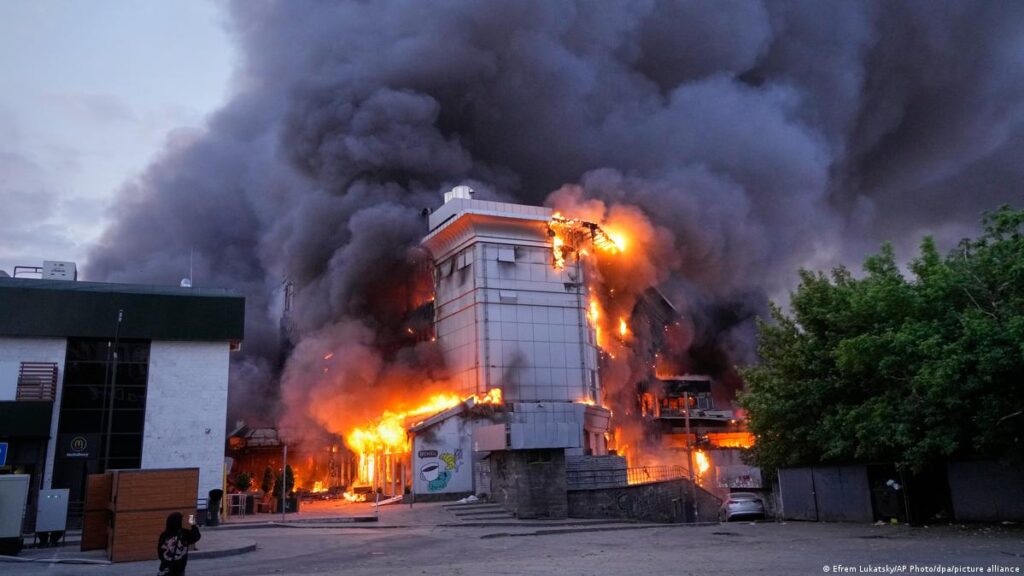
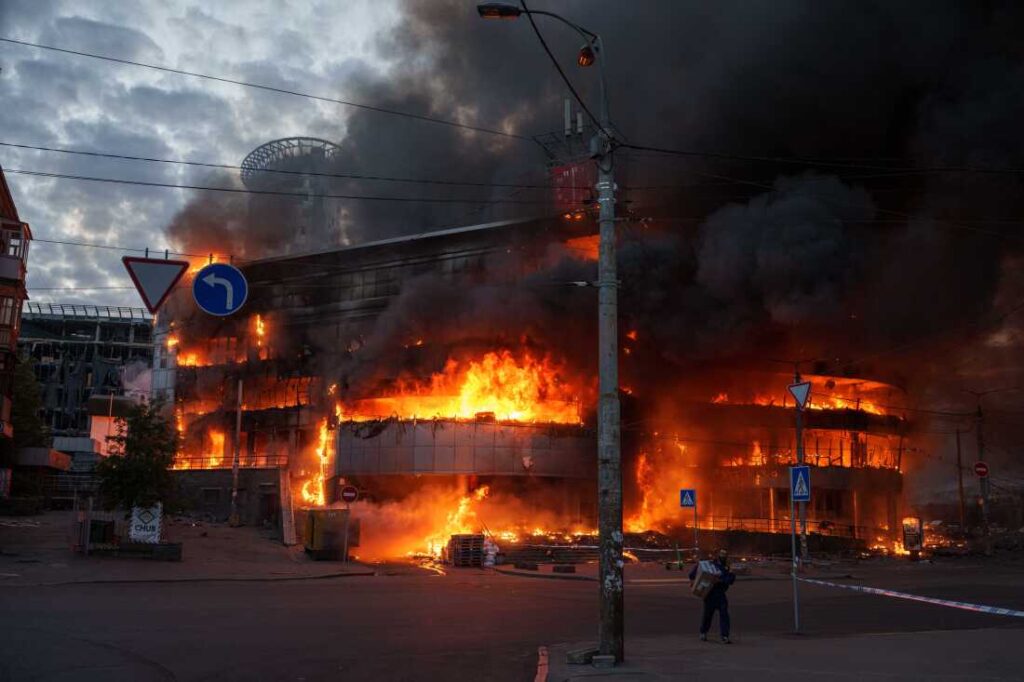
Black smoke towered over several parts of the seaside capital, where enormous numbers of people displaced by war have taken shelter after fleeing southern Lebanon and Beirut’s southern suburbs. Explosions interrupted the honking of traffic on what had been a bustling, blue-sky afternoon. Ambulances raced toward open flames. Apartment buildings were struck and collapsed, burying residents who had no warning to seek shelter.

Associated Press journalists witnessed charred bodies in vehicles and on the ground at one of Beirut’s busiest intersections in the central Corniche al Mazraa neighborhood, a mixed commercial and residential area where civilians had no reason to expect devastating bombardment during midday hours. Using forklifts, rescue workers removed smoldering debris and sifted through ruins searching for survivors trapped beneath collapsed structures.

There was no indication of Hezbollah launching strikes against Israel in the first several hours after the attacks—suggesting either the group was exercising restraint despite massive provocation or that Israeli strikes had successfully degraded its immediate retaliatory capabilities.

In response to the attacks on Lebanon, Iran later Wednesday announced it was again halting the movement of oil tankers in the Strait of Hormuz, the country’s state-run media confirmed. The closure of the vital waterway just hours after agreeing to reopen it under ceasefire terms demonstrated how fragile the truce remained and how quickly regional actors could weaponize energy supplies in response to perceived violations.

Central Beirut has been targeted previously, but not by so many strikes simultaneously and during the middle of the day when civilian casualties would be maximized. Israel had rarely struck central Beirut since the outbreak of the latest Israel-Hezbollah war on March 2 but has regularly pounded southern and eastern Lebanon and Beirut’s southern suburbs where Hezbollah maintains strongest presence.

Lebanon’s Minister of Social Affairs, Haneed Sayed, in an interview with The Associated Press condemned Israel’s wide-ranging strikes, characterizing them as a “very dangerous turning point” in a conflict already devastating Lebanese civilian infrastructure and displacing millions.

“These hits are now at the heart of Beirut … Half of the sheltered (internally displaced people) are in Beirut in this area,” she disclosed, adding that she had just driven past areas hit by Israeli missiles. The targeting of central Beirut where displaced populations concentrated represented either reckless disregard for civilian lives or deliberate strategy to inflict maximum casualties on vulnerable populations.

Sayed emphasized Lebanon’s government is ready to enter negotiations with Israel for an end to hostilities, an offer the Lebanese president previously extended. Israel has not responded to diplomatic overtures. “There are calls and efforts being made as we speak,” Sayed indicated, though the massive strikes suggested Israel was more interested in military solutions than negotiated settlements.

Prime Minister Nawaf Salam in a statement accused Israel of escalating at a moment when Lebanese officials were seeking to negotiate solutions, and of hitting civilian areas in “utter disregard for the principles of international law and international humanitarian law — principles it has, in any case, never respected.” The language reflected Lebanese officials’ frustration that Israel operates with apparent impunity regardless of civilian casualties or legal prohibitions.

Lebanese President Joseph Aoun characterized the Israeli attacks as “barbaric.” Lebanon’s health ministry disclosed that along with the 182 killed, at least 890 people sustained wounds in the strikes. Altogether, 1,739 people have perished and 5,873 have been wounded in Lebanon in just over five weeks since the war’s outbreak—casualty figures reflecting the catastrophic humanitarian toll of the conflict.

Israel’s military claimed it had targeted missile launchers, command centers, and intelligence infrastructure. It accused Hezbollah fighters of attempting to “blend into” non-Shiite Muslim areas beyond their traditional strongholds—an assertion that residents and local officials vehemently denied, insisting the buildings struck were civilian residences and commercial establishments.

“Look at these crimes,” declared Mohammed Balouza, a member of Beirut’s municipal council, at the scene of a strike in Corniche al Mazraa. An apartment building behind a popular shop selling nuts and dried fruit had been demolished. “This is a residential area. There is nothing (military) here.” The official’s on-scene assessment contradicted Israeli military claims about the targets’ military nature.

As smoke rose Wednesday, Israeli Defense Minister Israel Katz warned Hezbollah leader Naim Kassem that “his turn will come”—a direct assassination threat against the group’s top leadership. In 2024, Israel killed Hezbollah’s previous leader, Hassan Nasrallah, with an airstrike that also killed numerous civilians in the surrounding area.

Katz characterized Wednesday’s strikes as the largest blow against Hezbollah since the attack that caused pagers used by hundreds of its members to explode almost simultaneously in September 2024—an operation that killed civilians as well as Hezbollah operatives and raised questions about indiscriminate attacks violating laws of war.

Before the new strikes, a Hezbollah official told the AP that the group was providing opportunity for mediators to secure a ceasefire in Lebanon, “but we have not announced our adherence to the ceasefire since the Israelis are not adhering to it.” He spoke on condition of anonymity because he lacked authorization to comment publicly about sensitive diplomatic and military matters.

The Hezbollah official emphasized the group will not accept a return to the pre-March 2 status quo, when Israel carried out near-daily strikes in Lebanon despite a ceasefire being nominally in place since the last full-blown Israel-Hezbollah war ended in November 2024. “We will not accept for the Israelis to continue behaving as they did before this war with regards to attacks,” he stated, articulating demands that any future arrangement must prevent Israeli strikes rather than merely pausing them temporarily.

Hezbollah had fired missiles across the border days after the United States and Israel attacked Iran on February 28, sparking a regional war that has drawn multiple countries into expanding conflict. Israel responded with widespread bombardment of Lebanon and a ground invasion that has displaced over one million people.

The Israeli military chief of staff, Lieutenant General Eyal Zamir, declared the attacks are intended to protect Israel’s northern residents, who have experienced heavy fire from Hezbollah rockets and missiles. The Israeli military has claimed it has killed hundreds of Hezbollah fighters, though independent verification of militant versus civilian casualties remains impossible given Israeli control of information from strike zones.

More than one million people have been displaced throughout Lebanon—a staggering number in a nation of approximately six million total population. The displacement represents one of the largest humanitarian crises in the Middle East, with entire communities uprooted and crowded into temporary shelters lacking adequate sanitation, medical care, or security.

Early Wednesday, after the Iran ceasefire was announced and before Israel struck, many displaced people sleeping in tents on Beirut’s streets and in the coastal city of Sidon had begun packing belongings in preparation to return home. The brief optimism that the ceasefire might allow safe return to bombed-out communities proved tragically premature.

Families at sprawling displacement camps on Beirut’s waterfront later expressed confusion and despair as explosions shattered hopes for imminent return. “We can’t take this anymore, sleeping in a tent, not showering, the uncertainty,” lamented Fadi Zaydan, 35. He and his parents had prepared to head back to the southern city of Nabatieh. Instead, they decided to wait things out in Sidon, slightly closer to home but still displaced from their actual residences.

The deadliest day of strikes exposed fundamental contradictions in the ceasefire announced just hours earlier. If Iran and Pakistan—who mediated the agreement—believed it covered all parties including Hezbollah, while the United States and Israel insisted Lebanon was excluded, then the ceasefire represented diplomatic theater rather than genuine peace agreement.

Trump’s characterization of Lebanon as “a separate skirmish” minimized the massive death toll and suggested American indifference to Lebanese civilian casualties. The language implied that killing nearly 200 people in coordinated strikes on a major capital city constituted minor violence unworthy of serious diplomatic attention.

The timing of the strikes—coming immediately after ceasefire announcement—suggested either Israeli determination to exploit the ambiguity about geographic scope or deliberate effort to establish that the truce would not constrain its Lebanon operations regardless of what mediators claimed. Either interpretation indicated the ceasefire’s fragility and limited effectiveness.

For Lebanese civilians trapped between Israeli bombardment and Hezbollah’s resistance operations, the distinction about whether the ceasefire technically covers Lebanon provides no comfort as their homes are destroyed and family members killed. The diplomatic parsing of ceasefire terms becomes irrelevant when bombs are falling on residential neighborhoods during midday hours.

The international community’s muted response to the massive civilian casualties suggested that Lebanese lives commanded less diplomatic attention than the broader U.S.-Iran conflict. The ability of Israel to kill nearly 200 people just hours after a regional ceasefire without provoking strong international condemnation illustrated the selective application of humanitarian concerns based on geopolitical calculations.

As Lebanon’s health ministry continued tallying casualties and rescue workers searched rubble for survivors, the fundamental question remained whether any meaningful peace was possible in a region where ceasefires can be announced and violated within hours, where civilian casualties in the hundreds provoke minimal diplomatic consequences, and where competing interpretations of agreements allow parties to claim compliance while continuing devastation.

AP

Iran Says U.S. Violated Deal Framework as Ceasefire Faces Early Strain

Iran’s parliament speaker said Wednesday that a ceasefire and negotiations with the United States are “unreasonable,” accusing Washington of violating key conditions in a proposed framework to end the conflict.

Mohammad Bagher Ghalibaf said the United States failed to meet three of Iran’s 10 conditions for ending the fighting, raising new doubts about the durability of a ceasefire agreement reached less than a day earlier.

In a social media post, Ghalibaf pointed to continued Israeli military actions in Lebanon, an alleged drone entry into Iranian airspace after the ceasefire took effect, and U.S. insistence that any final agreement must prohibit Iran from maintaining nuclear enrichment capabilities.

The accusations come as the fragile ceasefire shows signs of unraveling, with both sides claiming success while deep disagreements remain unresolved.

The White House announced shortly before Ghalibaf’s comments that Vice President JD Vance will lead the U.S. delegation to upcoming talks aimed at ending the conflict. The negotiations are set to begin Saturday in Islamabad.

Officials say the talks are intended to build on the temporary ceasefire and address broader issues, including security guarantees and nuclear restrictions. However, Iran’s latest statements highlight the challenges facing negotiators as they attempt to move toward a more lasting agreement.

Iran’s accusation that the United States violated elements of the deal framework underscores how fragile the current ceasefire remains. Agreements reached under intense pressure often leave critical details unresolved, increasing the likelihood of disputes shortly after implementation.

The issues raised by Iran reflect core points of contention that have long complicated negotiations. Disagreements over military activity, territorial security and nuclear capabilities remain central obstacles to any lasting settlement.

The timing of the remarks, coming just as new diplomatic talks are announced, suggests Iran may be seeking leverage ahead of negotiations. By publicly challenging U.S. compliance, Iranian officials could be positioning themselves to push for concessions during upcoming discussions.

At the same time, the involvement of senior U.S. leadership in the talks indicates Washington is prioritizing a diplomatic resolution, even as tensions persist.

Whether the ceasefire can hold will likely depend on both sides’ willingness to address immediate concerns while working toward broader compromises. Without progress, the risk of renewed escalation remains high.

Haitian Man Charged With Murder in Hammer Attack Outside Florida Gas Station

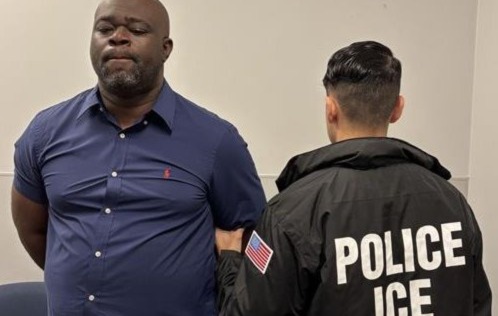
A Haitian man who entered the United States in 2022 and was granted temporary immigration status has been arrested and charged with second-degree murder after allegedly killing a mother of two with a hammer outside a gas station in Fort Myers, Florida, in broad daylight Friday.

Rolbert Joachim, 40, faces charges of second-degree murder and criminal damage to property, according to Lee County Sheriff’s Office jail records. The arrest followed a violent incident captured on surveillance footage that shocked the community and immediately became focal point for political debates about immigration enforcement and border security.

Surveillance footage appeared to show Joachim smashing the woman’s car windshield, approaching her, and repeatedly striking her in the head with a hammer—killing her in full view of potential witnesses during daylight hours, according to the Department of Homeland Security. The brazen nature of the attack outside a commercial establishment during normal business hours amplified public alarm about the incident.

The woman, whose identity has not been publicly released pending family notification, was a store clerk working inside the gas station. She was also the mother of two teenage daughters, according to a report from local outlet Gulf Coast News. The victim’s family now faces devastating loss compounded by the brutal circumstances of her death.

Immigration and Customs Enforcement assisted the Fort Myers Police Department in tracking down and arresting Joachim on Mango Street in Fort Myers following the attack. The collaborative law enforcement effort resulted in his swift apprehension before he could flee the jurisdiction.

Joachim first entered the United States in August 2022 and was released into the country under the Biden administration, according to DHS records. A federal immigration judge issued a final order of removal against him later that year, but he was granted Temporary Protected Status—which expired in 2024—allowing him to remain in the country legally despite the deportation order.

“This illegal alien barbarically hit this woman in the head multiple times with a hammer,” DHS acting assistant secretary Lauren Bis wrote in a statement employing inflammatory language characterizing the suspect by immigration status rather than simply as an accused criminal. “This heinous murderer was RELEASED into the country by the Biden administration. Not only did the Biden administration release him into the country, but they then gave him temporary protected status. Their reckless immigration policies cost this woman her life.”

The statement immediately politicized the murder investigation by framing the crime as an immigration policy failure rather than addressing it primarily as a horrific act of violence requiring justice for the victim and her family. The emphasis on the suspect’s immigration history rather than the victim’s life reflected broader political strategies of attributing individual crimes to systemic policy decisions.

ICE has lodged a detainer against Joachim, and he will be deported regardless of the outcome of the criminal case—meaning even if acquitted of murder charges, he would face removal from the United States based on immigration violations. The dual track of criminal prosecution and immigration enforcement ensures consequences for his presence in the country independent of murder trial outcomes.

“The arrest of this criminal is an example of how ICE and local authorities can work together to swiftly bring criminals to justice and make our communities safer,” Bis declared, framing the case as validation of cooperative immigration enforcement rather than acknowledging the tragedy that a woman lost her life before any prevention occurred.

The case immediately generated political controversy as immigration restrictionists cited it as evidence that temporary protected status programs and border policies endanger public safety by allowing individuals with deportation orders to remain in the country. Advocates for immigrants countered that individual crimes should not be used to stereotype entire populations or justify sweeping policy changes affecting millions.

Temporary Protected Status is a humanitarian program that allows nationals of designated countries experiencing armed conflict, environmental disasters, or other extraordinary conditions to remain temporarily in the United States. Haiti has been designated for TPS multiple times due to political instability, natural disasters including devastating earthquakes, and economic collapse that have made return dangerous for Haitian nationals.

The program’s critics argue it enables individuals with removal orders to remain in the country indefinitely despite lacking permanent legal status. Supporters emphasize it provides essential humanitarian protection to vulnerable populations who would face serious harm if forcibly returned to crisis-affected nations.

The fact that Joachim received TPS despite having a final removal order raises questions about how such statuses are granted and whether adequate background checks or coordination between immigration enforcement divisions occurs. However, it remains unclear whether any prior criminal history or behavioral indicators existed that might have predicted violent behavior.

For the victim’s teenage daughters, the political debates about their mother’s killer’s immigration status provide no comfort as they confront life without the parent who worked at a gas station to support them. The reduction of their mother’s life to a talking point in immigration arguments compounds the tragedy of her violent death.

The surveillance footage that apparently captured the attack will likely prove central to prosecution efforts, providing visual documentation of the incident that could eliminate reasonable doubt about what transpired. However, the footage’s existence also means the victim’s final moments may become public spectacle as the case proceeds through judicial processes.

Lee County prosecutors will determine whether to pursue first-degree murder charges that could result in life imprisonment or whether the second-degree murder charge—suggesting intent to kill without premeditation—adequately reflects the evidence. The distinction carries significant sentencing implications should Joachim be convicted.

As the case proceeds through Florida’s criminal justice system, it will inevitably fuel ongoing political battles about immigration enforcement, border security, and humanitarian protection programs. The Trump administration has already seized upon such incidents to justify aggressive immigration enforcement measures and proposals to eliminate or severely restrict programs like Temporary Protected Status.

Whether this horrific murder represents evidence of systemic immigration policy failures requiring dramatic reforms or an isolated crime that should not drive sweeping policy changes affecting millions will likely divide observers along existing ideological lines regarding immigration. For the Fort Myers community and especially the victim’s family, the urgent need is for justice and accountability rather than political vindication.

New York Post

Iran to Allow Strait of Hormuz Shipping for Two Weeks Under Ceasefire Deal, Foreign Minister Says

Iran will allow ships to pass through the Strait of Hormuz for the next two weeks under military oversight, its foreign minister said Tuesday, as Tehran and the United States reached a temporary ceasefire agreement aimed at easing a nearly 40-day conflict that has disrupted global shipping and driven up fuel prices.

President Donald Trump announced the two-week pause in military action less than 90 minutes before his deadline for Iran to reopen the key waterway or face expanded strikes on its infrastructure. The agreement is contingent on Iran ensuring the safe and immediate reopening of the strait, a route that carries about one-fifth of the world’s oil supply.

“This will be a two-sided ceasefire,” Trump said, adding that both countries had made significant progress toward a broader agreement on long-term peace.

Iran’s foreign minister said passage through the strait would be permitted during the two-week period, with Iranian forces managing traffic. He added that Iran would halt its defensive operations if attacks against the country stop.

The breakthrough triggered an immediate reaction in global markets. Oil prices dropped sharply, with Brent crude falling about 14 percent within an hour of the announcement, reflecting expectations of restored supply and reduced risk of further disruption.

Iran’s national security authorities confirmed the ceasefire but cautioned that it does not mark the end of the conflict. In a statement, officials said the country remains ready to respond to any renewed attacks.

The agreement follows weeks of escalating violence that saw strikes on military and infrastructure targets, including key sites linked to Iran’s oil production. The Strait of Hormuz had been effectively closed during the conflict, sending shockwaves through global energy markets and increasing pressure on both sides to reach a resolution.

Diplomatic efforts are continuing, with officials indicating that direct talks between the United States and Iran are under consideration, though no final arrangements have been confirmed.

Iran has outlined conditions for a broader peace deal, including the lifting of long-standing economic sanctions and guarantees against future military action. U.S. officials have signaled that discussions remain ongoing but emphasized that no final agreement has been reached.

The temporary ceasefire came after mediation efforts by several countries seeking to prevent further escalation. Officials said negotiations intensified in the final hours before the deadline, with both sides under pressure to avoid a wider conflict that could further destabilize global markets.

Despite the agreement, uncertainty remains over whether the two-week pause will lead to a lasting settlement. Officials on both sides have acknowledged that significant differences remain, particularly over sanctions and long-term security arrangements.

The conflict has resulted in significant casualties and damage across the region, including the deaths of U.S. service members and widespread destruction of military assets. It has also imposed a heavy economic cost, with disruptions to oil supply affecting prices worldwide.

The agreement to reopen the Strait of Hormuz, even temporarily, represents a critical turning point in the conflict, given the waterway’s central role in global energy supply. Its closure had immediate and far-reaching economic consequences, highlighting how regional conflicts can quickly impact markets worldwide.

The two-week ceasefire appears to be a tactical pause rather than a comprehensive resolution. For the United States, it offers an opportunity to secure key objectives without immediate escalation, while Iran gains temporary relief from sustained military pressure and the possibility of sanctions negotiations.

However, the arrangement remains fragile. Iran’s insistence on long-term guarantees and sanctions relief presents a major hurdle, while the United States is likely to resist concessions that could weaken its strategic position.

The sharp drop in oil prices following the announcement underscores how closely global markets are tied to developments in the region. Any breakdown in the agreement could quickly reverse those gains and renew volatility.

Diplomatic momentum in the coming days will be crucial. If negotiations progress, the ceasefire could serve as a foundation for a broader agreement. If not, the conflict risks returning to escalation once the two-week period expires.

The situation remains fluid, with both sides balancing military pressure and diplomatic engagement as they test the possibility of a longer-term resolution.

NewYorkPost

U.S. and Iran Agree to Two-Week Ceasefire After Trump Abandons Destruction Threats

The United States and Iran agreed to a two-week ceasefire on Tuesday evening following last-minute diplomatic intervention led by Pakistan, canceling an ultimatum from Donald Trump for Iran to surrender or face widespread destruction that legal scholars and international leaders had warned could constitute war crimes.

Trump’s announcement of the ceasefire agreement arrived less than two hours before the U.S. president’s self-imposed 8 p.m. Eastern time deadline to bomb Iran’s power plants and bridges in attacks that the Pope, numerous government officials, and legal experts had characterized as potential crimes against humanity. Just hours earlier, Trump had written on Truth Social: “A whole civilization will die tonight, never to be brought back again. I don’t want that to happen, but it probably will.”

B-52 bombers were documented to be en route to Iran before the ceasefire agreement was announced, suggesting military preparations for infrastructure destruction had advanced to operational stages when diplomatic breakthrough intervened. The dramatic reversal occurred through intensive mediation by Pakistan, whose prime minister Shehbaz Sharif had requested the two-week peace period to “allow diplomacy to run its course.”

Trump wrote in a post that “subject to the Islamic Republic of Iran agreeing to the COMPLETE, IMMEDIATE, and SAFE OPENING of the Strait of Hormuz, I agree to suspend the bombing and attack of Iran for a period of two weeks.” The statement emphasized that Iran’s compliance with strait reopening represented the essential condition for American restraint from attacks on civilian infrastructure.

In the two-week period, Trump indicated, he believed the United States and Iran could negotiate over a 10-point proposal submitted by Tehran that would allow an armistice to be “finalized and consummated.” The reference to Iranian proposals represented acknowledgment that Tehran had presented substantive negotiating positions rather than merely resisting American demands.

“This will be a double sided CEASEFIRE!” he continued, employing capital letters for emphasis. “The reason for doing so is that we have already met and exceeded all Military objectives, and are very far along with a definitive Agreement concerning Longterm PEACE with Iran, and PEACE in the Middle East.”

Iran’s foreign minister, Abbas Araghchi, issued a statement shortly after Trump’s announcement confirming Iran had agreed to the ceasefire terms. “For a period of two weeks, safe passage through the Strait of Hormuz will be possible via coordinating with Iran’s Armed Forces,” he wrote, specifying the mechanism by which maritime traffic would resume through the waterway handling approximately one-fifth of global energy supplies.

The sudden reversal will allow Trump to retreat as the U.S. war in Iran has dragged on for five weeks with minimal evidence that Tehran is prepared to surrender or release its hold on the Strait of Hormuz, where traffic has slowed to a trickle since Iran effectively closed the waterway following American and Israeli attacks. The ceasefire provides Trump an exit from escalating toward infrastructure destruction that could have triggered international condemnation and domestic political backlash.

Israel will also agree to the two-week ceasefire, Axios confirmed, citing an Israeli official who added that the ceasefire would enter effect as soon as the blockade of the Strait of Hormuz ceased. The coordination between American and Israeli forces suggested both nations recognized the strategic dead end reached after five weeks of bombardment producing no Iranian capitulation.

Trump had earlier rejected Iran’s 10-point plan as “not good enough,” but the president has established deadlines previously and allowed them to pass over the five weeks of conflict. Yet he insisted Tuesday the ensuing hours would represent “one of the most important moments in the long and complex history of the World” unless “something revolutionarily wonderful” happened, with “less radicalized minds” in Iran’s leadership prevailing.

Amir-Saeid Iravani, Iran’s representative at the United Nations, declared that Trump’s threats constituted “incitement to war crimes – and potentially genocide.” During a Security Council session on the Strait of Hormuz, Iravani emphasized: “Iran will not stand idle in the face of such egregious war crimes. It will exercise, without hesitation, its inherent right of self-defence and will take immediate and proportionate reciprocal measures.”

Through his spokesperson, UN Secretary-General António Guterres issued a reminder Monday that attacking civilian infrastructure is banned under international law, but Trump proclaimed the same day he was “not at all” concerned about being called a war criminal—language suggesting willingness to violate legal prohibitions if they interfered with his objectives.

The Guardian documented that in the hours before Trump’s deadline, Israel mounted its own attacks on Iran’s infrastructure. A rail bridge in the central city of Kashan was among the first reported bombed Tuesday by Iranian state media, with two people reportedly killed as Israel’s military announced it had launched “a wide-scale wave of strikes targeting dozens of infrastructure sites.”

A bridge over a railway line near Karaj, northwest of Tehran, was struck, according to Iranian media, and power outages were documented in the same city after a substation and transmission lines were bombed. Bridges near Qom and Tabriz were also reportedly hit in coordinated attacks apparently designed to demonstrate Israel’s capability to execute the infrastructure destruction Trump threatened.

The United States also struck 50 military targets on Iran’s Kharg Island, home to its main oil export terminal, while Iran’s Revolutionary Guards disclosed they had attacked Saudi Arabia’s Jubail petrochemical complex in retaliation for strikes on an Iranian petrochemical facility the night before. The tit-for-tat attacks illustrated the escalating violence that the ceasefire would temporarily halt.

The Associated Press confirmed that the president indicated the pause includes an array of bridges, power plants, and other civilian targets—subject to Iran accepting a two-week ceasefire and reopening the Strait of Hormuz. In a post on his social media site Tuesday evening, Trump specified Iran could agree “to the COMPLETE, IMMEDIATE, and SAFE OPENING of the Strait of Hormuz” and said he would then “suspend the bombing and attack of Iran for a period of two weeks.”

Since the war began in February, Trump has established a series of deadlines threatening escalation of the conflict, only to retreat just before they expire—a phenomenon his critics have derided as “Trump Always Chickens Out,” or TACO. The pattern suggests Trump employs deadline threats as negotiating tactics rather than genuine intentions to execute threatened actions.

The president added in his social media post that Iran has presented “a workable basis on which to negotiate.” “Almost all of the various points of past contention have been agreed to between the United States and Iran, but a two week period will allow the Agreement to be finalized and consummated,” Trump declared, suggesting diplomatic progress had been more substantial than his public rhetoric acknowledged.

Trump backed off many of the sweeping “Liberation Day” tariffs he first announced in April 2025 after they caused financial markets to crash. He also largely abandoned threats to impose high levies on imported products from China, Mexico, the European Union, and Canada—among other trade partners whose resistance forced him to modify maximalist demands.

Perhaps the most spectacular example transpired during a January meeting of the World Economic Forum in Davos, where Trump insisted he wanted the United States to obtain Greenland “including right, title and ownership” only to reverse course and abandon his threat to impose widespread tariffs on Europe to press his case. The pattern of dramatic threats followed by quiet retreat has become characteristic of Trump’s negotiating style.

In his social media post, Trump disclosed he reached the decision to delay expansion of U.S. strikes “based on conversations” with Pakistan Prime Minister Shehbaz Sharif and General Asim Munir, Pakistan’s powerful army chief. Sharif, in a post on X earlier Tuesday, urged Trump to extend his deadline by two weeks to allow diplomacy to advance. Pakistan has been leading negotiations between the adversaries.

Sharif employed the same post to request Iran open the Hormuz Strait for two weeks, demonstrating Pakistan’s role as honest broker appealing to both parties to accept compromise. According to Reuters, Trump agreed to suspend “bombing and attack of Iran” for two weeks, contingent on Iran agreeing to the “complete, immediate and safe opening” of the Strait of Hormuz.

The Independent documented that Trump backed off his threat to unleash devastation across Iran. Trump wrote on Truth Social around 6:30 p.m. ET that U.S. forces would pause plans for a massive final military assault against Iran for two weeks while negotiations continued between the two countries, mediated by Pakistan.

He also claimed that complete reopening of the Strait of Hormuz would be part of arrangements around a temporary pause. “Based on conversations with Prime Minister Shehbaz Sharif and Field Marshal Asim Munir, of Pakistan, and wherein they requested that I hold off the destructive force being sent tonight to Iran, and subject to the Islamic Republic of Iran agreeing to the COMPLETE, IMMEDIATE, and SAFE OPENING of the Strait of Hormuz, I agree to suspend the bombing and attack of Iran for a period of two weeks,” the president stated.

Earlier Tuesday, the president warned that Iran’s millennia-old “civilization will die tonight, never to be brought back again” unless Tehran capitulated to his demands for a ceasefire deal by 8 p.m. ET—language evoking genocide that provoked international outrage and domestic calls for his removal from office.

Shortly afterwards, Iran’s Foreign Minister Abbas Araghchi confirmed an agreement had been reached. He disclosed in an X post that shipping traffic would be allowed through the Strait of Hormuz for two weeks, adding that Iran would cease “defensive” operations until that time, providing attacks against Iran are stopped—language framing Iranian military actions as self-defense rather than aggression.

Tuesday evening’s announcement followed a particularly dire 12 hours in Washington. The day began with the president issuing vows to unleash catastrophic military force upon Iran’s civil infrastructure, including bridges and power plants, if the Iranian government did not comply with his demand for the Strait of Hormuz to be reopened.

The closure of the strait has caused a spike in global oil prices showing no signs of alleviating as long as the waterway, through which about one-fifth of the world’s oil and gas supplies travel, remains largely blocked by Iranian mines and other forces. The economic consequences of continued closure threatened to produce recession across energy-importing nations.

That post from the president drew shocked reactions worldwide and on Capitol Hill, where despite lawmakers being out for Easter recess, many Democrats reacted with public calls for Vice President JD Vance to instigate the removal of the president via the 25th Amendment. The amendment is designed to guide power transfer when the president is incapacitated or unable to serve office duties. Others called for impeachment by the Republican-held House and Senate.

“These are not the words of a sane person, nor one who is fit to serve as president of the most powerful nation in the world,” wrote Democratic Illinois Representative Shri Thanedar in a letter addressed to Vance and top administration officials, questioning Trump’s mental fitness for office.

House Minority Leader Hakeem Jeffries added in a statement: “Congress must immediately end this reckless war of choice in Iran before Donald Trump plunges us into World War III. It’s time for every single Republican to put patriotic duty over party and stop the madness. Enough.”

Experts in military warfare and international law concur that targeting Iran’s civil infrastructure could not be accomplished without causing significant civilian casualties. The non-military designation of the targets would likely constitute war crimes unless the targets were actively being utilized for military purposes—a legal standard these infrastructure sites clearly would not meet.

U.S. forces have sought for weeks to de-mine the Strait of Hormuz and secure the waterway for global shipping traffic, without success. Trump’s efforts to convince European allies to intervene and assist in the endeavor has also largely ended in failure—a result of his frequent and toxic personal attacks aimed at European and NATO leadership that alienated potential partners.

The president’s critics immediately characterized the reversal as evidence that Trump was bluffing once again. “He’s not telling the truth. But if you accept even part of the Iranian statement, Donald Trump has agreed to give Iran control of the Strait of Hormuz. That is extraordinary and cataclysmic for the world,” Senator Chris Murphy, a Democrat from Connecticut, declared on CNN after the news broke.

The 8 p.m. deadline Trump claimed was still in effect to Fox’s Bret Baier just hours earlier represented merely the latest iteration of a deadline that the White House repeatedly extended, even as Iranian officials publicly rejected temporary ceasefire overtures. His first 48-hour “deadline” concerning the Strait of Hormuz was issued more than two weeks earlier.

It was not immediately clear from Trump’s Tuesday evening words whether the temporary ceasefire would include Israel’s military, which is also a party in the conflict, but in Tel Aviv an alert warned residents of incoming rockets just minutes after Trump’s message was posted, according to Fox News—suggesting Iranian retaliation continued despite ceasefire announcements.

For the Trump administration, the Iran war has become a murky morass as the president finds himself unable to tell Americans when it will conclude or why the White House keeps threatening to escalate the conflict if U.S. objectives have supposedly been achieved and Iran’s military is truly “devastated,” as officials claim.

At a press conference Monday, Trump could not tell a reporter whether the conflict was escalating or drawing down when asked directly. “Somebody said, ‘Oh, he doesn’t have a plan.’ I have the best plan of all, but I’m not going to tell you what my plan is,” the president also insisted Monday—language suggesting improvisation rather than strategic coherence.

As the two-week ceasefire begins, fundamental questions remain about whether substantive negotiations can bridge gaps between American and Iranian positions, whether the strait will genuinely reopen to commercial traffic, and whether Trump will follow through on infrastructure destruction threats if diplomacy fails to produce agreement he deems acceptable within the temporary peace window.

AP/Theindependent

Trump Warns ‘Whole Civilization Will Die Tonight’ if Iran Deal Fails as Strikes Intensify

President Donald Trump warned Tuesday that “a whole civilization will die tonight” if Iran fails to meet his latest deadline to reach a deal, as airstrikes intensified and tensions escalated across the region.

The warning came hours before Trump’s 8 p.m. Eastern deadline for Tehran to agree to terms that include reopening the Strait of Hormuz, a critical global shipping route for oil. Iran signaled it would respond forcefully if the United States follows through on its threats.

Iran’s ambassador to the United Nations said any U.S. action would be met with “immediate and proportionate” retaliation, calling Trump’s statements a dangerous escalation and accusing Washington of encouraging potential violations of international law.

Even before the deadline, new strikes were reported across Iran. Two bridges and a train station were hit, while U.S. forces struck military-related targets on Kharg Island, a key location tied to Iran’s oil production. It marked the second time American forces have targeted the island since the conflict began.

Trump has repeatedly set deadlines throughout the conflict, often extending them, but insisted this latest ultimatum would not change without a major diplomatic breakthrough. At the same time, his public statements have left uncertainty about the exact scope of possible U.S. action.

He has tied reopening the Strait of Hormuz to avoiding broader attacks, while also suggesting the waterway is more critical to other countries than to the United States. Trump has also raised the possibility of deploying ground forces to secure Iranian oil assets, even as he indicated that large-scale combat operations could wind down.

The mixed signals have added to uncertainty as rhetoric on both sides has intensified.

Iranian President Masoud Pezeshkian said 14 million people have volunteered to defend the country, including himself. The statement came as Trump warned that U.S. forces could destroy Iran’s bridges and power plants within hours and suggested the country could face devastating consequences.

It remained unclear whether the latest airstrikes were directly tied to Trump’s broader threats. Some targets appeared linked to Iran’s transportation network, and Israel’s prime minister said Israeli aircraft struck bridges and rail lines used for military purposes.

Iran launched missiles toward Israel and Saudi Arabia, prompting defensive responses and the temporary closure of a major bridge connecting Saudi Arabia and Bahrain.

While Iran lacks the advanced military capabilities of the United States and Israel, its ability to disrupt shipping through the Strait of Hormuz has had a significant impact on the global economy, increasing pressure on Washington to find a resolution.

Diplomatic efforts are continuing, though Iran has rejected the latest U.S. proposal. Officials involved in negotiations said talks remain active but face major obstacles.

In a social media post Tuesday morning, Trump repeated his warning, saying that without a deal, “a whole civilization will die tonight,” while also leaving open the possibility of a breakthrough.

Iranian officials have called on civilians to form human chains around power plants, a move intended to deter attacks on critical infrastructure. Similar actions have been taken in past periods of heightened tension, though the scale of the current effort remains unclear.

Military leaders in Iran also signaled a broader response if the United States escalates, warning that regional energy supplies could be disrupted for years.

On the ground in Tehran, residents expressed growing concern about the impact of continued strikes. One teacher, speaking anonymously for safety reasons, said prolonged attacks could severely damage basic services and daily life.

International leaders have urged restraint. France’s foreign minister warned that targeting civilian and energy infrastructure could violate the laws of war and lead to further escalation. The United Nations human rights chief also criticized the rhetoric from all sides, including threats to destroy large parts of a country.

Meanwhile, intense airstrikes continued across Iran, including in residential areas. Israel said it targeted a petrochemical facility in the south and struck multiple bridges used by Iranian forces to transport military equipment.

A U.S. official, speaking on condition of anonymity, said the strikes on Kharg Island were focused on previously identified military targets and were not aimed at oil infrastructure.

Saudi Arabia reported intercepting multiple missiles and drones launched by Iran and temporarily closed the King Fahd Causeway, a key road link to Bahrain, where the U.S. Navy’s Fifth Fleet is based.

The conflict has caused widespread casualties. More than 1,900 people have been killed in Iran since the fighting began, though official figures have not been updated in recent days. In Lebanon, more than 1,500 people have died and over one million have been displaced. Additional deaths have been reported in Israel, neighboring areas and among U.S. service members.

At the center of the crisis is the Strait of Hormuz, where shipping has been severely disrupted since the conflict began earlier this year. The disruption, combined with attacks on regional energy infrastructure, has driven global oil prices sharply higher, increasing costs for fuel and basic goods worldwide.

Iran has rejected a temporary ceasefire proposal, saying it wants a permanent end to the war. However, indirect talks between the United States and Iran are continuing, with mediators from several countries working to reach a compromise before the deadline.

Iran has linked reopening the Strait of Hormuz to relief from economic sanctions, and U.S. officials have signaled some openness to easing restrictions, particularly on Iran’s oil sector, to stabilize global markets.

President Donald Trump’s warning marks one of the most severe rhetorical escalations in the conflict, raising fears of a dramatic expansion of military action. His use of sweeping language underscores both the urgency of the deadline and the uncertainty surrounding what actions may follow if diplomacy fails.

The focus on the Strait of Hormuz highlights the global stakes of the الأزمة. As a critical route for oil shipments, any prolonged disruption has immediate consequences for energy markets and economies worldwide. This has increased pressure on all sides to find a resolution, even as positions remain far apart.

Iran’s strategy appears to rely on both military pressure and symbolic actions, including public mobilization and threats to regional energy supplies. While it cannot match the military strength of the United States and its allies, its ability to disrupt key shipping lanes gives it significant leverage.

At the same time, the growing number of civilian casualties and warnings from international leaders about potential violations of international law add another layer of complexity. Calls for restraint reflect concern that further escalation could trigger a broader regional conflict with long-term consequences.

With diplomacy ongoing but uncertain, the situation remains highly volatile. The hours surrounding the deadline are likely to determine whether the conflict moves toward a negotiated outcome or a more dangerous phase of escalation.

AP